Circle Blacklists Zama Protocol Address, Freezing $12.6M In User Funds – Details

bitcoinistPubblicato 2026-05-31Pubblicato ultima volta 2026-05-31

Introduzione

Circle has blacklisted a smart contract address for the Zama protocol's Confidential USDC (cUSDC), freezing approximately $12.6 million in user funds. The action, identified by on-chain investigator ZachXBT, targeted a publicly documented contract on Ethereum. Investigations suggest the frozen funds may be indirectly connected to ongoing controversy and legal issues surrounding Overnight Finance, an asset-management protocol. A wallet linked to Overnight Finance had deposited a large sum into the Zama contract amidst governance disputes and allegations of a possible rug pull. This move by Circle, reportedly made without prior warning to Zama, has reignited criticism over transparency and unilateral enforcement by centralized stablecoin issuers. It highlights concerns about how external legal and governance risks can impact unrelated users in interconnected DeFi systems. Circle has not provided an official explanation for the freeze.

Stablecoin issuer Circle has reportedly blacklisted a smart contract linked to privacy protocol Zama, freezing approximately $12.6 million in user funds. The development, first flagged by on-chain investigator ZachXBT, involves the protocol’s Confidential USDC (cUSDC) contract deployed on Ethereum seven hours before ban. The affected contract address had been publicly documented in Zama’s docs and visible on blockchain explorers, making the freeze both traceable and verifiable in real time.

Zama’s Frozen Funds Draw Relationship To Overnight Finance And Legal Dispute

According to further findings by ZachXBT, the freeze may be indirectly tied to recent controversy and legal issues surrounding the asset-management and yield-generating protocol Overnight Finance.

Data shows that wallet address 0xf7fcc deposited roughly $12.4 million in USDC into the Zama contract on May 11, 2026. This wallet appears to be associated with Overnight Finance, which has recently been embroiled in governance tensions. Notably, token holders had alleged a possible rug pull by the development team. This resulted in a governance vote on the DeFi protocol to distribute its treasury assets.

ZachXBT shared additional information suggesting that Overnight Finance is also facing a civil case in court. One of the plaintiffs in the protocol case is Patagon Management, a firm known in the DeFi space for engaging in aggressive governance strategies, such as hostile DAO takeovers/RFV raiding. While no direct causal link has been confirmed between Circle actions and these events, the overlap between legal proceedings, treasury movements, and the frozen funds has raised concerns about how interconnected DeFi protocols can expose unrelated users, i.e., Zama users in this case, to external risks.

Circle’s Unilateral Action Sets Unwanted Precedent

Circle’s freeze has also reignited criticism of transparency practices by centralized issuers. According to ZachXBT, the Zama team appears to have received no prior notice before the cUSDC contract was blacklisted. If confirmed, this would amplify growing concerns about unilateral enforcement actions affecting decentralized applications and their users without warning.

Earlier in March 2026, Circle reportedly froze over 16 hot wallets associated with various entities without publicly explaining its rationale. The latest action, however, goes a step further by targeting a protocol-level contract where user funds are pooled, rather than isolated wallets. This distinction is significant because it raises questions about custodial risk in supposedly decentralized systems.

At the time of reporting, Circle has not issued an official explanation for its unilateral action in freezing Zama’s cUSDC contract.

Total crypto market cap valued at $2.47 trillion on the daily chart | Source: TOTAL chart on Tradingview.com

Featured image from Shutterstock, chart from Tradingview

Domande pertinenti

QWhat is the main reason Circle froze the $12.6 million in user funds according to the article?

ACircle blacklisted a smart contract linked to the privacy protocol Zama, specifically its Confidential USDC (cUSDC) contract, which held approximately $12.6 million in user funds.

QWhich on-chain investigator first reported the freeze of funds in the Zama protocol contract?

AThe freeze was first flagged by the on-chain investigator ZachXBT.

QHow is the frozen Zama contract potentially linked to the Overnight Finance protocol?

AA wallet address associated with Overnight Finance deposited roughly $12.4 million in USDC into the Zama contract. Overnight Finance is involved in governance tensions and a civil court case, and the timing and movement of funds have raised concerns about indirect connections.

QWhy is Circle's action against the Zama contract considered to set an unwanted precedent?

AThe action targeted a protocol-level contract where user funds are pooled, rather than isolated individual wallets. This raises concerns about custodial risk in decentralized systems and highlights unilateral enforcement by a centralized issuer without prior warning to the protocol team.

QHas Circle provided an official explanation for freezing the Zama cUSDC contract as of the reporting time?

ANo, at the time of reporting, Circle has not issued an official explanation for its unilateral action in freezing Zama's cUSDC contract.

Letture associate

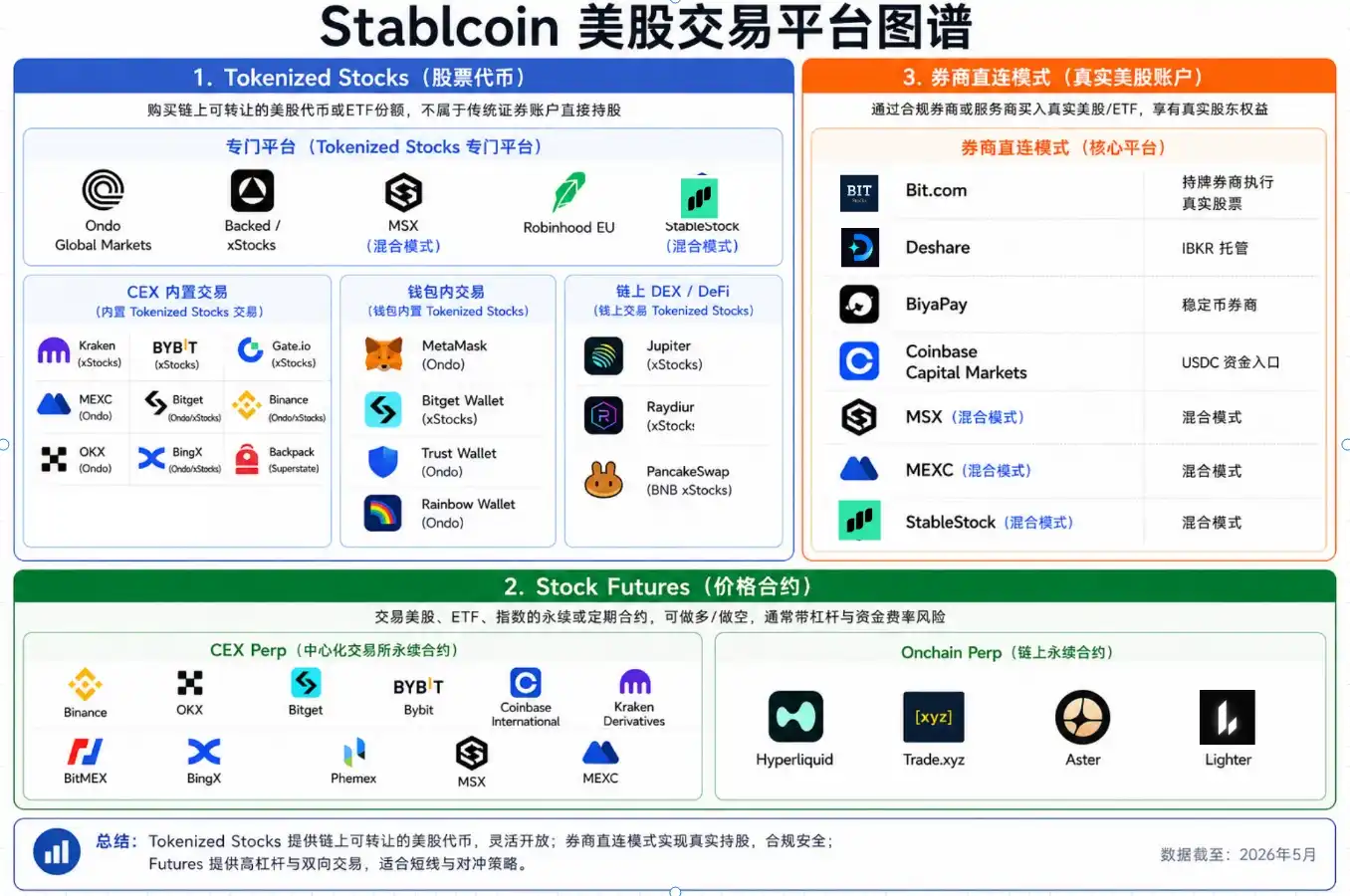
How to Define "Real U.S. Stocks": Differences Between On-Chain Tokens, Price Contracts, and Direct Broker Connections

**Title:** Defining "Real US Stocks": Differences Among On-Chain Tokens, Price Contracts, and Broker-Direct Access **Summary:** In 2026, using stablecoins to purchase US stocks is mainstream, but products marketed as "buying US stocks with USDT" offer fundamentally different assets. This article analyzes three primary models. **1. Tokenized Stocks:** These are on-chain tokens representing economic exposure to underlying stocks, held by an issuer or custodian. They offer benefits like 24/7 trading and DeFi composability (e.g., use as loan collateral). However, users lack direct legal shareholder status; dividends may not be paid in cash, and voting rights are typically non-binding advisory expressions. Examples include platforms like Ondo Finance. **2. Stock Futures / Equity Perpetuals:** These are derivative contracts tracking a stock's price, allowing leveraged long/short positions 24/7, similar to crypto perpetuals. They offer high efficiency and flexibility but involve funding fees, which can be a significant long-term cost, especially during strong trends. Crucially, they confer no ownership rights (dividends, voting) to the holder. **3. Broker-Direct Model:** This model provides access to real securities via licensed broker-dealers. Stocks/ETFs are bought and held within the US clearing and custodial system (e.g., DTCC), making it the only path to genuine stock ownership. Users receive cash dividends and formal proxy voting rights (where applicable). It supports thousands of stocks and ETFs, far exceeding the coverage of the other two models. Key advantages include no funding fees, a clean cost structure for long-term holds, and the potential to transfer holdings to other brokers. Some platforms facilitate stablecoin (USDT/USDC) deposits, reducing reliance on traditional banking. A critical distinction exists *within* the broker-direct model: the underlying brokerage architecture (e.g., Fully Disclosed IB, Omnibus IB, Self-Clearing) determines how client assets are held, protected, and how safeguards like SIPC insurance are conveyed. Users should verify the specific clearing structure and regulatory compliance of any platform. In conclusion, "buying US stocks with USDT" can mean holding an on-chain economic proxy (Tokenized Stocks), trading a price derivative (Stock Futures), or owning the actual security (Broker-Direct). For users seeking full ownership rights and long-term investment, the broker-direct model is the definitive choice, though its implementation details require careful scrutiny.

marsbit51 min fa

How to Define "Real U.S. Stocks": Differences Between On-Chain Tokens, Price Contracts, and Direct Broker Connections

marsbit51 min fa

NVIDIA Launches DSX Platform, Expanding into AI Factory Infrastructure

NVIDIA has unveiled the DSX platform at its GTC Taipei event, marking a strategic expansion from GPU sales into comprehensive AI factory infrastructure solutions. The platform addresses challenges like power supply, cooling, and resource orchestration as AI models scale, shifting the industry focus from single-chip performance to overall infrastructure efficiency. DSX integrates NVIDIA's chips, systems, software, and partner technologies to cover the entire AI factory lifecycle—from design and simulation to deployment and operations. It aims to accelerate deployment, improve reliability and operational efficiency, and reduce the cost per generated token in AI inference. The software suite includes DSX MaxLPS, which uses 45°C liquid cooling and rack-level optimization to allow up to 40% more GPUs per megawatt, and DSX OS, an open-source platform for AI factory operations. The platform also encompasses reference designs, digital twin simulation (DSX Sim), dynamic workload adjustment based on grid conditions (DSX Flex), and data exchange between systems. Early adopters include cloud providers like CoreWeave and Lambda. Major hardware partners, including Dell, HPE, Lenovo, and Supermicro, are developing DSX-ready systems. Pilot projects for DSX Flex are underway with energy providers. Strategically, DSX represents NVIDIA's ongoing transition from an AI chip supplier to a full-stack AI infrastructure platform provider, aiming to set industry standards and solidify its market leadership.

marsbit57 min fa

NVIDIA Launches DSX Platform, Expanding into AI Factory Infrastructure

marsbit57 min fa

After Burning Tens of Billions of Dollars in Tokens, Silicon Valley Giants Start Limiting Employee Token Usage

After burning tens of billions of dollars on AI tokens, major Silicon Valley firms are now restricting employee usage. Companies like Microsoft, Uber, and Salesforce, which heavily promoted AI for "efficiency," are facing a cost crisis. The practice of "tokenmaxxing"—pushing employees to maximize AI tool usage—led to wasteful spending on trivial tasks like checking the weather or writing birthday messages, with studies showing significant hidden costs for bug fixes and code rewrites. The core issue is a misalignment between individual productivity gains and actual business value. While employees use AI to automate tasks they dislike, such as writing reports, this often doesn't translate to increased company revenue or improved core business outcomes. For instance, AI-generated code speeds up development but also sees an 800% increase in "code churn" (code being discarded or rewritten). As a result, only 14% of CFOs report seeing a clear, measurable return on AI investments. Firms are now shifting strategies. Microsoft has revoked most internal licenses for Claude Code, while others are implementing monitoring and cost controls. New tools from companies like Harness and CloudZero aim to track AI spending and tie costs to business results. Some AI vendors, like HubSpot, are moving from token-based pricing to charging based on outcomes, such as "resolved conversations" or "leads generated." This represents a necessary correction in the AI adoption cycle. The challenge now is for companies to move beyond using AI merely to speed up old tasks and instead rethink their workflows and business models fundamentally. The future of enterprise AI depends on proving its value, not just its usage.

marsbit1 h fa

After Burning Tens of Billions of Dollars in Tokens, Silicon Valley Giants Start Limiting Employee Token Usage

marsbit1 h fa

Trading

Spot
Futures
活动图片