The DeepSeek Fundraising Story

marsbitPubblicato 2026-06-18Pubblicato ultima volta 2026-06-18

Introduzione

"The DeepSeek Funding Story: Insights from the $2.15 Billion Round" This article details behind-the-scenes narratives from DeepSeek's recent massive funding round. Key highlights include the legendary four-hour online investor meeting where CEO Liang Wenfeng, despite not being a charismatic speaker, impressed attendees with his focus on AGI and team stability. He emphasized the philosophy of "ordinary people doing extraordinary things" and a steadfast commitment to solely advancing intelligence. The fundraising process, initiated in April, saw initial demands for a minimum investment of 5 billion RMB, no syndication, and a pure RMB structure. These terms were later adjusted to a 1.5 billion RMB minimum to accommodate more investors. A notable absence was the lack of participation from major VC firms Sequoia China and Hillhouse Capital, despite early rumors, making IDG the only established VC in the final lineup. The investor list, while showing 10 entities, actually involved nearly 100 underlying institutions and individuals upon closer examination. Significant participants included Monolith Capital, which doubled its commitment to 3 billion RMB, and Zhenxingu Capital, an unexpected entrant. Liang Wenfeng's paramount condition for all investors was a strict agreement not to poach DeepSeek employees. The article reflects on DeepSeek's unexpected openness to funding and the mix of strategies—synergy, insight, brand alignment, and persistence—that secured investors a stake. ...

Author:@Liu Jing, elsewhere

Information about DeepSeek's funding is already widespread.

For the known information, "elsewhere" will not reiterate. What follows are some untold stories or details we have learned.

The Legendary Four-Hour Meeting

Let's start with that investor meeting, the one passed around by word of mouth, the "four-hour meeting."

In mid-May, DeepSeek organized this online meeting using the Tencent Meeting system. By then, the investor lineup was mostly settled, with each institution having two attendance slots.

Liang Wenfeng spoke first, followed by a Q&A session where investors asked questions and Liang provided answers.

Legend has it that a CVC investor spent a full ten minutes asking questions: first a lengthy self-introduction, then three long questions. The atmosphere became somewhat awkward at one point—this scene is easy to imagine. Some people whispered among themselves, asking who that person was.

But Liang didn't mind, answering each question seriously. Although after answering the second question, he momentarily forgot the third one and asked the investor to repeat it.

Before this, most of the investors who got in hadn't even met Liang Wenfeng in person offline, so this was their first interaction with him. As a result, after the meeting ended, many felt the experience lingered with them.

Liang Wenfeng's memorable quotes and spirit began to circulate in the market.

Restraint and AGI

Liang Wenfeng is not an exceptionally eloquent speaker; his pace of speech is not fast either. But a few quotes from that meeting are often mentioned (paraphrased, the exact wording might vary slightly)—

"We have no fame or influence; we are a group of very ordinary people."

"The narrative I like is ordinary people accomplishing extraordinary things.For DeepSeek, our core is ensuring team stability—this is more important than money or resources. This is the greatest risk and also the greatest challenge."

"Assuming AGI will account for 20% of GDP, those who want 5% will lose to those who want 1%, and those who want 1% will lose to those who want 0.1%."

"What we want to do are things related to improving intelligence; we won't do anything else."

"AGI is a sufficiently big thing; everything else is just part of the process."

Throughout the four hours, Liang Wenfeng repeatedly emphasized the same themes: pursuing only AGI; less is more; restraint, etc.

From 5 Billion to 1.5 Billion

Formal fundraising roughly started in April this year. There was reportedly a so-called "fund whitelist": a list of institutions with strong investment capacity and good brands.

Initially, DeepSeek required a minimum ticket size of 5 billion RMB, prohibited syndicating shares, and required a pure RMB structure.

Against this backdrop, an investment tycoon initially rumored to be a sure participant but ultimately not involved was, according to market gossip, excluded because they had allegedly pitched shares to Middle Eastern LPs.

But in China, there are very few market-oriented funds capable of a single investment of 3 billion RMB. So, some VCs repeatedly negotiated whether multiple fund entities could participate.

Therefore, looking at the outcome, the minimum fund commitment was reduced to 1.5 billion RMB, and the fundraising method became more flexible.

There was also talk that participating institutions ideally should not have invested in other large models. This was highly unlikely, for a simple reason—being a top-tier fund without having invested in large models is contradictory.

At the investor meeting, Liang Wenfeng also expressed that DeepSeek was willing to help other companies—even including large model companies. Of course, the premise remained that they wouldn't poach his people.

Monolith

Monolith Capital appeared early on the investor list. The change was that the initial version was 1.5 billion, and the final amount was 3 billion.

The change in numbers is said to be related to the adjustment in Guozhitou's allocation, which freed up some shares—judging from the latter's figure of 980 million RMB, it seems designed to be just under 1 billion.

Regardless, being willing to make big bets is indeed Cao Xi's distinctive style. He has already proven it once with Kimi.

Monolith is likely the youngest VC among the participating institutions in this round.

Zhengxingu

Zhengxingu is probably the most surprising presence on the final list.

Many interpret it as Zhengxingu not having invested in any Chinese large model company before, thus being more eager to get on board. But according to our information, they actually invested in Kimi, roughly between $6 billion and $10 billion valuation. However, relative to their fund size, the invested amount was relatively limited.

One market interpretation is that Zhengxingu's founder comes from a secondary market background, seemingly having more connection with Huafang. But actually, in the secondary market, quantitative investing and fundamental investing are two distinct circles, even with different values.

According to our understanding, besides Lin Lijun and his partnerYe Chunyan, this investment also happened due to the efforts of a new investor who joined.

Zhengxingu was also one of the earliest VCs to communicate with DeepSeek.

Could DeepSeek Be the Biggest Miss for Sequoia and Hillhouse?

Now to the most surprising part of this deal.

In the initial rumors, Hillhouse would participate, investing 5 billion. Zhang Lei also reportedly told friends multiple times that since 2025, he has occasionally communicated with Liang Wenfeng, visiting Liang's home when in Beijing.

But this narrative later evolved into: Hillhouse would not participate, but Zhang Lei would invest personally. The reasons vary, some say it's related to Hillhouse's fundraising rhythm, others say it's related to regulation.

In the end, neither Zhang Lei nor Hillhouse appeared on the list.

As for Sequoia China, it was almost considered from the beginning as not participating. The most widespread version concerns worries about overseas LPs. We asked many people close to Sequoia, and they roughly expressed similar sentiments. Of course, there are other circulating theories.

The final result is that Sequoia and Hillhouse, the two institutions that seemed almost certain to be involved, ultimately did not appear. A senior lawyer told us that, in theory, companies with an RMB structure cannot be hidden.

Among the old-guard VCs, only IDG invested.

Thus, someone asked us a question: Could DeepSeek become the biggest miss for Sequoia and Hillhouse?

That's hard to assess. However, according to our understanding, DeepSeek may not only raise this one round.

Nearly 100 Institutions and Individuals

Looking at the investor list, only 10 entities participated. But "elsewhere" simply conducted a preliminary look-through of the fund entities and found that the actual number of participants is quite high.

For example, the behind-the-scenes investors of CATL-affiliated off-balance-sheet CVC—Puquan Capital—include: state-owned capital from Xiamen, Ordos, etc., entities related to CATL, and the National Green Development Fund.

Several funds related to IDG Capital in this transaction have strong insurance capital attributes, accounting for a very high proportion of the 3 billion. Additionally, there are entities related to Nongfu Spring, Septwolves, etc.

Monolith's current LPs are mainly state-owned capital from Zhejiang and Shanghai, as well as listed companies like By-health and Yanghe Brewery.

Furthermore,iHealth Labs Inc. (Jiu'an Medical)is also a participant. In fact, Jiu'an is also an LP behind many GPs.

A rough estimate, after a shallow look-through and simple deduplication, shows that nearly 100 institutions or individuals participated in this round of DeepSeek's financing.

The Biggest Requirement: Don't Poach People

We won't elaborate on DeepSeek's investment terms here. Just one additional point: Whether towards large corporations or VC funds, Liang Wenfeng's most important requirement is: Do not poach DeepSeek's people or encourage them to start their own ventures.

"China's Largest Listed Company"

If we return to viewing this as an investment, what kind of odds does DeepSeek really have?

One participating investor once expressed an overly worried thought: Could this be too much of a consensus investment? According to investment industry experience, consensus outcomes are often mediocre.

But for DeepSeek, it's hard to say that. Or rather, we cannot understand it through a simple investment lens. Whether it's its significance for China's AGI industry or its spiritual meaning.

As one investor put it: "They are doing all this with immense goodwill. He seems to be telling us: The world should have been like this all along."

So while some hesitated, others believed, "couldn't find any reason not to invest"—if, as some expect, it goes for an IPO, could DeepSeek potentially become China's largest listed company on the A-share market?

Low Profile and Ambition

While following DeepSeek's fundraising progress, a prominent feeling emerged: For most people, DeepSeek was probably a completely unexpected answer. Even the most competitive investors didn't expect it to open for funding one day.

So as mentioned before, most well-known investment figures also only recently connected with the company. Objectively, Liang Wenfeng has indeed long avoided meeting investors.

When the fundraising news broke, many institutions didn't even try to seek an investment opportunity. But looking at the result, some got their ticket based on so-called synergies, some on insight, some on brand ethos, and some simply on sheer effort.

"elsewhere" tried to ask some investors; most didn't want to discuss this investment much. The sensitivity of the deal is one aspect, but more so it seems a conscious desire to maintain this low profile, feeling honored to be part of it.

One participating investor said that throughout the transaction process, he treasured every document, hoping to frame them someday. Another investor repeated twice the 16-character phrase released with DeepSeek V4 Preview:"Not seduced by praise, not intimidated by slander, act according to the Way, uphold oneself with integrity."

Crypto di tendenza

Domande pertinenti

QWhat were the core philosophies and quotes of Liang Wenfeng (梁文锋) during the legendary four-hour investor meeting for DeepSeek's fundraising?

ADuring the four-hour investor meeting, Liang Wenfeng emphasized philosophies of humility, focus, and restraint. Key quotes attributed to him include: 'We have no fame or influence, we are a group of very ordinary people.' 'My favorite narrative is a group of ordinary people doing extraordinary things.' 'Our core at DeepSeek is ensuring team stability—this is more important than money or resources. This is the biggest risk and the biggest challenge.' 'Assuming AGI will account for 20% of GDP, those who want 5% will lose to those who want 1%, and those who want 1% will lose to those who want 0.1%.' 'We focus only on things related to improving intelligence, we won't do anything else.' 'AGI is a sufficiently big thing; everything else is just a process.' He consistently stressed pursuing only AGI, the principle of 'less is more,' and the virtue of restraint.

QHow did DeepSeek's fundraising terms and participant list evolve from the initial plan to the final outcome?

ADeepSeek's fundraising started around April with an initial plan requiring a minimum commitment of 5 billion RMB per fund, no syndication of shares, and a pure RMB structure. Due to the scarcity of Chinese funds capable of single commitments of 3 billion RMB, the minimum was eventually lowered to 1.5 billion RMB, and the fundraising method became more flexible. While there was a preference for funds that hadn't invested in other LLM companies, this was largely impractical. The final list of 10 direct institutional investors included Monolith (increasing from 1.5B to 3B RMB), Zhenxingu, IDG Capital, and溥泉资本 (associated with CATL), among others. Notably, Sequoia China and Hillhouse Capital, initially rumored to participate, were absent from the final list. A shallow穿透 analysis revealed nearly 100 underlying entities (including LPs like local SOEs, insurers, and listed companies) ultimately participated.

QWhat was the most important requirement set by Liang Wenfeng for DeepSeek's investors?

AThe most important requirement set by Liang Wenfeng for DeepSeek's investors, whether large corporations or VC funds, was that they must not poach DeepSeek's employees or encourage them to leave and start their own ventures. This condition was emphasized to protect the company's core asset and biggest challenge: team stability.

QWhy were Sequoia China and Hillhouse Capital absent from DeepSeek's final investor list, despite early rumors of their involvement?

AAccording to the article, Sequoia China was largely considered unlikely to participate from the beginning. The most widespread reason cited was concerns regarding its overseas Limited Partners (LPs), though other explanations also circulated. For Hillhouse Capital, early rumors suggested it would invest 5 billion RMB, with founder Zhang Lei having regular contact with Liang Wenfeng. Later, it was said Hillhouse as a firm wouldn't participate, but Zhang Lei might invest personally. The final absence was attributed to factors like Hillhouse's fundraising rhythm or regulatory considerations. Ultimately, neither firm appeared on the list, making IDG Capital the only traditional major VC to invest.

QWhat broader significance does DeepSeek's fundraising hold beyond a mere financial investment, according to perspectives in the article?

ABeyond a financial transaction, DeepSeek's fundraising holds significant symbolic meaning. It is seen not just through a simple investment lens but for its importance to China's AGI industry and its spiritual or philosophical impact. One investor described the DeepSeek team as operating with 'immense goodwill' and showing 'how the world ought to be.' Another pondered if DeepSeek, upon a potential IPO, could become the largest listed company in China's A-share market. The participants displayed a sense of honor and a conscious desire to maintain the company's low-profile ethos, with some treasuring deal documents as artifacts and citing DeepSeek's motto: '不诱于誉,不恐于诽,率道而行,端然正己' (Not lured by praise, not frightened by slander, follow the path, and correct oneself uprightly).

Letture associate

Gate Research Institute: Analysis of Chart Patterns and Breakout Trading Strategies

Gate Research Institute: Chart Pattern Analysis and Breakout Trading Strategies Chart patterns are crucial tools in technical analysis for observing market supply and demand shifts, trend continuations, and reversals. This analysis involves a comprehensive evaluation of trend, volume, support/resistance, time cycles, and breakout validity, not just rote pattern recognition. Patterns are broadly categorized into reversal patterns (e.g., Double Tops/Bottoms, Head and Shoulders) and continuation patterns (e.g., Flags, Triangles, Rectangles). An effective breakout, key for trading, requires clear support/resistance, prolonged consolidation, a prevailing trend backdrop, and volume confirmation. However, breakouts are not guaranteed, as false breakouts are common. Risk must be managed through position sizing, stop-loss orders, pullback confirmations, and profit-taking in stages. Key pattern types discussed include: * **Rectangle Patterns:** Indicate market indecision within parallel support and resistance, with breakouts projecting a move equal to the pattern's width. * **Flag & Pennant Patterns:** Short-term continuation patterns following sharp price moves ("flagpoles"). * **Triangle Patterns:** Symmetrical, Ascending (bullish bias), and Descending (bearish bias) triangles, representing consolidation before a directional move. * **Head and Shoulders Patterns:** Major reversal patterns signaling trend exhaustion. The article details breakout trading strategies, defining valid breakouts by price closing beyond a key level with increased volume and minimal immediate re-entry into the prior range. It contrasts range trading with breakout trading and outlines entry methods (immediate entry, pullback entry, scaling in), stop-loss placement (based on pattern failure), and profit-taking techniques (target-based, structure-based, trend-following). It further classifies breakout outcomes: 1. **Valid Breakouts:** Strong, sustained moves in the breakout direction. 2. **Pullback Breakouts:** Price breaks out, retests the breakout level as support/resistance, then resumes the trend—offering a lower-risk entry. 3. **False Breakouts:** Price briefly breaches a level but quickly reverses back into the prior range, a common risk managed by strict stop-losses. Key validation tools for breakouts include volume analysis, the principle of support/resistance role reversal, and momentum indicators like ATR, Moving Averages, Bollinger Bands, and RSI. In conclusion, while chart patterns and breakout analysis provide a structured framework, their effectiveness relies on multiple confirming factors—trend context, volume, and proper risk management. They should be integrated into a broader trading system rather than used as standalone signals.

marsbit27 min fa

Gate Research Institute: Analysis of Chart Patterns and Breakout Trading Strategies

marsbit27 min fa

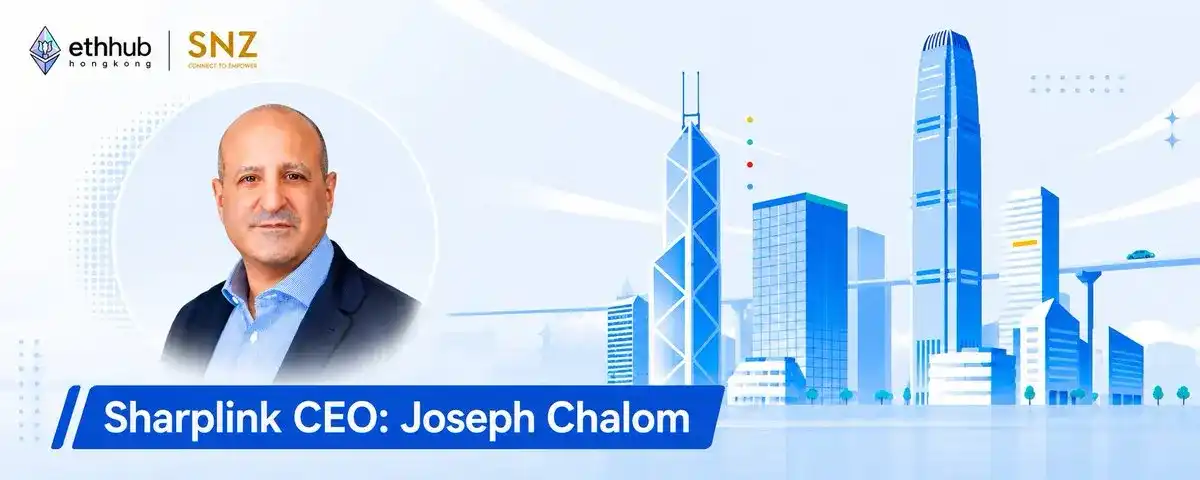
Joseph Chalom: Ethereum is Becoming the "Settlement Layer of Trust" for Global Finance

In a speech titled "The Industrialization of Trust," Sharplink CEO Joseph Chalom (former BlackRock digital assets head) discussed the future transformation of global finance. Drawing from 20 years at BlackRock, where he led the launch of Bitcoin/ETH ETFs and tokenized funds, Chalom highlighted the immense hidden costs of establishing trust in traditional finance—estimated at over $9.3 trillion annually in the US alone due to fragmented systems, multi-day settlements, and countless reconciliations. He argued that Ethereum is emerging as the global financial "settlement layer for trust," with its robust, decentralized infrastructure securing over $300 billion in on-chain assets and most stablecoins and tokenized assets. The future, he stated, will be driven by three accelerating pillars: stablecoins (evolving beyond crypto gateways to become efficient cross-border payment rails), tokenized assets (enabling 24/7 trading and reshaping capital markets), and DeFi (providing automated, accessible financial services). A potential game-changer, Chalom added, is the fourth pillar: "Agentic Finance," where AI agents autonomously execute programmable financial transactions via smart contracts and stablecoins. He envisions individuals soon having AI-powered "CFOs in their pockets" to optimize idle capital and manage tokenized portfolios. This shift, facilitated by Ethereum's trustless settlement, could multiply on-chain transaction volume 1000x within a year, moving finance toward a seamless, digitized future.

marsbit27 min fa

Joseph Chalom: Ethereum is Becoming the "Settlement Layer of Trust" for Global Finance

marsbit27 min fa

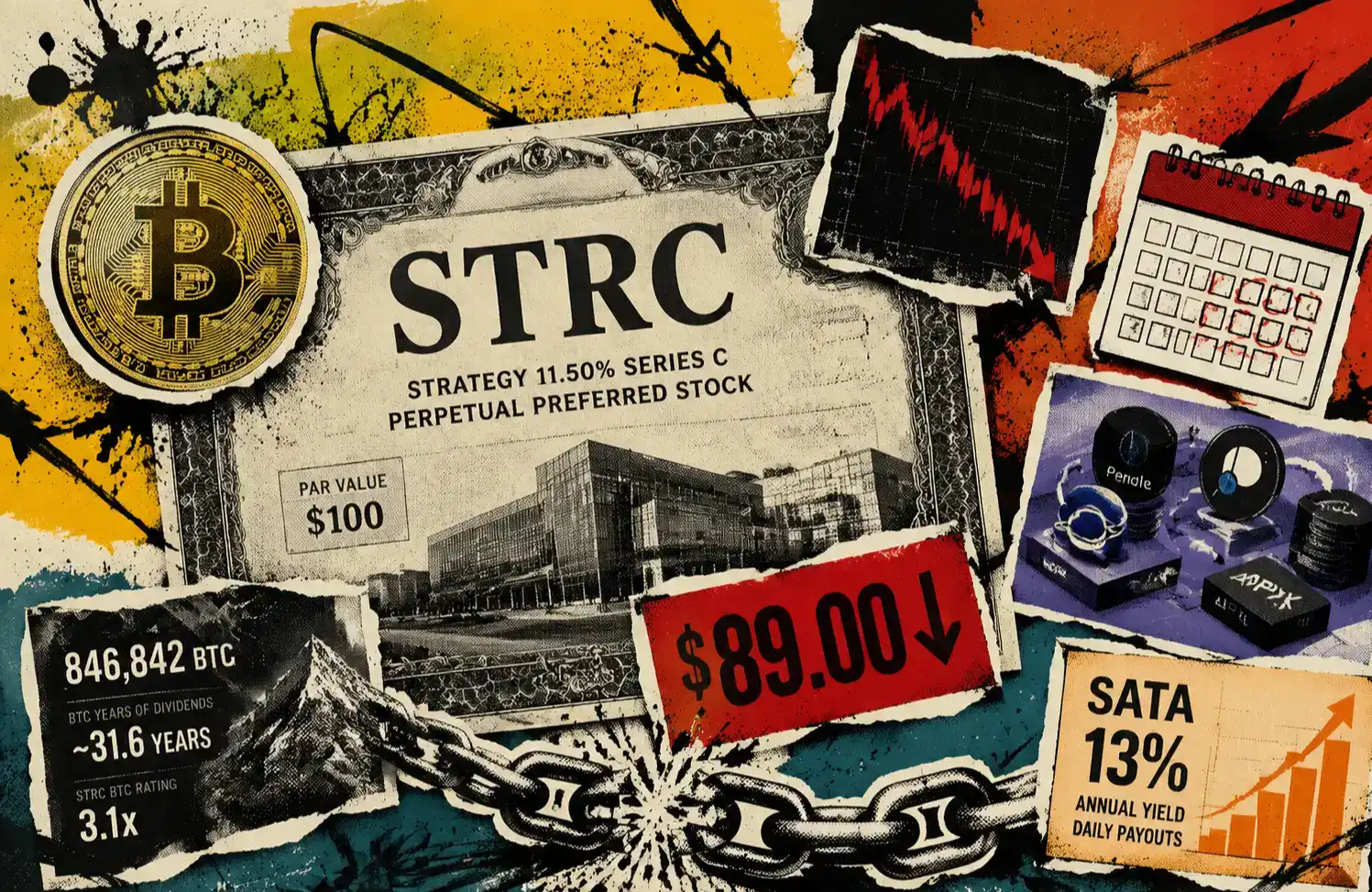
STRC Severely Unpegged, What Risks Is the Market Pricing In?

The article analyzes the recent significant de-pegging of Strategy's perpetual preferred stock, STRC, whose price fell to approximately $89, far below its $100 face value. This discount has pushed its simple yield to around 12.9%, creating a paradox. The stock was designed as a high-yield instrument trading near par, and Strategy maintains an 11.5% annual dividend, even recently switching to semi-monthly payments to support the price. The author explores several reasons why the high yield hasn't attracted enough buying pressure to restore the par value. A key factor is potential reverse deleveraging from carry trades, where leveraged investors may be forced to sell due to margin calls as the price falls, creating a self-reinforcing downward spiral. Additionally, the tokenization and integration of STRC into DeFi protocols (like Apyx, Saturn, Pendle) have introduced faster, more transparent, and potentially more volatile price adjustment mechanisms through leverage and yield-splitting products. The emergence of a competing product, Strive's SATA, offering a 13% yield with daily dividends, has also changed the yield benchmark, challenging STRC's unique high-yield narrative. Furthermore, the market is questioning the distinction between Strategy's substantial Bitcoin reserves, which provide long-term balance sheet coverage, and the certainty of stable near-term cash flow for dividends. Ultimately, the price dip represents a stress test for this type of BTC-backed, high-yield financing tool. The future path of STRC depends on whether Strategy acts to reinforce the $100 peg (e.g., by adjusting dividends), whether DeFi-related leverage unwinds further, and how investors ultimately price the risks of leverage, competition, and cash flow uncertainty against the offered yield.

marsbit38 min fa

STRC Severely Unpegged, What Risks Is the Market Pricing In?

marsbit38 min fa

LIT Token Hits Six-Month High: How Long Can the Buyback Flywheel Keep Burning Fuel?

The LIT token of decentralized perpetual exchange Lighter surged to a six-month high above $1.90 on June 18th, with a market cap of $425 million. After a price correction earlier this year, the recent rebound is attributed to its core "buyback flywheel" mechanism. All protocol fee revenue is used for programmatic, hourly market buybacks of LIT. Since its TGE in December 2025, approximately 15 million LIT (6% of circulating supply) has been repurchased for around $21 million. Additional price support comes from the LLP (Lighter Liquidity Pool), where providers must stake LIT worth 10% of their deposited USDC, locking significant token supply. However, challenges persist. Trading volume has declined amidst a sluggish market, with total volume at $1.68 trillion, significantly lower than leading competitor Hyperliquid's $4.37 trillion. While Lighter focuses on perpetual contracts, RWA, and Pre-IPO markets, Hyperliquid has expanded into prediction markets and boasts a U.S. spot ETF, attracting institutional investment and influencer endorsements like from Arthur Hayes. In contrast, LIT currently lacks similar high-profile backing. With 75% of LIT's total 1 billion supply still locked (team and investor tokens begin a 3-year linear unlock in December 2026), there is no immediate unlock selling pressure. The token's future performance hinges on sustaining trading volume growth, successful product iteration, and executing its transparent buyback strategy against a dominant competitor.

Foresight News58 min fa

LIT Token Hits Six-Month High: How Long Can the Buyback Flywheel Keep Burning Fuel?

Foresight News58 min fa

Trading

Spot
Futures

Articoli Popolari

Cosa è $S$

Comprendere SPERO: Una Panoramica Completa Introduzione a SPERO Mentre il panorama dell'innovazione continua a evolversi, l'emergere delle tecnologie web3 e dei progetti di criptovaluta gioca un ruolo fondamentale nel plasmare il futuro digitale. Un progetto che ha attirato l'attenzione in questo campo dinamico è SPERO, denotato come SPERO,$$s$. Questo articolo mira a raccogliere e presentare informazioni dettagliate su SPERO, per aiutare gli appassionati e gli investitori a comprendere le sue basi, obiettivi e innovazioni nei domini web3 e crypto. Che cos'è SPERO,$$s$? SPERO,$$s$ è un progetto unico all'interno dello spazio crypto che cerca di sfruttare i principi della decentralizzazione e della tecnologia blockchain per creare un ecosistema che promuove l'impegno, l'utilità e l'inclusione finanziaria. Il progetto è progettato per facilitare interazioni peer-to-peer in modi nuovi, fornendo agli utenti soluzioni e servizi finanziari innovativi. Al suo interno, SPERO,$$s$ mira a responsabilizzare gli individui fornendo strumenti e piattaforme che migliorano l'esperienza dell'utente nello spazio delle criptovalute. Questo include la possibilità di metodi di transazione più flessibili, la promozione di iniziative guidate dalla comunità e la creazione di percorsi per opportunità finanziarie attraverso applicazioni decentralizzate (dApps). La visione sottostante di SPERO,$$s$ ruota attorno all'inclusività, cercando di colmare le lacune all'interno della finanza tradizionale mentre sfrutta i vantaggi della tecnologia blockchain. Chi è il Creatore di SPERO,$$s$? L'identità del creatore di SPERO,$$s$ rimane piuttosto oscura, poiché ci sono risorse pubblicamente disponibili limitate che forniscono informazioni dettagliate sul suo fondatore o fondatori. Questa mancanza di trasparenza può derivare dall'impegno del progetto per la decentralizzazione—un ethos che molti progetti web3 condividono, dando priorità ai contributi collettivi rispetto al riconoscimento individuale. Centrando le discussioni attorno alla comunità e ai suoi obiettivi collettivi, SPERO,$$s$ incarna l'essenza dell'empowerment senza mettere in evidenza individui specifici. Pertanto, comprendere l'etica e la missione di SPERO rimane più importante che identificare un creatore singolo. Chi sono gli Investitori di SPERO,$$s$? SPERO,$$s$ è supportato da una varietà di investitori che vanno dai capitalisti di rischio agli investitori angelici dedicati a promuovere l'innovazione nel settore crypto. Il focus di questi investitori generalmente si allinea con la missione di SPERO—dando priorità a progetti che promettono avanzamenti tecnologici sociali, inclusività finanziaria e governance decentralizzata. Queste fondazioni di investitori sono tipicamente interessate a progetti che non solo offrono prodotti innovativi, ma contribuiscono anche positivamente alla comunità blockchain e ai suoi ecosistemi. Il supporto di questi investitori rafforza SPERO,$$s$ come un concorrente degno di nota nel dominio in rapida evoluzione dei progetti crypto. Come Funziona SPERO,$$s$? SPERO,$$s$ impiega un framework multifunzionale che lo distingue dai progetti di criptovaluta convenzionali. Ecco alcune delle caratteristiche chiave che sottolineano la sua unicità e innovazione: Governance Decentralizzata: SPERO,$$s$ integra modelli di governance decentralizzati, responsabilizzando gli utenti a partecipare attivamente ai processi decisionali riguardanti il futuro del progetto. Questo approccio favorisce un senso di proprietà e responsabilità tra i membri della comunità. Utilità del Token: SPERO,$$s$ utilizza il proprio token di criptovaluta, progettato per servire varie funzioni all'interno dell'ecosistema. Questi token abilitano transazioni, premi e la facilitazione dei servizi offerti sulla piattaforma, migliorando l'impegno e l'utilità complessivi. Architettura Stratificata: L'architettura tecnica di SPERO,$$s$ supporta la modularità e la scalabilità, consentendo un'integrazione fluida di funzionalità e applicazioni aggiuntive man mano che il progetto evolve. Questa adattabilità è fondamentale per mantenere la rilevanza nel panorama crypto in continua evoluzione. Coinvolgimento della Comunità: Il progetto enfatizza iniziative guidate dalla comunità, impiegando meccanismi che incentivano la collaborazione e il feedback. Nutrendo una comunità forte, SPERO,$$s$ può affrontare meglio le esigenze degli utenti e adattarsi alle tendenze di mercato. Focus sull'Inclusione: Offrendo basse commissioni di transazione e interfacce user-friendly, SPERO,$$s$ mira ad attrarre una base utenti diversificata, inclusi individui che potrebbero non aver precedentemente interagito nello spazio crypto. Questo impegno per l'inclusione si allinea con la sua missione generale di empowerment attraverso l'accessibilità. Cronologia di SPERO,$$s$ Comprendere la storia di un progetto fornisce preziose intuizioni sulla sua traiettoria di sviluppo e sui traguardi. Di seguito è riportata una cronologia suggerita che mappa eventi significativi nell'evoluzione di SPERO,$$s$: Fase di Concettualizzazione e Ideazione: Le idee iniziali che formano la base di SPERO,$$s$ sono state concepite, allineandosi strettamente con i principi di decentralizzazione e focus sulla comunità all'interno dell'industria blockchain. Lancio del Whitepaper del Progetto: Dopo la fase concettuale, è stato rilasciato un whitepaper completo che dettaglia la visione, gli obiettivi e l'infrastruttura tecnologica di SPERO,$$s$ per suscitare interesse e feedback dalla comunità. Costruzione della Comunità e Prime Interazioni: Sono stati effettuati sforzi attivi di outreach per costruire una comunità di early adopters e potenziali investitori, facilitando discussioni attorno agli obiettivi del progetto e ottenendo supporto. Evento di Generazione del Token: SPERO,$$s$ ha condotto un evento di generazione del token (TGE) per distribuire i propri token nativi ai primi sostenitori e stabilire una liquidità iniziale all'interno dell'ecosistema. Lancio della Prima dApp: La prima applicazione decentralizzata (dApp) associata a SPERO,$$s$ è stata attivata, consentendo agli utenti di interagire con le funzionalità principali della piattaforma. Sviluppo Continuo e Partnership: Aggiornamenti e miglioramenti continui alle offerte del progetto, inclusi partnership strategiche con altri attori nello spazio blockchain, hanno plasmato SPERO,$$s$ in un concorrente competitivo e in evoluzione nel mercato crypto. Conclusione SPERO,$$s$ rappresenta una testimonianza del potenziale del web3 e delle criptovalute di rivoluzionare i sistemi finanziari e responsabilizzare gli individui. Con un impegno per la governance decentralizzata, il coinvolgimento della comunità e funzionalità progettate in modo innovativo, apre la strada verso un panorama finanziario più inclusivo. Come per qualsiasi investimento nello spazio crypto in rapida evoluzione, si incoraggiano potenziali investitori e utenti a ricercare approfonditamente e a impegnarsi in modo riflessivo con gli sviluppi in corso all'interno di SPERO,$$s$. Il progetto mostra lo spirito innovativo dell'industria crypto, invitando a ulteriori esplorazioni delle sue innumerevoli possibilità. Mentre il percorso di SPERO,$$s$ è ancora in fase di sviluppo, i suoi principi fondamentali potrebbero effettivamente influenzare il futuro di come interagiamo con la tecnologia, la finanza e tra di noi in ecosistemi digitali interconnessi.

78 Totale visualizzazioniPubblicato il 2024.12.17Aggiornato il 2024.12.17

Cosa è $S$

Cosa è AGENT S

Agent S: Il Futuro dell'Interazione Autonoma in Web3 Introduzione Nel panorama in continua evoluzione di Web3 e criptovalute, le innovazioni stanno costantemente ridefinendo il modo in cui gli individui interagiscono con le piattaforme digitali. Uno di questi progetti pionieristici, Agent S, promette di rivoluzionare l'interazione uomo-computer attraverso il suo framework agentico aperto. Aprendo la strada a interazioni autonome, Agent S mira a semplificare compiti complessi, offrendo applicazioni trasformative nell'intelligenza artificiale (AI). Questa esplorazione dettagliata approfondirà le complessità del progetto, le sue caratteristiche uniche e le implicazioni per il dominio delle criptovalute. Cos'è Agent S? Agent S si presenta come un innovativo framework agentico aperto, progettato specificamente per affrontare tre sfide fondamentali nell'automazione dei compiti informatici: Acquisizione di Conoscenze Specifiche del Dominio: Il framework apprende in modo intelligente da varie fonti di conoscenza esterne ed esperienze interne. Questo approccio duale gli consente di costruire un ricco repository di conoscenze specifiche del dominio, migliorando le sue prestazioni nell'esecuzione dei compiti. Pianificazione su Lungo Orizzonte di Compiti: Agent S impiega una pianificazione gerarchica potenziata dall'esperienza, un approccio strategico che facilita la suddivisione e l'esecuzione efficiente di compiti complessi. Questa caratteristica migliora significativamente la sua capacità di gestire più sottocompiti in modo efficiente ed efficace. Gestione di Interfacce Dinamiche e Non Uniformi: Il progetto introduce l'Interfaccia Agente-Computer (ACI), una soluzione innovativa che migliora l'interazione tra agenti e utenti. Utilizzando Modelli Linguistici Multimodali di Grandi Dimensioni (MLLM), Agent S può navigare e manipolare senza sforzo diverse interfacce grafiche utente. Attraverso queste caratteristiche pionieristiche, Agent S fornisce un framework robusto che affronta le complessità coinvolte nell'automazione dell'interazione umana con le macchine, preparando il terreno per innumerevoli applicazioni nell'AI e oltre. Chi è il Creatore di Agent S? Sebbene il concetto di Agent S sia fondamentalmente innovativo, informazioni specifiche sul suo creatore rimangono elusive. Il creatore è attualmente sconosciuto, il che evidenzia sia la fase embrionale del progetto sia la scelta strategica di mantenere i membri fondatori sotto anonimato. Indipendentemente dall'anonimato, l'attenzione rimane sulle capacità e sul potenziale del framework. Chi sono gli Investitori di Agent S? Poiché Agent S è relativamente nuovo nell'ecosistema crittografico, informazioni dettagliate riguardanti i suoi investitori e sostenitori finanziari non sono documentate esplicitamente. La mancanza di approfondimenti pubblicamente disponibili sulle fondazioni di investimento o sulle organizzazioni che supportano il progetto solleva interrogativi sulla sua struttura di finanziamento e sulla roadmap di sviluppo. Comprendere il supporto è cruciale per valutare la sostenibilità del progetto e il suo potenziale impatto sul mercato. Come Funziona Agent S? Al centro di Agent S si trova una tecnologia all'avanguardia che gli consente di funzionare efficacemente in contesti diversi. Il suo modello operativo è costruito attorno a diverse caratteristiche chiave: Interazione Uomo-Computer Simile a Quella Umana: Il framework offre una pianificazione AI avanzata, cercando di rendere le interazioni con i computer più intuitive. Mimando il comportamento umano nell'esecuzione dei compiti, promette di elevare le esperienze degli utenti. Memoria Narrativa: Utilizzata per sfruttare esperienze di alto livello, Agent S utilizza la memoria narrativa per tenere traccia delle storie dei compiti, migliorando così i suoi processi decisionali. Memoria Episodica: Questa caratteristica fornisce agli utenti una guida passo-passo, consentendo al framework di offrire supporto contestuale mentre i compiti si sviluppano. Supporto per OpenACI: Con la capacità di funzionare localmente, Agent S consente agli utenti di mantenere il controllo sulle proprie interazioni e flussi di lavoro, allineandosi con l'etica decentralizzata di Web3. Facile Integrazione con API Esterne: La sua versatilità e compatibilità con varie piattaforme AI garantiscono che Agent S possa adattarsi senza problemi agli ecosistemi tecnologici esistenti, rendendolo una scelta attraente per sviluppatori e organizzazioni. Queste funzionalità contribuiscono collettivamente alla posizione unica di Agent S all'interno dello spazio crittografico, poiché automatizza compiti complessi e multi-fase con un intervento umano minimo. Man mano che il progetto evolve, le sue potenziali applicazioni in Web3 potrebbero ridefinire il modo in cui si svolgono le interazioni digitali. Cronologia di Agent S Lo sviluppo e le tappe di Agent S possono essere riassunti in una cronologia che evidenzia i suoi eventi significativi: 27 Settembre 2024: Il concetto di Agent S è stato lanciato in un documento di ricerca completo intitolato “Un Framework Agentico Aperto che Usa i Computer Come un Umano”, mostrando le basi per il progetto. 10 Ottobre 2024: Il documento di ricerca è stato reso pubblicamente disponibile su arXiv, offrendo un'esplorazione approfondita del framework e della sua valutazione delle prestazioni basata sul benchmark OSWorld. 12 Ottobre 2024: È stata rilasciata una presentazione video, fornendo un'idea visiva delle capacità e delle caratteristiche di Agent S, coinvolgendo ulteriormente potenziali utenti e investitori. Questi indicatori nella cronologia non solo illustrano i progressi di Agent S, ma indicano anche il suo impegno per la trasparenza e il coinvolgimento della comunità. Punti Chiave su Agent S Man mano che il framework Agent S continua a evolversi, diversi attributi chiave si distinguono, sottolineando la sua natura innovativa e il potenziale: Framework Innovativo: Progettato per fornire un uso intuitivo dei computer simile all'interazione umana, Agent S porta un approccio nuovo all'automazione dei compiti. Interazione Autonoma: La capacità di interagire autonomamente con i computer attraverso GUI segna un passo avanti verso soluzioni informatiche più intelligenti ed efficienti. Automazione di Compiti Complessi: Con la sua metodologia robusta, può automatizzare compiti complessi e multi-fase, rendendo i processi più veloci e meno soggetti a errori. Miglioramento Continuo: I meccanismi di apprendimento consentono ad Agent S di migliorare dalle esperienze passate, migliorando continuamente le sue prestazioni e la sua efficacia. Versatilità: La sua adattabilità attraverso diversi ambienti operativi come OSWorld e WindowsAgentArena garantisce che possa servire un'ampia gamma di applicazioni. Man mano che Agent S si posiziona nel panorama di Web3 e delle criptovalute, il suo potenziale per migliorare le capacità di interazione e automatizzare i processi segna un significativo avanzamento nelle tecnologie AI. Attraverso il suo framework innovativo, Agent S esemplifica il futuro delle interazioni digitali, promettendo un'esperienza più fluida ed efficiente per gli utenti in vari settori. Conclusione Agent S rappresenta un audace passo avanti nell'unione tra AI e Web3, con la capacità di ridefinire il modo in cui interagiamo con la tecnologia. Sebbene sia ancora nelle sue fasi iniziali, le possibilità per la sua applicazione sono vaste e coinvolgenti. Attraverso il suo framework completo che affronta sfide critiche, Agent S mira a portare le interazioni autonome al centro dell'esperienza digitale. Man mano che ci addentriamo nei regni delle criptovalute e della decentralizzazione, progetti come Agent S giocheranno senza dubbio un ruolo cruciale nel plasmare il futuro della tecnologia e della collaborazione uomo-computer.

548 Totale visualizzazioniPubblicato il 2025.01.14Aggiornato il 2025.01.14

Cosa è AGENT S

Come comprare S

Benvenuto in HTX.com! Abbiamo reso l'acquisto di Sonic (S) semplice e conveniente. Segui la nostra guida passo passo per intraprendere il tuo viaggio nel mondo delle criptovalute.Step 1: Crea il tuo Account HTXUsa la tua email o numero di telefono per registrarti il tuo account gratuito su HTX. Vivi un'esperienza facile e sblocca tutte le funzionalità,Crea il mio accountStep 2: Vai in Acquista crypto e seleziona il tuo metodo di pagamentoCarta di credito/debito: utilizza la tua Visa o Mastercard per acquistare immediatamente SonicS.Bilancio: Usa i fondi dal bilancio del tuo account HTX per fare trading senza problemi.Terze parti: abbiamo aggiunto metodi di pagamento molto utilizzati come Google Pay e Apple Pay per maggiore comodità.P2P: Fai trading direttamente con altri utenti HTX.Over-the-Counter (OTC): Offriamo servizi su misura e tassi di cambio competitivi per i trader.Step 3: Conserva Sonic (S)Dopo aver acquistato Sonic (S), conserva nel tuo account HTX. In alternativa, puoi inviare tramite trasferimento blockchain o scambiare per altre criptovalute.Step 4: Scambia Sonic (S)Scambia facilmente Sonic (S) nel mercato spot di HTX. Accedi al tuo account, seleziona la tua coppia di trading, esegui le tue operazioni e monitora in tempo reale. Offriamo un'esperienza user-friendly sia per chi ha appena iniziato che per i trader più esperti.

1.1k Totale visualizzazioniPubblicato il 2025.01.15Aggiornato il 2026.06.02

Come comprare S

Discussioni

Benvenuto nella Community HTX. Qui puoi rimanere informato sugli ultimi sviluppi della piattaforma e accedere ad approfondimenti esperti sul mercato. Le opinioni degli utenti sul prezzo di S S sono presentate come di seguito.

活动图片