ChatGPT Might Be Disappearing Soon

marsbitPubblicato 2026-06-03Pubblicato ultima volta 2026-06-03

Introduzione

OpenAI announced at its "Intelligence at Work" event that its coding assistant, Codex, will be fully integrated into the ChatGPT app within weeks. This move marks a strategic shift from a conversational AI (Chat) towards a unified "agentic" platform capable of execution. Codex, originally launched to compete with Anthropic's Claude Code, has grown rapidly to 5 million weekly active users, with 20% being non-developers like analysts and designers. Its enterprise revenue now constitutes 40% of OpenAI's total. The integration is the first step in creating a super-app combining ChatGPT (interface), Codex (execution engine), and the Atlas browser (web access). OpenAI also unveiled new Codex features: specialized Agent plugins for six professional roles, an "Annotations" tool for direct document editing, and a "Sites" function to turn work into shareable web apps. Internally, this reflects a power shift; the Codex team now leads core product strategy. While the ChatGPT brand remains for its vast user base, the platform's future is focused on autonomous agents that perform tasks, not just chat. The article notes that competition with Claude Code pushed OpenAI's development, with Codex competing on cost-effectiveness and accessibility rather than raw coding quality. It concludes that the essence of "ChatGPT" is evolving from a chatbot into an AI agent platform, with the name potentially becoming a legacy symbol of its original function.

OpenAI's super app has finally 'taken shape'.

It's still called ChatGPT, but its core is about to gain a new member: Codex.

And ChatGPT is essentially just a shell now.

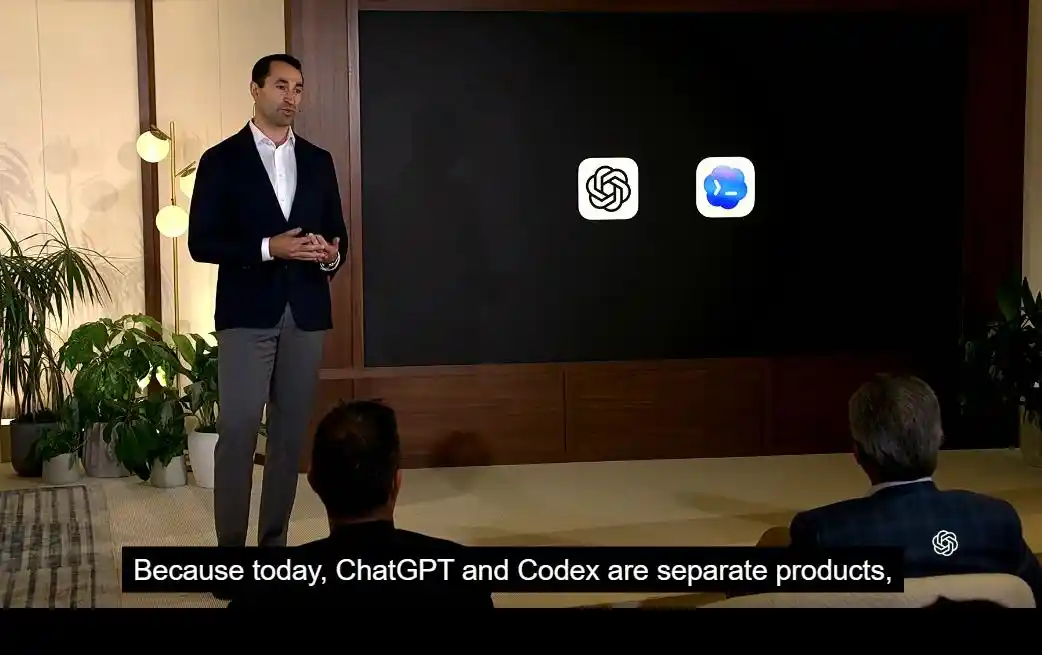
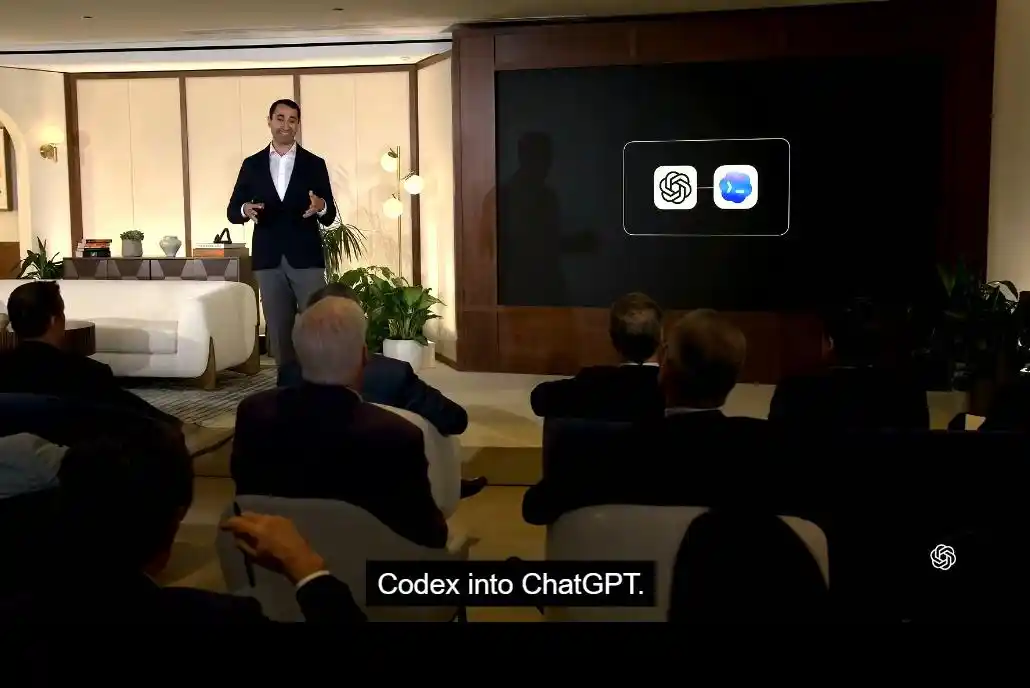
At the Intelligence at Work launch event just held by OpenAI, the company officially announced that Codex will be integrated into ChatGPT in the coming weeks.

Initially, this news was a bit confusing? Wasn't there always a Codex option in ChatGPT?

Only when I clicked on it today did I realize it was 'fake'—it prompts you to further download the Codex app, you can't use it directly within ChatGPT.

So, once the integration happens, chatting and working can be done within a single app, no need to switch between apps anymore.
But, did you think that's the end of the story?

At least from OpenAI's perspective, Codex might just be the beginning.

And through this launch event, we finally got a clear picture of the entire vision for the super app.

So Codex Was Just the First Step

The launch event lasted a full hour, packed with information, but it can be summarized into three key things.

1. ChatGPT will merge with Codex because times are changing.

2. Codex will continue to evolve, so three major updates were announced.

3. Codex is catching up to Claude Code, and GPT-5.5's 'efficiency' is a key factor.

Let's quickly go through them:

First, the somewhat surprising merger. Why is ChatGPT choosing to merge with Codex now?

One reason is that Codex, initially launched to catch up with Claude Code, can now speak for itself with results.

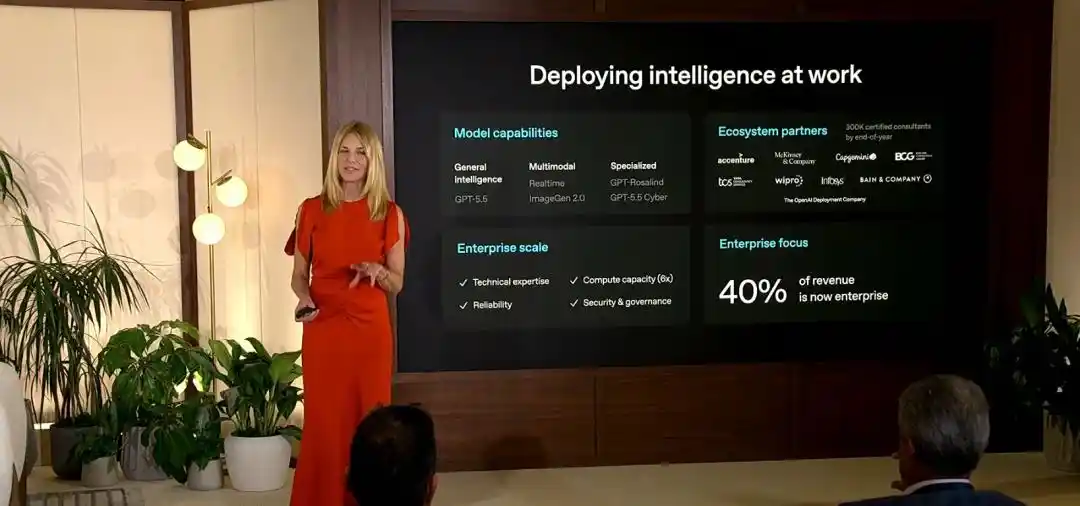
Codex weekly active users have surpassed 5 million, skyrocketing 6 times since the desktop version launched in February.

More crucially, 20% are not programmers at all, but knowledge workers like analysts, designers, and investment banking professionals, and this group is growing 3 times faster than developers.

This indicates Codex is achieving significant breakout momentum.

Regarding revenue, which OpenAI values highly (they followed Claude Code partly because they were envious of its revenue), OpenAI itself revealed that enterprise revenue currently accounts for 40% of OpenAI's total revenue, projected to reach 50% by year-end.
In short, Codex now has rapid user growth, broad user coverage, and is genuinely making money for OpenAI.

All signs seem to be telling OpenAI it's time to consider the next step.

And the direction of the next step, at least for now, seems very clear—from Chat to Agent, from conversation to execution.

Alexander Embiricos, OpenAI's Head of Product, said this during the launch:

You might not work 24/7, but your Agent in the cloud will.

A single line encapsulates the ultimate appeal of a super app. In the future, users truly won't need to switch between apps. You give an instruction, ChatGPT helps you understand it, and then Codex can call upon various Agents to execute for you.

So this integration is essentially OpenAI's first step toward a super app.

What's the next step? You might have guessed—Browser.

The browser is the final piece of this integration, providing the entry point for AI into the web world. It allows users to simply speak in ChatGPT, and Codex can automatically perform tasks like searching, operating backends, and handling work within the browser—everything that previously required manual clicks.

Thus, ChatGPT + Codex + Atlas browser, OpenAI finally has the potential to achieve execution across all scenarios through a single APP.

But for today, let's stick to talking about Codex.

To equip Codex with more 'soldiers' capable of doing work, OpenAI unveiled three more updates in one go:

Six Professional Role Agent Plugins, covering data analysis, sales, creative production, product design, equity investment, and investment banking, directly integrating 62 enterprise apps like Snowflake, Figma, and Salesforce, and embedding 110 automation skills.

Annotations feature, allowing direct annotation and modification on the original text of documents, eliminating the need to regenerate entire pieces. Developers are already using this capability to modify code, Markdown files, and websites generated by Codex.

Now, it extends to content creation scenarios like documents, spreadsheets, and presentations.
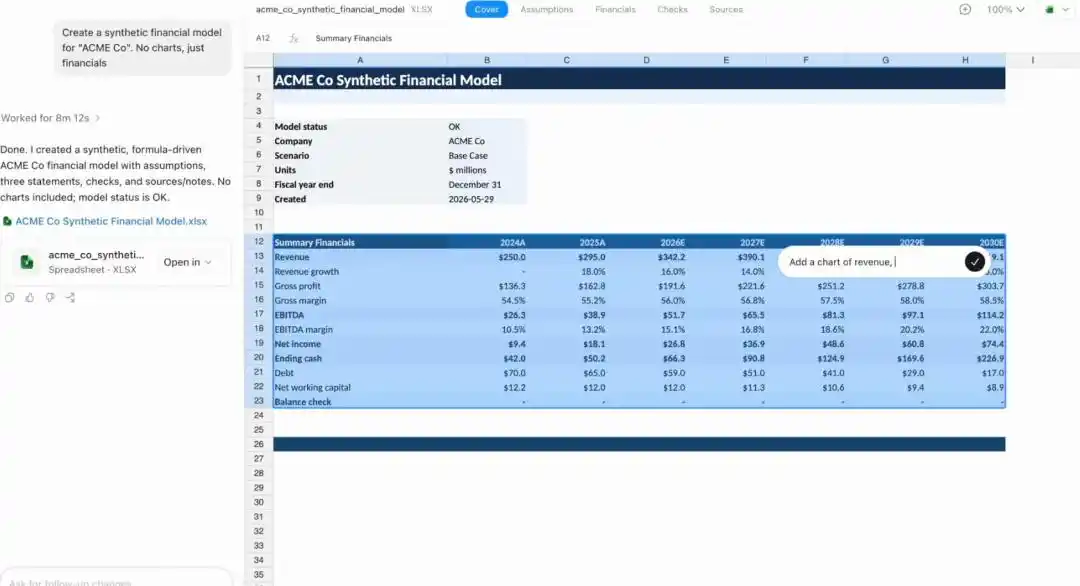
Sites feature, enabling Codex to turn your work results into interactive web applications with one click, generating URLs to share directly with teams.

This feature feels quite practical. Previously, when developing a project, non-technical people could only vaguely describe their needs. Now, anyone can generate a clear, intuitive, visualizable demo, significantly reducing team communication costs.

This feature is currently in preview for Business and Enterprise customers.
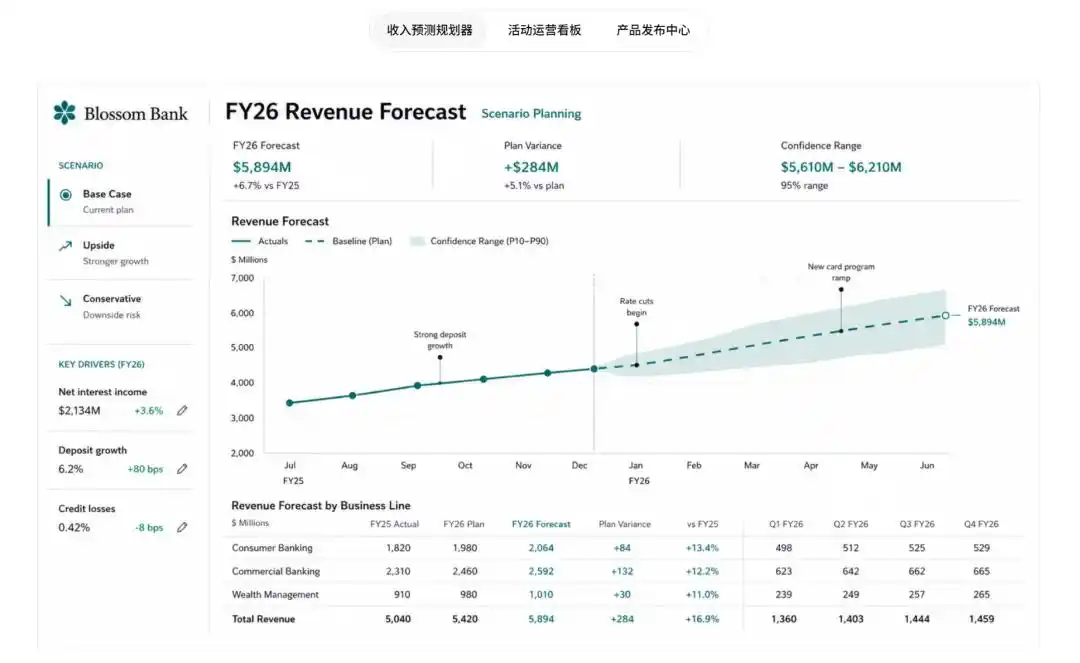
See, OpenAI is betting that in the future, more and more ordinary people will shift from conversation to execution.

Some might ask, why isn't Codex absorbing ChatGPT instead?

It can be said that, superficially, this appears to be ChatGPT absorbing Codex, but piecing together a few details, the direction might be the exact opposite.

In the May organizational restructuring, Thibault Sottiaux, who built Codex into what it is, was promoted to Head of Core Product and Platform, overseeing consumer, enterprise, and developer lines. Nick Turley, who grew ChatGPT to 900 million weekly actives, was moved to the enterprise product line.

So now, it's the Codex team managing ChatGPT, not the other way around.

Furthermore, the wording in Brockman's internal memo is worth pondering—

He didn't write 'upgrade ChatGPT,' but 'invest in a unified agentic platform.'

Therefore, this merger is less about product integration and more about a strategic shift: from conversation to execution, from chat to Agent.

ChatGPT provides the massive user base of 1 billion, Codex provides the growth engine and future narrative.

The shell belongs to ChatGPT, but the soul belongs to Codex.

However, in the end, Codex's existence was forced by competitor Anthropic.

Even the GPT-5.5 mentioned during the launch can almost be considered a product born from this pressure.

Codex Was Forced Out by Anthropic

Looking back, if it weren't for Anthropic, Codex might still just be an inconspicuous auxiliary feature in ChatGPT today.

Let's rewind to the release of Claude Code's preview version last year.

Claude Code was an immediate success upon its debut, its annualized revenue breaking $2.5 billion by February this year, reaching $1 billion in just 6 months from launch, making it one of the fastest-growing commercial software products in history.

About 4% of global GitHub public commits come from it, and users spend an average of 20 hours per week on it.

It was the explosion of Claude Code that made OpenAI realize internally: they were already falling behind in the coding domain.

How to catch up? Just chase.

The default narrative in the AI industry had always been Anthropic following in OpenAI's footsteps—GPT releases first, Claude follows; ChatGPT becomes popular first, Claude emulates.

But on the Code front, the script was completely rewritten.

Claude Code launched in February last year, and OpenAI only released the competing Codex two months later; Anthropic made a desktop version first, OpenAI chased after it; Anthropic launched Cowork for knowledge workers, OpenAI later caught up with Plugins.

This time, OpenAI was following in Anthropic's footsteps.

But the chase was indeed rapid. Looking at the timeline: 14 months, from zero to 5 million weekly actives.

Codex Cloud preview went online in April last year;

Launched desktop App and dedicated model GPT-5.3-Codex in February this year;

Announced super App merger and acquisition of Python tool company Astral in March;

Launched ChatGPT Pro at $100/month to attract developers in April;

Released mobile version in May;

Officially integrated into ChatGPT in June.

It could be said that almost every step here has the shadow of Claude Code.

But to be honest, Codex didn't stage a comeback by directly competing on code quality.

After all, blind test data shows Claude Code still has a 67% win rate, and most programmers admit its outputs are more robust.

However, Claude Code's usage limits are simply too strict, and it's more expensive than Codex.

A discussion thread on Reddit involving over 500 developers condensed into one consensus:

Claude Code is smarter, but the limits are too strict for daily use; Codex is a bit worse but actually usable.
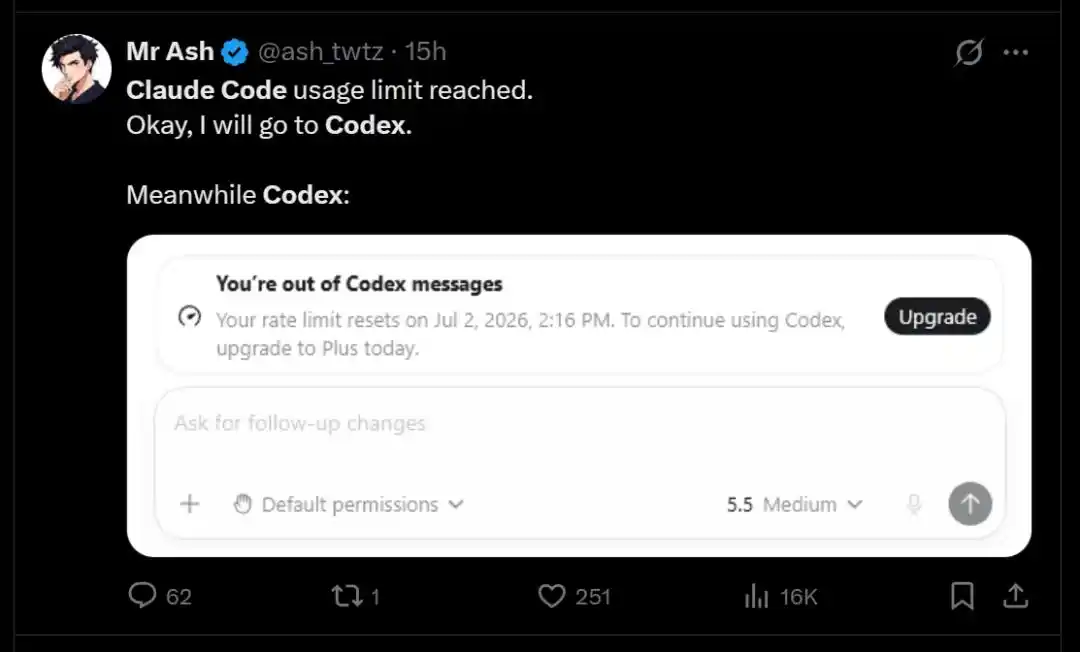
A smarter model that often gets tasks stuck midway and is more expensive, versus a slightly less intelligent but more affordable model.

Which would you choose? (doge)

Interestingly, during the launch, OpenAI's Head of Product Alexander also said this golden line:

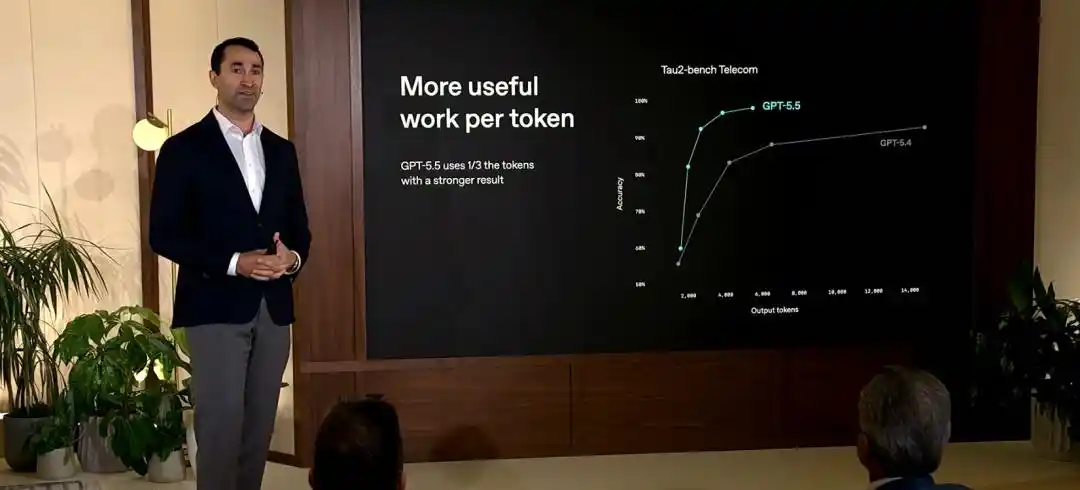
The one thing GPT-5.5 hates most is wasting tokens.

Using Codex with GPT-5.5 achieves the same quality output using only one-third of the tokens.

In short, on the path to catching up with Claude Code, Codex is making 'more intelligence with fewer tokens' its new guiding principle.
Undeniably, the AI programming field is now a duopoly.

One represents the strongest coding capability, the other the strongest productization capability.

But if we look further ahead, what Claude Code and Codex are competing for is no longer just the programming tools market.

As more and more ordinary people start using Agents as daily work partners, the entry point is actually the most important thing.

And this precisely presents a new opportunity for Chinese players—because in the Agent era, victory may not solely depend on model capability, but also on scenario, ecosystem, application connectivity, and understanding of local enterprise workflows.

In fact, major Chinese tech companies have already entered the field.

Among them, some are targeting developer entry points, some enterprise internal office entry points, and others full-process intelligent Agent platforms.

But regardless of the path, the goal is largely consistent—seize the core entry point of the Agent era.

Everyone understands clearly that how to leverage the time window of local scenarios to establish real competitive barriers at the Agent infrastructure level is the true urgent task.

So, next, let's see who will be the first to break through, running out China's versions of Claude Code and Codex?

And more crucially, who will become the new super entry point in China for the Agent era?

One More Thing

Returning to this merger event.

Considering Codex's current development momentum and the industry environment, I'm inclined to make a bold statement:

Rather than continuing to call the merged application ChatGPT, it would be better to directly call it Codex.

Think about it: ChatGPT sounds like an old relic from the 'Chat' era, but OpenAI's current bet is precisely no longer on Chat.

The people managing the product are from Codex, the internal memo mentions an agentic platform, the fastest-growing scenarios are execution-oriented, and none of the new features are related to chatting.

Is 'ChatGPT' usable? Yes. But is it accurate? No.

Of course, OpenAI likely won't rename it. After all, the three letters 'ChatGPT' have become synonymous with AI, brand assets of immeasurable value.

But not changing the name doesn't mean the essence hasn't changed.

Perhaps soon, when you open ChatGPT, what greets you won't be a dialog box waiting for your question, but an Agent that has already finished the work for you.

By then, whether it's 'Chat' or not will no longer be important.

In other words, ChatGPT might just be a spiritual symbol in the future...

References:

[1]https://www.techmeme.com/260602/p14#a260602p14

[2]https://openai.com/index/codex-for-every-role-tool-workflow/

[3]https://www.theinformation.com/articles/inside-openais-decision-combine-codex-chatgpt

This article is from the WeChat public account 'QbitAI', author: Focus on Frontier Technology

Domande pertinenti

QWhat is the main announcement made by OpenAI in the article?

AOpenAI announced at its 'Intelligence at Work' event that Codex will be integrated into the ChatGPT app within the coming weeks.

QWhat is the primary strategic shift indicated by the integration of Codex into ChatGPT?

AThe integration signals a strategic shift from a focus on conversational AI (Chat) towards an agentic platform capable of executing tasks (Action/Agent).

QWhich competitor's product is cited as the primary reason for OpenAI's accelerated development of Codex?

AThe article states that the development of Codex was primarily accelerated in response to the success of Anthropic's product, Claude Code.

QWhat new functionality does the 'Annotations' update to Codex provide?

AThe 'Annotations' feature allows users to directly edit or comment on parts of a document (like code or text) without regenerating the entire content, extending this capability from code to documents, spreadsheets, and presentations.

QAccording to the author, why might the combined app not be accurately named 'ChatGPT' in the future?

AThe author suggests that since the core focus and capabilities are shifting from chat to task execution via agents, the name 'ChatGPT' no longer accurately represents the product's primary function, though the brand name will likely be retained for its value.

Letture associate

Claude Code Introduces Dynamic Workflows: Enabling AI to Form Teams and Collaborate

Claude Code introduces dynamic workflows, enabling AI to coordinate teams of specialized agents for complex tasks. This transforms Claude from a code assistant into a programmable workbench. Workflows address key limitations of single-agent systems: agentic laziness (premature task completion), self-preferential bias (favoring own outputs), and goal drift (losing sight of original objectives). The system allows Claude to dynamically create execution frameworks using JavaScript. It can split tasks, dispatch parallel agents for isolated work (e.g., in separate worktrees), implement adversarial validation, run tournaments, and synthesize results. This multi-agent approach is valuable for tasks requiring deep research, factual verification, code migration, root cause analysis, large-scale triage, and qualitative sorting. Key patterns include: classify-and-route, fan-out-and-synthesize, adversarial verification, generate-and-filter, tournaments, and loop-until-done. While token usage is higher, workflows excel where tasks resemble programming—needing problem decomposition, isolated context, hypothesis testing, and handling many details. They extend Claude Code's utility beyond technical work to areas like business plan review, resume screening, and naming brainstorm. The feature is not a universal solution but points to a future where AI tool competitiveness depends on organizing reliable, reusable, and auditable execution flows for complex goals.

marsbit34 min fa

Claude Code Introduces Dynamic Workflows: Enabling AI to Form Teams and Collaborate

marsbit34 min fa

Hyperliquid, Wall Street's 24/7 Trading Convenience Store

Hyperliquid: The 24/7 Trading "Convenience Store" for Wall Street Hyperliquid, a decentralized cryptocurrency exchange, has become a go-to platform for Wall Street traders seeking to trade around the clock, especially during traditional market closures. Founded by Jeff Yan, a former quantitative trader, after the FTX collapse, the platform emphasizes user self-custody of assets. It offers a wide range of perpetual contracts—leveraged derivatives with no expiry—on assets from Bitcoin and crude oil to the S&P 500 and even pre-IPO companies like SpaceX. A notable example involves a hedge fund trader who capitalized on geopolitical news over a weekend, securing a 243% return on oil derivatives before markets reopened. The platform, run by just 11 employees, generated approximately $800 million in revenue last year, and its native token HYPE has seen significant growth. Its rise highlights the merging of traditional finance and crypto. While U.S. users are currently restricted, recent CFTC rule changes could open access. The platform is known for its transparency, having processed $10 billion in liquidations during a market crash while competitors faltered. Regulators warn of the high risks and complexity of perpetual contracts for retail investors. Key to its appeal is a strong community culture, direct engagement with founders, and a simple interface. Despite rules against VPN use, it attracts global users with its permissionless approach. Hyperliquid plans to expand into prediction markets and options, aiming to eventually host all financial activity.

marsbit34 min fa

Hyperliquid, Wall Street's 24/7 Trading Convenience Store

marsbit34 min fa

Who Funds the Agents?

**Summary: Who Funds AI Agents?** OpenAI recently shut down a feature allowing AI agents to shop for users, highlighting the challenge of creating a secure and regulated environment for agent-driven transactions. While payment infrastructure exists, a crucial governance layer—defining spending limits, fraud detection, tax handling, and return policies—is largely missing. The potential is enormous: AI agents already processed $73M across 176M transactions last year, with McKinsey forecasting this could grow to $3-5T in global consumer commerce by 2030. The core competition isn't just about processing payments, which can be very cheap (especially with crypto-based settlement), but about controlling the rules that govern agent spending. Key players like Stripe and Coinbase are racing to dominate this governance layer. Stripe's acquisition of wallet provider Privy allows it to set spending policies, identity checks, and human-in-the-loop approvals directly at the wallet level. Similarly, Coinbase's stack, including its x402 protocol and AgentKit, embeds governance rules. This vertical integration across settlement, wallet, and governance layers is becoming the dominant strategy. Control over the governance layer is where significant future value lies. If agents handle trillions in transactions, even a small fee for managing compliance, fraud prevention, and policy enforcement could generate billions in annual revenue. The companies that successfully integrate across the payment stack will capture value from idle agent balances, transaction fees, and governance services, positioning themselves as the foundational banks of the AI agent economy.

marsbit1 h fa

Who Funds the Agents?

marsbit1 h fa

Trading

Spot
Futures

Articoli Popolari

Cosa è $S$

Comprendere SPERO: Una Panoramica Completa Introduzione a SPERO Mentre il panorama dell'innovazione continua a evolversi, l'emergere delle tecnologie web3 e dei progetti di criptovaluta gioca un ruolo fondamentale nel plasmare il futuro digitale. Un progetto che ha attirato l'attenzione in questo campo dinamico è SPERO, denotato come SPERO,$$s$. Questo articolo mira a raccogliere e presentare informazioni dettagliate su SPERO, per aiutare gli appassionati e gli investitori a comprendere le sue basi, obiettivi e innovazioni nei domini web3 e crypto. Che cos'è SPERO,$$s$? SPERO,$$s$ è un progetto unico all'interno dello spazio crypto che cerca di sfruttare i principi della decentralizzazione e della tecnologia blockchain per creare un ecosistema che promuove l'impegno, l'utilità e l'inclusione finanziaria. Il progetto è progettato per facilitare interazioni peer-to-peer in modi nuovi, fornendo agli utenti soluzioni e servizi finanziari innovativi. Al suo interno, SPERO,$$s$ mira a responsabilizzare gli individui fornendo strumenti e piattaforme che migliorano l'esperienza dell'utente nello spazio delle criptovalute. Questo include la possibilità di metodi di transazione più flessibili, la promozione di iniziative guidate dalla comunità e la creazione di percorsi per opportunità finanziarie attraverso applicazioni decentralizzate (dApps). La visione sottostante di SPERO,$$s$ ruota attorno all'inclusività, cercando di colmare le lacune all'interno della finanza tradizionale mentre sfrutta i vantaggi della tecnologia blockchain. Chi è il Creatore di SPERO,$$s$? L'identità del creatore di SPERO,$$s$ rimane piuttosto oscura, poiché ci sono risorse pubblicamente disponibili limitate che forniscono informazioni dettagliate sul suo fondatore o fondatori. Questa mancanza di trasparenza può derivare dall'impegno del progetto per la decentralizzazione—un ethos che molti progetti web3 condividono, dando priorità ai contributi collettivi rispetto al riconoscimento individuale. Centrando le discussioni attorno alla comunità e ai suoi obiettivi collettivi, SPERO,$$s$ incarna l'essenza dell'empowerment senza mettere in evidenza individui specifici. Pertanto, comprendere l'etica e la missione di SPERO rimane più importante che identificare un creatore singolo. Chi sono gli Investitori di SPERO,$$s$? SPERO,$$s$ è supportato da una varietà di investitori che vanno dai capitalisti di rischio agli investitori angelici dedicati a promuovere l'innovazione nel settore crypto. Il focus di questi investitori generalmente si allinea con la missione di SPERO—dando priorità a progetti che promettono avanzamenti tecnologici sociali, inclusività finanziaria e governance decentralizzata. Queste fondazioni di investitori sono tipicamente interessate a progetti che non solo offrono prodotti innovativi, ma contribuiscono anche positivamente alla comunità blockchain e ai suoi ecosistemi. Il supporto di questi investitori rafforza SPERO,$$s$ come un concorrente degno di nota nel dominio in rapida evoluzione dei progetti crypto. Come Funziona SPERO,$$s$? SPERO,$$s$ impiega un framework multifunzionale che lo distingue dai progetti di criptovaluta convenzionali. Ecco alcune delle caratteristiche chiave che sottolineano la sua unicità e innovazione: Governance Decentralizzata: SPERO,$$s$ integra modelli di governance decentralizzati, responsabilizzando gli utenti a partecipare attivamente ai processi decisionali riguardanti il futuro del progetto. Questo approccio favorisce un senso di proprietà e responsabilità tra i membri della comunità. Utilità del Token: SPERO,$$s$ utilizza il proprio token di criptovaluta, progettato per servire varie funzioni all'interno dell'ecosistema. Questi token abilitano transazioni, premi e la facilitazione dei servizi offerti sulla piattaforma, migliorando l'impegno e l'utilità complessivi. Architettura Stratificata: L'architettura tecnica di SPERO,$$s$ supporta la modularità e la scalabilità, consentendo un'integrazione fluida di funzionalità e applicazioni aggiuntive man mano che il progetto evolve. Questa adattabilità è fondamentale per mantenere la rilevanza nel panorama crypto in continua evoluzione. Coinvolgimento della Comunità: Il progetto enfatizza iniziative guidate dalla comunità, impiegando meccanismi che incentivano la collaborazione e il feedback. Nutrendo una comunità forte, SPERO,$$s$ può affrontare meglio le esigenze degli utenti e adattarsi alle tendenze di mercato. Focus sull'Inclusione: Offrendo basse commissioni di transazione e interfacce user-friendly, SPERO,$$s$ mira ad attrarre una base utenti diversificata, inclusi individui che potrebbero non aver precedentemente interagito nello spazio crypto. Questo impegno per l'inclusione si allinea con la sua missione generale di empowerment attraverso l'accessibilità. Cronologia di SPERO,$$s$ Comprendere la storia di un progetto fornisce preziose intuizioni sulla sua traiettoria di sviluppo e sui traguardi. Di seguito è riportata una cronologia suggerita che mappa eventi significativi nell'evoluzione di SPERO,$$s$: Fase di Concettualizzazione e Ideazione: Le idee iniziali che formano la base di SPERO,$$s$ sono state concepite, allineandosi strettamente con i principi di decentralizzazione e focus sulla comunità all'interno dell'industria blockchain. Lancio del Whitepaper del Progetto: Dopo la fase concettuale, è stato rilasciato un whitepaper completo che dettaglia la visione, gli obiettivi e l'infrastruttura tecnologica di SPERO,$$s$ per suscitare interesse e feedback dalla comunità. Costruzione della Comunità e Prime Interazioni: Sono stati effettuati sforzi attivi di outreach per costruire una comunità di early adopters e potenziali investitori, facilitando discussioni attorno agli obiettivi del progetto e ottenendo supporto. Evento di Generazione del Token: SPERO,$$s$ ha condotto un evento di generazione del token (TGE) per distribuire i propri token nativi ai primi sostenitori e stabilire una liquidità iniziale all'interno dell'ecosistema. Lancio della Prima dApp: La prima applicazione decentralizzata (dApp) associata a SPERO,$$s$ è stata attivata, consentendo agli utenti di interagire con le funzionalità principali della piattaforma. Sviluppo Continuo e Partnership: Aggiornamenti e miglioramenti continui alle offerte del progetto, inclusi partnership strategiche con altri attori nello spazio blockchain, hanno plasmato SPERO,$$s$ in un concorrente competitivo e in evoluzione nel mercato crypto. Conclusione SPERO,$$s$ rappresenta una testimonianza del potenziale del web3 e delle criptovalute di rivoluzionare i sistemi finanziari e responsabilizzare gli individui. Con un impegno per la governance decentralizzata, il coinvolgimento della comunità e funzionalità progettate in modo innovativo, apre la strada verso un panorama finanziario più inclusivo. Come per qualsiasi investimento nello spazio crypto in rapida evoluzione, si incoraggiano potenziali investitori e utenti a ricercare approfonditamente e a impegnarsi in modo riflessivo con gli sviluppi in corso all'interno di SPERO,$$s$. Il progetto mostra lo spirito innovativo dell'industria crypto, invitando a ulteriori esplorazioni delle sue innumerevoli possibilità. Mentre il percorso di SPERO,$$s$ è ancora in fase di sviluppo, i suoi principi fondamentali potrebbero effettivamente influenzare il futuro di come interagiamo con la tecnologia, la finanza e tra di noi in ecosistemi digitali interconnessi.

75 Totale visualizzazioniPubblicato il 2024.12.17Aggiornato il 2024.12.17

Cosa è $S$

Cosa è AGENT S

Agent S: Il Futuro dell'Interazione Autonoma in Web3 Introduzione Nel panorama in continua evoluzione di Web3 e criptovalute, le innovazioni stanno costantemente ridefinendo il modo in cui gli individui interagiscono con le piattaforme digitali. Uno di questi progetti pionieristici, Agent S, promette di rivoluzionare l'interazione uomo-computer attraverso il suo framework agentico aperto. Aprendo la strada a interazioni autonome, Agent S mira a semplificare compiti complessi, offrendo applicazioni trasformative nell'intelligenza artificiale (AI). Questa esplorazione dettagliata approfondirà le complessità del progetto, le sue caratteristiche uniche e le implicazioni per il dominio delle criptovalute. Cos'è Agent S? Agent S si presenta come un innovativo framework agentico aperto, progettato specificamente per affrontare tre sfide fondamentali nell'automazione dei compiti informatici: Acquisizione di Conoscenze Specifiche del Dominio: Il framework apprende in modo intelligente da varie fonti di conoscenza esterne ed esperienze interne. Questo approccio duale gli consente di costruire un ricco repository di conoscenze specifiche del dominio, migliorando le sue prestazioni nell'esecuzione dei compiti. Pianificazione su Lungo Orizzonte di Compiti: Agent S impiega una pianificazione gerarchica potenziata dall'esperienza, un approccio strategico che facilita la suddivisione e l'esecuzione efficiente di compiti complessi. Questa caratteristica migliora significativamente la sua capacità di gestire più sottocompiti in modo efficiente ed efficace. Gestione di Interfacce Dinamiche e Non Uniformi: Il progetto introduce l'Interfaccia Agente-Computer (ACI), una soluzione innovativa che migliora l'interazione tra agenti e utenti. Utilizzando Modelli Linguistici Multimodali di Grandi Dimensioni (MLLM), Agent S può navigare e manipolare senza sforzo diverse interfacce grafiche utente. Attraverso queste caratteristiche pionieristiche, Agent S fornisce un framework robusto che affronta le complessità coinvolte nell'automazione dell'interazione umana con le macchine, preparando il terreno per innumerevoli applicazioni nell'AI e oltre. Chi è il Creatore di Agent S? Sebbene il concetto di Agent S sia fondamentalmente innovativo, informazioni specifiche sul suo creatore rimangono elusive. Il creatore è attualmente sconosciuto, il che evidenzia sia la fase embrionale del progetto sia la scelta strategica di mantenere i membri fondatori sotto anonimato. Indipendentemente dall'anonimato, l'attenzione rimane sulle capacità e sul potenziale del framework. Chi sono gli Investitori di Agent S? Poiché Agent S è relativamente nuovo nell'ecosistema crittografico, informazioni dettagliate riguardanti i suoi investitori e sostenitori finanziari non sono documentate esplicitamente. La mancanza di approfondimenti pubblicamente disponibili sulle fondazioni di investimento o sulle organizzazioni che supportano il progetto solleva interrogativi sulla sua struttura di finanziamento e sulla roadmap di sviluppo. Comprendere il supporto è cruciale per valutare la sostenibilità del progetto e il suo potenziale impatto sul mercato. Come Funziona Agent S? Al centro di Agent S si trova una tecnologia all'avanguardia che gli consente di funzionare efficacemente in contesti diversi. Il suo modello operativo è costruito attorno a diverse caratteristiche chiave: Interazione Uomo-Computer Simile a Quella Umana: Il framework offre una pianificazione AI avanzata, cercando di rendere le interazioni con i computer più intuitive. Mimando il comportamento umano nell'esecuzione dei compiti, promette di elevare le esperienze degli utenti. Memoria Narrativa: Utilizzata per sfruttare esperienze di alto livello, Agent S utilizza la memoria narrativa per tenere traccia delle storie dei compiti, migliorando così i suoi processi decisionali. Memoria Episodica: Questa caratteristica fornisce agli utenti una guida passo-passo, consentendo al framework di offrire supporto contestuale mentre i compiti si sviluppano. Supporto per OpenACI: Con la capacità di funzionare localmente, Agent S consente agli utenti di mantenere il controllo sulle proprie interazioni e flussi di lavoro, allineandosi con l'etica decentralizzata di Web3. Facile Integrazione con API Esterne: La sua versatilità e compatibilità con varie piattaforme AI garantiscono che Agent S possa adattarsi senza problemi agli ecosistemi tecnologici esistenti, rendendolo una scelta attraente per sviluppatori e organizzazioni. Queste funzionalità contribuiscono collettivamente alla posizione unica di Agent S all'interno dello spazio crittografico, poiché automatizza compiti complessi e multi-fase con un intervento umano minimo. Man mano che il progetto evolve, le sue potenziali applicazioni in Web3 potrebbero ridefinire il modo in cui si svolgono le interazioni digitali. Cronologia di Agent S Lo sviluppo e le tappe di Agent S possono essere riassunti in una cronologia che evidenzia i suoi eventi significativi: 27 Settembre 2024: Il concetto di Agent S è stato lanciato in un documento di ricerca completo intitolato “Un Framework Agentico Aperto che Usa i Computer Come un Umano”, mostrando le basi per il progetto. 10 Ottobre 2024: Il documento di ricerca è stato reso pubblicamente disponibile su arXiv, offrendo un'esplorazione approfondita del framework e della sua valutazione delle prestazioni basata sul benchmark OSWorld. 12 Ottobre 2024: È stata rilasciata una presentazione video, fornendo un'idea visiva delle capacità e delle caratteristiche di Agent S, coinvolgendo ulteriormente potenziali utenti e investitori. Questi indicatori nella cronologia non solo illustrano i progressi di Agent S, ma indicano anche il suo impegno per la trasparenza e il coinvolgimento della comunità. Punti Chiave su Agent S Man mano che il framework Agent S continua a evolversi, diversi attributi chiave si distinguono, sottolineando la sua natura innovativa e il potenziale: Framework Innovativo: Progettato per fornire un uso intuitivo dei computer simile all'interazione umana, Agent S porta un approccio nuovo all'automazione dei compiti. Interazione Autonoma: La capacità di interagire autonomamente con i computer attraverso GUI segna un passo avanti verso soluzioni informatiche più intelligenti ed efficienti. Automazione di Compiti Complessi: Con la sua metodologia robusta, può automatizzare compiti complessi e multi-fase, rendendo i processi più veloci e meno soggetti a errori. Miglioramento Continuo: I meccanismi di apprendimento consentono ad Agent S di migliorare dalle esperienze passate, migliorando continuamente le sue prestazioni e la sua efficacia. Versatilità: La sua adattabilità attraverso diversi ambienti operativi come OSWorld e WindowsAgentArena garantisce che possa servire un'ampia gamma di applicazioni. Man mano che Agent S si posiziona nel panorama di Web3 e delle criptovalute, il suo potenziale per migliorare le capacità di interazione e automatizzare i processi segna un significativo avanzamento nelle tecnologie AI. Attraverso il suo framework innovativo, Agent S esemplifica il futuro delle interazioni digitali, promettendo un'esperienza più fluida ed efficiente per gli utenti in vari settori. Conclusione Agent S rappresenta un audace passo avanti nell'unione tra AI e Web3, con la capacità di ridefinire il modo in cui interagiamo con la tecnologia. Sebbene sia ancora nelle sue fasi iniziali, le possibilità per la sua applicazione sono vaste e coinvolgenti. Attraverso il suo framework completo che affronta sfide critiche, Agent S mira a portare le interazioni autonome al centro dell'esperienza digitale. Man mano che ci addentriamo nei regni delle criptovalute e della decentralizzazione, progetti come Agent S giocheranno senza dubbio un ruolo cruciale nel plasmare il futuro della tecnologia e della collaborazione uomo-computer.

531 Totale visualizzazioniPubblicato il 2025.01.14Aggiornato il 2025.01.14

Cosa è AGENT S

Come comprare S

Benvenuto in HTX.com! Abbiamo reso l'acquisto di Sonic (S) semplice e conveniente. Segui la nostra guida passo passo per intraprendere il tuo viaggio nel mondo delle criptovalute.Step 1: Crea il tuo Account HTXUsa la tua email o numero di telefono per registrarti il tuo account gratuito su HTX. Vivi un'esperienza facile e sblocca tutte le funzionalità,Crea il mio accountStep 2: Vai in Acquista crypto e seleziona il tuo metodo di pagamentoCarta di credito/debito: utilizza la tua Visa o Mastercard per acquistare immediatamente SonicS.Bilancio: Usa i fondi dal bilancio del tuo account HTX per fare trading senza problemi.Terze parti: abbiamo aggiunto metodi di pagamento molto utilizzati come Google Pay e Apple Pay per maggiore comodità.P2P: Fai trading direttamente con altri utenti HTX.Over-the-Counter (OTC): Offriamo servizi su misura e tassi di cambio competitivi per i trader.Step 3: Conserva Sonic (S)Dopo aver acquistato Sonic (S), conserva nel tuo account HTX. In alternativa, puoi inviare tramite trasferimento blockchain o scambiare per altre criptovalute.Step 4: Scambia Sonic (S)Scambia facilmente Sonic (S) nel mercato spot di HTX. Accedi al tuo account, seleziona la tua coppia di trading, esegui le tue operazioni e monitora in tempo reale. Offriamo un'esperienza user-friendly sia per chi ha appena iniziato che per i trader più esperti.

1.0k Totale visualizzazioniPubblicato il 2025.01.15Aggiornato il 2026.06.02

Come comprare S

Discussioni

Benvenuto nella Community HTX. Qui puoi rimanere informato sugli ultimi sviluppi della piattaforma e accedere ad approfondimenti esperti sul mercato. Le opinioni degli utenti sul prezzo di S S sono presentate come di seguito.

活动图片