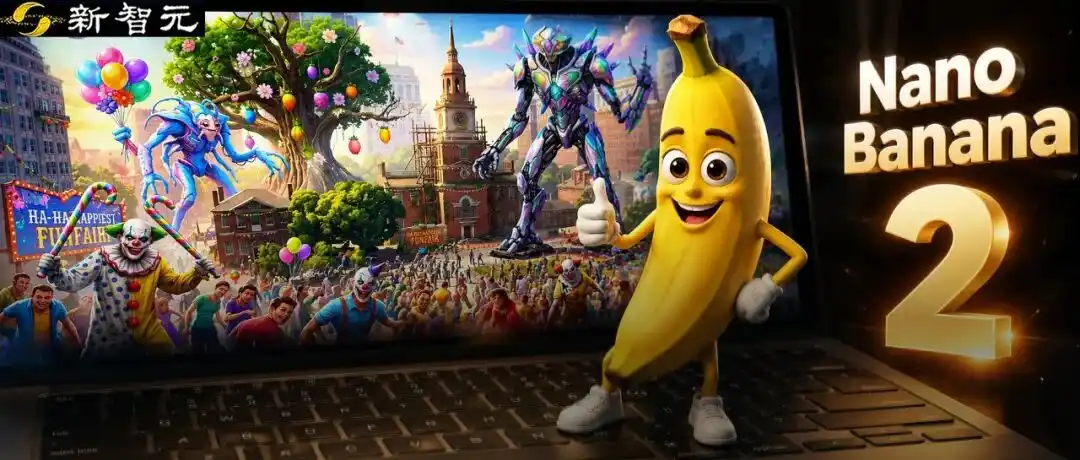
Cyber 'Words as Law' has reached a whole new level!
Yesterday, Google officially integrated the latest image generation model, Nano Banana 2, into the web version of Google Earth.
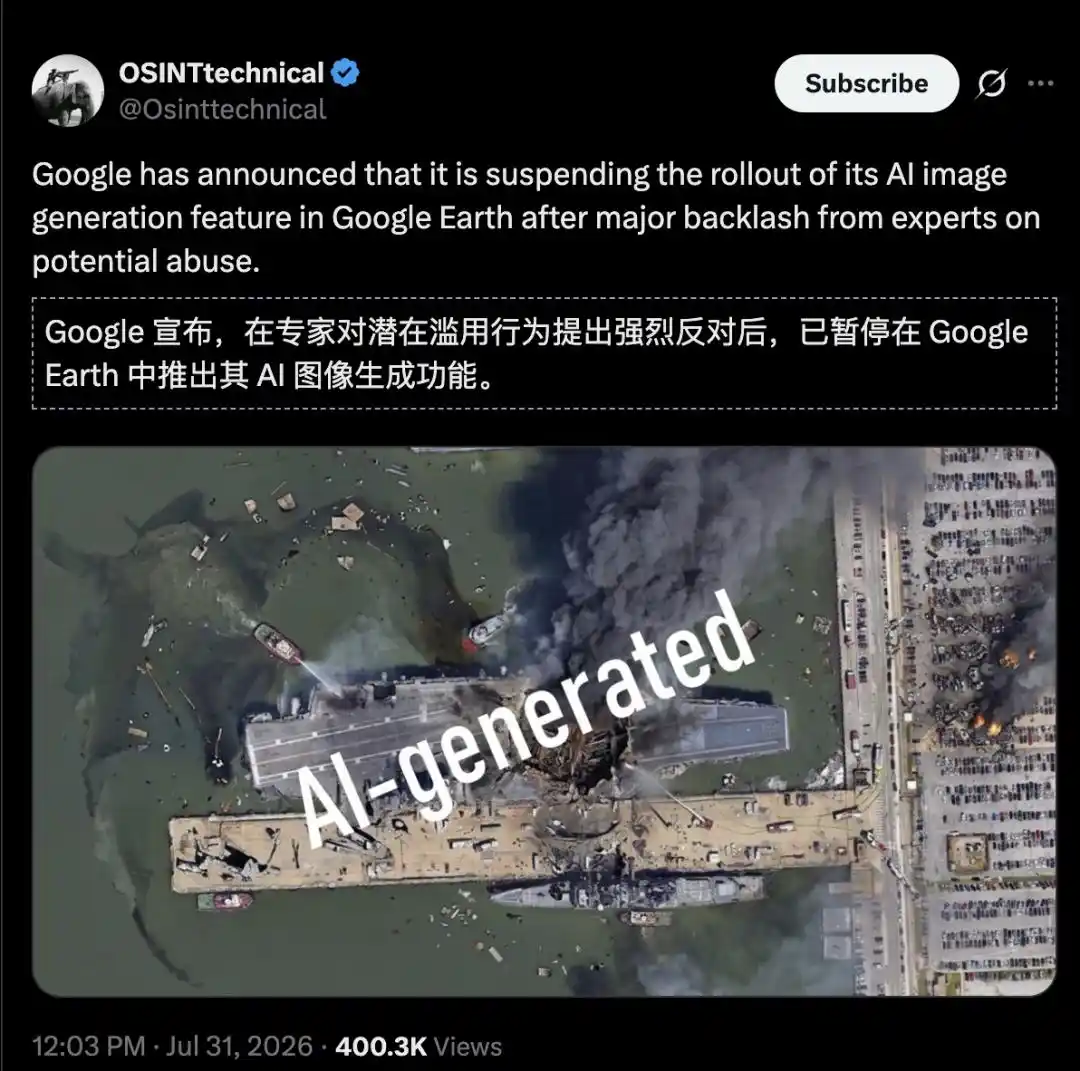
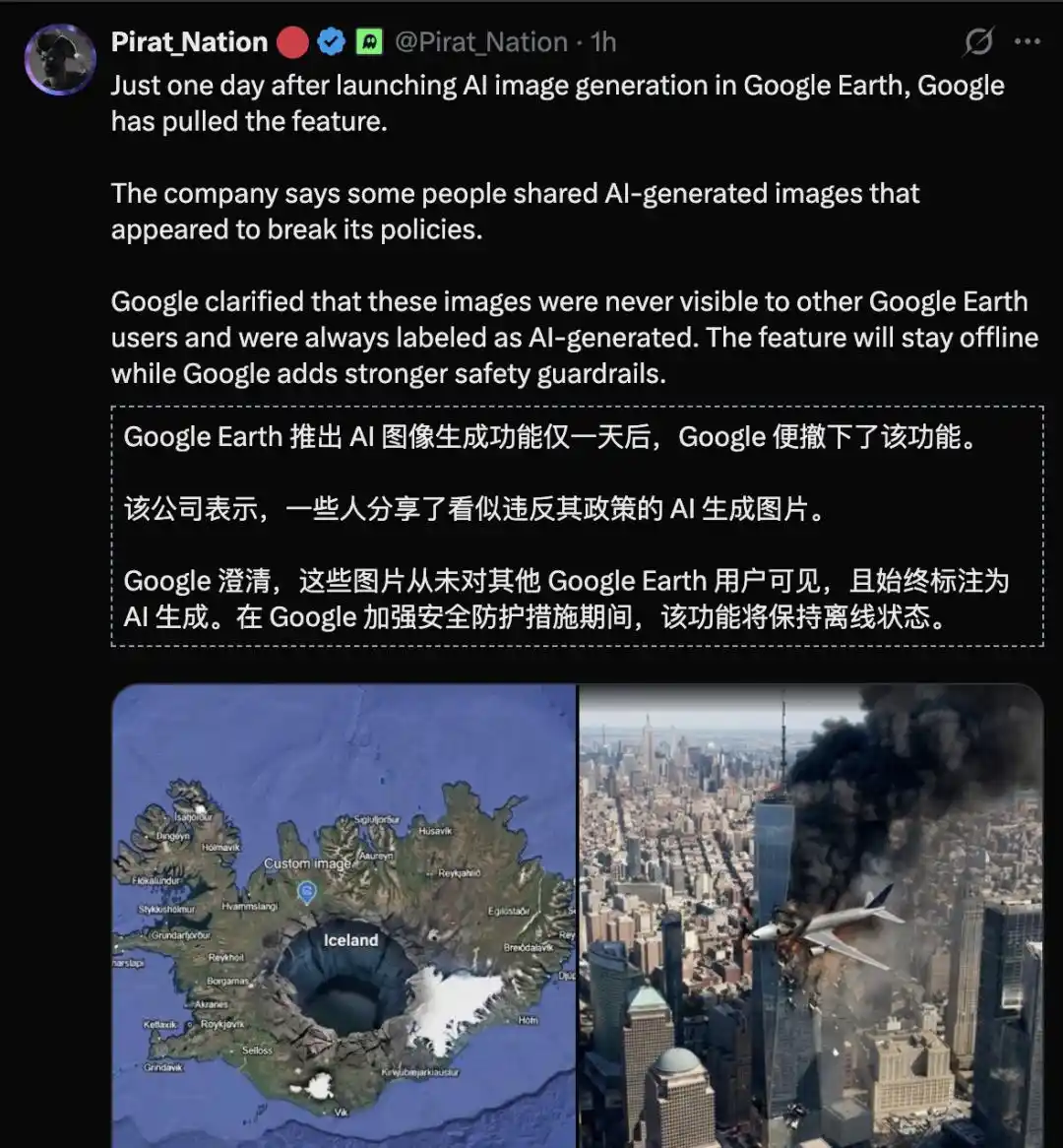
Who would have thought that overnight, the new feature got out of hand, and Google urgently pulled it back!
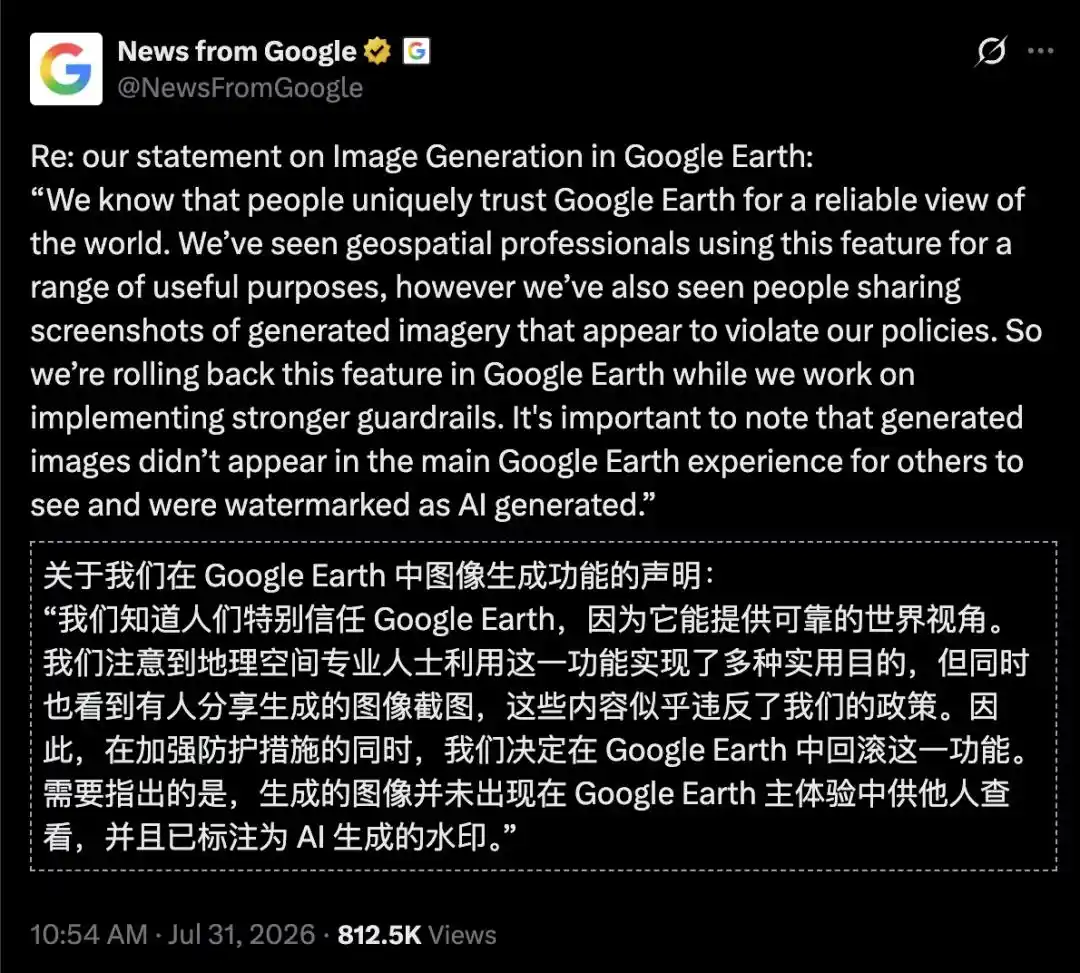
As a result, the effects were too realistic. After strong opposition from experts, Google urgently withdrew the new feature, and then re-released it after "strengthening protective measures."
New Ways to Play with Nano Banana 2: A Visual Feast for Netizens
You open Google Earth in your browser and skillfully zoom down to the old street where you played as a child. You don't open complex Photoshop, nor do you copy a screenshot to another AI chat tool.
You simply click the brand-new, slightly glowing 'Create image' button in the upper right corner.
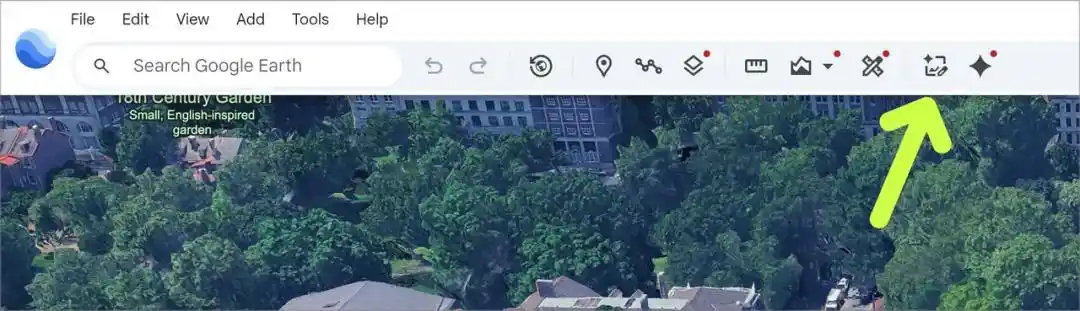
First, look at a few examples from Google.
Turn Back Time, Recreate History
Helping students not just read about history, but truly "see" the past.
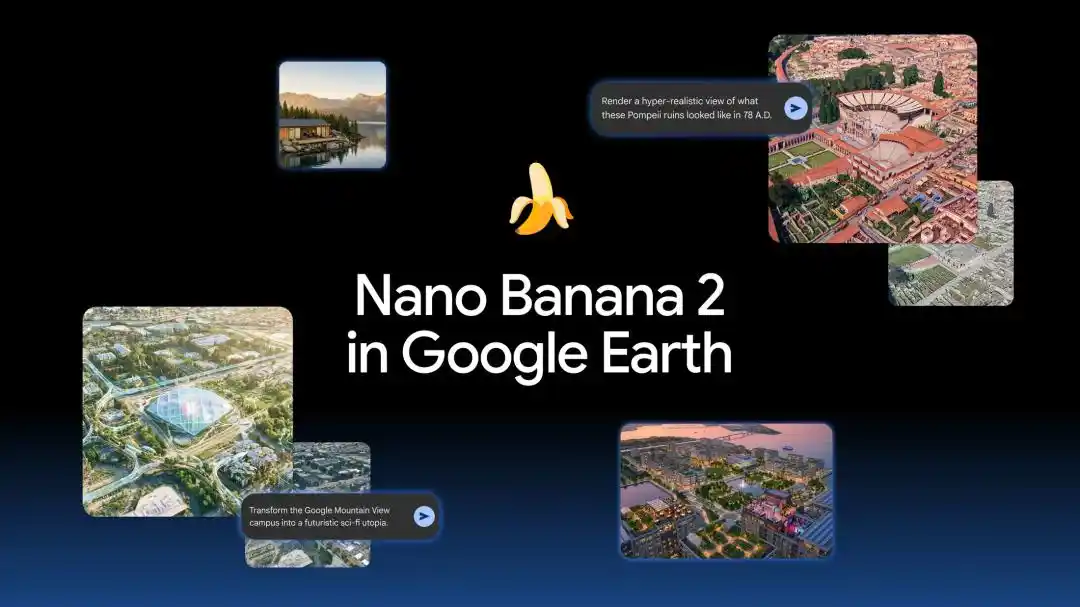
Teachers can display a historical site in the classroom, then input: "Generate a photorealistic image showing the original appearance of the Pompeii archaeological site in AD 78."
The modern ruins instantly transform into a bustling, colorful ancient Roman street scene, allowing students to visually see the world from two thousand years ago.
Virtual Tour Guide: Explore and Learn Deeply
Create customized infographics to gain a deeper understanding of a place without leaving Google Earth.
Input: "Create an easy-to-understand infographic about the Statue of Liberty, labeling key historical facts."
In the background, Gemini retrieves relevant historical information, and Nano Banana generates the corresponding visual chart within seconds.
'Dream City Transformer': Create Professional Real Estate Planning Proposals
Presenting real estate projects becomes much simpler when clients can see the final outcome directly.
Architects and urban planners can now present design plans with a single sentence: "Reimagine this vacant lot in Tokyo as a vibrant shopping and commercial district, featuring open public spaces."
The originally barren concrete lot is replaced with a high-quality 3D rendered modern urban oasis, helping clients see future possibilities.
Visualize Project Results Before Construction Begins
Whether it's a dream backyard studio or a lakeside home, it's often hard to imagine what it will look like when completed.
Now, you can quickly turn it into a reality preview.
Zoom in on an empty plot of land, then input: "Add a modern lakeside cabin built using locally sourced sustainable materials."
The system generates a photorealistic rendering, perfectly integrating the future home into the actual terrain.
Give Your Favorite Place a Future Makeover
Sometimes, letting your imagination run wild is its own kind of fun.
If you want to see what a place might look like a hundred years from now, input: "Transform the Google Mountain View campus into a futuristic sci-fi utopia, with glowing walkways, glass eco-domes, flying transit pods, and trees growing around the buildings."
Soon, the entire area gradually morphs into a cinematic cyberpunk metropolis.
Users Exclaim 'Oh My God'
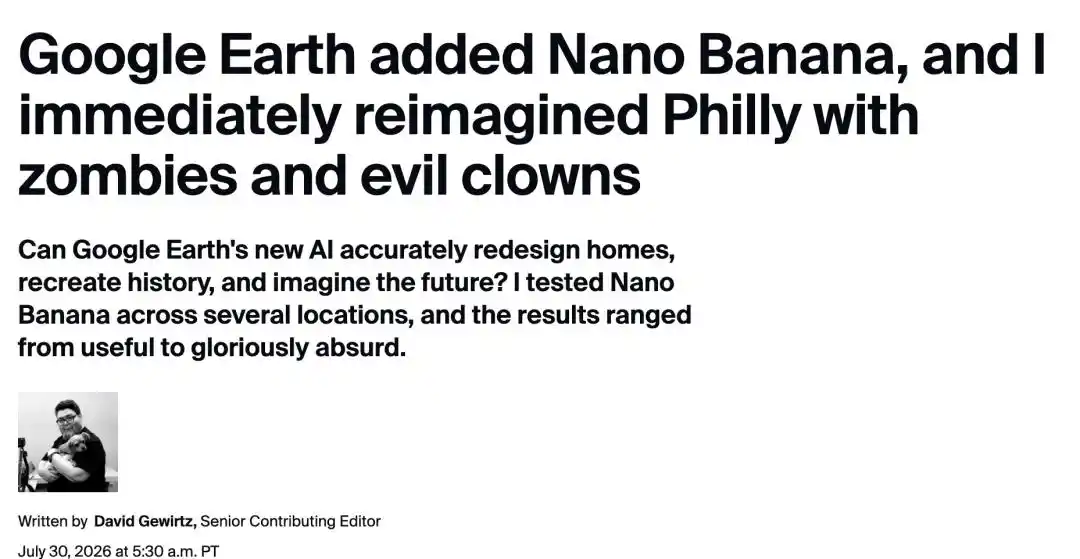
Technology editor David Gewirtz once spent hours exploring on Google Earth, captivated by its ability to travel the world without leaving home. Street View, though somewhat intrusive, also fascinated him, and still does to this day.
Upon hearing the news, he immediately tested the new feature, resulting in "a lot of laughs."
Independence Hall is a U.S. National Historic Landmark and a UNESCO World Heritage Site. On July 4, 1776, the Declaration of Independence was adopted there.
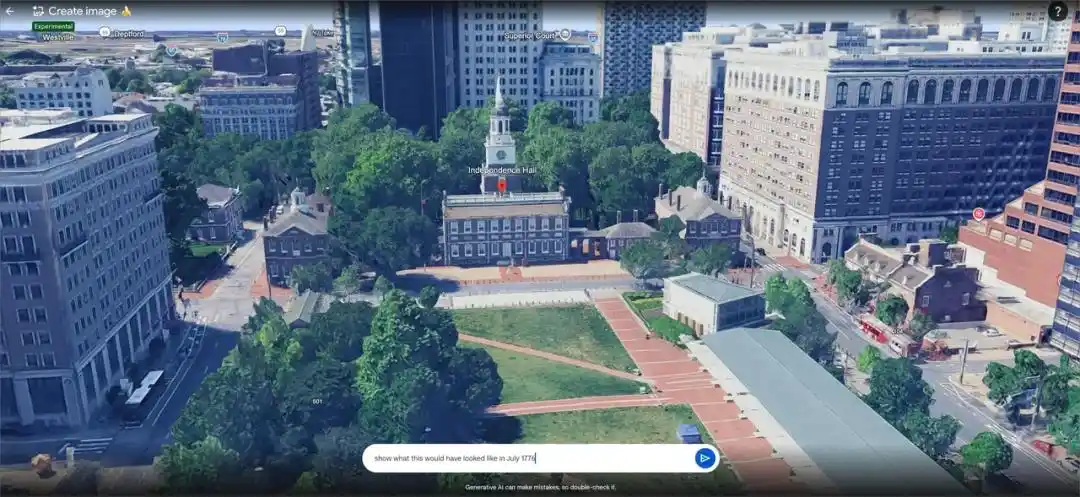
Undoubtedly, this holds significant historical and cultural value for the United States.
But David Gewirtz had a wild idea: "Imagine this in a post-apocalyptic dystopian future, 500 years from now."
With that one prompt, the former hall was directly transformed into a "post-apocalyptic ruin."
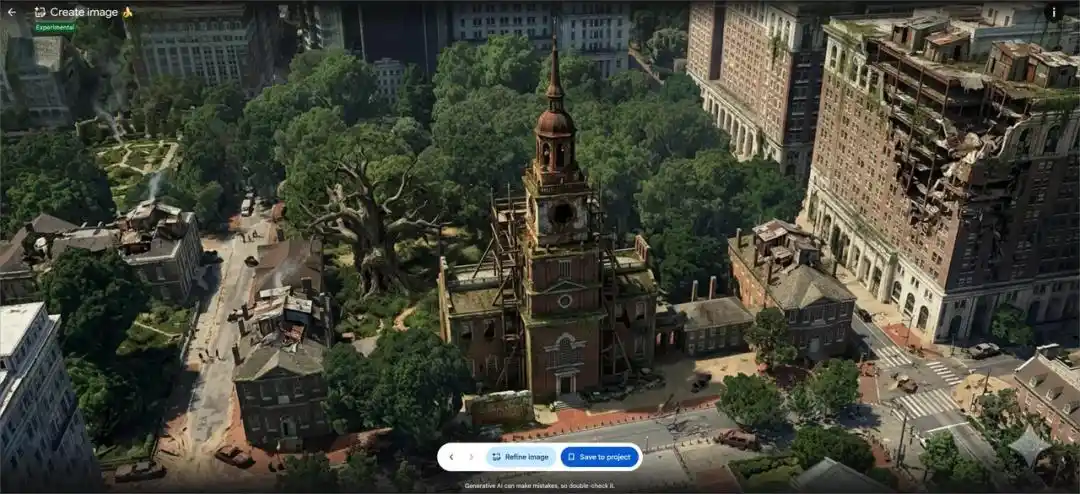
One of Philadelphia's most iconic traditions is the annual Mummers Parade, the oldest folk parade in the U.S., a New Year's tradition since 1901.
This got him thinking: Philadelphia in the future would need a post-apocalyptic dystopian Mummers Parade.
So, he added the prompt, "Now, have it overrun by zombies, evil clowns, and giant alien mechs."
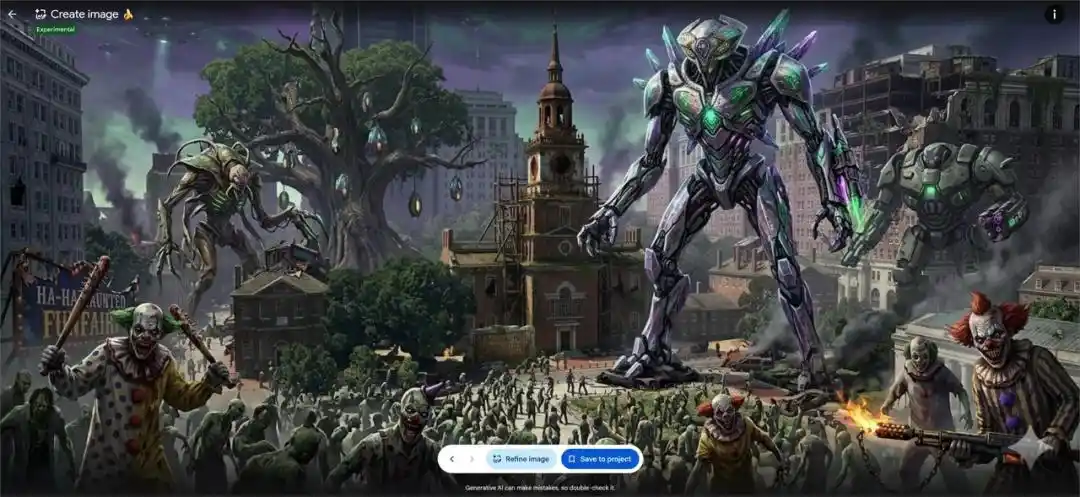
Zombies, evil clowns, and giant alien mechs, oh my!
The zombies, evil clowns, and giant alien mechs seemed a bit tense, the atmosphere off. But one more prompt would make it perfect. He told the AI, "Make them all cheerful."
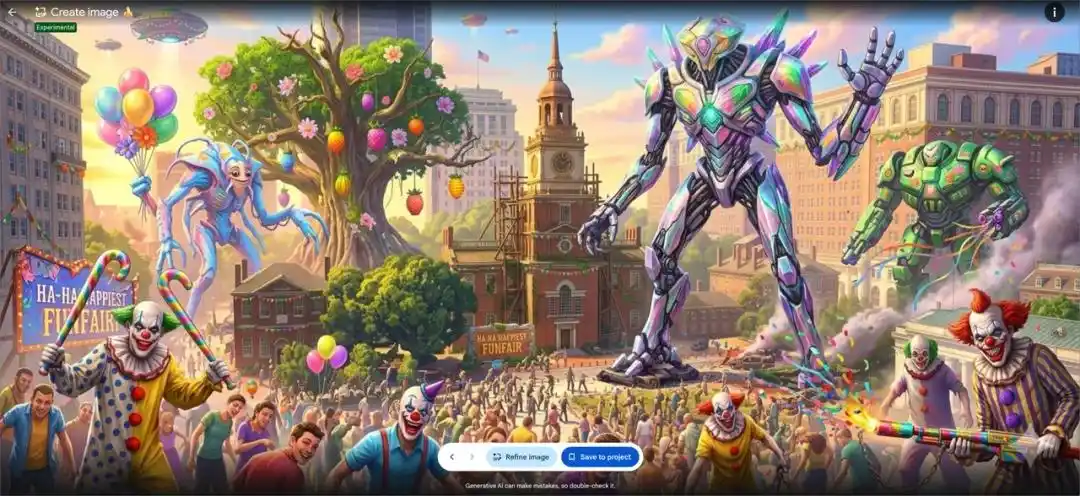
Now, he thinks: "This is a believable future Philadelphia, especially on January 1st."
Note, he also cautioned: "While this can lead to some fun experiments, it's clearly not yet a reliable and practical tool."
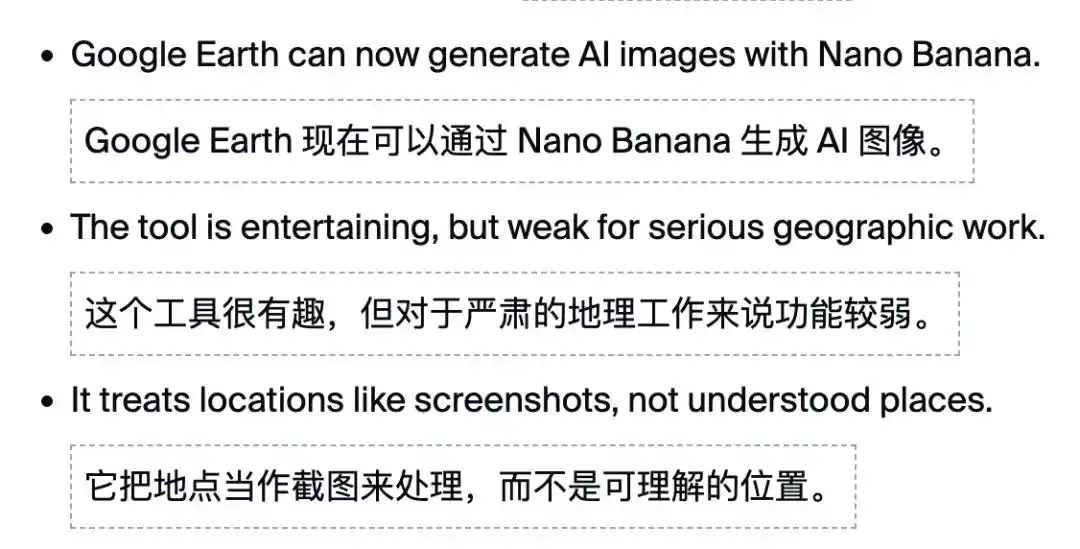
Currently, the new feature does not support direct use in "Street View" at all, directly reducing both practicality and fun, which is regrettable.
Some media outlets have mercilessly criticized it: For professional developers or architects, this kind of painting that cannot guarantee spatial geometric rigor and is purely stitched together by probability is nothing more than a refined "AI Slop."
It was taken down by netizens in less than a day! Google urgently pulls back the new feature!
Technical Decryption
From "Creating from Nothing" to "Geospatial Grounding"
In the early logic of AI drawing, AI played with pixels like a game.
You give it a prompt, and it pieces together a picture from a vast probability distribution. It doesn't care about gravity, let alone whether the building in the image actually exists in reality.
But Nano Banana 2, integrated into Google Earth, has completely changed the game. This is a brand-new attempt called "Geospatial Grounding."
At the technical core, it relies on Gemini's powerful multimodal and retrieval-augmented (Search Grounding) capabilities:
First, real-time capture of the physical base map.
The underlying input Nano Banana 2 receives is not just an ordinary top-down view; it's a composite constraint matrix of "the current viewport's satellite/aerial original image + 3D elevation and terrain mesh + spatial camera parameters."
It is speculated that its generation tasks are strictly anchored:
Terrain cannot be altered: The folds of mountains, the baseline of lake edges, the precise location and scale of building foundations must strictly conform to geographical facts.
Perspective and spatial relationships must match: Newly generated buildings, vegetation, or scene elements must be nested into the real 3D terrain and existing structures, not float in mid-air.
Subject consistency: Nano Banana 2 supports powerful consistency rendering for up to 5 main subjects and 14 objects, ensuring new cities or communities don't suffer obvious visual collapse when switching perspectives.
This is conditioned generation under real geographic constraints. The cost is that each image in Google Earth takes up to two minutes to generate.
Second, real-time retrieval from a world knowledge base.
Nano Banana 2 is not just an image generator; it's connected to Google's vast search engine and geographic knowledge base. When you try to "restore history" or "label landmarks," it actively retrieves the cultural background and geographic knowledge of that landmark.
For example, a user requests to generate a "Statue of Liberty infographic."
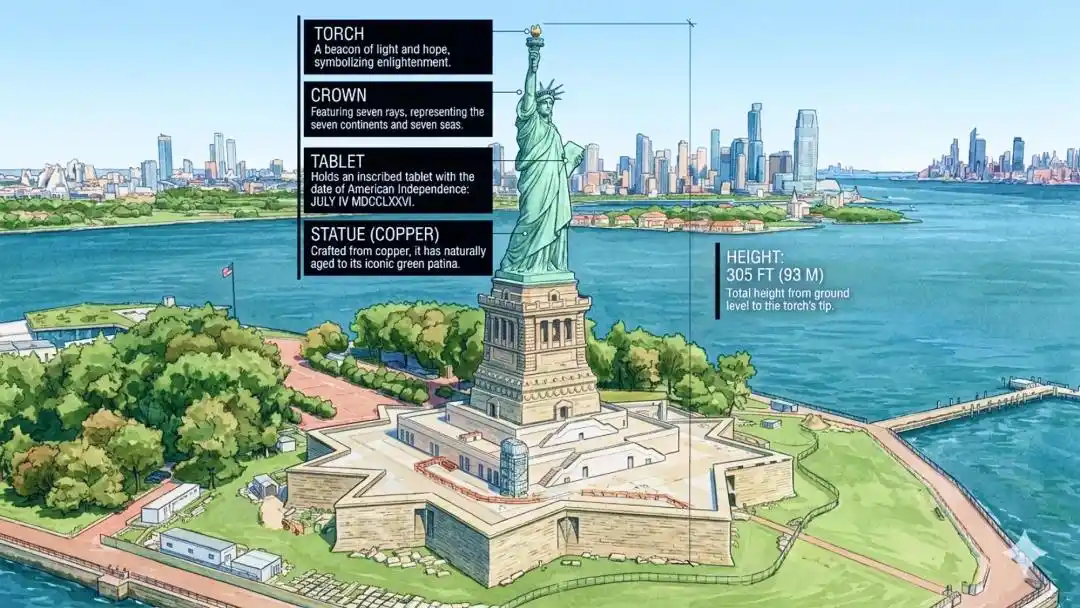
The model not only draws the image but also calls upon Gemini's world knowledge base to automatically populate: year of construction, materials used, architectural dimensions, historical information, etc.
However, whether the retrieved information is completely accurate is another issue that requires careful consideration.
The fact that AI can generate seemingly professional infographics does not mean all facts are absolutely reliable.
Third, high-fidelity detail and precise text.
Nano Banana 2 supports high-fidelity 2K or even 4K image output and possesses powerful text rendering capabilities. This means you can directly see clearly laid-out, non-garbled text signs or informational explanations within the generated scenes. You can even "hand-draw" an infographic with real historical facts directly onto a landmark.
At the operational level, Google has compressed this complex technology to the extreme: During generation, you can go forward/backward to see changes, click "Refine image" to add prompts for further iteration, and the interface provides an intuitive before/after experience.
This directly eliminates the cumbersome workflow for the average person of "screenshot - export - input to another AI - re-paste," enabling the seamless, native fusion of "creativity" and "real-world geography."
After you're satisfied, click "Save to Project." The generated image is permanently pinned to your personal project layer as a Placemark, preserving the camera view. Anyone who clicks on this coordinate can see your "alternate possibility."
Will the Virtual Earth Help Google Gemini Break Through the Crowd?
The significance of Nano Banana entering Google Earth likely goes far beyond a new feature.
The AI image generator track is in a state of intense competition.
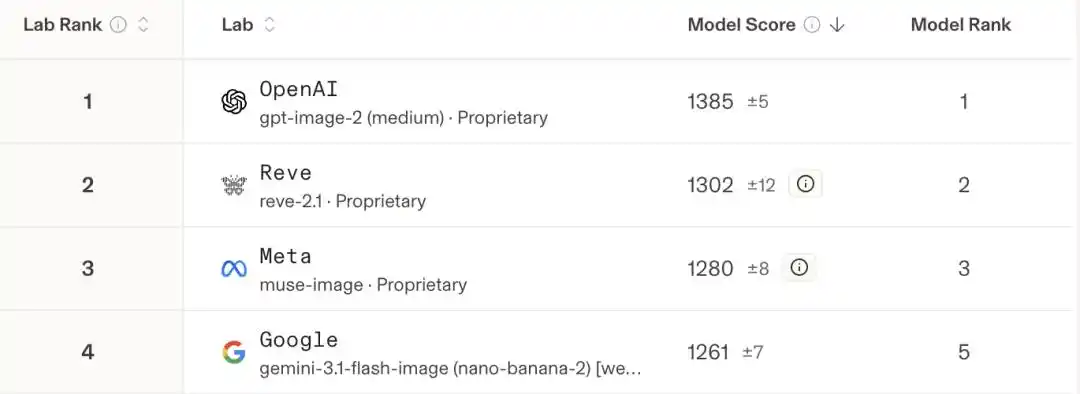
OpenAI's GPT-image-2 leads the Arena rankings, while Nano Banana 2 Lite ranks fifth. Adobe Firefly, Midjourney, and others are all vying for the same pool of users.
Google has taken a completely different path.
Its ace card isn't the algorithm; it's the data. Two decades of accumulated satellite imagery, aerial photos, plus 3D terrain modeling covering hundreds of cities in over 40 countries—this proprietary spatial dataset is a moat that any purely text-based model will never reach.
By grafting Nano Banana 2 onto this dataset, Google has created a brand-new category: AI visualization based on real geographic coordinates, possessing spatial credibility.
It's not competing with Midjourney over who can paint more beautifully, but over who can paint more "realistically"—real enough to have latitude, longitude, altitude, and physical perspective.
Kevin Kelly once predicted that the physical world would have a strictly corresponding "Mirrorworld" in the digital world. Today, Google is using Nano Banana 2 to lightly apply a layer of "digital skin that can be arbitrarily rewritten by prompts" onto this mirror world.
Google has directly shifted the battlefield from "painting beautifully" to "transforming the Earth." In this war, others don't even have a ticket to get in.
References:
https://blog.google/products-and-platforms/products/earth/nano-banana-google-earth-image-generation/
https://www.zdnet.com/article/google-earth-added-nano-banana-and-i-immediately-reimagined-philly-with-zombies-and-evil-clowns/
https://www.techtimes.com/articles/322272/20260730/google-earth-gets-ai-image-generator-grounded-satellite-data-web-only.htm
https://x.com/googleearth/status/2082818165503902043
https://x.com/Google/status/2082834786310123787
Editor: David
This article is from the WeChat public account "New Zhiyuan", author: ASI启示录