Trading Moment: South Korean Stocks Fall into Technical Bear Market, Hong Kong Tech Leads Strongly, BTC Pulls Back Slightly

marsbitPubblicato 2026-07-08Pubblicato ultima volta 2026-07-08

Introduzione

Market Roundup: Tech Leads in Hong Kong, South Korea Enters Technical Bear Market, BTC Dips Global markets displayed divergent trends. Hong Kong's Hang Seng Tech Index surged over 5%, led by major tech stocks like Alibaba (+12%) and Xiaomi (+10%), as southbound capital inflows exceeded HK$11 billion. In contrast, South Korea's KOSPI tumbled 5.35%, entering a technical bear market (down >20% from June peak), heavily dragged by chip giants Samsung and SK Hynix. Japan's Nikkei 225 fell 2.11% for a third day, pressured by tech and rising bond yields. Bitcoin saw a slight pullback after its recent rebound, testing key support near $63,000. Analysts note the rally appears corrective, driven by macro factors rather than a structural shift. Sustained ETF inflows are seen as crucial for a trend reversal. Key near-term levels are support at $63,000 and resistance at $64,600-$65,000. U.S. spot Bitcoin ETFs recorded a third consecutive day of net inflows (+$21.44M). In mainland China, A-share indices closed lower, though semiconductor and computing power sectors saw gains. Market focus now turns to upcoming U.S. Fed minutes, Chinese macroeconomic data, and global liquidity conditions, which will be pivotal for near-term direction across these asset classes.

Every Monday, Wednesday, and Friday, we focus on the crypto market, Japan, South Korea, A-shares, and Hong Kong stocks, reviewing the market with data and seizing opportunities through trends. Presented by PANews.

BTC Tests 200-week Moving Average After Days of Rebound
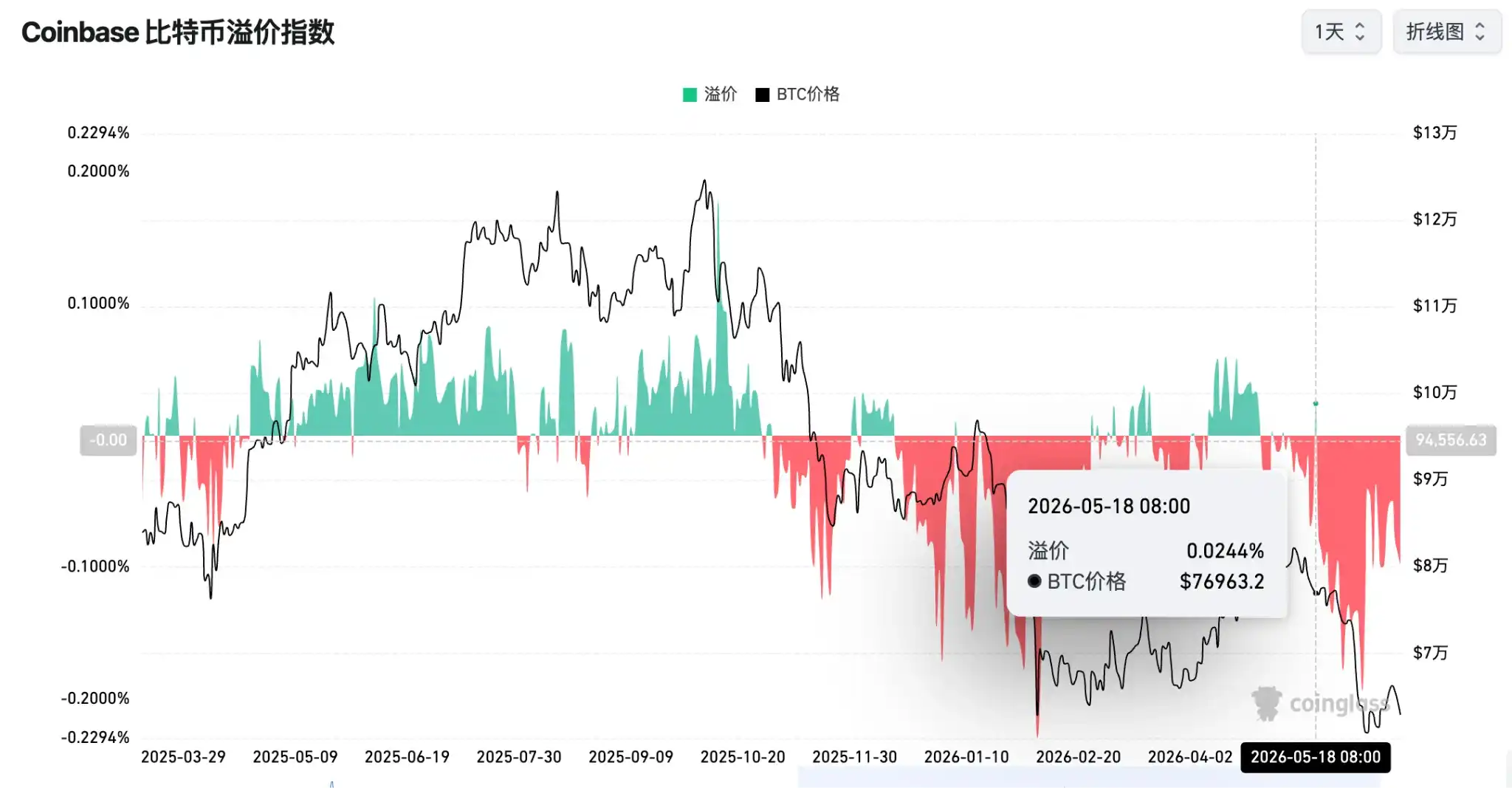
Bitcoin has entered a period of consolidation and repair after rebounding over 11%, with market sentiment easing from extreme panic but still facing tests of support. The Coinbase Bitcoin Premium Index has been in negative premium for 50 consecutive days, setting a record for the longest duration, reflecting significant selling pressure in the U.S. market and an overall risk appetite that has not fully recovered. Market maker Wintermute noted that this rebound is more of a "textbook repair" driven by macro easing, a dovish Fed tone, and institutional adoption benefits for Ethereum, rather than a structural shift. Short-term prices may rise slightly, but continued capital inflows are needed to confirm the trend.

On-chain data also fails to give a clear optimistic signal. A CryptoQuant analyst indicated that the Bitcoin NUPL indicator remains at 0.158. Although close to levels seen in early 2023, the 30-day and 100-day EMAs have not yet entered the negative territory typical of historical bear market bottoms, suggesting there may be further downside risks in this cycle. The Galaxy research team believes Bitcoin is gradually entering a value zone with limited downside, but prices could still fall back to the $40,000-$46,000 range if global liquidity tightens.

From a technical perspective, several traders are watching the support level near $63,000. If it holds steadily, there is potential to challenge the resistance zone around $64,600 to $65,000 again. If it falls below $63,000, the market may retest support near $60,000 or even $58,000. Short-term movements will remain highly dependent on capital flows and macro policy changes.

Looking ahead, Federal Reserve policy will be the core variable affecting the trend of digital assets. The market will focus on the latest meeting minutes, the U.S. Dollar Index, Treasury yields, and ETF fund flow changes. If institutional funds resume net inflows and U.S. market risk appetite improves, Bitcoin may continue its challenge towards $65,000 or higher. Conversely, the $63,000 support level will face a test.

Key Points Today:

  • Bitcoin L2 network Botanix will gradually shut down, users need to withdraw assets by July 9.

  • Base will activate the B20 token standard on the mainnet on July 9.

  • Movement (MOVE) will unlock approximately 165 million tokens worth about $2 million on July 9.

  • Upbit 24-hour trading volume ranking: XRP, SLX, BTC, ETH, AI.

  • Bitcoin Spot ETF: +$21.435 million, net inflows for 3 consecutive days.

  • Ethereum Spot ETF: +$26.9252 million, net inflows for 4 consecutive days.

  • HYPE Spot ETF: +$4.3227 million.

  • SOL Spot ETF: +$1.6720 million.

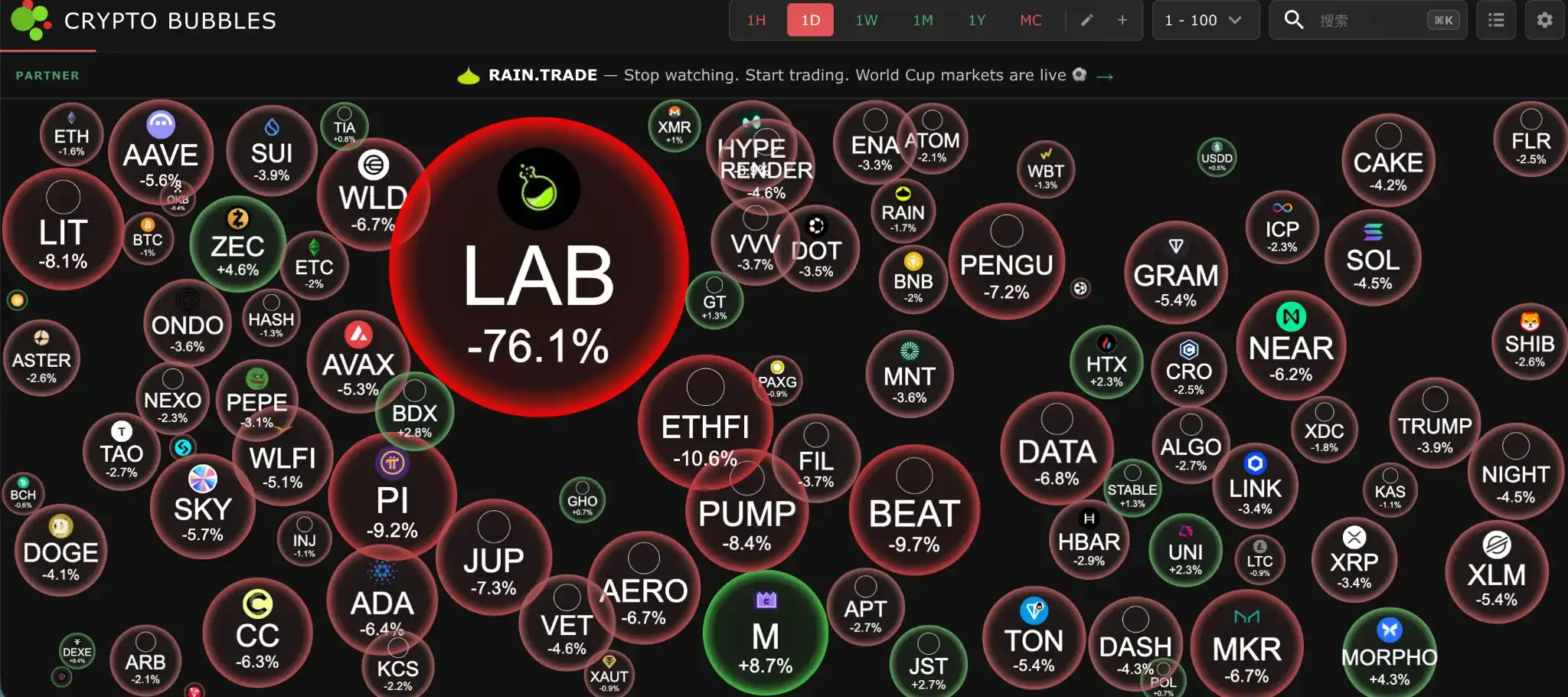
Today's Biggest Gainers among Top 100 Cryptos by Market Cap: M up 8.7%, ZEC up 4.6%, MORPH up 4.3%, BDX up 2.8%, JST up 2.7%.
Nikkei Technically Pressured, Falls for 3 Consecutive Days

Following a sharp overnight decline in the Nasdaq, the Tokyo Stock Exchange came under pressure today. The Nikkei 225 index experienced intense volatility throughout the day, ultimately closing down 2.11%, marking its third consecutive day of decline. Tech stocks led the losses, dragged down by U.S. chip stocks and in resonance with the South Korean market.

Worsening Middle East tensions have pushed up energy costs. Japan's reliance on crude oil from the Strait of Hormuz is as high as 93.5%, sparking fears of imported inflation that directly impacts corporate profits. High-valuation tech stocks suffered heavy blows: semiconductor giant Tokyo Electron fell 3.7%, capacitor maker Taiyo Yuden, a key supplier for AI servers, plummeted 8.5%, and Advantest dropped 4.7%, indicating market doubts about the sustainability of the semiconductor boom cycle.

Japan's macro-financial environment has entered a danger zone. The yield on 10-year government bonds rose to 2.86%, a 30-year high, while the 30-year bond yield exceeded 3.98%. A Daiwa Securities strategist pointed out that investor confidence in the AI sector has not recovered, and a Goldman Sachs economist warned Japan could fall into a vicious cycle of debt and high-interest payments. The market is highly focused on the potential for "fiscal dominance" by the Bank of Japan under fiscal pressure. The next 48 hours require close attention to U.S. wholesale inventory data and the Fed meeting minutes for guidance on global liquidity.

Chip Stock Volatility Drags Market, South Korean Stocks Fall into Technical Bear Market

South Korean stocks were among the most volatile markets in Asia. Affected by adjustments in the global AI industry chain, foreign capital profit-taking, and concentrated deleveraging, it closed down 5.35%. The index has now plunged more than 20% from its late-June all-time high, technically confirming entry into a technical bear market. The Ministry of Finance urgently stated it will closely monitor risks with the central bank and regulators, naming chip stock concentration as the main cause of market instability.

The previously profitable chip giants became the main source of market bleeding. Samsung Electronics shares plunged 6.25%, and SK Hynix fell 5.68%. Over-concentration in the semiconductor sector amplified volatility, with leveraged ETFs acting as volatility amplifiers. A South Korean economist publicly criticized that KOSPI has gradually become a "casino," and leveraged ETFs linked to single stocks are a policy failure, not only amplifying market fluctuations but also eroding corporate value and investor wealth.

IBK Investment & Securities researcher Byun Jun-ho noted that semiconductor stock prices are undergoing violent corrections following the inflection point of slowing earnings growth, and a peak in investment sentiment is an undeniable fact. A Fidelity International portfolio manager cautioned that the AI semiconductor boom entirely depends on annual capital expenditures of around $1 trillion by a few tech giants. Once this scale is proven unsustainable, the downside could be unimaginable.

A-shares Consolidate and Pull Back, Hong Kong Tech Leads Strongly
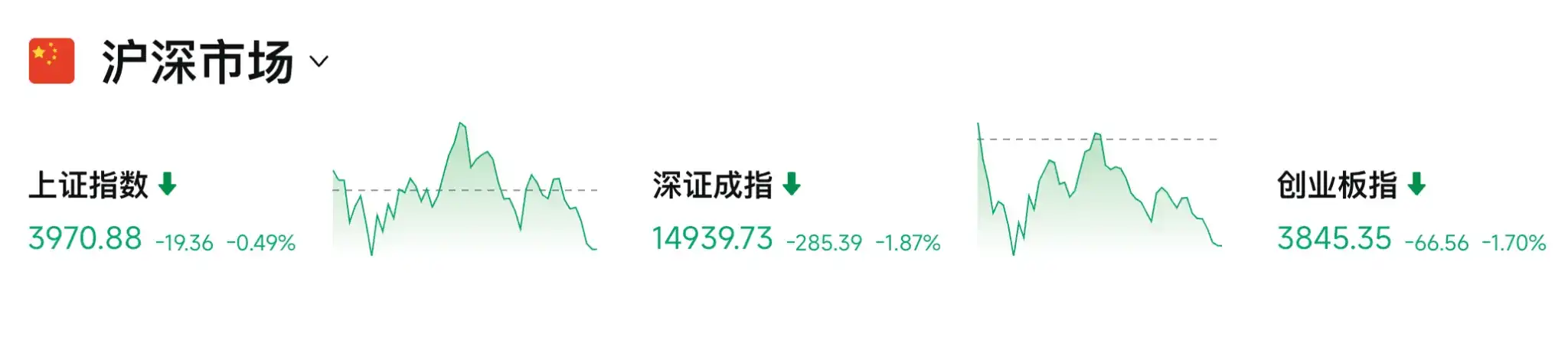
A-shares showed a consolidating and declining trend on Wednesday, with the Shanghai Composite Index down 0.49%, the Shenzhen Component Index down 1.87%, and the ChiNext Index down 1.7%.

More stocks fell than rose. Computing power, AI server, and cloud computing sectors bucked the trend and surged, with stocks like Inspur Information, Sangfor Technologies, Wangsu Science & Technology, and Yunsail Zhilian hitting the daily limit-up. Sectors like lithium batteries, lab-grown diamonds, and humanoid robots saw noticeable adjustments.

The semiconductor self-reliance theme saw a full-scale counterattack. CanSemi hit the limit-up, while Huahong Grace surged over 10% to a record high, driven by international investment banks raising target prices.
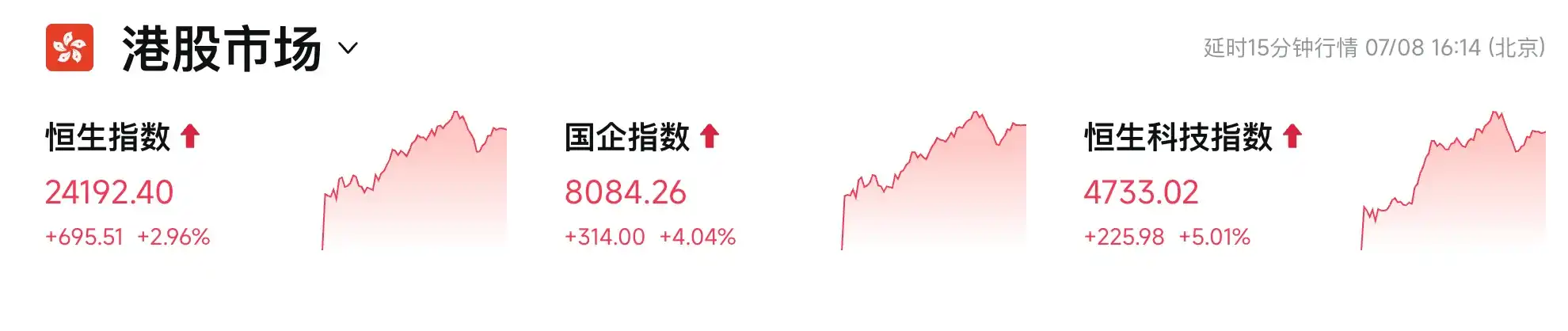
Hong Kong stocks, however, opened higher and rallied strongly. The Hang Seng Index rose about 700 points, reclaiming the 24,000 level, with the Hang Seng Tech Index surging over 5% and tech and internet stocks soaring across the board.

  • Alibaba surged over 12%, with its market cap returning to HK$2 trillion, leading the market. Reports suggest Taobao Flash Sales' losses are narrowing faster than expected, and Agent product integration is progressing.

  • Xiaomi Group's stock skyrocketed over 10%, returning above HK$25. The company officially announced the launch of a new car brand "SkyNomad," with its first model set for release in the second half of the year.

  • At the sensitive moment of the first batch of cornerstone lock-up shares being lifted for Zhipu AI, instead of the usual sell-off, nearly 70% of national-level strategic capital and local government guidance funds pledged long-term holdings with strong backing. J.P. Morgan ruthlessly raised its target price to HK$2,000,刺激其股价盘中逆势暴涨18% (stimulating its stock price to surge 18% against the trend intraday).

  • SMIC, Lenovo, Kuaishou, and other chip and tech stocks rose broadly.

Southbound capital recorded a net purchase of over HK$11 billion, indicating funds flowing from South Korea and Japan to Hong Kong stocks' "import substitution" and low-valuation AI assets. Institutional views suggest a resonance between Hong Kong stocks' valuation attractiveness and fund rebalancing, with short-term catalysts including Fed minutes and Chinese macro data.

In the next day or two, focus on China's June CPI/PPI data. The central bank and market participants expect policy implementation in the third quarter to improve liquidity, making tech and consumption recovery worth tracking closely. Overall, the market is seeking a new balance amid global volatility, with Hong Kong's resilience likely to persist.


Crypto di tendenza

Domande pertinenti

QWhat major indexes and markets were discussed in the article, and what was their general performance trend?

AThe article discussed the performance of Bitcoin (BTC), the Nikkei 225 (Japan), the KOSPI (South Korea), and the A-share and Hong Kong stock markets. The trends were mixed: BTC rebounded but faced a slight pullback; the Nikkei 225 fell for three consecutive days; the KOSPI entered a technical bear market; A-shares experienced a volatile decline; while Hong Kong's Hang Seng Tech Index led gains with a strong rally.

QAccording to analysts and data in the article, what are the key technical support and resistance levels for Bitcoin mentioned?

AAnalysts in the article noted key technical levels for Bitcoin. The support level is around $63,000. If this holds, Bitcoin could challenge the resistance zone between $64,600 and $65,000. However, if $63,000 is breached, the market may test support near $60,000 or even $58,000.

QWhy did the South Korean KOSPI index fall into a technical bear market, and which sectors were most affected?

AThe South Korean KOSPI index fell into a technical bear market, dropping more than 20% from its recent peak, due to adjustments in the global AI supply chain, foreign capital taking profits, and leveraged fund liquidations. The semiconductor sector was the most severely impacted, with giants like Samsung Electronics and SK Hynix experiencing significant declines, amplifying market volatility.

QWhich specific stocks led the gains in the Hong Kong stock market, and what were the reasons for their strong performance?

AIn the Hong Kong stock market, technology stocks led the gains. Alibaba surged over 12% due to positive news about its Taobao flash sales reducing losses faster than expected. Xiaomi's stock soared over 10% following the announcement of its new car brand 'SkyNomad'. Zhipu AI's stock also surged nearly 18% after receiving commitments from strategic investors and an upgraded price target from J.P. Morgan.

QWhat are the future factors that the article suggests could influence the market trends discussed?

AThe article suggests several future factors could influence market trends. For digital assets like Bitcoin, the core variable will be Federal Reserve policy, including meeting minutes, the US dollar index, Treasury yields, and ETF fund flows. For Asian markets, key factors include US wholesale inventory data, Fed guidance on global liquidity, China's June CPI/PPI data, and potential policy support in the third quarter to improve liquidity.

Letture associate

Weng Li's New Blog Proposes 'Self-Evolution Should Start from Harness', DeepSeek's Cui Tianyi Endorses with Repost

Lilian Weng, former OpenAI security VP and co-founder of Thinking Machines Lab, has published a new blog post titled "Harness Engineering for Self-Improvement," proposing a pragmatic path for AI self-evolution. She argues that Recursive Self-Improvement (RSI) may practically begin at the "Harness" layer—the external runtime system governing how models use tools, manage context, and execute tasks—rather than directly from the model rewriting its own weights. The blog outlines a progression from optimizing prompts (Context Engineering) to designing workflows, and ultimately to Self-Improving Harness systems. These systems can identify their own weaknesses, propose targeted, verifiable modifications to the harness code, and validate improvements. Works like Self-Harness and Darwin Gödel Machine (DGM) demonstrate significant performance gains on benchmarks like SWE-bench through such automated harness evolution, rivaling handcrafted agents. DeepSeek researcher Tianyi Cui endorsed the view, noting harness-based self-evolution is as promising as model-based approaches. Weng emphasizes this is complementary to model training, with both reinforcing each other. However, key challenges remain: weak evaluators for subjective tasks, reward hacking, diversity collapse, managing long-term system health versus short-term success, and defining the human oversight role. The consensus is growing: the harness is a critical variable, as the same model can exhibit vastly different capabilities within different harness systems.

marsbit49 min fa

Weng Li's New Blog Proposes 'Self-Evolution Should Start from Harness', DeepSeek's Cui Tianyi Endorses with Repost

marsbit49 min fa

Odaily Editorial Department Tea Party (July 8)

Odaily Editorial Team Casual Chat (July 8) This is an informal column from Odaily's editorial team, sharing immediate thoughts on industry news, data, and hot topics from various angles. It presents investment ideas and opportunity hypotheses still under verification—which may not be direct wealth codes but questions in themselves—alongside observations from industry interactions and materials that genuinely enhance the team's understanding. The content is based on real investment and observation experiences, carries no advertising, and does not constitute investment advice. Its purpose is to broaden perspectives and supplement information sources, not to create consensus. Team Member Shares: * **Wenser (@wenser2010):** Noted a deeper correction (nearly 30%) in US and Korean stocks, including memory stocks, but remains bullish on DRAM due to perceived supply shortages. In prediction markets, personal small bets outperformed blind copying; favors France to win the World Cup. Views crypto-related stocks like STRK as bearish for now, while seeing Circle and Coinbase as potential rebound plays. Observes recent strength in software stocks like Microsoft but is unsure if it's a sustained recovery. * **Bcxiongdi (@bcxiongdi):** Discusses the recent "recovery training" in meme coin markets on Solana and BSC, characterized by small-scale PVP opportunities, admitting to having sold many assets too early. Suggests also watching the Robinhood chain. Found World Cup prediction markets challenging, advising to consider buying during matches rather than only before. * **Azuma (@azuma_eth):** Focuses on the US stock market, particularly the significant semiconductor correction. Believes demand fundamentals remain and considers buying the dip in DRAM stocks. Notes a potential rotation signal as hedge funds have recently concentrated buying in tech stocks. Plans to continue adding to RKLB (Rocket Lab) stock, seeing limited downside and high upside potential at current levels after its founder's share sale window closed.

Odaily星球日报1 h fa

Odaily Editorial Department Tea Party (July 8)

Odaily星球日报1 h fa

Trading

Spot

Articoli Popolari

Cosa è BITCOIN

Comprendere HarryPotterObamaSonic10Inu (ERC-20) e la sua posizione nel mondo delle criptovalute Negli ultimi anni, il mercato delle criptovalute ha assistito a un aumento della popolarità delle meme coin, catturando l'interesse non solo dei trader, ma anche di coloro che cercano coinvolgimento comunitario e valore di intrattenimento. Tra questi token unici c'è HarryPotterObamaSonic10Inu (ERC-20), un progetto intrigante che mescola riferimenti culturali nel tessuto delle criptovalute. Questo articolo esplora gli aspetti chiave di HarryPotterObamaSonic10Inu, analizzando i suoi meccanismi, l'etica guidata dalla comunità e il suo coinvolgimento con il panorama crittografico più ampio. Che cos'è HarryPotterObamaSonic10Inu (ERC-20)? Come suggerisce il suo nome, HarryPotterObamaSonic10Inu è una meme coin costruita sulla blockchain di Ethereum, classificata secondo lo standard ERC-20. A differenza delle criptovalute tradizionali che possono enfatizzare l'utilità pratica o il potenziale investimento, questo token prospera grazie al valore di intrattenimento e alla forza della sua comunità. Il progetto mira a creare un ambiente in cui gli utenti coinvolti possono riunirsi, condividere idee e partecipare ad attività ispirate a diversi fenomeni culturali. Una caratteristica notevole di HarryPotterObamaSonic10Inu è la zero tassa sulle transazioni. Questo elemento allettante tende a incoraggiare il trading e il coinvolgimento della comunità, privo di costi aggiuntivi che possono scoraggiare i trader di piccole dimensioni. L'offerta totale della moneta è fissata a un miliardo di token, un numero che segna la sua intenzione di mantenere una circolazione sostanziale all'interno della comunità. Creatore di HarryPotterObamaSonic10Inu (ERC-20) Le origini di HarryPotterObamaSonic10Inu sono avvolte in un certo mistero; i dettagli sul creatore rimangono sconosciuti. Lo sviluppo di questo token non presenta un team identificabile o un piano esplicito, cosa non rara nel settore delle meme coin. Invece, il progetto è emerso organicamente, con il suo progresso fortemente dipendente dall'entusiasmo e dalla partecipazione della sua comunità. Investitori di HarryPotterObamaSonic10Inu (ERC-20) Per quanto riguarda investimenti esterni e finanziamenti, HarryPotterObamaSonic10Inu rimane ambiguo. Il token non elenca alcuna fondazione di investimento conosciuta o un sostegno organizzativo significativo. Invece, la linfa vitale del progetto è la sua comunità di base, che informa la sua crescita e sostenibilità attraverso azioni collettive e coinvolgimento nello spazio crittografico. Come funziona HarryPotterObamaSonic10Inu (ERC-20)? In quanto meme coin, HarryPotterObamaSonic10Inu opera principalmente al di fuori delle strutture tradizionali che governano spesso il valore degli asset. Ci sono diversi aspetti distintivi che definiscono il funzionamento del progetto: Transazioni senza tasse: Senza costi fiscali sulle transazioni, gli utenti possono comprare e vendere liberamente il token senza preoccuparsi di costi nascosti. Coinvolgimento della comunità: Il progetto prospera sull'interazione della comunità, sfruttando le piattaforme social per creare entusiasmo e facilitare il coinvolgimento. Discussioni, condivisione di contenuti e coinvolgimento sono elementi cruciali che aiutano ad espandere la sua portata e a favorire la lealtà tra i sostenitori. Nessuna utilità pratica: Va notato che HarryPotterObamaSonic10Inu non offre un'utilità concreta all'interno dell'ecosistema finanziario. Piuttosto, è classificato come un token principalmente per attività di intrattenimento e comunitarie. Riferimento culturale: Il token incorpora astutamente elementi della cultura pop per attirare interesse, collegandosi a appassionati di meme e seguaci delle criptovalute. HarryPotterObamaSonic10Inu esemplifica come le meme coin operino in modo diverso rispetto ai progetti di criptovalute più tradizionali, entrando nel mercato come costrutti sociali innovativi piuttosto che come asset utilitari. Cronologia di HarryPotterObamaSonic10Inu (ERC-20) La storia di HarryPotterObamaSonic10Inu è segnata da diversi traguardi notevoli: Creazione: Il token è emerso da un meme virale, catturando l'immaginazione di molti appassionati di criptovalute. Le date di creazione specifiche non sono disponibili, sottolineando la sua crescita organica. Inserimento negli scambi: HarryPotterObamaSonic10Inu ha fatto il suo ingresso in vari scambi, consentendo un accesso e un trading più facili da parte della comunità. Iniziative di coinvolgimento della comunità: Attività in corso volte a migliorare l'interazione della comunità, comprese gare, campagne sui social media e generazione di contenuti da parte di fan e sostenitori. Piani di espansione futura: La tabella di marcia del progetto include il lancio di una collezione NFT, merchandising e un sito di eCommerce relativo ai suoi temi culturali, coinvolgendo ulteriormente la comunità e cercando di aggiungere più dimensioni al suo ecosistema. Punti chiave su HarryPotterObamaSonic10Inu (ERC-20) Natura guidata dalla comunità: Il progetto dà priorità al contributo collettivo e alla creatività, garantendo che il coinvolgimento degli utenti sia al centro del suo sviluppo. Classificazione come meme coin: Rappresenta l'epitome delle criptovalute basate sull'intrattenimento, distinguendosi dai veicoli d'investimento tradizionali. Nessuna affiliazione diretta con Bitcoin: Nonostante la somiglianza nel nome del ticker, HarryPotterObamaSonic10Inu è distintivo e non ha alcuna relazione con Bitcoin o altre criptovalute consolidate. Focus sulla collaborazione: HarryPotterObamaSonic10Inu è progettato per creare uno spazio per la collaborazione e la condivisione di storie tra i suoi detentori, fornendo un canale per la creatività e il legame comunitario. Prospettive future: L'ambizione di espandersi oltre il suo presupposto iniziale verso NFT e merchandising delinea un percorso per il progetto per potenzialmente entrare in strade più mainstream all'interno della cultura digitale. Poiché le meme coin continuano a catturare l'immaginazione della comunità crittografica, HarryPotterObamaSonic10Inu (ERC-20) si distingue per i suoi legami culturali e il suo approccio centrato sulla comunità. Anche se potrebbe non adattarsi al modello tipico di un token orientato all'utilità, la sua essenza risiede nella gioia e nella camaraderia coltivate tra i suoi sostenitori, evidenziando la natura in evoluzione delle criptovalute in un'epoca sempre più digitale. Con la continuazione dello sviluppo del progetto, sarà importante osservare come le dinamiche della comunità influenzano la sua traiettoria nel panorama in continuo cambiamento della tecnologia blockchain.

1.8k Totale visualizzazioniPubblicato il 2024.04.01Aggiornato il 2024.12.03

Cosa è BITCOIN

Come comprare BTC

Benvenuto in HTX.com! Abbiamo reso l'acquisto di Bitcoin (BTC) semplice e conveniente. Segui la nostra guida passo passo per intraprendere il tuo viaggio nel mondo delle criptovalute.Step 1: Crea il tuo Account HTXUsa la tua email o numero di telefono per registrarti il tuo account gratuito su HTX. Vivi un'esperienza facile e sblocca tutte le funzionalità,Crea il mio accountStep 2: Vai in Acquista crypto e seleziona il tuo metodo di pagamentoCarta di credito/debito: utilizza la tua Visa o Mastercard per acquistare immediatamente BitcoinBTC.Bilancio: Usa i fondi dal bilancio del tuo account HTX per fare trading senza problemi.Terze parti: abbiamo aggiunto metodi di pagamento molto utilizzati come Google Pay e Apple Pay per maggiore comodità.P2P: Fai trading direttamente con altri utenti HTX.Over-the-Counter (OTC): Offriamo servizi su misura e tassi di cambio competitivi per i trader.Step 3: Conserva Bitcoin (BTC)Dopo aver acquistato Bitcoin (BTC), conserva nel tuo account HTX. In alternativa, puoi inviare tramite trasferimento blockchain o scambiare per altre criptovalute.Step 4: Scambia Bitcoin (BTC)Scambia facilmente Bitcoin (BTC) nel mercato spot di HTX. Accedi al tuo account, seleziona la tua coppia di trading, esegui le tue operazioni e monitora in tempo reale. Offriamo un'esperienza user-friendly sia per chi ha appena iniziato che per i trader più esperti.

4.1k Totale visualizzazioniPubblicato il 2024.12.12Aggiornato il 2026.06.02

Come comprare BTC

Cosa è $BITCOIN

ORO DIGITALE ($BITCOIN): Un'Analisi Completa Introduzione all'ORO DIGITALE ($BITCOIN) L'ORO DIGITALE ($BITCOIN) è un progetto basato su blockchain che opera sulla rete Solana, con l'obiettivo di combinare le caratteristiche dei metalli preziosi tradizionali con l'innovazione delle tecnologie decentralizzate. Sebbene condivida un nome con Bitcoin, spesso definito “oro digitale” a causa della sua percezione come riserva di valore, l'ORO DIGITALE è un token separato progettato per creare un ecosistema unico all'interno del panorama Web3. Il suo obiettivo è posizionarsi come un asset digitale alternativo valido, anche se i dettagli riguardanti le sue applicazioni e funzionalità sono ancora in fase di sviluppo. Cos'è l'ORO DIGITALE ($BITCOIN)? L'ORO DIGITALE ($BITCOIN) è un token di criptovaluta esplicitamente progettato per l'uso sulla blockchain di Solana. A differenza di Bitcoin, che fornisce un ruolo di stoccaggio di valore ampiamente riconosciuto, questo token sembra concentrarsi su applicazioni e caratteristiche più ampie. Aspetti notevoli includono: Infrastruttura Blockchain: Il token è costruito sulla blockchain di Solana, nota per la sua capacità di gestire transazioni ad alta velocità e a basso costo. Dinamiche di Offerta: L'ORO DIGITALE ha un'offerta massima fissata a 100 quadrilioni di token (100P $BITCOIN), sebbene i dettagli riguardanti la sua offerta circolante siano attualmente non divulgati. Utilità: Sebbene le funzionalità precise non siano esplicitamente delineate, ci sono indicazioni che il token potrebbe essere utilizzato per varie applicazioni, potenzialmente coinvolgendo applicazioni decentralizzate (dApp) o strategie di tokenizzazione degli asset. Chi è il Creatore dell'ORO DIGITALE ($BITCOIN)? Attualmente, l'identità dei creatori e del team di sviluppo dietro l'ORO DIGITALE ($BITCOIN) rimane sconosciuta. Questa situazione è tipica tra molti progetti innovativi nel settore blockchain, in particolare quelli allineati con la finanza decentralizzata e i fenomeni delle meme coin. Sebbene tale anonimato possa favorire una cultura guidata dalla comunità, intensifica le preoccupazioni riguardo alla governance e alla responsabilità. Chi sono gli Investitori dell'ORO DIGITALE ($BITCOIN)? Le informazioni disponibili indicano che l'ORO DIGITALE ($BITCOIN) non ha alcun sostenitore istituzionale noto o investimenti di venture capital prominenti. Il progetto sembra operare su un modello peer-to-peer incentrato sul supporto e sull'adozione della comunità piuttosto che su percorsi di finanziamento tradizionali. La sua attività e liquidità si trovano principalmente su exchange decentralizzati (DEX), come PumpSwap, piuttosto che su piattaforme di trading centralizzate consolidate, evidenziando ulteriormente il suo approccio di base. Come Funziona l'ORO DIGITALE ($BITCOIN) Le meccaniche operative dell'ORO DIGITALE ($BITCOIN) possono essere elaborate in base al suo design blockchain e alle caratteristiche della rete: Meccanismo di Consenso: Sfruttando il proof-of-history (PoH) unico di Solana combinato con un modello di proof-of-stake (PoS), il progetto garantisce una validazione efficiente delle transazioni contribuendo all'alta performance della rete. Tokenomics: Sebbene meccanismi deflazionistici specifici non siano stati dettagliati ampiamente, l'ampia offerta massima di token implica che potrebbe soddisfare microtransazioni o casi d'uso di nicchia che devono ancora essere definiti. Interoperabilità: Esiste il potenziale per l'integrazione con l'ecosistema più ampio di Solana, inclusi vari piattaforme di finanza decentralizzata (DeFi). Tuttavia, i dettagli riguardanti integrazioni specifiche rimangono non specificati. Cronologia degli Eventi Chiave Ecco una cronologia che evidenzia traguardi significativi riguardanti l'ORO DIGITALE ($BITCOIN): 2023: Il dispiegamento iniziale del token avviene sulla blockchain di Solana, contrassegnato dal suo indirizzo di contratto. 2024: L'ORO DIGITALE guadagna visibilità poiché diventa disponibile per il trading su exchange decentralizzati come PumpSwap, consentendo agli utenti di scambiarlo contro SOL. 2025: Il progetto assiste a un'attività di trading sporadica e a un potenziale interesse per impegni guidati dalla comunità, sebbene non siano state documentate partnership significative o avanzamenti tecnici fino ad ora. Analisi Critica Punti di Forza Scalabilità: L'infrastruttura sottostante di Solana supporta alti volumi di transazioni, il che potrebbe migliorare l'utilità di $BITCOIN in vari scenari di transazione. Accessibilità: Il potenziale basso prezzo di trading per token potrebbe attrarre investitori al dettaglio, facilitando una partecipazione più ampia grazie a opportunità di proprietà frazionata. Rischi Mancanza di Trasparenza: L'assenza di sostenitori, sviluppatori o di un processo di audit pubblicamente noti potrebbe generare scetticismo riguardo alla sostenibilità e all'affidabilità del progetto. Volatilità del Mercato: L'attività di trading è fortemente dipendente dal comportamento speculativo, il che può comportare una significativa volatilità dei prezzi e incertezze per gli investitori. Conclusione L'ORO DIGITALE ($BITCOIN) emerge come un progetto intrigante ma ambiguo all'interno dell'evolvente ecosistema di Solana. Sebbene tenti di sfruttare la narrativa dell'“oro digitale”, la sua partenza dal ruolo consolidato di Bitcoin come riserva di valore sottolinea la necessità di una chiara differenziazione della sua utilità e struttura di governance. L'accettazione e l'adozione future dipenderanno probabilmente dall'affrontare l'attuale opacità e dalla definizione più esplicita delle sue strategie operative ed economiche. Nota: Questo rapporto comprende informazioni sintetizzate disponibili a ottobre 2023, e potrebbero essersi verificati sviluppi oltre il periodo di ricerca.

124 Totale visualizzazioniPubblicato il 2025.05.13Aggiornato il 2025.05.13

Cosa è $BITCOIN

Discussioni

Benvenuto nella Community HTX. Qui puoi rimanere informato sugli ultimi sviluppi della piattaforma e accedere ad approfondimenti esperti sul mercato. Le opinioni degli utenti sul prezzo di BTC BTC sono presentate come di seguito.

活动图片