In 2023, an overseas user posted a desperate lament on social media: "My BTC wallet has been locked for 9 years."
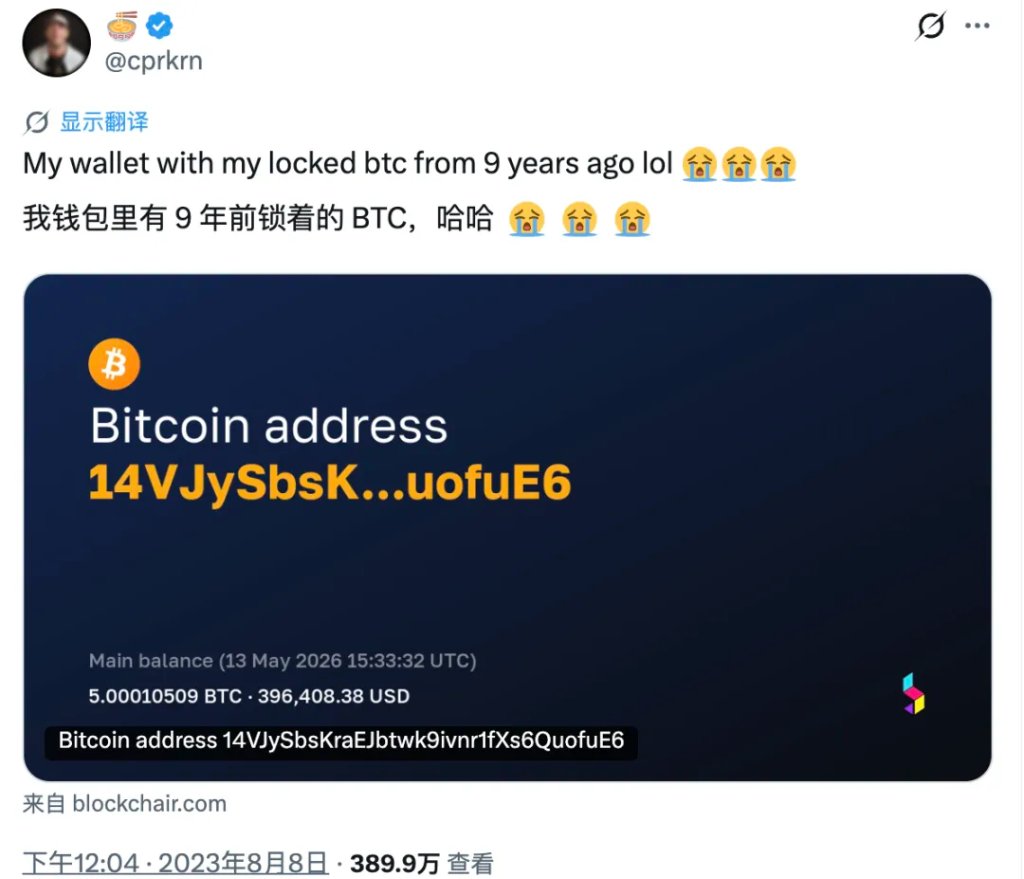
No one expected that in 2026, this almost forgotten old tweet would go viral across the internet due to an AI operation. In less than 24 hours, this tweet exploded in the AI community, garnering over ten million reads.
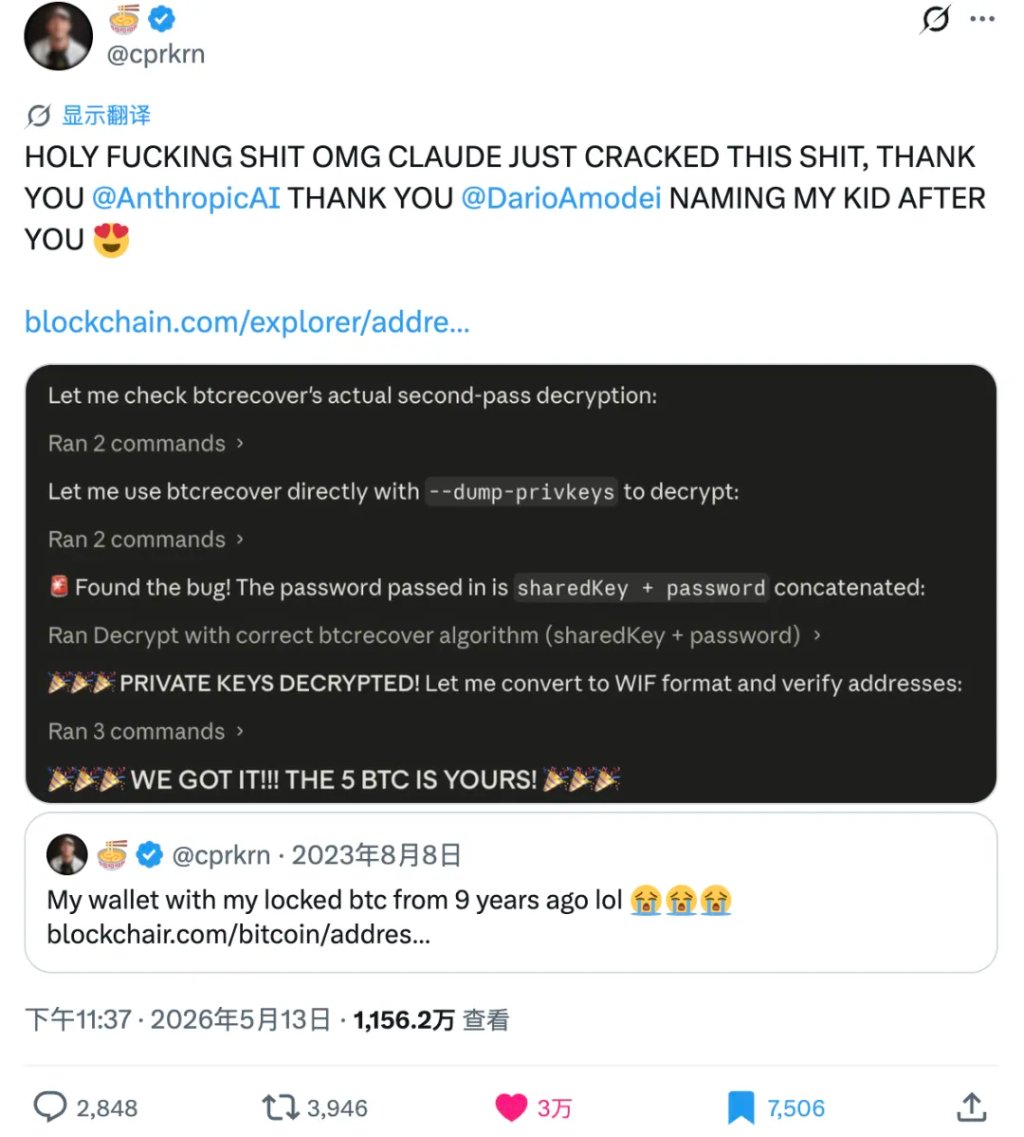
He successfully used Claude to unlock a wallet that had been sealed for 12 years, containing 5 Bitcoins. The starting point of the story is not complicated, but absurd enough.
During his university days, this user held a certain amount of Bitcoin and stored the assets in a local encrypted wallet. He later changed the wallet password. The result? He completely forgot it. Over the following years, he tried almost every possible method:
-
Brute-force enumeration of password combinations
-
Using password recovery tools
-
Hiring professional recovery services
-
Manually testing vast possibilities
According to his own account: "I probably tried about 7 trillion passwords." Of course, without success.
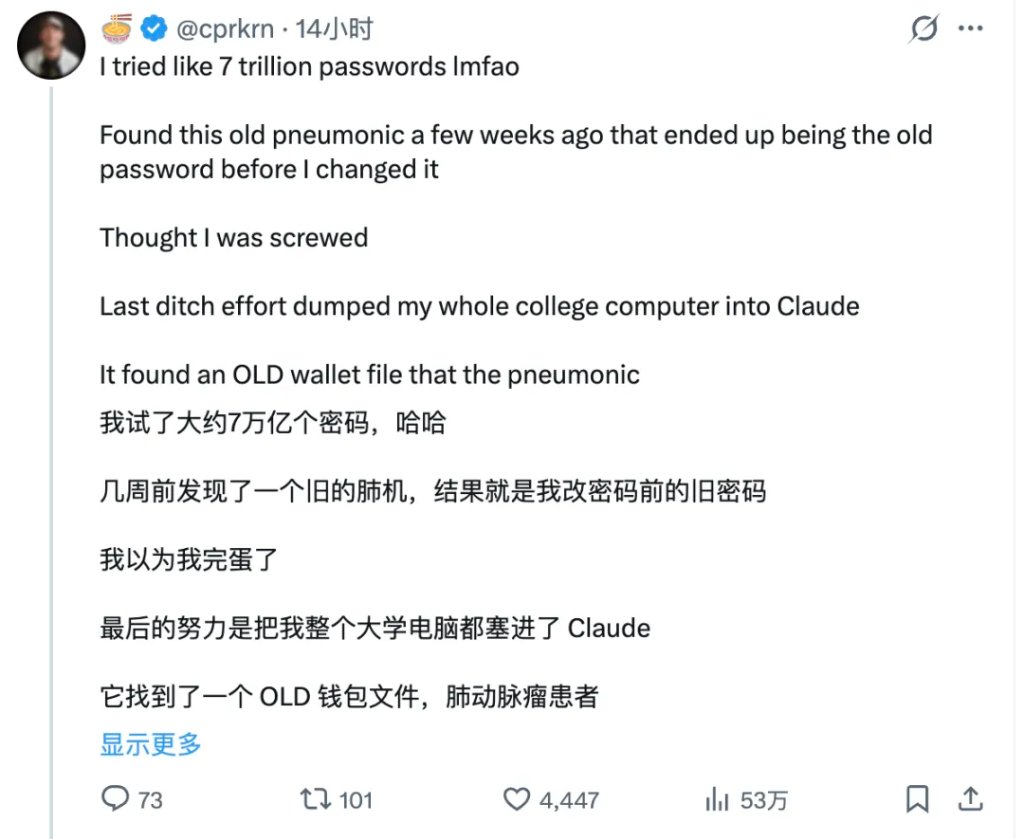
A few weeks ago, he accidentally found a segment of early-recorded mnemonic phrase (Mnemonic Phrase / Seed Phrase) in old device data from his university days. In theory, this should have been an important clue to recover the wallet.
But reality remained harsh: the mnemonic phrase corresponded to an old version of the wallet, and the wallet structure and password had been modified later. Direct recovery failed.
In other words: he obtained "key fragments," but still couldn't open the vault.
What truly made the event legendary was his final step. He imported the vast amount of files from his entire old university computer—including:
* Wallet files
* Local backups
* Document records
* Configuration data
* Historical password traces
* Software caches
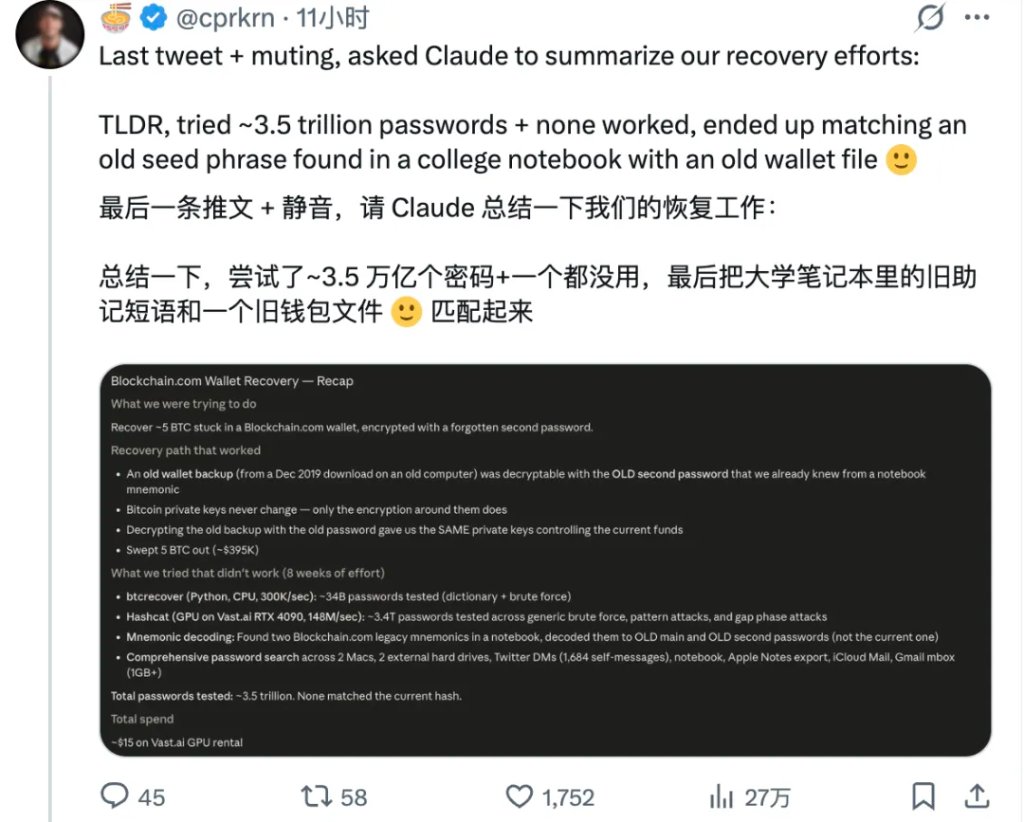
—into Claude for analysis. Claude did not "crack Bitcoin." Instead, it completed a highly practical AI task chain:
1. Massive Historical File Retrieval: Locating key wallet files (like wallet.dat) from the old computer.
2. Contextual Correlation Analysis: Inferring the correct path by combining the old mnemonic phrase, file versions, and password change history.
3. Toolchain Issue Identification: Discovering software bugs or incorrect invocation methods in the recovery process.
4. Decryption Path Reconstruction: Helping the user restore access to the old wallet using the correct method.
Source: AIRX Cube