The Evolution Path of Physical Bitcoin

marsbitPubblicato 2026-05-27Pubblicato ultima volta 2026-05-27

Introduzione

The Evolution of Physical Bitcoin Bitcoin's digital nature is its core strength, enabling self-custody and rapid global transfers. However, its intangibility also hinders mainstream adoption. For over a decade, creators have attempted to materialize Bitcoin while preserving its cash-like properties, yielding notable results. Casascius Coins, launched in 2011, were the first and most iconic physical Bitcoin. Creator Mike Caldwell generated private keys offline, printed them on coins, and sealed them with tamper-evident holograms. This model relied on user trust in the centralized issuer. Production ceased in 2013 due to regulatory pressure from FinCEN. RavenBit Coins emerged in 2014 aiming to decentralize minting by letting users generate and apply their own keys. However, this led to trust issues with numerous untrusted minters and insecure key generation methods. In 2016, Coinkite introduced Opendimes—a breakthrough in bearer asset technology. These USB-shaped devices generate and store keys internally. Funds can be received by checking the public key, but spending requires physically breaking the device to extract the private key. While innovative and open-source, its cost (~$20) and form factor limit its use for small, everyday transactions. Satochip's Satodime, a card-shaped device using similar secure chip technology, followed. It supports NFC interaction and comes in various forms. While potentially cheaper in bulk (~13€), it remains a high-security hardware wallet...

Author: Juan Galt

Compiled by: Saoirse, Foresight News

Bitcoin's digital nature is its core strength. Thanks to its programmability, Bitcoin enables self-custody, making it significantly harder for assets to be stolen or seized. Meanwhile, its digital form allows for extremely fast circulation, enabling global value transfer and settlement to be completed in just a few minutes.

However, Bitcoin has also been controversial due to its intangible nature. In its native state, Bitcoin cannot be touched or held in hand; people can only rely on imagination and understanding to perceive it, which has also become a major obstacle to its widespread acceptance. For over a decade, entrepreneurs and creators have continuously attempted to physicalize Bitcoin, striving to preserve its core characteristics similar to cash. Although no one has completely solved all the problems so far, related explorations have yielded many results and have given rise to a large number of classic physical products.

Casascius Coins
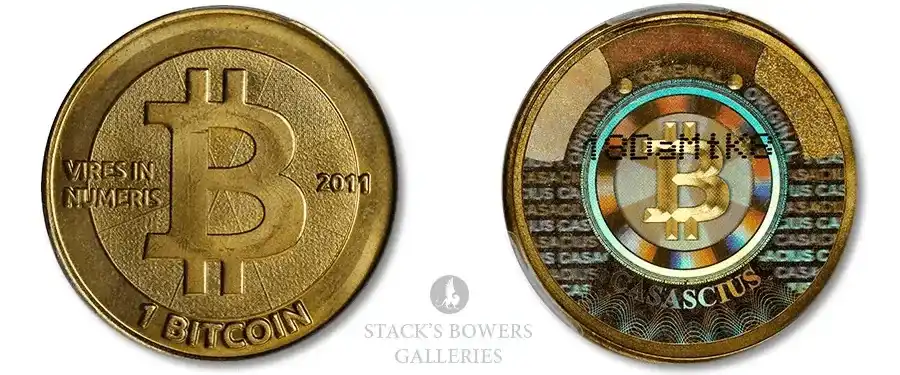
Image source: Stacks Bowers Galleries

Casascius Coins were first minted on September 6, 2011, when the price of a single Bitcoin was only $8. It is undoubtedly the most iconic physical Bitcoin collectible in history, and a large number of imitations have appeared since then. The name originates from Mike Caldwell's username on the Bitcointalk forum. The numerous design concepts established by this coin have also become important references for subsequent various physical Bitcoin products.

A major challenge in creating physical Bitcoin is the safekeeping of the private key. Bitcoin is a native digital asset that operates based on cryptographic public-private key pairs. The private key, as confidential information, can generate the corresponding public key through Bitcoin-specific encryption algorithms. Mike Caldwell used an offline device to generate private keys, printed them, and attached them to precious metal coins, and likely destroyed any private key backups left on the computer. He also detailed the entire set of security measures on his personal website for potential buyers to review.

The printed private key would be covered with a special tamper-evident sticker. Once the sticker is removed, a clear honeycomb-like pattern would remain on the surface. Based on this, buyers could determine whether the private key of a coin purchased from a third party had been previously accessed.

Private key management is the biggest security risk in creating physical Bitcoin. The solution of Casascius Coins relied on user trust in the developer. By the standards of the time, Mike Caldwell was transparent and meticulous, and he still maintains a good reputation today. The trust of users has been rewarded. Such collectibles now command a considerable collector's premium on top of the intrinsic value of the Bitcoin itself and the precious metal value, and holders have thus reaped substantial returns.

In November 2013, Casascius Coins officially ceased production. The Financial Crimes Enforcement Network (FinCEN) under the U.S. Department of the Treasury informed Mike Caldwell that the act of minting physical Bitcoins was considered a money transmission business, requiring strict compliance. The centralized trust mechanism involved in the private key generation process also made him a focus of regulatory attention.

RavenBit Coins

One year after Casascius Coins ceased production, RavenBit was officially launched, aiming to solve the problem of trustworthy minting in the physical Bitcoin space by attempting to decentralize the minting process. RavenBit's appearance is very similar to Casascius Coins, but it did not come pre-installed with a private key, and the tamper-evident sticker was also unsealed. Users could generate their own key pair, paste it onto the coin, and then seal it with the tamper-evident sticker.

Theoretically, this design achieved decentralization of minting rights, which could be considered a breakthrough. However, in practice, it only spawned a large number of unbranded, low-reputation individual minters, and many of the office devices used to generate private keys might have been infected with malware. When you received a RavenBit coin from someone else, you had no way to confirm whether they kept a copy of the private key or if they had implemented proper security measures.

The RavenBit project has long since ceased operations, but it also brought enlightenment to the entire industry: to truly achieve the physicalization of Bitcoin, more advanced technology is needed.

Opendimes
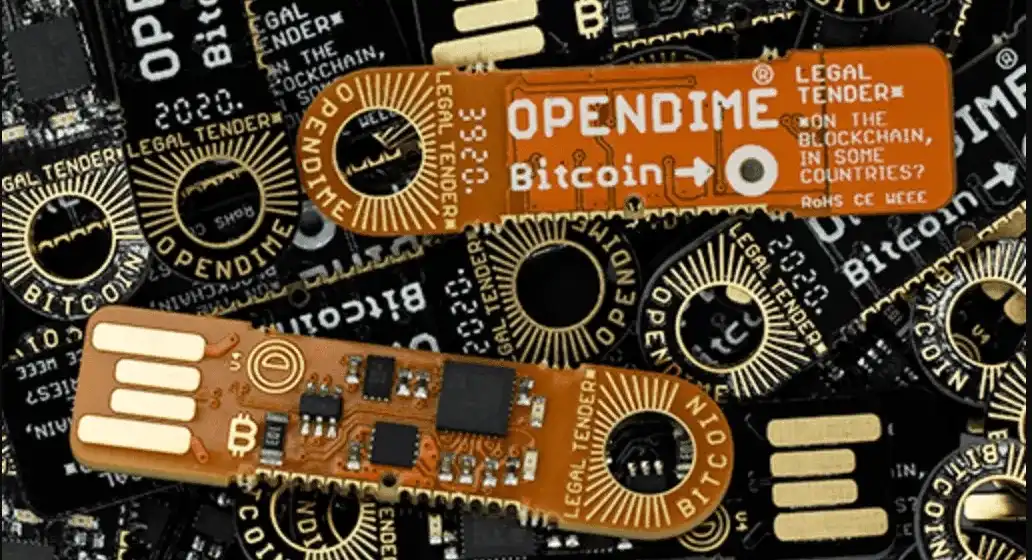
To completely solve the trust problem in minting physical Bitcoin in both centralized and decentralized scenarios, hardware wallet manufacturer Coinkite developed Opendimes. This is a micro hardware device specifically designed to carry Bitcoin bearer assets. NVK, co-founder of Coinkite, discussed the motivation behind the product in an interview with Bitcoin Magazine: "Bitcoin is a digital currency. Everything we do is just to create a physical backup for it. Perhaps someone in the future can manually crack the secp256k1 algorithm, but for now, generating valid Bitcoin keys always requires a computer. The computer is the current 'minting tool.'"

The design of Opendimes is based precisely on this core logic. The device has a built-in chip that can autonomously generate public-private key pairs and securely store the private key using a silicon-based tamper-resistant structure.

When initializing the device, users need to import files or other forms of random entropy. The chip combines this data to generate a Bitcoin wallet. This open-source random key generation logic, paired with high-quality entropy input, further ensures the security of the keys.

Connecting an Opendimes to a computer like a regular USB drive allows viewing the wallet's public key, and the account balance can be queried in real-time on a block explorer. Users can transfer Bitcoin to the device, but to extract the assets, they must physically destroy the device. This action unlocks the circuit to read the private key, while also leaving obvious damage marks on the device.

Opendimes is a major breakthrough in bearer asset technology. The product was priced as low as $13 in 2016, and due to inflation, its unit price is now around $20. It has also become an iconic product in the industry, with many artists incorporating it into high-end Bitcoin artworks, and it has gradually become a cultural symbol within the Bitcoin community.

For a hardware wallet, a price of $13 to $20 is not considered high, and the model where users deposit their own coins effectively solves the minting trust problem. However, its price and appearance are still far from everyday cash. Looking solely at hardware cost, the $20 threshold is not low. Referring to the approximately 20% premium standard of Casascius Coins, an Opendimes would need to hold at least $100 worth of Bitcoin to match the hardware cost and have circulation value, which also prevents it from being suitable for most small daily transactions.

Furthermore, while this USB drive-shaped device has a unique style, it cannot intuitively display internal asset information. Each device is unique and lacks the fungibility of cash. The industry has therefore realized the need to develop cheaper, more versatile alternatives.

Satodime
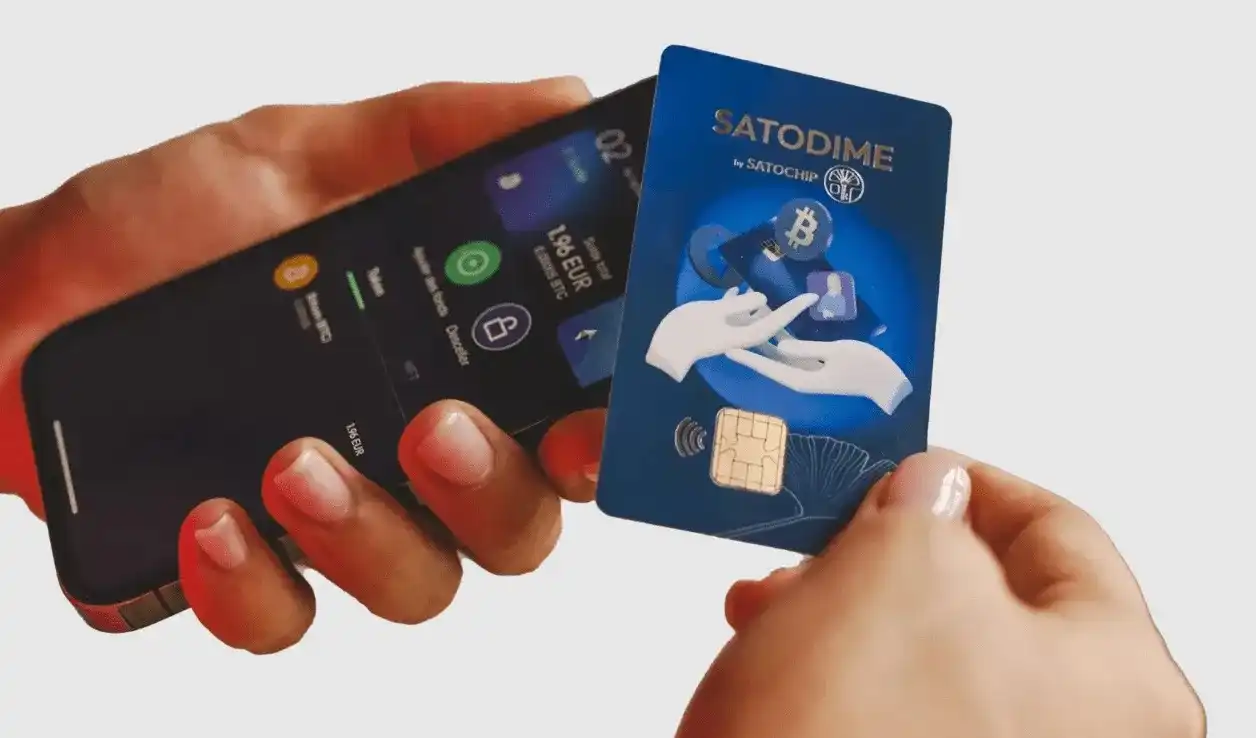
Building on the concept of Opendimes, Belgian hardware wallet manufacturer Satochip launched the more user-friendly, open-source product Satodime. It resembles a bank card in shape, with core functions similar to Opendimes. It can generate Bitcoin public-private key pairs, and some versions also support transaction signing. Users can interact with the device via a mobile app using Near Field Communication (NFC) functionality. The product also comes in forms such as rings and physical coins, with the same chip and functions inside.

In bulk purchases, the hardware unit price of Satodime can be as low as 13 euros, making it more affordable than Opendimes and bringing it a step closer to the standard of everyday cash, though the gap remains significant. Satodime is essentially a high-security hardware wallet, not a cash vehicle intended for daily circulation. The inherently high cost of these high-performance microchips also makes it difficult for the product price to fall below the $10 threshold for now.

The Cost Dilemma: The Underlying Limit Hard to Surpass

What level does the hardware cost need to be reduced to for physical Bitcoin to have commercial popularization value?

According to data from the Federal Reserve, the production cost of a U.S. dollar banknote ranges between 4.1 cents and 11.3 cents. The lower the denomination, the higher the unit production cost, and even a $1 bill can incur a 4.1% manufacturing loss.

Based on this calculation, the hardware cost of a physical Bitcoin carrying 20,000 satoshis (approximately $16 at the current price) must be controlled within $1. However, currently, the vast majority of chips capable of running Bitcoin encryption algorithms cannot meet this cost requirement. Nevertheless, the NTAG X DNA chip launched by NXP has shown the industry a possibility.

This chip uses a thin sticker antenna design, is only a few millimeters thick, and can run various encryption programs like Elliptic Curve Digital Signature Algorithm (ECDSA) and Elliptic Curve Cryptography (ECC), supporting key generation, transaction signing, and information encryption. However, it does not have the Bitcoin-specific secp256k1 encryption curve built-in and cannot natively run Bitcoin-related programs.

Even so, when the 2025 model NTAG chip is in sufficient supply, its unit price is about $3, proving that there is significant room for price reduction in encryption chips.

Unfortunately, the foldable paper money form used in daily life can damage delicate chips. The Coinkite team personally verified this issue during their research and development of Bitcoin bearer asset hardware.
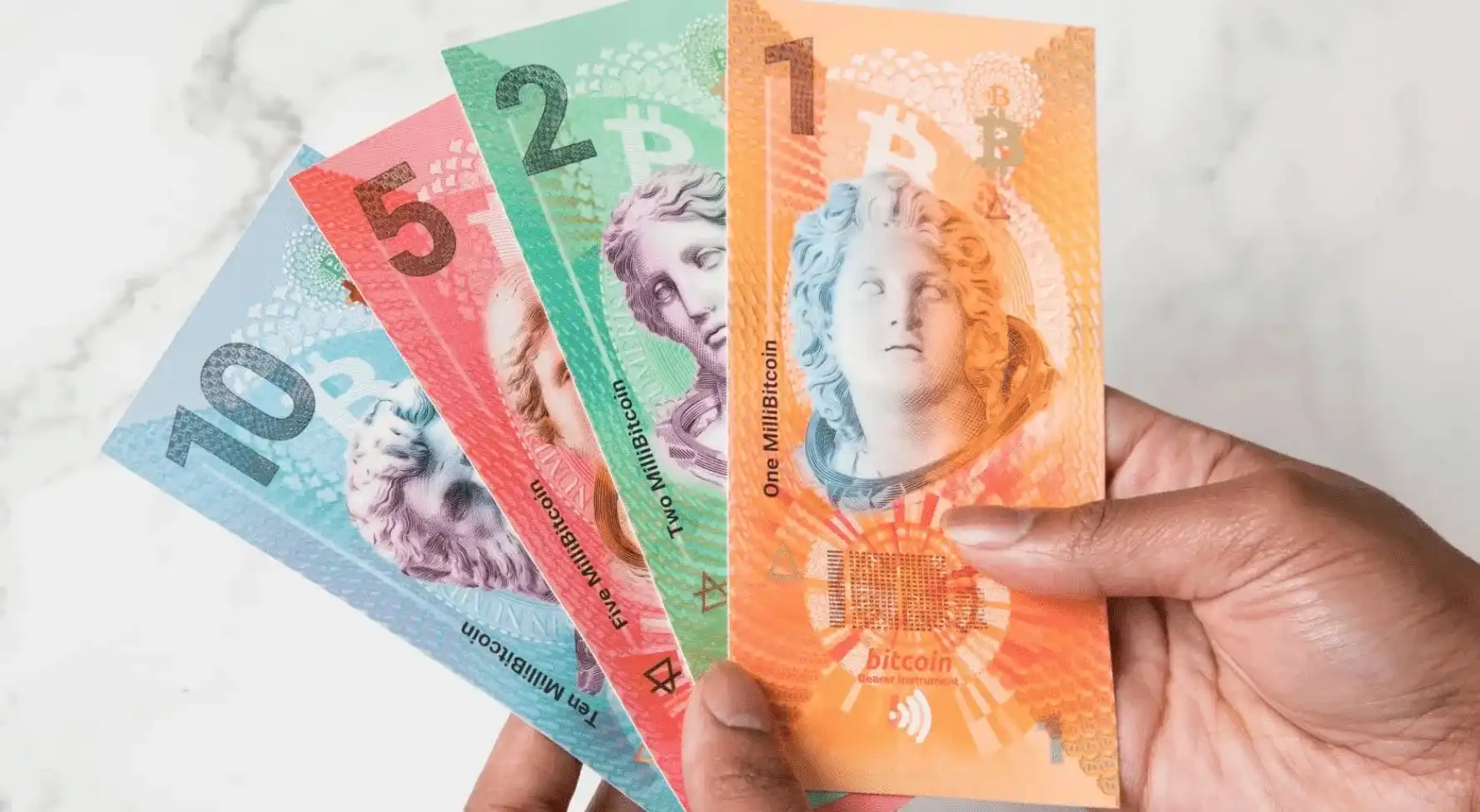
The product created by OfflineCash is currently the solution that looks most like traditional banknotes. This Bitcoin-denominated note is equipped with an NTAG series NFC chip. The chip stores a key generated by the user, while the company retains a second key on its server, forming a 2-of-2 multisignature wallet. The server-side key has a time lock, and after it expires, the multisignature wallet converts into a single-signature wallet, allowing the user to extract the assets. This scheme attempts to avoid the trust risk of traditional minting but ultimately creates a new problem of decentralized minting. However, it cannot be denied that its banknote appearance is highly aesthetic and has collectible value.

Developing an NTAG chip that natively supports Bitcoin algorithms requires an initial investment of millions of dollars. If the R&D team lacks expertise in the cryptography field, vulnerabilities are highly likely to occur when adapting to Bitcoin encryption programs. Simultaneously, such chips must be completely open-source to ensure there are no backdoor programs.

As a bearer asset, physical Bitcoin faces another fundamental problem: even if a low-cost, banknote-like hardware carrier is created, since Bitcoin is inherently a digital asset, users must connect to the internet to verify whether the device contains real assets.

If one chooses to trust the issuing institution and recognize the exchange value of the banknote's face, the verification problem might be solved, but this would deviate from Bitcoin's design初衷 of self-custody and trustless cash. Of course, this model might be able to operate in regions with favorable regulatory environments.

In summary, products like OfflineCash, which combine security chips and banknote forms, though conceptually appealing, still have a long way to go before large-scale adoption. Moreover, at present, such products are somewhat "over-engineered"—there is currently no Bitcoin change system in the market; after spending, one would still receive fiat change. Perhaps in a future fully Bitcoinized era, it could truly realize its value.

Within the foreseeable scope, Coinkite believes the card form is a superior solution to banknotes, which is also why the company launched Tapsigner.

Tapsigner
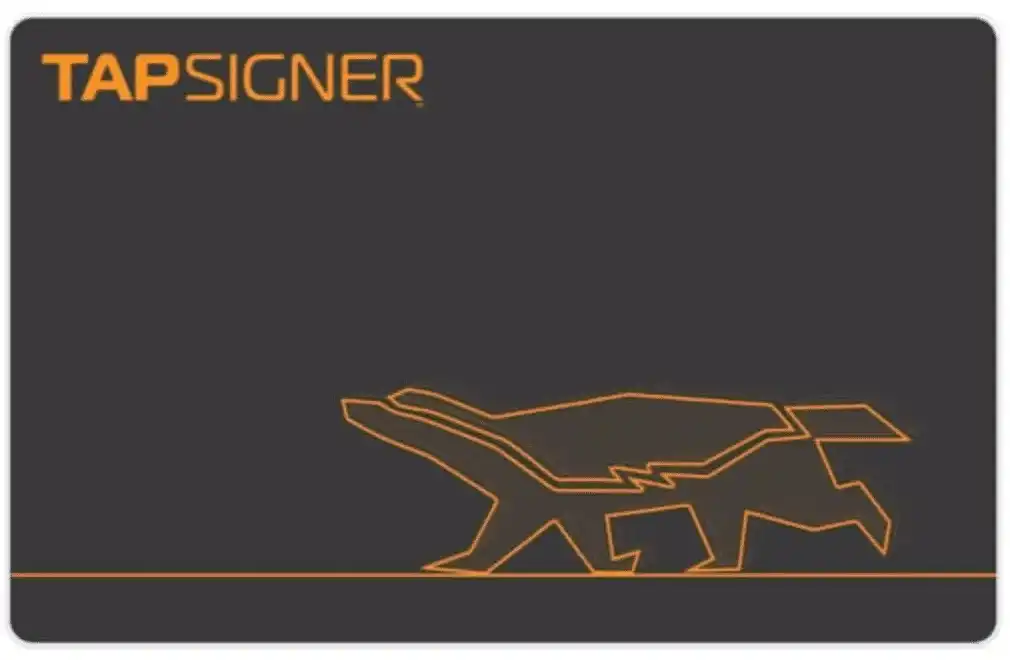
Tapsigner is equipped with Coinkite's self-developed Bitcoin NFC chip, which performs comparably to the NXP NTAG X DNA, has stronger functionality, and is relatively more expensive. The product adopts the familiar shape of a debit card, has a built-in security chip, supports NFC tap-to-pay, and offers multiple design options.

The chip has a complete Bitcoin wallet function built-in, runs the secp256k1 encryption program, can generate and securely store private keys, can complete transaction signing internally, and then the paired mobile device broadcasts the transaction information. The mobile end can also provide transaction information verification for the user, serving as a security aid.

Tapsigner can be used as a bearer asset carrier but is more suitable as a rechargeable hardware wallet. Like a regular bank card, it can make directed payments of fixed amounts of Bitcoin, perfectly solving the change problem while being compatible with mainstream tap-to-pay functionality.

This product costs around $20. Its emergence shifts the focus of Bitcoin payment development back to offline retail adoption and ecological integration with mainstream corporate finance and payment software, a process actively promoted by platforms like Cashapp and Square.

Domande pertinenti

QWhat are the core advantages of Bitcoin's digital nature according to the article?

AAccording to the article, Bitcoin's digital nature enables self-custody due to its programmability, making theft and confiscation significantly more difficult. Its digital form also allows for near-instantaneous global transfer and settlement of value within minutes.

QWhat was the key security challenge addressed by Casascius Coins, and what was its solution?

AThe key security challenge was private key custody. Casascius Coins' solution involved generating the private key offline, printing it, and physically attaching it to the coin under a tamper-evident hologram. This model relied on trust in the creator, Mike Caldwell, who maintained transparency and a good reputation.

QHow did Opendimes fundamentally improve upon earlier physical Bitcoin models regarding the 'trust' issue?

AOpendimes improved the 'trust' issue by removing the need to trust a centralized mint. The device itself contains a chip that generates the private key internally using user-provided entropy, and the key is never exposed. The only way to spend the funds is to physically destroy the device, which permanently reveals the private key and leaves visible damage.

QWhat is identified as a major fundamental obstacle to creating a cost-effective, mass-market physical Bitcoin like a banknote?

AA major obstacle is the high hardware cost. For a physical Bitcoin to be viable for everyday, low-value transactions, its hardware cost needs to be under $1. However, the specialized chips capable of running Bitcoin's cryptographic algorithms (like secp256k1) currently cost significantly more, making them unsuitable for low-denomination, disposable cash-like use.

QWhat is the stated purpose of the Tapsigner product, and how does it differ from earlier physical Bitcoin concepts like Opendimes?

ATapsigner is designed as a reusable hardware wallet for facilitating Bitcoin payments, particularly in offline retail settings. Unlike Opendimes, which is a single-use bearer instrument, Tapsigner functions more like a reloadable debit card, allowing for repeated top-ups and fixed-amount payments, and it integrates with NFC 'tap-to-pay' systems for easier merchant adoption.

Letture associate

Trump, the "Stock Market Manipulator" in U.S. Stocks, Lifts Up the Entire Quantum Computing Sector

"Trump, the 'U.S. Stock Market Mastermind,' Boosts the Entire Quantum Computing Sector" This article details how former U.S. President Donald Trump's policies and public statements have significantly influenced the stock market, particularly in the quantum computing sector. A key example is the U.S. government's direct investment in Intel stock in August 2025, which yielded over $45 billion in gains within seven months. Trump publicly credited himself for this profit. Recently, the Trump administration announced a new $2 billion initiative. Through the Department of Commerce, funding from the CHIPS and Science Act will be provided to nine quantum computing companies in exchange for minority, non-controlling equity stakes. The recipients include IBM ($1B for its subsidiary Anderon), GlobalFoundries ($375M), and listed companies like D-Wave, Infleqtion, and Rigetti ($100M each). Private firms such as Atom Computing and PsiQuantum also received $100M. This "investment-for-equity" strategy marks a shift from pure subsidies to an "active investor" model under the CHIPS Act. The announcement immediately boosted quantum computing stocks. The article frames this as part of Trump's "America First" industrial policy, aimed at securing U.S. technological leadership, similar to past investments in semiconductors, rare earths, and lithium. The author suggests this pattern of government-backed market intervention, alongside Trump's personal stock endorsements, is a hallmark of his approach to driving market gains and may continue in sectors like defense and advanced energy.

marsbit12 min fa

Trump, the "Stock Market Manipulator" in U.S. Stocks, Lifts Up the Entire Quantum Computing Sector

marsbit12 min fa

2-Year Return of 225x? Uncovering Mysterious Researcher Serenity's AI 'Choke Point' Investment Strategy

"2 Years, 225x Returns? Decoding Serenity's AI 'Chokepoint' Investment Strategy" This article profiles Serenity (formerly AleaBito on Reddit's WallStreetBets), a pseudonymous researcher known for exceptional returns by applying a "Chokepoint Theory" to AI investments. His methodology involves a bottom-up, reverse-engineering approach of the AI hardware supply chain. He identifies critical, irreplaceable physical bottlenecks (chokepoints) that could cripple entire AI systems if disrupted, bypassing Wall Street's top-down focus on major tech firms. Key examples include pinpointing essential suppliers in the emerging Silicon Photonics and Co-Packaged Optics (CPO) sector—components vital for next-generation AI data center interconnects—such as niche companies providing external laser sources, molecular beam epitaxy equipment, or ultra-pure raw materials. Similarly, he highlights geopolitical "chokepoints" in the humanoid robotics supply chain, where key hardware components and rare earth elements are concentrated in Asia. Serenity validates his investment theses through rigorous adversarial AI debates before publication. He leverages institutional blind spots, directing a sophisticated network of retail followers toward undervalued, under-covered micro-cap stocks across global exchanges, driving significant price movements in names like Sivers ($SIVE), Soitec, and Raspberry Pi ($RPI). While presenting a powerful framework for finding critical system dependencies, the strategy carries inherent risks: extreme concentration on specific technological paths, liquidity issues in small-cap stocks, and accusations of market manipulation. Ultimately, the core takeaway is not to copy his trades, but to adopt his analytical lens: to ask which silent, physical switches hold irreplaceable power within a complex system and invest ahead of the market's recognition of their value.

链捕手14 min fa

2-Year Return of 225x? Uncovering Mysterious Researcher Serenity's AI 'Choke Point' Investment Strategy

链捕手14 min fa

Bitroot Public Chain Invited to Attend Tencent Cloud Singapore AI Conference, Discussing the Future Alongside Solana

On May 19, Bitroot, an emerging Layer 1 blockchain, participated in the Tencent Cloud AI Summit in Singapore alongside key industry players like Solana Foundation. The event explored the intersection of AI infrastructure, enterprise applications, AI Agents, and Web3. Bitroot's invitation, despite being pre-mainnet, highlights industry interest in its focus on high-performance, AI-native architecture tailored for future AI Agent execution and verifiable on-chain automation. Bitroot CEO Juan Jose emphasized that AI competition is shifting from model performance to data, real-world application scenarios, and trust infrastructure. He argued that for AI Agents to evolve from assistants to autonomous executors managing transactions and assets, they require low-latency, low-cost, and high-throughput blockchain environments. Bitroot aims to address this through its EVM-compatible design, optimistic parallel execution, and a consensus mechanism targeting high scalability. Currently in its Testnet 5.0 phase, Bitroot reports metrics like over 50,000 peak TPS and sub-0.3 second average block time. Its narrative positions it within a growing landscape where next-generation Layer 1s like Monad and Aptos also compete on performance, while Bitroot differentiates by integrating AI computational capabilities natively across its stack. The summit underscored that the fusion of AI and Web3 is moving from concept to infrastructure competition, where networks balancing performance, security, and verifiability will be crucial for enabling scalable AI-driven applications.

marsbit1 h fa

Bitroot Public Chain Invited to Attend Tencent Cloud Singapore AI Conference, Discussing the Future Alongside Solana

marsbit1 h fa

Hedge Fund Q1 Interpretation: Everyone Is Selling Software, Buying Chips

Hedge Funds and Mutual Funds Aligned in Q1: Dumping Software, Buying Chips A clear consensus emerged among major U.S. hedge funds and mutual funds in Q1: they were simultaneously selling software stocks and pouring capital into the semiconductor sector. This aggressive rotation pushed semiconductor exposure in hedge fund long portfolios to a record high. Hedge funds delivered a 7% return year-to-date, while only 30% of large-cap active mutual funds outperformed their benchmarks. The average short interest for S&P 500 constituents rose to 3% of market cap, the highest since 2011. Within technology, the structural shift was stark. Hedge funds' semiconductor weighting hit an all-time high, while software fell to its lowest since 2019. Excluding Microsoft, mutual funds' relative overexposure to semis vs. software was the largest since 2012. Microsoft was among the most net-sold stocks by both groups. Hedge funds net purchased semiconductor names like LRCX and AMAT. Strategies diverged on leverage and cash. Hedge funds increased their net exposure to near a one-year high after an initial cut. Mutual funds raised their cash allocation, though it remains historically low at 1.4%. Sector alignment was high in Industrials (both overweight) but divergent in Tech: hedge funds increased their Tech net tilt by a record 853 basis points, while mutual funds reduced theirs. Clear splits also appeared in Financials and Consumer Discretionary. Four stocks appeared on both Goldman's hedge fund VIP and mutual fund overweight lists: BA, MA, MRVL, and V. This "shared favorites" basket has returned 10% YTD, outperforming the equal-weight S&P 500. Notably, all "Magnificent Seven" stocks are on the hedge fund VIP list but are uniformly underweighted by mutual funds.

marsbit1 h fa

Hedge Fund Q1 Interpretation: Everyone Is Selling Software, Buying Chips

marsbit1 h fa

Trading

Spot
Futures

Articoli Popolari

Cosa è BITCOIN

Comprendere HarryPotterObamaSonic10Inu (ERC-20) e la sua posizione nel mondo delle criptovalute Negli ultimi anni, il mercato delle criptovalute ha assistito a un aumento della popolarità delle meme coin, catturando l'interesse non solo dei trader, ma anche di coloro che cercano coinvolgimento comunitario e valore di intrattenimento. Tra questi token unici c'è HarryPotterObamaSonic10Inu (ERC-20), un progetto intrigante che mescola riferimenti culturali nel tessuto delle criptovalute. Questo articolo esplora gli aspetti chiave di HarryPotterObamaSonic10Inu, analizzando i suoi meccanismi, l'etica guidata dalla comunità e il suo coinvolgimento con il panorama crittografico più ampio. Che cos'è HarryPotterObamaSonic10Inu (ERC-20)? Come suggerisce il suo nome, HarryPotterObamaSonic10Inu è una meme coin costruita sulla blockchain di Ethereum, classificata secondo lo standard ERC-20. A differenza delle criptovalute tradizionali che possono enfatizzare l'utilità pratica o il potenziale investimento, questo token prospera grazie al valore di intrattenimento e alla forza della sua comunità. Il progetto mira a creare un ambiente in cui gli utenti coinvolti possono riunirsi, condividere idee e partecipare ad attività ispirate a diversi fenomeni culturali. Una caratteristica notevole di HarryPotterObamaSonic10Inu è la zero tassa sulle transazioni. Questo elemento allettante tende a incoraggiare il trading e il coinvolgimento della comunità, privo di costi aggiuntivi che possono scoraggiare i trader di piccole dimensioni. L'offerta totale della moneta è fissata a un miliardo di token, un numero che segna la sua intenzione di mantenere una circolazione sostanziale all'interno della comunità. Creatore di HarryPotterObamaSonic10Inu (ERC-20) Le origini di HarryPotterObamaSonic10Inu sono avvolte in un certo mistero; i dettagli sul creatore rimangono sconosciuti. Lo sviluppo di questo token non presenta un team identificabile o un piano esplicito, cosa non rara nel settore delle meme coin. Invece, il progetto è emerso organicamente, con il suo progresso fortemente dipendente dall'entusiasmo e dalla partecipazione della sua comunità. Investitori di HarryPotterObamaSonic10Inu (ERC-20) Per quanto riguarda investimenti esterni e finanziamenti, HarryPotterObamaSonic10Inu rimane ambiguo. Il token non elenca alcuna fondazione di investimento conosciuta o un sostegno organizzativo significativo. Invece, la linfa vitale del progetto è la sua comunità di base, che informa la sua crescita e sostenibilità attraverso azioni collettive e coinvolgimento nello spazio crittografico. Come funziona HarryPotterObamaSonic10Inu (ERC-20)? In quanto meme coin, HarryPotterObamaSonic10Inu opera principalmente al di fuori delle strutture tradizionali che governano spesso il valore degli asset. Ci sono diversi aspetti distintivi che definiscono il funzionamento del progetto: Transazioni senza tasse: Senza costi fiscali sulle transazioni, gli utenti possono comprare e vendere liberamente il token senza preoccuparsi di costi nascosti. Coinvolgimento della comunità: Il progetto prospera sull'interazione della comunità, sfruttando le piattaforme social per creare entusiasmo e facilitare il coinvolgimento. Discussioni, condivisione di contenuti e coinvolgimento sono elementi cruciali che aiutano ad espandere la sua portata e a favorire la lealtà tra i sostenitori. Nessuna utilità pratica: Va notato che HarryPotterObamaSonic10Inu non offre un'utilità concreta all'interno dell'ecosistema finanziario. Piuttosto, è classificato come un token principalmente per attività di intrattenimento e comunitarie. Riferimento culturale: Il token incorpora astutamente elementi della cultura pop per attirare interesse, collegandosi a appassionati di meme e seguaci delle criptovalute. HarryPotterObamaSonic10Inu esemplifica come le meme coin operino in modo diverso rispetto ai progetti di criptovalute più tradizionali, entrando nel mercato come costrutti sociali innovativi piuttosto che come asset utilitari. Cronologia di HarryPotterObamaSonic10Inu (ERC-20) La storia di HarryPotterObamaSonic10Inu è segnata da diversi traguardi notevoli: Creazione: Il token è emerso da un meme virale, catturando l'immaginazione di molti appassionati di criptovalute. Le date di creazione specifiche non sono disponibili, sottolineando la sua crescita organica. Inserimento negli scambi: HarryPotterObamaSonic10Inu ha fatto il suo ingresso in vari scambi, consentendo un accesso e un trading più facili da parte della comunità. Iniziative di coinvolgimento della comunità: Attività in corso volte a migliorare l'interazione della comunità, comprese gare, campagne sui social media e generazione di contenuti da parte di fan e sostenitori. Piani di espansione futura: La tabella di marcia del progetto include il lancio di una collezione NFT, merchandising e un sito di eCommerce relativo ai suoi temi culturali, coinvolgendo ulteriormente la comunità e cercando di aggiungere più dimensioni al suo ecosistema. Punti chiave su HarryPotterObamaSonic10Inu (ERC-20) Natura guidata dalla comunità: Il progetto dà priorità al contributo collettivo e alla creatività, garantendo che il coinvolgimento degli utenti sia al centro del suo sviluppo. Classificazione come meme coin: Rappresenta l'epitome delle criptovalute basate sull'intrattenimento, distinguendosi dai veicoli d'investimento tradizionali. Nessuna affiliazione diretta con Bitcoin: Nonostante la somiglianza nel nome del ticker, HarryPotterObamaSonic10Inu è distintivo e non ha alcuna relazione con Bitcoin o altre criptovalute consolidate. Focus sulla collaborazione: HarryPotterObamaSonic10Inu è progettato per creare uno spazio per la collaborazione e la condivisione di storie tra i suoi detentori, fornendo un canale per la creatività e il legame comunitario. Prospettive future: L'ambizione di espandersi oltre il suo presupposto iniziale verso NFT e merchandising delinea un percorso per il progetto per potenzialmente entrare in strade più mainstream all'interno della cultura digitale. Poiché le meme coin continuano a catturare l'immaginazione della comunità crittografica, HarryPotterObamaSonic10Inu (ERC-20) si distingue per i suoi legami culturali e il suo approccio centrato sulla comunità. Anche se potrebbe non adattarsi al modello tipico di un token orientato all'utilità, la sua essenza risiede nella gioia e nella camaraderia coltivate tra i suoi sostenitori, evidenziando la natura in evoluzione delle criptovalute in un'epoca sempre più digitale. Con la continuazione dello sviluppo del progetto, sarà importante osservare come le dinamiche della comunità influenzano la sua traiettoria nel panorama in continuo cambiamento della tecnologia blockchain.

1.5k Totale visualizzazioniPubblicato il 2024.04.01Aggiornato il 2024.12.03

Cosa è BITCOIN

Come comprare BTC

Benvenuto in HTX.com! Abbiamo reso l'acquisto di Bitcoin (BTC) semplice e conveniente. Segui la nostra guida passo passo per intraprendere il tuo viaggio nel mondo delle criptovalute.Step 1: Crea il tuo Account HTXUsa la tua email o numero di telefono per registrarti il tuo account gratuito su HTX. Vivi un'esperienza facile e sblocca tutte le funzionalità,Crea il mio accountStep 2: Vai in Acquista crypto e seleziona il tuo metodo di pagamentoCarta di credito/debito: utilizza la tua Visa o Mastercard per acquistare immediatamente BitcoinBTC.Bilancio: Usa i fondi dal bilancio del tuo account HTX per fare trading senza problemi.Terze parti: abbiamo aggiunto metodi di pagamento molto utilizzati come Google Pay e Apple Pay per maggiore comodità.P2P: Fai trading direttamente con altri utenti HTX.Over-the-Counter (OTC): Offriamo servizi su misura e tassi di cambio competitivi per i trader.Step 3: Conserva Bitcoin (BTC)Dopo aver acquistato Bitcoin (BTC), conserva nel tuo account HTX. In alternativa, puoi inviare tramite trasferimento blockchain o scambiare per altre criptovalute.Step 4: Scambia Bitcoin (BTC)Scambia facilmente Bitcoin (BTC) nel mercato spot di HTX. Accedi al tuo account, seleziona la tua coppia di trading, esegui le tue operazioni e monitora in tempo reale. Offriamo un'esperienza user-friendly sia per chi ha appena iniziato che per i trader più esperti.

3.8k Totale visualizzazioniPubblicato il 2024.12.12Aggiornato il 2025.03.21

Come comprare BTC

Cosa è $BITCOIN

ORO DIGITALE ($BITCOIN): Un'Analisi Completa Introduzione all'ORO DIGITALE ($BITCOIN) L'ORO DIGITALE ($BITCOIN) è un progetto basato su blockchain che opera sulla rete Solana, con l'obiettivo di combinare le caratteristiche dei metalli preziosi tradizionali con l'innovazione delle tecnologie decentralizzate. Sebbene condivida un nome con Bitcoin, spesso definito “oro digitale” a causa della sua percezione come riserva di valore, l'ORO DIGITALE è un token separato progettato per creare un ecosistema unico all'interno del panorama Web3. Il suo obiettivo è posizionarsi come un asset digitale alternativo valido, anche se i dettagli riguardanti le sue applicazioni e funzionalità sono ancora in fase di sviluppo. Cos'è l'ORO DIGITALE ($BITCOIN)? L'ORO DIGITALE ($BITCOIN) è un token di criptovaluta esplicitamente progettato per l'uso sulla blockchain di Solana. A differenza di Bitcoin, che fornisce un ruolo di stoccaggio di valore ampiamente riconosciuto, questo token sembra concentrarsi su applicazioni e caratteristiche più ampie. Aspetti notevoli includono: Infrastruttura Blockchain: Il token è costruito sulla blockchain di Solana, nota per la sua capacità di gestire transazioni ad alta velocità e a basso costo. Dinamiche di Offerta: L'ORO DIGITALE ha un'offerta massima fissata a 100 quadrilioni di token (100P $BITCOIN), sebbene i dettagli riguardanti la sua offerta circolante siano attualmente non divulgati. Utilità: Sebbene le funzionalità precise non siano esplicitamente delineate, ci sono indicazioni che il token potrebbe essere utilizzato per varie applicazioni, potenzialmente coinvolgendo applicazioni decentralizzate (dApp) o strategie di tokenizzazione degli asset. Chi è il Creatore dell'ORO DIGITALE ($BITCOIN)? Attualmente, l'identità dei creatori e del team di sviluppo dietro l'ORO DIGITALE ($BITCOIN) rimane sconosciuta. Questa situazione è tipica tra molti progetti innovativi nel settore blockchain, in particolare quelli allineati con la finanza decentralizzata e i fenomeni delle meme coin. Sebbene tale anonimato possa favorire una cultura guidata dalla comunità, intensifica le preoccupazioni riguardo alla governance e alla responsabilità. Chi sono gli Investitori dell'ORO DIGITALE ($BITCOIN)? Le informazioni disponibili indicano che l'ORO DIGITALE ($BITCOIN) non ha alcun sostenitore istituzionale noto o investimenti di venture capital prominenti. Il progetto sembra operare su un modello peer-to-peer incentrato sul supporto e sull'adozione della comunità piuttosto che su percorsi di finanziamento tradizionali. La sua attività e liquidità si trovano principalmente su exchange decentralizzati (DEX), come PumpSwap, piuttosto che su piattaforme di trading centralizzate consolidate, evidenziando ulteriormente il suo approccio di base. Come Funziona l'ORO DIGITALE ($BITCOIN) Le meccaniche operative dell'ORO DIGITALE ($BITCOIN) possono essere elaborate in base al suo design blockchain e alle caratteristiche della rete: Meccanismo di Consenso: Sfruttando il proof-of-history (PoH) unico di Solana combinato con un modello di proof-of-stake (PoS), il progetto garantisce una validazione efficiente delle transazioni contribuendo all'alta performance della rete. Tokenomics: Sebbene meccanismi deflazionistici specifici non siano stati dettagliati ampiamente, l'ampia offerta massima di token implica che potrebbe soddisfare microtransazioni o casi d'uso di nicchia che devono ancora essere definiti. Interoperabilità: Esiste il potenziale per l'integrazione con l'ecosistema più ampio di Solana, inclusi vari piattaforme di finanza decentralizzata (DeFi). Tuttavia, i dettagli riguardanti integrazioni specifiche rimangono non specificati. Cronologia degli Eventi Chiave Ecco una cronologia che evidenzia traguardi significativi riguardanti l'ORO DIGITALE ($BITCOIN): 2023: Il dispiegamento iniziale del token avviene sulla blockchain di Solana, contrassegnato dal suo indirizzo di contratto. 2024: L'ORO DIGITALE guadagna visibilità poiché diventa disponibile per il trading su exchange decentralizzati come PumpSwap, consentendo agli utenti di scambiarlo contro SOL. 2025: Il progetto assiste a un'attività di trading sporadica e a un potenziale interesse per impegni guidati dalla comunità, sebbene non siano state documentate partnership significative o avanzamenti tecnici fino ad ora. Analisi Critica Punti di Forza Scalabilità: L'infrastruttura sottostante di Solana supporta alti volumi di transazioni, il che potrebbe migliorare l'utilità di $BITCOIN in vari scenari di transazione. Accessibilità: Il potenziale basso prezzo di trading per token potrebbe attrarre investitori al dettaglio, facilitando una partecipazione più ampia grazie a opportunità di proprietà frazionata. Rischi Mancanza di Trasparenza: L'assenza di sostenitori, sviluppatori o di un processo di audit pubblicamente noti potrebbe generare scetticismo riguardo alla sostenibilità e all'affidabilità del progetto. Volatilità del Mercato: L'attività di trading è fortemente dipendente dal comportamento speculativo, il che può comportare una significativa volatilità dei prezzi e incertezze per gli investitori. Conclusione L'ORO DIGITALE ($BITCOIN) emerge come un progetto intrigante ma ambiguo all'interno dell'evolvente ecosistema di Solana. Sebbene tenti di sfruttare la narrativa dell'“oro digitale”, la sua partenza dal ruolo consolidato di Bitcoin come riserva di valore sottolinea la necessità di una chiara differenziazione della sua utilità e struttura di governance. L'accettazione e l'adozione future dipenderanno probabilmente dall'affrontare l'attuale opacità e dalla definizione più esplicita delle sue strategie operative ed economiche. Nota: Questo rapporto comprende informazioni sintetizzate disponibili a ottobre 2023, e potrebbero essersi verificati sviluppi oltre il periodo di ricerca.

99 Totale visualizzazioniPubblicato il 2025.05.13Aggiornato il 2025.05.13

Cosa è $BITCOIN

Discussioni

Benvenuto nella Community HTX. Qui puoi rimanere informato sugli ultimi sviluppi della piattaforma e accedere ad approfondimenti esperti sul mercato. Le opinioni degli utenti sul prezzo di BTC BTC sono presentate come di seguito.

活动图片