Robinhood Chain's First Breakout Hit Is a Meme Cat: Retail Investors Dig Out CashCat's 'Original Name,' CEO Jumps on the Trend

marsbitPubblicato 2026-07-08Pubblicato ultima volta 2026-07-08

Introduzione

Robinhood Chain launched its mainnet on July 1st, promoting tokenized U.S. stocks as its core feature. However, the first asset to gain significant traction was a meme token called CASHCAT, which surged over 1700% in 24 hours, reaching a market cap of $120 million. The token's narrative stems from Robinhood's early history: CEO Vlad Tenev revealed the company's initial working name was "CashCat." CASHCAT has no official ties to Robinhood and declares itself as "pure cat" with zero utility. Tenev added fuel by tweeting on July 8th that the chain is "great for memes," which the community saw as implicit approval. The hype has attracted copycat tokens on other chains like Solana and impersonator accounts promoting scams. The article highlights the extreme volatility and risks associated with this new, illiquid meme token on a fledgling blockchain, cautioning investors to verify contracts and treat any investment as high-risk speculation.

Author: Claude, Shenchao TechFlow

Shenchao Introduction: One week after the Robinhood Chain mainnet launch, while the officially promoted stock token hasn't gone viral yet, a Meme cat called CASHCAT has taken off first, with its price surging over 1700% in 24 hours at one point and its market cap exceeding $120M. Its entire narrative boils down to one sentence: the working name for Robinhood during its startup phase was CashCat. CEO Tenev himself shared this history and even tweeted a meme on the day of the surge. Meanwhile, copycat tokens and fake 'Roaring Kitty' shilling accounts are already in position.
Attracting traffic and retail investor attention still depends on Memes.

Robinhood spent a year paving the way for its own blockchain, pitching tokenized stocks as the core story. However, the first truly viral asset on the chain turned out to be a cartoon cat holding cash.

According to GMGN monitoring, on July 8th, the market capitalization of the Meme token CASHCAT on Robinhood Chain exceeded $120 million, with a 24-hour increase of over 1700%. In the following hours, readings from different data platforms continued to rise. According to CoinGecko data, CASHCAT primarily trades on the Uniswap V3 deployed on Robinhood Chain, with the CASHCAT/WETH pair seeing a 24-hour trading volume of approximately $28 million. For a new chain that has only been live for a week and has very few ecosystem applications, this cat is the current traffic itself.

Seventh Day Post-Mainnet Launch, The First Viral Asset Is a Meme

First, some background.

On July 1st, Robinhood officially launched the public mainnet for Robinhood Chain at an event in London. This is an Ethereum Layer 2 based on Arbitrum technology, unveiled by CEO Vlad Tenev and crypto business head Johann Kerbrat. The official positioning of this chain is quite 'serious'. Its core product, Stock Tokens, tracks the price performance of over 200 US stocks and ETFs and is open to users in over 120 jurisdictions (excluding US users). DeFi protocols like Uniswap and 1inch were deployed on day one, and Robinhood pledged to cover all Gas fees for the first 90 days.

According to the official script, the protagonists of this chain should have been tokenized stocks and RWA (Real World Assets). However, the script didn't follow the plan. In the first week after the mainnet launch, the most actively traded pair on the chain wasn't any stock token, but CASHCAT. Retail investors set the tone for this 'retail broker's chain' first.

A clear warning for holders: CASHCAT's current trading depth is concentrated on a single trading pair within a single DEX. Liquidity is thin on a new chain, price readings vary significantly across platforms, and both slippage and wick risk upon entry/exit are far higher than for Memes on mature chains.

Archaeology of the 'Original Name', Tenev Himself Told the CashCat Story

CASHCAT's success relies on a real piece of company history.

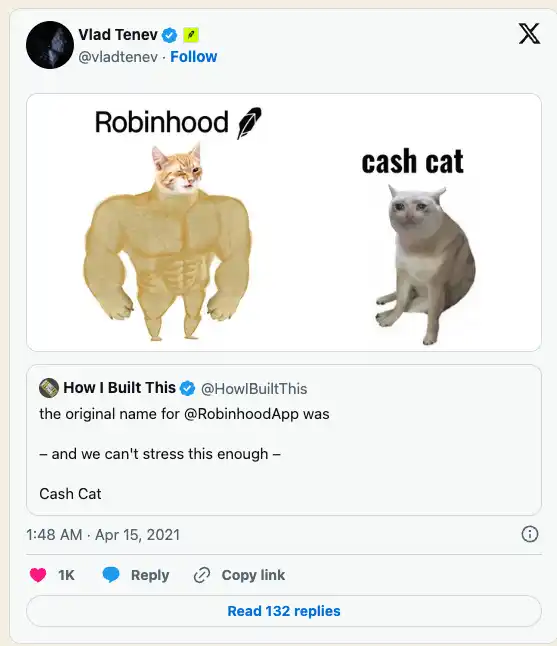
In early interviews, Tenev recalled the company naming process: "The original working name was actually CashCat, but everyone felt it wasn't powerful enough. My wife would introduce me to her friends by saying, 'They're the Robin Hoods of finance, doing things for the little guy.' That's how the name Robinhood stuck." This account has been cited in numerous company retrospectives after the GameStop saga, making it verifiable 'archaeological material.' This is the biggest difference between CASHCAT and other cat/dog coins built on fabricated stories.

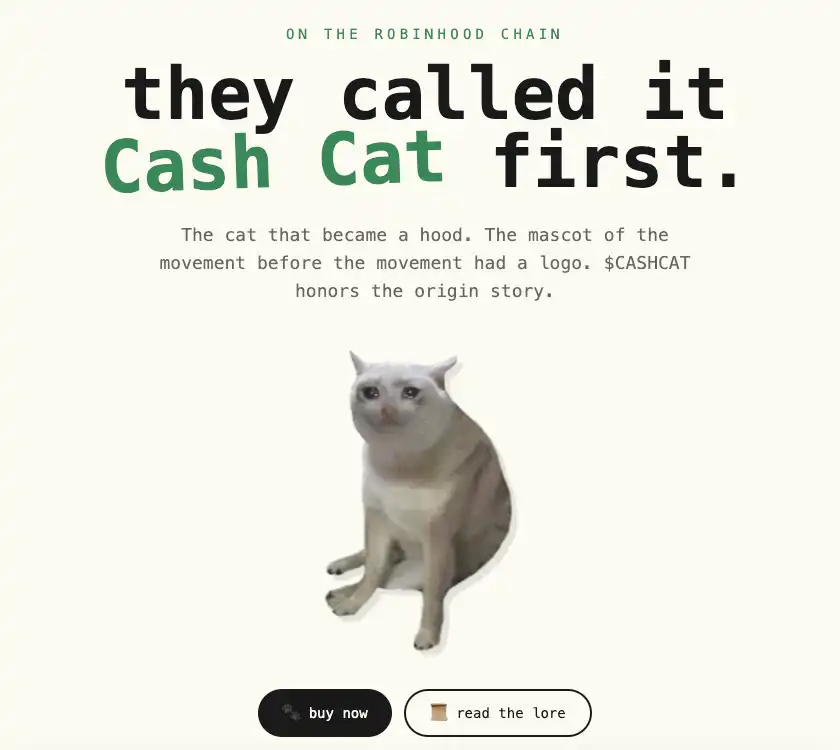
The token's structure is as simple as it gets. According to the project's website, the total supply is 1 billion tokens, with zero buy/sell taxes. The liquidity pool tokens have been fully burned, and it self-identifies as "zero utility, one hundred percent cat." The website also explicitly states that the project has no affiliation with Robinhood, calling it "fan fiction with a ticker."

The narrative is real, the product is unrelated. Readers need to distinguish these two facts: Robinhood's history provides this cat with viral material, but the company does not endorse it. The token's value is built entirely on attention, with no safety net when that attention fades.
Tenev Tweets Meme, Market Interprets It as Semi-Endorsement

What truly pushed the frenzy to its peak was Tenev himself.

On July 8th, Tenev posted on X (formerly Twitter): "We're making Robinhood Chain the best RWA public chain... but it runs Memes really well too." The post garnered over 500,000 views within hours. While he didn't mention CASHCAT by name, the timing coincided with the day of the massive surge. The community interpreted it as implicit approval, if not an assist, for the Meme frenzy on the chain.

There's a layer of historical irony here. During the 2021 GameStop short squeeze, Robinhood was thrust into Congressional hearings for restricting retail buys of GME, becoming the 'villain' in the retail narrative. Five years later, this company's blockchain completes its cold start, precisely relying on the Meme culture that retail investors excel at, with the object of speculation being the name the company itself discarded. The CASHCAT website even specifically plays on this irony: "Cash Cat doesn't do options, and it doesn't do PFOF (Payment for Order Flow)."
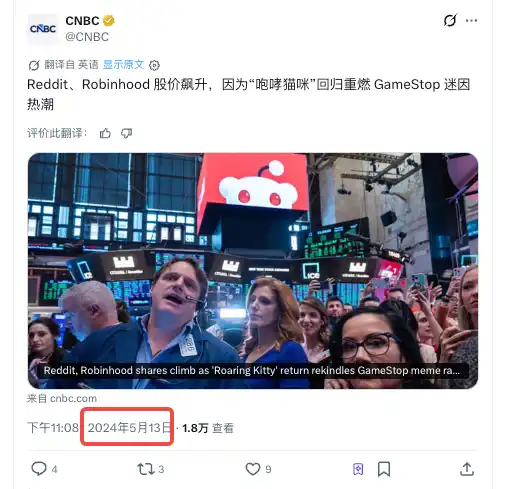
For traders, it's necessary to heavily discount the actual value of this tweet. A playful tweet from Tenev and an official Robinhood endorsement are separated by an entire compliance department. The company has no commitments regarding custody, listing, or providing liquidity for the Meme token. The effectiveness of such sentiment catalysts typically lasts only hours.

Copycat Tokens and Fake 'Roaring Kitty' Accounts Are Already in Position

Once the heat arrived, the tools to hunt retail investors followed.

First, cross-chain copycat tokens. According to aggregated monitoring information from CoinGecko, an identically named CASHCAT has already been deployed on the Solana chain. The original contract is deployed on Robinhood Chain with an address starting with 0x020b and ending with 18b4; identically named tokens on other chains are unrelated to the original.

Second, impersonator accounts shilling. For example, an X account with the handle "RK" and a username highly similar to GameStop saga protagonist 'Roaring Kitty' Keith Gill tweeted, "CASHCAT is the first major Meme on Robinhood chain," and included a Solana contract address in the post.

New chain, new Meme, fake accounts, cross-chain copycats—this combination has claimed victims in every past Meme cycle. If you still decide to participate now, at least do these three things: verify the contract address, use only official or reputable cross-chain bridges, and keep your position size to lottery-ticket levels.

CASHCAT's current total value is just a good story plus a wave of attention, neither of which has a retention mechanism.


Crypto di tendenza

Domande pertinenti

QWhat is CASHCAT, and why did it become the first viral asset on Robinhood Chain after its mainnet launch?

ACASHCAT is a meme token featuring a cartoon cat holding cash. It became the first viral asset on Robinhood Chain, launched on July 1, due to its connection to Robinhood's early history. The name 'CashCat' was Robinhood's original working name before it adopted 'Robinhood,' a fact shared by CEO Vlad Tenev. The token's price surged over 1700% in 24 hours, capturing significant market attention and liquidity on the new chain.

QWhat historical anecdote about Robinhood gives CASHCAT its narrative foundation?

AThe narrative foundation for CASHCAT comes from an anecdote shared by Robinhood CEO Vlad Tenev. He revealed that the company's original working name during its early days was 'CashCat,' but it was changed to 'Robinhood' because the latter was perceived as more powerful and aligned with the idea of 'stealing from the rich to give to the poor.' This true piece of company history differentiates CASHCAT from other meme tokens with fabricated backstories.

QHow did Robinhood CEO Vlad Tenev's actions on social media contribute to the hype around CASHCAT?

AOn July 8, Vlad Tenev posted on X, stating, 'We're building Robinhood Chain to be the best RWA public chain... but it runs Memes pretty well too.' Although he didn't mention CASHCAT by name, the timing coincided with the token's massive price surge. The community interpreted the post as a tacit endorsement or acknowledgment of the meme token activity on the chain, significantly fueling the hype and market speculation.

QWhat are the key risks associated with trading CASHCAT as highlighted in the article?

AThe article highlights several key risks: 1) The token's trading is concentrated on a single DEX (Uniswap V3) and a single trading pair (CASHCAT/WETH) on the new Robinhood Chain, leading to thin liquidity. 2) This results in high slippage, price volatility, and significant differences in price readings across data platforms. 3) The token's value is based solely on a historical narrative and market attention, with no underlying utility or backing from Robinhood, making it highly susceptible to rapid value loss when hype fades.

QWhat fraudulent activities emerged following CASHCAT's price surge, and what precautions should investors take?

AFollowing the surge, fraudulent activities included: 1) The deployment of fake 'CASHCAT' tokens on other blockchains like Solana, which are unrelated to the original Robinhood Chain token. 2) Impersonator accounts on social media, such as one mimicking 'Roaring Kitty' (Keith Gill), promoting these fake tokens. Investors are advised to: verify the correct contract address (the original starts with 0x020b and ends with 18b4), use only official or reputable cross-chain bridges, and limit their investment to an amount they are prepared to lose ('lottery ticket' sized positions).

Letture associate

Former Huawei 'Genius Teen' Who Questioned DeepSeek Interview Lands in 'Crossfire' from Web3 Investor

Former Huawei "Genius Youth" Li Bojie recently drew public attention by criticizing his interview experience with DeepSeek. The controversy escalated when Du Jun, co-founder of Web3 investment firm ABCDE Capital, publicly accused Li of being "the founder with the least sense of contractual spirit" he had ever cooperated with, sparking a dispute over Li's startup project, Metagent. Li detailed a frustrating DeepSeek interview where he was accused of potential plagiarism, leading him to end the session. The spotlight then shifted to his venture, Metagent, a Web3+AI project aiming to tokenize AI agents. ABCDE invested $1.5 million, with an initial $500k disbursed. Du Jun claimed the project's progress was severely lacking, with a poor-quality demo and minimal social media activity. He alleged Li stopped communicating, deleted his Telegram, and failed to provide proper financial reporting. In response, Li argued the remaining $1 million was never received, crippling operations and forcing salary cuts. He stated he left Metagent in October 2024 due to family reasons and Web3 compliance concerns, with board approval. He claimed to have fulfilled disclosure duties and that his subsequent projects avoided conflicting fields. Other investors, including ArkStream Capital, shared negative due diligence experiences, citing unprofessional contracts and evasive answers on tokenomics. Metagent's social media went silent in June 2024, effectively stalling. Li has since moved to a new consumer AI agent platform, Pine AI (formerly Logenic AI), which has raised $25 million in Series A funding. He served as its Chief Scientist but recently left, clarifying he was not the founder and departed due to a shift in research interests.

Foresight News21 min fa

Former Huawei 'Genius Teen' Who Questioned DeepSeek Interview Lands in 'Crossfire' from Web3 Investor

Foresight News21 min fa

SemiAnalysis: Anthropic's Q3 Profit to Exceed $1 Billion

Research firm SemiAnalysis reveals that Anthropic is reshaping the AI commercialization landscape with profitability and growth rates far exceeding competitors. Leveraging a high-margin, API-centric business model, Anthropic has become a leader in the B2B AI market. The report projects that Anthropic will achieve a GAAP EBIT of $1 billion in Q3 2026, with a 6% margin. Its Annual Recurring Revenue (ARR) has surged from $9 billion at the end of 2025 to over $60 billion currently. If it maintains a Net New ARR (NNARR) of approximately $15 billion per month, its ARR could reach $300 billion by the end of 2027, implying a $6 trillion enterprise value and making it the world's most valuable company. Anthropic secretly filed for an IPO on June 1st. SemiAnalysis argues the timing is strategically urgent due to narrowing capital market windows as rivals like Alphabet and Meta secure major funding. The superior financials and business model suggest Anthropic should go public before OpenAI to seize the competitive initiative. The performance inflection stems from the explosive adoption of Claude Code, which now accounts for over 7% of all GitHub commits, driving monthly NNARR from $3 billion in January to $11 billion in March. Anthropic's revenue structure differs significantly from OpenAI's. Approximately 75-85% of Anthropic's ARR comes from usage-based API fees, with consumer subscriptions constituting only about 5%. In contrast, over 65% of OpenAI's Q1 2026 revenue was from subscriptions, with ~40% from consumers. The API model's key advantage is no per-user revenue cap, enabling growth within existing accounts. Anthropic's Net Revenue Retention (NRR) is an extraordinary 500%. This drives superior gross margins, now in the mid-60% range versus -94% in 2024, with API margins exceeding 80%. Core drivers are improved inference efficiency and a largely enterprise-focused model without the cost of serving hundreds of millions of free users. The report introduces "EBTIT" (Earnings Before Training & Interest & Taxes) to measure re-investment capacity, projecting Anthropic's cumulative EBTIT through 2028 will be $250 billion higher than OpenAI's. Over 65% of lab ARR currently comes from programming use cases. Cybersecurity is seen as the next major vertical, with upcoming model releases like Fable expected to further increase token pricing and expand NNARR. Indirect sales via hyperscaler platforms (AWS Bedrock, Azure Foundry) now account for 15-20% of ARR. A core constraint is compute supply. By 2030, combined unconstrained compute demand from Anthropic and OpenAI could exceed 100 GW, far outstripping projected new capacity. IPO proceeds are seen as crucial to lock in future compute resources. Key risks include potential price cuts by OpenAI, competitive pressure from Google DeepMind and Meta in coding models, potential government restrictions on frontier model releases, and margin dilution from growing indirect "Token-as-a-Service" sales. Regulatory actions that narrow the capability gap between open-source and proprietary models are highlighted as a fundamental threat to Anthropic's moat.

marsbit34 min fa

SemiAnalysis: Anthropic's Q3 Profit to Exceed $1 Billion

marsbit34 min fa

Trading

Spot

Articoli Popolari

Come comprare CAT

Benvenuto in HTX.com! Abbiamo reso l'acquisto di Simon's Cat (CAT) semplice e conveniente. Segui la nostra guida passo passo per intraprendere il tuo viaggio nel mondo delle criptovalute.Step 1: Crea il tuo Account HTXUsa la tua email o numero di telefono per registrarti il tuo account gratuito su HTX. Vivi un'esperienza facile e sblocca tutte le funzionalità,Crea il mio accountStep 2: Vai in Acquista crypto e seleziona il tuo metodo di pagamentoCarta di credito/debito: utilizza la tua Visa o Mastercard per acquistare immediatamente Simon's CatCAT.Bilancio: Usa i fondi dal bilancio del tuo account HTX per fare trading senza problemi.Terze parti: abbiamo aggiunto metodi di pagamento molto utilizzati come Google Pay e Apple Pay per maggiore comodità.P2P: Fai trading direttamente con altri utenti HTX.Over-the-Counter (OTC): Offriamo servizi su misura e tassi di cambio competitivi per i trader.Step 3: Conserva Simon's Cat (CAT)Dopo aver acquistato Simon's Cat (CAT), conserva nel tuo account HTX. In alternativa, puoi inviare tramite trasferimento blockchain o scambiare per altre criptovalute.Step 4: Scambia Simon's Cat (CAT)Scambia facilmente Simon's Cat (CAT) nel mercato spot di HTX. Accedi al tuo account, seleziona la tua coppia di trading, esegui le tue operazioni e monitora in tempo reale. Offriamo un'esperienza user-friendly sia per chi ha appena iniziato che per i trader più esperti.

80 Totale visualizzazioniPubblicato il 2024.12.13Aggiornato il 2026.06.02

Come comprare CAT

Cosa è TRUMP CAT

Famiglia Trump Cat, $Trump Cat: Un Mistero Svelato Introduzione Nel panorama in continua evoluzione dei progetti crypto e delle innovazioni web3, è emerso un fenomeno curioso—uno che sembra trovarsi a cavallo tra criptovaluta e cultura dei meme di internet. Questo è l'enigmatico “Famiglia Trump Cat”, noto anche come “$Trump Cat”. Sebbene possa suscitare curiosità tra gli appassionati di crypto, la realtà appare molto lontana dalla definizione standard di un progetto crypto. Questo articolo mira a esplorare il concetto di Famiglia Trump Cat, portando alla luce il contesto che la circonda e chiarendo il suo status nel regno delle criptovalute. Cos'è Famiglia Trump Cat, $Trump Cat? A prima vista, si potrebbe pensare che “Famiglia Trump Cat” si riferisca a una legittima criptovaluta o progetto web3. Tuttavia, dopo un'indagine più approfondita, diventa evidente che il termine manca delle caratteristiche di un'impresa crypto tradizionale. Invece, “Trump Cat” sembra essere prevalentemente associato alla cultura dei meme virali che è emersa a seguito delle dichiarazioni controverse dell'ex presidente degli Stati Uniti Donald Trump riguardo agli immigrati haitiani. La copertura mediatica ha scatenato una miriade di meme, interpretazioni umoristiche e una ondata di commento sociale. Questi meme ritraggono varie forme di satira incentrate sul dialogo di Trump, spesso utilizzando gatti in scenari comici e talvolta assurdi. Piuttosto che un progetto strutturato volto ad affrontare avanzamenti tecnologici o transazioni finanziarie, il concetto di “Famiglia Trump Cat” esiste prevalentemente nel regno dell'umorismo di internet. Chi è il Creatore di Famiglia Trump Cat, $Trump Cat? Nell'indagine su chi si cela dietro la “Famiglia Trump Cat”, diventa chiaro che non esiste un creatore identificabile o una figura fondatrice. Il fenomeno sembra essere originato dall'espressione collettiva di internet, piuttosto che da un singolo visionario con un obiettivo di progetto definito. Questa anonimato sottolinea ulteriormente il suo status di meme piuttosto che di iniziativa strutturata simile alla maggior parte dei progetti crypto noti. Chi sono gli Investitori di Famiglia Trump Cat, $Trump Cat? Dato che “Famiglia Trump Cat” non si conforma alle caratteristiche di un progetto crypto rispettabile, la questione dell'investimento diventa irrilevante. Non ci sono state fondazioni o organizzazioni stabilite che esprimano supporto per un progetto con questo nome. Invece, ciò che esiste sono contributori individuali alla cultura dei meme—hobbyisti, artisti e utenti dei social media che popolano collettivamente internet con le loro interpretazioni e umorismo riguardanti il termine “Trump Cat”. Questa crescita organica all'interno della comunicazione umana digitale riflette più un commento sociale che un panorama di investimenti finanziari. Come Funziona Famiglia Trump Cat, $Trump Cat? Se si cerca di stabilire come “Famiglia Trump Cat” operi, la risposta è molto diversa da ciò che ci si potrebbe aspettare dai progetti crypto standard. Non ci sono meccanismi operativi, innovazioni tecnologiche o caratteristiche uniche intrinseche a questo fenomeno. Invece, esiste attraverso la diffusione virale online, facendo affidamento sulle piattaforme dei social media per la proliferazione. Il “come” risiede nel regno della cultura e della comunicazione—la sua essenza deriva dalle dinamiche dell'interazione sociale piuttosto che da protocolli crypto stabiliti o funzionalità blockchain. Ciò che rende “Trump Cat” unico, se mai, è il modo in cui drammatizza un dialogo politico attraverso l'umorismo. Le persone utilizzano immagini coinvolgenti, battute interne e narrazioni inventive per esprimere sentimenti riguardo a figure politiche e questioni sociali. Il potere dei meme trascende la comunicazione tradizionale, racchiudendo pensieri complessi in una forma che risuona ampiamente, ma rimane elusiva in termini di successo quantificabile o obiettivi strutturati. Cronologia di Famiglia Trump Cat, $Trump Cat Settembre 2024: Il dibattito riguardante i commenti di Donald Trump sugli immigrati haitiani che presumibilmente consumano animali domestici guadagna terreno online, portando a una fioritura di meme e interpretazioni parodistiche su varie piattaforme. Impatto Continuo: Dopo questo periodo, il fenomeno “Trump Cat” continua a vivere mentre gli utenti dei social media sfruttano l'umorismo per affrontare, criticare o semplicemente celebrare l'assurdità delle conversazioni e degli eventi politici. È essenziale notare che poiché “Famiglia Trump Cat” manca della struttura formale di un progetto tradizionale, la cronologia consiste principalmente di osservazioni aneddotiche piuttosto che di traguardi notevoli comunemente trovati in iniziative crypto riconosciute. Punti Chiave Cultura dei Meme: Piuttosto che un'iniziativa crypto strutturata, “Trump Cat” si allinea di più con il panorama in evoluzione dei meme di internet. Origine del Termine: La genesi di “Trump Cat” è direttamente correlata ai commenti sulle osservazioni del presidente Trump riguardo agli immigrati haitiani, scatenando una rappresentazione umoristica diffusa. Assenza di un Quadro di Progetto: Il termine non si allinea con alcun obiettivo di progetto definito, creatori o investitori, segnalandolo come un'esperienza culturale nuova piuttosto che un progetto crypto. Conclusione In sintesi, l'indagine su “Famiglia Trump Cat, $Trump Cat” rivela un fenomeno radicato nella cultura dei meme di internet piuttosto che un progetto riconosciuto nei settori delle criptovalute o del web3. La viralità che circonda il termine nasce dall'impegno collettivo degli utenti, riflettendo il discorso digitale moderno piuttosto che un'iniziativa formalizzata con struttura o lungimiranza strategica. Per tutta la curiosità che può suscitare tra coloro che cercano il prossimo grande progetto crypto, “Famiglia Trump Cat” serve come testimonianza della creatività, dell'umorismo e spesso della relazione assurda dell'umanità con la politica nell'era digitale.

274 Totale visualizzazioniPubblicato il 2025.01.22Aggiornato il 2025.01.22

Cosa è TRUMP CAT

Discussioni

Benvenuto nella Community HTX. Qui puoi rimanere informato sugli ultimi sviluppi della piattaforma e accedere ad approfondimenti esperti sul mercato. Le opinioni degli utenti sul prezzo di CAT CAT sono presentate come di seguito.

活动图片