This Russell Signal Has Predicted Every Bitcoin Bull Market And It Just Got Triggered Again

bitcoinistPubblicato 2026-05-08Pubblicato ultima volta 2026-05-08

Introduzione

Crypto analyst Bull Theory highlights a signal from the Russell 2000 index that has historically preceded every major Bitcoin bull market. The index has reportedly broken out after its longest consolidation period in over 20 years (64 months), a pattern seen before the bull runs of 2012, 2016, and 2020. The analyst explains this breakout signals increasing market liquidity and risk appetite, as capital flows to risk-on assets like crypto. This view is supported by a rising ISM Manufacturing PMI, another liquidity indicator. While noting past performance doesn't guarantee future results, the analyst suggests the setup for a powerful new Bitcoin bull market is present. Separately, Bitmine's Tom Lee suggests the bear market is over if Bitcoin closes above $76,000 for a third consecutive month—a pattern not seen in prior bear markets. Bitcoin is currently trading around $79,600, having closed March and April positively, though some analysts warn of a potential bull trap and further decline.

Crypto pundit Bull Theory has alluded to a Russell 2000 signal, which has always triggered every major Bitcoin bull market. This signal is again said to have triggered, signaling that another major bull run may be on the horizon.

Russell 2000 Signal Points To Another Bitcoin Bull Market

In an X post, Bull Theory stated that the Russell 2000 just gave the same signal that has triggered every major Bitcoin bull market in the past. The pundit further revealed that this index has broken out after consolidating for 64 months, which is its longest base in over 20 years. This matters because of how a bull run has followed every breakout.

The pundit pointed to the fourth quarters of 2012, 2016, and 2020, when the Russell broke out, after which Bitcoin bull markets followed. Now, the Russell has broken out again after 64 months, which is 17 months longer than the consolidation prior to the three previous breakouts. Bull Theory explained that the Russell 2000 is a leading indicator of liquidity and risk appetite, as when small caps rally, it means that capital is flowing to risk-on assets such as crypto.
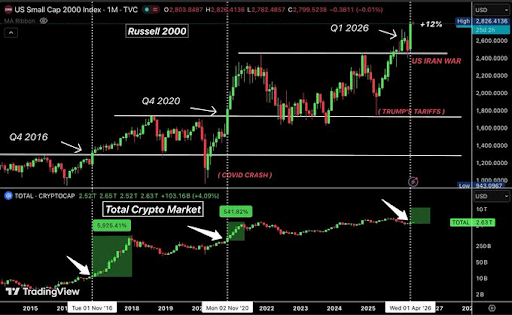
Source: Chart from Bull Theory on X

Bull Theory also noted that the length of this consolidation matters, as it means liquidity was constrained for an unusually long time. However, the breakout signals that conditions have materially changed. Furthermore, the pundit stated that the ISM Manufacturing PMI confirms liquidity expansion, as the Bitcoin cycle has historically begun 4 to 5 months after the PMI bottoms.

As such, Bull Theory believes that the small caps and the PMI are sending the same message that liquidity is rising and risk appetite is returning, which means that the setup for a new Bitcoin bull market is here. The pundit added that the upcoming bull run could be more powerful given the depth of the consolidation. He warned that past performance is never a guarantee of future results, but that the Russell 2000 has a strong track record of calling major shifts in the liquidity cycle.

The Bear Market Is Over If This Happens

Speaking at the Consensus conference, Bitmine’s Chairman Tom Lee said that the bear market is definitely over if Bitcoin closes this month above $76,000. He explained that BTC has never closed three consecutive months in the green in prior bear markets, which is why the crypto winter may be over.

BTC notably closed March and April in the green despite the ongoing U.S.-Iran war, signaling that the Bitcoin bull market may be back. However, analysts such as Doctor Profit have warned that the recent rally is simply a bull trap, with the leading crypto likely to see another massive decline.

At the time of writing, the Bitcoin price is trading at around $79,600, down in the last 24 hours, according to data from CoinMarketCap.

BTC trading at $79,679 on the 1D chart | Source: BTCUSDT on Tradingview.com

Domande pertinenti

QWhat is the Russell 2000 signal and what does it predict according to the article?

AThe Russell 2000 signal, as discussed in the article, refers to a breakout of the Russell 2000 index after a period of consolidation. According to crypto pundit Bull Theory, this signal has historically predicted every major Bitcoin bull market, as these bull runs have followed the index's breakout in the past.

QHow long did the Russell 2000 consolidate before the latest breakout mentioned in the article?

AAccording to the article, the Russell 2000 consolidated for 64 months before the latest breakout, which is described as its longest base in over 20 years and 17 months longer than the consolidations prior to the previous three breakouts.

QAccording to Tom Lee, when is the Bitcoin bear market definitely over?

AAccording to Bitmine's Chairman Tom Lee at the Consensus conference, the Bitcoin bear market is definitely over if Bitcoin closes the current month (the article's context) above $76,000. He bases this on the historical precedent that BTC has never closed three consecutive months in the green during prior bear markets.

QWhat other indicator does Bull Theory mention that confirms liquidity expansion and its relation to the Bitcoin cycle?

ABull Theory also mentions the ISM Manufacturing PMI as an indicator that confirms liquidity expansion. The pundit states that historically, the Bitcoin cycle has begun 4 to 5 months after the PMI bottoms.

QWhat is the current Bitcoin price and its 24-hour trend as reported at the end of the article?

AAt the time of writing reported in the article, the Bitcoin price is trading at around $79,600, showing a decline in the last 24 hours.

Letture associate

Undercover in Crypto for 8 Years, 5 Jobs: The Revolution and Scam in My Eyes

"Undercover in Crypto for 8 Years, 5 Jobs: The Revolution and the Scam I Saw" In 2017, the author entered crypto believing it would revolutionize everything: replacing fiat, disintermediating finance, and shifting power to users. Eight years later, almost none of that has happened as predicted. The author worked at Circle, Messari, Coinbase, and Crossmint, witnessing the asset class grow from under $10B to over $4T, through multiple speculative bubbles and a near-systemic crisis. The journey began with the 2017-18 ICO frenzy, an "internet bubble 2.0" fueled by Ethereum. The promised "decentralized Uber" never materialized; instead, it was an era of greed, fraud, and rampant speculation where founders cashed out early. In the 2018-19 hangover, the focus shifted. The seeds of crypto's next phase were planted: stablecoins (like USDC) for borderless dollars and DeFi (decentralized finance) for rebuilding financial primitives like lending and trading on-chain. The COVID-19 pandemic and massive monetary stimulus triggered "DeFi Summer" in 2020-21. DeFi's value soared 250x to $180B, but it resembled a high-stakes game for mercenary traders with "food-themed" tokens. A new bubble formed around NFTs, with digital art selling for millions. The 2022 "crypto winter" mirrored the 2008 financial crisis. The collapse of the algorithmic stablecoin Terra (UST) triggered a chain reaction, bringing down hedge funds (Three Arrows Capital) and lending platforms (Celsius, Voyager). The final blow was the implosion of FTX and Sam Bankman-Fried, who had misused customer funds. This was crypto's "Lehman Moment." After the crash, the Biden administration's hostile regulatory crackdown under the SEC pushed innovation toward the legally safest, most absurd path: meme coins. The 2024 meme coin mania peaked at $150B before imploding. This political pressure, however, mobilized the industry. Donald Trump capitalized, promising a crypto-friendly stance, which many credit for helping him win the 2024 election. Trump's victory marked a turning point. A pro-crypto SEC chair took over, the "GENIUS Act" provided clear stablecoin rules in 2025, and institutional adoption accelerated. Circle (maker of USDC) IPO'd, and traditional giants like MoneyGram began using stablecoins for cross-border payments via firms like Crossmint. Looking back, the predicted consumer revolution (decentralized Uber) didn't happen. Instead, crypto built the plumbing for a new internet financial system. Each boom/bust cycle refined the infrastructure for global, 24/7 finance accessible to anyone online. The $300B+ stablecoin market, settling tens of trillions annually and creating demand for U.S. debt, is now a strategic U.S. priority. The future lies in convergence, not replacement. Crypto will be the backend, invisible to most users. The next frontier is integration with AI, where autonomous agents will use crypto wallets and stablecoins to transact. The result will be a global financial system equally accessible in New York or Nigeria, paving the way for countless new innovations.

marsbit28 min fa

Undercover in Crypto for 8 Years, 5 Jobs: The Revolution and Scam in My Eyes

marsbit28 min fa

AI Relay Stations: The Hidden Pitfalls Behind Low Costs, How to Screen and Avoid Them?

AI Relay Stations: The Hidden Risks Behind Low Costs and How to Avoid Pitfalls AI relay stations are becoming a popular gateway to various models, offering lower prices, a wider selection, and a unified interface for tools like Claude Code and Cursor. However, their appeal masks significant risks. Users may unknowingly surrender prompts, code, business documents, customer data, and even full project contexts. The demand is driven by genuine needs: cost savings compared to expensive official APIs (e.g., GPT, Claude), easier access amid regional restrictions, and the push from AI-powered development tools. But not everyone needs a relay station. Light users should exhaust free official quotas first. Heavy users, like developers, can adopt a layered approach, using top models for critical tasks and cheaper local models for routine work. If a relay station is necessary, follow a careful selection and usage protocol: 1. **Verify First:** Test model authenticity, latency, and stability before purchasing credits. Check the quality of provided documentation. 2. **Isolate Configuration:** Use unique API keys for each service, manage them via environment variables, and set usage limits to control costs and potential damage from leaks. 3. **Classify Your Data:** Develop a habit of data grading before sending requests. Only send non-sensitive, public information directly. Desensitize semi-sensitive data (e.g., internal documents) by removing names and specifics. Never send highly sensitive data like passwords, private keys, or confidential customer information. 4. **Handle AI Coding Tools Separately:** Tools like Cursor can send extensive project context (file contents, directory structures, error logs). Use relay stations only for independent, non-core code tasks. For sensitive projects, switch back to official APIs or local models. 5. **Monitor and Prepare an Exit:** Regularly check billing statements, follow platform updates and community feedback, and always have a backup provider. Ensure your setup uses standard OpenAI-compatible APIs for easy migration. Ultimately, relay stations are tools, not default solutions. Their value lies in solving access needs at a controlled cost, but maintaining that control requires proactive risk management through verification, isolation, data classification, and continuous monitoring.

marsbit31 min fa

AI Relay Stations: The Hidden Pitfalls Behind Low Costs, How to Screen and Avoid Them?

marsbit31 min fa

US Stock Registration Giant Acquired by Cryptocurrency Exchange, Accelerating Stock Tokenization

Bullish (NYSE: BLSH), a crypto asset trading platform, announced a $4.2 billion acquisition of Equiniti, a major Wall Street transfer agent serving nearly 3,000 public companies. This move aims to accelerate stock tokenization by securing a critical, regulated piece of financial infrastructure that maintains official shareholder records and handles dividends. The deal signals intensifying competition in the tokenization race. True "native" on-chain securities require a licensed transfer agent for legal ownership registration—a bottleneck Bullish now aims to solve. The acquisition positions Bullish to bridge traditional equity markets with blockchain, leveraging Equiniti's extensive client network and compliance credentials. This follows recent key developments: ICE (NYSE's parent) plans a new tokenized securities platform, and the SEC approved Nasdaq's tokenized stock pilot. Bullish's strategy is to establish a neutral, cross-platform infrastructure ahead of these initiatives. The combined company expects high growth from its tokenization business, targeting the vast U.S. equity market. The narrative is shifting from "crypto vs. Wall Street" to convergence, where legacy infrastructure is upgraded onto blockchain rails. The next 18 months will be crucial for observing the rollout of NYSE's platform, Bullish-Equiniti integration, and the broader adoption of tokenized securities by institutions.

marsbit55 min fa

US Stock Registration Giant Acquired by Cryptocurrency Exchange, Accelerating Stock Tokenization

marsbit55 min fa

Trading

Spot
Futures

Articoli Popolari

Cosa è BITCOIN

Comprendere HarryPotterObamaSonic10Inu (ERC-20) e la sua posizione nel mondo delle criptovalute Negli ultimi anni, il mercato delle criptovalute ha assistito a un aumento della popolarità delle meme coin, catturando l'interesse non solo dei trader, ma anche di coloro che cercano coinvolgimento comunitario e valore di intrattenimento. Tra questi token unici c'è HarryPotterObamaSonic10Inu (ERC-20), un progetto intrigante che mescola riferimenti culturali nel tessuto delle criptovalute. Questo articolo esplora gli aspetti chiave di HarryPotterObamaSonic10Inu, analizzando i suoi meccanismi, l'etica guidata dalla comunità e il suo coinvolgimento con il panorama crittografico più ampio. Che cos'è HarryPotterObamaSonic10Inu (ERC-20)? Come suggerisce il suo nome, HarryPotterObamaSonic10Inu è una meme coin costruita sulla blockchain di Ethereum, classificata secondo lo standard ERC-20. A differenza delle criptovalute tradizionali che possono enfatizzare l'utilità pratica o il potenziale investimento, questo token prospera grazie al valore di intrattenimento e alla forza della sua comunità. Il progetto mira a creare un ambiente in cui gli utenti coinvolti possono riunirsi, condividere idee e partecipare ad attività ispirate a diversi fenomeni culturali. Una caratteristica notevole di HarryPotterObamaSonic10Inu è la zero tassa sulle transazioni. Questo elemento allettante tende a incoraggiare il trading e il coinvolgimento della comunità, privo di costi aggiuntivi che possono scoraggiare i trader di piccole dimensioni. L'offerta totale della moneta è fissata a un miliardo di token, un numero che segna la sua intenzione di mantenere una circolazione sostanziale all'interno della comunità. Creatore di HarryPotterObamaSonic10Inu (ERC-20) Le origini di HarryPotterObamaSonic10Inu sono avvolte in un certo mistero; i dettagli sul creatore rimangono sconosciuti. Lo sviluppo di questo token non presenta un team identificabile o un piano esplicito, cosa non rara nel settore delle meme coin. Invece, il progetto è emerso organicamente, con il suo progresso fortemente dipendente dall'entusiasmo e dalla partecipazione della sua comunità. Investitori di HarryPotterObamaSonic10Inu (ERC-20) Per quanto riguarda investimenti esterni e finanziamenti, HarryPotterObamaSonic10Inu rimane ambiguo. Il token non elenca alcuna fondazione di investimento conosciuta o un sostegno organizzativo significativo. Invece, la linfa vitale del progetto è la sua comunità di base, che informa la sua crescita e sostenibilità attraverso azioni collettive e coinvolgimento nello spazio crittografico. Come funziona HarryPotterObamaSonic10Inu (ERC-20)? In quanto meme coin, HarryPotterObamaSonic10Inu opera principalmente al di fuori delle strutture tradizionali che governano spesso il valore degli asset. Ci sono diversi aspetti distintivi che definiscono il funzionamento del progetto: Transazioni senza tasse: Senza costi fiscali sulle transazioni, gli utenti possono comprare e vendere liberamente il token senza preoccuparsi di costi nascosti. Coinvolgimento della comunità: Il progetto prospera sull'interazione della comunità, sfruttando le piattaforme social per creare entusiasmo e facilitare il coinvolgimento. Discussioni, condivisione di contenuti e coinvolgimento sono elementi cruciali che aiutano ad espandere la sua portata e a favorire la lealtà tra i sostenitori. Nessuna utilità pratica: Va notato che HarryPotterObamaSonic10Inu non offre un'utilità concreta all'interno dell'ecosistema finanziario. Piuttosto, è classificato come un token principalmente per attività di intrattenimento e comunitarie. Riferimento culturale: Il token incorpora astutamente elementi della cultura pop per attirare interesse, collegandosi a appassionati di meme e seguaci delle criptovalute. HarryPotterObamaSonic10Inu esemplifica come le meme coin operino in modo diverso rispetto ai progetti di criptovalute più tradizionali, entrando nel mercato come costrutti sociali innovativi piuttosto che come asset utilitari. Cronologia di HarryPotterObamaSonic10Inu (ERC-20) La storia di HarryPotterObamaSonic10Inu è segnata da diversi traguardi notevoli: Creazione: Il token è emerso da un meme virale, catturando l'immaginazione di molti appassionati di criptovalute. Le date di creazione specifiche non sono disponibili, sottolineando la sua crescita organica. Inserimento negli scambi: HarryPotterObamaSonic10Inu ha fatto il suo ingresso in vari scambi, consentendo un accesso e un trading più facili da parte della comunità. Iniziative di coinvolgimento della comunità: Attività in corso volte a migliorare l'interazione della comunità, comprese gare, campagne sui social media e generazione di contenuti da parte di fan e sostenitori. Piani di espansione futura: La tabella di marcia del progetto include il lancio di una collezione NFT, merchandising e un sito di eCommerce relativo ai suoi temi culturali, coinvolgendo ulteriormente la comunità e cercando di aggiungere più dimensioni al suo ecosistema. Punti chiave su HarryPotterObamaSonic10Inu (ERC-20) Natura guidata dalla comunità: Il progetto dà priorità al contributo collettivo e alla creatività, garantendo che il coinvolgimento degli utenti sia al centro del suo sviluppo. Classificazione come meme coin: Rappresenta l'epitome delle criptovalute basate sull'intrattenimento, distinguendosi dai veicoli d'investimento tradizionali. Nessuna affiliazione diretta con Bitcoin: Nonostante la somiglianza nel nome del ticker, HarryPotterObamaSonic10Inu è distintivo e non ha alcuna relazione con Bitcoin o altre criptovalute consolidate. Focus sulla collaborazione: HarryPotterObamaSonic10Inu è progettato per creare uno spazio per la collaborazione e la condivisione di storie tra i suoi detentori, fornendo un canale per la creatività e il legame comunitario. Prospettive future: L'ambizione di espandersi oltre il suo presupposto iniziale verso NFT e merchandising delinea un percorso per il progetto per potenzialmente entrare in strade più mainstream all'interno della cultura digitale. Poiché le meme coin continuano a catturare l'immaginazione della comunità crittografica, HarryPotterObamaSonic10Inu (ERC-20) si distingue per i suoi legami culturali e il suo approccio centrato sulla comunità. Anche se potrebbe non adattarsi al modello tipico di un token orientato all'utilità, la sua essenza risiede nella gioia e nella camaraderia coltivate tra i suoi sostenitori, evidenziando la natura in evoluzione delle criptovalute in un'epoca sempre più digitale. Con la continuazione dello sviluppo del progetto, sarà importante osservare come le dinamiche della comunità influenzano la sua traiettoria nel panorama in continuo cambiamento della tecnologia blockchain.

1.5k Totale visualizzazioniPubblicato il 2024.04.01Aggiornato il 2024.12.03

Cosa è BITCOIN

Come comprare BTC

Benvenuto in HTX.com! Abbiamo reso l'acquisto di Bitcoin (BTC) semplice e conveniente. Segui la nostra guida passo passo per intraprendere il tuo viaggio nel mondo delle criptovalute.Step 1: Crea il tuo Account HTXUsa la tua email o numero di telefono per registrarti il tuo account gratuito su HTX. Vivi un'esperienza facile e sblocca tutte le funzionalità,Crea il mio accountStep 2: Vai in Acquista crypto e seleziona il tuo metodo di pagamentoCarta di credito/debito: utilizza la tua Visa o Mastercard per acquistare immediatamente BitcoinBTC.Bilancio: Usa i fondi dal bilancio del tuo account HTX per fare trading senza problemi.Terze parti: abbiamo aggiunto metodi di pagamento molto utilizzati come Google Pay e Apple Pay per maggiore comodità.P2P: Fai trading direttamente con altri utenti HTX.Over-the-Counter (OTC): Offriamo servizi su misura e tassi di cambio competitivi per i trader.Step 3: Conserva Bitcoin (BTC)Dopo aver acquistato Bitcoin (BTC), conserva nel tuo account HTX. In alternativa, puoi inviare tramite trasferimento blockchain o scambiare per altre criptovalute.Step 4: Scambia Bitcoin (BTC)Scambia facilmente Bitcoin (BTC) nel mercato spot di HTX. Accedi al tuo account, seleziona la tua coppia di trading, esegui le tue operazioni e monitora in tempo reale. Offriamo un'esperienza user-friendly sia per chi ha appena iniziato che per i trader più esperti.

3.8k Totale visualizzazioniPubblicato il 2024.12.12Aggiornato il 2025.03.21

Come comprare BTC

Cosa è $BITCOIN

ORO DIGITALE ($BITCOIN): Un'Analisi Completa Introduzione all'ORO DIGITALE ($BITCOIN) L'ORO DIGITALE ($BITCOIN) è un progetto basato su blockchain che opera sulla rete Solana, con l'obiettivo di combinare le caratteristiche dei metalli preziosi tradizionali con l'innovazione delle tecnologie decentralizzate. Sebbene condivida un nome con Bitcoin, spesso definito “oro digitale” a causa della sua percezione come riserva di valore, l'ORO DIGITALE è un token separato progettato per creare un ecosistema unico all'interno del panorama Web3. Il suo obiettivo è posizionarsi come un asset digitale alternativo valido, anche se i dettagli riguardanti le sue applicazioni e funzionalità sono ancora in fase di sviluppo. Cos'è l'ORO DIGITALE ($BITCOIN)? L'ORO DIGITALE ($BITCOIN) è un token di criptovaluta esplicitamente progettato per l'uso sulla blockchain di Solana. A differenza di Bitcoin, che fornisce un ruolo di stoccaggio di valore ampiamente riconosciuto, questo token sembra concentrarsi su applicazioni e caratteristiche più ampie. Aspetti notevoli includono: Infrastruttura Blockchain: Il token è costruito sulla blockchain di Solana, nota per la sua capacità di gestire transazioni ad alta velocità e a basso costo. Dinamiche di Offerta: L'ORO DIGITALE ha un'offerta massima fissata a 100 quadrilioni di token (100P $BITCOIN), sebbene i dettagli riguardanti la sua offerta circolante siano attualmente non divulgati. Utilità: Sebbene le funzionalità precise non siano esplicitamente delineate, ci sono indicazioni che il token potrebbe essere utilizzato per varie applicazioni, potenzialmente coinvolgendo applicazioni decentralizzate (dApp) o strategie di tokenizzazione degli asset. Chi è il Creatore dell'ORO DIGITALE ($BITCOIN)? Attualmente, l'identità dei creatori e del team di sviluppo dietro l'ORO DIGITALE ($BITCOIN) rimane sconosciuta. Questa situazione è tipica tra molti progetti innovativi nel settore blockchain, in particolare quelli allineati con la finanza decentralizzata e i fenomeni delle meme coin. Sebbene tale anonimato possa favorire una cultura guidata dalla comunità, intensifica le preoccupazioni riguardo alla governance e alla responsabilità. Chi sono gli Investitori dell'ORO DIGITALE ($BITCOIN)? Le informazioni disponibili indicano che l'ORO DIGITALE ($BITCOIN) non ha alcun sostenitore istituzionale noto o investimenti di venture capital prominenti. Il progetto sembra operare su un modello peer-to-peer incentrato sul supporto e sull'adozione della comunità piuttosto che su percorsi di finanziamento tradizionali. La sua attività e liquidità si trovano principalmente su exchange decentralizzati (DEX), come PumpSwap, piuttosto che su piattaforme di trading centralizzate consolidate, evidenziando ulteriormente il suo approccio di base. Come Funziona l'ORO DIGITALE ($BITCOIN) Le meccaniche operative dell'ORO DIGITALE ($BITCOIN) possono essere elaborate in base al suo design blockchain e alle caratteristiche della rete: Meccanismo di Consenso: Sfruttando il proof-of-history (PoH) unico di Solana combinato con un modello di proof-of-stake (PoS), il progetto garantisce una validazione efficiente delle transazioni contribuendo all'alta performance della rete. Tokenomics: Sebbene meccanismi deflazionistici specifici non siano stati dettagliati ampiamente, l'ampia offerta massima di token implica che potrebbe soddisfare microtransazioni o casi d'uso di nicchia che devono ancora essere definiti. Interoperabilità: Esiste il potenziale per l'integrazione con l'ecosistema più ampio di Solana, inclusi vari piattaforme di finanza decentralizzata (DeFi). Tuttavia, i dettagli riguardanti integrazioni specifiche rimangono non specificati. Cronologia degli Eventi Chiave Ecco una cronologia che evidenzia traguardi significativi riguardanti l'ORO DIGITALE ($BITCOIN): 2023: Il dispiegamento iniziale del token avviene sulla blockchain di Solana, contrassegnato dal suo indirizzo di contratto. 2024: L'ORO DIGITALE guadagna visibilità poiché diventa disponibile per il trading su exchange decentralizzati come PumpSwap, consentendo agli utenti di scambiarlo contro SOL. 2025: Il progetto assiste a un'attività di trading sporadica e a un potenziale interesse per impegni guidati dalla comunità, sebbene non siano state documentate partnership significative o avanzamenti tecnici fino ad ora. Analisi Critica Punti di Forza Scalabilità: L'infrastruttura sottostante di Solana supporta alti volumi di transazioni, il che potrebbe migliorare l'utilità di $BITCOIN in vari scenari di transazione. Accessibilità: Il potenziale basso prezzo di trading per token potrebbe attrarre investitori al dettaglio, facilitando una partecipazione più ampia grazie a opportunità di proprietà frazionata. Rischi Mancanza di Trasparenza: L'assenza di sostenitori, sviluppatori o di un processo di audit pubblicamente noti potrebbe generare scetticismo riguardo alla sostenibilità e all'affidabilità del progetto. Volatilità del Mercato: L'attività di trading è fortemente dipendente dal comportamento speculativo, il che può comportare una significativa volatilità dei prezzi e incertezze per gli investitori. Conclusione L'ORO DIGITALE ($BITCOIN) emerge come un progetto intrigante ma ambiguo all'interno dell'evolvente ecosistema di Solana. Sebbene tenti di sfruttare la narrativa dell'“oro digitale”, la sua partenza dal ruolo consolidato di Bitcoin come riserva di valore sottolinea la necessità di una chiara differenziazione della sua utilità e struttura di governance. L'accettazione e l'adozione future dipenderanno probabilmente dall'affrontare l'attuale opacità e dalla definizione più esplicita delle sue strategie operative ed economiche. Nota: Questo rapporto comprende informazioni sintetizzate disponibili a ottobre 2023, e potrebbero essersi verificati sviluppi oltre il periodo di ricerca.

99 Totale visualizzazioniPubblicato il 2025.05.13Aggiornato il 2025.05.13

Cosa è $BITCOIN

Discussioni

Benvenuto nella Community HTX. Qui puoi rimanere informato sugli ultimi sviluppi della piattaforma e accedere ad approfondimenti esperti sul mercato. Le opinioni degli utenti sul prezzo di BTC BTC sono presentate come di seguito.

活动图片