[Анализ рынка от Huobi] BTC и ETH отскочили, KLAY растёт на новостях о халвинге

HTX NewsPubblicato 2022-10-24Pubblicato ultima volta 2022-10-24

Introduzione

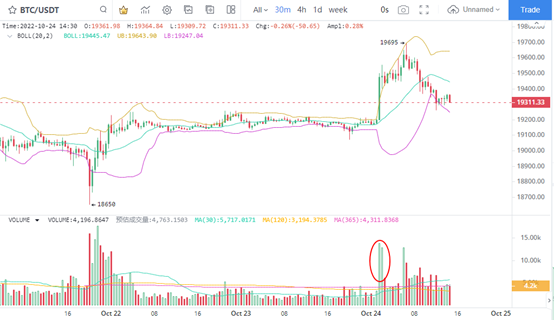
Курс BTC немного отскочил, что сопровождалось резким ростом объёма торгов. За ним последовал и Эфир. KLAY вырос на 106% в моменте на новостях о грядущем халвинге.

1. Отскок BTC

Курс BTC немного отскочил, что сопровождалось резким ростом объёма торгов. Однако, восходящий импульс был достаточно кратковременным и продолжался примерно в течение часа. Это говорит о том, что на данный момент возможности быков в определенной степени ограничены, и за данным отскоком может последовать такая же стремительная коррекция. В целом биткоин по-прежнему колеблется в диапазоне 19 000-20 000 долларов, и выход за его пределы потребуется более значительных усилий.

2. Coin Days Destroyed указывает на вероятное падение цены

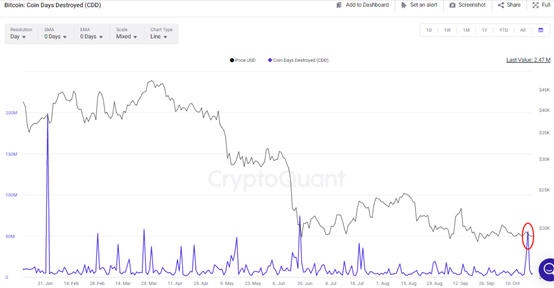
Индикатор Coin Days Destroyed (CDD) учитывает все отдельные монеты, которые перемещались в течение дня, и умножает их на количество дней, в течение которых эти монеты ранее оставались бездействующими. Полученное число — это количество разрушенных койн-дней за данный день. Анализ этого показателя может дать представление об активности более долгосрочных инвесторов, а также о том, совершаются ли транзакции биткойнов по сети преимущественно краткосрочными или долгосрочными владельцами.

18 октября метрика достигла максимального значения с 17 июня этого года – 55,44 миллиона, что говорит о том, что давление продаж вновь усиливается и в ближайшей перспективе можно будет наблюдать коррекцию цены первой криптовалюты вслед за недавним отскоком.

3. Эфир вырос вслед за биткоином

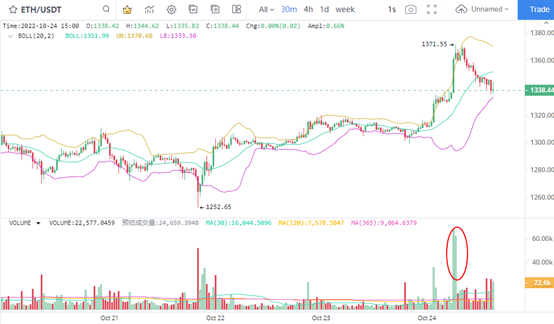
График Ethereum вслед за биткоином также продемонстрировал повышенную активность после очень затяжного штиля и бокового движения с уменьшающимися объёмами торгов. Цена в моменте достигла отметки 1371 долларов, однако затем последовала коррекция. Такое, почти синхронное с биткоином, движение говорит о том, что в ближайшее время можно ожидать высокую корреляцию Эфира с ценой первой криптовалюты.

4. Объём продаж Ethereum-китами своих монет растёт

Количество ETH на биржах резко возросло – 21 октября приток монет на торговые площадки достиг отметки 13948. Это говорит о том, что большая часть купных держателей Эфира ждёт подходящей цены, чтобы начать продавать свои запасы, что в среднесрочной перспективе окажет дополнительное медвежье давление на цену.

5. KLAY вырос на 106% в моменте

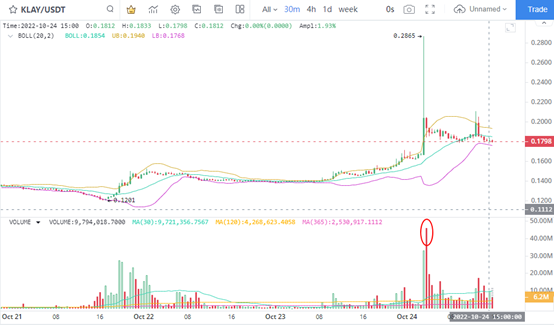
С 21 октября KLAY продемонстрировал прорыв – цена выросла на 11% и 31% 21 и 23 октября соответственно, при этом в моменте рост составлял 106%. Такой аномальный рост мог быть вызван недавними новостями о развитии проекта.

24 октября стало известно, что, согласно официальному заявлению, официальная команда Klaytn, публичной сети Kakao, южнокорейского интернет-гиганта, представила Комитету по управлению Klaytn (GC) предложение по «сокращению вознаграждения за блок». Было предложено сократить существующие награды за блок на одну треть, чтобы оптимизировать уровень эмиссии KLAY. Если предложение будет одобрено комитетом по управлению (крайний срок голосования - 25 октября), то инфляционная корректировка будет отражена в сети примерно в середине ноября. В это время вознаграждение за каждый блок будет изменено с нынешних 9,6 KLAY до 6,4 KLAY, а пропорция распределения новых намайненных токенов между комитетом управления, фондом роста Klaytn и резервом развития Klaytn (KIR) будет изменена с 34%: 54%: 12% до 50%: 40%: 10%, а годовой объем выпуска токенов KLAY будет снижен с 3% до 2%, годовой уровень инфляции токенов KLAY будет снижен с 10% до 6,48%.

Letture associate

The War Without a Unified Name: The Domestic Tech Giants' World Model Landscape

The article outlines the diverse and fragmented landscape of "World Models" in China's tech industry, where major players are pursuing similar goals under different names like world foundational models, physical AI, or integrated within autonomous driving and embodied intelligence systems. The core aim is to enable AI to create an internal, dynamic environment for simulation, reasoning, and learning, reducing reliance on infinite real-world data. This "data engine" allows for unlimited generation, experimentation, and iteration. The report categorizes the approaches of different companies: * **Internet Giants:** Alibaba is developing models for linguistic, virtual, and physical worlds (Qwen-AgentWorld, HappyOyster, Qwen-RobotWorld). Tencent's HY-World focuses on 3D, game, and social scenarios. ByteDance leverages its vast video data for a potential "digital twin" model. Huawei integrates its model into industrial applications like smart cars and robotics without separately branding it. Baidu embeds world model capabilities within its Apollo autonomous driving and Ernie systems. * **Automakers:** Companies like NIO, Li Auto, XPeng, and Geely are using world models as virtual "driving schools" and "testing grounds." They generate complex scenarios (e.g., rain, snow) to train and validate autonomous driving systems in simulation, aiming for more capable and safer AI drivers. * **Autonomous Driving Suppliers:** Firms such as Momenta, Horizon Robotics, Haomo.ai, and DeepRoute.ai are building the underlying "world engines." They focus on large-scale video generation for simulation, reinforcement learning, and enhancing end-to-end autonomous driving models, often integrating these capabilities into commercial products. While startups bring focus and innovation, they face challenges like limited data, compute resources, and deployment channels. Large companies possess these advantages and are rapidly transitioning world models from research projects into core business infrastructure powering products in vehicles, games, and industry. The conclusion is that world models represent an evolution and convergence of existing AI fields into crucial industrial infrastructure, moving the competition from simply building a model to effectively deploying it to understand and interact with the physical world.

marsbit5 min fa

The War Without a Unified Name: The Domestic Tech Giants' World Model Landscape

marsbit5 min fa

The Crypto Industry Enters the 'Show Me' Era: Vision Alone Is No Longer Enough

The crypto industry has entered a "Show Me" era, where grand visions and white papers are no longer sufficient to gain traction. This shift is driven by increased skepticism, high-profile bad actors, and notably, the serious entry of traditional finance (TradFi) institutions like BlackRock, Fidelity, and JPMorgan Chase, which are launching real, scaled products such as tokenized funds and blockchain-based settlement. This raises the bar for what constitutes a credible project. The communication dynamic has fundamentally changed. The focus is no longer on "what you are building" but on "what you have built and who is using it." Startups must now provide a "proof stack": verifiable data like mainnet transaction volume and active wallets, genuine partnerships with signed contracts, and evidence of organic product-market fit from real users, not just investors. Announcements must be backed by concrete, chain-verifiable evidence. For communication strategies, this means leading with proven facts and hard data—even if modest—rather than speculative narratives. A compelling story must be grounded in demonstrated results. While vision remains important, the balance has inverted from 80% vision/20% substance to the opposite. This higher threshold ultimately benefits builders with genuine traction, filtering out noise and allowing their real signals to stand out clearly. The "Show Me" era is a permanent maturation, demanding that communication strategies prove value, not just promise it.

链捕手37 min fa

The Crypto Industry Enters the 'Show Me' Era: Vision Alone Is No Longer Enough

链捕手37 min fa

Meta Follows the Trend into Prediction Markets: Can It Avoid Repeating the Failure of the Metaverse?

Meta, the tech giant behind Facebook, has reportedly formed a team to develop "Arena," a new application focused on prediction markets. Users would use platform points to place bets on outcomes in politics, sports, and global events. This move follows Meta's massive, nearly $900 billion, losses from its heavily-invested metaverse division, Reality Labs. The prediction market industry is already showing strong demand, with leading platforms like Kalshi and Polymarket facilitating hundreds of billions in annual volume. Meta, with its 3.56 billion daily active users across its apps, possesses the unprecedented scale to bring this niche activity to a mainstream audience, similar to its past success in cloning features like Stories and Reels. However, Arena faces significant hurdles. Meta plans to start with a points-based system to avoid strict financial regulations, but this may dilute the core incentive of accurate prediction that real-money markets provide. More critically, Meta enters the space with a major trust deficit stemming from its past regulatory battles, notably the failed Libra/Diem stablecoin project, and its controversial history with political content and misinformation. The prediction market sector itself is under increasing regulatory scrutiny, with recent CFTC actions including fines and the first-ever insider trading case. While Meta's vast user base offers a unique opportunity to expand the market, its success hinges on navigating complex regulations and rebuilding the credibility necessary for a platform dealing with sensitive topics like elections. The outcome could range from Meta dramatically growing the industry to Arena becoming a high-profile regulatory target before it can scale.

Foresight News54 min fa

Meta Follows the Trend into Prediction Markets: Can It Avoid Repeating the Failure of the Metaverse?

Foresight News54 min fa

Trading

Spot
Futures
活动图片