The Risks in DeFi Stack

HACKERNOONPubblicato 2022-10-17Pubblicato ultima volta 2022-10-17

Introduzione

Decentralized Finance or DeFi is a form of blockchain-based finance that offers financial services without any central intermediaries.

Decentralized Finance or DeFi is a form of blockchain-based finance that offers financial services without any central intermediaries. What used to be a niche ecosystem with a TVL of less than $100 Million in the year 2017 grew to over $200 Billion at the peak of the last bull run in 2022.

TVL or Total Value Locked is the value of the crypto assets locked in a DeFi smart contract. - Source

The flip side of the tremendous growth is that it has become a honeypot for some of the most sophisticated hackers across the world. Billions of dollars have been lost to security vulnerabilities and economic failures.

If you are a crypto believer, you can’t ignore the movement of Decentralized Finance. While the ecosystem is too nascent for us to identify all potential risks, a look at the DeFi stack can help us understand the different ways things can break and thus inform how we can go about participating in the ecosystem.

None of what follows is financial advice. Neither will I claim to be an exhaustive list of risks in DeFi. Treat it more as a starting point and a framework for identifying different risks that may exist in a DeFi Investment Approach.

The DeFi Stack

We can look at the DeFi ecosystem as a combination of the following five layers.

Blockchain Networks - All DeFi protocols are deployed on a blockchain network. The blockchain network provides the computational platform for the execution of the smart contracts that power the DeFi service.

Crypto Tokens - The tokens are the underlying assets that are used by the protocol to deliver a service. A Lending Protocol might enable the lending and borrowing of a particular crypto token to be used by traders as a form of leverage. A Decentralized Exchange might have a pool that allows users to swap one token for another.

Protocol - DeFi Protocols are open-source computer programs that run on blockchain networks and provide financial services.

dApp Interface - These are the web interfaces that users use to interact with the DeFi Protocols. Some wallets such as Argent, Coinbase, and Brew Money offer in wallet integrations with Protocols too directly from the mobile.

Wallets - Cryptocurrency wallets hold the private keys that allow users to make payments, deploy and withdraw funds from defi protocols, and more.

Risks in Blockchain Network Layer

Unlike popular perception, blockchains are not infallible. Security vulnerabilities can allow malicious actors to siphon off funds or take over control of the network.

The 51% Attack

A 51% Attack on a Blockchain Network is a scenario where one single entity or group has control over 50% of the network hash rate. The implication of this is that the group can censor transactions, and reorder and rewrite blocks leading to double spending where a network participant can spend/utilize the same asset multiple times.

"Hashrate" refers to the total combined computational power that is being used to mine

and process transactions on a Proof-of-Work blockchain, such as Bitcoin. - Source

A 51% attack while complex and expensive to pull off is a risk that even mature blockchain networks such as Bitcoin have had to face at some point in time.

Bitcoin’s reckoning with 51% Attack

In 2014, ghash.io, a popular bitcoin mining pool for a brief duration of 24-48 hours had over 51% of Bitcoin’s hash rate. While GHash didn’t demonstrate any signs of malicious intent, it did raise debates on how bitcoin can avoid such scenarios of a pool or entity taking over 51% of the network’s hash rate. In this particular case, miners from the pool volunteered to move away from ghash. Moreover, ghash publicly vowed to limit its hash rate to 40% of the network’s hash rate.

A mining pool is the pooling of resources by miners, who share their processing power over a network, to split the reward equally, according to the amount of work they contributed to the probability of finding a block. - Source

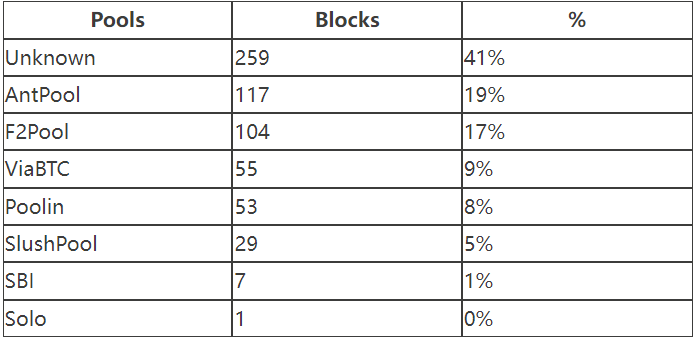
Bitcoin hash rate is more widely distributed today. For instance, the last days of data for blocks mined look like the following. The largest mining pool makes up for 19% of the network’s hashrate.
51% Attacks on Ethereum Classic

Ethereum Classic blockchain came into being after the infamous The DAO Hack. It has a market cap of over $4 Billion. In August 2020 Ethereum Classic was attacked three times and over $5 Million were siphoned off from the network through double-spending.

Vulnerabilities in Blockchain Network

Eventually, blockchain networks are powered by code and code can be buggy. In August 2010 an anonymous hacker was able to exploit a bug to create 184 Billion Bitcoin. Bitcoin supply is supposed to be capped at 21 Million. The anomaly was detected by the Bitcoin community soon. Satoshi Nakamoto coded up a fix for the issue and rolled it out within 5 hours that soft forked the network to state before the faulty block was mined.

In blockchain technology, a soft fork is a change to the software protocol where only previously valid transaction blocks are made invalid. Because old nodes will recognize the new blocks as valid, a soft fork is backwards-compatible. This kind of fork requires only a majority of the miners upgrading to enforce the new rules. - Source

In the recent past, Polygon, one of the leading scaling solutions for Ethereum and a sidechain, lost over 800K Matic worth $ 2 million to a hack. Two white hat hackers reported the vulnerability and Polygon rolled out a fix within 48 hours. Polygon Foundation covered the money lost and paid out a sum of $3.5 Million in bounty to the two white hat hackers.

The Volatility in Crypto Assets

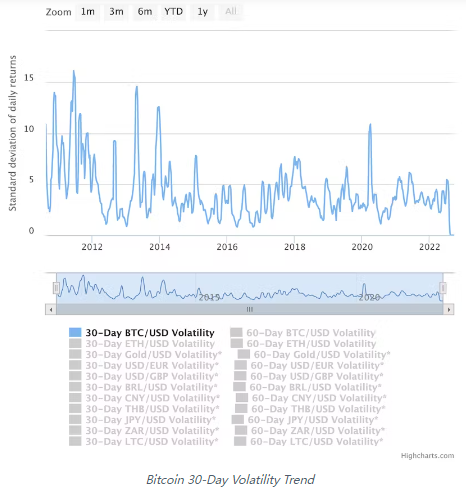
Every asset class has inherent volatility. Crypto Assets more so. In stock markets, a 1% dip makes headlines and is reported as a crash. In crypto markets, it is fairly common to see such fluctuations in prices multiple times in a month.
Bitcoin 30-Day Volatility Trend

The above graph shows the trend of Bitcoin price volatility over time. While it may seem that over the years, the volatility is reducing a bit, but still, 5% up and down swings are not that uncommon.

Volatility refers to the amount of uncertainty or risk related to the size of changes in a security's value. - Investopedia

30-Day Rolling Volatility = Standard Deviation of the last 30 percentage changes in Total Return Price * Square-root of number of trading days

Token prices are a function of market perception. The perception can be based on how the specific project is doing or it can be more macro as in where the overall market is headed.

For instance, the crypto market still has a very high correlation with bitcoin price. Whenever bitcoin price dips, we see people liquidating their other crypto assets bringing down the overall market. This is understandable considering even now bitcoin makes up almost 40% of the total crypto market.

Earlier this year, in May, 2022 a bank run on US Terra Stablecoin wiped off $ 40 Billion from the market. Anchor Protocol was one of the most popular lending protocols on Luna that offered ~20% APY on US Terra Stablecoin deposits. While the protocol itself worked as it was supposed to, a known economical weakness in Luna ecosystem led to US Terra losing its peg to US Dollar.

1 US Terra = 3 cents as of now

The Fault in the Protocols

Security breaches, code exploits, and flash loan attacks led to the loss of billions of dollars in DeFi. As per Chainanalysis, over $ 1.3 Billion were stolen in the first 3 months of 2022.

Security Breaches are instances when a hacker gains control of the private key or keys of wallets that have admin controls over the protocol. [The Ronin Hack](https://medium.com/uno-re/biggest-crypto-hack-of-all-time-a-breakdown-of-the-ronin-network-hack-ef8d9e25ba6b#:\~:text=The attacker discovered a backdoor,them using the stolen keys.) is one of the largest hacks in DeFi where allegedly a North Korean Hacking Group stole over $ 600 Million worth crypto tokens.

Ronin is an Ethereum Sidechain developed and operated by Sky Mavis to support their popular play-2-earn game, Axie Infinity.

Ronin Network has nine validators to process the transactions and as long as the majority of them approve a transaction it goes through. The catch was that the nine keys were controlled by just two entities. Sky Mavis had 4 keys and Axie DAO 5. However, Axie DAO had earlier provided Sky Mavis with access to sign transactions on its behalf for a short-term period. The access was never revoked. This miss allowed hackers to gain access to the majority of the keys and process the transactions.

Code Exploits are faults in smart contracts that allow a hacker to siphon off funds. The Polynetwork hack where $610 Million worth of crypto assets were hacked (and later returned) is one of the largest hacks that happened due to code exploits.

Polynetwork is a protocol that enables cross-chain assets transfer.

In this particular case, the hacker was able to figure out a way to invoke a restricted smart contract that enabled them to take control of the wallets that held assets managed by Polynetwork and transfer them to a wallet they controlled.

Frontend and DNS Exploits

Users interact with DeFi protocols by connecting their wallet to a protocol through a web interface. In May 2022 a hacker was able to leverage a vulnerability in the DNS to inject a malicious smart contract on the web interface for mm.finance, a leading DeFi protocol on Cronos chain, and diverted over $2 Million to their wallet.

The domain name system (i.e., “DNS”) is responsible for translating domain names into a specific IP address so that the initiating client can load the requested Internet resources. The domain name system works much like a phone book where users can search for a requested person and retrieve their phone number. - [Learn more](https://www.infoblox.com/glossary/domain-name-system-dns/#:~:text=The%20domain%20name%20system%20(i.e.,and%20retrieve%20their%20phone%20number.)

Losing Private keys or Seed Phrase

Cryptocurrency Wallets store the public key and the private key. The private key is used to access the fund and transfer them. The public key is your address. Private Keys or the more popular seed phrase where a 12 - 24 words phrase is used to generate the private keys.

If a hacker is able to access your seed phrase or your wallet’s private keys, they can take over your assets. Malicious software on your computer or mobile, or phishing attacks that trick users into sharing their seed phrase on a website are some of the common ways in which hackers gain access to their seed phrase and steal assets in your wallet.

In April 2022 an iPhone user lost crypto and NFTs in his wallet when a hacker pretending to be an Apple representative tricked the user to share a secure code that was sent to the user’s number and use that to hack into their iCloud Account. From there on, they were able to access the user’s wallet seed phrase

Navigating DeFi Safely

It is essential to practice caution when navigating DeFi considering the different risks that exist in the stack. As you delve into the DeFi Ecosystem, choosing the right platforms and ecosystems for your risk tolerance is a critical step. A few things to look for

Track record

How long has the blockchain or protocols been in existence? How have they performed in volatile market conditions?

What has been the TVL's growth over time?

What is the caliber of the core team working on the protocol or chain?

Independent Audits

Has it gone through independent security audits?

How robust are their processes? Here processes can range from their development activities, and security practices, to taking key decisions with community participation

Liquidity

How much liquidity the asset or the protocol has? This is especially critical in selecting an asset or protocol. Low liquidity can translate to higher risks.

How much AUM does the DAOs’Community’s treasury have?

A lot of products have emerged that help with such research. A few of them are DeFiLllama, DeFi Safety, and Exponential Finance. Beyond this, there are a few things you can do as a user that can ensure the safety of your funds

Maintain Wallet Hygiene

Don’t hold all your assets in a single wallet. Use a Hardware Wallet

Never share your seed phrase or private key online or offline

Maintain multiple backups of your seed phrase

Ensure safety in the devices where your wallets reside, desktop, mobile, or browser.

Be cautious about the dApps you’re interacting with and the kind of permissions you are allowing. Do a regular audit of the funds

Stay Informed - You can do all of these yet, if the dapp or protocol you interact with has been hacked, you can end up losing your funds. Stay aware of the happenings in the chain, assets, and protocols you use. You can use twitter for that.

Despite these risks, DeFi presents multiple opportunities for early adopters to not only grow their crypto assets but also get familiar with an emerging phenomenon that will reimagine how financial services are delivered in the coming years.

Crypto di tendenza

Letture associate

Report Interpretation: J.P. Morgan Details Micron's Pre-Earnings Sentiment, Current Hardware Sector Dynamics

Morgan Stanley analyst Joshua Meyers' report (June 21, 2026) highlights key trends in the hardware and semiconductor sector ahead of Micron's earnings. The core takeaways are: 1. **Micron & Memory:** Memory remains a high-conviction long theme, driven by strong AI demand and rising ASPs. However, investor focus is shifting to the sustainability of Micron's >80% gross margins and the specifics of potential new long-term supply agreements (SCAs). 2. **Hardware Supply Chain:** AI-related demand for servers, networking, and storage remains robust, but company performance is diverging. Celestica (CLS) shows improved margin confidence, Western Digital and Seagate benefit from pricing, Fabrinet (FN) sees predictable AI optics growth, and Teradyne (TER) anticipates a new Google customer. 3. **AI Capex & WFE Forecasts:** JPMorgan increased its Wafer Fab Equipment (WFE) market growth forecasts to 28% in 2026 and 29% in 2027. AI infrastructure financing is evolving, with higher project-level debt reducing constraints on capex expansion. The report signals that while the AI-driven hardware cycle is strong, the market is entering a phase focused on execution verification (e.g., Micron's SCA details, Fabrinet's ramp with Amazon) and valuation sustainability. Key near-term signals include Micron's guidance, Arista Networks' outlook, and the pace of demand normalization post potential tariff-related pull-ins.

marsbit6 h fa

Report Interpretation: J.P. Morgan Details Micron's Pre-Earnings Sentiment, Current Hardware Sector Dynamics

marsbit6 h fa

Research Report Analysis: The Fed's New Chair's Debut – New Leader, But Same Script?

Report Analysis: Federal Reserve's New Chair Debut – A New Captain, But the Same Script? Morgan Stanley's chief global economist Seth B. Carpenter analyzes the first FOMC meeting under new Fed Chair Kevin Warsh in a June 21 report. Warsh deliberately avoided providing forward guidance on interest rates, aligning with his philosophy. However, market expectations for a rate hike this year were reinforced. Key signals lie elsewhere: inflation may fall more than expected, and quantitative tightening (QT) could be more aggressive than anticipated. The FOMC's "dot plot" suggests only one rate hike in 2026. Carpenter argues that if inflation undershoots forecasts, the logic for even a single hike weakens, especially as projections indicate potential rate cuts in 2027. On QT, Warsh's stance is clear. Carpenter notes that measures like halving the Treasury's account balance could shrink the Fed's balance sheet by around $500 billion with minimal market impact. Combined with adjustments to reserve interest and liquidity rules, the ultimate QT scale may exceed expectations, though its market effect might be less disruptive unless the Fed actively sells Mortgage-Backed Securities (MBS). While Warsh initiated a review of the Fed's policy framework, the 2% inflation target remains intact for now. The report concludes that the market may be overestimating the significance of reduced forward guidance and the near-term rate hike risk, while potentially underestimating the scope and manageable nature of the coming balance sheet reduction. The key debates will hinge on upcoming core PCE data, the specifics of the QT path, and the framework review's findings.

marsbit6 h fa

Research Report Analysis: The Fed's New Chair's Debut – New Leader, But Same Script?

marsbit6 h fa

Critical Game Week: BTC Retracement Confirmation vs. HYPE Support Battle | Guest Analysis

This weekly analysis outlines a critical juncture for BTC and HYPE markets, focusing on key price level confirmations. **BTC Analysis:** BTC is at a pivotal point after a five-wave rally from the June 5th low of $59,100. The price has broken below a short-term rising channel's lower boundary, with the current move seen as a pullback to test this breakdown. Failure to reclaim this level could lead to a retest of the $59,000-$60,000 support zone. The core scenario hinges on this channel retest outcome. * **Key Levels:** Resistance at $64,500-$65,000 (channel boundary) and $69,500-$70,500. Support at $59,000-$60,000 and $55,000. * **Strategy:** A core bearish stance is maintained (20% short from last week), with short-term plans for tactical trades. Three detailed contingency plans (A/B/C) are provided for short positions on resistance tests or breakdowns, emphasizing strict stop-loss discipline. **HYPE Analysis:** HYPE shows strong momentum but is currently in a corrective phase after hitting a new high of $76.94. The price is retesting the crucial $64-$66 support area. * **Key Levels:** Resistance near $77 and $80-$82. Support at $64-$66 and $52-$54. * **Strategy:** The short-term approach is "buy on dips, avoid chasing rallies." A long position is considered only if clear stabilization signals appear at the $64-$66 or deeper $52-$54 support zones, with tight risk controls. **General Risk Management:** A standardized trailing stop-loss protocol is emphasized: set initial stop, breakeven at +1% profit, then trail stops upward to lock in gains. *Disclaimer: All analysis is presented as a personal trading framework, not investment advice. Market conditions are complex and require dynamic adjustment.*

marsbit6 h fa

Critical Game Week: BTC Retracement Confirmation vs. HYPE Support Battle | Guest Analysis

marsbit6 h fa

Trading

Spot
Futures

Articoli Popolari

Cosa è BITCOIN

Comprendere HarryPotterObamaSonic10Inu (ERC-20) e la sua posizione nel mondo delle criptovalute Negli ultimi anni, il mercato delle criptovalute ha assistito a un aumento della popolarità delle meme coin, catturando l'interesse non solo dei trader, ma anche di coloro che cercano coinvolgimento comunitario e valore di intrattenimento. Tra questi token unici c'è HarryPotterObamaSonic10Inu (ERC-20), un progetto intrigante che mescola riferimenti culturali nel tessuto delle criptovalute. Questo articolo esplora gli aspetti chiave di HarryPotterObamaSonic10Inu, analizzando i suoi meccanismi, l'etica guidata dalla comunità e il suo coinvolgimento con il panorama crittografico più ampio. Che cos'è HarryPotterObamaSonic10Inu (ERC-20)? Come suggerisce il suo nome, HarryPotterObamaSonic10Inu è una meme coin costruita sulla blockchain di Ethereum, classificata secondo lo standard ERC-20. A differenza delle criptovalute tradizionali che possono enfatizzare l'utilità pratica o il potenziale investimento, questo token prospera grazie al valore di intrattenimento e alla forza della sua comunità. Il progetto mira a creare un ambiente in cui gli utenti coinvolti possono riunirsi, condividere idee e partecipare ad attività ispirate a diversi fenomeni culturali. Una caratteristica notevole di HarryPotterObamaSonic10Inu è la zero tassa sulle transazioni. Questo elemento allettante tende a incoraggiare il trading e il coinvolgimento della comunità, privo di costi aggiuntivi che possono scoraggiare i trader di piccole dimensioni. L'offerta totale della moneta è fissata a un miliardo di token, un numero che segna la sua intenzione di mantenere una circolazione sostanziale all'interno della comunità. Creatore di HarryPotterObamaSonic10Inu (ERC-20) Le origini di HarryPotterObamaSonic10Inu sono avvolte in un certo mistero; i dettagli sul creatore rimangono sconosciuti. Lo sviluppo di questo token non presenta un team identificabile o un piano esplicito, cosa non rara nel settore delle meme coin. Invece, il progetto è emerso organicamente, con il suo progresso fortemente dipendente dall'entusiasmo e dalla partecipazione della sua comunità. Investitori di HarryPotterObamaSonic10Inu (ERC-20) Per quanto riguarda investimenti esterni e finanziamenti, HarryPotterObamaSonic10Inu rimane ambiguo. Il token non elenca alcuna fondazione di investimento conosciuta o un sostegno organizzativo significativo. Invece, la linfa vitale del progetto è la sua comunità di base, che informa la sua crescita e sostenibilità attraverso azioni collettive e coinvolgimento nello spazio crittografico. Come funziona HarryPotterObamaSonic10Inu (ERC-20)? In quanto meme coin, HarryPotterObamaSonic10Inu opera principalmente al di fuori delle strutture tradizionali che governano spesso il valore degli asset. Ci sono diversi aspetti distintivi che definiscono il funzionamento del progetto: Transazioni senza tasse: Senza costi fiscali sulle transazioni, gli utenti possono comprare e vendere liberamente il token senza preoccuparsi di costi nascosti. Coinvolgimento della comunità: Il progetto prospera sull'interazione della comunità, sfruttando le piattaforme social per creare entusiasmo e facilitare il coinvolgimento. Discussioni, condivisione di contenuti e coinvolgimento sono elementi cruciali che aiutano ad espandere la sua portata e a favorire la lealtà tra i sostenitori. Nessuna utilità pratica: Va notato che HarryPotterObamaSonic10Inu non offre un'utilità concreta all'interno dell'ecosistema finanziario. Piuttosto, è classificato come un token principalmente per attività di intrattenimento e comunitarie. Riferimento culturale: Il token incorpora astutamente elementi della cultura pop per attirare interesse, collegandosi a appassionati di meme e seguaci delle criptovalute. HarryPotterObamaSonic10Inu esemplifica come le meme coin operino in modo diverso rispetto ai progetti di criptovalute più tradizionali, entrando nel mercato come costrutti sociali innovativi piuttosto che come asset utilitari. Cronologia di HarryPotterObamaSonic10Inu (ERC-20) La storia di HarryPotterObamaSonic10Inu è segnata da diversi traguardi notevoli: Creazione: Il token è emerso da un meme virale, catturando l'immaginazione di molti appassionati di criptovalute. Le date di creazione specifiche non sono disponibili, sottolineando la sua crescita organica. Inserimento negli scambi: HarryPotterObamaSonic10Inu ha fatto il suo ingresso in vari scambi, consentendo un accesso e un trading più facili da parte della comunità. Iniziative di coinvolgimento della comunità: Attività in corso volte a migliorare l'interazione della comunità, comprese gare, campagne sui social media e generazione di contenuti da parte di fan e sostenitori. Piani di espansione futura: La tabella di marcia del progetto include il lancio di una collezione NFT, merchandising e un sito di eCommerce relativo ai suoi temi culturali, coinvolgendo ulteriormente la comunità e cercando di aggiungere più dimensioni al suo ecosistema. Punti chiave su HarryPotterObamaSonic10Inu (ERC-20) Natura guidata dalla comunità: Il progetto dà priorità al contributo collettivo e alla creatività, garantendo che il coinvolgimento degli utenti sia al centro del suo sviluppo. Classificazione come meme coin: Rappresenta l'epitome delle criptovalute basate sull'intrattenimento, distinguendosi dai veicoli d'investimento tradizionali. Nessuna affiliazione diretta con Bitcoin: Nonostante la somiglianza nel nome del ticker, HarryPotterObamaSonic10Inu è distintivo e non ha alcuna relazione con Bitcoin o altre criptovalute consolidate. Focus sulla collaborazione: HarryPotterObamaSonic10Inu è progettato per creare uno spazio per la collaborazione e la condivisione di storie tra i suoi detentori, fornendo un canale per la creatività e il legame comunitario. Prospettive future: L'ambizione di espandersi oltre il suo presupposto iniziale verso NFT e merchandising delinea un percorso per il progetto per potenzialmente entrare in strade più mainstream all'interno della cultura digitale. Poiché le meme coin continuano a catturare l'immaginazione della comunità crittografica, HarryPotterObamaSonic10Inu (ERC-20) si distingue per i suoi legami culturali e il suo approccio centrato sulla comunità. Anche se potrebbe non adattarsi al modello tipico di un token orientato all'utilità, la sua essenza risiede nella gioia e nella camaraderia coltivate tra i suoi sostenitori, evidenziando la natura in evoluzione delle criptovalute in un'epoca sempre più digitale. Con la continuazione dello sviluppo del progetto, sarà importante osservare come le dinamiche della comunità influenzano la sua traiettoria nel panorama in continuo cambiamento della tecnologia blockchain.

1.7k Totale visualizzazioniPubblicato il 2024.04.01Aggiornato il 2024.12.03

Cosa è BITCOIN

Come comprare BTC

Benvenuto in HTX.com! Abbiamo reso l'acquisto di Bitcoin (BTC) semplice e conveniente. Segui la nostra guida passo passo per intraprendere il tuo viaggio nel mondo delle criptovalute.Step 1: Crea il tuo Account HTXUsa la tua email o numero di telefono per registrarti il tuo account gratuito su HTX. Vivi un'esperienza facile e sblocca tutte le funzionalità,Crea il mio accountStep 2: Vai in Acquista crypto e seleziona il tuo metodo di pagamentoCarta di credito/debito: utilizza la tua Visa o Mastercard per acquistare immediatamente BitcoinBTC.Bilancio: Usa i fondi dal bilancio del tuo account HTX per fare trading senza problemi.Terze parti: abbiamo aggiunto metodi di pagamento molto utilizzati come Google Pay e Apple Pay per maggiore comodità.P2P: Fai trading direttamente con altri utenti HTX.Over-the-Counter (OTC): Offriamo servizi su misura e tassi di cambio competitivi per i trader.Step 3: Conserva Bitcoin (BTC)Dopo aver acquistato Bitcoin (BTC), conserva nel tuo account HTX. In alternativa, puoi inviare tramite trasferimento blockchain o scambiare per altre criptovalute.Step 4: Scambia Bitcoin (BTC)Scambia facilmente Bitcoin (BTC) nel mercato spot di HTX. Accedi al tuo account, seleziona la tua coppia di trading, esegui le tue operazioni e monitora in tempo reale. Offriamo un'esperienza user-friendly sia per chi ha appena iniziato che per i trader più esperti.

4.0k Totale visualizzazioniPubblicato il 2024.12.12Aggiornato il 2026.06.02

Come comprare BTC

Cosa è $BITCOIN

ORO DIGITALE ($BITCOIN): Un'Analisi Completa Introduzione all'ORO DIGITALE ($BITCOIN) L'ORO DIGITALE ($BITCOIN) è un progetto basato su blockchain che opera sulla rete Solana, con l'obiettivo di combinare le caratteristiche dei metalli preziosi tradizionali con l'innovazione delle tecnologie decentralizzate. Sebbene condivida un nome con Bitcoin, spesso definito “oro digitale” a causa della sua percezione come riserva di valore, l'ORO DIGITALE è un token separato progettato per creare un ecosistema unico all'interno del panorama Web3. Il suo obiettivo è posizionarsi come un asset digitale alternativo valido, anche se i dettagli riguardanti le sue applicazioni e funzionalità sono ancora in fase di sviluppo. Cos'è l'ORO DIGITALE ($BITCOIN)? L'ORO DIGITALE ($BITCOIN) è un token di criptovaluta esplicitamente progettato per l'uso sulla blockchain di Solana. A differenza di Bitcoin, che fornisce un ruolo di stoccaggio di valore ampiamente riconosciuto, questo token sembra concentrarsi su applicazioni e caratteristiche più ampie. Aspetti notevoli includono: Infrastruttura Blockchain: Il token è costruito sulla blockchain di Solana, nota per la sua capacità di gestire transazioni ad alta velocità e a basso costo. Dinamiche di Offerta: L'ORO DIGITALE ha un'offerta massima fissata a 100 quadrilioni di token (100P $BITCOIN), sebbene i dettagli riguardanti la sua offerta circolante siano attualmente non divulgati. Utilità: Sebbene le funzionalità precise non siano esplicitamente delineate, ci sono indicazioni che il token potrebbe essere utilizzato per varie applicazioni, potenzialmente coinvolgendo applicazioni decentralizzate (dApp) o strategie di tokenizzazione degli asset. Chi è il Creatore dell'ORO DIGITALE ($BITCOIN)? Attualmente, l'identità dei creatori e del team di sviluppo dietro l'ORO DIGITALE ($BITCOIN) rimane sconosciuta. Questa situazione è tipica tra molti progetti innovativi nel settore blockchain, in particolare quelli allineati con la finanza decentralizzata e i fenomeni delle meme coin. Sebbene tale anonimato possa favorire una cultura guidata dalla comunità, intensifica le preoccupazioni riguardo alla governance e alla responsabilità. Chi sono gli Investitori dell'ORO DIGITALE ($BITCOIN)? Le informazioni disponibili indicano che l'ORO DIGITALE ($BITCOIN) non ha alcun sostenitore istituzionale noto o investimenti di venture capital prominenti. Il progetto sembra operare su un modello peer-to-peer incentrato sul supporto e sull'adozione della comunità piuttosto che su percorsi di finanziamento tradizionali. La sua attività e liquidità si trovano principalmente su exchange decentralizzati (DEX), come PumpSwap, piuttosto che su piattaforme di trading centralizzate consolidate, evidenziando ulteriormente il suo approccio di base. Come Funziona l'ORO DIGITALE ($BITCOIN) Le meccaniche operative dell'ORO DIGITALE ($BITCOIN) possono essere elaborate in base al suo design blockchain e alle caratteristiche della rete: Meccanismo di Consenso: Sfruttando il proof-of-history (PoH) unico di Solana combinato con un modello di proof-of-stake (PoS), il progetto garantisce una validazione efficiente delle transazioni contribuendo all'alta performance della rete. Tokenomics: Sebbene meccanismi deflazionistici specifici non siano stati dettagliati ampiamente, l'ampia offerta massima di token implica che potrebbe soddisfare microtransazioni o casi d'uso di nicchia che devono ancora essere definiti. Interoperabilità: Esiste il potenziale per l'integrazione con l'ecosistema più ampio di Solana, inclusi vari piattaforme di finanza decentralizzata (DeFi). Tuttavia, i dettagli riguardanti integrazioni specifiche rimangono non specificati. Cronologia degli Eventi Chiave Ecco una cronologia che evidenzia traguardi significativi riguardanti l'ORO DIGITALE ($BITCOIN): 2023: Il dispiegamento iniziale del token avviene sulla blockchain di Solana, contrassegnato dal suo indirizzo di contratto. 2024: L'ORO DIGITALE guadagna visibilità poiché diventa disponibile per il trading su exchange decentralizzati come PumpSwap, consentendo agli utenti di scambiarlo contro SOL. 2025: Il progetto assiste a un'attività di trading sporadica e a un potenziale interesse per impegni guidati dalla comunità, sebbene non siano state documentate partnership significative o avanzamenti tecnici fino ad ora. Analisi Critica Punti di Forza Scalabilità: L'infrastruttura sottostante di Solana supporta alti volumi di transazioni, il che potrebbe migliorare l'utilità di $BITCOIN in vari scenari di transazione. Accessibilità: Il potenziale basso prezzo di trading per token potrebbe attrarre investitori al dettaglio, facilitando una partecipazione più ampia grazie a opportunità di proprietà frazionata. Rischi Mancanza di Trasparenza: L'assenza di sostenitori, sviluppatori o di un processo di audit pubblicamente noti potrebbe generare scetticismo riguardo alla sostenibilità e all'affidabilità del progetto. Volatilità del Mercato: L'attività di trading è fortemente dipendente dal comportamento speculativo, il che può comportare una significativa volatilità dei prezzi e incertezze per gli investitori. Conclusione L'ORO DIGITALE ($BITCOIN) emerge come un progetto intrigante ma ambiguo all'interno dell'evolvente ecosistema di Solana. Sebbene tenti di sfruttare la narrativa dell'“oro digitale”, la sua partenza dal ruolo consolidato di Bitcoin come riserva di valore sottolinea la necessità di una chiara differenziazione della sua utilità e struttura di governance. L'accettazione e l'adozione future dipenderanno probabilmente dall'affrontare l'attuale opacità e dalla definizione più esplicita delle sue strategie operative ed economiche. Nota: Questo rapporto comprende informazioni sintetizzate disponibili a ottobre 2023, e potrebbero essersi verificati sviluppi oltre il periodo di ricerca.

103 Totale visualizzazioniPubblicato il 2025.05.13Aggiornato il 2025.05.13

Cosa è $BITCOIN

Discussioni

Benvenuto nella Community HTX. Qui puoi rimanere informato sugli ultimi sviluppi della piattaforma e accedere ad approfondimenti esperti sul mercato. Le opinioni degli utenti sul prezzo di BTC BTC sono presentate come di seguito.

活动图片