80% of Oil Revenue Settled in Stablecoins, Venezuela Turns USDT into a Second Dollar

marsbitPubblicato 2026-01-13Pubblicato ultima volta 2026-01-13

Introduzione

Venezuela is increasingly using USDT, a dollar-pegged stablecoin, to settle up to 80% of its oil export revenue, as the country seeks to bypass U.S. sanctions and a collapsing traditional banking system. At the same time, USDT has become a financial lifeline for ordinary Venezuelans grappling with hyperinflation of the bolivar and strict capital controls. They use it for remittances, savings, and daily transactions—from paying building fees to haircuts. While Tether, the issuer of USDT, has cooperated with U.S. authorities to freeze wallets linked to sanctioned oil trade, the stablecoin’s role reflects a broader reality: it serves both as a tool for evading financial controls and as a critical means of survival in an economy with broken institutions. The situation underscores the dual nature of stablecoins—operating in regulatory gray zones while providing essential services where traditional systems fail.

Editor's Note: From 'the stablecoin of outlaws' to attempting to enter the U.S. compliant market, the role of USDT in Venezuela reveals the most real and contradictory aspect of stablecoins: they serve both as a settlement tool for oil exports to bypass sanctions and the traditional banking system, and as a financial lifeline for ordinary people to sustain their lives amidst the collapse of the Bolivar and capital controls.

When nearly 80% of a country's oil revenue is handled by stablecoins, and even the elderly use USDT to pay property fees, this is not only an extreme example of crypto penetrating the real economy but also a reminder that the core controversy of stablecoins has never been just about 'how well they work,' but rather their inherent 'dual use': becoming a lifeline where institutions fail, and an escape route in regulatory vacuums.

The following is the original text:
Nicolás Maduro has, in a way, contributed to USDT becoming the world's most dominant stablecoin. And now, as the former Venezuelan leader is held in a Brooklyn prison, the central role of this cryptocurrency in Venezuela's economy is once again in the spotlight.

For Venezuela's state-owned oil company, USDT has become a crucial tool to evade sanctions and is used as a payment currency for settling oil transactions. At the same time, Tether provides a financial 'lifeline' for ordinary Venezuelans amid the ongoing devaluation of the national currency, the bolivar. Like most mainstream stablecoins, USDT maintains a 1:1 peg to the U.S. dollar.

According to crypto industry analysts, Maduro's arrest and removal from the presidency of Venezuela may not necessarily weaken USDT's presence in the country—after all, hyperinflation remains a long-term challenge. Meanwhile, the financial ties between Tether and Venezuela also place the cryptocurrency company in a critical position: it could become a key ally for U.S. authorities as they attempt to trace the whereabouts of funds allegedly embezzled by the Maduro regime.

Adam Zarazinski, CEO of crypto intelligence firm Inca Digital, said: 'The use of cryptocurrency in Venezuela will continue and is likely to expand in the short term. For ordinary users, it is a self-help mechanism to cope with economic failure and institutional collapse. But the same governance failures also create space for evading sanctions—if there is no credible improvement in governance, this outcome will not change.'

Last week, Maduro pleaded not guilty to drug trafficking charges in a U.S. federal court arraignment.

This new phase comes as cryptocurrency company Tether and its token—once stigmatized as the 'stablecoin of choice for outlaws'—are seeking recognition in the U.S. market. Last year, legislation was passed to pave the way for broader use of stablecoins, and Tether announced plans to launch a stablecoin open to U.S. investors. If realized, this would put it on a level playing field with competitors like Circle Internet Group and Paxos. Otherwise, Tether risks being marginalized in the U.S. market.

Just last week, U.S. Energy Secretary Chris Wright stated that the U.S. would indefinitely sell blocked Venezuelan oil. He said the proceeds from the sales would be deposited into accounts controlled by the U.S. government and eventually transferred to the Latin American country to 'benefit the Venezuelan people.' A senior Trump administration official also told The Wall Street Journal that the government is selectively rolling back some sanctions to allow crude oil and petroleum products to be shipped and sold to global markets.

Faced with escalating U.S. sanctions in 2020, Venezuela's state-owned oil company Petroleos de Venezuela (PdVSA) began requiring payments in USDT to bypass the traditional banking system. Oil export revenues were settled either by directly transferring USDT to a wallet address or by converting cash proceeds into USDT through intermediaries.

This shift has been 'transformative' for the country's oil economy. Venezuelan local economist Asdrúbal Oliveros recently stated in a podcast that, according to one estimate, nearly 80% of Venezuela's oil revenue is received in stablecoins like USDT.

Subsequently, Tether cooperated with U.S. authorities to freeze dozens of wallets identified as involved in Venezuelan oil trade. A Tether spokesperson did not respond to a request for comment.

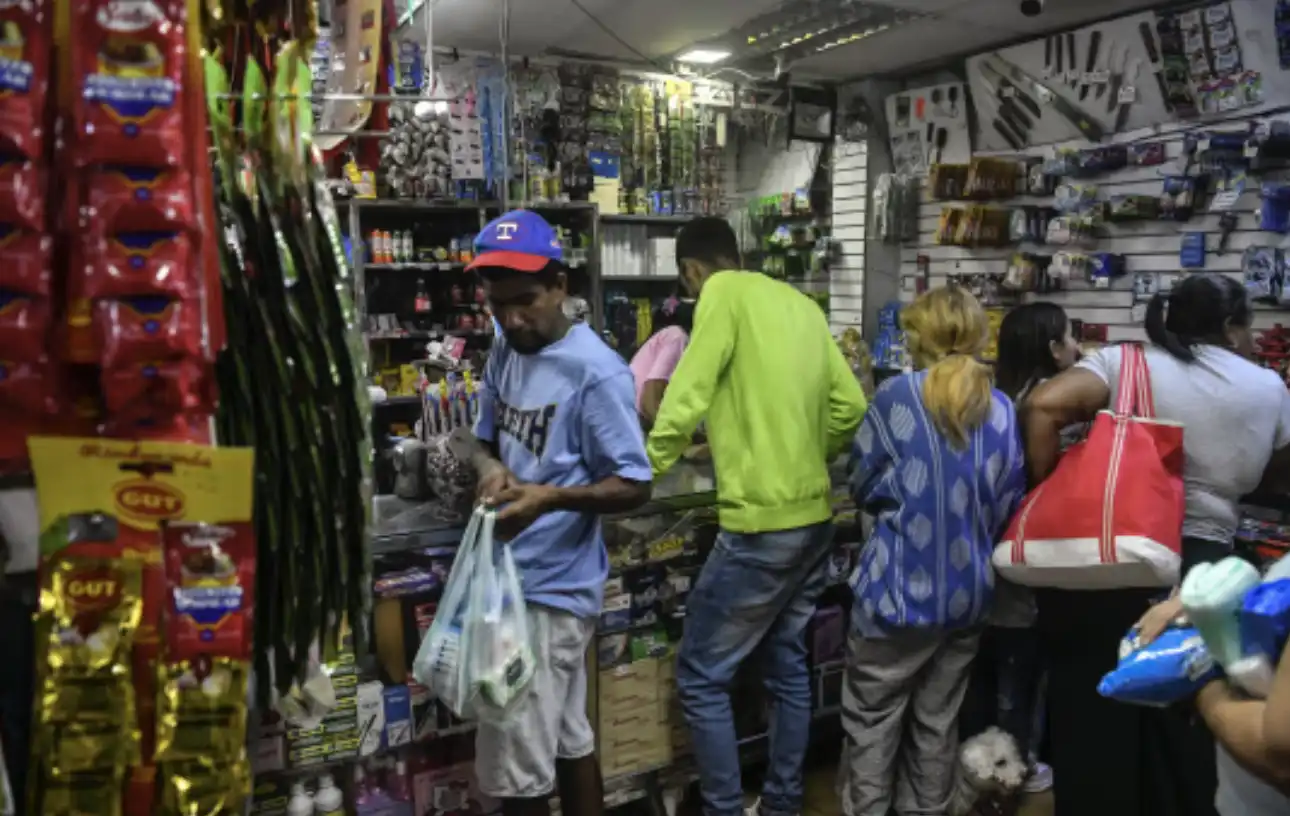
Soon after the sanctions took effect, Tether, with the ticker USDT, also became a viable alternative currency for many Venezuelans. They use this stablecoin for cross-border remittances, savings preservation, and daily payments.

Tether CEO Paolo Ardoino said at a recent crypto industry conference: 'In the past 10 years, the Venezuelan bolivar has depreciated by 99.8% against the U.S. dollar, the Turkish lira by 80%, and the Argentine peso by about 94.5%. This simple chart alone is enough to explain why USDT has been successful.'

Mauricio Di Bartolomeo, a crypto entrepreneur born and raised in Venezuela, said that two months ago, his 71-year-old aunt called him because she needed to buy some USDT to pay her apartment's homeowners association fee.

'You pay the gardener, you pay for a haircut—this is how you pay for everything. Basically, you can use USDT for anything,' said Di Bartolomeo, co-founder of crypto lending platform Ledn. 'The penetration of stablecoins in Venezuela is so deep that even without regulated, compliant channels to buy and sell stablecoins, people still choose stablecoins over the local banking system.'

Researchers say it was almost inevitable that USDT would play a major role in Venezuela—due to a lack of trust in the domestic banking system and strict capital controls that limit access to physical U.S. dollars. A prime example: the Venezuelan government attempted to launch an oil-backed cryptocurrency called Petro in 2018, but it failed due to lack of public trust and international recognition.

Ari Redbord, global head of policy at blockchain analytics firm TRM Labs, said: 'The issue is not with USDT itself, but with the inherent 'dual-use' reality of stablecoins.' TRM Labs has partnered with Tether to track the use of stablecoins on the Tron blockchain for illicit activities. 'They can be a lifeline for ordinary people and also serve as a tool to evade sanctions under pressure.'

Domande pertinenti

QWhat percentage of Venezuela's oil revenue is now settled using stablecoins like USDT, according to the article?

ANearly 80% of Venezuela's oil revenue is settled using stablecoins like USDT.

QWhy has USDT become a 'financial lifeline' for ordinary Venezuelan citizens?

AUSDT has become a financial lifeline because it provides a stable store of value and a means for daily transactions, cross-border remittances, and savings, helping citizens cope with the hyperinflation of the bolivar and strict capital controls that limit access to physical dollars.

QWhat is the 'dual-use' nature of stablecoins as highlighted in the article?

AThe 'dual-use' nature refers to stablecoins like USDT serving both as a vital tool for ordinary people in failing economies (a lifeline) and as a means to circumvent sanctions and traditional banking systems for entities like state-owned oil companies (an escape route).

QWhat role did the Venezuelan state oil company PdVSA play in the adoption of USDT?

AFacing escalating U.S. sanctions in 2020, PdVSA began requiring payments for oil exports to be made in USDT to bypass the traditional banking system, which was a transformative change for the country's oil economy.

QHow has Tether's relationship with U.S. authorities been relevant to the situation in Venezuela?

ATether has cooperated with U.S. authorities by freezing dozens of wallets identified as being involved in Venezuelan oil trade, demonstrating its role in enforcement actions while it also seeks broader legitimacy in the U.S. market.

Letture associate

Breaking: OpenAI Undergoes Major Reorganization, President Brockman Assumes Command

OpenAI has announced a major internal reorganization just months before its anticipated IPO. The company is merging its three flagship product lines—ChatGPT, Codex, and the API platform—into a single, unified product organization. The most significant leadership change involves co-founder and President Greg Brockman moving from a background technical role to take full, permanent control over all product strategy. This follows the indefinite medical leave of AGI Deployment CEO Fidji Simo. Additionally, ChatGPT's longtime lead, Nick Turley, has been reassigned to enterprise products, with former Instagram executive Ashley Alexander taking over consumer offerings. The consolidation, internally framed as a strategic move towards an "Agentic Future," aims to break down internal silos and create a cohesive "Super App." This planned desktop application would integrate ChatGPT's conversational abilities, Codex's coding power, and a rumored internal web browser named "Atlas" to autonomously perform complex user tasks. The reorganization occurs amid significant internal and external pressures. OpenAI has recently seen a wave of high-profile departures, including Sora co-lead Bill Peebles and other senior technical leaders, leading to concerns about a thinning executive bench. Externally, rival Anthropic recently secured funding at a staggering $900 billion valuation, surpassing OpenAI's own. Google's upcoming I/O developer conference also poses a competitive threat. Analysts suggest the dramatic restructure is a pre-IPO move to present a clearer, more focused narrative to Wall Street—streamlining operations and demonstrating decisive leadership under Brockman to counter internal turbulence and intense market competition.

marsbit3 h fa

Breaking: OpenAI Undergoes Major Reorganization, President Brockman Assumes Command

marsbit3 h fa

Two Survival Structures of Market Makers and Arbitrageurs

Market makers and arbitrageurs represent two distinct survival structures in high-frequency trading. Market makers primarily use limit orders (makers) to profit from the bid-ask spread, enjoying high capital efficiency (nominally 100%) but bearing inventory risk. This "inventory risk" arises from passive, fragmented, and discontinuous order fills in the limit order book (LOB). This risk, while a potential cost, can also contribute to excess profit if managed within control boundaries, allowing for mean reversion. Market makers essentially sell "time" (uncertainty over execution timing) to the market for price control and low fees. In contrast, cross-exchange arbitrageurs typically use market orders (takers) to exploit price differences or funding rates, resulting in lower nominal capital efficiency (requiring capital on both exchanges) and higher transaction costs. Their risk exposure stems from asymmetries in exchange rules (e.g., minimum order sizes), execution latency, and infrastructure risks (e.g., ADL, oracle drift). These exposures are active, exogenous gaps that primarily erode profits rather than contribute to them. Arbitrageurs essentially sell "space" (capital sunk across venues) for localized, immediate certainty. Both strategies engage in a trade-off between execution friction and residual risk. Optimal systems allow for temporary, controlled risk exposure rather than enforcing zero exposure at all costs. Their evolution converges towards hybrid models: arbitrageurs may use maker orders to reduce costs, while market makers may use taker orders or hedges for risk management. Ultimately, both use different forms of risk exposure—market makers exposing inventory, arbitrageurs immobilizing capital—to extract marginal, hard-won certainty from the market.

链捕手3 h fa

Two Survival Structures of Market Makers and Arbitrageurs

链捕手3 h fa

Who Will Define the Rules of the AI Era? Anthropic Discusses the 2028 US-China AI Landscape

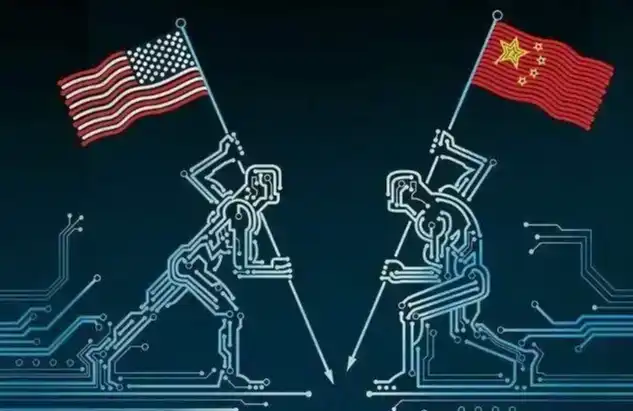
This article, based on Anthropic's analysis, outlines the intensifying systemic competition between the U.S./allies and China for AI leadership by 2028. It argues that access to advanced computing power ("compute") is the critical bottleneck, where the U.S. currently holds a significant advantage through chip export controls and allied innovation. However, China's AI labs remain competitive by exploiting policy loopholes—via chip smuggling, overseas data center access, and "model distillation" attacks to copy U.S. model capabilities—keeping them close to the frontier. The piece presents two contrasting scenarios for 2028. In the first, decisive U.S. action to tighten compute controls and curb distillation locks in a 12-24 month AI capability lead, cementing democratic influence over global AI norms, security, and economic infrastructure. In the second, policy inaction allows China to achieve near-parity through continued access to U.S. technology, enabling Beijing to promote its AI stack globally and integrate advanced AI into its military and governance systems, altering the strategic balance. Anthropic contends that maintaining a decisive U.S. lead is essential for shaping safe AI development and governance. The core recommendation is for U.S. policymakers to urgently close compute and model access loopholes while promoting global adoption of the U.S. AI technology stack to secure a lasting strategic advantage.

marsbit5 h fa

Who Will Define the Rules of the AI Era? Anthropic Discusses the 2028 US-China AI Landscape

marsbit5 h fa

Trading

Spot
Futures
活动图片