Từ đầu cơ đến quản lý rủi ro: Các thị trường dự đoán đang lấp đầy khoảng trống bảo hiểm thương mại

marsbitPubblicato 2026-08-17Pubblicato ultima volta 2026-08-17

Introduzione

Từ đầu cơ đến quản lý rủi ro: Thị trường dự đoán đang lấp đầy khoảng trống bảo hiểm thương mại Bài viết phân tích sự phát triển của thị trường dự đoán (prediction markets), đặc biệt là công cụ quản lý rủi ro AI Blanket, trong việc trở thành một công cụ phòng ngừa rủi ro thay thế cho doanh nghiệp. Thay vì dựa vào công ty bảo hiểm truyền thống, doanh nghiệp có thể sử dụng các hợp đồng sự kiện (như trên nền tảng Kalshi) để bảo vệ trước các rủi ro như biến động giá năng lượng, thời tiết bất thường hay thay đổi chính sách. Phân tích dữ liệu từ tháng 8/2025 đến tháng 8/2026 trên 1265 thị trường Kalshi so sánh hành vi giao dịch trong ba lĩnh vực: Hợp đồng thời tiết trên Kalshi, hợp đồng thể thao trên Kalshi (chủ yếu đầu cơ) và hợp đồng tương lai truyền thống (CME). Ba chỉ số chính được xem xét: 1. **Tỷ lệ luân chuyển hàng ngày trung bình:** Hợp đồng thời tiết có tỷ lệ thấp nhất (0.210), cho thấy xu hướng giữ vị thế lâu hơn so với hợp đồng thể thao (0.315). 2. **Tỷ lệ giữ đến khi đáo hạn:** Hợp đồng thời tiết có tỷ lệ này rất cao (>0.5), trong khi hợp đồng thể thao rất thấp (0.012-0.033). Điều này cho thấy nhiều vị thế thời tiết được nắm giữ ổn định đến cuối, phù hợp với hành vi phòng ngừa rủi ro. 3. **Thời điểm thiết lập vị thế:** Vị thế trong hợp đồng thời tiết thường được thiết lập sớm hơn nhiều so với ngày đáo hạn, tương tự thị trường phòng ngừa rủi ro truyền thống, khác biệt rõ rệt với hợp đồng thể thao. Kết luận cho thấy thị trường thời tiết trên Kalshi không phải là thuầ...

Tác giả: G_Gyeomm

Biên dịch: AIdidiaoJP, Foresight News

I. Một loại bảo hiểm mới được định giá trực tiếp bởi thị trường

Công cụ quản lý rủi ro AI Blanket mới ra mắt gần đây đang cố gắng biến các thị trường dự đoán thành một công cụ bảo hiểm thực sự hữu ích cho doanh nghiệp. Logic rất đơn giản: Doanh nghiệp nhập thông tin kinh doanh của mình, hệ thống tự động chẩn đoán các rủi ro chính, sau đó đề xuất các hợp đồng sự kiện Kalshi tương ứng để giúp doanh nghiệp phòng ngừa những rủi ro này.

Cơ chế phòng ngừa rủi ro tự thân không phức tạp. Cấu trúc hợp đồng của thị trường dự đoán cực kỳ rõ ràng — sự kiện xảy ra thì thanh toán 1 USD, không xảy ra thì thanh toán 0 USD. Giá thực thời của hợp đồng chính là sự đánh giá tập thể của thị trường về xác suất xảy ra sự kiện đó.

Chính cấu trúc đơn giản này đã cho phép các thị trường dự đoán có tiềm năng trở thành công cụ phòng ngừa rủi ro thực tế. Doanh nghiệp có thể mua trước các hợp đồng sự kiện có thể ảnh hưởng đến hoạt động kinh doanh của mình, chẳng hạn như thời tiết bất thường, biến động giá năng lượng hoặc thay đổi chính sách thuế quan. Một khi những rủi ro này thực sự xảy ra, khoản thanh toán từ hợp đồng có thể bù đắp một phần hoặc toàn bộ thiệt hại kinh doanh.

Lấy một ví dụ cụ thể: Một cửa hàng kem, gặp phải mùa hè mát mẻ, doanh thu sẽ giảm khoảng 20.000 USD.

Thao tác phòng ngừa rủi ro như sau: Mua 20.000 hợp đồng nhiệt độ với giá 0,30 USD mỗi hợp đồng. Nếu nhiệt độ trung bình mùa hè thấp hơn ngưỡng đã định trước, mỗi hợp đồng sẽ thanh toán 1 USD. Tổng chi phí là 6.000 USD.

Kết quả chỉ có hai khả năng:

  • Mùa hè mát mẻ: Nhiệt độ thấp hơn ngưỡng, doanh thu giảm 20.000 USD, nhưng hợp đồng thanh toán một lần 20.000 USD. Cuối cùng, tổn thất ròng bị khóa ở mức 6.000 USD — chính xác là số tiền đã chi để mua hợp đồng ban đầu.
  • Mùa hè nóng bức: Nhiệt độ cao hơn ngưỡng, doanh thu không bị ảnh hưởng, nhưng hợp đồng hết hạn và trở về 0, 6.000 USD chi phí mất trắng.

Dù kết quả nào, tổn thất cuối cùng cũng bị khóa chặt ở 6.000 USD. 6.000 USD này về bản chất chính là phí bảo hiểm. Và mức phí này được định không phải bởi chuyên gia tính toán rủi ro của công ty bảo hiểm, cũng không phải bởi bất kỳ tổ chức bảo hiểm truyền thống nào, mà chính là bởi thị trường — mức giá được công bố theo thời gian thực bằng tiền thật từ vô số người mua và người bán.

II. Thị trường phòng ngừa rủi ro có thực sự đang vận hành?

Các thị trường dự đoán đã tích lũy đủ nhu cầu đầu cơ. Ban đầu, nó tạo dựng danh tiếng nhờ dự đoán bầu cử, sau đó mở rộng suôn sẻ sang lĩnh vực thể thao, vấn đề khối lượng giao dịch cơ bản đã được giải quyết. Ngành công nghiệp phổ biến tin rằng không gian tăng trưởng tiếp theo nằm ở việc mở rộng thêm nhiều kịch bản sử dụng thực tế, và nhu cầu phòng ngừa rủi ro được nhắc đến nhiều lần, là một trong những hướng đi đáng mong đợi nhất.

Về lý thuyết, giá trị của nó thực sự rất lớn. Các khu vực trống không được các công cụ phòng ngừa rủi ro hiện có bao phủ khá rộng. Bảo hiểm gián đoạn kinh doanh trong bảo hiểm thương mại truyền thống thường yêu cầu tổn thất vật chất làm tiền đề. Một cửa hàng trượt tuyết bị mất doanh thu vì cả mùa đông hầu như không có tuyết — loại "rủi ro kinh doanh" thuần túy này, trên thị trường hầu như không tìm được sản phẩm bảo hiểm phù hợp để bảo vệ.

Thị trường kỳ hạn (futures) thì có các công cụ phòng ngừa rủi ro trưởng thành, nhưng ngưỡng không thấp: cần ký kết thỏa thuận ISDA, mở tài khoản giao dịch kỳ hạn chuyên dụng, nộp tiền ký quỹ và có các hạn chế về quy mô hợp đồng tối thiểu. Những điều kiện này không phải là vấn đề đối với các tổ chức lớn, nhưng đối với các doanh nghiệp vừa và nhỏ bình thường, gần như không thể đạt được. Goldman Sachs có thể nuôi một đội ngũ giao dịch phái sinh chuyên nghiệp, nhưng một quán cà phê ở góc phố rõ ràng không làm được.

Vấn đề là, giữa tính hợp lý về lý thuyết và việc sử dụng thực tế, luôn tồn tại một khoảng cách rõ rệt. Các thị trường dự đoán lâu nay bị gán mác "cờ bạc", liệu nó có thực sự có thể hoạt động như một thị trường phòng ngừa rủi ro độc lập — chứ không chỉ là công cụ đầu cơ — chưa bao giờ được xác minh một cách có hệ thống.

Câu hỏi thực sự cần trả lời là: Các thị trường dự đoán có thực sự được sử dụng để phòng ngừa rủi ro không? Nhu cầu phòng ngừa rủi ro thực tế có tồn tại không? Bản thân hành vi giao dịch có thể cung cấp manh mối. Chúng tôi chọn ba nhóm dữ liệu để so sánh.

Nhóm thứ nhất là hợp đồng tương lai ngũ cốc CME — một thị trường phòng ngừa rủi ro truyền thống điển hình, chủ yếu được sử dụng để giảm bớt tổn thất do biến động giá nông sản và sản phẩm chăn nuôi.

Nhóm thứ hai là thị trường thể thao Kalshi — nơi nhu cầu phòng ngừa rủi ro cực kỳ hạn chế, giao dịch hầu hết đều do động cơ đầu cơ thúc đẩy.

Nhóm thứ ba là thị trường thời tiết Kalshi — nó xử lý rủi ro thời tiết theo cách tương tự như hợp đồng tương lai thời tiết CME, đồng thời chia sẻ chính xác cấu trúc hợp đồng sự kiện và môi trường giao dịch giống hệt với thị trường thể thao Kalshi. Điều này biến nó thành một mẫu thử nghiệm tuyệt vời — để xem hành vi giao dịch của nó cuối cùng gần giống bên nào hơn.

Người phòng ngừa rủi ro và người đầu cơ thường biểu hiện các đặc điểm giao dịch khác nhau. Người phòng ngừa rủi ro có xu hướng thiết lập vị thế sớm trước khi cửa sổ rủi ro thực sự đến, sau đó giữ cho đến ngày đáo hạn; người đầu cơ thì vào ra thường xuyên hơn, đuổi theo giá, tỷ lệ luân chuyển rõ ràng cao hơn.

Nếu tỷ lệ luân chuyển và hành vi nắm giữ vị thế của thị trường thời tiết Kalshi đều gần với thị trường phòng ngừa rủi ro truyền thống hơn là thị trường thể thao, thì nhu cầu phòng ngừa rủi ro là có thật.

Ngược lại, nếu nó không khác gì thị trường thể thao, thì việc sử dụng thực tế sẽ gần với đầu cơ thuần túy hơn. Trong trường hợp này, các công cụ như Blanket, có thể chỉ đáp ứng những tưởng tượng tốt đẹp trong ngành, chứ không phải nhu cầu thực tế được xác minh bởi dữ liệu.

Bộ dữ liệu phân tích này bao phủ 1265 thị trường Kalshi được thanh toán từ tháng 8 năm 2025 đến tháng 8 năm 2026. Tiêu chí lọc là: khối lượng giao dịch tích lũy ít nhất 500 hợp đồng và giao dịch kéo dài ít nhất ba ngày.

III. Dữ liệu một: Tỷ lệ luân chuyển trung bình hàng ngày

Đầu tiên, xem xét tần suất các vị thế trên mỗi thị trường được giao dịch. Tỷ lệ luân chuyển được định nghĩa là khối lượng giao dịch hàng ngày chia cho số lượng vị thế mở (OI) trong ngày đó. Chúng tôi tính tỷ lệ luân chuyển hàng ngày cho mỗi hợp đồng trên mỗi thị trường, sau đó lấy trung vị cho toàn bộ chu kỳ giao dịch.

Kết quả rõ ràng: Hợp đồng thời tiết Kalshi có tỷ lệ luân chuyển thấp nhất, chỉ 0,210. Sản phẩm phòng ngừa rủi ro truyền thống là hợp đồng tương lai ngô là 0,266, hợp đồng thể thao Kalshi cao nhất, đạt 0,315.
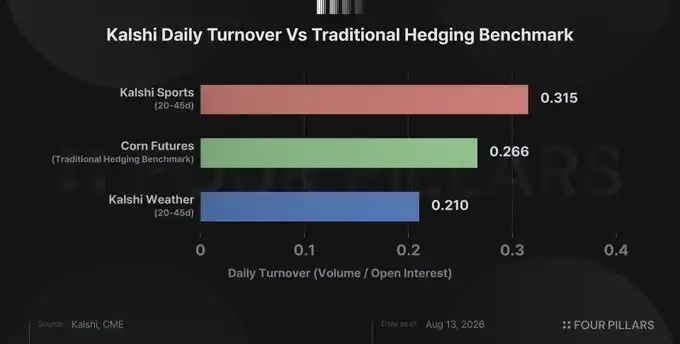
Tốc độ luân chuyển của hợp đồng thể thao cao gấp khoảng 1,5 lần hợp đồng thời tiết. Điều này cho thấy hợp đồng thời tiết có xu hướng nắm giữ lâu hơn tương đối, gợi ý ban đầu có thể tồn tại nhu cầu phòng ngừa rủi ro thực tế.

Tuy nhiên, cần lưu ý: Tỷ lệ luân chuyển của hợp đồng tương lai ngô nằm ở giữa, và sự khác biệt giữa ba nhóm dữ liệu không quá chênh lệch. Chỉ riêng chỉ số tỷ lệ luân chuyển này, chưa thể hoàn toàn khẳng định thị trường thời tiết có nhu cầu phòng ngừa rủi ro. Hiện tại, dữ liệu này có thể cho chúng ta biết rõ ràng rằng, tỷ lệ luân chuyển của hợp đồng thời tiết thấp hơn đáng kể so với hợp đồng thể thao.

IV. Dữ liệu hai: Tỷ lệ nắm giữ đến ngày đáo hạn

Chỉ số then chốt thứ hai là tỷ lệ nắm giữ đến ngày đáo hạn — đo lường có bao nhiêu vị thế còn lại trên thị trường vào lúc thanh toán mà chưa bị động chạm. Cách tính là số lượng vị thế mở cuối cùng của mỗi hợp đồng chia cho khối lượng giao dịch tích lũy. Giá trị càng cao, càng cho thấy nhiều vị thế được kiên định nắm giữ cho đến ngày đáo hạn.
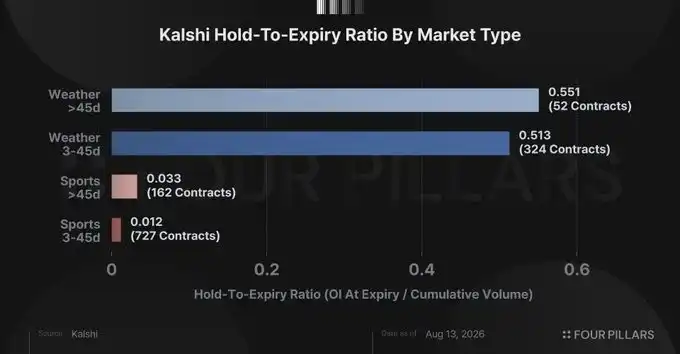
Kết quả khác biệt rất ấn tượng: Bất kể giao dịch kéo dài bao lâu, tỷ lệ nắm giữ đến ngày đáo hạn của hợp đồng thời tiết đều vượt quá 0,5. Ngược lại, hợp đồng thể thao lần lượt chỉ có 0,012 và 0,033. Trong khoảng thời gian giao dịch từ 3 đến 45 ngày, hợp đồng thời tiết cao gấp 42,8 lần thể thao; trong khoảng trên 45 ngày, chênh lệch vẫn là 16,7 lần.

Điều này cho thấy rõ ràng: Hợp đồng thời tiết có xu hướng "mua vào và không động đậy" cao hơn nhiều so với hợp đồng thể thao. Người phòng ngừa rủi ro nắm giữ hợp đồng, nhằm mục đích nhận được khoản thanh toán nếu rủi ro xảy ra, chứ không phải để mua đáy bán đỉnh kiếm chênh lệch. Do đó, tỷ lệ nắm giữ đến ngày đáo hạn cao, ủng hộ mạnh mẽ cho nhận định rằng thị trường thời tiết có nhu cầu phòng ngừa rủi ro thực tế.

Tất nhiên, điều này không thể hiểu trực tiếp rằng toàn bộ thị trường thời tiết đang được sử dụng để phòng ngừa rủi ro. Dữ liệu này không theo dõi được danh tính của bên mua và bên bán trong từng vị thế riêng lẻ, vì vậy không thể đơn giản coi đây là tỷ lệ người mua ban đầu nắm giữ đến ngày đáo hạn. Hiện tại có thể xác nhận rằng, hành vi nắm giữ vị thế của hợp đồng thời tiết khác biệt rõ ràng so với hợp đồng thể thao.

V. Dữ liệu ba: Vị thế được thiết lập khi nào?

Câu hỏi cuối cùng là: Những vị thế này được thiết lập khi nào? Chúng tôi chia số lượng vị thế mở hàng ngày của mỗi hợp đồng cho số lượng vị thế mở đỉnh của hợp đồng đó, sau đó chuyển đổi thời gian từ khi ra mắt đến ngày đáo hạn thành thanh tiến trình từ 0% đến 100%, và vẽ đường cong trung vị.

Tiêu chí đánh giá là xem thời điểm đạt được một nửa số lượng vị thế mở đỉnh. Nếu đạt được một nửa khi còn nhiều thời gian hơn đến ngày đáo hạn, điều đó cho thấy vị thế được thiết lập sớm hơn — điều này phù hợp hơn với mô hình hành vi của người phòng ngừa rủi ro.
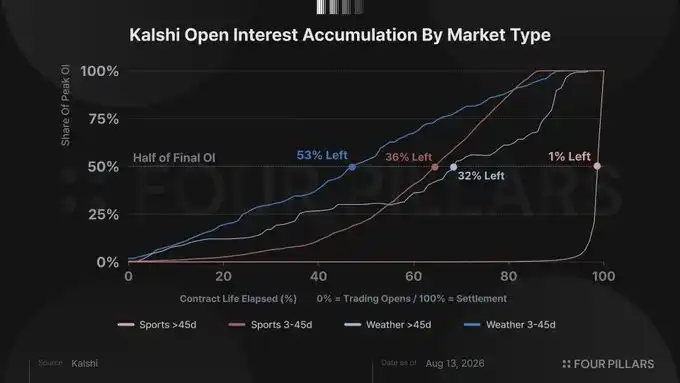
Các hợp đồng thời tiết có giao dịch kéo dài từ 3 đến 45 ngày, khi vòng đời đạt 47% đã đạt được một nửa số lượng vị thế mở đỉnh, lúc này còn 53% thời gian đến ngày đáo hạn. Các hợp đồng thể thao trong cùng khoảng thời gian phải đến 65% mới đạt một nửa, thời gian còn lại chỉ còn 36%.

Trong các hợp đồng kéo dài hơn 45 ngày, sự khác biệt còn đáng kinh ngạc hơn. Hợp đồng thời tiết đạt một nửa khi còn 32% thời gian đến ngày đáo hạn, hợp đồng thể thao chỉ còn 1,3%. Dù ở khoảng thời gian nào, vị thế thời tiết cũng được thiết lập sớm hơn nhiều so với vị thế thể thao.
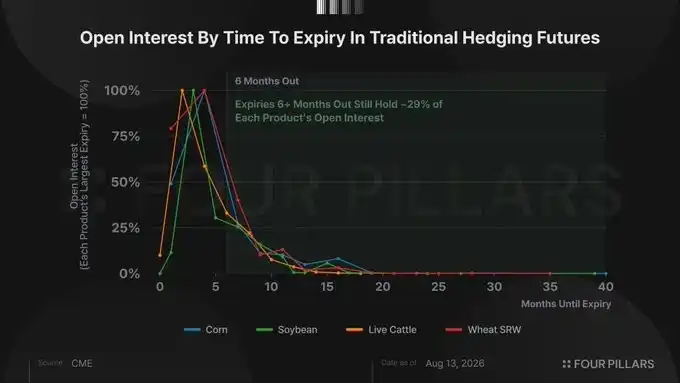
Hành vi "bố trí sớm" này chính là đặc trưng điển hình của thị trường phòng ngừa rủi ro truyền thống. Tính đến ngày 11 tháng 8 năm 2026, trong các hợp đồng tương lai ngũ cốc và sản phẩm chăn nuôi của CME, các hợp đồng còn sáu tháng nữa mới đáo hạn đã tích lũy số lượng vị thế mở khổng lồ. Hợp đồng tương lai ngô thậm chí vẫn nắm giữ 65.127 vị thế trên các hợp đồng còn 16 tháng nữa mới đáo hạn.

Điều này phản ánh xu hướng hành động sớm trước khi rủi ro thực sự ập đến. Và mô hình hành vi của hợp đồng thời tiết Kalshi, rõ ràng gần với thị trường phòng ngừa rủi ro truyền thống hơn, chứ không phải thị trường thể thao.

VI. Phòng ngừa rủi ro dựa vào thanh khoản do đầu cơ tạo ra

Nói về kết luận: Thị trường thời tiết Kalshi không phải là một thị trường phòng ngừa rủi ro thuần túy, cũng không phải là thị trường đầu cơ thuần túy như thể thao. Nhu cầu đầu cơ vẫn đóng góp một phần thanh khoản đáng kể, nhưng trên cơ sở đó, nhu cầu phòng ngừa rủi ro cũng đã xuất hiện tương đối rõ ràng.

Ba chỉ số hướng đến cùng một hướng: Hợp đồng thời tiết giao dịch ít thường xuyên hơn, giữ lại nhiều vị thế hơn khi thanh toán, vị thế được thiết lập sớm hơn. Một chỉ số đơn lẻ không thể xác nhận 100% ý định giao dịch, nhưng sự nhất quán cao của những hành vi này cùng nhau ủng hộ một đánh giá — trong thị trường thời tiết Kalshi thực sự tồn tại nhu cầu nắm giữ khác biệt với thể thao, trong đó một phần đáng kể rất có thể là nhu cầu phòng ngừa rủi ro thực tế.

Quan trọng hơn, nhu cầu đầu cơ không hẳn là điểm yếu của thị trường dự đoán, mà có lẽ là tiền đề để chức năng phòng ngừa rủi ro được thiết lập. Một thị trường chỉ có người phòng ngừa rủi ro, không có người đầu cơ, rất khó tìm đủ đối tác và duy trì thanh khoản liên tục.

Trong thị trường dự đoán, người đầu cơ chịu trách nhiệm định giá và cung cấp thanh khoản, còn người phòng ngừa rủi ro trên cơ sở đó chuyển những rủi ro mà họ không muốn gánh chịu. Rủi ro không còn được các công ty bảo hiểm trực tiếp bảo hiểm, mà được phân tán một cách tự nhiên giữa những người tham gia thị trường thông qua giao dịch.

Vì vậy, tăng trưởng ở giai đoạn tiếp theo của thị trường dự đoán, mấu chốt không nằm ở việc "loại bỏ" đầu cơ, chuyển hướng hoàn toàn sang phòng ngừa rủi ro. Điều thực sự quan trọng là: Trên nền tảng thanh khoản đã được đầu cơ xây dựng sẵn, có thể bổ sung thêm bao nhiêu nhu cầu phòng ngừa rủi ro thực tế của doanh nghiệp. Đây mới là biến số cốt lõi quyết định liệu nó có thể nâng cấp từ một "công cụ đầu cơ thú vị" thành một "cơ sở hạ tầng quản lý rủi ro có thể sử dụng được" hay không.


Crypto di tendenza

Domande pertinenti

QCông cụ quản lý rủi ro AI Blanket đang thử biến thị trường dự đoán thành công cụ bảo hiểm cho doanh nghiệp bằng cách nào?

ABlanket phân tích thông tin kinh doanh của doanh nghiệp để chẩn đoán rủi ro chính, sau đó đề xuất các hợp đồng sự kiện trên nền tảng Kalshi tương ứng để doanh nghiệp phòng ngừa rủi ro đó. Doanh nghiệp mua hợp đồng dự đoán các sự kiện như thời tiết bất thường hay biến động giá năng lượng. Nếu rủi ro xảy ra, khoản thanh toán từ hợp đồng sẽ bù đắp một phần hoặc toàn bộ thiệt hại kinh doanh.

QBài viết đã so sánh hành vi giao dịch của những thị trường nào để xác định nhu cầu phòng ngừa rủi ro thực sự trong thị trường thời tiết Kalshi?

ABài viết so sánh ba nhóm: 1) Hợp đồng tương lai ngũ cốc trên CME - đại diện cho thị trường phòng ngừa rủi ro truyền thống. 2) Thị trường thể thao Kalshi - nơi giao dịch chủ yếu do đầu cơ thúc đẩy. 3) Thị trường thời tiết Kalshi - mẫu thử nghiệm chính, xem xét hành vi giao dịch của nó giống với bên nào hơn để xác định có tồn tại nhu cầu phòng ngừa rủi ro hay không.

QChỉ số nào trong phân tích dữ liệu cho thấy sự khác biệt rõ ràng nhất giữa hợp đồng thời tiết và hợp đồng thể thao trên Kalshi, ủng hộ giả thuyết tồn tại nhu cầu phòng ngừa rủi ro?

AChỉ số 'Tỷ lệ nắm giữ đến khi đáo hạn' (holding-to-expiration ratio) cho thấy sự khác biệt rõ rệt nhất. Hợp đồng thời tiết có tỷ lệ này luôn trên 0.5, trong khi hợp đồng thể thao chỉ ở mức 0.012 và 0.033. Điều này có nghĩa là các vị thế trong hợp đồng thời tiết có xu hướng được giữ nguyên cho đến ngày thanh toán cao hơn rất nhiều so với hợp đồng thể thao, phù hợp với hành vi của người phòng ngừa rủi ro.

QVai trò của nhà đầu cơ trong việc phát triển thị trường dự đoán thành công cụ quản lý rủi ro là gì?

ANhà đầu cơ đóng vai trò then chốt trong việc cung cấp tính thanh khoản và định giá cho thị trường. Một thị trường chỉ có người phòng ngừa rủi ro sẽ thiếu tính thanh khoản và đối tác giao dịch. Các nhà đầu cơ tạo ra nền tảng thanh khoản, cho phép những người phòng ngừa rủi ro có thể tham gia để chuyển giao rủi ro họ không muốn chịu. Do đó, nhu cầu đầu cơ là tiền đề để chức năng phòng ngừa rủi ro của thị trường dự đoán tồn tại.

QTheo bài viết, yếu tố cốt lõi nào sẽ quyết định việc thị trường dự đoán có thể nâng cấp từ 'công cụ đầu cơ thú vị' thành 'cơ sở hạ tầng quản lý rủi ro khả dụng'?

AYếu tố cốt lõi là khả năng chồng thêm bao nhiêu nhu cầu phòng ngừa rủi ro thực tế của doanh nghiệp lên trên nền tảng thanh khoản vốn đã được xây dựng bởi hoạt động đầu cơ. Sự tăng trưởng của thị trường dự đoán không nằm ở việc loại bỏ hoàn toàn đầu cơ, mà là tận dụng nền tảng đó để đáp ứng nhu cầu quản lý rủi ro thực sự từ các doanh nghiệp.

Letture associate

Treasury Secretary's Move to Suppress Treasury Yields Ignites 'Currency Debasement Trade'! Gold Hits Three-Month High, Bitcoin Surges Over 25% in a Single Week

US Treasury Secretary Besant's efforts to lower long-term Treasury yields by announcing expanded buybacks had only a brief market impact. However, this move fueled a "currency devaluation trade," weakening the US dollar while boosting both gold (to a three-month high) and Bitcoin (up over 25% for the week). Analysts attribute this reaction to deepening market concerns over the massive US fiscal deficit and structural pressures keeping long-term rates elevated, including fierce competition for capital from global government borrowing and massive AI sector financing. Despite the Treasury's actions, fundamental forces like growth, inflation, and capital demand are seen as limiting its ability to sustainably suppress yields. Bitcoin's strong positive correlation with gold has reinforced its narrative as a hedge against devaluation. While equity markets have shown resilience, some strategists warn that Treasury yields nearing 5% increase pressure on the dollar and high-leverage assets. Figures like Ray Dalio have advised reducing bond exposure in favor of gold and some Bitcoin, citing US debt risks. Market opinions are divided on the sustainability of the devaluation trade, with some noting the lack of a near-term catalyst for its next leg higher. The underlying tension between the Treasury's desire for lower borrowing costs and the Federal Reserve's focus on inflation and reducing market intervention remains a key theme. Upcoming events like Nvidia's earnings and the Jackson Hole symposium will test whether AI profits can continue supporting stocks and if the Fed aligns more with Washington's preference for easier financial conditions.

华尔街日报1 h fa

Treasury Secretary's Move to Suppress Treasury Yields Ignites 'Currency Debasement Trade'! Gold Hits Three-Month High, Bitcoin Surges Over 25% in a Single Week

华尔街日报1 h fa

Alexander Shokhin: Business Needs an Interest Rate Below 10% and the Dollar at 90-95 Rubles

Alexander Shokhin, head of the Russian Union of Industrialists and Entrepreneurs (RSPP), has advocated for potentially using "non-market" tools to keep the ruble within a target exchange rate corridor. This, he argues on August 21, would help avoid excessive volatility, though he called the topic a separate discussion. Shokhin had previously raised the idea of a currency corridor in late May, noting the ruble's current exchange rate is not fully market-driven due to a limited currency segment and reduced foreign currency demand. He stated that many business community colleagues propose fixing a corridor, even through non-market methods, to ensure predictability. The business community's key targets, as outlined by Shokhin in late December 2025, are a Central Bank key rate of 12%, inflation of 4–5%, and a US dollar exchange rate of 90–95 rubles by the end of 2026. A turning point for investment, he said, would be lowering the rate to 12% with 6% inflation, though truly comfortable business conditions would require a rate below 10%. He stressed the critical importance of currency predictability for corporate investment decisions. From a data analysis perspective, the idea of a ruble corridor is not new. A similar mechanism was used in Russia from 1995 to 1998, where the central bank held the dollar within fixed boundaries through regular interventions. This regime lasted three years before ending abruptly during the 1998 default, illustrating the fragility of rigid targets under external shocks. The macro-economic link is clear: stricter corridors require more reserves to defend against currency pressure. The key unresolved technical aspect is the specific sources and volume of such interventions given the current market's limited liquidity. Whether this discussion remains theoretical or leads to concrete corridor parameters will be seen in the coming months.

cryptonews.ru2 h fa

Alexander Shokhin: Business Needs an Interest Rate Below 10% and the Dollar at 90-95 Rubles

cryptonews.ru2 h fa

Trading

Spot

Articoli Popolari

Cosa è G$

Comprendere GoodDollar ($G$): Un Progetto per il Reddito Universale di Base Decentralizzato Introduzione Nel panorama in continua evoluzione delle criptovalute e della tecnologia blockchain, le iniziative che cercano di affrontare questioni sociali urgenti hanno attirato crescente attenzione. Uno di questi progetti è GoodDollar ($G$), una soluzione di reddito universale di base (UBI) basata su Web3. GoodDollar si impegna a combattere le disuguaglianze e colmare il divario di ricchezza creando e distribuendo risorse economiche accessibili a coloro che ne hanno più bisogno. Attraverso il suo utilizzo innovativo della finanza decentralizzata (DeFi), GoodDollar propone un modello unico che potrebbe potenzialmente rimodellare il modo in cui l'assistenza finanziaria è percepita e fornita a livello globale. Che cos'è GoodDollar ($G$)? GoodDollar è un protocollo di criptovaluta che facilita l'emissione e la distribuzione di token digitali, denominati $G$, ai suoi utenti registrati su base giornaliera. Questi token funzionano come una forma di reddito universale di base, promuovendo l'empowerment finanziario per individui provenienti da vari contesti, specialmente quelli tradizionalmente esclusi dal sistema finanziario. Operando sulla blockchain, GoodDollar utilizza più catene, tra cui Ethereum, Celo e Fuse, garantendo ampia accessibilità e usabilità. L'obiettivo fondamentale di GoodDollar è rendere le criptovalute accessibili e vantaggiose per tutti, indipendentemente dal loro punto di partenza economico. Il Creatore di GoodDollar ($G$) I dettagli riguardanti il creatore di GoodDollar rimangono piuttosto oscuri. Tuttavia, è significativamente evidenziato che il progetto ha il forte sostegno di eToro, una piattaforma di investimento ampiamente riconosciuta che ha fornito il finanziamento iniziale e il supporto fondamentale per lo sviluppo di GoodDollar. La visione dietro il progetto non è esclusivamente orientata al profitto, ma tende fortemente verso l'imprenditorialità sociale, puntando a un cambiamento sistemico nell'accessibilità economica. Investitori di GoodDollar ($G$) GoodDollar gode del supporto finanziario e operativo di eToro. Questa partnership ha svolto un ruolo significativo nel lancio del protocollo e nei suoi sviluppi successivi. Sebbene eToro sia stato determinante nell'estableire le basi del progetto, GoodDollar prevede di passare a un modello finanziato dalla sua comunità a lungo termine. Questo spostamento verso il finanziamento comunitario è in linea con l'impegno di GoodDollar verso la decentralizzazione, consentendo ai suoi utenti di avere una partecipazione diretta nel futuro del progetto. Come Funziona GoodDollar ($G$)? Il framework operativo di GoodDollar si basa fortemente sui principi della DeFi per generare interessi dalle criptovalute staked. Questo meccanismo consente al progetto di coniare e distribuire token $G$ come reddito base digitale per utenti in tutto il mondo. Diverse caratteristiche chiave contribuiscono all'unicità e all'innovazione di GoodDollar: Reddito Universale di Base (UBI): Ogni giorno, gli utenti registrati ricevono token gratuiti, stabilendo un flusso di reddito automatico destinato ad alleviare le pressioni finanziarie. Modello Economico Sostenibile: La tokenomica del progetto mira a bilanciare domanda e offerta di token $G$, assicurando che il valore rimanga stabile nel tempo. Token Sostenuti da Riserva: Ogni token $G$ è sostenuto da una riserva di criptovalute, fornendogli un valore intrinseco e affidabilità, un aspetto cruciale per mantenere la fiducia degli utenti. Governance Decentralizzata: GoodDollar incorpora un approccio democratico al processo decisionale attraverso una governance decentralizzata alimentata dai token. Questo consente ai membri della comunità di partecipare attivamente alla definizione della traiettoria del progetto, rendendolo veramente guidato dalla comunità. Accessibilità Globale: GoodDollar ha stabilito un notevole footprint comunitario, vantando oltre 640.000 membri provenienti da 181 paesi. Tale portata diffusa è strumentale nel facilitare l'UBI su scala globale. Timeline di GoodDollar ($G$) L'evoluzione di GoodDollar è segnata da diversi traguardi significativi nella sua storia: 2019: Il lancio del portafoglio GoodDollar ha segnato il primo passo nella operativizzazione della sua visione di fornire UBI attraverso le criptovalute. 2020: Dopo il successo del portafoglio, il protocollo GoodDollar ha debuttato ufficialmente. Questo ha segnato una fase cruciale nella sua missione di fornire reddito distribuito giornalmente. 2021: Il progetto è avanzato ulteriormente con l'introduzione della sua Organizzazione Autonoma Decentralizzata (DAO), favorendo un maggiore livello di coinvolgimento e governance della comunità. 2022: GoodDollar ha svelato la sua versione DeFi-friendly 2 (V2), mirando a un coinvolgimento degli utenti e a un'efficienza operativa migliorata. Lo stesso anno ha visto anche la transizione a una struttura di governance decentralizzata tramite GoodDAO. 2022: È stata concettualizzata una nuova roadmap, focalizzata su iniziative come un programma di sovvenzioni progettato per promuovere iniziative imprenditoriali legate a $G$ e un mercato GoodDollar aggiornato. Caratteristiche Chiave di GoodDollar ($G$) Il progetto GoodDollar introduce numerose caratteristiche critiche tese a ridefinire il panorama del reddito di base: Reddito Universale di Base: La consegna diaria di token gratuiti ai suoi utenti sottolinea fondamentalmente la sua missione di eliminare la precarietà economica. Operazione Multi-Chain: Sfruttare più reti blockchain migliora l'accessibilità e la scalabilità, garantendo una partecipazione più ampia. Engagement con la Finanza Decentralizzata: L'uso della DeFi consente un finanziamento sostenibile del modello UBI, rafforzandone la fattibilità come soluzione economica. Coinvolgimento e Governance della Comunità: GoodDollar prevede un modello in cui la comunità influenza le operazioni attraverso la partecipazione democratica, promuovendo trasparenza e responsabilità. Comunità Globale: Vantare una comunità globale diversificata consente al progetto di implementare soluzioni UBI adattate a vari contesti culturali ed economici. Conclusione GoodDollar rappresenta un salto trasformativo verso l'integrazione dei principi del reddito universale di base attraverso l'innovativo obiettivo della tecnologia blockchain. Sfruttando la finanza decentralizzata, il progetto non solo fornisce una soluzione all'ineguaglianza finanziaria, ma coinvolge attivamente gli utenti nella sua governance e nelle sue operazioni. Con una comunità in crescita e una roadmap in evoluzione, GoodDollar si afferma come un attore significativo nell'intersezione tra criptovaluta e bene sociale, aprendo la strada a un futuro finanziario più equo. Continuando a evolversi, il percorso di GoodDollar potrebbe infine ispirare altre iniziative a considerare modelli simili, promuovendo ulteriormente la causa dell'empowerment economico per tutti.

214 Totale visualizzazioniPubblicato il 2024.04.05Aggiornato il 2024.12.03

Cosa è G$

Come comprare G

Benvenuto in HTX.com! Abbiamo reso l'acquisto di Gravity (G) semplice e conveniente. Segui la nostra guida passo passo per intraprendere il tuo viaggio nel mondo delle criptovalute.Step 1: Crea il tuo Account HTXUsa la tua email o numero di telefono per registrarti il tuo account gratuito su HTX. Vivi un'esperienza facile e sblocca tutte le funzionalità,Crea il mio accountStep 2: Vai in Acquista crypto e seleziona il tuo metodo di pagamentoCarta di credito/debito: utilizza la tua Visa o Mastercard per acquistare immediatamente GravityG.Bilancio: Usa i fondi dal bilancio del tuo account HTX per fare trading senza problemi.Terze parti: abbiamo aggiunto metodi di pagamento molto utilizzati come Google Pay e Apple Pay per maggiore comodità.P2P: Fai trading direttamente con altri utenti HTX.Over-the-Counter (OTC): Offriamo servizi su misura e tassi di cambio competitivi per i trader.Step 3: Conserva Gravity (G)Dopo aver acquistato Gravity (G), conserva nel tuo account HTX. In alternativa, puoi inviare tramite trasferimento blockchain o scambiare per altre criptovalute.Step 4: Scambia Gravity (G)Scambia facilmente Gravity (G) nel mercato spot di HTX. Accedi al tuo account, seleziona la tua coppia di trading, esegui le tue operazioni e monitora in tempo reale. Offriamo un'esperienza user-friendly sia per chi ha appena iniziato che per i trader più esperti.

565 Totale visualizzazioniPubblicato il 2024.12.10Aggiornato il 2026.06.02

Come comprare G

Cosa è @G

Rete Graphite, $@G: Colmare il divario tra TradFi e Web3 Introduzione alla Rete Graphite, $@G Nel vivace mondo delle criptovalute e dei progetti web3, la Rete Graphite emerge come un faro di innovazione. Con il suo token nativo, $@G, questa blockchain Layer-1, Proof-of-Authority (PoA) è progettata per colmare il divario tra la finanza tradizionale (TradFi) e l'ecosistema Web3 in rapida evoluzione. Mentre le valute digitali guadagnano terreno, la Rete Graphite si impegna a offrire una piattaforma blockchain che prioritizza sicurezza, conformità e velocità, presentandosi come un facilitatore di fiducia e responsabilità. Cos'è la Rete Graphite, $@G? La Rete Graphite non è semplicemente un altro progetto blockchain; mira a ridefinire come la decentralizzazione, la sicurezza e la responsabilità degli utenti siano percepite nel regno della finanza digitale. Il progetto vanta una serie di caratteristiche distintive: Blockchain Basata sulla Reputazione: Al suo interno, la Rete Graphite implementa una politica di uno-utente, uno-account, rafforzata con meccanismi integrati di Know Your Customer (KYC) e sistemi di punteggio. Questo design garantisce un equilibrio tra privacy degli utenti e trasparenza—un aspetto critico delle operazioni finanziarie nel mondo digitale odierno. Entrate dai Noduli di Accesso: La rete incentiva gli utenti a impostare noduli di accesso, consentendo agli operatori di guadagnare ricompense dalle transazioni di rete. Questo modello di generazione di reddito non solo aumenta il coinvolgimento degli utenti, ma rafforza anche la salute e la decentralizzazione della rete. Compatibilità EVM: Con una macchina virtuale (VM) compatibile con Ethereum, la Rete Graphite consente un'integrazione senza soluzione di continuità delle applicazioni decentralizzate (dApps) e dei contratti smart esistenti in Solidity, invitando così gli sviluppatori a sfruttare le sue capacità senza modifiche estensive. Integrazione KYC: In un'era in cui la conformità è fondamentale, il framework KYC integrato con più livelli di verifica migliora il controllo sulle operazioni finanziarie senza partecipazione obbligatoria, stabilendo un precedente per l'autonomia degli utenti. Chi è il Creatore della Rete Graphite, $@G? La Rete Graphite nasce dagli sforzi della Graphite Foundation, un'organizzazione non profit dedicata allo sviluppo, alla manutenzione e all'evoluzione della Rete Graphite. L'impegno della fondazione sottolinea la visione del progetto di creare un ambiente blockchain sicuro e sostenibile, focalizzato sul coinvolgimento autentico degli utenti e sulla conformità. Chi sono gli Investitori della Rete Graphite, $@G? Attualmente, ci sono informazioni limitate disponibili sugli investitori specifici che sostengono l'iniziativa della Rete Graphite. L'organizzazione fondatrice, la Graphite Foundation, opera in modo indipendente per promuovere la crescita del progetto, cercando al contempo partnership che risuonino con la sua visione di una piattaforma blockchain conforme e accessibile. Come Funziona la Rete Graphite, $@G? Il funzionamento della Rete Graphite si basa sul suo unico meccanismo di consenso Proof-of-Authority, che trova un impressionante equilibrio tra elevata capacità di elaborazione e decentralizzazione. Approfondiamo i vari componenti che definiscono il suo funzionamento: Nodi di Trasporto: Servendo come nodi di accesso, questi sono critici per l'ecosistema. Gli operatori possono guadagnare entrate dalle transazioni che attraversano la rete, il che non solo potenzia gli utenti individuali ma rafforza anche la decentralizzazione della rete. Nodi Autorizzati: Al centro della Rete Graphite ci sono i validatori principali che sottopongono a rigorosi test di conformità, comprendenti una robusta verifica KYC insieme a valutazioni tecniche. Questo strato di fiducia è essenziale per garantire che le transazioni all'interno della rete mantengano un elevato livello di integrità. Sistema di Ticker: La Rete Graphite impiega un sistema di ticker distintivo per i suoi token avvolti, denotati come @G. Questa caratteristica migliora la chiarezza nell'integrazione degli asset, rendendo le transazioni degli utenti comprensibili e dirette. L'approccio innovativo della Rete Graphite riflette un passo significativo nell'affrontare le questioni cruciali della finanza digitale, posizionandosi favorevolmente per il futuro mentre sempre più utenti transitano dalle forme tradizionali di finanza al mondo delle applicazioni decentralizzate. Cronologia della Rete Graphite, $@G Per comprendere la progressione e le tappe della Rete Graphite, è utile rivedere eventi chiave nella sua cronologia: 2021: L'inizio della Rete Graphite da parte della Graphite Foundation segna l'inizio di un nuovo capitolo nello sviluppo blockchain, focalizzandosi sulla conformità e sull'empowerment degli utenti. Sviluppi Chiave: Dopo il suo lancio, l'introduzione delle entrate dai nodi di accesso, l'istituzione di un modello basato sulla reputazione, la verifica KYC integrata e la fornitura di compatibilità EVM rappresentano progressi significativi nel progetto. Attività Recenti: I continui sforzi di sviluppo e cura della Graphite Foundation si sono concentrati sull'aumento delle funzionalità della rete, mentre si promuoveva la crescita dell'ecosistema, dimostrando un impegno a lungo termine per la sostenibilità e l'innovazione. Ulteriori Punti Chiave Oltre ai suoi componenti fondamentali, la Rete Graphite comprende diversi strumenti e funzionalità che ne rafforzano l'usabilità: Graphite Wallet: Un'estensione di Chrome user-friendly che facilita l'accesso a varie funzionalità e applicazioni della rete su catene compatibili con Ethereum, migliorando la comodità per gli utenti. Graphite Bridge: Questo strumento consente trasferimenti senza soluzione di continuità di asset Graphite tra diverse reti, promuovendo un ecosistema integrato e interoperabile. Graphite Explorer: Servendo come uno strumento essenziale all'interno dell'ecosistema, questa funzionalità consente agli utenti di visualizzare e verificare il codice sorgente dei contratti smart, tracciare le transazioni e esplorare altre informazioni vitali in tempo reale. Graphite Testnet: Il progetto fornisce un robusto ambiente di test per gli sviluppatori, consentendo loro di garantire stabilità e scalabilità prima del deployment sulla mainnet. Questa iniziativa non solo potenzia gli sviluppatori ma migliora anche l'affidabilità dell'intera rete. Conclusione La Rete Graphite, con il suo token nativo $@G, rappresenta un passo significativo verso il collegamento tra la finanza tradizionale e la tecnologia blockchain all'avanguardia. Concentrandosi su sicurezza, conformità e decentralizzazione, questa piattaforma innovativa è pronta a guidare la transizione nell'era Web3. Man mano che il coinvolgimento degli utenti cresce e sempre più progetti sfruttano le sue capacità, la Rete Graphite è destinata a dare contributi duraturi al panorama digitale in rapida evoluzione. In conclusione, la Rete Graphite è una testimonianza di ciò che può essere realizzato quando il pensiero innovativo incontra le crescenti esigenze della finanza e della tecnologia moderne. Mentre il mondo esplora il potenziale della finanza decentralizzata, la Rete Graphite rimarrà senza dubbio un attore notevole in questo campo.

102 Totale visualizzazioniPubblicato il 2025.01.06Aggiornato il 2025.01.06

Cosa è @G

Discussioni

Benvenuto nella Community HTX. Qui puoi rimanere informato sugli ultimi sviluppi della piattaforma e accedere ad approfondimenti esperti sul mercato. Le opinioni degli utenti sul prezzo di G G sono presentate come di seguito.

活动图片












