12 Brokerages Laying the Groundwork, 34 Brokerages Participating in the IPO: Did You Get Allotted Shares in Unitree Robotics?

marsbitPubblicato 2026-08-14Pubblicato ultima volta 2026-08-14

Introduzione

Yushu Technology is going public with a market valuation of 60.9 billion yuan and a P/E ratio of 219x, raising over 6 billion yuan. At least 12 securities firms had indirectly invested before the IPO via limited partner (LP) models, primarily through top-tier PE funds. During the subscription phase, 34 securities firms participated in the offline share placement. As the lead underwriter, CITIC Securities played four roles: an early-stage investor (achieving ~1300% return), a mandatory co-investor in the科创板 listing, the underwriter earning fees (~145 million yuan), and the manager of the employee strategic placement plan. This represents deep, multi-layered involvement. For retail investors, the article highlights three key points: 1) "Indirect investment" through LPs is standard practice for many securities firms. 2) The total exposure of the securities sector to Yushu is significant, combining both pre-IPO stakes and IPO subscriptions. 3) With a 219x P/E ratio, underwriters, their investment arms, and clients are all heavily exposed, creating shared risk. The performance in 2026, with projected H1 revenue of 1.05-1.13 billion yuan, will be crucial to validate the high valuation and the humanoid robotics narrative.

Unitree Robotics is going public.

With a market cap of 60.9 billion yuan and a P/E ratio of 219 times, it aims to raise over 6 billion yuan, oversubscribing by 45%. The online subscription was overwhelming, resulting in a pitifully low allotment rate.

We previously discussed that Meituan is Unitree's largest external shareholder ('Wang Xing Becomes Wang Xingxing's Largest External Shareholder'), and Meituan is likely to reap huge profits.

Today, IT桔子 talks about those who act as both referees and players behind the scenes – the brokerages.

What you might not know is that for this Unitree IPO, at least 12 brokerages quietly "laid the groundwork" by investing before the listing. During the subscription phase, another 34 brokerages queued up to participate in the IPO.

And CITIC Securities, the lead underwriter for the listing, alone made money four times over on this single project.

12 Brokerages: They Bought In Long Ago

Unitree had 46 shareholders before going public. Peeling back the layers of these shareholders reveals the shadows of at least 12 brokerages.

How did they get in? Mostly not through direct purchases, but by taking detours.

For example, the fund Jinshi Growth is under CITIC Securities.

Before Unitree's listing, Jinshi Growth held 4.15%, making it the fifth-largest shareholder.

But the Jinshi Growth fund doesn't just contain CITIC's own money – Hualong Securities invested a bit, Huaan Securities invested a bit, and Hongta Securities also invested a bit. Everyone pools money together, hands it to CITIC's fund to invest – this is the so-called LP (Limited Partner) model.

You chip in a little, I chip in a little, we invest in star projects together, and share the profits upon listing.

Besides the Jinshi Growth route, there are other paths: Soochow Securities holds indirectly through Shenzhen Capital Group's fund, Guotai Junan and Haitong hold indirectly through the Shanghai Science and Technology Innovation Fund, CICC holds indirectly through CICC Capital...

With all these twists and turns, the core logic is one: the alternative investment subsidiaries of brokerages give money to top-tier PE funds, using them as a conduit to acquire Unitree shares.

This kind of operation isn't new in the industry, but it's quite rare to see 12 brokerages simultaneously appear on a single project's shareholder list.

CITIC Securities: One Dish, Eaten Four Times

If other brokerages are hitching a ride, then CITIC Securities is "driving the car, selling the tickets, and collecting the toll."

On the Unitree project, CITIC did four things simultaneously:

First, it was an early-stage investor. Through two Pre-IPO investments by Jinshi Growth and China Securities Investment, it invested roughly over 33 million yuan. Calculated at the issue price, this investment is now worth nearly 500 million yuan, with a return rate of around 1300%.

Second, it was a co-investor. The STAR Market has a rule: the sponsor must buy a bit too. CITIC, through CITIC Investment, bought over 800,000 shares for 122 million yuan, locked up for 24 months.

Third, it was the sponsor and lead underwriter. Unitree raised over 6 billion yuan this time. The sponsor fee plus underwriting fee add up to roughly 145 million yuan. This is CITIC's most direct "service fee" income.

Fourth, it was also the manager of the employee strategic placement asset management plan. Unitree's senior executives and core employees participated in the strategic placement, and their money is managed by CITIC's asset management plan, locked up for 36 months. Founder Wang Xingxing himself put in 15 million yuan.

Let's do the math: equity investment earned a 1300% return, co-investment locked for 24 months waiting for the lock-up to lift, sponsor/underwriting fees securely pocketed 145 million yuan, plus managing the employees' strategic placement funds.

One dish, eaten four times.

This model has a benefit: CITIC's own money is also locked in, so it has the incentive to do the project well and not just muddle through. But the question is: when you are both the largest institutional shareholder and the pricing sponsor, how much independence do you have left?

There's no standard answer to this question, but it's worth thinking about.

34 Brokerages Queued Up for the IPO

On the subscription day, it was another scene of excitement.

For Unitree's offline IPO subscription, 34 brokerages and their asset management subsidiaries participated. From top players like CITIC, Huatai, Guotai Junan, and Haitong, to mid-sized ones like Guoyuan, Zheshang, and Caitong, even foreign brokerages' China subsidiaries like JPMorgan and Goldman Sachs showed up.

These 34 firms together were allotted over 650,000 shares, amounting to roughly 98 million yuan.

Interestingly, some of these brokerages already indirectly held Unitree shares in the primary market through LPs, and now directly participated in the IPO through asset management products in the secondary market. That means adding another layer on top of their existing position.

Why are they still scrambling to buy even with a 219 times P/E ratio?

Simply put, brokerages judge that Unitree still has room to rise after listing. Offline IPO participation is not charity; it's based on calculated accounts.

These institutions believe that even at such a high P/E, there's still short-term profit to be made.

Three Things Worth Remembering for Ordinary Investors

First, "taking detours" is the norm. Most small and medium-sized brokerages don't hold shares directly but hold them indirectly through the LP model. This means a stable profit-sharing relationship has formed between the brokerage system and top-tier PE funds. You provide the money, I provide the project, and we share the profits.

Second, primary + secondary: brokerages' total exposure is larger than you think. 12 brokerages hold shares in the primary market, 34 participate in the secondary market IPO, with overlapping lists. Some brokerages both indirectly hold shares in the primary market and directly participate in the IPO in the secondary market. Combined, the brokerage system's actual exposure on Unitree is much larger than the direct shareholding ratio seen in the prospectus.

Third, at 219 times P/E, everyone is in the same boat. Unitree's estimated non-GAAP net profit for 2025 is about 590 million yuan. At 219 times P/E, the market cap is over 60 billion yuan. Is this valuation high? High. But the brokerage system, as a whole, is both the largest camp of institutional shareholders and the most core participant in pricing.

When the sponsor's own funds, employee strategic placement funds, and underwriting income are all locked in the same ultra-high valuation project, this is no longer just "aligned interests" – this is shared risk.

Is shared risk good? Yes. But the premise is that Unitree's post-listing performance can deliver.

In the first half of 2026, Unitree expects revenue of 1.05 to 1.13 billion yuan. Whether it can maintain high growth for the full year is a crucial test for the humanoid robot sector, moving from storytelling to performance scrutiny.

The brokerages have bet on Unitree with more than just underwriting fees.

In the first half of 2026, Unitree expects revenue of 1.05 to 1.13 billion yuan.

Whether it can maintain high growth for the full year is the key verification window for the humanoid robot sector to move from concept to performance. 12 brokerages laying groundwork in the primary market, 34 brokerages participating in the IPO in the secondary market, CITIC Securities eating one dish four times – under the high valuation of 219 times P/E, this is both aligned interests and shared risk.

This article is from the WeChat public account "IT桔子" (ID: itjuzi521), author: Judy

Crypto di tendenza

Domande pertinenti

QAccording to the article, how many securities companies are involved in the pre-IPO investment (through indirect holdings) of Unitree Robotics?

AAccording to the article, at least 12 securities companies are involved in the pre-IPO investment of Unitree Robotics, primarily through indirect holdings by acting as Limited Partners (LPs) in top private equity funds.

QWhat four roles does CITIC Securities play in the Unitree Robotics IPO, and what are the associated financial benefits or actions?

ACITIC Securities plays four roles: 1) Early-stage investor (via funds like Jinshi Growth), with a potential return of around 1300%. 2) Co-investor, purchasing over 800,000 shares locked for 24 months. 3) Sponsor and underwriter, earning an estimated 145 million RMB in fees. 4) Manager of the employee strategic placement asset management plan, managing funds from executives and core employees locked for 36 months.

QWhy did the 34 securities companies participate in the offline subscription of Unitree's shares despite the high P/E ratio of 219 times?

AThe 34 securities companies participated in the offline subscription because they calculated that there was still short-term profit potential, believing Unitree's stock price had room to rise even at a P/E ratio of 219 times.

QWhat does the article imply about the potential conflict of interest when a securities firm acts as both a major institutional shareholder and the IPO sponsor?

AThe article implies a potential conflict of interest, questioning the independence of the sponsor when it is also a major institutional shareholder. It asks how much independence remains when the firm responsible for pricing is also heavily invested in the company's success.

QWhat is the significance of 2026 for Unitree Robotics and the humanoid robot sector, according to the article's conclusion?

AAccording to the article, 2026 is a critical validation year for Unitree Robotics and the humanoid robot sector. Unitree's projected full-year performance will be key in determining whether the sector can transition from hype to demonstrating solid financial results, which affects all invested parties, including the securities firms.

Letture associate

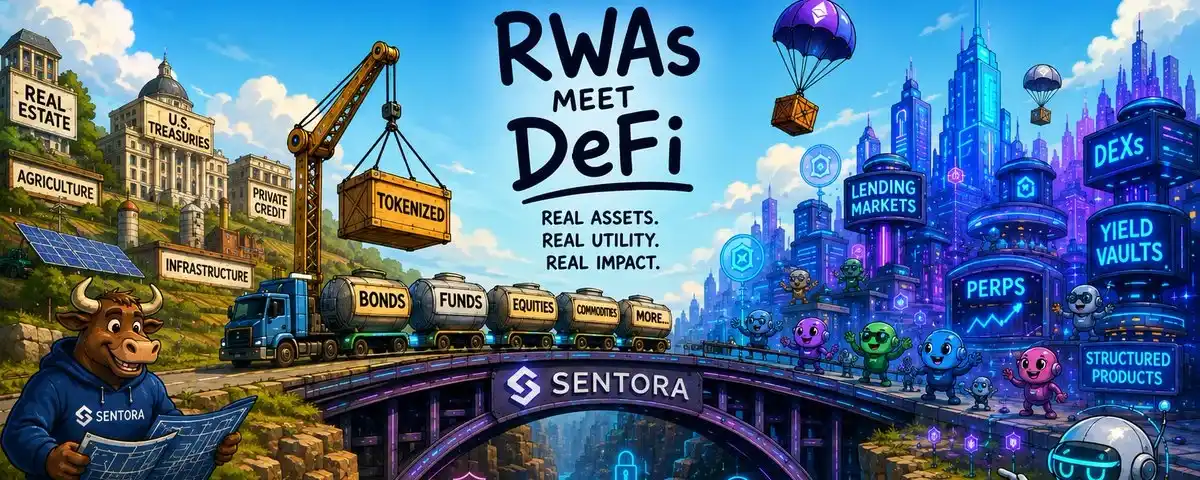
Is RWA Still Meaningful Without DeFi?

The article "Would RWA Still Matter Without DeFi?" argues that tokenizing real-world assets (RWA) alone, like putting a barcode on a container, is not transformative. True value emerges when these tokenized assets are integrated into decentralized finance (DeFi) ecosystems, enabling valuation, financing, hedging, trading, and loss management in a programmable, automated manner. Tokenization provides digital representation, but DeFi provides utility through leverage, liquidity, and composability. The core challenge lies in aligning the different "time clocks" of blockchain (fast, 24/7), traditional markets (limited hours), and asset redemption (slow processes), which creates liquidation risks and gaps. Effective RWA integration requires more than a token; it needs a full stack: legally enforceable rights, reliable data oracles, clear transfer rules, executable secondary liquidity, appropriate collateral parameters, and credible loss resolution paths. Liquidity is defined not by total value locked (TVL) but by the ability to exit a position under stress within a required timeframe. Risk management for RWAs must be modeled as a dependency graph, monitoring interconnected nodes like issuers, custodians, oracles, and liquidity pools for early warning signs beyond just price data. While tokenized government bonds serve as an initial "ping test," the future lies in more complex assets like computing power and energy, which require bespoke risk models. Tokenized stocks paired with perpetual futures present a major test, combining global equity ownership with crypto-native leverage, necessitating robust architectural safeguards like isolation and dynamic collateral rules. The conclusion is that without DeFi, RWA tokenization offers limited value—improving distribution and transparency. The significant opportunity arises when tokenized assets become functional components within open, programmable capital markets, where they can be used as collateral and facilitate complex financial strategies. The token is merely the barcode; the market operating system is the real machine.

marsbit21 min fa

Is RWA Still Meaningful Without DeFi?

marsbit21 min fa

Government Intervention in the Bond Market: What Does It Mean?

On August 19, 2026, the U.S. Treasury unexpectedly announced it would at least double the size of its long-term Treasury buyback operations, starting September 9. The move triggered an immediate market reaction, with the 30-year yield falling 9 basis points. This intervention came against a backdrop of the 30-year yield hitting a 19-year high of 5.34% the previous day, driven by persistent inflation, high oil prices, deteriorating U.S. fiscal health with public debt surpassing $40 trillion, and a global "buyers' strike" for long-dated bonds. Treasury buybacks involve the government repurchasing older, less liquid bonds from the market via reverse auctions to improve market functioning, not to reduce overall debt. While the action provided tactical relief and signaled the Treasury's willingness to intervene, analysts caution it does not address core structural issues: massive fiscal deficits, high borrowing needs, and fading demand from traditional buyers like foreign central banks. For investors, the announcement offered short-term support for long-duration bond ETFs and boosted assets like gold, which rose 2.7%. However, it's unlikely to significantly lower mortgage rates or alter the challenging environment for long-term bonds. The key takeaway is the distinction between a tactical market operation and the unresolved structural pressures that continue to push yields higher, requiring close monitoring of upcoming economic data, Treasury auctions, and potential signals of more aggressive policy measures.

marsbit25 min fa

Government Intervention in the Bond Market: What Does It Mean?

marsbit25 min fa

After 'Bessent Put', How Far Is the U.S. from Restarting QE?

Following an unscheduled announcement from the U.S. Treasury Department on August 19th, investor discussions have intensified regarding the potential for future policy interventions in long-term bond markets. The Treasury increased the maximum size of its regular buyback operations for 10-to-30 year bonds from $2 billion to $4 billion, citing a desire to improve liquidity. This move came shortly after a surge in long-term yields, with the 30-year Treasury yield briefly touching 5.34%. Market analysts, rather than focusing on the modest operational size, have interpreted the timing—outside the normal quarterly communication window—as a significant signal. The move has been dubbed the "Bessent Put," implying the market's growing expectation that Treasury officials, led by Deputy Secretary Josh Bessent, may act to prevent a disorderly rise in long-term borrowing costs. This perception represents a potential shift in the market's view of the government's "policy reaction function." The underlying pressures on long-term bonds are multifaceted, including large fiscal deficits, increased Treasury supply, a rise in corporate debt issuance for AI infrastructure (creating a "crowding out" effect), and uncertainty around foreign holdings, particularly from Japan. Geopolitical risks in the Middle East further complicate the policy landscape, potentially creating conflicting pressures between fighting inflation and managing financing costs. However, the article clarifies that this Treasury buyback program is distinct from Quantitative Easing (QE). It is a debt management operation, not a Federal Reserve balance sheet expansion. While the announcement opens the door for market speculation about more forceful tools like Yield Curve Control (YCC) or a return to QE, analysts note that conditions would need to deteriorate significantly for such measures to be implemented. For now, the "Bessent Put" reflects a change in market expectations about possible policy boundaries, not an imminent launch of new monetary stimulus.

marsbit26 min fa

After 'Bessent Put', How Far Is the U.S. from Restarting QE?

marsbit26 min fa

Is Stablecoin Really Necessary for Cross-border Payments?

"Is Stablecoin Truly Necessary for Cross-Border Payments? While stablecoins are often praised as superior for cross-border transfers—especially if the recipient desires crypto—their advantage is less clear in traditional cross-currency scenarios (e.g., USD to Mexican Peso). The existing correspondent banking system is slow and costly (≈15% fees) due to multiple intermediaries. Modern fintech solutions like Wise have dramatically improved this by using a netting model: they hold local currency pools and settle payments domestically, avoiding actual cross-border fund movement. This offers near-instant transfers with low, transparent fees (averaging ~0.52%). The 'stablecoin sandwich' model (convert fiat to stablecoin, transfer on-chain, convert to local fiat) offers similar user experience but doesn't inherently provide major cost or speed advantages over fintech. Its on-chain transfer is cheap, but fiat conversion spreads remain. Stablecoin's real innovation is 'unbundling' the cross-border payment stack. Instead of requiring a proprietary global network like Wise, businesses only need reliable on- and off-ramps in specific corridors. This lowers market entry barriers, fosters competition among local providers, and can drive down costs, particularly for niche or underserved corridors (e.g., US to Africa). While vertical integration may reoccur, the open, permissionless nature of the underlying blockchain layer makes monopolistic pricing difficult. The long-term benefit is the potential redistribution of value—previously captured as intermediary rents—to consumers through lower costs."

marsbit30 min fa

Is Stablecoin Really Necessary for Cross-border Payments?

marsbit30 min fa

Ethereum Finally 'Bounces Back'! ETH Returns to the Golden Line, What's Different About This Rally?

Ethereum has surged above $2,300, a level not seen in over three months, marking a significant recovery and technical breakthrough by reclaiming key resistance levels, including the weekly EMA50 for the first time in the current bear market. The rally has been fueled by a combination of factors: improved market risk appetite, positive regulatory sentiment, and a major short squeeze where over 88% of recent ETH liquidations were short positions. The ETH/BTC ratio has also broken its long-term downtrend, indicating renewed strength for Ethereum relative to Bitcoin. Fundamentally, Ethereum spot ETFs have shown strong inflows, outperforming their Bitcoin counterparts in recent months. Wall Street institutions like Morgan Stanley and JPMorgan have notably increased their ETH exposure, while several banks have added or expanded positions in ETH ETFs. On-chain fundamentals remain robust, with the proportion of staked ETH reaching a new all-time high of nearly 33.7%. Data indicates long-term holding sentiment, as small wallet holdings increased while large outflows were often directed towards staking or contracts, not selling. However, potential headwinds include declining staking yields and community debate over proposals to adjust staking rewards at high participation levels. The upcoming Glamsterdam upgrade, featuring improvements to validator exit efficiency, could enhance liquidity and further attract institutional stakers. While the rebound is supported by sentiment, capital flows, and fundamentals, its sustainability hinges on continued positive developments.

marsbit30 min fa

Ethereum Finally 'Bounces Back'! ETH Returns to the Golden Line, What's Different About This Rally?

marsbit30 min fa

Trading

Spot

Articoli Popolari

Come comprare CAP

Benvenuto in HTX.com! Abbiamo reso l'acquisto di Cap (CAP) semplice e conveniente. Segui la nostra guida passo passo per intraprendere il tuo viaggio nel mondo delle criptovalute.Step 1: Crea il tuo Account HTXUsa la tua email o numero di telefono per registrarti il tuo account gratuito su HTX. Vivi un'esperienza facile e sblocca tutte le funzionalità,Crea il mio accountStep 2: Vai in Acquista crypto e seleziona il tuo metodo di pagamentoCarta di credito/debito: utilizza la tua Visa o Mastercard per acquistare immediatamente CapCAP.Bilancio: Usa i fondi dal bilancio del tuo account HTX per fare trading senza problemi.Terze parti: abbiamo aggiunto metodi di pagamento molto utilizzati come Google Pay e Apple Pay per maggiore comodità.P2P: Fai trading direttamente con altri utenti HTX.Over-the-Counter (OTC): Offriamo servizi su misura e tassi di cambio competitivi per i trader.Step 3: Conserva Cap (CAP)Dopo aver acquistato Cap (CAP), conserva nel tuo account HTX. In alternativa, puoi inviare tramite trasferimento blockchain o scambiare per altre criptovalute.Step 4: Scambia Cap (CAP)Scambia facilmente Cap (CAP) nel mercato spot di HTX. Accedi al tuo account, seleziona la tua coppia di trading, esegui le tue operazioni e monitora in tempo reale. Offriamo un'esperienza user-friendly sia per chi ha appena iniziato che per i trader più esperti.

558 Totale visualizzazioniPubblicato il 2026.06.26Aggiornato il 2026.06.26

Come comprare CAP

Discussioni

Benvenuto nella Community HTX. Qui puoi rimanere informato sugli ultimi sviluppi della piattaforma e accedere ad approfondimenti esperti sul mercato. Le opinioni degli utenti sul prezzo di CAP CAP sono presentate come di seguito.

活动图片