XRP Price Changes Impact Evernorth Shares Ahead of Nasdaq Debut

cryptonews.ruPubblicato 2026-08-14Pubblicato ultima volta 2026-08-14

Introduzione

The price of XRP will determine the number of Evernorth shares distributed to private investors upon the closing of its deal to list on Nasdaq, according to revised agreements. As of August 13, the lower XRP price is expected to result in fewer shares being issued. This would give each public share of the merging SPAC, Armada II, a larger proportional claim on Evernorth's XRP treasury. Evernorth's founder stated the change aligns investor interests with the company's long-term strategy of providing institutional access to the XRP ecosystem. Over 95% of committed investors, including major firms like Arrington Capital and Ripple, approved the amendment. The final share count will be based on a volume-weighted average price of XRP at closing, replacing an initial $2.36 benchmark. The sponsor also adjusted its founder shares proportionally. Evernorth's strategy remains focused on growing XRP per share through capital allocation and participation in the XRP Ledger ecosystem. The merger, pending SEC approval and standard closing conditions, is anticipated for late Q3 or early Q4 2026.

The market price of $XRP at closing will determine how many shares Evernorth distributes to investors under revised private placement agreements, the company said in an Aug. 13 press release outlining the amendments. Based on the Aug. 13 price of $XRP, this formula is expected to reduce the number of shares issued at deal closing, giving each Armada II public share a more significant stake in Evernorth's $XRP treasury.

Evernorth founder and CEO Ashish Birla commented on the revised deal terms:

"We are aligning investor interests while supporting our long-term strategy to provide institutional access to the $XRP ecosystem. The fact that our entire pre-funding group supports this strategy under current conditions demonstrates their unwavering confidence in our strategy and the opportunities ahead."

According to Evernorth's amended S-4 form, the applicable value of $XRP is calculated based on a volume-weighted average price, not the original benchmark of $2.36. The formula works both ways, allowing the token's level at deal completion to influence the number of common shares distributed to participating investors. As of Aug. 13, the price of $XRP is around $1.006.

Public Shareholders and Treasury Shares

According to Evernorth's initial registration statement, investors participating in the private placement subscribed at $10 per share, with most contributing funds in advance and the rest agreeing to deferred payments. This statement calculated equity based on a $XRP benchmark price of $2.36, leaving the final ownership structure exposed to potential price mismatch risk before deal completion.

A smaller number of newly issued shares would result in the company's net asset value being distributed over a smaller equity base, increasing the portion of treasury shares attributable to each outstanding Armada II share. Companies holding treasury shares use per-share asset metrics and net asset value to indicate whether a new issuance enhances or dilutes each owner's claim on underlying assets.

Private Investors and Sponsor Alignment

According to Evernorth, investors representing over 95% of the committed capital supported this change, with all investors providing upfront funding joining the approval. The investor group notably includes Arrington Capital, SBI Group, Ripple, Pantera Capital, Kraken, and GSR. An earlier piece covering Evernorth's April filing presented the $XRP pricing benchmarks, cash commitments, and ownership share calculations that preceded the latest reassessment.

Armada II's sponsor also consented to a proportional adjustment of founder shares, spreading the impact between sponsor and investor interests. In Evernorth's planned board composition, Ripple Chief Legal Officer Stuart Alderoty is among the expected directors post-deal closure, alongside executives with backgrounds in finance, risk management, and digital assets.

Remaining Steps Before Nasdaq Debut

Evernorth's assets and strategy remain unchanged, with the company aiming to increase $XRP per share through disciplined capital allocation, ecosystem participation, treasury operations, and yield-enhancing strategies. The $XRP Ledger (XRPL) underpins Evernorth's ecosystem strategy, serving as the network where $XRP functions as the native asset for transactions and liquidity provisioning.

Armada II already uses XRPN as its stock ticker on the Nasdaq following an October 2025 symbol change that linked the SPAC to the proposed $XRP treasury deal. The business combination awaits SEC review and the satisfaction of standard closing conditions; completion is expected in late Q3 or early Q4 2026.

end-content

Crypto di tendenza

Domande pertinenti

QWhat determines the number of shares Evernorth will distribute to private placement investors according to the revised agreements?

AThe market price of XRP at the closing of the transaction determines the number of shares Evernorth will distribute to investors.

QWho is the founder and CEO of Evernorth, and what did he say about the revised deal terms?

AThe founder and CEO of Evernorth is Ashish Birla. He stated that the revisions align investor interests while supporting the company's long-term strategy of providing institutional access to the XRP ecosystem, and that the full pre-funding group's support demonstrates their confidence.

QAccording to the article, how is the applicable value of XRP now calculated for the deal, and what was the original benchmark price?

AThe applicable value of XRP is now calculated based on the volume-weighted average price. The original benchmark price was $2.36.

QName at least three major investors in Evernorth's private placement mentioned in the article.

AMajor investors mentioned include Arrington Capital, SBI Group, Ripple, Pantera Capital, Kraken, and GSR.

QWhat is the expected timeline for the completion of the deal and Evernorth's debut on Nasdaq?

AThe completion of the deal is expected in late Q3 or early Q4 of 2026, pending SEC review and satisfaction of customary closing conditions.

Letture associate

The Bear Market Has Ended, A New Bull Cycle Has Begun

**Title: Bear Market Over, New Bull Cycle Begins** Bitcoin surged over 20% in just three days, from a low of $64,100 on August 19th to a high of $79,500 by August 21st, marking a dramatic shift in market sentiment. This rapid rise triggered massive liquidations exceeding $4 billion, with short positions accounting for $3.7 billion—the largest short squeeze since 2021. The rally was fueled by several key factors. Macroeconomic conditions improved as the US Treasury doubled its long-term bond buyback size, easing pressure. Significant regulatory developments included a White House meeting where former President Trump urged Senate action on the CLARITY Act and hinted at potential US Bitcoin reserves, followed by the CFTC Chairman stating the agency would establish crypto market rules if the bill stalls. On-chain data revealed a fierce battle: large whales faced substantial liquidations on short positions, while others took profits or doubled down on longs. Major altcoins like ETH and XRP also saw impressive gains. Analysts are divided but increasingly bullish. Many, including CryptoQuant's founder, declare the bear market over and a new bull cycle begun. Price targets range from $100k by year-end to ambitious long-term projections of $200k. However, some caution against immediate chasing, noting overbought conditions and viewing the move as a potential "trap" ahead of the crucial September 15th Senate vote on the CLARITY Act. The market's next test is sustaining the momentum with real buying pressure, holding above key resistance near $78k-$80k, and watching ETF inflows and the upcoming regulatory vote.

marsbit2 min fa

The Bear Market Has Ended, A New Bull Cycle Has Begun

marsbit2 min fa

Xiaomi Defended Its Smartphone Gross Margin, Yet to Find a Profit Successor

Xiaomi's Q2 2026 financial report reveals a company navigating a complex transition. While smartphone gross margin held steady at 8.5% through strategic product mix and a record-high average selling price (ASP), this came at the cost of a 26.5% year-over-year decline in global shipments, pressuring its core user acquisition engine. This illustrates Xiaomi's central challenge: managing the "timing gap" between its established and emerging growth engines. Its smartphone business is pivoting from scale to premiumization, but it's unclear if high-end models can fully offset the volume loss from more price-sensitive segments, especially in markets like India and Africa. Meanwhile, the electric vehicle segment has become a significant revenue contributor, delivering 104,200 units and generating ¥23.9 billion. However, its profit contribution remains unclear as it, along with AI investments, is still in a scaling and investment phase. The AI and humanoid robot initiatives, though strategically prioritized and tested in Xiaomi's own factories, are in early-stage validation with no near-term commercialization timeline. Financially, the company remains stable, supported by a robust cash position and its high-margin internet services business, which hit a new high in monthly active users. Management emphasized continued heavy investment in AI, chips, and robotics to fuel the next growth cycle. The key question is whether these new engines—cars, AI, robotics—can achieve commercial scale and profitability before the smartphone engine's growth slows further.

marsbit3 min fa

Xiaomi Defended Its Smartphone Gross Margin, Yet to Find a Profit Successor

marsbit3 min fa

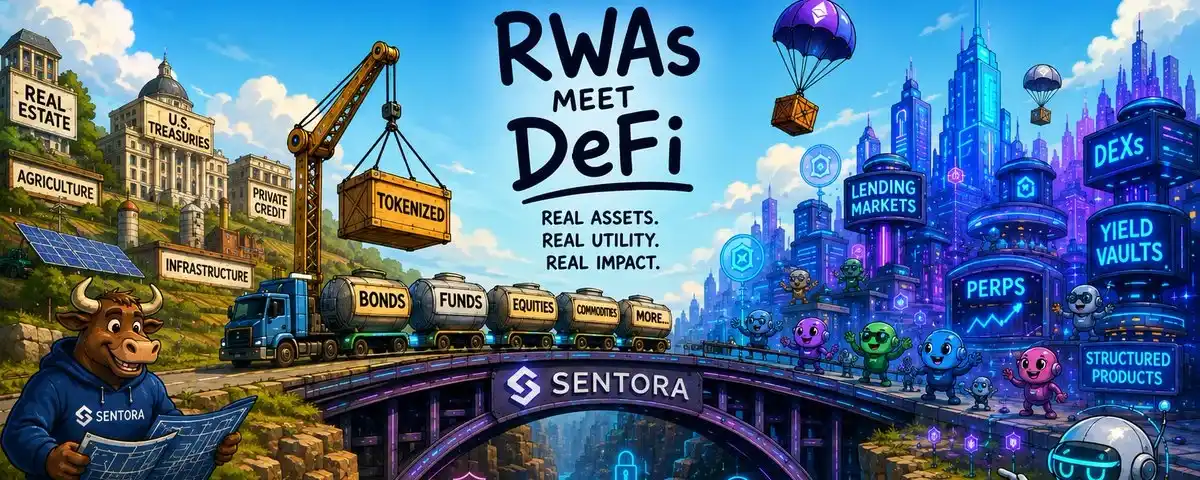
Is RWA Still Meaningful Without DeFi?

The article "Would RWA Still Matter Without DeFi?" argues that tokenizing real-world assets (RWA) alone, like putting a barcode on a container, is not transformative. True value emerges when these tokenized assets are integrated into decentralized finance (DeFi) ecosystems, enabling valuation, financing, hedging, trading, and loss management in a programmable, automated manner. Tokenization provides digital representation, but DeFi provides utility through leverage, liquidity, and composability. The core challenge lies in aligning the different "time clocks" of blockchain (fast, 24/7), traditional markets (limited hours), and asset redemption (slow processes), which creates liquidation risks and gaps. Effective RWA integration requires more than a token; it needs a full stack: legally enforceable rights, reliable data oracles, clear transfer rules, executable secondary liquidity, appropriate collateral parameters, and credible loss resolution paths. Liquidity is defined not by total value locked (TVL) but by the ability to exit a position under stress within a required timeframe. Risk management for RWAs must be modeled as a dependency graph, monitoring interconnected nodes like issuers, custodians, oracles, and liquidity pools for early warning signs beyond just price data. While tokenized government bonds serve as an initial "ping test," the future lies in more complex assets like computing power and energy, which require bespoke risk models. Tokenized stocks paired with perpetual futures present a major test, combining global equity ownership with crypto-native leverage, necessitating robust architectural safeguards like isolation and dynamic collateral rules. The conclusion is that without DeFi, RWA tokenization offers limited value—improving distribution and transparency. The significant opportunity arises when tokenized assets become functional components within open, programmable capital markets, where they can be used as collateral and facilitate complex financial strategies. The token is merely the barcode; the market operating system is the real machine.

marsbit24 min fa

Is RWA Still Meaningful Without DeFi?

marsbit24 min fa

Government Intervention in the Bond Market: What Does It Mean?

On August 19, 2026, the U.S. Treasury unexpectedly announced it would at least double the size of its long-term Treasury buyback operations, starting September 9. The move triggered an immediate market reaction, with the 30-year yield falling 9 basis points. This intervention came against a backdrop of the 30-year yield hitting a 19-year high of 5.34% the previous day, driven by persistent inflation, high oil prices, deteriorating U.S. fiscal health with public debt surpassing $40 trillion, and a global "buyers' strike" for long-dated bonds. Treasury buybacks involve the government repurchasing older, less liquid bonds from the market via reverse auctions to improve market functioning, not to reduce overall debt. While the action provided tactical relief and signaled the Treasury's willingness to intervene, analysts caution it does not address core structural issues: massive fiscal deficits, high borrowing needs, and fading demand from traditional buyers like foreign central banks. For investors, the announcement offered short-term support for long-duration bond ETFs and boosted assets like gold, which rose 2.7%. However, it's unlikely to significantly lower mortgage rates or alter the challenging environment for long-term bonds. The key takeaway is the distinction between a tactical market operation and the unresolved structural pressures that continue to push yields higher, requiring close monitoring of upcoming economic data, Treasury auctions, and potential signals of more aggressive policy measures.

marsbit28 min fa

Government Intervention in the Bond Market: What Does It Mean?

marsbit28 min fa

After 'Bessent Put', How Far Is the U.S. from Restarting QE?

Following an unscheduled announcement from the U.S. Treasury Department on August 19th, investor discussions have intensified regarding the potential for future policy interventions in long-term bond markets. The Treasury increased the maximum size of its regular buyback operations for 10-to-30 year bonds from $2 billion to $4 billion, citing a desire to improve liquidity. This move came shortly after a surge in long-term yields, with the 30-year Treasury yield briefly touching 5.34%. Market analysts, rather than focusing on the modest operational size, have interpreted the timing—outside the normal quarterly communication window—as a significant signal. The move has been dubbed the "Bessent Put," implying the market's growing expectation that Treasury officials, led by Deputy Secretary Josh Bessent, may act to prevent a disorderly rise in long-term borrowing costs. This perception represents a potential shift in the market's view of the government's "policy reaction function." The underlying pressures on long-term bonds are multifaceted, including large fiscal deficits, increased Treasury supply, a rise in corporate debt issuance for AI infrastructure (creating a "crowding out" effect), and uncertainty around foreign holdings, particularly from Japan. Geopolitical risks in the Middle East further complicate the policy landscape, potentially creating conflicting pressures between fighting inflation and managing financing costs. However, the article clarifies that this Treasury buyback program is distinct from Quantitative Easing (QE). It is a debt management operation, not a Federal Reserve balance sheet expansion. While the announcement opens the door for market speculation about more forceful tools like Yield Curve Control (YCC) or a return to QE, analysts note that conditions would need to deteriorate significantly for such measures to be implemented. For now, the "Bessent Put" reflects a change in market expectations about possible policy boundaries, not an imminent launch of new monetary stimulus.

marsbit28 min fa

After 'Bessent Put', How Far Is the U.S. from Restarting QE?

marsbit28 min fa

Trading

Spot

Articoli Popolari

Cosa è XRP 2.0

XRP 2.0: Una Nuova Frontiera nel Paesaggio delle Criptovalute Introduzione a XRP 2.0 Nel mondo in continua evoluzione delle criptovalute, nuovi progetti emergono continuamente, cercando attenzione e adozione. Una tale iniziativa promettente è XRP 2.0, un nuovo progetto di criptovaluta progettato per sfruttare avanzate tecnologie blockchain e metodologie di crittografia robuste. Anche se il nome richiama alla mente l'XRP di Ripple, è fondamentale notare che XRP 2.0 opera in modo indipendente, concentrandosi sul miglioramento della sicurezza delle transazioni, della privacy e della scalabilità. Mentre il panorama finanziario digitale abbraccia sempre di più soluzioni decentralizzate, XRP 2.0 mira a contribuire in modo significativo al web3 e all'espansione generale dei progetti crypto. Cos'è XRP 2.0? Alla sua base, XRP 2.0 è un progetto di criptovaluta che mira a creare un ecosistema di valuta digitale sicuro e decentralizzato. La sua tecnologia fondamentale integra principi di blockchain sofisticati con tecniche di crittografia all'avanguardia. L'obiettivo principale di XRP 2.0 è quello di affermarsi come una piattaforma affidabile ed efficiente in grado di consentire un'esecuzione rapida delle transazioni, dando priorità a migliori protezioni della privacy per i suoi utenti. Il progetto è promosso come una soluzione a molte limitazioni affrontate dalle criptovalute esistenti, proponendo un sistema in grado di gestire un volume maggiore di transazioni con migliorata velocità e privacy. Questa versatilità pone XRP 2.0 come un significativo competitor in un mercato affollato di varie valute digitali. Chi è il Creatore di XRP 2.0? L'identità del creatore dietro XRP 2.0 è stata segnalata come 'Wilbur'. Tuttavia, i dettagli completi riguardanti Wilbur o l'entità associata rimangono sfuggenti. L'anonimato di molti creatori di criptovalute non è un fenomeno raro nel settore, spesso progettato per mantenere un certo grado di privacy e sicurezza. Chi sono gli Investitori di XRP 2.0? Al momento, informazioni specifiche relative alle fondazioni o organizzazioni di investimento a supporto di XRP 2.0 non sono disponibili pubblicamente. Nel settore delle criptovalute, il supporto di investitori rinomati può influenzare significativamente la credibilità e il successo di un progetto, tuttavia la trasparenza riguardo ai sostenitori finanziari di XRP 2.0 non è stata stabilita. Come Funziona XRP 2.0? XRP 2.0 si distingue per l'impiego di una combinazione di tecnologia blockchain e algoritmi di crittografia avanzati che garantiscono transazioni sicure e decentralizzate. La sua struttura innovativa include caratteristiche uniche progettate per promuovere il coinvolgimento degli utenti e ampliare le funzionalità oltre le transazioni convenzionali delle criptovalute. Tra queste caratteristiche, XRP 2.0 incorpora capacità alimentate da intelligenza artificiale, come funzionalità di testo in immagini e testo in voce. Queste aggiunte sono progettate per migliorare l'esperienza interattiva per gli utenti, promuovendo una maggiore applicabilità in vari settori. Unendo progressi tecnologici con design incentrati sugli utenti, XRP 2.0 mira a catturare l'attenzione di una vasta gamma di individui e aziende che cercano di integrare soluzioni di criptovaluta nei loro framework operativi. Cronologia di XRP 2.0 Comprendere XRP 2.0 richiede di esaminare i traguardi che hanno definito il suo percorso fino ad ora: 23 luglio 2023: XRP 2.0 viene introdotto come un nuovo progetto di criptovaluta, mirante a rivoluzionare le capacità di transazione sicura e decentralizzata nel dominio blockchain. 8 settembre 2023: Si verifica il lancio di un altro progetto, XRP20, marcando l'emergere di un token ERC-20 sulla blockchain di Ethereum che resta non correlato a XRP 2.0. 13 novembre 2023: Il ledger XRP subisce un significativo aggiornamento con il rilascio della versione 2.0.0 del software server rippled. È essenziale notare che questo sviluppo è scollegato dal progetto di criptovaluta XRP 2.0. Punti Chiave su XRP 2.0 Per distillare l'essenza di XRP 2.0, emergono diversi fattori critici: Caratteristiche Uniche: L'inclusione di funzionalità come il testo in immagini e testo in voce alimentato da intelligenza artificiale diversifica ulteriormente le potenziali applicazioni di XRP 2.0. Tecnologia Blockchain: Il framework utilizza meccanismi blockchain avanzati e protocolli di crittografia, garantendo un ambiente sicuro e decentralizzato per le transazioni. Scalabilità e Privacy: XRP 2.0 dà priorità a migliori protezioni della privacy nei processi di transazione e alla scalabilità necessaria per accogliere una base di utenti in crescita. Nessuna Affiliazione con Ripple: È importante notare che, nonostante il suo nome, XRP 2.0 non ha alcuna fedeltà o collaborazione con l'XRP di Ripple, distinguendo il proprio framework operativo e obiettivi all'interno dell'ecosistema delle criptovalute. Conclusione XRP 2.0 rappresenta un'ambiziosa venture nell'ambito delle criptovalute, mirante a offrire una combinazione di sicurezza, privacy ed efficienza nelle transazioni digitali. Integrando tecnologie sofisticate e caratteristiche user-friendly, il progetto si propone di ampliare gli orizzonti di ciò che le criptovalute possono realizzare nell'economia digitale odierna. Sebbene l'anonimato del suo creatore e la mancanza di investitori dichiarati possano sollevare domande per alcuni, il focus di XRP 2.0 su funzionalità avanzate e decentralizzazione ne amplifica l'appeal in un mercato crypto sempre più affollato. Man mano che il panorama delle criptovalute continua a evolversi, XRP 2.0 potrebbe emergere come un attore decisivo nell'espansione di soluzioni blockchain sicure e scalabili.

321 Totale visualizzazioniPubblicato il 2024.04.05Aggiornato il 2024.12.03

Cosa è XRP 2.0

Come comprare XRP

Benvenuto in HTX.com! Abbiamo reso l'acquisto di XRP (XRP) semplice e conveniente. Segui la nostra guida passo passo per intraprendere il tuo viaggio nel mondo delle criptovalute.Step 1: Crea il tuo Account HTXUsa la tua email o numero di telefono per registrarti il tuo account gratuito su HTX. Vivi un'esperienza facile e sblocca tutte le funzionalità,Crea il mio accountStep 2: Vai in Acquista crypto e seleziona il tuo metodo di pagamentoCarta di credito/debito: utilizza la tua Visa o Mastercard per acquistare immediatamente XRPXRP.Bilancio: Usa i fondi dal bilancio del tuo account HTX per fare trading senza problemi.Terze parti: abbiamo aggiunto metodi di pagamento molto utilizzati come Google Pay e Apple Pay per maggiore comodità.P2P: Fai trading direttamente con altri utenti HTX.Over-the-Counter (OTC): Offriamo servizi su misura e tassi di cambio competitivi per i trader.Step 3: Conserva XRP (XRP)Dopo aver acquistato XRP (XRP), conserva nel tuo account HTX. In alternativa, puoi inviare tramite trasferimento blockchain o scambiare per altre criptovalute.Step 4: Scambia XRP (XRP)Scambia facilmente XRP (XRP) nel mercato spot di HTX. Accedi al tuo account, seleziona la tua coppia di trading, esegui le tue operazioni e monitora in tempo reale. Offriamo un'esperienza user-friendly sia per chi ha appena iniziato che per i trader più esperti.

1.9k Totale visualizzazioniPubblicato il 2024.12.10Aggiornato il 2026.06.02

Come comprare XRP

Discussioni

Benvenuto nella Community HTX. Qui puoi rimanere informato sugli ultimi sviluppi della piattaforma e accedere ad approfondimenti esperti sul mercato. Le opinioni degli utenti sul prezzo di XRP XRP sono presentate come di seguito.

活动图片