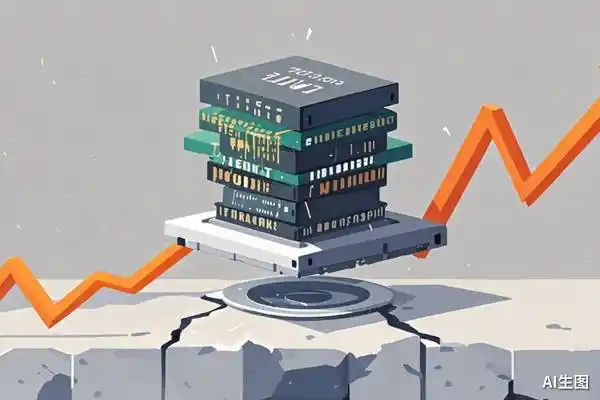
Storage Chip Stocks Skyrocket: Is This a Return to a Bull Market or a Dead Cat Bounce?

marsbitPubblicato 2026-07-31Pubblicato ultima volta 2026-07-31

Introduzione

The storage chip sector experienced a dramatic overnight rebound in US markets, with major stocks like SK Hynix and Micron surging over 17%. This sharp reversal is attributed to multiple factors: potential short-selling bans and market stabilization measures from South Korea, significant leverage unwinding (with leveraged ETF assets down ~70% from peaks), cooler-than-expected US inflation data easing rate hike fears, and a stellar Microsoft earnings report showing strong cloud/AI demand growth. Microsoft's results, highlighting Azure revenue crossing $100 billion, helped counter the "AI bubble burst" narrative that had pressured the sector. However, the article cautions against declaring a sustained bull market. Key risks remain, including potential further interest rate hikes by the Bank of Japan, which could pressure global carry trades, and unanswered questions about whether high industry profits can be maintained amid the supply cycle and new competition. Investors are advised to monitor whether gains hold, watch for updates on HBM/DRAM/NAND pricing and orders, and await key upcoming events like NVIDIA's earnings. The conclusion emphasizes disciplined investing—avoiding panic selling or FOMO buying—and using strategies like hedging to manage risk in this volatile environment.

Last night's U.S. stock market performance makes the term "skyrocketing rebound" seem like an understatement.

SK Hynix surged 17.52%, SanDisk jumped 25.99%, Micron rose 18.36%, Microsoft climbed 15.51%, and even the VIX fear index plummeted 17.28% in a single day. The memory chip sector, which was bleeding heavily just days ago, staged a dramatic overnight reversal.

A rebound of this magnitude is never driven by a single factor. It is the result of multiple forces resonating: South Korea's market rescue efforts, cooling U.S. inflation, Microsoft's earnings report, and a short squeeze. However, before getting excited, one crucial question must be answered: Is this the beginning of a true reversal, or just a classic "dead cat bounce"?

1. South Korea's Market Rescue: Technical Assessment of a Short-Selling Ban, Sincerity Under Political Pressure

First, let's look at the clue from the epicenter of this storm—South Korea.

Following several consecutive days of sharp declines, the Korea Exchange (KRX) has internally assessed the technical feasibility and system preparation time required for a temporary ban on short-selling. It is also reviewing the operational feasibility of narrowing the current 30% daily price limit. The Ministry of Economy and Finance convened an "emergency market condition assessment meeting," maintaining the highest level of market alert afterward and initiating a cross-departmental 24-hour monitoring mechanism.

This rescue effort is also highly politically sensitive. The South Korean government had previously actively encouraged retail investors to participate in the AI chip stock craze led by Samsung Electronics and SK Hynix. Now, with retail investors suffering massive losses within 48 hours, authorities are caught in a dilemma—inaction is politically untenable, but intervention risks distorting market pricing.

Precisely because of this, the measures proposed so far appear quite sincere. Expectations of a short-selling ban, coupled with discussions about narrowing price limits, can significantly curb short-term selling pressure. For the market, this at least means one thing: the policy bottom has emerged before the market bottom.

2. Late-Stage Deleveraging: Leveraged ETF Assets Shrink by Nearly 70%

As mentioned in our previous article, the key for the memory sector to stabilize and bottom out lies not in how far prices fall, but in the progress of deleveraging in South Korea.

So, what is the current state of deleveraging?

The KOSPI index has successively broken below its 50-day, 100-day, and 200-day moving averages during this plunge, indicating a comprehensive technical breakdown. The asset size of leveraged ETFs has plummeted from a peak of over $50 billion in June to about $16 billion, a drop of nearly 70%.

This figure is crucial. While it's hard to say all leverage has been unwound, a 70% shrinkage in leveraged funds clearly indicates that deleveraging has entered its late stages—the most severe period of forced liquidations has likely passed. The remaining selling pressure is now more emotional than mechanical.

A policy floor in South Korea, combined with deleveraging nearing its end, forms the first layer of reasons why the rebound could ignite first in the Asian session.

3. U.S. Resonance: Cooling Inflation + Microsoft's Strongest Single-Day Performance Ever

The second layer of reasons comes from the United States.

Last night, the released U.S. Q2 core PCE inflation showed cooling, causing short-term rate hike expectations to plummet overnight and macroeconomic liquidity expectations to suddenly turn accommodative.

Even more impactful was Microsoft. Its Q4 FY2026 earnings report was explosive: revenue of $90 billion, a year-on-year increase of 18%; Azure and other cloud services growth accelerated from 40% last quarter to 43%; CEO Satya Nadella explicitly stated that Azure's full-year revenue "exceeded $100 billion," growing 41%—the first time this business has crossed the $100 billion threshold.

The market voted with real money: Microsoft soared over 15% in a single day, marking the largest single-day market cap increase in Wall Street history for an individual stock and its biggest one-day gain in 18 years. Combined with the end of selling pressure from the recent liquidation of a large AI fund, tech and momentum stocks collectively staged a short-squeeze rebound.

Why is Microsoft's earnings so important for the memory sector? Because the underlying narrative behind the earlier memory chip plunge was market concern that the "AI bubble had burst" and capital expenditure was unsustainable. Microsoft's report directly counters that: demand is not slowing down; it's accelerating. With the bearish narrative disproven, short covering naturally led to exaggerated gains.

4. A Moment of Caution: Potential Risk from Potential Yen Rate Hikes

If the above makes you think "the bull is back," this next section advises a moment of caution.

Japan's inflation accelerated for the second consecutive month, increasing expectations that the Bank of Japan (BoJ) may raise interest rates again in the coming months. Data from the Ministry of Internal Affairs and Communications showed Tokyo's core CPI rose 1.9% year-on-year in July, above market expectations of 1.8%; the "core-core CPI" excluding fresh food and energy rose 2%, and the overall CPI also increased by 2%. Takeshi Minami, chief economist at Norinchukin Research Institute, judges that inflation will stay above 2%.

The market widely expects the BoJ to keep interest rates unchanged at 1% at its meeting this Friday but may signal a continued readiness to hike.

What does this mean for global markets? It means the cost side of the Yen carry trade is rising. The severe global market turbulence in August 2024 was precisely triggered by massive unwinding of the Yen carry trade. If the deleveraging in South Korea is the "visible thread" of this episode, then Japan's rate hike expectations are the "invisible thread" hanging overhead—it may not determine whether a rebound occurs, but it will likely determine how far the rebound can go.

5. What to Watch Next?

Microsoft's earnings answered the question "Can AI capital expenditure be sustained?" But another question remains to be verified: As the supply cycle progresses and with the listing of China's CXMT, can the memory industry's high profitability be maintained?

To gauge the substance of this rebound, watch the following in the coming period:

  • Can memory stocks hold their gains, and will the Korean market avoid another surge-and-fall pattern?
  • Will prices and orders for HBM, DRAM, and NAND continue to be revised upward?
  • Three key time windows—the Future Memory Conference on August 4th, the progress of SK Hynix's HBM4 volume ramp in Q3, and Nvidia's earnings report on August 26th.

6. Final Thoughts

To summarize the entire situation: A policy bottom is in place, deleveraging is in its late stages, and the AI demand narrative has been reaffirmed by Microsoft. However, the unresolved expectations for Japanese rate hikes and the unverified memory supply cycle mean it's far too early to declare "the bull is back."

For investors, there are two major pitfalls to avoid in such a market: first, panic selling at the bottom; second, chasing the rally after a violent rebound. What remains truly useful is discipline—don't go all-in at the start of a rebound, wait for confirming signals before deploying capital in phases, and use position sizing instead of trying to predict exact price points.

This is also the investment philosophy consistently emphasized by BIT Securities. At this juncture, investors may also consider using BIT Securities' options functionality to hedge their underlying assets, preparing for the upcoming market movements while waiting for the market to provide clearer answers.

Disclaimer:

This article is contributed by an external author. The content represents the personal views of the author only and does not represent the position, views, or opinions of BIT or its affiliates. The information herein is for reference only and does not constitute any investment advice, investment solicitation, recommendation for securities or financial products, nor should it be the basis for any investment decision. Financial markets involve risks, and the prices of related assets may experience significant volatility. Investors should make independent investment decisions based on their own circumstances and bear the corresponding risks.


Crypto di tendenza

Domande pertinenti

QAccording to the article, what are the three main factors that contributed to the violent rebound in memory chip stocks?

AThe three main factors are: 1) Rescue measures from South Korea, including the potential for a short-selling ban and circuit breaker adjustments; 2) The later stage of deleveraging in South Korea, with leveraged ETF assets shrinking by nearly 70%; 3) A positive U.S. resonance, driven by cooling core PCE inflation and Microsoft's exceptionally strong quarterly earnings report that confirmed ongoing AI demand.

QWhat is the significance of Microsoft's latest quarterly earnings report for the memory chip sector, as stated in the article?

AMicrosoft's report is significant because it directly countered the market narrative that 'the AI bubble has burst' and capital expenditure is unsustainable. The report showed accelerating growth in Azure and other cloud services, confirming that AI-related demand remains strong. This prompted short covering and a powerful rebound in tech and momentum stocks, including memory chip companies.

QWhat does the article identify as the key distinction between the 'policy bottom' and the 'market bottom' in the context of the South Korean market?

AThe article states that in the South Korean market, the announced rescue measures and internal assessments of a short-selling ban indicate that a 'policy bottom' has appeared. This 'policy bottom' has emerged before the 'market bottom,' meaning government intervention is attempting to stabilize the market before natural price discovery finds its lowest point.

QWhat potential risk from Japan does the article caution investors to be aware of, even amidst the strong rebound?

AThe article cautions about the potential risk of the Bank of Japan (BOJ) raising interest rates. With Japanese inflation accelerating, further hikes are expected. This would increase the cost of the Yen carry trade (Carry Trade), which could trigger another round of global market volatility and limit the extent of the current rebound.

QWhat are the three key things investors should monitor to judge the sustainability of the rebound, according to the article's concluding section?

AInvestors should monitor: 1) Whether memory stocks can hold their gains and if the South Korean market avoids another sharp decline after the rebound; 2) Whether prices and orders for HBM, DRAM, and NAND continue to be revised upward; 3) Key upcoming events: the Future Memory Conference on August 4th, SK Hynix's HBM4 volume ramp-up in Q3, and Nvidia's earnings report on August 26th.

Letture associate

Analyzing the Impact of AI on Economic Growth and Productivity

**Title: Analyzing AI's Impact on Economic Growth and Productivity** This article examines three contrasting views on AI's influence on economic growth and productivity. **The Optimistic View** posits that AI, especially through automating R&D ("recursive self-improvement"), could dramatically accelerate growth, even triggering a technological "singularity" with explosive, potentially infinite, economic expansion. **The Moderate/Mainstream View** acknowledges AI's productivity benefits but emphasizes significant real-world constraints that could limit its impact. These include: limited cost savings per task, structural ceilings on which jobs and industries are "exposed" to AI, adoption bottlenecks (e.g., compute, energy, regulatory hurdles), and the "weak link" effect where non-automatable tasks cap overall gains. Consequently, the realized AI dividend may be far lower than optimistic projections, with estimates typically ranging from 0.1% to 1.3% annual productivity growth. **The Pessimistic View** stems from two strands. The first aligns with the moderate view but applies extremely conservative assumptions about task exposure and efficiency gains, yielding minimal projected impact. The second introduces a demand-side critique: if AI primarily replaces rather than augments labor, it could depress labor's share of income, weaken consumer demand, and create a "demand trap" that ultimately stifles growth, unless offset by redistribution policies. **The authors' assessment** is nuanced: * **Short-term (1-2 years):** AI will support growth primarily through investment spending, not significant productivity gains. * **Medium-term (3-5 years):** Three potential paths emerge based on AI demand and bottleneck severity: 1. **"Optimistic Path":** High demand, few bottlenecks. Rapid productivity gains but risk of major job displacement and social conflict without redistribution. 2. **"Moderate Path" (most likely):** High demand but significant, surmountable bottlenecks. Leads to moderate productivity gains, financial market volatility (K-shaped returns), and sectoral job losses. 3. **"Pessimistic Path":** Low demand or severe bottlenecks. Minimal productivity and growth impact, triggering financial market corrections but allowing a smoother societal transition with less labor disruption. * **Long-term:** AI holds potential for a major productivity revolution and prosperity. The conclusion stresses that no path is smooth. Technologically "optimistic" outcomes could be socially detrimental, while "pessimistic" technological diffusion might be more socially stable. Policymakers must monitor developments and prepare balanced responses to manage economic, financial, and social sustainability.

marsbit52 min fa

Analyzing the Impact of AI on Economic Growth and Productivity

marsbit52 min fa

Trading

Spot

Articoli Popolari

Come comprare CAT

Benvenuto in HTX.com! Abbiamo reso l'acquisto di Simon's Cat (CAT) semplice e conveniente. Segui la nostra guida passo passo per intraprendere il tuo viaggio nel mondo delle criptovalute.Step 1: Crea il tuo Account HTXUsa la tua email o numero di telefono per registrarti il tuo account gratuito su HTX. Vivi un'esperienza facile e sblocca tutte le funzionalità,Crea il mio accountStep 2: Vai in Acquista crypto e seleziona il tuo metodo di pagamentoCarta di credito/debito: utilizza la tua Visa o Mastercard per acquistare immediatamente Simon's CatCAT.Bilancio: Usa i fondi dal bilancio del tuo account HTX per fare trading senza problemi.Terze parti: abbiamo aggiunto metodi di pagamento molto utilizzati come Google Pay e Apple Pay per maggiore comodità.P2P: Fai trading direttamente con altri utenti HTX.Over-the-Counter (OTC): Offriamo servizi su misura e tassi di cambio competitivi per i trader.Step 3: Conserva Simon's Cat (CAT)Dopo aver acquistato Simon's Cat (CAT), conserva nel tuo account HTX. In alternativa, puoi inviare tramite trasferimento blockchain o scambiare per altre criptovalute.Step 4: Scambia Simon's Cat (CAT)Scambia facilmente Simon's Cat (CAT) nel mercato spot di HTX. Accedi al tuo account, seleziona la tua coppia di trading, esegui le tue operazioni e monitora in tempo reale. Offriamo un'esperienza user-friendly sia per chi ha appena iniziato che per i trader più esperti.

107 Totale visualizzazioniPubblicato il 2024.12.13Aggiornato il 2026.06.02

Come comprare CAT

Cosa è TRUMP CAT

Famiglia Trump Cat, $Trump Cat: Un Mistero Svelato Introduzione Nel panorama in continua evoluzione dei progetti crypto e delle innovazioni web3, è emerso un fenomeno curioso—uno che sembra trovarsi a cavallo tra criptovaluta e cultura dei meme di internet. Questo è l'enigmatico “Famiglia Trump Cat”, noto anche come “$Trump Cat”. Sebbene possa suscitare curiosità tra gli appassionati di crypto, la realtà appare molto lontana dalla definizione standard di un progetto crypto. Questo articolo mira a esplorare il concetto di Famiglia Trump Cat, portando alla luce il contesto che la circonda e chiarendo il suo status nel regno delle criptovalute. Cos'è Famiglia Trump Cat, $Trump Cat? A prima vista, si potrebbe pensare che “Famiglia Trump Cat” si riferisca a una legittima criptovaluta o progetto web3. Tuttavia, dopo un'indagine più approfondita, diventa evidente che il termine manca delle caratteristiche di un'impresa crypto tradizionale. Invece, “Trump Cat” sembra essere prevalentemente associato alla cultura dei meme virali che è emersa a seguito delle dichiarazioni controverse dell'ex presidente degli Stati Uniti Donald Trump riguardo agli immigrati haitiani. La copertura mediatica ha scatenato una miriade di meme, interpretazioni umoristiche e una ondata di commento sociale. Questi meme ritraggono varie forme di satira incentrate sul dialogo di Trump, spesso utilizzando gatti in scenari comici e talvolta assurdi. Piuttosto che un progetto strutturato volto ad affrontare avanzamenti tecnologici o transazioni finanziarie, il concetto di “Famiglia Trump Cat” esiste prevalentemente nel regno dell'umorismo di internet. Chi è il Creatore di Famiglia Trump Cat, $Trump Cat? Nell'indagine su chi si cela dietro la “Famiglia Trump Cat”, diventa chiaro che non esiste un creatore identificabile o una figura fondatrice. Il fenomeno sembra essere originato dall'espressione collettiva di internet, piuttosto che da un singolo visionario con un obiettivo di progetto definito. Questa anonimato sottolinea ulteriormente il suo status di meme piuttosto che di iniziativa strutturata simile alla maggior parte dei progetti crypto noti. Chi sono gli Investitori di Famiglia Trump Cat, $Trump Cat? Dato che “Famiglia Trump Cat” non si conforma alle caratteristiche di un progetto crypto rispettabile, la questione dell'investimento diventa irrilevante. Non ci sono state fondazioni o organizzazioni stabilite che esprimano supporto per un progetto con questo nome. Invece, ciò che esiste sono contributori individuali alla cultura dei meme—hobbyisti, artisti e utenti dei social media che popolano collettivamente internet con le loro interpretazioni e umorismo riguardanti il termine “Trump Cat”. Questa crescita organica all'interno della comunicazione umana digitale riflette più un commento sociale che un panorama di investimenti finanziari. Come Funziona Famiglia Trump Cat, $Trump Cat? Se si cerca di stabilire come “Famiglia Trump Cat” operi, la risposta è molto diversa da ciò che ci si potrebbe aspettare dai progetti crypto standard. Non ci sono meccanismi operativi, innovazioni tecnologiche o caratteristiche uniche intrinseche a questo fenomeno. Invece, esiste attraverso la diffusione virale online, facendo affidamento sulle piattaforme dei social media per la proliferazione. Il “come” risiede nel regno della cultura e della comunicazione—la sua essenza deriva dalle dinamiche dell'interazione sociale piuttosto che da protocolli crypto stabiliti o funzionalità blockchain. Ciò che rende “Trump Cat” unico, se mai, è il modo in cui drammatizza un dialogo politico attraverso l'umorismo. Le persone utilizzano immagini coinvolgenti, battute interne e narrazioni inventive per esprimere sentimenti riguardo a figure politiche e questioni sociali. Il potere dei meme trascende la comunicazione tradizionale, racchiudendo pensieri complessi in una forma che risuona ampiamente, ma rimane elusiva in termini di successo quantificabile o obiettivi strutturati. Cronologia di Famiglia Trump Cat, $Trump Cat Settembre 2024: Il dibattito riguardante i commenti di Donald Trump sugli immigrati haitiani che presumibilmente consumano animali domestici guadagna terreno online, portando a una fioritura di meme e interpretazioni parodistiche su varie piattaforme. Impatto Continuo: Dopo questo periodo, il fenomeno “Trump Cat” continua a vivere mentre gli utenti dei social media sfruttano l'umorismo per affrontare, criticare o semplicemente celebrare l'assurdità delle conversazioni e degli eventi politici. È essenziale notare che poiché “Famiglia Trump Cat” manca della struttura formale di un progetto tradizionale, la cronologia consiste principalmente di osservazioni aneddotiche piuttosto che di traguardi notevoli comunemente trovati in iniziative crypto riconosciute. Punti Chiave Cultura dei Meme: Piuttosto che un'iniziativa crypto strutturata, “Trump Cat” si allinea di più con il panorama in evoluzione dei meme di internet. Origine del Termine: La genesi di “Trump Cat” è direttamente correlata ai commenti sulle osservazioni del presidente Trump riguardo agli immigrati haitiani, scatenando una rappresentazione umoristica diffusa. Assenza di un Quadro di Progetto: Il termine non si allinea con alcun obiettivo di progetto definito, creatori o investitori, segnalandolo come un'esperienza culturale nuova piuttosto che un progetto crypto. Conclusione In sintesi, l'indagine su “Famiglia Trump Cat, $Trump Cat” rivela un fenomeno radicato nella cultura dei meme di internet piuttosto che un progetto riconosciuto nei settori delle criptovalute o del web3. La viralità che circonda il termine nasce dall'impegno collettivo degli utenti, riflettendo il discorso digitale moderno piuttosto che un'iniziativa formalizzata con struttura o lungimiranza strategica. Per tutta la curiosità che può suscitare tra coloro che cercano il prossimo grande progetto crypto, “Famiglia Trump Cat” serve come testimonianza della creatività, dell'umorismo e spesso della relazione assurda dell'umanità con la politica nell'era digitale.

292 Totale visualizzazioniPubblicato il 2025.01.22Aggiornato il 2025.01.22

Cosa è TRUMP CAT

Discussioni

Benvenuto nella Community HTX. Qui puoi rimanere informato sugli ultimi sviluppi della piattaforma e accedere ad approfondimenti esperti sul mercato. Le opinioni degli utenti sul prezzo di CAT CAT sono presentate come di seguito.

活动图片