高通芯片大涨价,安卓手机最受伤

marsbitPubblicato 2026-07-31Pubblicato ultima volta 2026-07-31

Introduzione

近日,全球芯片巨头高通宣布自9月1日起对全系列芯片产品实施两位数幅度涨价,新款旗舰芯片涨幅最高达18%。此次涨价旨在对冲产业链成本压力,修复公司下滑的毛利率。 此前联发科已宣布涨价,存储芯片(DRAM、NAND Flash)价格也因AI算力需求激增而大幅上涨,导致手机物料成本中存储占比飙升。同时,台积电先进制程及封装成本上涨,共同推高了芯片成本。 成本压力已传导至下游手机厂商。小米、OPPO、vivo等品牌为控制成本,已下调中低端机型订单,部分机型甚至精简配置或使用旧款芯片。受此影响,国内智能手机出货量已连续五个季度同比下滑,主流安卓品牌市占率大幅下降。而凭借自研芯片的华为和苹果,市占率则有明显增长。 高通目前正加速向汽车、物联网等新业务转型以寻求增长,但新业务体量尚不足以完全弥补手机业务下滑的缺口。业内人士预计,下半年成本集中释放后,安卓旗舰新机涨价幅度可能超预期,国内手机市场出货量降幅或进一步扩大。

近日,全球芯片巨头高通正式官宣新一轮产品调价计划,将于9月1日起对全系列芯片产品实施两位数幅度涨价,其中新款旗舰芯片骁龙8 Elite Gen 6 Pro涨幅最高可达18%。

继6月下旬联发科宣布天玑系列芯片涨价后,高通也跟上了涨价的步伐,这也让本就承压的手机终端行业迎来了新一轮成本冲击。

据悉,高通已于当地时间7月24日向全球客户下发涨价通知,新价格将统一适用于9月1日后出货的所有芯片产品,覆盖手机、平板、智能穿戴、汽车芯片等多条产品线。高通CEO安蒙在业绩电话会议上证实该调价计划,表示此次涨价核心是为对冲全产业链成本上行压力,修复公司下滑的毛利率,推动利润率回归历史正常水平。
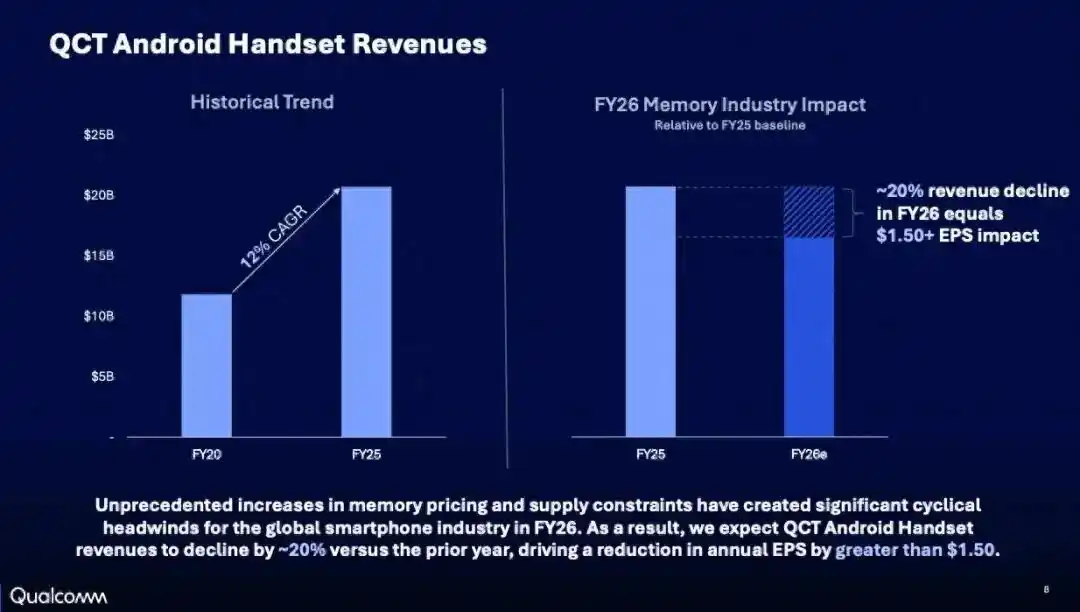
数据显示,高通2026财年第三财季营收99.47亿美元,同比增长4%,但净利润同比大幅下滑25%,手机业务营收更是同比暴跌20%,创下2021年以来最低纪录,主要原因还是AI产业爆发引发的全行业涨价。

随着AI算力需求激增,三星、SK海力士等存储原厂大幅增加HBM内存的产能,导致通用存储芯片供需失衡。

据集邦咨询数据显示,2026年一季度通用DRAM合约价季增93%-98%,NAND Flash合约价季增55%-60%,手机物料成本中存储占比从10%-15%飙升至30%以上。与此同时,台积电2nm先进制程晶圆成本突破3万美元,加上先进封装也有超20%的涨价幅度,芯片成本来到了历史高位。

芯片巨头的成本压力,最终也传到了下游手机厂商,行业陷入恶性循环。

此前,存储芯片持续涨价已压缩终端厂商利润空间,小米、OPPO、vivo等品牌为控成本,2026年纷纷下调中低端机型订单,降幅最高达20%。部分厂商还通过精简硬件配置的方式压缩成本,甚至用上了旧款芯片。

据报道,去年9月发布的第五代骁龙 8 至尊版(骁龙 8E5)“被迫”成了长寿神U,高通将在今年下半年发布降频版专门供子系迭代新机,性能上不输标准版骁龙8E5,价格上要比同期发布的骁龙8E6便宜不少。

成本重压下,安卓手机市场持续低迷。IDC数据显示,2026年二季度国内智能手机出货量同比下滑4.3%,连续五个季度同比下跌,OPPO、vivo、小米、荣耀等主流安卓品牌市占率均大幅下滑。反观未依赖外部高端SoC芯片的华为、苹果,凭借自研芯片优势与稳定的定价,市占率有明显增长。

相比手机厂商,高通即便不涨价其实也能转移成本压力。

目前,高通正加速业务多元化转型,发力汽车、物联网、数据中心等新赛道,其中汽车业务已实现连续23个季度两位数同比增长,近期还与宝马达成十年芯片供应协议。不过目前新业务体量有限,难以完全填补手机业务缺口。

业内人士预判,随着芯片、存储涨价成本在下半年集中释放,安卓旗舰新机涨价幅度或将超市场预期,2026年国内手机市场出货量降幅或将进一步扩大。

本文来自微信公众号“镁客网”,作者:镁客网

Crypto di tendenza

Domande pertinenti

Q高通芯片涨价的主要原因是什么?

A高通CEO安蒙表示,此次涨价的核心原因是为了对冲全产业链(包括存储芯片、先进制程晶圆等)成本上行的压力,修复公司下滑的毛利率,推动利润率回归历史正常水平。

Q高通芯片涨价对安卓手机厂商造成了哪些具体影响?

A高通的涨价进一步加剧了手机厂商的成本压力。为了控制成本,小米、OPPO、vivo等厂商下调了中低端机型订单(最高达20%),甚至通过精简硬件配置、使用旧款芯片来压缩成本,这导致安卓手机市场持续低迷,出货量连续下滑。

Q除了手机业务,高通还在哪些领域进行业务拓展?

A高通正在加速业务多元化转型,发力汽车、物联网、数据中心等新赛道。其中,汽车业务表现突出,已实现连续23个季度两位数同比增长,并近期与宝马达成了十年芯片供应协议。

Q高通此次涨价后,市场对安卓旗舰新机的价格有何预期?

A业内人士预判,随着芯片、存储涨价成本在下半年集中释放,安卓旗舰新机的涨价幅度或将超出市场原有的预期。

Q在芯片成本压力下,手机厂商对芯片使用策略出现了什么变化?

A为了应对成本压力,部分厂商被迫将旧款旗舰芯片进行“再利用”。例如,高通的骁龙8E5芯片就变成了“长寿神U”,高通计划在今年下半年发布其降频版,以更低的价格供给子品牌迭代新机,在性能上则不输标准版骁龙8E5。

Letture associate

Analyzing the Impact of AI on Economic Growth and Productivity

**Title: Analyzing AI's Impact on Economic Growth and Productivity** This article examines three contrasting views on AI's influence on economic growth and productivity. **The Optimistic View** posits that AI, especially through automating R&D ("recursive self-improvement"), could dramatically accelerate growth, even triggering a technological "singularity" with explosive, potentially infinite, economic expansion. **The Moderate/Mainstream View** acknowledges AI's productivity benefits but emphasizes significant real-world constraints that could limit its impact. These include: limited cost savings per task, structural ceilings on which jobs and industries are "exposed" to AI, adoption bottlenecks (e.g., compute, energy, regulatory hurdles), and the "weak link" effect where non-automatable tasks cap overall gains. Consequently, the realized AI dividend may be far lower than optimistic projections, with estimates typically ranging from 0.1% to 1.3% annual productivity growth. **The Pessimistic View** stems from two strands. The first aligns with the moderate view but applies extremely conservative assumptions about task exposure and efficiency gains, yielding minimal projected impact. The second introduces a demand-side critique: if AI primarily replaces rather than augments labor, it could depress labor's share of income, weaken consumer demand, and create a "demand trap" that ultimately stifles growth, unless offset by redistribution policies. **The authors' assessment** is nuanced: * **Short-term (1-2 years):** AI will support growth primarily through investment spending, not significant productivity gains. * **Medium-term (3-5 years):** Three potential paths emerge based on AI demand and bottleneck severity: 1. **"Optimistic Path":** High demand, few bottlenecks. Rapid productivity gains but risk of major job displacement and social conflict without redistribution. 2. **"Moderate Path" (most likely):** High demand but significant, surmountable bottlenecks. Leads to moderate productivity gains, financial market volatility (K-shaped returns), and sectoral job losses. 3. **"Pessimistic Path":** Low demand or severe bottlenecks. Minimal productivity and growth impact, triggering financial market corrections but allowing a smoother societal transition with less labor disruption. * **Long-term:** AI holds potential for a major productivity revolution and prosperity. The conclusion stresses that no path is smooth. Technologically "optimistic" outcomes could be socially detrimental, while "pessimistic" technological diffusion might be more socially stable. Policymakers must monitor developments and prepare balanced responses to manage economic, financial, and social sustainability.

marsbit30 min fa

Analyzing the Impact of AI on Economic Growth and Productivity

marsbit30 min fa

The New Cold War is a Tech Stock War

The New Cold War is a Tech Stock War The article argues that the contemporary geopolitical and economic rivalry between the US and China represents a "New Cold War," but one fundamentally fought through technology and financial markets, not physical barriers or conventional trade. Historically, US dominance was secured through financial systems. The Soviet Union, reliant on the rigid "Transferable Ruble," was ultimately undermined by its dependency on the US dollar for oil trade. Later, Japan's semiconductor challenge was countered not just by tariffs (e.g., Plaza Accord, 301 investigations) but by binding it to US Treasury bonds. China presents a more complex, "embedded" challenger. While it holds vast dollar reserves and US debt like Japan, its industrial base is stronger and more diversified than the Soviet Union's. Surviving the initial 2018 trade war phase, the conflict has evolved into a "tech-financial war." The core battlefield is now the stock market. US tech stocks (AI, semiconductors) are treated as sovereign assets, buoyed by bipartisan national will. China is pushing to strengthen its own financial markets to convert industrial strength into financial power and fund its tech ambitions. Companies like ChangXin (semiconductors), Moonshot AI, and DJI compete not just for market share but as financial proxies for their respective systems. The new paradigm is moving from globally efficient monopolies (Apple, Google) towards companies that achieve monopolistic profits within their respective geopolitical spheres. This competition over "pricing power" and financial valuation in segmented markets defines the current era, making the stock market the primary arena for this tech-centric struggle.

marsbit39 min fa

The New Cold War is a Tech Stock War

marsbit39 min fa

Trading

Spot

Articoli Popolari

Come comprare CHIP

Benvenuto in HTX.com! Abbiamo reso l'acquisto di USD.AI (CHIP) semplice e conveniente. Segui la nostra guida passo passo per intraprendere il tuo viaggio nel mondo delle criptovalute.Step 1: Crea il tuo Account HTXUsa la tua email o numero di telefono per registrarti il tuo account gratuito su HTX. Vivi un'esperienza facile e sblocca tutte le funzionalità,Crea il mio accountStep 2: Vai in Acquista crypto e seleziona il tuo metodo di pagamentoCarta di credito/debito: utilizza la tua Visa o Mastercard per acquistare immediatamente USD.AICHIP.Bilancio: Usa i fondi dal bilancio del tuo account HTX per fare trading senza problemi.Terze parti: abbiamo aggiunto metodi di pagamento molto utilizzati come Google Pay e Apple Pay per maggiore comodità.P2P: Fai trading direttamente con altri utenti HTX.Over-the-Counter (OTC): Offriamo servizi su misura e tassi di cambio competitivi per i trader.Step 3: Conserva USD.AI (CHIP)Dopo aver acquistato USD.AI (CHIP), conserva nel tuo account HTX. In alternativa, puoi inviare tramite trasferimento blockchain o scambiare per altre criptovalute.Step 4: Scambia USD.AI (CHIP)Scambia facilmente USD.AI (CHIP) nel mercato spot di HTX. Accedi al tuo account, seleziona la tua coppia di trading, esegui le tue operazioni e monitora in tempo reale. Offriamo un'esperienza user-friendly sia per chi ha appena iniziato che per i trader più esperti.

336 Totale visualizzazioniPubblicato il 2026.04.21Aggiornato il 2026.06.02

Come comprare CHIP

Discussioni

Benvenuto nella Community HTX. Qui puoi rimanere informato sugli ultimi sviluppi della piattaforma e accedere ad approfondimenti esperti sul mercato. Le opinioni degli utenti sul prezzo di CHIP CHIP sono presentate come di seguito.

活动图片