Đối mặt với sự gia nhập mạnh mẽ của Robinhood, tại sao PUMP lại tăng giá trái ngược với xu hướng?

marsbitPubblicato 2026-07-30Pubblicato ultima volta 2026-07-30

Introduzione

Trong bối cảnh thị trường tiền mã hóa suy thoái, Pump.fun vẫn là một trong những giao thức hàng đầu có khả năng sinh lời mạnh. Gần đây, token PUMP đã tăng giá bất chấp việc mở khóa số lượng lớn và sự gia nhập của đối thủ mới Robinhood Chain. Sau đợt mở khóa hơn 86 triệu USD vào giữa tháng 7, giá PUMP tăng gần 48% trong 30 ngày, phần lớn nhờ hơn 92% token của nhà đầu tư chưa được bán và cơ chế mua lại tiêu hủy. Tuy nhiên, ngân sách mua lại đã giảm ~77.5% do mô hình kinh tế token điều chỉnh và doanh thu hàng ngày giảm từ mức đỉnh ~5.2 triệu USD xuống ~1.6 triệu USD. Pump.fun vẫn tạo ra dòng tiền ổn định với doanh thu hàng năm ~450 triệu USD, nhưng hoạt động giao dịch và doanh thu hiện chỉ bằng một phần nhỏ so với thời kỳ đỉnh điểm, cho thấy sự phụ thuộc vào chu kỳ thị trường và xu hướng meme coin. Robinhood Chain, với launchpad đạt khối lượng giao dịch 1.23 tỷ USD trong tuần qua, đã trở thành đối thủ cạnh tranh trực tiếp. Để ứng phó, Pump.fun ra mắt cơ chế phóng mới BOOST, giúp tăng thanh khoản và cải thiện tỷ lệ token "tốt nghiệp", dù vẫn tiềm ẩn rủi ro khuyến khích token chất lượng thấp. Tóm lại, dù có sức cạnh tranh nhất định, mô hình của Pump.fun vẫn phụ thuộc nhiều vào vốn đầu cơ và nhiệt độ thị trường meme coin.

Tác giả: Nancy, PANews

Thị trường tiền mã hóa đang chìm sâu trong thị trường giá xuống, một lượng lớn dự án đối mặt với doanh thu sụt giảm mạnh, thậm chí rút khỏi thị trường, nhưng Pump.fun vẫn là một trong số ít giao thức hàng đầu duy trì khả năng sinh lợi mạnh mẽ.

Gần đây, token PUMP của Pump.fun không những không giảm mà còn tăng sau khi trải qua đợt mở khóa số lượng lớn. Đồng thời, trước sự gia nhập của đối thủ cạnh tranh mới Robinhood Chain, lượng người dùng và thị phần của nền tảng chưa có dấu hiệu sụt giảm rõ rệt, một lần nữa thu hút sự chú ý của thị trường.

Sau khi mở khóa số lượng lớn không giảm mà còn tăng, tại sao PUMP lại có xu hướng đi ngược lại?

Theo kỳ vọng của thị trường, việc mở khóa token quy mô lớn thường sẽ tạo ra áp lực bán ra, nhưng PUMP lại đi theo hướng ngược lại.

Kể từ giữa tháng 7, PUMP đón đợt mở khóa lớn, giá của nó không giảm mà còn tăng. Dữ liệu từ CoinGecko cho thấy, trong 30 ngày qua, mức tăng cao nhất của PUMP là khoảng 47.9%.
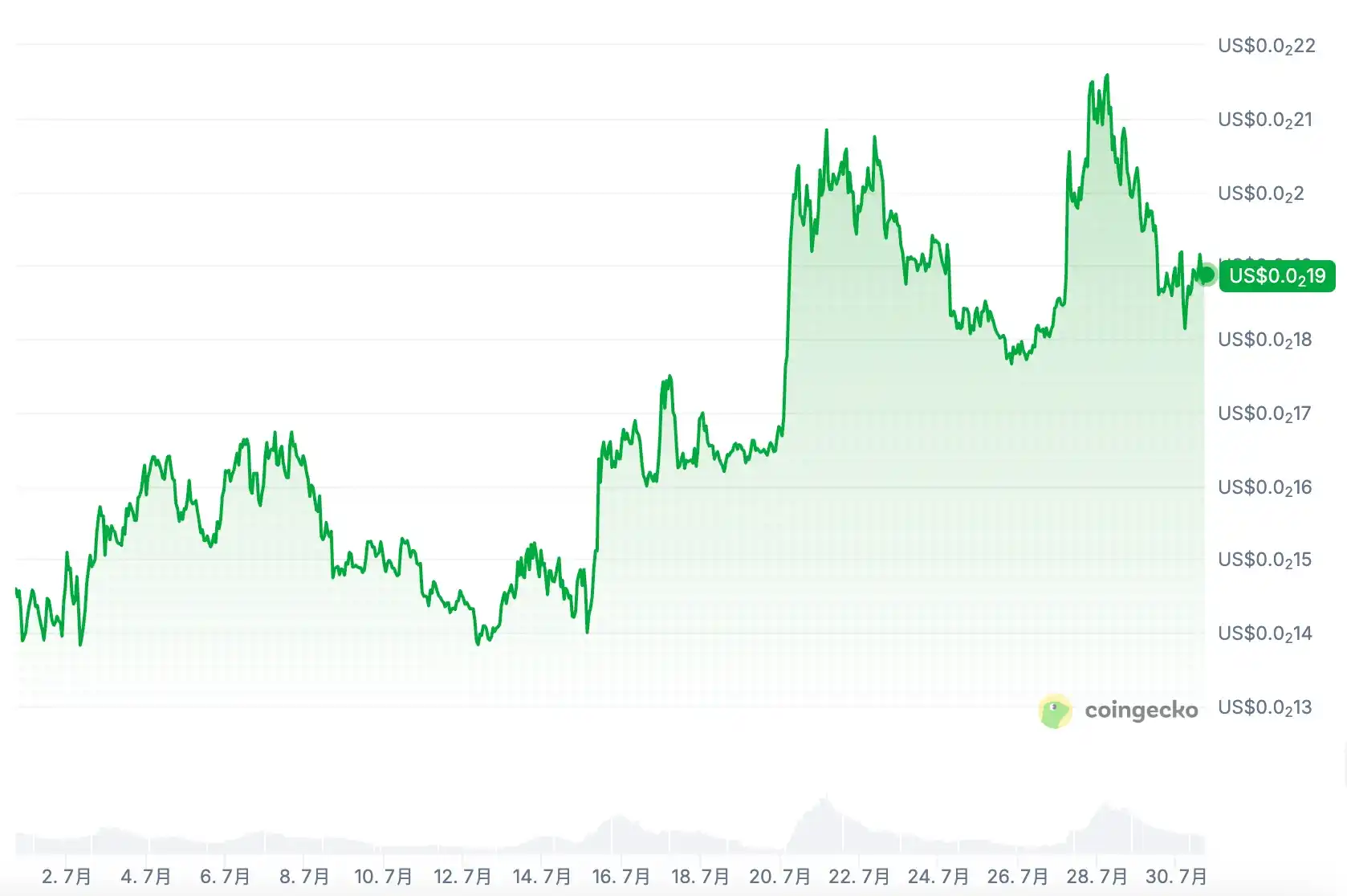
Đằng sau việc giá PUMP tăng, một mặt là do áp lực bán từ đợt mở khóa lớn đã giảm bớt. Ngày 14 tháng 7, PUMP bắt đầu đợt mở khóa lớn đầu tiên dành cho đội ngũ và nhà đầu tư sau TGE, quy mô giải phóng vượt quá 86 triệu USD. Trước đó, thị trường lo ngại phổ biến rằng việc mở khóa quy mô lớn có thể kích hoạt việc bán ra từ các nhà đầu tư.

Tuy nhiên, theo phân tích mới nhất của Lbexplorer, trong số 79 ví nhà đầu tư của Pump.fun, hiện chỉ có 3 ví đã bán phần phân bổ của nhà đầu tư. Trong đó, giao dịch bán lớn nhất đến từ một ví nắm giữ 625 triệu token PUMP, số tiền thu về khoảng 1.2825 triệu USD; hai ví khác bán ra với tổng số tiền hơn 100,000 USD một chút. Trong 13 ngày qua, các nhà đầu tư đã bán ra tổng cộng khoảng 770 triệu token PUMP, trị giá khoảng 1.574 triệu USD. Hiện tại, vẫn còn khoảng 92% token phân bổ cho nhà đầu tư chưa được bán.

Đồng thời, cơ chế mua lại và tiêu hủy cũng là yếu tố quan trọng hỗ trợ giá PUMP. Trang web chính thức của Pump.fun cho thấy, tính đến nay, nền tảng đã tích lũy tiêu hủy hơn 15.45 triệu token PUMP, trị giá hơn 416 triệu USD, chiếm khoảng 15.4% tổng nguồn cung PUMP. Trong 7 ngày qua, Pump.fun đã mua lại và tiêu hủy tích lũy khoảng 2.236 tỷ token PUMP, trị giá khoảng 4.359 triệu USD. Tuy nhiên, mặc dù cơ chế mua lại có thể hỗ trợ giá trong ngắn hạn, nhưng hiệu quả thúc đẩy dài hạn của nó vẫn phụ thuộc vào khả năng tăng trưởng doanh thu của nền tảng.

Trên thực tế, lực mua lại của Pump.fun gần đây đã giảm đáng kể. Dữ liệu cho thấy, vốn mua lại hàng ngày của nó đã giảm từ mức cao nhất trước đây là hơn 3.06 triệu USD xuống còn khoảng 690,000 USD hiện tại, giảm khoảng 77.5%.
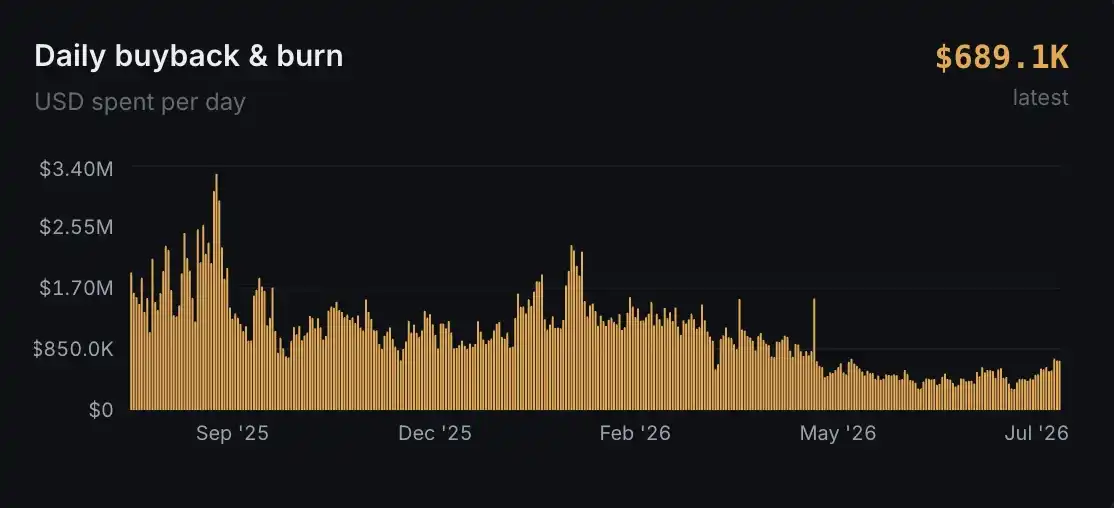
Việc thu hẹp vốn mua lại, một mặt liên quan đến việc Pump.fun điều chỉnh mô hình kinh tế token vài tháng trước, khi nền tảng thông báo giảm quy mô doanh thu dùng để mua lại và tiêu hủy PUMP xuống còn 50%. Mặt khác, cũng phản ánh sự ảm đạm của thị trường đang ảnh hưởng đến biểu hiện doanh thu của nền tảng, doanh thu hàng ngày của nó đã giảm từ mức cao kỷ lục gần 5.2 triệu USD xuống còn khoảng 1.608 triệu USD hiện tại, giảm khoảng 69.1%.

Vẫn là cỗ máy kiếm tiền trong thị trường giá xuống, nhưng tăng trưởng doanh thu khó thoát khỏi biến động chu kỳ

So với đa số các giao thức tiền mã hóa, Pump.fun vẫn duy trì khả năng sinh lợi mạnh mẽ và trở thành một trong số ít giao thức hàng đầu vẫn có dòng tiền ổn định trong môi trường thị trường giá xuống.

Dữ liệu từ DeFiLlama cho thấy, tính đến ngày 30 tháng 7, doanh thu hàng năm của Pump.fun đạt khoảng 450 triệu USD. Doanh thu hàng ngày chỉ đứng sau Tether, Circle và Hyperliquid, chiếm gần 4.2% tổng doanh thu thị trường tiền mã hóa. Kể từ đầu năm nay, doanh thu hàng tháng của Pump.fun cơ bản duy trì trên 30 triệu USD.
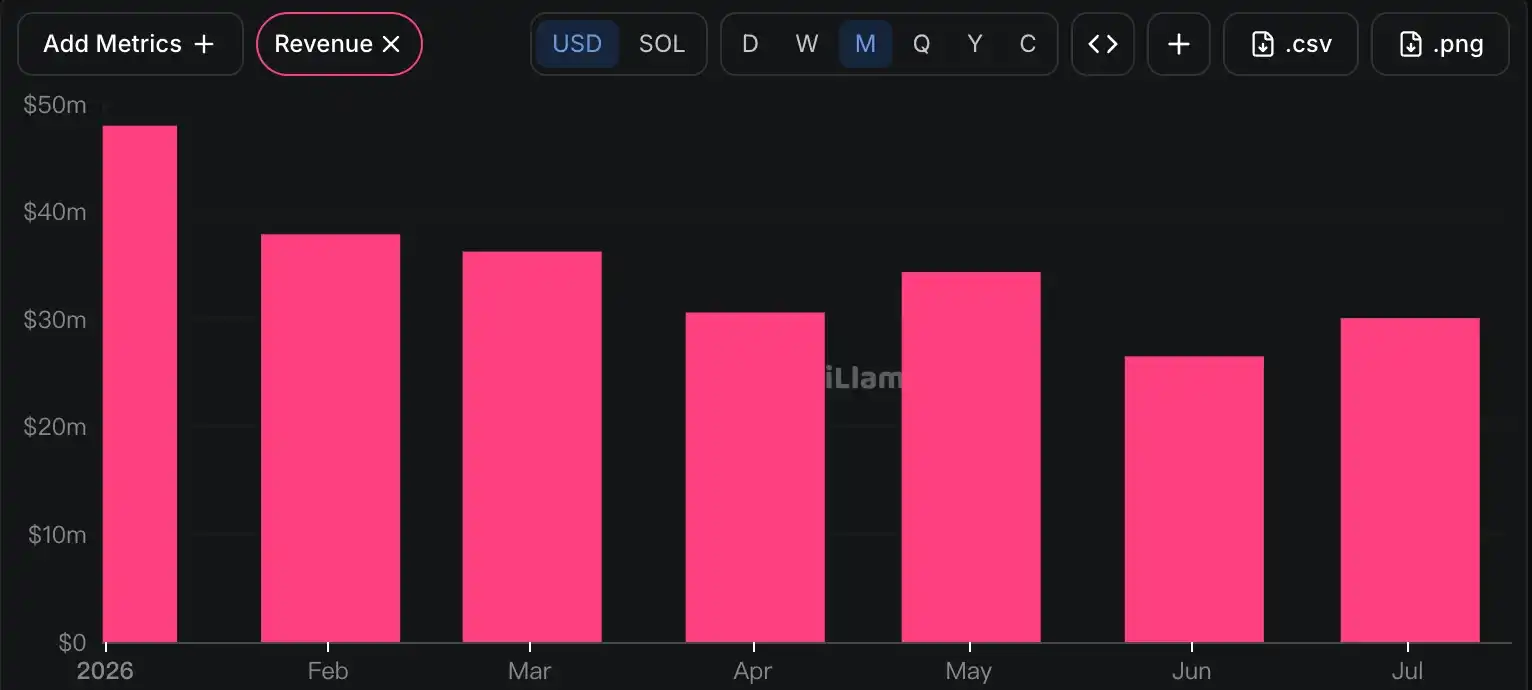
Gần đây, doanh thu của Pump.fun thậm chí từng vượt qua Hyperliquid, ông lớn trong lĩnh vực Perp DEX. Về vấn đề này, đồng sáng lập Pump.fun Sapijiju còn cho biết, quy mô thị trường tiềm năng dài hạn (TAM) của Pump.fun sẽ vượt qua thị trường hợp đồng vĩnh viễn toàn cầu mà Hyperliquid đang hoạt động, và cho rằng nó "lớn hơn nhiều... chỉ là hiện tại chưa được kiểm chứng".

Ngoài việc liên tục tạo ra doanh thu, đội ngũ Pump.fun cũng thu về doanh thu phí giao dịch khổng lồ. Từ đầu năm 2024 đến nay, Pump.fun đã tích lũy bán khoảng 4.812 triệu SOL từ doanh thu phí, trị giá hơn 810 triệu USD, chủ yếu từ phí giao dịch 1%.

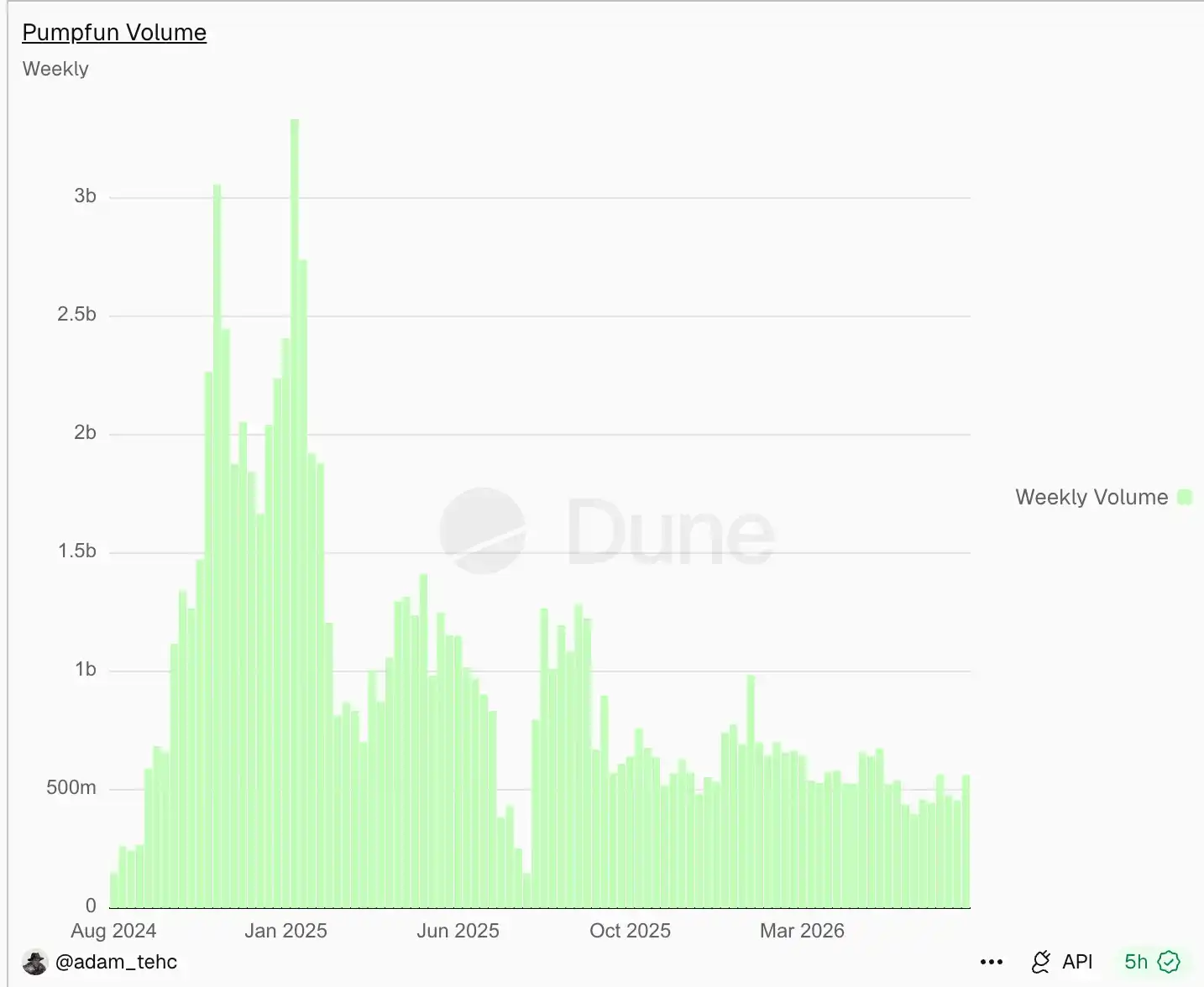
Tuy nhiên, hiệu suất hiện tại của Pump.fun vẫn có khoảng cách đáng kể so với thời kỳ đỉnh cao. Dữ liệu từ Dune cho thấy, tính đến ngày 30 tháng 7, khối lượng giao dịch hàng tuần của Pump.fun chỉ bằng khoảng 17% so với mức đỉnh lịch sử, số địa chỉ hoạt động hàng ngày cũng giảm xuống còn 38.1% so với thời kỳ đỉnh cao. Sự suy giảm nhiệt độ giao dịch đã ảnh hưởng trực tiếp đến biểu hiện doanh thu của nền tảng. Dữ liệu Dune cho thấy, doanh thu hàng ngày hiện tại của Pump.fun chỉ bằng khoảng 30% so với thời kỳ đỉnh cao lịch sử. Điều này có nghĩa là mô hình kinh doanh của Pump.fun vẫn phụ thuộc khá nhiều vào tâm lý thị trường và sức nóng của Meme coin, sự tăng trưởng doanh thu có tính chu kỳ mạnh.
Đáng chú ý, hiện tại Pump.fun đang phải đối mặt với vụ kiện tập thể, bị cáo buộc liên quan đến giao dịch ưu tiên nội bộ, thao túng thị trường Meme coin, bán chứng khoán chưa đăng ký và vi phạm luật liên quan đến RICO. Trước nguy cơ tuân thủ tiềm ẩn, cuối tháng 6 năm nay, công ty mẹ của Pump.fun, Baton Corporation, thông báo tuyển dụng Trưởng phòng Pháp lý với mức lương cao, phạm vi lương cơ bản từ 1 đến 5 triệu USD, chịu trách nhiệm về các vấn đề giám sát, tư vấn sản phẩm, quản trị công ty, tuân thủ xuyên biên giới, v.v.

Robinhood gia nhập mạnh mẽ, Pump.fun đối mặt với cạnh tranh trực diện

Ngoài áp lực từ thị trường giá xuống, cuộc tấn công mạnh mẽ gần đây của Robinhood Chain cũng tạo ra áp lực cạnh tranh mới cho Pump.fun.

Theo dữ liệu từ Dune, khối lượng giao dịch của Launchpad trên Robinhood Chain tuần trước đạt 1.23 tỷ USD, cao hơn con số 447 triệu USD của Pump.fun trong cùng kỳ, gần bằng 1.22 tỷ USD của Pumpswap. Về số địa chỉ hoạt động, số địa chỉ hoạt động của Launchpad trên Robinhood Chain trong cùng kỳ đạt khoảng 191,000, trong khi Pump.fun, chiếm vị trí chủ đạo trong hệ sinh thái Solana, là khoảng 141,000.
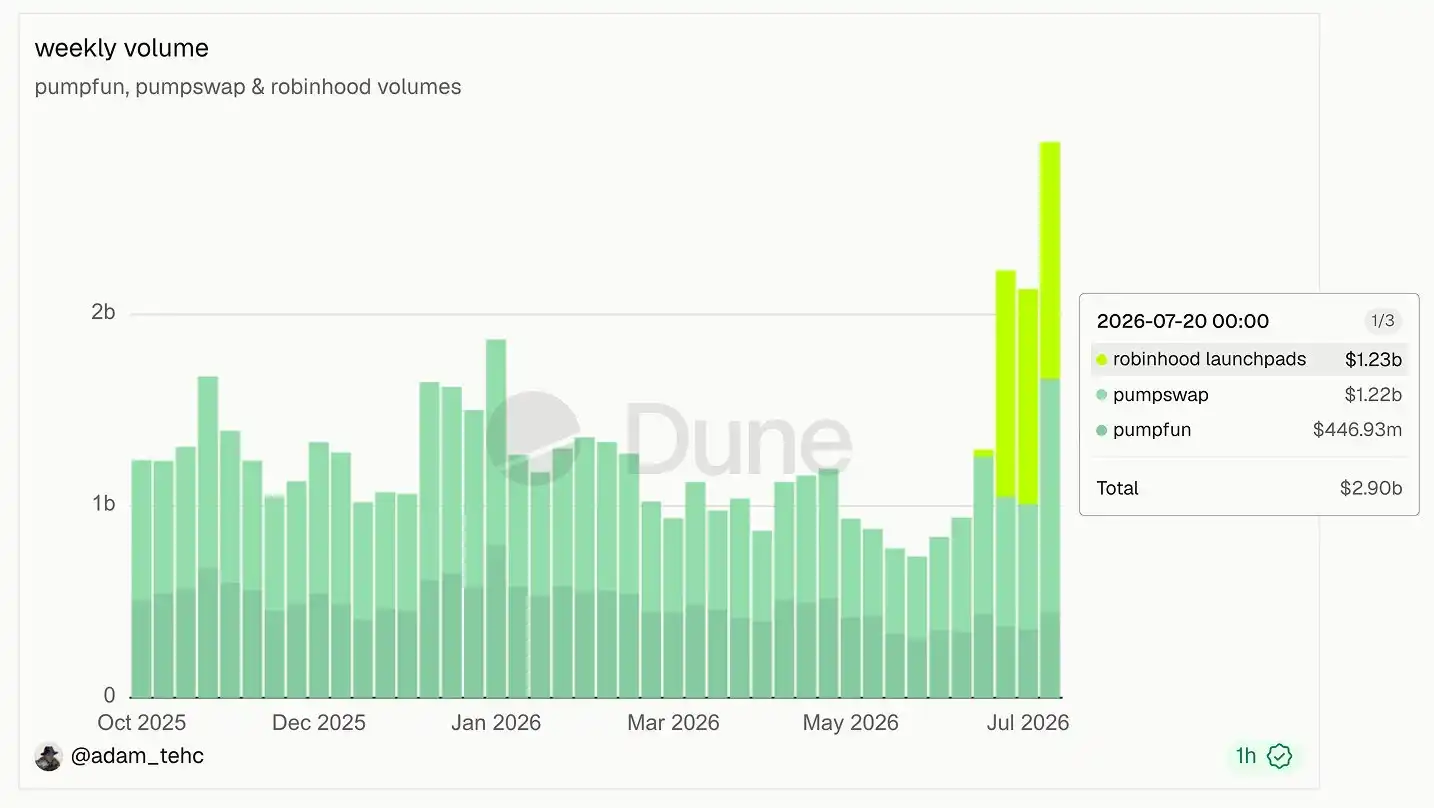
Tuy nhiên, hiện tại Robinhood Launchpad chưa xâm phạm rõ ràng vào thị phần của Pump.fun. Dù là khối lượng giao dịch hay số địa chỉ hoạt động, Pump.fun gần đây vẫn duy trì xu hướng tăng trưởng. Tuy nhiên, bỏ qua các yếu tố môi trường thị trường, trong bối cảnh các đối thủ cạnh tranh liên tục gia nhập, vị thế dẫn đầu của Pump.fun trên thị trường phóng hành Meme còn có thể duy trì được bao lâu vẫn là một ẩn số.

Để nâng cao năng lực cạnh tranh, Pump.fun cũng bắt đầu điều chỉnh chiến lược sản phẩm. Gần đây, Pump.fun đã ra mắt cơ chế phóng hành tiêu chuẩn mới BOOST, cố gắng cải thiện vấn đề thanh khoản chết lớn phát sinh trong quá trình chuyển token từ đường cong liên kết sang bể thanh khoản trước đây. Theo đồng sáng lập Alon Cohen giới thiệu, cơ chế này có thể tăng thêm khoảng 20% thanh khoản cho mỗi token mới được chuyển, mà không thay đổi trải nghiệm giao dịch của đường cong liên kết hoặc bể thanh khoản, theo thời gian sẽ bơm hàng trăm triệu USD thanh khoản vào hệ sinh thái.

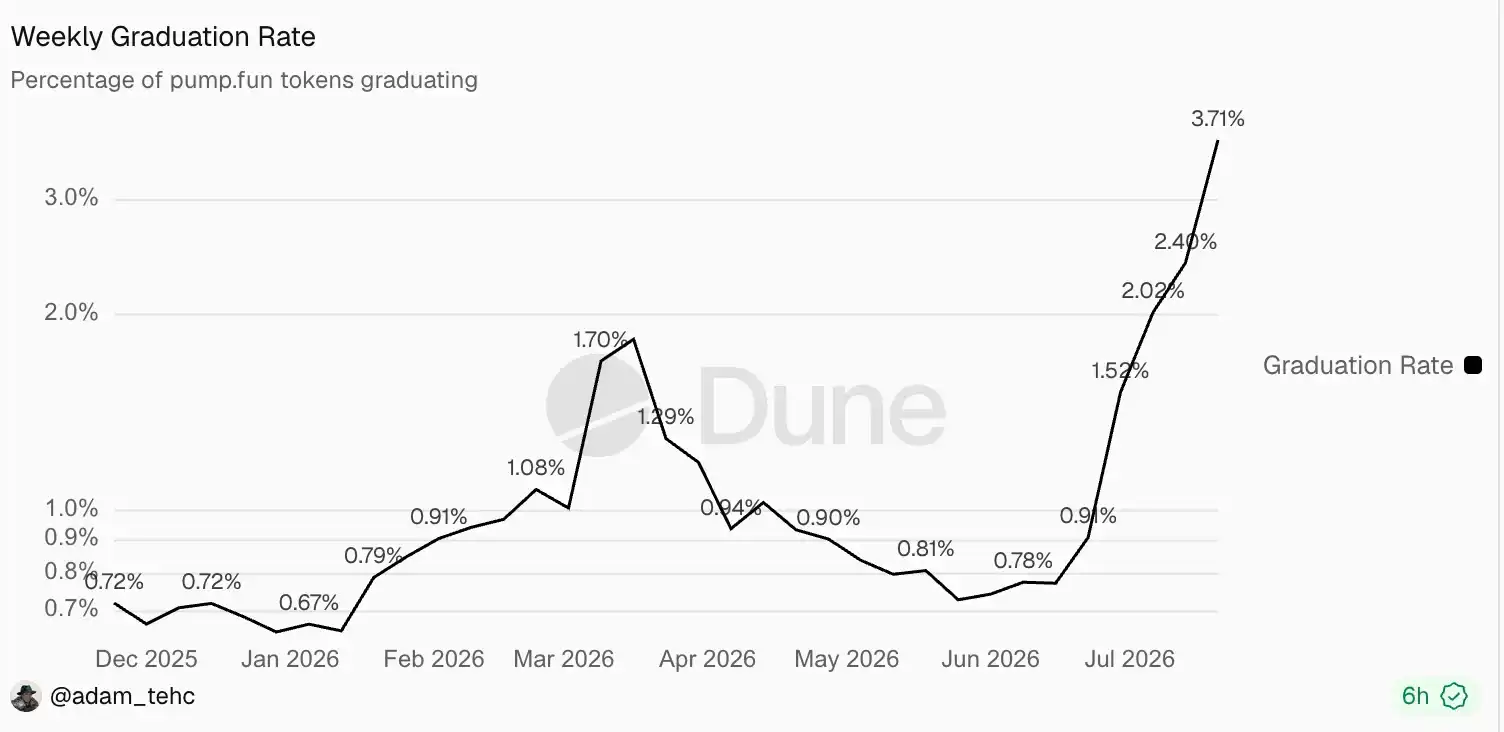
Sau khi cơ chế mới được ra mắt, mức độ hoạt động của thị trường Pump.fun đã được cải thiện đáng kể. Dữ liệu Dune cho thấy, tỷ lệ token tốt nghiệp hàng tuần của nền tảng đã tăng lên 3.7%, trong khi tỷ lệ này vào đầu năm chỉ là 0.67%; số lượng token được tạo hàng ngày trung bình cũng vượt qua 36,000, gần bằng mức cao mới trong gần bốn tháng qua.
Tuy nhiên, một số người dùng cộng đồng chỉ ra rằng, cơ chế này trên thực tế cung cấp áp lực mua miễn phí và hiệu ứng giảm phát cho các token sắp tốt nghiệp, làm giảm đáng kể chi phí ràng buộc, khuyến khích các nhà giao dịch đẩy mạnh thị trường. Các nhà phát triển có thể lợi dụng cơ chế này để đóng gói các token bó gần tốt nghiệp, thông qua việc tạo ra thanh khoản và nhiệt độ giao dịch để thu hút các nhà đầu tư nhỏ lẻ tham gia, và dễ dàng kiếm lợi nhuận từ đó, từ đó thúc đẩy nhiều token chất lượng thấp hơn phụ thuộc vào việc bó gói và đầu cơ ngắn hạn.

Nhìn chung, bánh đà doanh thu của Pump.fun hiện tại vẫn được xây dựng trên sức nóng của thị trường Meme và dòng chảy vốn đầu cơ, mô hình này mặc dù có thể mang lại dòng tiền cao khi thị trường sôi động, nhưng cũng có nghĩa là biểu hiện doanh thu của nền tảng và giá PUMP vẫn dễ bị ảnh hưởng bởi biến động chu kỳ thị trường.


Crypto di tendenza

Domande pertinenti

QTại sao giá token PUMP không giảm mà lại tăng sau khi mở khóa một lượng lớn?

AGiá token PUMP tăng sau khi mở khóa một lượng lớn chủ yếu do hai nguyên nhân: thứ nhất, áp lực bán ra từ việc mở khóa thấp hơn dự kiến (chỉ khoảng 8% lượng token phân bổ cho nhà đầu tư đã được bán). Thứ hai, cơ chế mua lại và đốt token của nền tảng đã cung cấp hỗ trợ cho giá. Tuy nhiên, lực mua gần đây đã giảm mạnh do thu nhập nền tảng sụt giảm và thay đổi mô hình kinh tế token.

QPump.fun so với các giao thức khác về khả năng tạo doanh thu trong thị trường gấu như thế nào?

APump.fun vẫn là một trong số ít giao thức hàng đầu duy trì khả năng sinh lời mạnh trong thị trường gấu. Theo DeFiLlama, doanh thu hàng năm của nó đạt khoảng 450 triệu USD, đứng thứ tư trong toàn thị trường crypto về doanh thu hàng ngày và chiếm gần 4,2% tổng doanh thu thị trường. Tuy nhiên, doanh thu hiện tại chỉ bằng khoảng 30% so với mức đỉnh lịch sử, cho thấy tính chu kỳ mạnh trong mô hình kinh doanh phụ thuộc vào xu hướng Meme coin.

QCơ chế BOOST mới của Pump.fun là gì và nó có tác động gì đến nền tảng?

ACơ chế BOOST là một tiêu chuẩn phát hành mới của Pump.fun nhằm giải quyết vấn đề thanh khoản 'chết' (dead liquidity) khi token chuyển từ bonding curve sang liquidity pool. Cơ chế này được cho là có thể thêm khoảng 20% thanh khoản cho mỗi token mới di chuyển. Sau khi ra mắt, tỷ lệ token 'tốt nghiệp' hàng tuần của nền tảng đã tăng lên 3,7% và số lượng token được tạo hàng ngày đạt gần mức cao nhất trong bốn tháng. Tuy nhiên, một số ý kiến lo ngại nó có thể khuyến khích các token chất lượng thấp dựa vào thao tác ngắn hạn.

QSự xuất hiện của Robinhood Chain có ảnh hưởng đáng kể đến thị phần của Pump.fun không?

ACho đến thời điểm hiện tại, Robinhood Chain chưa làm xói mòn đáng kể thị phần của Pump.fun. Mặc dù launchpad của Robinhood Chain có khối lượng giao dịch và số địa chỉ hoạt động cao hơn trong một tuần cụ thể, nhưng Pump.fun vẫn duy trì xu hướng tăng trưởng về cả khối lượng giao dịch và địa chỉ hoạt động. Điều này cho thấy vị thế dẫn đầu của Pump.fun trong thị trường phát hành Meme trên Solana vẫn chưa bị lung lay ngay lập tức bởi đối thủ mới.

QNhững rủi ro tiềm ẩn nào Pump.fun đang phải đối mặt?

APump.fun đang phải đối mặt với một số rủi ro tiềm ẩn: (1) Rủi ro tuân thủ pháp lý do một vụ kiện tập thể cáo buộc giao dịch ưu tiên nội bộ, thao túng thị trường Meme coin và bán chứng khoán chưa đăng ký. (2) Mô hình doanh thu phụ thuộc nhiều vào sự nhiệt tình của thị trường và dòng tiền đầu cơ vào Meme coin, dễ biến động theo chu kỳ thị trường. (3) Áp lực cạnh tranh ngày càng tăng từ các đối thủ mới như Robinhood Chain.
Letture associate

a16z: From Companies to DAOs, DUNA May Become the Next Generation Organizational Form

This article, "From Companies to DAOs: How DUNA Could Become the Next Organizational Form," traces the 500-year evolution of business collaboration. It begins with medieval structures like the *commenda* and Florentine *compagnia*, which exposed partners to personal risk. The modern corporation, exemplified by the Dutch East India Company (VOC), was a revolutionary leap, enabling large-scale, capital-intensive ventures by offering limited liability and reducing coordination costs. However, corporations introduced new challenges like principal-agent problems and bureaucratic overhead. The piece argues that software and internet-native protocols are now reducing these traditional overheads. Decentralized Autonomous Organizations (DAOs) emerged as a new model for coordination without centralized management. Yet, DAOs face a significant legal vacuum: they lack legal recognition, leaving members exposed to unlimited personal liability, and their tokens are vulnerable to being classified as securities under unclear regulations (e.g., the Howey Test). This has forced projects into suboptimal workarounds like offshore foundations. The article identifies the Decentralized Unincorporated Nonprofit Association (DUNA) as a potential solution. Recently legalized in states like Wyoming, the DUNA provides a legal wrapper for decentralized networks. It grants key protections—legal personality, limited liability, and perpetual existence—to a group without imposing a traditional hierarchical management structure. This allows token-holder communities to govern, hold assets, and contract as a single legal entity, aligning with their decentralized nature. While DUNA doesn't solve all governance challenges or magically resolve securities law questions, it represents a crucial step. It fills the legal recognition gap, offering a native legal form for internet-scale, decentralized collaboration and extending the separation of personal risk from organizational venture into a new domain.

marsbit11 min fa

a16z: From Companies to DAOs, DUNA May Become the Next Generation Organizational Form

marsbit11 min fa

2026 Mid-Year Report On-Chain RWA: Tokenized Stock Market Cap Doubles in a Year, But 90% of Rights Are Hollow Shells

The 2026 Mid-Year Report on On-Chain RWA highlights a significant growth in tokenized stock market capitalization, which nearly doubled from $951 million in March to $1.89 billion by July. However, the report reveals a fundamental contradiction in this "layer 2.5" ecosystem: products with the strongest legal foundation (like regulated U.S. infrastructure) lack liquidity and distribution, while freely tradable offshored wrapper products often lack substantive ownership rights. The increase is driven largely by a few products (SECZ, FGRS, STRCx) and platforms (Ondo, xStocks, Securitize collectively hold over 85% share). While distributed value across networks like Ethereum, Solana, and BNB Chain has grown, the market remains fragmented. Products referencing the same underlying asset (e.g., Apple stock) are distinct legal liabilities with different intermediaries and jurisdictional rules, offering varying degrees of legal claim. The report cautions that headline numbers are misleading, as they reflect changes in distributed token value—driven by issuance, conversions, and price movements—not pure investor inflows. True "canonical shares" with legal ownership, wide wallet distribution, institutional liquidity, and independent on-chain price discovery do not yet exist at scale. Tokenized treasuries show stronger product-market fit, and ETFs may be easier to scale than single stocks. The core takeaway is a trade-off: legal certainty versus liquidity and composability.

marsbit1 h fa

2026 Mid-Year Report On-Chain RWA: Tokenized Stock Market Cap Doubles in a Year, But 90% of Rights Are Hollow Shells

marsbit1 h fa

Coldcard Hardware Wallet Hacked: 594 Bitcoin Withdrawn in 25 Minutes

The Coldcard hardware wallet has been compromised, with hackers stealing approximately 594.5 Bitcoin (~$40 million) from 500 addresses in just 25 minutes. The root cause was a critical software bug, undetected for five years, which disabled the device's secure chip for generating true random numbers. This led to the creation of private keys based on predictable data like the processor's serial number, drastically reducing cryptographic security. The attackers exploited this offline by brute-forcing possible seed phrases, finding active addresses on the public ledger, and signing transactions. Initially, Coinkite (Coldcard's maker) claimed only older models were at risk but later admitted all devices running the compromised firmware were vulnerable. CEO Rodolphe Novak (NVK) apologized but ruled out financial compensation for affected users. To secure funds, owners must urgently update their firmware to specific safe versions, generate a completely new seed phrase on the updated device, and transfer all assets to new addresses created with that new seed. While a BIP-39 passphrase can help, it does not replace this migration process. Other Coinkite products like TAPSIGNER were not affected. This incident underscores that even specialized hardware requires rigorous, independent code audits, especially for cryptographic functions. It parallels past failures, like a 2006 OpenSSL bug in Debian, and raises questions about whether automated code analysis can ever fully replace human scrutiny in critical security areas.

cryptonews.ru3 h fa

Coldcard Hardware Wallet Hacked: 594 Bitcoin Withdrawn in 25 Minutes

cryptonews.ru3 h fa

Trading

Spot

Articoli Popolari

Cosa è $S$

Comprendere SPERO: Una Panoramica Completa Introduzione a SPERO Mentre il panorama dell'innovazione continua a evolversi, l'emergere delle tecnologie web3 e dei progetti di criptovaluta gioca un ruolo fondamentale nel plasmare il futuro digitale. Un progetto che ha attirato l'attenzione in questo campo dinamico è SPERO, denotato come SPERO,$$s$. Questo articolo mira a raccogliere e presentare informazioni dettagliate su SPERO, per aiutare gli appassionati e gli investitori a comprendere le sue basi, obiettivi e innovazioni nei domini web3 e crypto. Che cos'è SPERO,$$s$? SPERO,$$s$ è un progetto unico all'interno dello spazio crypto che cerca di sfruttare i principi della decentralizzazione e della tecnologia blockchain per creare un ecosistema che promuove l'impegno, l'utilità e l'inclusione finanziaria. Il progetto è progettato per facilitare interazioni peer-to-peer in modi nuovi, fornendo agli utenti soluzioni e servizi finanziari innovativi. Al suo interno, SPERO,$$s$ mira a responsabilizzare gli individui fornendo strumenti e piattaforme che migliorano l'esperienza dell'utente nello spazio delle criptovalute. Questo include la possibilità di metodi di transazione più flessibili, la promozione di iniziative guidate dalla comunità e la creazione di percorsi per opportunità finanziarie attraverso applicazioni decentralizzate (dApps). La visione sottostante di SPERO,$$s$ ruota attorno all'inclusività, cercando di colmare le lacune all'interno della finanza tradizionale mentre sfrutta i vantaggi della tecnologia blockchain. Chi è il Creatore di SPERO,$$s$? L'identità del creatore di SPERO,$$s$ rimane piuttosto oscura, poiché ci sono risorse pubblicamente disponibili limitate che forniscono informazioni dettagliate sul suo fondatore o fondatori. Questa mancanza di trasparenza può derivare dall'impegno del progetto per la decentralizzazione—un ethos che molti progetti web3 condividono, dando priorità ai contributi collettivi rispetto al riconoscimento individuale. Centrando le discussioni attorno alla comunità e ai suoi obiettivi collettivi, SPERO,$$s$ incarna l'essenza dell'empowerment senza mettere in evidenza individui specifici. Pertanto, comprendere l'etica e la missione di SPERO rimane più importante che identificare un creatore singolo. Chi sono gli Investitori di SPERO,$$s$? SPERO,$$s$ è supportato da una varietà di investitori che vanno dai capitalisti di rischio agli investitori angelici dedicati a promuovere l'innovazione nel settore crypto. Il focus di questi investitori generalmente si allinea con la missione di SPERO—dando priorità a progetti che promettono avanzamenti tecnologici sociali, inclusività finanziaria e governance decentralizzata. Queste fondazioni di investitori sono tipicamente interessate a progetti che non solo offrono prodotti innovativi, ma contribuiscono anche positivamente alla comunità blockchain e ai suoi ecosistemi. Il supporto di questi investitori rafforza SPERO,$$s$ come un concorrente degno di nota nel dominio in rapida evoluzione dei progetti crypto. Come Funziona SPERO,$$s$? SPERO,$$s$ impiega un framework multifunzionale che lo distingue dai progetti di criptovaluta convenzionali. Ecco alcune delle caratteristiche chiave che sottolineano la sua unicità e innovazione: Governance Decentralizzata: SPERO,$$s$ integra modelli di governance decentralizzati, responsabilizzando gli utenti a partecipare attivamente ai processi decisionali riguardanti il futuro del progetto. Questo approccio favorisce un senso di proprietà e responsabilità tra i membri della comunità. Utilità del Token: SPERO,$$s$ utilizza il proprio token di criptovaluta, progettato per servire varie funzioni all'interno dell'ecosistema. Questi token abilitano transazioni, premi e la facilitazione dei servizi offerti sulla piattaforma, migliorando l'impegno e l'utilità complessivi. Architettura Stratificata: L'architettura tecnica di SPERO,$$s$ supporta la modularità e la scalabilità, consentendo un'integrazione fluida di funzionalità e applicazioni aggiuntive man mano che il progetto evolve. Questa adattabilità è fondamentale per mantenere la rilevanza nel panorama crypto in continua evoluzione. Coinvolgimento della Comunità: Il progetto enfatizza iniziative guidate dalla comunità, impiegando meccanismi che incentivano la collaborazione e il feedback. Nutrendo una comunità forte, SPERO,$$s$ può affrontare meglio le esigenze degli utenti e adattarsi alle tendenze di mercato. Focus sull'Inclusione: Offrendo basse commissioni di transazione e interfacce user-friendly, SPERO,$$s$ mira ad attrarre una base utenti diversificata, inclusi individui che potrebbero non aver precedentemente interagito nello spazio crypto. Questo impegno per l'inclusione si allinea con la sua missione generale di empowerment attraverso l'accessibilità. Cronologia di SPERO,$$s$ Comprendere la storia di un progetto fornisce preziose intuizioni sulla sua traiettoria di sviluppo e sui traguardi. Di seguito è riportata una cronologia suggerita che mappa eventi significativi nell'evoluzione di SPERO,$$s$: Fase di Concettualizzazione e Ideazione: Le idee iniziali che formano la base di SPERO,$$s$ sono state concepite, allineandosi strettamente con i principi di decentralizzazione e focus sulla comunità all'interno dell'industria blockchain. Lancio del Whitepaper del Progetto: Dopo la fase concettuale, è stato rilasciato un whitepaper completo che dettaglia la visione, gli obiettivi e l'infrastruttura tecnologica di SPERO,$$s$ per suscitare interesse e feedback dalla comunità. Costruzione della Comunità e Prime Interazioni: Sono stati effettuati sforzi attivi di outreach per costruire una comunità di early adopters e potenziali investitori, facilitando discussioni attorno agli obiettivi del progetto e ottenendo supporto. Evento di Generazione del Token: SPERO,$$s$ ha condotto un evento di generazione del token (TGE) per distribuire i propri token nativi ai primi sostenitori e stabilire una liquidità iniziale all'interno dell'ecosistema. Lancio della Prima dApp: La prima applicazione decentralizzata (dApp) associata a SPERO,$$s$ è stata attivata, consentendo agli utenti di interagire con le funzionalità principali della piattaforma. Sviluppo Continuo e Partnership: Aggiornamenti e miglioramenti continui alle offerte del progetto, inclusi partnership strategiche con altri attori nello spazio blockchain, hanno plasmato SPERO,$$s$ in un concorrente competitivo e in evoluzione nel mercato crypto. Conclusione SPERO,$$s$ rappresenta una testimonianza del potenziale del web3 e delle criptovalute di rivoluzionare i sistemi finanziari e responsabilizzare gli individui. Con un impegno per la governance decentralizzata, il coinvolgimento della comunità e funzionalità progettate in modo innovativo, apre la strada verso un panorama finanziario più inclusivo. Come per qualsiasi investimento nello spazio crypto in rapida evoluzione, si incoraggiano potenziali investitori e utenti a ricercare approfonditamente e a impegnarsi in modo riflessivo con gli sviluppi in corso all'interno di SPERO,$$s$. Il progetto mostra lo spirito innovativo dell'industria crypto, invitando a ulteriori esplorazioni delle sue innumerevoli possibilità. Mentre il percorso di SPERO,$$s$ è ancora in fase di sviluppo, i suoi principi fondamentali potrebbero effettivamente influenzare il futuro di come interagiamo con la tecnologia, la finanza e tra di noi in ecosistemi digitali interconnessi.

174 Totale visualizzazioniPubblicato il 2024.12.17Aggiornato il 2024.12.17

Cosa è $S$

Cosa è AGENT S

Agent S: Il Futuro dell'Interazione Autonoma in Web3 Introduzione Nel panorama in continua evoluzione di Web3 e criptovalute, le innovazioni stanno costantemente ridefinendo il modo in cui gli individui interagiscono con le piattaforme digitali. Uno di questi progetti pionieristici, Agent S, promette di rivoluzionare l'interazione uomo-computer attraverso il suo framework agentico aperto. Aprendo la strada a interazioni autonome, Agent S mira a semplificare compiti complessi, offrendo applicazioni trasformative nell'intelligenza artificiale (AI). Questa esplorazione dettagliata approfondirà le complessità del progetto, le sue caratteristiche uniche e le implicazioni per il dominio delle criptovalute. Cos'è Agent S? Agent S si presenta come un innovativo framework agentico aperto, progettato specificamente per affrontare tre sfide fondamentali nell'automazione dei compiti informatici: Acquisizione di Conoscenze Specifiche del Dominio: Il framework apprende in modo intelligente da varie fonti di conoscenza esterne ed esperienze interne. Questo approccio duale gli consente di costruire un ricco repository di conoscenze specifiche del dominio, migliorando le sue prestazioni nell'esecuzione dei compiti. Pianificazione su Lungo Orizzonte di Compiti: Agent S impiega una pianificazione gerarchica potenziata dall'esperienza, un approccio strategico che facilita la suddivisione e l'esecuzione efficiente di compiti complessi. Questa caratteristica migliora significativamente la sua capacità di gestire più sottocompiti in modo efficiente ed efficace. Gestione di Interfacce Dinamiche e Non Uniformi: Il progetto introduce l'Interfaccia Agente-Computer (ACI), una soluzione innovativa che migliora l'interazione tra agenti e utenti. Utilizzando Modelli Linguistici Multimodali di Grandi Dimensioni (MLLM), Agent S può navigare e manipolare senza sforzo diverse interfacce grafiche utente. Attraverso queste caratteristiche pionieristiche, Agent S fornisce un framework robusto che affronta le complessità coinvolte nell'automazione dell'interazione umana con le macchine, preparando il terreno per innumerevoli applicazioni nell'AI e oltre. Chi è il Creatore di Agent S? Sebbene il concetto di Agent S sia fondamentalmente innovativo, informazioni specifiche sul suo creatore rimangono elusive. Il creatore è attualmente sconosciuto, il che evidenzia sia la fase embrionale del progetto sia la scelta strategica di mantenere i membri fondatori sotto anonimato. Indipendentemente dall'anonimato, l'attenzione rimane sulle capacità e sul potenziale del framework. Chi sono gli Investitori di Agent S? Poiché Agent S è relativamente nuovo nell'ecosistema crittografico, informazioni dettagliate riguardanti i suoi investitori e sostenitori finanziari non sono documentate esplicitamente. La mancanza di approfondimenti pubblicamente disponibili sulle fondazioni di investimento o sulle organizzazioni che supportano il progetto solleva interrogativi sulla sua struttura di finanziamento e sulla roadmap di sviluppo. Comprendere il supporto è cruciale per valutare la sostenibilità del progetto e il suo potenziale impatto sul mercato. Come Funziona Agent S? Al centro di Agent S si trova una tecnologia all'avanguardia che gli consente di funzionare efficacemente in contesti diversi. Il suo modello operativo è costruito attorno a diverse caratteristiche chiave: Interazione Uomo-Computer Simile a Quella Umana: Il framework offre una pianificazione AI avanzata, cercando di rendere le interazioni con i computer più intuitive. Mimando il comportamento umano nell'esecuzione dei compiti, promette di elevare le esperienze degli utenti. Memoria Narrativa: Utilizzata per sfruttare esperienze di alto livello, Agent S utilizza la memoria narrativa per tenere traccia delle storie dei compiti, migliorando così i suoi processi decisionali. Memoria Episodica: Questa caratteristica fornisce agli utenti una guida passo-passo, consentendo al framework di offrire supporto contestuale mentre i compiti si sviluppano. Supporto per OpenACI: Con la capacità di funzionare localmente, Agent S consente agli utenti di mantenere il controllo sulle proprie interazioni e flussi di lavoro, allineandosi con l'etica decentralizzata di Web3. Facile Integrazione con API Esterne: La sua versatilità e compatibilità con varie piattaforme AI garantiscono che Agent S possa adattarsi senza problemi agli ecosistemi tecnologici esistenti, rendendolo una scelta attraente per sviluppatori e organizzazioni. Queste funzionalità contribuiscono collettivamente alla posizione unica di Agent S all'interno dello spazio crittografico, poiché automatizza compiti complessi e multi-fase con un intervento umano minimo. Man mano che il progetto evolve, le sue potenziali applicazioni in Web3 potrebbero ridefinire il modo in cui si svolgono le interazioni digitali. Cronologia di Agent S Lo sviluppo e le tappe di Agent S possono essere riassunti in una cronologia che evidenzia i suoi eventi significativi: 27 Settembre 2024: Il concetto di Agent S è stato lanciato in un documento di ricerca completo intitolato “Un Framework Agentico Aperto che Usa i Computer Come un Umano”, mostrando le basi per il progetto. 10 Ottobre 2024: Il documento di ricerca è stato reso pubblicamente disponibile su arXiv, offrendo un'esplorazione approfondita del framework e della sua valutazione delle prestazioni basata sul benchmark OSWorld. 12 Ottobre 2024: È stata rilasciata una presentazione video, fornendo un'idea visiva delle capacità e delle caratteristiche di Agent S, coinvolgendo ulteriormente potenziali utenti e investitori. Questi indicatori nella cronologia non solo illustrano i progressi di Agent S, ma indicano anche il suo impegno per la trasparenza e il coinvolgimento della comunità. Punti Chiave su Agent S Man mano che il framework Agent S continua a evolversi, diversi attributi chiave si distinguono, sottolineando la sua natura innovativa e il potenziale: Framework Innovativo: Progettato per fornire un uso intuitivo dei computer simile all'interazione umana, Agent S porta un approccio nuovo all'automazione dei compiti. Interazione Autonoma: La capacità di interagire autonomamente con i computer attraverso GUI segna un passo avanti verso soluzioni informatiche più intelligenti ed efficienti. Automazione di Compiti Complessi: Con la sua metodologia robusta, può automatizzare compiti complessi e multi-fase, rendendo i processi più veloci e meno soggetti a errori. Miglioramento Continuo: I meccanismi di apprendimento consentono ad Agent S di migliorare dalle esperienze passate, migliorando continuamente le sue prestazioni e la sua efficacia. Versatilità: La sua adattabilità attraverso diversi ambienti operativi come OSWorld e WindowsAgentArena garantisce che possa servire un'ampia gamma di applicazioni. Man mano che Agent S si posiziona nel panorama di Web3 e delle criptovalute, il suo potenziale per migliorare le capacità di interazione e automatizzare i processi segna un significativo avanzamento nelle tecnologie AI. Attraverso il suo framework innovativo, Agent S esemplifica il futuro delle interazioni digitali, promettendo un'esperienza più fluida ed efficiente per gli utenti in vari settori. Conclusione Agent S rappresenta un audace passo avanti nell'unione tra AI e Web3, con la capacità di ridefinire il modo in cui interagiamo con la tecnologia. Sebbene sia ancora nelle sue fasi iniziali, le possibilità per la sua applicazione sono vaste e coinvolgenti. Attraverso il suo framework completo che affronta sfide critiche, Agent S mira a portare le interazioni autonome al centro dell'esperienza digitale. Man mano che ci addentriamo nei regni delle criptovalute e della decentralizzazione, progetti come Agent S giocheranno senza dubbio un ruolo cruciale nel plasmare il futuro della tecnologia e della collaborazione uomo-computer.

632 Totale visualizzazioniPubblicato il 2025.01.14Aggiornato il 2025.01.14

Cosa è AGENT S

Come comprare S

Benvenuto in HTX.com! Abbiamo reso l'acquisto di Sonic (S) semplice e conveniente. Segui la nostra guida passo passo per intraprendere il tuo viaggio nel mondo delle criptovalute.Step 1: Crea il tuo Account HTXUsa la tua email o numero di telefono per registrarti il tuo account gratuito su HTX. Vivi un'esperienza facile e sblocca tutte le funzionalità,Crea il mio accountStep 2: Vai in Acquista crypto e seleziona il tuo metodo di pagamentoCarta di credito/debito: utilizza la tua Visa o Mastercard per acquistare immediatamente SonicS.Bilancio: Usa i fondi dal bilancio del tuo account HTX per fare trading senza problemi.Terze parti: abbiamo aggiunto metodi di pagamento molto utilizzati come Google Pay e Apple Pay per maggiore comodità.P2P: Fai trading direttamente con altri utenti HTX.Over-the-Counter (OTC): Offriamo servizi su misura e tassi di cambio competitivi per i trader.Step 3: Conserva Sonic (S)Dopo aver acquistato Sonic (S), conserva nel tuo account HTX. In alternativa, puoi inviare tramite trasferimento blockchain o scambiare per altre criptovalute.Step 4: Scambia Sonic (S)Scambia facilmente Sonic (S) nel mercato spot di HTX. Accedi al tuo account, seleziona la tua coppia di trading, esegui le tue operazioni e monitora in tempo reale. Offriamo un'esperienza user-friendly sia per chi ha appena iniziato che per i trader più esperti.

1.3k Totale visualizzazioniPubblicato il 2025.01.15Aggiornato il 2026.06.02

Come comprare S

Discussioni

Benvenuto nella Community HTX. Qui puoi rimanere informato sugli ultimi sviluppi della piattaforma e accedere ad approfondimenti esperti sul mercato. Le opinioni degli utenti sul prezzo di S S sono presentate come di seguito.

活动图片