三星Q2创史上最强盈利季:净利润暴涨1299.9%超预期,AI芯片狂揽99%利润

华尔街见闻Pubblicato 2026-07-30Pubblicato ultima volta 2026-07-30

Introduzione

三星电子2026年Q2创史上最强单季:营收171.5万亿韩元同比暴增130%,营业利润89.49万亿韩元同比飙升1814%,利润率高达52.2%。核心引擎是半导体——DS部门独揽全公司99%利润,HBM4已完成规模量产并率先发货HBM4E样品,AI超级周期红利尽收囊中。净现金头寸167.6万亿韩元较去年近乎翻倍,ROE从5%跃升至56%。

三星电子2026年第二季度创下历史上盈利能力最强的单季。

具体来看:

营收达到171.5万亿韩元,同比大增130%,环比增长28%;

营业利润更是飙升至89.49万亿韩元,同比大幅增长1813.8%,相较去年同期的4.68万亿韩元实现跨越式增长,环比亦增长56.4%;营业利润率高达52.2%,同比增幅达到1814%。

净利润高达71.62万亿韩元,超出预估68.36万亿韩元,同比暴涨1299.9%,净利润率达41.8%。

每股收益10,849韩元,较一年前的737韩元实现了跨越式跃升,环比增加3726韩元

从上半年累计数据看,前两个季度合并营收达305.37万亿韩元,营业利润达146.73万亿韩元,分别较去年同期增长98.7%和1191.5%。
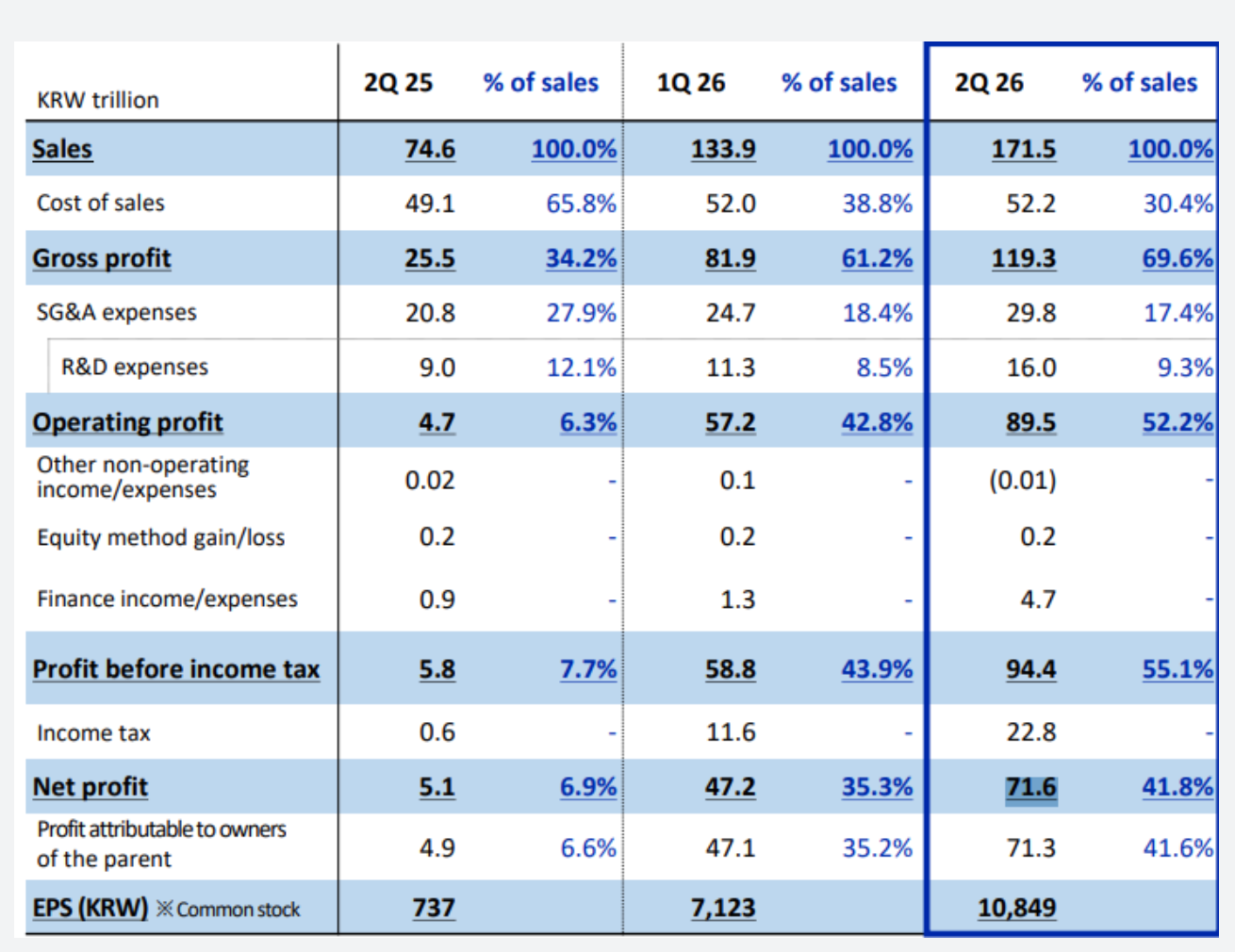
驱动这轮业绩爆发的核心引擎,毫无疑问是半导体业务。以AI服务器需求为中心,三星内存部门实现了销售额120.8万亿韩元,创下历史最高纪录,仅DS(器件解决方案)部门单季营业利润就达89.2万亿韩元,占全公司总营业利润的99%以上。与此同时,研发投入同步攀升至16万亿韩元,环比增长41%,显示出三星在技术领先地位上的持续押注。

然而,业绩结构的分化同样清晰可见。DX(器件体验)部门——涵盖手机、电视、家电——营业利润转负至-0.8万亿韩元,零部件成本上涨侵蚀了消费端业务的利润空间。整体业绩的亮丽很大程度上依赖半导体单一引擎的高速旋转。

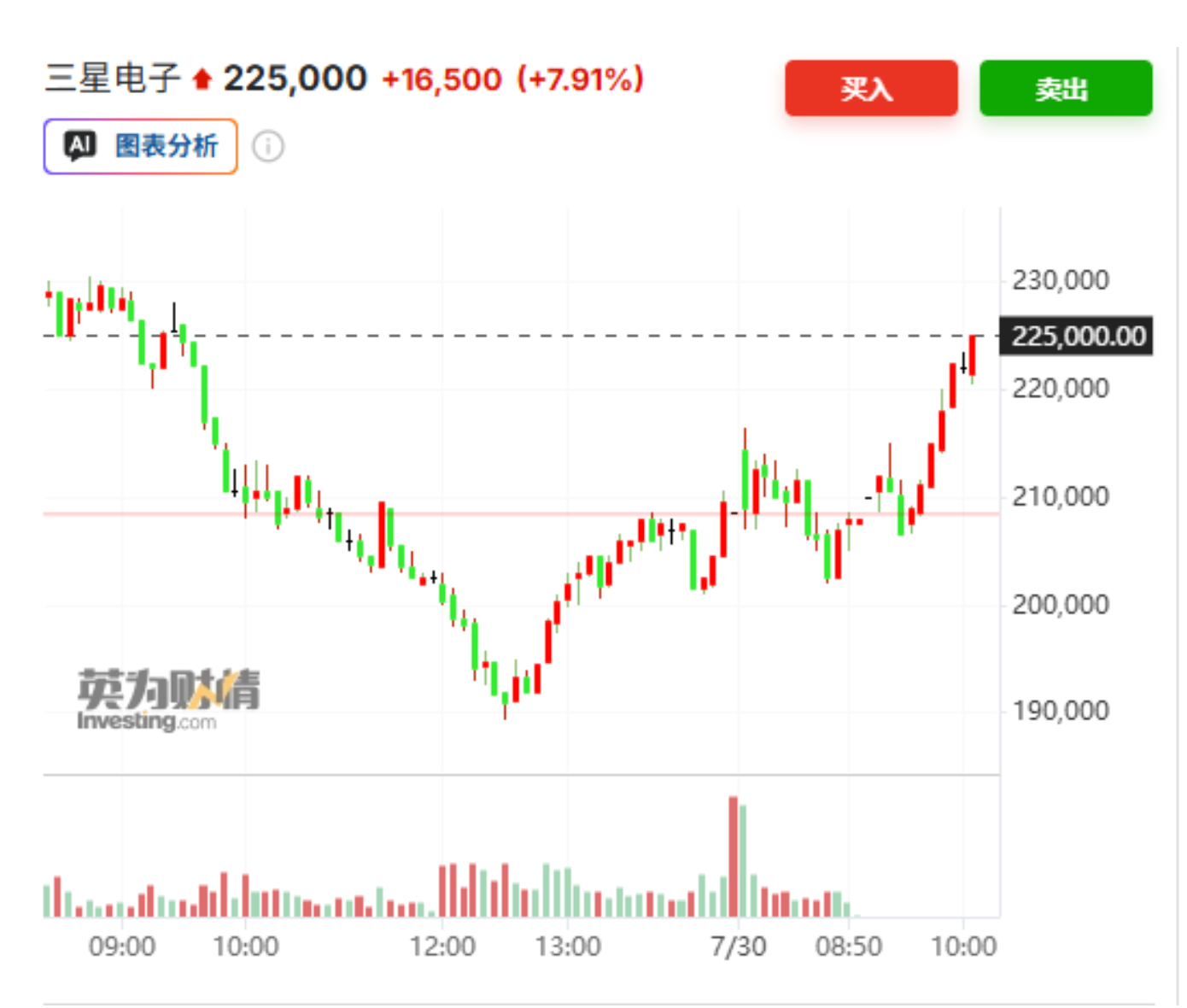
公告公布后,三星股价周四在首尔盘中一度上涨4.1%,但随后转跌1.9%,目前涨7.91%。
内存与HBM:AI浪潮下的超级周期,利润飙升250倍

内存业务是本季度最耀眼的亮点。

DS部门销售额从上季度的81.7万亿韩元跃升至127.5万亿韩元,环比增长56%;营业利润从53.7万亿韩元升至89.2万亿韩元,同比增长逾250倍,环比增长66%。DRAM与NAND均实现了历史最高出货量,服务器收入占比创下新纪录。

HBM(高带宽内存)方面,三星已完成HBM4的规模量产并向主要客户批量交货,同时完成了业界首批HBM4E样品的发货——这意味着三星在下一代AI加速器平台的竞争中率先卡位。DDR5、SOCAMM2等高附加值产品的持续放量,配合企业级SSD需求的强劲增长,使得整个内存市场依然处于供给偏紧的格局。

三星半导体部门的业绩大幅超预期,核心驱动力来自AI服务器对高带宽内存需求的爆发式增长。Counterpoint研究总监黄先生表示,三星的DRAM业务正持续扩大市场份额领先优势,"三星正利用其在存储器领域的强大地位,积极拓展其大部分业务部门的市场份额。"

展望下半年,三星预期AI基础设施资本支出维持强劲,Agentic AI的广泛落地将进一步拉动服务器DRAM与企业级SSD需求。尽管移动端和PC端需求存在阶段性软化,三星判断整体市场仍将维持供给不足状态,并计划围绕HBM4、Gen6及UFS 5.0持续巩固技术领先优势。

S.LSI与晶圆代工:双线突破,进击高端节点

系统半导体(S.LSI)部门在本季度创下上半年收入历史新高,SoC与图像传感器的强劲销售是主要拉动力。公司已成功锁定下一代旗舰SoC订单及新定制SoC设计合同,在高端移动市场的份额持续扩大。后续重点包括推动下一代旗舰SoC销售、拓展Custom SoC新业务,以及进入更多高价值领域,包括多元化图像传感器应用和Power IC业务。

晶圆代工(Foundry)业务同样呈现积极态势:HBM B-Die需求带动收入增长,来自美国客户的订单强劲,2nm HPC项目的设计合同持续推进。进入下半年,三星计划推进2nm Gen 2移动芯片的量产爬坡,4nm LPU的放量以及Base-Die出货扩大,并将目标锁定在实现两位数的营收增长,并通过先进节点与AI/HPC设计赢单推动中长期增长。

DX部门:消费端承压,成本侵蚀利润

与半导体的辉煌形成鲜明对比,DX部门在本季度录得-0.8万亿韩元的营业亏损。

移动业务(MX/NW)方面,智能手机营收为32.3万亿韩元,同比增长14%,旗舰机型与A系列的销售均表现稳健,Galaxy Z Fold8系列的发布也带来了新的增长点。但营业利润转负至-0.7万亿韩元,行业性零部件成本上涨是核心压力来源。公司正积极推进效率优化举措,并计划通过"智能眼镜"等新形态产品拓展AI体验生态。

VD/DA(影像显示与家电)部门营收为14.5万亿韩元,同比小幅增长,但营业利润接近盈亏平衡(-0.01万亿韩元)。空调需求拉动了DA部门收入,但成本压力依然构成拖累。下半年,三星计划以"Vision AI"为差异化标签,结合TV Plus内容和广告业务的扩展来提升整体盈利能力。

SDC与Harman:利润弹性改善

三星显示(SDC)在本季度呈现明显的边际改善。营收达到7.5万亿韩元,同比增长17%;营业利润从上季度的0.4万亿韩元回升至0.7万亿韩元。

高端智能手机OLED面板的旺盛需求是核心驱动力,游戏显示器市场的扩张也带动大尺寸面板业务同步受益。下半年,三星计划推进8.6G IT OLED产线的适时量产,并向平板、游戏及车载市场进一步扩大差异化产品供给。

VD/DA销售额14.5万亿韩元,环比增长2%、同比增长3%;营业利润为-0.01万亿韩元。VD由于成本增加导致环比盈利下降,但受体育赛事需求捕捉推动,收入和盈利同比增长。DA受空调需求推动收入增长,但成本压力拖累盈利。下半年,VD将依托“Vision AI”引领AI TV市场,并通过TV Plus内容多元化和广告业务扩张提升盈利;DA将扩大AI产品销售并强化渠道多元化和产品竞争力。

Harman(收购的高端音频与车载解决方案品牌)录得营收4.6万亿韩元,同比增长19%;营业利润回升至0.4万亿韩元。车载中央计算单元、便携式音频产品的旺销推动了整体表现的改善,公司后续将重点围绕高增长车载细分市场与品牌效应驱动的音频业务保持稳健增长。

资产负债表与现金流:财务实力大幅增厚

三星电子的财务状况随业绩的爆发显著改善。截至2026年6月末,总资产达759.5万亿韩元,较三个月前增长逾12万亿韩元;现金及等价物达到190万亿韩元,净现金头寸高达167.6万亿韩元,较去年同期的86.7万亿韩元近乎翻倍。

本季度经营活动现金流高达105.1万亿韩元,同样是历史最高水平,净利润对现金流的贡献已超过折旧摊销。ROE从一年前的5%跃升至56%,EBITDA利润率达到59%。

投资方面,本季度资本支出为14.1万亿韩元,三星同时斥资5.6万亿韩元回购库存股、6.2万亿韩元派发股息,显示出在强劲盈利支撑下对股东回报的持续重视。负债率维持在31%的低位,净债务/股本比为-29%,财务结构稳健。
Letture associate

Now the Greatest Regret Is to My Family: Crypto Experts Took a Stumble in the Stock Market

Summary: This article examines the significant losses recently suffered by cryptocurrency traders and influencers who ventured into the stock market, specifically by heavily investing in AI-related and semiconductor storage stocks. The narrative centers on the dramatic reversal in the Korean and US equity markets in late July, with stocks like SK Hynix and related leveraged ETFs experiencing historic plunges, erasing massive gains. The analysis highlights several key factors behind the "flip." Traders, accustomed to crypto's high volatility and frustrated by a stagnant market, chased the apparent momentum in AI-themed equities. Many made fatal mistakes: applying high-leverage strategies common in crypto (e.g., 2x ETFs, on-chain perpetual contracts) to stocks, and failing to understand the distinct rules of different stock markets (like Korean pre-market trading). This led to widespread liquidations, especially when a thin Korean pre-market trade triggered a cascading flash crash on a decentralized exchange. Post-crash reflections from prominent figures reveal deep regret and self-criticism. They acknowledge misjudging their expertise, overestimating their edge against sophisticated institutional players, and the dangers of leverage. The article concludes that while such setbacks are part of trading, surviving long-term requires recognizing one's limitations and the inherent risks of cross-market strategies.

marsbit19 min fa

Now the Greatest Regret Is to My Family: Crypto Experts Took a Stumble in the Stock Market

marsbit19 min fa

US Senate Makes Important Amendments to "Conflict of Interest" Section of Cryptocurrency Bill

The U.S. Senate has taken a key step regarding the CLARITY Act, which could shape the future of the U.S. crypto market. On July 29, Senators Tom Tillis and Ruben Gallego finalized amendments to the bill's "conflict of interest" rules, one of its most contentious aspects. The bipartisan bill aims to tighten restrictions on high-level federal officials' ties to digital assets. The new text, crafted as an alternative to a White House-endorsed ethics code, is expected to impose stricter rules limiting officials' ability to issue or directly participate in digital asset projects. However, with Congress entering an August recess and the revised text not yet reviewed by much of the Senate, the bill's timeline is uncertain. Senate Majority Leader John Thune indicated a procedural vote could occur between July 29 and August 1 but expressed doubt the full bill could pass before the break. The House-approved CLARITY Act, passed in July 2025, has been under Senate negotiation for over a year. Key goals of the CLARITY Act include clarifying jurisdictional boundaries between the SEC and CFTC, setting rules for digital commodity spot markets, and addressing topics like stablecoin yields, DeFi, and illicit financing. The stablecoin yield provisions could significantly impact U.S.-based DeFi protocols, exchanges, and issuers, affecting their global competitiveness. The outcome is being closely watched by both the U.S. and global digital asset markets.

cryptonews.ru1 h fa

US Senate Makes Important Amendments to "Conflict of Interest" Section of Cryptocurrency Bill

cryptonews.ru1 h fa

Pavel Durov Designated as a Terrorist in Russia. What Does This Mean for Telegram Users?

Pavel Durov, the founder of Telegram, has been added to Russia's list of terrorists and extremists by Rosfinmonitoring, as published on July 30. The entry includes his name and date of birth. The designation follows an announcement by the Russian Federal Security Service (FSB) on July 29, which charged Durov with aiding terrorist activity. The FSB alleges that a Telegram dating bot named "DaiVinchik" was used to recruit 46 individuals for attacks on police and arson, orchestrated by Ukrainian special services. The FSB also accuses Telegram's administration of failing to remove channels and bots used by Ukrainian intelligence and extremist groups. Durov is reportedly subject to an international arrest warrant. Inclusion on the Rosfinmonitoring list leads to significant restrictions: the freezing of Durov's bank accounts and assets, severe limitations on financial transactions, and a ban on election participation, media interaction, and event organization. Transfers to his accounts may be considered terrorism financing. For ordinary Russian Telegram users, purchasing Telegram Premium is not classified as financing terrorism, according to an IT expert. General use of the messenger—messaging, managing channels—does not automatically make a user a participant in extremist activity. There has been no official decision to ban Telegram itself. It is noted that French authorities are also investigating Durov over allegations of inadequate measures against criminal activity on the platform and insufficient cooperation with law enforcement. Durov denies all charges.

cryptonews.ru1 h fa

Pavel Durov Designated as a Terrorist in Russia. What Does This Mean for Telegram Users?

cryptonews.ru1 h fa

Trading

Spot
活动图片