Để mua thuốc giảm cân còn đang nghiên cứu, một nhóm người Mỹ học cách thanh toán bằng Bitcoin

marsbitPubblicato 2026-07-22Pubblicato ultima volta 2026-07-22

Introduzione

Một giám đốc tiếp thị 49 tuổi ở Mỹ, trước đây coi Bitcoin là tài sản đầu cơ thuần túy, đã tự học cách mua và chuyển Bitcoin để mua 20 lọ thuốc giảm cân thử nghiệm từ một người bán Trung Quốc với giá chỉ 240 USD/năm, rẻ hơn rất nhiều so với giá từ các nhà cung cấp trong nước. Câu chuyện này phản ánh một thị trường ngách đang phát triển: những người tiêu dùng bình thường sử dụng tiền điện tử, chủ yếu là Bitcoin, để mua các peptide chưa được FDA phê duyệt (như Retatrutide của Eli Lilly) từ các phòng thí nghiệm nước ngoài. Do các ngân hàng và mạng lưới thẻ tín dụng từ chối phục vụ những giao dịch có rủi ro pháp lý cao này, thanh toán bằng tiền mã hóa đã trở thành lựa chọn bắt buộc. Dữ liệu từ Chainalysis cho thấy lượng thanh toán bằng tiền mã hóa cho các peptide "xám" trong quý I/2026 đạt 32 triệu USD, tăng trưởng mạnh. Tuy nhiên, so với ước tính quy mô thị trường chợ đen tổng thể từ 1-3 tỷ USD, đây vẫn là một phần nhỏ. Mối liên hệ sâu hơn nằm ở sự chồng lấn giữa cộng đồng tiền mã hóa, giới "biohacker" và những người đam mê khoa học/decentralized science (DeSci), những người thường xuyên thảo luận và thử nghiệm các hợp chất này. Trong khi đó, FDA Mỹ đang xem xét việc hợp pháp hóa sản xuất một số peptide trong nước để đưa nhu cầu ra khỏi thị trường chợ đen. Nếu điều này xảy ra, nhu cầu về thanh toán bằng tiền điện tử trong lĩnh vực này có thể sẽ giảm đi đáng kể.

Bài gốc:Bloomberg

Biên dịch và tổng hợp:angelilu,Foresight News

Một giám đốc tiếp thị 49 tuổi người Mỹ, trước đây vẫn luôn cho rằng Bitcoin "không có giá trị nền tảng". Năm nay, anh ta đã dành vài ngày để mở tài khoản, mua tiền điện tử, chuyển tiền, chỉ để mua 20 lọ thuốc giảm cân vẫn đang trong giai đoạn thử nghiệm lâm sàng từ một người bán Trung Quốc. Bài báo ngày 20/7 của Bloomberg tiết lộ, loại giao dịch này đang hình thành một thị trường thanh toán bằng tiền điện tử, theo tốc độ hiện tại, khối lượng giao dịch một năm sẽ vượt quá 100 triệu đô la - và người mua phần lớn là những người tiêu dùng bình thường chưa từng tiếp xúc với tiền điện tử trước đây.

Một giao dịch chuyển tiền để tiết kiệm

Người mua được Bloomberg phỏng vấn tên là Zach, do lý do riêng tư không tiết lộ họ, đến từ khu vực Tây Bắc Thái Bình Dương của Mỹ. Anh ta muốn mua Retatrutide - một loại thuốc giảm cân đang nghiên cứu của công ty Eli Lilly, thuộc nhóm chất chủ vận ba thụ thể GIP, GLP-1 và glucagon, nói đơn giản là đánh vào nhiều mục tiêu hơn so với semaglutide, tirzepatide hiện có trên thị trường. Lilly công bố dữ liệu thử nghiệm lâm sàng giai đoạn 3 của nó vào tháng 3 năm nay, với mức giảm cân lên tới 28% trong 80 tuần ở liều cao nhất, nhưng loại thuốc này đến nay vẫn chưa được Cục Quản lý Thực phẩm và Dược phẩm Hoa Kỳ (FDA) phê duyệt, không thể mua được qua kênh chính thức.

Zach đã tìm kiếm vài tháng, cuối cùng tìm thấy một người bán Trung Quốc, đồng ý bán cho anh ta 20 lọ sản phẩm tự nhận là hợp chất này, tương đương lượng dùng một năm, tổng giá 240 đô la. Để so sánh, anh ta mua từ tay người bán lại ở Mỹ phải mất 300 đô la một tháng, một năm là 3600 đô la.

Điều kiện duy nhất là: chỉ nhận Bitcoin.

Theo mô tả của Bloomberg, Zach trước đây xếp Bitcoin vào loại tài sản đầu cơ thuần túy. Nhưng chênh lệch giá hơn chục lần đã khiến anh ta đổi ý - "Chênh lệch quá lớn, cảm thấy rủi ro này đáng để mạo hiểm". Người bán đã cho anh ta một trang web dạy cách mua và chuyển tiền điện tử, vài ngày sau anh ta đã mở tài khoản Coinbase, lần đầu tiên trong đời mua Bitcoin, chuyển cho đối phương, và một tuần sau nhận được bưu kiện.

Peptide là gì, và tại sao nó cần thanh toán bằng tiền điện tử

Peptide là chuỗi axit amin ngắn, tham gia điều chỉnh nhiều quá trình sinh lý của cơ thể con người. Hai năm gần đây nó cùng với cơn sốt thuốc giảm cân bước vào tầm mắt công chúng - các loại thuốc tiêm như semaglutide (Wegovy), tirzepatide (Zepbound) đã được thử nghiệm lâm sàng đầy đủ và được phê duyệt, bản thân chúng là thuốc peptide.

Nhưng ngoài những loại thuốc đã được phê duyệt, một lượng lớn sản phẩm cùng loại chưa được xác minh đầy đủ về độ an toàn và hiệu quả trên người đang được lưu thông trên mạng, thường được bán dưới danh nghĩa "hóa chất nghiên cứu" (research chemicals), trên bao bì ghi rõ là chưa được FDA phê duyệt, không dùng cho người hoặc động vật. Chúng được gửi trực tiếp từ phòng thí nghiệm nước ngoài, không cần đơn thuốc, cũng không qua bảo hiểm.

Do tác dụng sức khỏe được tuyên bố của sản phẩm chưa được chứng minh, rủi ro pháp lý và quản lý quá cao, ngân hàng và mạng lưới thẻ tín dụng thường không muốn cung cấp dịch vụ cho loại người bán này. Sau khi bị hệ thống thanh toán từ chối, ngày càng nhiều người bán chỉ nhận Bitcoin.

Cần nói rõ, thanh toán bằng tiền điện tử nội bộ cũng có phân tầng: Dữ liệu được Bloomberg dẫn cho thấy, trong số những người bán có giá trị đơn hàng trung bình trên 1000 đô la, stablecoin đã vượt qua Bitcoin trở thành lựa chọn hàng đầu; còn ở đầu hướng đến khách hàng lẻ nhỏ như Zach, Bitcoin vẫn là chủ đạo.

Quy mô đang tăng, nhưng tổng thể không lớn

Dữ liệu từ công ty phân tích blockchain Chainalysis cho thấy, trong quý 1 năm 2026, các khoản thanh toán bằng tiền điện tử mà những người bán peptide xám nhận được đạt 32 triệu đô la, tăng 700% so với cùng kỳ (tăng 159% so với quý trước đó là 12 triệu đô la). Tính theo tốc độ vài tháng gần đây, quy mô theo năm đã vượt quá 100 triệu đô la.
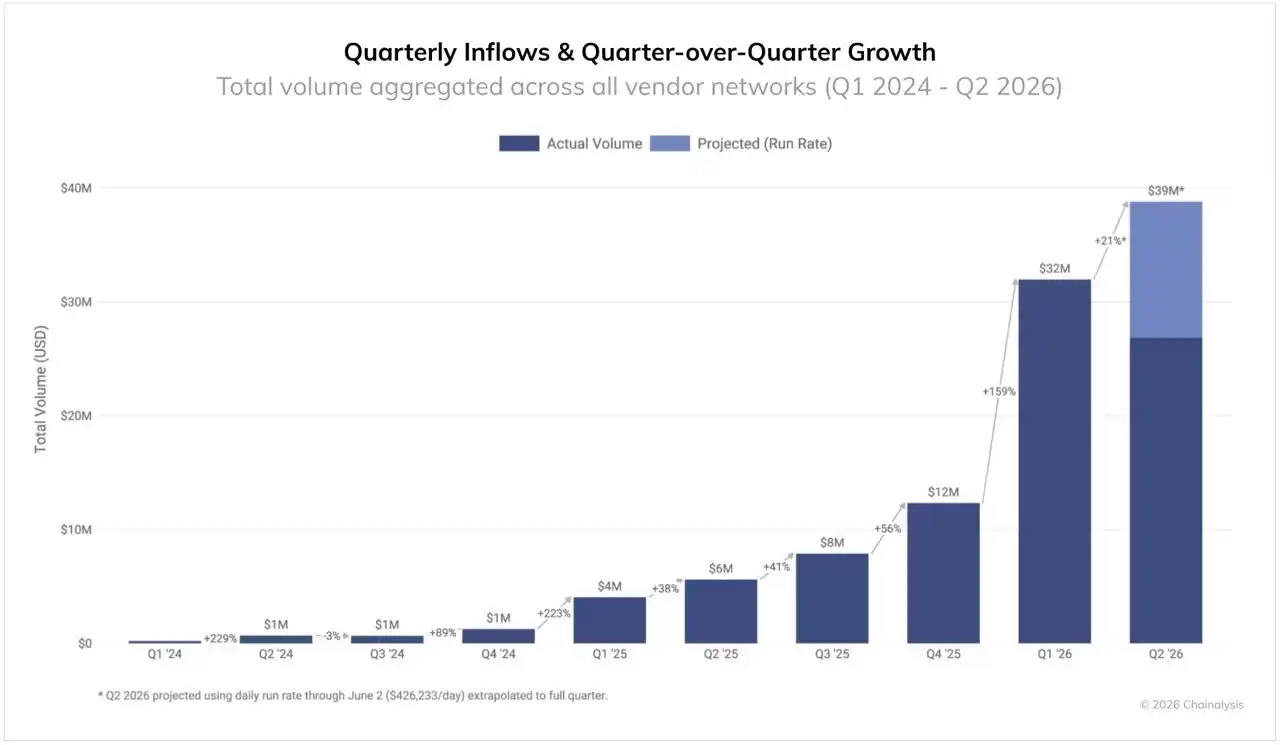
Công ty an ninh TRM Labs sử dụng phương pháp khác - kết hợp phân tích trên chuỗi với điều tra thông tin công khai về các nhà sản xuất tiền chất thuốc - thống kê được năm 2025 dòng tiền điện tử vào lĩnh vực này là 41,4 triệu đô la, tăng 20% so với cùng kỳ.

Giám đốc Chính sách Toàn cầu của TRM Labs Ari Redbord nhận định, "Thị trường này rất lớn và đang mở rộng, tôi không chắc trên thế giới còn thị trường dược phẩm nào phát triển nhanh như peptide."

Điều này phác họa ra một khung cảnh khá kịch tính: những người thường xuyên đến phòng gym, người nghe podcast, người trung niên muốn giảm cân, những nhóm nhân khẩu học này bị liên kết với người mua sản phẩm xám.

Mặc dù đang tăng trưởng, nhưng theo ước tính của các nhà đầu tư trong ngành, toàn bộ quy mô thị trường chợ đen peptide là từ 1 đến 3 tỷ đô la. Khối lượng sử dụng tiền điện tử làm phương thức thanh toán vẫn còn rất nhỏ.

Một quán bar được trang trí bằng đồ lưu niệm tiền điện tử

Khung cảnh thú vị nhất trong bài báo của Bloomberg, diễn ra ở một góc quán bar tại Manhattan - tường treo đầy đồ lưu niệm tiền điện tử, hơn một trăm người chen chúc trong căn phòng ngột ngạt, lắng nghe một bài giảng về peptide.

Đơn vị tổ chức là DeSciNYC, một cuộc gặp mặt offline hàng tháng của những người yêu thích khoa học, khẩu hiệu là "Khoa học thuộc về mọi người". Các chủ đề trước đây của nó bao gồm: Trường thọ, chỉnh sửa gen CRISPR, AI và Khoa học, hệ vi sinh vật, điện sinh học, gấu nước, chuyển hóa tế bào, gian lận xuất bản học thuật, thị trường dự đoán, v.v.

Buổi có chủ đề peptide này có tên "Peptides 101", người trình bày chính là Julius Ritter, hơn hai mươi tuổi, người sáng lập California Peptide Club, đồng thời điều hành một công ty giao đồ ăn theo chủ đề trường thọ, vận hành một hackathon house ở San Francisco. Anh ta dùng một giờ để nói về hóa học peptide, công dụng tiềm năng, một số rủi ro và vài sản phẩm cụ thể, cuối cùng xắn áo phông đen lên và tự tiêm cho mình ngay tại chỗ, nhận được tràng pháo tay tán thưởng.

Khung cảnh này nói lên điều trực tiếp hơn dữ liệu thanh toán: sự kết nối giữa tiền điện tử và thị trường này không chỉ là một kênh thanh toán, mà là cùng một nhóm người. Các cộng đồng DeSci, trường thọ, biohacker, tối ưu hóa bản thân thể hình vốn đã chồng chéo cao độ, cộng đồng tiền điện tử là khách thường xuyên trong đó.

Quản lý đang hành động, trường hợp sử dụng này có thể biến mất

Đáng chú ý là, phía Mỹ đang đi theo hướng "hợp pháp hóa".

FDA đang triệu tập ủy ban cố vấn, thảo luận xem có cho phép sản xuất hợp pháp một số peptide phổ biến trong nội địa Mỹ hay không. Bộ trưởng Bộ Y tế và Dịch vụ Nhân sinh Hoa Kỳ Robert F. Kennedy Jr. công khai ủng hộ hướng đi này, lý do là hợp pháp hóa "giúp chuyển hướng nhu cầu khỏi thị trường chợ đen". Chủ tịch Hiệp hội Y học Peptide Mỹ ủng hộ quản lý Lee Rosebush đã dùng cụm từ "miền Tây hoang dã" để mô tả tình trạng thị trường hiện tại, ông cho rằng các quy tắc nghiêm ngặt hơn thậm chí có thể loại bỏ các nhà sản xuất "chỉ dành cho nghiên cứu", giúp bệnh nhân dễ dàng tiếp cận thuốc an toàn hơn.

Nếu con đường này thành công, vị trí của thanh toán bằng tiền điện tử trên thị trường này sẽ trở nên khó xử - thị phần của nó ngày nay, phần lớn là khoảng trống do sự vắng mặt của hệ thống thanh toán truyền thống để lại.

Bản thân Zach dự định rút lui. Anh ta nói mình đã đạt được cân nặng mục tiêu.

Crypto di tendenza

Domande pertinenti

QTại sao người mua người Mỹ lại phải học cách sử dụng Bitcoin để mua thuốc giảm cân đang nghiên cứu?

AHọ phải học dùng Bitcoin vì những người bán hàng từ Trung Quốc, nơi cung cấp các loại peptide (chất nghiên cứu hóa học chưa được FDA phê duyệt) với giá rẻ hơn nhiều, thường chỉ chấp nhận thanh toán bằng Bitcoin. Hệ thống thanh toán truyền thống như ngân hàng và mạng lưới thẻ tín dụng thường từ chối phục vụ những người bán này do rủi ro pháp lý và quy định cao.

QThị trường thanh toán bằng tiền mã hóa cho các peptide xám có quy mô như thế nào theo bài báo?

ATheo dữ liệu từ Chainalysis, thanh toán bằng tiền mã hóa cho các nhà bán peptide xám đạt 32 triệu USD trong quý 1/2026, tăng 700% so với cùng kỳ. Nếu duy trì tốc độ gần đây, quy mô hàng năm hóa đã vượt quá 100 triệu USD. Tuy nhiên, trong tổng thể thị trường chợ đen peptide ước tính từ 10 đến 30 tỷ USD, thanh toán bằng tiền mã hóa vẫn chỉ chiếm một phần nhỏ.

QSự kiện DeSciNYC được mô tả trong bài báo cho thấy điều gì về mối liên hệ giữa tiền mã hóa và thị trường peptide?

ASự kiện DeSciNYC, một buổi gặp mặt hàng tháng về khoa học với chủ đề peptide, được tổ chức tại một quán bar trang trí đầy kỷ vật tiền mã hóa, cho thấy mối liên hệ giữa hai cộng đồng không chỉ dừng ở thanh toán. Các nhóm DeSci (Khoa học phi tập trung), người theo trường phái sinh học hacker (biohacker), tối ưu hóa bản thân và thể hình có sự giao thoa đáng kể, và cộng đồng tiền mã hóa là một phần phổ biến trong đó.

QTương lai của việc thanh toán bằng tiền mã hóa trong thị trường peptide có thể thay đổi ra sao theo bài báo?

ABài báo chỉ ra rằng nếu FDA Mỹ tiến tới việc hợp pháp hóa một số peptide nhất định để sản xuất trong nước, vị thế của thanh toán tiền mã hóa có thể trở nên khó xử. Vị thế hiện tại của nó chủ yếu là do sự vắng mặt của hệ thống thanh toán truyền thống. Khi sản phẩm có thể được mua bán hợp pháp qua các kênh thông thường, nhu cầu sử dụng tiền mã hóa cho mục đích này có thể giảm hoặc biến mất.

QNhân vật Zach trong bài báo đã có trải nghiệm thế nào với Bitcoin và việc mua peptide?

AZach, một giám đốc tiếp thị 49 tuổi người Mỹ, ban đầu coi Bitcoin là tài sản đầu cơ thuần túy. Tuy nhiên, để mua 20 lọ thuốc giảm cân đang nghiên cứu từ một người bán Trung Quốc với giá chỉ 240 USD/năm (rẻ hơn rất nhiều so với giá 3600 USD/năm từ người bán trong nước), ông đã học cách mở tài khoản Coinbase, mua Bitcoin và chuyển tiền lần đầu tiên. Sau đó một tuần, ông nhận được hàng và cho biết đã đạt được cân nặng mục tiêu, đồng thời dự định ngừng sử dụng.

Letture associate

Annual Salary of Millions Competing for Electricians, Meta Rushes to Open Its Own Technical School

The AI boom is facing an unexpected bottleneck: a severe shortage of skilled construction workers and electricians. As tech giants like Meta, OpenAI, and Alphabet race to build massive data centers—such as OpenAI's $16 billion "Stargate" project—they are hitting a critical labor wall. The U.S. needs an estimated 130,000 more electricians, 240,000 construction workers, and 150,000 supervisors by 2030 for AI infrastructure alone, but tens of thousands of electrician jobs go unfilled each year. While AI companies offer high premiums, with electricians earning up to $280,000 annually, worker scarcity still causes massive losses—delays on a single project can cost $14.2 million per month. The complexity of building AI data centers, which require immense power (equivalent to powering hundreds of thousands of homes), sophisticated electrical systems, and advanced liquid cooling solutions, demands highly skilled technicians who are in short supply. To combat this, companies are investing heavily in training. Meta has committed $115 million to a free training school offering tuition, housing, and stipends, targeting 5,000 new workers. OpenAI is partnering with unions to secure skilled labor. These efforts are paying off, with a significant rise in Gen Z interest in trade schools over college. However, the power demands are staggering. AI data centers are driving a rapid surge in electricity consumption, projected to account for up to 12% of U.S. power use by 2028 and raising costs for consumers. Furthermore, the construction boom is project-based, leading to a potential future glut of trained workers once building peaks, which could depress wages industry-wide. The race for AI supremacy now depends as much on skilled hands as on advanced chips.

marsbit17 min fa

Annual Salary of Millions Competing for Electricians, Meta Rushes to Open Its Own Technical School

marsbit17 min fa

OpenAI No Longer Sells Its Most Expensive Model for Profit

OpenAI is shifting its business strategy away from promoting its most expensive, flagship models for every task. Recent price cuts—80% for GPT-5.6 Luna and 20% for Terra—signal a deeper change: the company now actively advises users that many tasks don't require the most powerful model. Instead, OpenAI recommends a tiered approach: use the high-end GPT-5.6 Sol for complex planning and analysis, then delegate execution to cheaper models like Luna. This mirrors moves by Anthropic, which recently launched Claude Opus 5 at half the price of its top model, Fable 5. Both companies are de-emphasizing flagship models as primary revenue drivers, using them instead for brand prestige and technological showcases. The industry is entering a "mass-market" phase, similar to automotive, where high-volume, cost-effective models handle daily operations and drive scale. OpenAI's price reductions are partly enabled by AI models themselves optimizing underlying code and infrastructure, creating a self-reinforcing cycle of efficiency gains and cost reduction. Competition is shifting from "who is smartest" to "who offers the best value." The goal is no longer selling individual models but fostering widespread API adoption and ecosystem lock-in. By making AI calls cheap and ubiquitous, companies like OpenAI aim to become the indispensable, utility-like infrastructure powering automated workflows—the "water and electricity" of software, quietly embedded everywhere.

marsbit17 min fa

OpenAI No Longer Sells Its Most Expensive Model for Profit

marsbit17 min fa

Will the Fed Definitely Raise Interest Rates in September? How Will Crypto and U.S. Stocks Withstand the Pressure?

The market's expectation for a September Fed rate hike surged dramatically in early August, jumping from under 50% to over 80% within a week. This shift followed a contentious July FOMC meeting, where a 9-3 vote to hold rates revealed growing dissent from hawkish members advocating for an immediate hike to combat persistent inflation. The primary catalyst for this repricing is rising oil prices, driven by renewed geopolitical tensions around the Strait of Hormuz, which threaten global supply. Energy costs directly influence inflation metrics, making the upcoming July CPI report (due August 12th) a critical data point. If it shows inflation reaccelerating, the probability of a September hike will solidify. For Bitcoin and crypto assets, this is typically bearish news. Bitcoin continues to behave as a high-beta, liquidity-sensitive risk asset. A rate hike raises the opportunity cost of holding non-yielding assets and could drive capital toward money markets, pressuring crypto prices in the short term. However, historical patterns suggest that if a hike is perceived as the end of a tightening cycle rather than the start, any negative price impact may be brief. U.S. stocks, particularly crypto-linked equities like Coinbase and growth-oriented tech stocks, are also vulnerable. Higher rates increase discount rates in valuation models, putting pressure on high-multiple companies. This coincides with a pivotal tech earnings season where investor focus has shifted from massive AI capital expenditure to tangible revenue and cash flow generation. Companies with negative cash flow and weak growth narratives could face heightened volatility if borrowing costs rise in September. In summary, a September Fed hike has evolved into a mainstream market scenario. Key factors to watch are oil prices, the July CPI report, and Fed communications, which will determine the final decision and its impact on volatile crypto and equity markets.

marsbit28 min fa

Will the Fed Definitely Raise Interest Rates in September? How Will Crypto and U.S. Stocks Withstand the Pressure?

marsbit28 min fa

Trading

Spot

Articoli Popolari

Cosa è BITCOIN

Comprendere HarryPotterObamaSonic10Inu (ERC-20) e la sua posizione nel mondo delle criptovalute Negli ultimi anni, il mercato delle criptovalute ha assistito a un aumento della popolarità delle meme coin, catturando l'interesse non solo dei trader, ma anche di coloro che cercano coinvolgimento comunitario e valore di intrattenimento. Tra questi token unici c'è HarryPotterObamaSonic10Inu (ERC-20), un progetto intrigante che mescola riferimenti culturali nel tessuto delle criptovalute. Questo articolo esplora gli aspetti chiave di HarryPotterObamaSonic10Inu, analizzando i suoi meccanismi, l'etica guidata dalla comunità e il suo coinvolgimento con il panorama crittografico più ampio. Che cos'è HarryPotterObamaSonic10Inu (ERC-20)? Come suggerisce il suo nome, HarryPotterObamaSonic10Inu è una meme coin costruita sulla blockchain di Ethereum, classificata secondo lo standard ERC-20. A differenza delle criptovalute tradizionali che possono enfatizzare l'utilità pratica o il potenziale investimento, questo token prospera grazie al valore di intrattenimento e alla forza della sua comunità. Il progetto mira a creare un ambiente in cui gli utenti coinvolti possono riunirsi, condividere idee e partecipare ad attività ispirate a diversi fenomeni culturali. Una caratteristica notevole di HarryPotterObamaSonic10Inu è la zero tassa sulle transazioni. Questo elemento allettante tende a incoraggiare il trading e il coinvolgimento della comunità, privo di costi aggiuntivi che possono scoraggiare i trader di piccole dimensioni. L'offerta totale della moneta è fissata a un miliardo di token, un numero che segna la sua intenzione di mantenere una circolazione sostanziale all'interno della comunità. Creatore di HarryPotterObamaSonic10Inu (ERC-20) Le origini di HarryPotterObamaSonic10Inu sono avvolte in un certo mistero; i dettagli sul creatore rimangono sconosciuti. Lo sviluppo di questo token non presenta un team identificabile o un piano esplicito, cosa non rara nel settore delle meme coin. Invece, il progetto è emerso organicamente, con il suo progresso fortemente dipendente dall'entusiasmo e dalla partecipazione della sua comunità. Investitori di HarryPotterObamaSonic10Inu (ERC-20) Per quanto riguarda investimenti esterni e finanziamenti, HarryPotterObamaSonic10Inu rimane ambiguo. Il token non elenca alcuna fondazione di investimento conosciuta o un sostegno organizzativo significativo. Invece, la linfa vitale del progetto è la sua comunità di base, che informa la sua crescita e sostenibilità attraverso azioni collettive e coinvolgimento nello spazio crittografico. Come funziona HarryPotterObamaSonic10Inu (ERC-20)? In quanto meme coin, HarryPotterObamaSonic10Inu opera principalmente al di fuori delle strutture tradizionali che governano spesso il valore degli asset. Ci sono diversi aspetti distintivi che definiscono il funzionamento del progetto: Transazioni senza tasse: Senza costi fiscali sulle transazioni, gli utenti possono comprare e vendere liberamente il token senza preoccuparsi di costi nascosti. Coinvolgimento della comunità: Il progetto prospera sull'interazione della comunità, sfruttando le piattaforme social per creare entusiasmo e facilitare il coinvolgimento. Discussioni, condivisione di contenuti e coinvolgimento sono elementi cruciali che aiutano ad espandere la sua portata e a favorire la lealtà tra i sostenitori. Nessuna utilità pratica: Va notato che HarryPotterObamaSonic10Inu non offre un'utilità concreta all'interno dell'ecosistema finanziario. Piuttosto, è classificato come un token principalmente per attività di intrattenimento e comunitarie. Riferimento culturale: Il token incorpora astutamente elementi della cultura pop per attirare interesse, collegandosi a appassionati di meme e seguaci delle criptovalute. HarryPotterObamaSonic10Inu esemplifica come le meme coin operino in modo diverso rispetto ai progetti di criptovalute più tradizionali, entrando nel mercato come costrutti sociali innovativi piuttosto che come asset utilitari. Cronologia di HarryPotterObamaSonic10Inu (ERC-20) La storia di HarryPotterObamaSonic10Inu è segnata da diversi traguardi notevoli: Creazione: Il token è emerso da un meme virale, catturando l'immaginazione di molti appassionati di criptovalute. Le date di creazione specifiche non sono disponibili, sottolineando la sua crescita organica. Inserimento negli scambi: HarryPotterObamaSonic10Inu ha fatto il suo ingresso in vari scambi, consentendo un accesso e un trading più facili da parte della comunità. Iniziative di coinvolgimento della comunità: Attività in corso volte a migliorare l'interazione della comunità, comprese gare, campagne sui social media e generazione di contenuti da parte di fan e sostenitori. Piani di espansione futura: La tabella di marcia del progetto include il lancio di una collezione NFT, merchandising e un sito di eCommerce relativo ai suoi temi culturali, coinvolgendo ulteriormente la comunità e cercando di aggiungere più dimensioni al suo ecosistema. Punti chiave su HarryPotterObamaSonic10Inu (ERC-20) Natura guidata dalla comunità: Il progetto dà priorità al contributo collettivo e alla creatività, garantendo che il coinvolgimento degli utenti sia al centro del suo sviluppo. Classificazione come meme coin: Rappresenta l'epitome delle criptovalute basate sull'intrattenimento, distinguendosi dai veicoli d'investimento tradizionali. Nessuna affiliazione diretta con Bitcoin: Nonostante la somiglianza nel nome del ticker, HarryPotterObamaSonic10Inu è distintivo e non ha alcuna relazione con Bitcoin o altre criptovalute consolidate. Focus sulla collaborazione: HarryPotterObamaSonic10Inu è progettato per creare uno spazio per la collaborazione e la condivisione di storie tra i suoi detentori, fornendo un canale per la creatività e il legame comunitario. Prospettive future: L'ambizione di espandersi oltre il suo presupposto iniziale verso NFT e merchandising delinea un percorso per il progetto per potenzialmente entrare in strade più mainstream all'interno della cultura digitale. Poiché le meme coin continuano a catturare l'immaginazione della comunità crittografica, HarryPotterObamaSonic10Inu (ERC-20) si distingue per i suoi legami culturali e il suo approccio centrato sulla comunità. Anche se potrebbe non adattarsi al modello tipico di un token orientato all'utilità, la sua essenza risiede nella gioia e nella camaraderia coltivate tra i suoi sostenitori, evidenziando la natura in evoluzione delle criptovalute in un'epoca sempre più digitale. Con la continuazione dello sviluppo del progetto, sarà importante osservare come le dinamiche della comunità influenzano la sua traiettoria nel panorama in continuo cambiamento della tecnologia blockchain.

2.0k Totale visualizzazioniPubblicato il 2024.04.01Aggiornato il 2024.12.03

Cosa è BITCOIN

Come comprare BTC

Benvenuto in HTX.com! Abbiamo reso l'acquisto di Bitcoin (BTC) semplice e conveniente. Segui la nostra guida passo passo per intraprendere il tuo viaggio nel mondo delle criptovalute.Step 1: Crea il tuo Account HTXUsa la tua email o numero di telefono per registrarti il tuo account gratuito su HTX. Vivi un'esperienza facile e sblocca tutte le funzionalità,Crea il mio accountStep 2: Vai in Acquista crypto e seleziona il tuo metodo di pagamentoCarta di credito/debito: utilizza la tua Visa o Mastercard per acquistare immediatamente BitcoinBTC.Bilancio: Usa i fondi dal bilancio del tuo account HTX per fare trading senza problemi.Terze parti: abbiamo aggiunto metodi di pagamento molto utilizzati come Google Pay e Apple Pay per maggiore comodità.P2P: Fai trading direttamente con altri utenti HTX.Over-the-Counter (OTC): Offriamo servizi su misura e tassi di cambio competitivi per i trader.Step 3: Conserva Bitcoin (BTC)Dopo aver acquistato Bitcoin (BTC), conserva nel tuo account HTX. In alternativa, puoi inviare tramite trasferimento blockchain o scambiare per altre criptovalute.Step 4: Scambia Bitcoin (BTC)Scambia facilmente Bitcoin (BTC) nel mercato spot di HTX. Accedi al tuo account, seleziona la tua coppia di trading, esegui le tue operazioni e monitora in tempo reale. Offriamo un'esperienza user-friendly sia per chi ha appena iniziato che per i trader più esperti.

4.4k Totale visualizzazioniPubblicato il 2024.12.12Aggiornato il 2026.06.02

Come comprare BTC

Cosa è $BITCOIN

ORO DIGITALE ($BITCOIN): Un'Analisi Completa Introduzione all'ORO DIGITALE ($BITCOIN) L'ORO DIGITALE ($BITCOIN) è un progetto basato su blockchain che opera sulla rete Solana, con l'obiettivo di combinare le caratteristiche dei metalli preziosi tradizionali con l'innovazione delle tecnologie decentralizzate. Sebbene condivida un nome con Bitcoin, spesso definito “oro digitale” a causa della sua percezione come riserva di valore, l'ORO DIGITALE è un token separato progettato per creare un ecosistema unico all'interno del panorama Web3. Il suo obiettivo è posizionarsi come un asset digitale alternativo valido, anche se i dettagli riguardanti le sue applicazioni e funzionalità sono ancora in fase di sviluppo. Cos'è l'ORO DIGITALE ($BITCOIN)? L'ORO DIGITALE ($BITCOIN) è un token di criptovaluta esplicitamente progettato per l'uso sulla blockchain di Solana. A differenza di Bitcoin, che fornisce un ruolo di stoccaggio di valore ampiamente riconosciuto, questo token sembra concentrarsi su applicazioni e caratteristiche più ampie. Aspetti notevoli includono: Infrastruttura Blockchain: Il token è costruito sulla blockchain di Solana, nota per la sua capacità di gestire transazioni ad alta velocità e a basso costo. Dinamiche di Offerta: L'ORO DIGITALE ha un'offerta massima fissata a 100 quadrilioni di token (100P $BITCOIN), sebbene i dettagli riguardanti la sua offerta circolante siano attualmente non divulgati. Utilità: Sebbene le funzionalità precise non siano esplicitamente delineate, ci sono indicazioni che il token potrebbe essere utilizzato per varie applicazioni, potenzialmente coinvolgendo applicazioni decentralizzate (dApp) o strategie di tokenizzazione degli asset. Chi è il Creatore dell'ORO DIGITALE ($BITCOIN)? Attualmente, l'identità dei creatori e del team di sviluppo dietro l'ORO DIGITALE ($BITCOIN) rimane sconosciuta. Questa situazione è tipica tra molti progetti innovativi nel settore blockchain, in particolare quelli allineati con la finanza decentralizzata e i fenomeni delle meme coin. Sebbene tale anonimato possa favorire una cultura guidata dalla comunità, intensifica le preoccupazioni riguardo alla governance e alla responsabilità. Chi sono gli Investitori dell'ORO DIGITALE ($BITCOIN)? Le informazioni disponibili indicano che l'ORO DIGITALE ($BITCOIN) non ha alcun sostenitore istituzionale noto o investimenti di venture capital prominenti. Il progetto sembra operare su un modello peer-to-peer incentrato sul supporto e sull'adozione della comunità piuttosto che su percorsi di finanziamento tradizionali. La sua attività e liquidità si trovano principalmente su exchange decentralizzati (DEX), come PumpSwap, piuttosto che su piattaforme di trading centralizzate consolidate, evidenziando ulteriormente il suo approccio di base. Come Funziona l'ORO DIGITALE ($BITCOIN) Le meccaniche operative dell'ORO DIGITALE ($BITCOIN) possono essere elaborate in base al suo design blockchain e alle caratteristiche della rete: Meccanismo di Consenso: Sfruttando il proof-of-history (PoH) unico di Solana combinato con un modello di proof-of-stake (PoS), il progetto garantisce una validazione efficiente delle transazioni contribuendo all'alta performance della rete. Tokenomics: Sebbene meccanismi deflazionistici specifici non siano stati dettagliati ampiamente, l'ampia offerta massima di token implica che potrebbe soddisfare microtransazioni o casi d'uso di nicchia che devono ancora essere definiti. Interoperabilità: Esiste il potenziale per l'integrazione con l'ecosistema più ampio di Solana, inclusi vari piattaforme di finanza decentralizzata (DeFi). Tuttavia, i dettagli riguardanti integrazioni specifiche rimangono non specificati. Cronologia degli Eventi Chiave Ecco una cronologia che evidenzia traguardi significativi riguardanti l'ORO DIGITALE ($BITCOIN): 2023: Il dispiegamento iniziale del token avviene sulla blockchain di Solana, contrassegnato dal suo indirizzo di contratto. 2024: L'ORO DIGITALE guadagna visibilità poiché diventa disponibile per il trading su exchange decentralizzati come PumpSwap, consentendo agli utenti di scambiarlo contro SOL. 2025: Il progetto assiste a un'attività di trading sporadica e a un potenziale interesse per impegni guidati dalla comunità, sebbene non siano state documentate partnership significative o avanzamenti tecnici fino ad ora. Analisi Critica Punti di Forza Scalabilità: L'infrastruttura sottostante di Solana supporta alti volumi di transazioni, il che potrebbe migliorare l'utilità di $BITCOIN in vari scenari di transazione. Accessibilità: Il potenziale basso prezzo di trading per token potrebbe attrarre investitori al dettaglio, facilitando una partecipazione più ampia grazie a opportunità di proprietà frazionata. Rischi Mancanza di Trasparenza: L'assenza di sostenitori, sviluppatori o di un processo di audit pubblicamente noti potrebbe generare scetticismo riguardo alla sostenibilità e all'affidabilità del progetto. Volatilità del Mercato: L'attività di trading è fortemente dipendente dal comportamento speculativo, il che può comportare una significativa volatilità dei prezzi e incertezze per gli investitori. Conclusione L'ORO DIGITALE ($BITCOIN) emerge come un progetto intrigante ma ambiguo all'interno dell'evolvente ecosistema di Solana. Sebbene tenti di sfruttare la narrativa dell'“oro digitale”, la sua partenza dal ruolo consolidato di Bitcoin come riserva di valore sottolinea la necessità di una chiara differenziazione della sua utilità e struttura di governance. L'accettazione e l'adozione future dipenderanno probabilmente dall'affrontare l'attuale opacità e dalla definizione più esplicita delle sue strategie operative ed economiche. Nota: Questo rapporto comprende informazioni sintetizzate disponibili a ottobre 2023, e potrebbero essersi verificati sviluppi oltre il periodo di ricerca.

275 Totale visualizzazioniPubblicato il 2025.05.13Aggiornato il 2025.05.13

Cosa è $BITCOIN

Discussioni

Benvenuto nella Community HTX. Qui puoi rimanere informato sugli ultimi sviluppi della piattaforma e accedere ad approfondimenti esperti sul mercato. Le opinioni degli utenti sul prezzo di BTC BTC sono presentate come di seguito.

活动图片














