Prompt Engineering Paper Accepted at ICML 2026 Sparks Heated Debate Among Netizens

marsbitPubblicato 2026-07-15Pubblicato ultima volta 2026-07-15

Introduzione

A paper on prompt engineering, titled "Verbalized Sampling (VS)," has been accepted by the prestigious machine learning conference ICML 2026, sparking significant debate online. The paper addresses the problem of "mode collapse" in large language models (LLMs), where models tend to produce repetitive, safe, and homogeneous outputs. Instead of proposing new training algorithms or model architectures, the authors introduce a simple yet effective prompt-based method. The core technique, Verbalized Sampling, instructs the model to generate multiple responses (e.g., five jokes) while also outputting a possible probability value for each. This prompt adjustment alone was shown to significantly increase output diversity by 1.6x to 2.1x in creative writing tasks, without compromising factual accuracy or safety. The authors argue that the root cause of mode collapse lies not in optimization algorithms but in the "typicality bias" present in human preference data used for alignment. Human annotators naturally favor familiar and fluent text, which steers models toward conservative outputs. The VS method aims to counteract this by leveraging the model's inherent pre-training distribution during inference. The paper's acceptance has led to polarized reactions. Critics argue that prompt engineering lacks the theoretical depth and algorithmic innovation expected from top-tier conferences like ICML, questioning its novelty, generalizability across models, and experimental scale. Some draw...

Prompt engineering can get a paper published in ICML these days???

Recently, a guy shared a paper just accepted by ICML 2026 on Reddit, and the post instantly went viral, with the number of comments skyrocketing.

However, everyone was left scratching their heads: Is this for real?
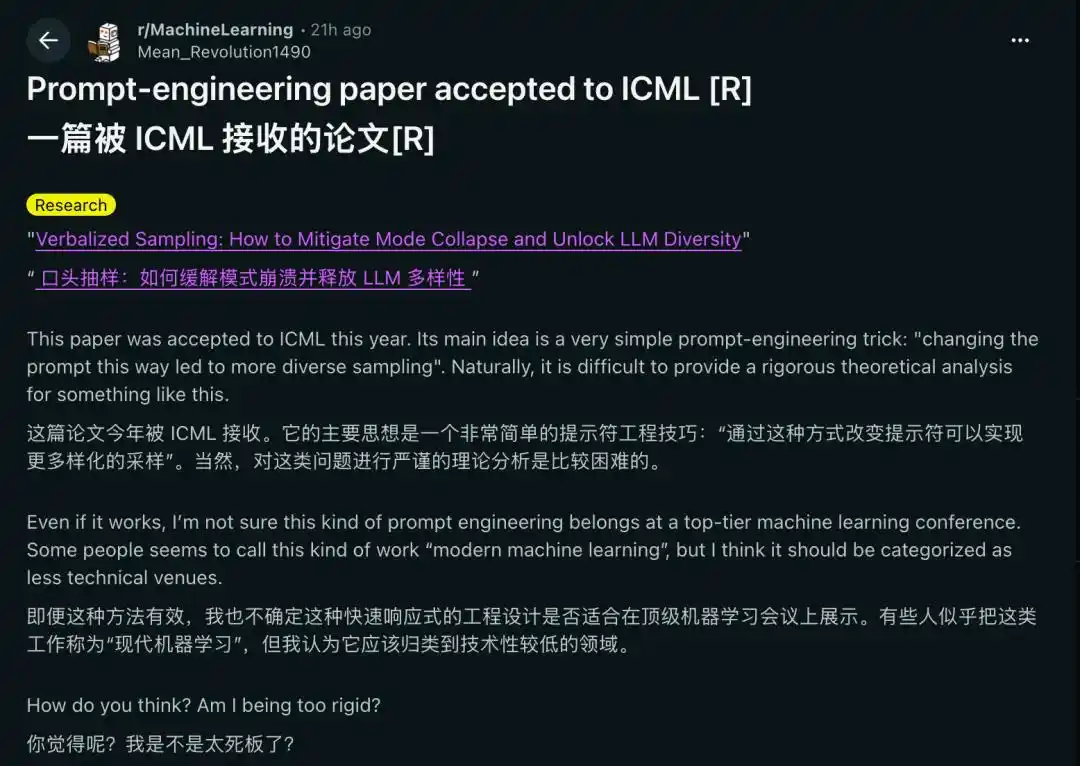
The authors didn't propose any new optimization algorithms or train any new large models. They simply did one thing—

Modified the Prompt.

The paper proposes a method called Verbalized Sampling (VS), which significantly enhances the diversity of large language model outputs and alleviates the long-standing issue of Mode Collapse in LLMs, solely by adjusting the prompt.

It sounds quite practical, but is it right for a mere prompt trick to get into a top-tier conference?

Let's take a look at the paper first before passing judgment.

A Highly Controversial ICML Paper
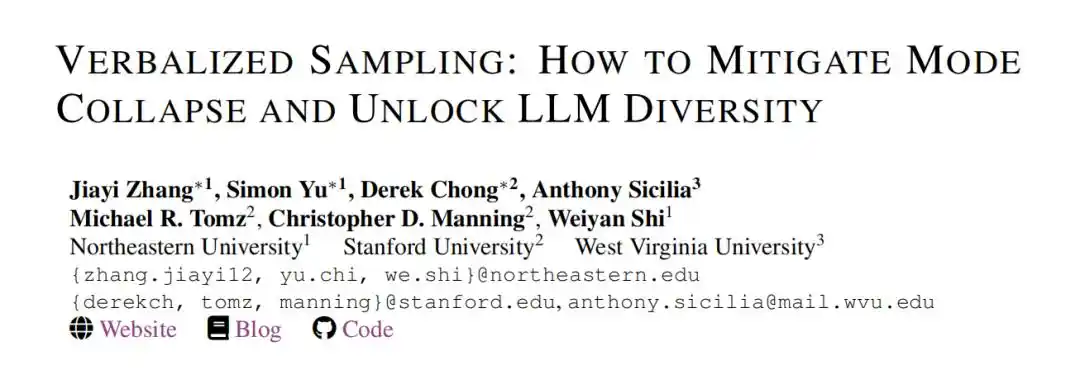
Have you ever felt that AI is becoming increasingly homogeneous?

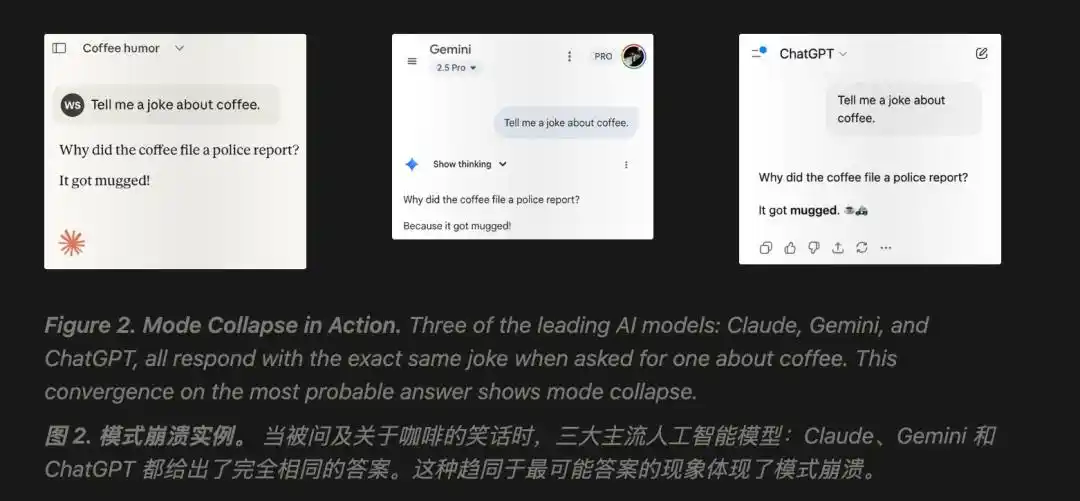
Ask it ten times to "Tell me a joke," and the answers you get are often highly similar. This is not only true for creative tasks but also for Q&A, code generation...

This phenomenon is collectively referred to as mode collapse in academia.

Simply put, models increasingly prefer to output the highest probability, safest, and most classic answers, while rejecting alternative creative ideas.
In the past, to solve this model problem, most researchers would first think of adjusting sampling parameters, modifying decoding algorithms, retraining, etc. However, this paper takes a different approach: directly asking the model to output its own sampling process along with the answer.

For example, using the earlier joke-telling scenario, the authors would modify the prompt, requiring the model to:

Generate 5 jokes, while also assigning a possible probability value to each joke.

Then the model can produce more varied and less repetitive answers.

It sounds very simple, doesn't it? In fact, this is the core contribution of the paper—the Verbalized Probability Sampling method. No fine-tuning is needed; just by changing the way of asking, content diversity can be significantly improved.
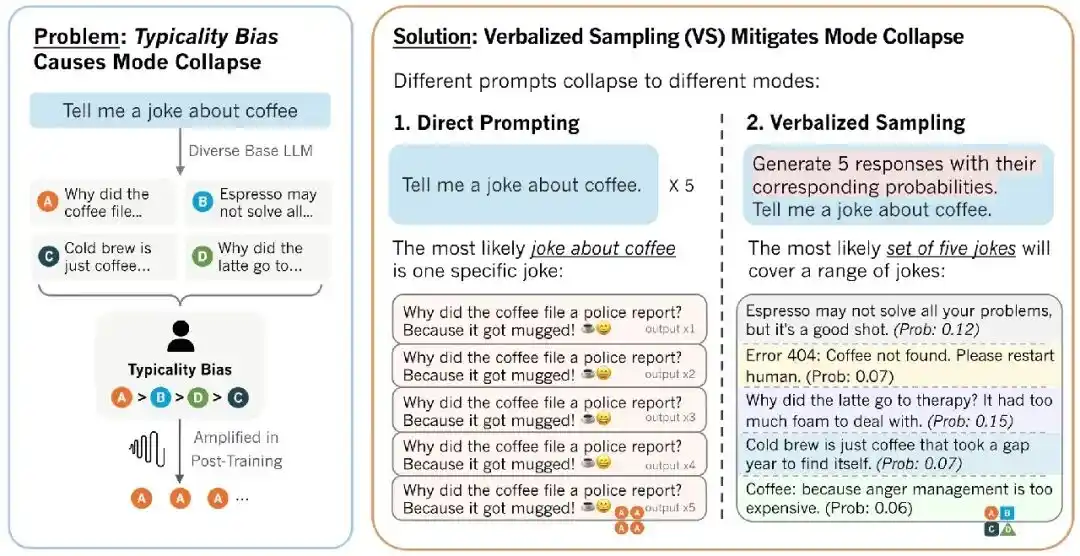
In the paper, however, the authors provide a rigorous argumentation process for this.

First, they address the root cause of the model's uniformity.

Past academia attributed this problem to algorithmic aspects, such as insufficient reward models or improperly set KL penalty terms. This paper delves deeper, suggesting the real root lies in the preference data itself.

They propose a concept called prototypical bias. From a cognitive psychology perspective, human annotators naturally prefer familiar, fluent, conventional text, and instinctively give higher scores to stereotypical, mainstream answers.
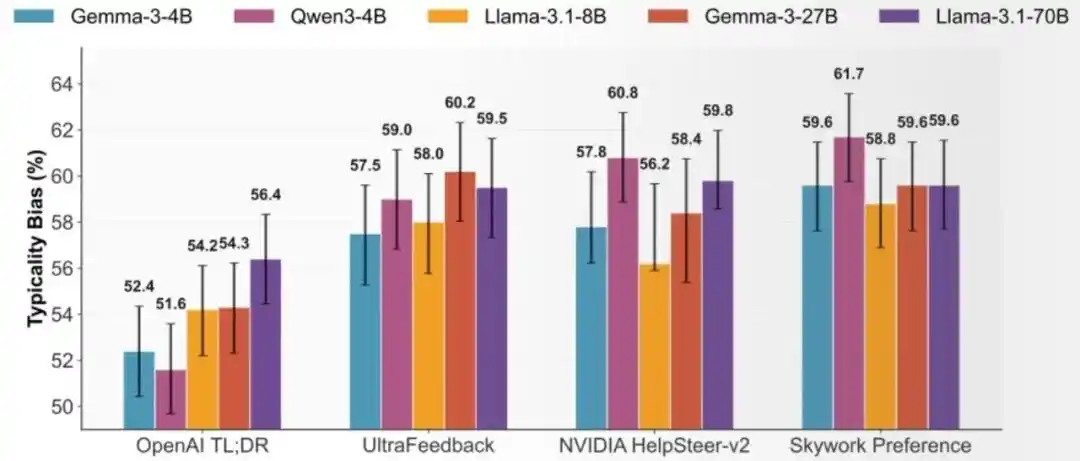
Therefore, even if reward models and optimization algorithms are perfected, as long as the human preference data used for training inherently contains prototypical bias, post-alignment models will still suffer from mode collapse.

The authors tested this repeatedly on five preference datasets and different base models, and the conclusion remained consistent.

After realizing this, the authors argue that since the problem is rooted in the training data, one only needs to consider designing a prompt-based correction scheme during the inference stage. That is, by making the model output the complete probability distribution in the prompt, the model's inherent diverse output distribution from the pre-training phase can be awakened, restoring diversity.

The rest involved running experiments with this method in various scenarios. The results show that in creative writing tasks, diversity was 1.6~2.1 times that of ordinary prompts, without reducing factual accuracy or compromising model safety.

Furthermore, the stronger the model's capabilities and the larger the parameter count, the more pronounced the diversity improvement brought by VS.
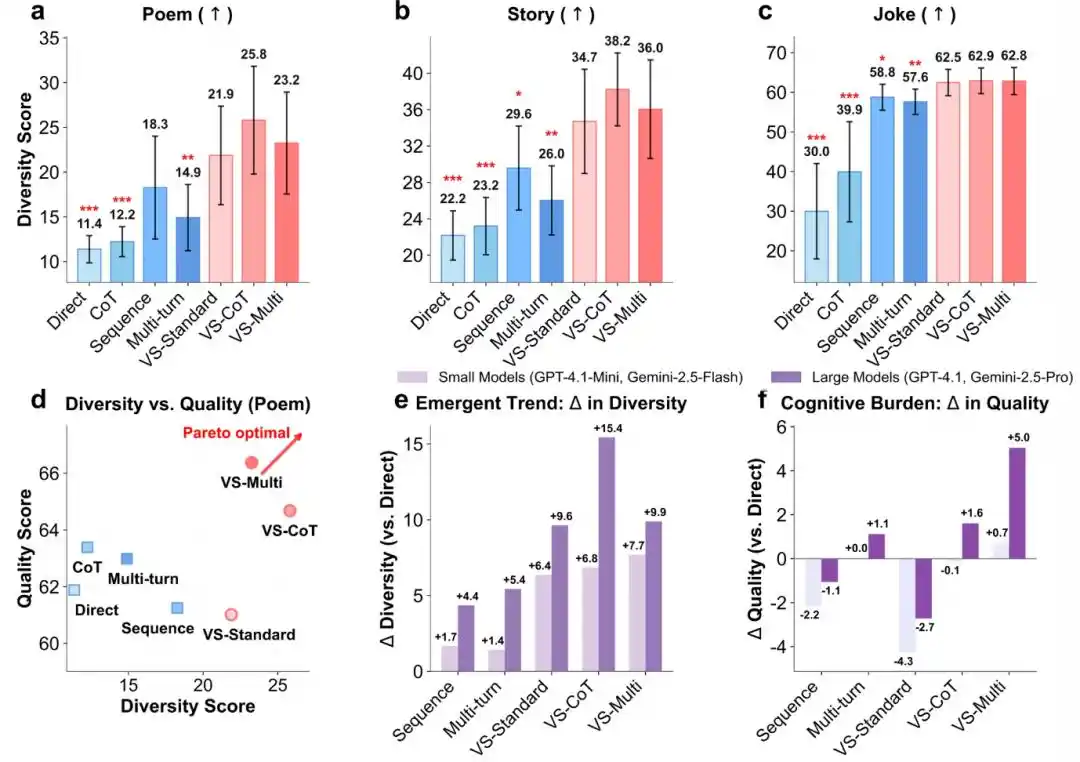
So, while the final method presented in the paper is simple, ICML still passed it.

Reddit Users in a Heated Debate

Under the original post, however, opinions on this paper are polarized.

Many netizens expressed that in the past, ICML featured hardcore innovations like new models, new algorithms, and new theories. Merely optimizing prompts or inference processes doesn't qualify as serious machine learning research.

In comparison, the innovation of this work seems somewhat thin, and several issues exist:

First, similar instruction-writing methods are not unique; some even claimed they were writing prompts like this just yesterday. Second, the theory is difficult to verify because prompts might fail when models are changed, unlike algorithms which are more stable. Third, the experimental scale is limited, insufficient to prove this is a universal law.
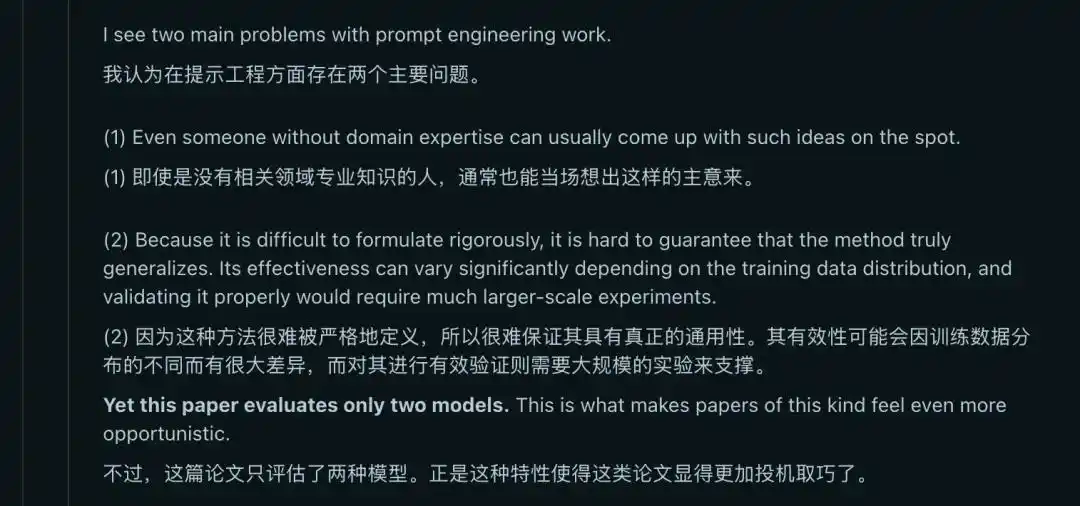
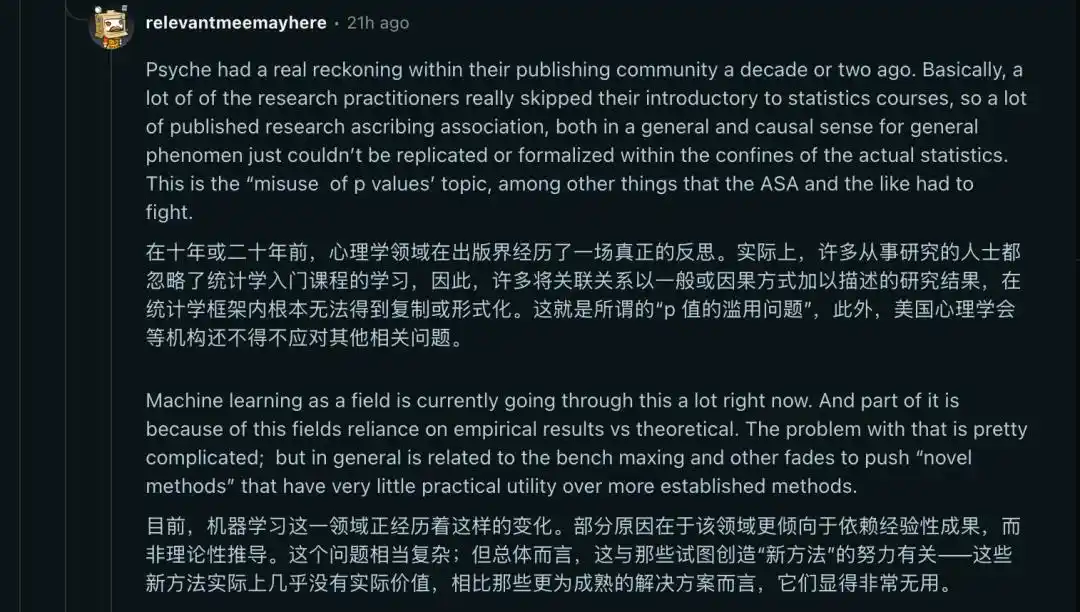
Some netizens directly compared the current state of the machine learning field to the academic crisis in psychology over a decade ago.

Back then, many researchers had weak statistical foundations and misused statistical tools, leading to many papers with unreproducible conclusions and a severe trust crisis in the field. Similarly, the machine learning industry now heavily relies on empirical experiments and undervalues rigorous theoretical support.

The industry is internally competitive, chasing new methods, but there's a widespread atmosphere of excessive hyperparameter tuning and benchmark score chasing. Many so-called innovative algorithms offer little practical value compared to mature baseline models, being packaged as innovative achievements based on tiny metric improvements.

Essentially, these are issues in paper publishing caused by unclear professional standards following the rapid expansion of the discipline.
But supporters argue that scientific research is not about whose method is more complex. As long as the hypothesis is clear, experiments are sufficient, and results are stable and reproducible, it can still be excellent research.

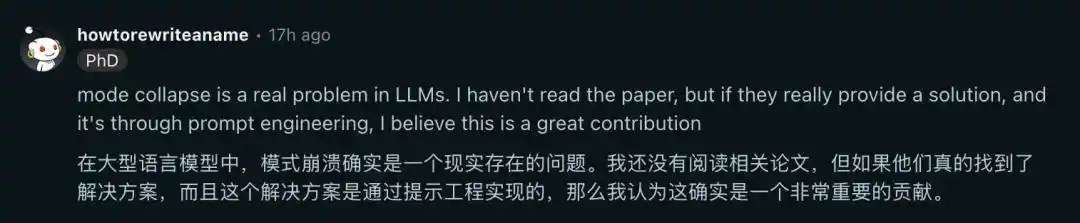
For example, this paper thoroughly explains what mode collapse is and proposes that the real problem lies in prototypical bias—a viewpoint more important than the prompt itself.
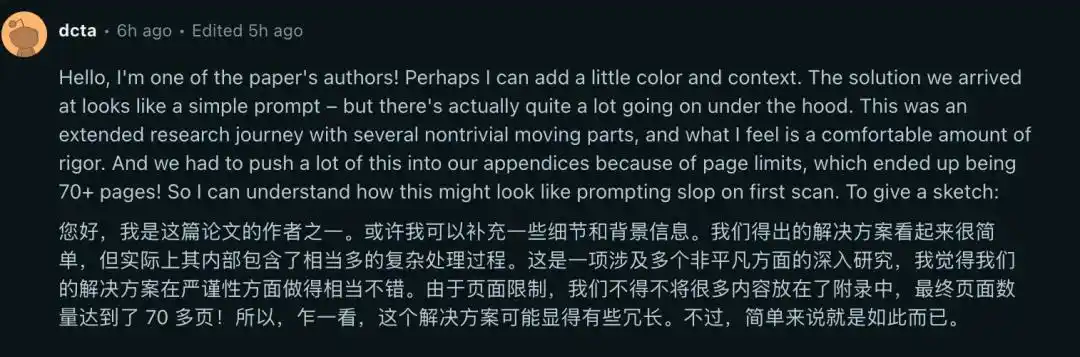
One of the authors also replied in the comments, stating that while the paper appears simple, it actually involves a great deal of complex processing.

The entire work includes complete problem tracing, new theoretical attribution, mathematical derivation, and multi-dimensional quantitative experiments—it's not a shallow, trivial prompt-tuning effort.
Many also mentioned Chain-of-Thought (CoT). When CoT first appeared, it was essentially a one-line prompt:

Let’s think step by step.

But now, almost all reasoning methods can be traced back to CoT. This precisely indicates that prompt engineering is no longer just about writing prompts; it is becoming a new method for studying model behavior.

Over the past decade, machine learning research has almost revolved around training. But now, some usage techniques during the inference stage are gradually moving toward the core of machine learning research.

Perhaps in the coming years, we will see more and more papers like this. They don't add a single line of training code or an extra model parameter, yet they can still change the capability boundaries of large models.

Research Team Introduction

Finally, let's take a look at the research team.

This work was completed by Weiyan Shi's team at Northeastern University (USA) in collaboration with Stanford's Manning Lab and West Virginia University. Jiayi Zhang, Simon Yu, and Derek Chong are listed as co-first authors.

Jiayi Zhang completed her undergraduate studies at the University of Michigan, earning triple bachelor's degrees in Computer Science, Mathematics, and Linguistics. She then pursued a Master's in Computer Science at Northeastern University (USA).

Another paper of hers, "Analyzing the Role of Semantic Representations in the Era of Large Language Models," accepted by the NLP top conference NAACL 2024, also revolves around semantic representation and large models.

Simon Yu is currently pursuing a Ph.D. at Northeastern University (USA), with his main research direction focusing on alignment and reinforcement learning mechanisms in large models. He completed both his bachelor's and master's degrees at the University of Edinburgh and has published several top conference papers.

Besides this paper, another one of his papers, "Unsafer in Many Turns: Benchmarking and Defending Multi-Turn Safety Risks in Tool-Using Agents," was also accepted by ICML 2026.

Derek Chong earned his Master's from Stanford University and is currently a researcher at the Stanford Artificial Intelligence Laboratory. His research primarily focuses on large language models in NLP.

He previously had three years of experience as a founder-entrepreneur and worked at Ello as an Applied Scientist, participating in industry-end AI implementation R&D. He possesses both solid theoretical research skills and rich hands-on practical experience.

References:[1]https://www.reddit.com/r/MachineLearning/comments/1uv1xb3/promptengineering_paper_accepted_to_icml_r/

[2]https://www.linkedin.com/in/jiayizx/[3]https://simonucl.github.io/[4]https://www.linkedin.com/in/derekch/

This article is from the WeChat public account "Qubit" (量子位), author: Focus on Frontier Technology


Crypto di tendenza

Domande pertinenti

QWhat is the main contribution of the 'Verbalized Sampling' paper accepted at ICML 2026?

AThe main contribution is a method called 'Verbalized Sampling' (VS), which involves adjusting prompts to ask language models to output their sampling process (e.g., assign probabilities to multiple generated answers). This simple intervention significantly increases the diversity of LLM outputs and mitigates the 'mode collapse' problem without requiring model retraining or new algorithms.

QAccording to the paper, what is identified as the root cause of the mode collapse problem in LLMs?

AThe paper identifies the root cause as 'typicality bias' in the human preference data used for training. This cognitive bias leads human annotators to consistently favor familiar, fluent, and conventional text. Consequently, the reward models trained on this data steer aligned models towards safe, high-probability answers, causing mode collapse.

QWhat are some of the key criticisms from Reddit users regarding this paper's acceptance at ICML?

ACritics argue that the innovation is thin, noting similar prompt techniques are already in use and questioning the method's stability across different models. They also contend that the experimental scale is insufficient to prove a universal law and express concern that the field is drifting towards an over-reliance on empirical results and 'benchmark hacking' rather than rigorous theoretical contributions.

QHow do the paper's supporters defend its value and acceptance at a top-tier conference?

ASupporters argue that good research is defined by clear hypotheses, rigorous experimentation, and reproducible results, not just complexity. They highlight that the paper's core contribution is the novel theoretical insight into the cause of mode collapse (typicality bias). They also compare it to foundational techniques like Chain-of-Thought, suggesting prompt engineering is evolving into a legitimate method for studying model behavior.

QWhat was the observed impact of the Verbalized Sampling method on creative writing tasks?

AIn creative writing tasks, the Verbalized Sampling method increased output diversity by 1.6 to 2.1 times compared to standard prompting, without compromising factual accuracy or model safety. The effectiveness of the method was also shown to be more pronounced in larger, more capable models.

Letture associate

PA Graphics Explanation | One Chart to Understand the Major Web3 Events in August 2026

**PANews Crypto Calendar: Key Web3 Events in August 2026** PANews introduces its revamped crypto calendar, featuring comprehensive coverage, flexible filtering, and easy export options. The market in August will be shaped by multiple key events across macroeconomics, regulation, tokenomics, and project developments: * **Macro & Policy:** Key US economic data releases (July Non-Farm Payrolls, CPI), the Federal Reserve meeting minutes, and the Jackson Hole Economic Symposium will be in focus. On the regulatory front, the US Senate plans to release a new draft of the *CLARITY Act*, while the EU's expanded crypto ban against Belarus comes into effect. * **Token Unlocks:** Significant token unlocks are scheduled for assets including ENA, AVAX, CONX, ZRO, and KAITO, which may influence market volatility. * **Project Updates & Shutdowns:** Several services, including Exchange Art, Ctrl Wallet, Zapper, NFTfi, and Summer.fi, are set to cease operations or undergo major adjustments. Users are advised to manage their assets accordingly. * **Corporate Activity:** Q2 earnings reports from companies like SpaceX, Circle, and Nvidia are due. Unitree Robotics will initiate its IPO subscription on the STAR Market, and Moonshot AI plans to begin a Pre-IPO financing round. * **Industry Events:** Major conferences such as Bitcoin Asia 2026 and the 2026 Digital Expo will take place. The overarching market narrative for August will revolve around macroeconomic expectations, regulatory developments, token unlock schedules, and ongoing industry consolidation.

marsbit5 min fa

PA Graphics Explanation | One Chart to Understand the Major Web3 Events in August 2026

marsbit5 min fa

Wall Street's Most Famous 'Cassandra' Now Has His Sights Set on Nvidia

Michael Burry, the famed "Big Short" investor, has once again captured Wall Street's attention with a series of short positions against major tech and semiconductor stocks, most notably Nvidia. In late June and July, through his "Cassandra Unchained" newsletter, Burry disclosed short bets against Nvidia, Tesla, Applied Materials, Caterpillar, the SOXX semiconductor ETF, and later, Micron Technology. His core thesis revolves around potential distortions in the AI infrastructure boom, specifically questioning whether extended depreciation schedules (e.g., 6 years vs. a realistic 2-3 years for AI chips) by cloud giants like Microsoft and Google artificially inflate profits. He also raises concerns about possible "off-balance-sheet circular financing," where chip demand might be propped up by vendor-backed funding to clients. Nvidia's stock experienced volatility following these disclosures, briefly dipping but largely holding near Burry's reported entry points, leaving his positions roughly flat or slightly underwater as of late July. This move is part of a pattern for Burry, whose track record since his legendary 2008 bet is mixed. He has faced notable losses, such as on Tesla in 2021, while scoring on broader market turns like the 2020 pandemic crash. His methodology focuses intensely on free cash flow and scrutinizing original financial documents to spot overvaluation and structural risks, but it often struggles with timing the market. The article contrasts Burry's stance with other prominent investors. Steve Eisman, another "Big Short" figure, is not shorting Nvidia, citing strong fundamentals but expressing nervousness about sustainability. Jim Chanos agrees with the broad "accounting mismatch" concern—comparing it to the dot-com bubble—but targets financial leverage in private equity firms rather than the chip stocks themselves. While Nvidia's short interest remains relatively low at 1.3-1.4% of float, the massive stock size means absolute short losses have been significant, exceeding $5 billion earlier this year. The piece concludes that for ordinary investors, the key takeaway is not replicating specific short bets but learning from the critical frameworks these investors use: questioning rosy accounting, identifying structural vulnerabilities, and maintaining skepticism during market euphoria, even if pinpointing the exact catalyst for a downturn remains elusive.

marsbit30 min fa

Wall Street's Most Famous 'Cassandra' Now Has His Sights Set on Nvidia

marsbit30 min fa

Weekly Selection丨Epic Stock Market Volatility, Changxin Tech's IPO Reshapes Storage Landscape, Saylor Aims to Re-Anchor STRC Around September 8th

PANews Weekly Digest: Market Turmoil, Tech Breakthroughs, and Crypto Developments. The week saw significant volatility across global markets. South Korea's KOSPI index experienced extreme turbulence, including multiple trading halts, largely driven by sharp declines in AI hardware stocks like SK Hynix. In contrast, China's Changxin Xinqiao (CXC) achieved a landmark IPO with a market cap surpassing 4 trillion yuan, marking a major success for the domestic DRAM industry after a decade of losses. In the crypto and Web3 space, several key narratives emerged. AI is driving demand for new infrastructure, with projects like AI agent wallets and programmable payments gaining traction, attracting interest from firms like Coinbase. The Bitcoin mining sector is pivoting, with companies like MARA focusing on energy management as electricity becomes a core AI-era asset. Meanwhile, the RWA (Real World Assets) sector faces a "utilization puzzle," with hundreds of billions in on-chain assets remaining dormant. Notable market movements included a historic single-day surge of over 17% for the KOSPI index and a significant migration of $16.5 billion in staked ETH within the Lido ecosystem. Michael Saylor announced a target to re-peg the STRC stablecoin around September 8th. Other highlights include discussions on Ethereum's ambitious 2030 roadmap for scaling and privacy, analysis showing high protocol revenues not always translating to token price gains, and warnings from Citi about potential extreme commodity price shocks by late 2026.

marsbit35 min fa

Weekly Selection丨Epic Stock Market Volatility, Changxin Tech's IPO Reshapes Storage Landscape, Saylor Aims to Re-Anchor STRC Around September 8th

marsbit35 min fa

When the Market Begins to Question AI Capex: A Full Analysis of Q2 Earnings Reports from Five Tech Giants

In late July 2026, five major US tech giants—Alphabet, Intel, Microsoft, Meta, and Apple—released their Q2 earnings reports. While all companies exceeded revenue and profit expectations, driven by strong AI-related business growth, investor reactions diverged sharply due to concerns over escalating AI capital expenditures (capex) and their impact on free cash flow. Alphabet reported strong revenue growth and a surging cloud business, but its stock fell after announcing a doubled year-on-year capex and negative quarterly free cash flow for the first time. Intel posted its strongest revenue growth in over 15 years, but its stock experienced volatile trading after significantly raising its full-year capex guidance. Microsoft saw its stock surge after beating estimates and, crucially, lowering its capex forecast while projecting positive free cash flow. Meta faced the most severe sell-off as its profits declined despite revenue beats, with free cash flow plunging over 90% and its capex guidance raised. Apple reported record June-quarter results, but its stock plummeted after providing Q4 revenue guidance that fell short of expectations, citing supply chain constraints and forex headwinds. The overall takeaway is that the market's focus has shifted from validating AI demand to scrutinizing the timeline for returns on massive AI investments. Companies demonstrating a clearer path to managing capex and preserving free cash flow, like Microsoft, were rewarded, while those signaling continued aggressive spending faced investor skepticism.

Odaily星球日报45 min fa

When the Market Begins to Question AI Capex: A Full Analysis of Q2 Earnings Reports from Five Tech Giants

Odaily星球日报45 min fa

a16z: From Companies to DAOs, DUNA May Become the Next Generation Organizational Form

This article, "From Companies to DAOs: How DUNA Could Become the Next Organizational Form," traces the 500-year evolution of business collaboration. It begins with medieval structures like the *commenda* and Florentine *compagnia*, which exposed partners to personal risk. The modern corporation, exemplified by the Dutch East India Company (VOC), was a revolutionary leap, enabling large-scale, capital-intensive ventures by offering limited liability and reducing coordination costs. However, corporations introduced new challenges like principal-agent problems and bureaucratic overhead. The piece argues that software and internet-native protocols are now reducing these traditional overheads. Decentralized Autonomous Organizations (DAOs) emerged as a new model for coordination without centralized management. Yet, DAOs face a significant legal vacuum: they lack legal recognition, leaving members exposed to unlimited personal liability, and their tokens are vulnerable to being classified as securities under unclear regulations (e.g., the Howey Test). This has forced projects into suboptimal workarounds like offshore foundations. The article identifies the Decentralized Unincorporated Nonprofit Association (DUNA) as a potential solution. Recently legalized in states like Wyoming, the DUNA provides a legal wrapper for decentralized networks. It grants key protections—legal personality, limited liability, and perpetual existence—to a group without imposing a traditional hierarchical management structure. This allows token-holder communities to govern, hold assets, and contract as a single legal entity, aligning with their decentralized nature. While DUNA doesn't solve all governance challenges or magically resolve securities law questions, it represents a crucial step. It fills the legal recognition gap, offering a native legal form for internet-scale, decentralized collaboration and extending the separation of personal risk from organizational venture into a new domain.

marsbit1 h fa

a16z: From Companies to DAOs, DUNA May Become the Next Generation Organizational Form

marsbit1 h fa

Trading

Spot

Articoli Popolari

Cosa è G$

Comprendere GoodDollar ($G$): Un Progetto per il Reddito Universale di Base Decentralizzato Introduzione Nel panorama in continua evoluzione delle criptovalute e della tecnologia blockchain, le iniziative che cercano di affrontare questioni sociali urgenti hanno attirato crescente attenzione. Uno di questi progetti è GoodDollar ($G$), una soluzione di reddito universale di base (UBI) basata su Web3. GoodDollar si impegna a combattere le disuguaglianze e colmare il divario di ricchezza creando e distribuendo risorse economiche accessibili a coloro che ne hanno più bisogno. Attraverso il suo utilizzo innovativo della finanza decentralizzata (DeFi), GoodDollar propone un modello unico che potrebbe potenzialmente rimodellare il modo in cui l'assistenza finanziaria è percepita e fornita a livello globale. Che cos'è GoodDollar ($G$)? GoodDollar è un protocollo di criptovaluta che facilita l'emissione e la distribuzione di token digitali, denominati $G$, ai suoi utenti registrati su base giornaliera. Questi token funzionano come una forma di reddito universale di base, promuovendo l'empowerment finanziario per individui provenienti da vari contesti, specialmente quelli tradizionalmente esclusi dal sistema finanziario. Operando sulla blockchain, GoodDollar utilizza più catene, tra cui Ethereum, Celo e Fuse, garantendo ampia accessibilità e usabilità. L'obiettivo fondamentale di GoodDollar è rendere le criptovalute accessibili e vantaggiose per tutti, indipendentemente dal loro punto di partenza economico. Il Creatore di GoodDollar ($G$) I dettagli riguardanti il creatore di GoodDollar rimangono piuttosto oscuri. Tuttavia, è significativamente evidenziato che il progetto ha il forte sostegno di eToro, una piattaforma di investimento ampiamente riconosciuta che ha fornito il finanziamento iniziale e il supporto fondamentale per lo sviluppo di GoodDollar. La visione dietro il progetto non è esclusivamente orientata al profitto, ma tende fortemente verso l'imprenditorialità sociale, puntando a un cambiamento sistemico nell'accessibilità economica. Investitori di GoodDollar ($G$) GoodDollar gode del supporto finanziario e operativo di eToro. Questa partnership ha svolto un ruolo significativo nel lancio del protocollo e nei suoi sviluppi successivi. Sebbene eToro sia stato determinante nell'estableire le basi del progetto, GoodDollar prevede di passare a un modello finanziato dalla sua comunità a lungo termine. Questo spostamento verso il finanziamento comunitario è in linea con l'impegno di GoodDollar verso la decentralizzazione, consentendo ai suoi utenti di avere una partecipazione diretta nel futuro del progetto. Come Funziona GoodDollar ($G$)? Il framework operativo di GoodDollar si basa fortemente sui principi della DeFi per generare interessi dalle criptovalute staked. Questo meccanismo consente al progetto di coniare e distribuire token $G$ come reddito base digitale per utenti in tutto il mondo. Diverse caratteristiche chiave contribuiscono all'unicità e all'innovazione di GoodDollar: Reddito Universale di Base (UBI): Ogni giorno, gli utenti registrati ricevono token gratuiti, stabilendo un flusso di reddito automatico destinato ad alleviare le pressioni finanziarie. Modello Economico Sostenibile: La tokenomica del progetto mira a bilanciare domanda e offerta di token $G$, assicurando che il valore rimanga stabile nel tempo. Token Sostenuti da Riserva: Ogni token $G$ è sostenuto da una riserva di criptovalute, fornendogli un valore intrinseco e affidabilità, un aspetto cruciale per mantenere la fiducia degli utenti. Governance Decentralizzata: GoodDollar incorpora un approccio democratico al processo decisionale attraverso una governance decentralizzata alimentata dai token. Questo consente ai membri della comunità di partecipare attivamente alla definizione della traiettoria del progetto, rendendolo veramente guidato dalla comunità. Accessibilità Globale: GoodDollar ha stabilito un notevole footprint comunitario, vantando oltre 640.000 membri provenienti da 181 paesi. Tale portata diffusa è strumentale nel facilitare l'UBI su scala globale. Timeline di GoodDollar ($G$) L'evoluzione di GoodDollar è segnata da diversi traguardi significativi nella sua storia: 2019: Il lancio del portafoglio GoodDollar ha segnato il primo passo nella operativizzazione della sua visione di fornire UBI attraverso le criptovalute. 2020: Dopo il successo del portafoglio, il protocollo GoodDollar ha debuttato ufficialmente. Questo ha segnato una fase cruciale nella sua missione di fornire reddito distribuito giornalmente. 2021: Il progetto è avanzato ulteriormente con l'introduzione della sua Organizzazione Autonoma Decentralizzata (DAO), favorendo un maggiore livello di coinvolgimento e governance della comunità. 2022: GoodDollar ha svelato la sua versione DeFi-friendly 2 (V2), mirando a un coinvolgimento degli utenti e a un'efficienza operativa migliorata. Lo stesso anno ha visto anche la transizione a una struttura di governance decentralizzata tramite GoodDAO. 2022: È stata concettualizzata una nuova roadmap, focalizzata su iniziative come un programma di sovvenzioni progettato per promuovere iniziative imprenditoriali legate a $G$ e un mercato GoodDollar aggiornato. Caratteristiche Chiave di GoodDollar ($G$) Il progetto GoodDollar introduce numerose caratteristiche critiche tese a ridefinire il panorama del reddito di base: Reddito Universale di Base: La consegna diaria di token gratuiti ai suoi utenti sottolinea fondamentalmente la sua missione di eliminare la precarietà economica. Operazione Multi-Chain: Sfruttare più reti blockchain migliora l'accessibilità e la scalabilità, garantendo una partecipazione più ampia. Engagement con la Finanza Decentralizzata: L'uso della DeFi consente un finanziamento sostenibile del modello UBI, rafforzandone la fattibilità come soluzione economica. Coinvolgimento e Governance della Comunità: GoodDollar prevede un modello in cui la comunità influenza le operazioni attraverso la partecipazione democratica, promuovendo trasparenza e responsabilità. Comunità Globale: Vantare una comunità globale diversificata consente al progetto di implementare soluzioni UBI adattate a vari contesti culturali ed economici. Conclusione GoodDollar rappresenta un salto trasformativo verso l'integrazione dei principi del reddito universale di base attraverso l'innovativo obiettivo della tecnologia blockchain. Sfruttando la finanza decentralizzata, il progetto non solo fornisce una soluzione all'ineguaglianza finanziaria, ma coinvolge attivamente gli utenti nella sua governance e nelle sue operazioni. Con una comunità in crescita e una roadmap in evoluzione, GoodDollar si afferma come un attore significativo nell'intersezione tra criptovaluta e bene sociale, aprendo la strada a un futuro finanziario più equo. Continuando a evolversi, il percorso di GoodDollar potrebbe infine ispirare altre iniziative a considerare modelli simili, promuovendo ulteriormente la causa dell'empowerment economico per tutti.

140 Totale visualizzazioniPubblicato il 2024.04.05Aggiornato il 2024.12.03

Cosa è G$

Come comprare G

Benvenuto in HTX.com! Abbiamo reso l'acquisto di Gravity (G) semplice e conveniente. Segui la nostra guida passo passo per intraprendere il tuo viaggio nel mondo delle criptovalute.Step 1: Crea il tuo Account HTXUsa la tua email o numero di telefono per registrarti il tuo account gratuito su HTX. Vivi un'esperienza facile e sblocca tutte le funzionalità,Crea il mio accountStep 2: Vai in Acquista crypto e seleziona il tuo metodo di pagamentoCarta di credito/debito: utilizza la tua Visa o Mastercard per acquistare immediatamente GravityG.Bilancio: Usa i fondi dal bilancio del tuo account HTX per fare trading senza problemi.Terze parti: abbiamo aggiunto metodi di pagamento molto utilizzati come Google Pay e Apple Pay per maggiore comodità.P2P: Fai trading direttamente con altri utenti HTX.Over-the-Counter (OTC): Offriamo servizi su misura e tassi di cambio competitivi per i trader.Step 3: Conserva Gravity (G)Dopo aver acquistato Gravity (G), conserva nel tuo account HTX. In alternativa, puoi inviare tramite trasferimento blockchain o scambiare per altre criptovalute.Step 4: Scambia Gravity (G)Scambia facilmente Gravity (G) nel mercato spot di HTX. Accedi al tuo account, seleziona la tua coppia di trading, esegui le tue operazioni e monitora in tempo reale. Offriamo un'esperienza user-friendly sia per chi ha appena iniziato che per i trader più esperti.

512 Totale visualizzazioniPubblicato il 2024.12.10Aggiornato il 2026.06.02

Come comprare G

Cosa è @G

Rete Graphite, $@G: Colmare il divario tra TradFi e Web3 Introduzione alla Rete Graphite, $@G Nel vivace mondo delle criptovalute e dei progetti web3, la Rete Graphite emerge come un faro di innovazione. Con il suo token nativo, $@G, questa blockchain Layer-1, Proof-of-Authority (PoA) è progettata per colmare il divario tra la finanza tradizionale (TradFi) e l'ecosistema Web3 in rapida evoluzione. Mentre le valute digitali guadagnano terreno, la Rete Graphite si impegna a offrire una piattaforma blockchain che prioritizza sicurezza, conformità e velocità, presentandosi come un facilitatore di fiducia e responsabilità. Cos'è la Rete Graphite, $@G? La Rete Graphite non è semplicemente un altro progetto blockchain; mira a ridefinire come la decentralizzazione, la sicurezza e la responsabilità degli utenti siano percepite nel regno della finanza digitale. Il progetto vanta una serie di caratteristiche distintive: Blockchain Basata sulla Reputazione: Al suo interno, la Rete Graphite implementa una politica di uno-utente, uno-account, rafforzata con meccanismi integrati di Know Your Customer (KYC) e sistemi di punteggio. Questo design garantisce un equilibrio tra privacy degli utenti e trasparenza—un aspetto critico delle operazioni finanziarie nel mondo digitale odierno. Entrate dai Noduli di Accesso: La rete incentiva gli utenti a impostare noduli di accesso, consentendo agli operatori di guadagnare ricompense dalle transazioni di rete. Questo modello di generazione di reddito non solo aumenta il coinvolgimento degli utenti, ma rafforza anche la salute e la decentralizzazione della rete. Compatibilità EVM: Con una macchina virtuale (VM) compatibile con Ethereum, la Rete Graphite consente un'integrazione senza soluzione di continuità delle applicazioni decentralizzate (dApps) e dei contratti smart esistenti in Solidity, invitando così gli sviluppatori a sfruttare le sue capacità senza modifiche estensive. Integrazione KYC: In un'era in cui la conformità è fondamentale, il framework KYC integrato con più livelli di verifica migliora il controllo sulle operazioni finanziarie senza partecipazione obbligatoria, stabilendo un precedente per l'autonomia degli utenti. Chi è il Creatore della Rete Graphite, $@G? La Rete Graphite nasce dagli sforzi della Graphite Foundation, un'organizzazione non profit dedicata allo sviluppo, alla manutenzione e all'evoluzione della Rete Graphite. L'impegno della fondazione sottolinea la visione del progetto di creare un ambiente blockchain sicuro e sostenibile, focalizzato sul coinvolgimento autentico degli utenti e sulla conformità. Chi sono gli Investitori della Rete Graphite, $@G? Attualmente, ci sono informazioni limitate disponibili sugli investitori specifici che sostengono l'iniziativa della Rete Graphite. L'organizzazione fondatrice, la Graphite Foundation, opera in modo indipendente per promuovere la crescita del progetto, cercando al contempo partnership che risuonino con la sua visione di una piattaforma blockchain conforme e accessibile. Come Funziona la Rete Graphite, $@G? Il funzionamento della Rete Graphite si basa sul suo unico meccanismo di consenso Proof-of-Authority, che trova un impressionante equilibrio tra elevata capacità di elaborazione e decentralizzazione. Approfondiamo i vari componenti che definiscono il suo funzionamento: Nodi di Trasporto: Servendo come nodi di accesso, questi sono critici per l'ecosistema. Gli operatori possono guadagnare entrate dalle transazioni che attraversano la rete, il che non solo potenzia gli utenti individuali ma rafforza anche la decentralizzazione della rete. Nodi Autorizzati: Al centro della Rete Graphite ci sono i validatori principali che sottopongono a rigorosi test di conformità, comprendenti una robusta verifica KYC insieme a valutazioni tecniche. Questo strato di fiducia è essenziale per garantire che le transazioni all'interno della rete mantengano un elevato livello di integrità. Sistema di Ticker: La Rete Graphite impiega un sistema di ticker distintivo per i suoi token avvolti, denotati come @G. Questa caratteristica migliora la chiarezza nell'integrazione degli asset, rendendo le transazioni degli utenti comprensibili e dirette. L'approccio innovativo della Rete Graphite riflette un passo significativo nell'affrontare le questioni cruciali della finanza digitale, posizionandosi favorevolmente per il futuro mentre sempre più utenti transitano dalle forme tradizionali di finanza al mondo delle applicazioni decentralizzate. Cronologia della Rete Graphite, $@G Per comprendere la progressione e le tappe della Rete Graphite, è utile rivedere eventi chiave nella sua cronologia: 2021: L'inizio della Rete Graphite da parte della Graphite Foundation segna l'inizio di un nuovo capitolo nello sviluppo blockchain, focalizzandosi sulla conformità e sull'empowerment degli utenti. Sviluppi Chiave: Dopo il suo lancio, l'introduzione delle entrate dai nodi di accesso, l'istituzione di un modello basato sulla reputazione, la verifica KYC integrata e la fornitura di compatibilità EVM rappresentano progressi significativi nel progetto. Attività Recenti: I continui sforzi di sviluppo e cura della Graphite Foundation si sono concentrati sull'aumento delle funzionalità della rete, mentre si promuoveva la crescita dell'ecosistema, dimostrando un impegno a lungo termine per la sostenibilità e l'innovazione. Ulteriori Punti Chiave Oltre ai suoi componenti fondamentali, la Rete Graphite comprende diversi strumenti e funzionalità che ne rafforzano l'usabilità: Graphite Wallet: Un'estensione di Chrome user-friendly che facilita l'accesso a varie funzionalità e applicazioni della rete su catene compatibili con Ethereum, migliorando la comodità per gli utenti. Graphite Bridge: Questo strumento consente trasferimenti senza soluzione di continuità di asset Graphite tra diverse reti, promuovendo un ecosistema integrato e interoperabile. Graphite Explorer: Servendo come uno strumento essenziale all'interno dell'ecosistema, questa funzionalità consente agli utenti di visualizzare e verificare il codice sorgente dei contratti smart, tracciare le transazioni e esplorare altre informazioni vitali in tempo reale. Graphite Testnet: Il progetto fornisce un robusto ambiente di test per gli sviluppatori, consentendo loro di garantire stabilità e scalabilità prima del deployment sulla mainnet. Questa iniziativa non solo potenzia gli sviluppatori ma migliora anche l'affidabilità dell'intera rete. Conclusione La Rete Graphite, con il suo token nativo $@G, rappresenta un passo significativo verso il collegamento tra la finanza tradizionale e la tecnologia blockchain all'avanguardia. Concentrandosi su sicurezza, conformità e decentralizzazione, questa piattaforma innovativa è pronta a guidare la transizione nell'era Web3. Man mano che il coinvolgimento degli utenti cresce e sempre più progetti sfruttano le sue capacità, la Rete Graphite è destinata a dare contributi duraturi al panorama digitale in rapida evoluzione. In conclusione, la Rete Graphite è una testimonianza di ciò che può essere realizzato quando il pensiero innovativo incontra le crescenti esigenze della finanza e della tecnologia moderne. Mentre il mondo esplora il potenziale della finanza decentralizzata, la Rete Graphite rimarrà senza dubbio un attore notevole in questo campo.

40 Totale visualizzazioniPubblicato il 2025.01.06Aggiornato il 2025.01.06

Cosa è @G

Discussioni

Benvenuto nella Community HTX. Qui puoi rimanere informato sugli ultimi sviluppi della piattaforma e accedere ad approfondimenti esperti sul mercato. Le opinioni degli utenti sul prezzo di G G sono presentate come di seguito.

活动图片