Jito价格回升——探究JTO能否将0.67美元转为支撑位

ambcryptoPubblicato 2026-07-14Pubblicato ultima volta 2026-07-14

Introduzione

Jito (JTO) 价格在从0.8美元遇阻暴跌至0.58美元低点后出现反弹。买家在0.6美元关键支撑位入场,推动价格回升。截至发稿时,JTO交易价格约为0.665美元,日内上涨11.5%,交易量增长42%至4130万美元。 衍生品市场数据显示,投机需求显著回升:衍生品交易量激增86%至8000万美元,未平仓合约增长21%至6500万美元,且永续合约出现140万美元的净买入。这表明市场参与度增加,新开仓多于平仓,短期可能推动价格上涨。 然而,反弹也引发了获利了结。链上数据显示,现货市场净流入76.5万美元,意味着更多代币流入交易所,卖方活跃度增强,这可能削弱上涨动力并导致价格回调。 从技术指标看,JTO的相对强弱指数已从42回升至48,但信号线仍在50下方,显示买盘力量虽有恢复但尚不足以完全主导市场。多头需将RSI推升至50以上,才能有效突破0.67美元的20日均线阻力,并进一步挑战0.70美元。若获利抛压持续,价格可能再次跌至0.59美元下方。 总之,JTO在0.6美元获得支撑后强劲反弹,投机需求推动上涨,但随之而来的获利了结可能使涨势面临考验。

Jito [JTO] 在 0.8 美元处遭遇阻力后下跌,一度跌至 0.58 美元的低点。随后买家在 0.6 美元支撑位介入,成功捍卫了这一关键水平。因此,截至发稿时,Jito 的交易价格约为 0.665 美元,日涨幅达 11.5%。

同期,该山寨币的交易量增长了 42%,达到 4130 万美元,而其市值也重新回到前 100 名之列。

Jito 录得新的投机需求

在 JTO 跌至 0.58 美元后,买家强势回归市场。这种需求在衍生品方面尤为突出。
来源:CoinGlass

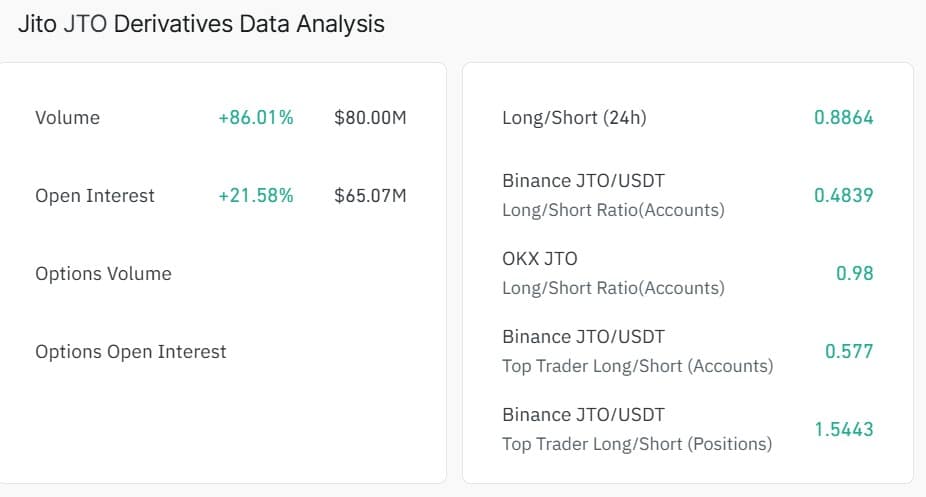
截至发稿时,衍生品交易量激增 86%,达到 8000 万美元,而持仓量(OI)则增长了 21%,达到 6500 万美元。随着 OI 和交易量的增加,交易者开了新的仓位,表明市场参与度有所提高。

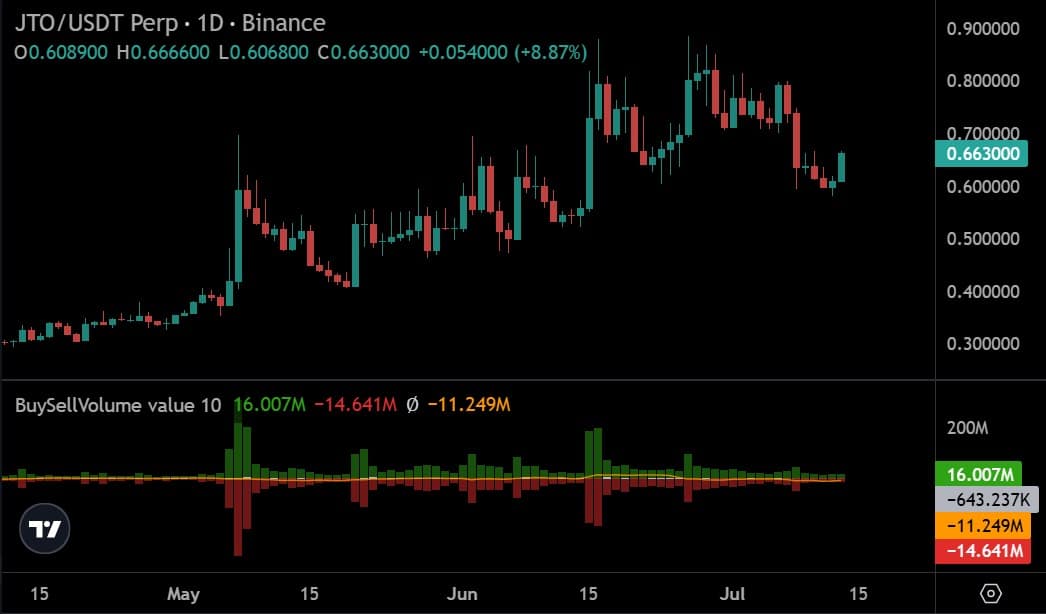
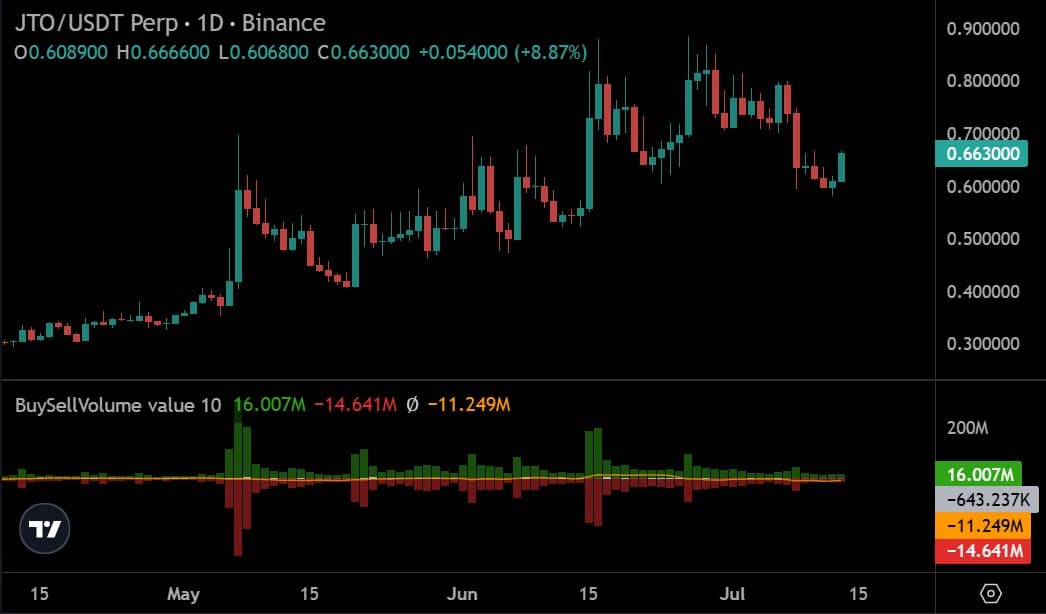
资金主要流入了永续合约仓位。根据 Coinalyze 的数据,Jito 的买入量为 1600 万美元,而卖出量为 1460 万美元。
来源:Coinalyze

因此,永续合约的净买入额上升至 140 万美元。这里的正增量表明交易者开仓多于平仓。

这种市场行为指向了更高的投机性。通常,这种市场状况会先于价格拉升,尤其是在短期内。

获利了结者可能破坏 JTO 的涨势

正如预期的那样,在 Jito 趋势反转后,一些处于亏损状态的持有者涌入市场并套现离场。

根据 CoinGlass 的数据,该山寨币录得 519 万美元的现货流入,相比之下有 442 万美元的流出。因此,现货净流入激增 364%,达到 76.5 万美元。

正的净流入表明有更多资产流入交易所,意味着更多的卖家活跃。通常,获利了结的增加会削弱市场结构,导致价格回撤。

JTO 的上涨动能能否持续?

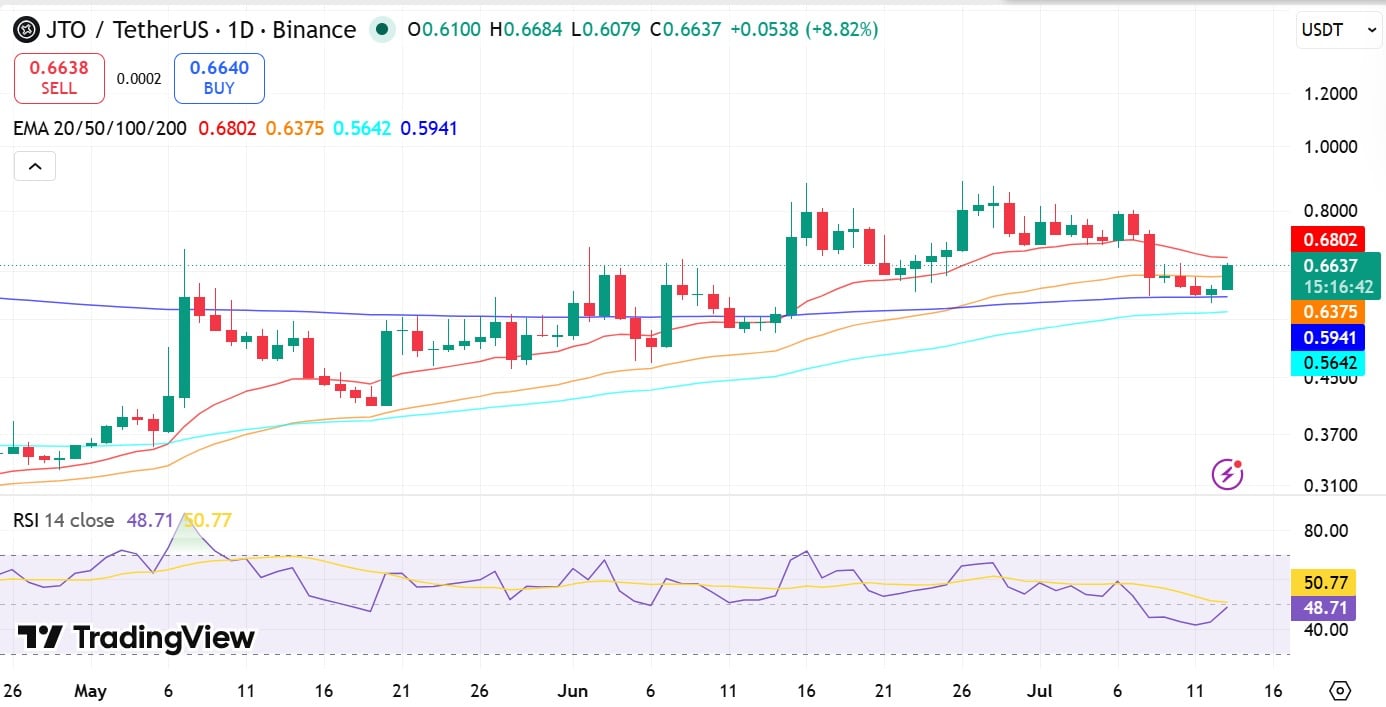
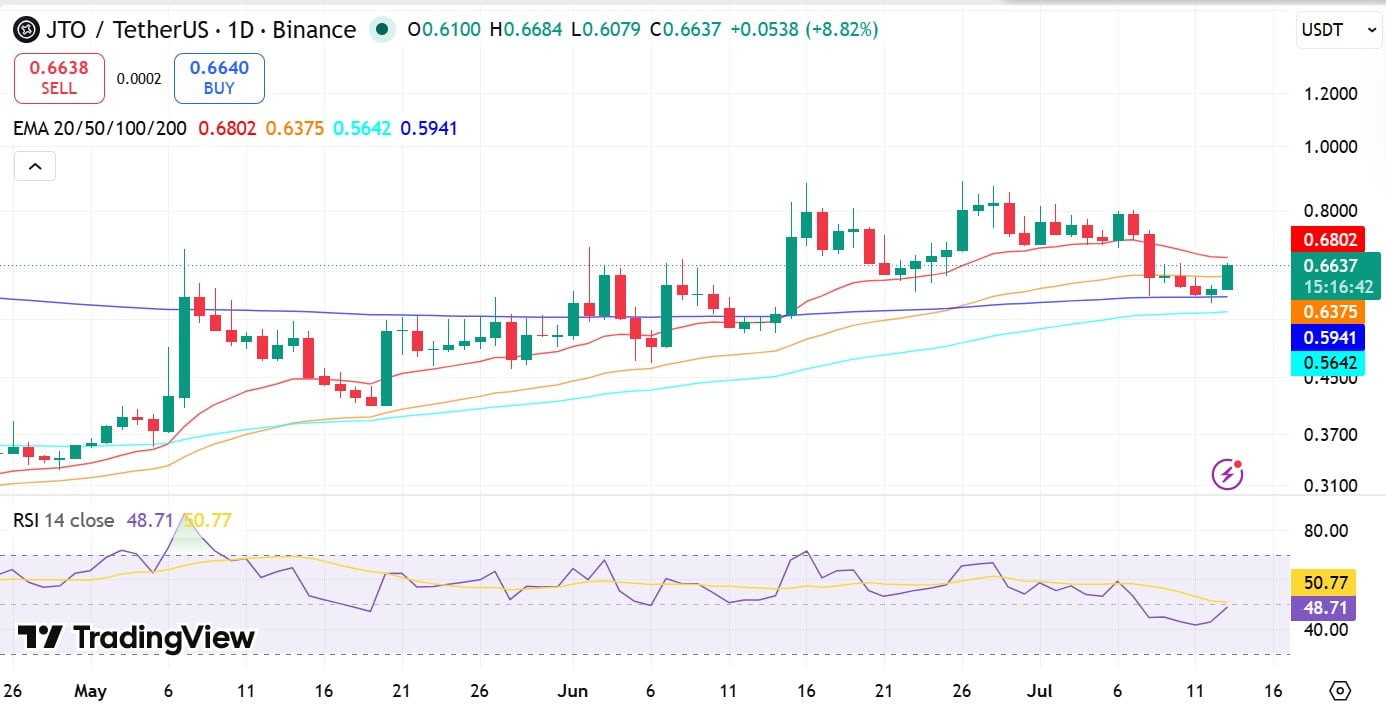
随着买家介入,Jito 取得了显著涨幅。由于需求回升,截至发稿时,该山寨币的相对强弱指数(RSI)从 42 升至 48。

虽然 RSI 持续上升,但信号线已降至 50。这表明,尽管需求有所恢复,但仍不足以让多头完全掌控市场。
来源:TradingView

因此,要确认这次上涨行情,买家需要推动 RSI 突破并保持在 50 以上。这样一来,该山寨币将有足够的力量突破 20 日指数移动平均线(EMA)所在的 0.67 美元,并挑战 0.70 美元。

然而,由于卖家依然非常活跃,获利了结可能会将该山寨币的价格推回至 0.59 美元以下。


最终总结

  • Jito 上涨 11%,成功守住 0.6 美元支撑位,触及 0.668 美元的局部高点后略有回撤。
  • JTO 出现了新的投机需求,推动了上涨势头,但随后的获利了结行为对这些涨幅构成了威胁。

Crypto di tendenza

Domande pertinenti

QJTO代币在文章提到的最新交易价格是多少?

A截至发稿时,JTO的交易价格约为0.665美元。

QJTO价格在遇到0.8美元的阻力后,下跌到哪个低点才获得支撑?

AJTO价格在0.8美元遭遇阻力后,下跌至0.58美元的低点,随后在0.6美元的支撑位获得买盘支撑。

Q文章指出,JTO衍生品市场的什么指标大幅上涨,表明投机需求增加?

AJTO衍生品市场的成交量和未平仓合约量分别大幅上涨86%和21%,达到8000万美元和6500万美元,表明投机需求增加。

Q根据文章,什么因素可能会破坏JTO当前的上涨势头?

A获利了结者可能会破坏JTO的上涨势头。文章数据显示,现货净流入为正值(76.5万美元),意味着更多代币流入交易所,表明卖出活动活跃。

Q要使JTO的上涨趋势得到确认,其相对强弱指数需要突破哪个关键水平?

A要使JTO的上涨趋势得到确认,买家需要推动其相对强弱指数突破并站稳在50这一关键水平之上。

Letture associate

Must-Watch Events Next Week|CLARITY Act Could Face Senate Vote; SpaceX, Circle to Report Earnings (8.3-8.9)

**Summary: Key Events and Developments to Watch (August 3-9)** The upcoming week is marked by significant financial disclosures, key legislative deadlines, and notable product updates. **Major Financial Events:** Several companies are scheduled to release their Q2 2026 earnings. American Bitcoin (ABTC) will report on August 3, followed by SpaceX and Hut 8 Mining Corp. on August 4, and Circle on August 5. Notably, a significant portion of SpaceX shares (up to 12% of total shares) will be unlocked on August 6 following their earnings release. **Key Legislative Deadline:** The U.S. Senate faces an August 7 deadline to secure 60 votes for the CLARITY Act, a bipartisan bill aiming to establish a federal regulatory framework for cryptocurrencies. The Senate may hold a full vote on the bill during the week. **Economic Data:** The U.S. July Non-Farm Payrolls report will be released on August 7, providing crucial labor market data. **Technology & Product Updates:** * **Shutdowns:** DeFi portfolio tracker Zapper and wallet app Ctrl Wallet will cease operations on August 3. * **Upgrades:** LayerZero will deprecate its v1 relayers on August 3. XRP Ledger's new version 3.3.0, featuring five new functions, is expected next week. * **AI:** Elon Musk announced that the advanced Grok 4.6 AI model is set for release around August 7. * **Bitcoin:** The BIP-110 forced signaling for a potential Bitcoin network change is scheduled to begin around August 8. **Other Notable Events:** Chinese robotics firm Unitree Tech has set its preliminary price inquiry for its IPO for August 5. South Korean exchange Upbit will delist AQT and AERGO tokens on August 3.

marsbit55 min fa

Must-Watch Events Next Week|CLARITY Act Could Face Senate Vote; SpaceX, Circle to Report Earnings (8.3-8.9)

marsbit55 min fa

Stocks Are Plummeting More Sharply Than Cryptocurrencies. Where Has the Money Gone?

Stock Markets Plunge Deeper Than Cryptocurrencies: Where Did the Money Go? In late July, Seoul's Kospi index triggered circuit breakers for two consecutive days, plummeting over 40% from its June high. The collapse was led by heavyweight stocks like SK Hynix, whose record profits still disappointed investors, and devastating leveraged ETFs, with one major product losing over 83% of its value. This signaled a global, forced deleveraging targeting the most crowded trades. Interestingly, while stocks exhibited extreme volatility akin to crypto markets, Bitcoin rose nearly 15% in July after a prior steep drop. Analysis shows the money fleeing equities did not flow into Bitcoin. Instead, Bitcoin had already absorbed its sell-off in May-June, when U.S. spot Bitcoin ETFs saw historic outflows. The true safe-haven beneficiary was gold, whose price rose over 20% year-on-year, highlighting a decoupling between Bitcoin and gold as "digital gold." The sell-off was a targeted unwinding of leveraged positions in tech and semiconductors, accelerated by broker-dealer risk management and shifts in the AI narrative, including new competition from Chinese memory chipmakers. The retreat path was clear: from high-valuation tech stocks to cash and U.S. Treasuries, then to gold. For Bitcoin to attract sustained institutional inflows, conditions like eased global liquidity pressure, a "soft-landing" Fed rate cut, and U.S. regulatory clarity via legislation like the stalled CLARITY Act are needed. Currently, Bitcoin is not a safe haven but an already-cleared asset. Its low correlation with tech stocks, however, makes it a potential diversification play for institutional portfolios once the storm passes. The money isn't here yet, but the positioning is underway.

marsbit55 min fa

Stocks Are Plummeting More Sharply Than Cryptocurrencies. Where Has the Money Gone?

marsbit55 min fa

In Conversation with Ray Dalio: We Are Currently in an AI Bubble, with 1% of My Portfolio in Bitcoin

Ray Dalio, founder of Bridgewater Associates, warns in an interview that the current AI boom shows classic bubble characteristics, which could lead to significant economic downturns as seen in past cycles like 1929 or 2000. He explains that speculative enthusiasm, fueled by debt and overvaluation, often precedes a crash when rising rates or taxation force asset sales, causing widespread losses and recession. Dalio also outlines his "Big Cycle" theory, describing an approximate 80-year pattern where widening wealth gaps, massive government deficits, and shifting geopolitical power (like China's rise) create internal conflict and global instability. He emphasizes that we are in a late-cycle, transitional phase where traditional powers like the US and UK face decline. For personal wealth protection, Dalio advises diversification beyond cash into assets like stocks, bonds, real estate, and particularly gold, which he prefers over Bitcoin. While he holds about 1% of his portfolio in Bitcoin as a non-printable hard asset, he views gold as more secure from technological or governmental threats. Regarding AI's impact, Dalio believes it will disproportionately benefit capital owners, worsening inequality by replacing both physical and cognitive labor. He suggests that human intuition and emotional intelligence, combined with AI, will be key for future workers. On taxation, Dalio argues that wealth taxes are impractical and risk triggering asset sell-offs, reducing productive investment. He points to the UK as a cautionary example of debt, low productivity, and political strife. Geopolitically, Dalio foresees a more regionalized world, with the US showing weakness in prolonged conflicts like with Iran, akin to past imperial declines. The ideal outcome, he suggests, is coexisting powerful blocs (e.g., Americas, China-Asia Pacific) without major war.

marsbit4 h fa

In Conversation with Ray Dalio: We Are Currently in an AI Bubble, with 1% of My Portfolio in Bitcoin

marsbit4 h fa

Daily 7.2 Trillion KRW: Foreign Capital's Record Net Buying on Friday! Wall Street Says Headwinds for Korean Stock Fund Flows Have Subsided

South Korean stock market sees a dramatic shift in fund flows. On July 31, foreign investors made a record net purchase of approximately KRW 7.2 trillion in KOSPI stocks, marking a fundamental reversal from the persistent large-scale net outflows seen in previous months. This contributed to a significant narrowing of foreign net selling in July to KRW 9.8 trillion, down sharply from KRW 48.4 trillion in June and KRW 44.5 trillion in May. Simultaneously, domestic institutional pressure eased. South Korean pension funds and asset managers turned to a net buying position in July, purchasing KRW 1.0 trillion worth of KOSPI shares, contrasting with net sales in May and June. Market volatility is expected to be dampened by new financial regulations. Effective July 31, the Financial Services Commission tightened access for retail investors to single-stock leveraged ETFs by raising the minimum cash deposit requirement. Trading volumes for these products subsequently dropped to about 50% of their monthly average. Citigroup Research maintains its year-end KOSPI target of 10,000 points. The firm cites several supportive factors: the substantial easing of headwinds from capital outflows, a robust fundamental outlook for the semiconductor sector, historically low market valuations, strong economic fundamentals, and the potential for policy support from financial authorities if needed.

marsbit4 h fa

Daily 7.2 Trillion KRW: Foreign Capital's Record Net Buying on Friday! Wall Street Says Headwinds for Korean Stock Fund Flows Have Subsided

marsbit4 h fa

Trading

Spot

Articoli Popolari

Come comprare JTO

Benvenuto in HTX.com! Abbiamo reso l'acquisto di Jito (JTO) semplice e conveniente. Segui la nostra guida passo passo per intraprendere il tuo viaggio nel mondo delle criptovalute.Step 1: Crea il tuo Account HTXUsa la tua email o numero di telefono per registrarti il tuo account gratuito su HTX. Vivi un'esperienza facile e sblocca tutte le funzionalità,Crea il mio accountStep 2: Vai in Acquista crypto e seleziona il tuo metodo di pagamentoCarta di credito/debito: utilizza la tua Visa o Mastercard per acquistare immediatamente JitoJTO.Bilancio: Usa i fondi dal bilancio del tuo account HTX per fare trading senza problemi.Terze parti: abbiamo aggiunto metodi di pagamento molto utilizzati come Google Pay e Apple Pay per maggiore comodità.P2P: Fai trading direttamente con altri utenti HTX.Over-the-Counter (OTC): Offriamo servizi su misura e tassi di cambio competitivi per i trader.Step 3: Conserva Jito (JTO)Dopo aver acquistato Jito (JTO), conserva nel tuo account HTX. In alternativa, puoi inviare tramite trasferimento blockchain o scambiare per altre criptovalute.Step 4: Scambia Jito (JTO)Scambia facilmente Jito (JTO) nel mercato spot di HTX. Accedi al tuo account, seleziona la tua coppia di trading, esegui le tue operazioni e monitora in tempo reale. Offriamo un'esperienza user-friendly sia per chi ha appena iniziato che per i trader più esperti.

165 Totale visualizzazioniPubblicato il 2024.12.11Aggiornato il 2026.06.02

Come comprare JTO

Discussioni

Benvenuto nella Community HTX. Qui puoi rimanere informato sugli ultimi sviluppi della piattaforma e accedere ad approfondimenti esperti sul mercato. Le opinioni degli utenti sul prezzo di JTO JTO sono presentate come di seguito.

活动图片