Định giá 8 tỷ USD, tăng gấp 2 lần trong 8 tháng! Ngân hàng thân thiện với tiền mã hóa Erebor Bank dựa vào đâu?

marsbitPubblicato 2026-07-04Pubblicato ultima volta 2026-07-04

Introduzione

Erebor Bank, ngân hàng thân thiện với tiền mã hóa do Palmer Luckey sáng lập và được tỷ phú Peter Thiel hậu thuẫn, đang đàm phán vòng gọi vốn mới với định giá mục tiêu ít nhất 80 tỷ USD, gấp đôi so với mức 43,5 tỷ USD hồi tháng 12/2024. Sự tăng trưởng ngoạn mục này chủ yếu dựa vào tốc độ mở rộng nhanh chóng: số dư tiền gửi của ngân hàng tăng gần gấp 4 lần chỉ trong một quý, từ 1,1 tỷ USD cuối tháng 3 lên khoảng 4,05 tỷ USD vào cuối quý II. Mặc dù báo cáo tài chính quý I cho thấy lỗ ròng 6,01 triệu USD và chưa có hoạt động cho vay đáng kể, các nhà đầu tư đánh giá cao tiềm năng tương lai. Erebor hướng tới việc sử dụng nguồn tiền gửi này để phát triển mạnh nghiệp vụ cho vay, đặc biệt là cho các doanh nghiệp sản xuất và quốc phòng Mỹ, đồng thời tích hợp dịch vụ stablecoin và thanh toán trên chuỗi (on-chain). Ngân hàng này nắm giữ giấy phép quốc gia (OCC) mới, được cấp trong bối cảnh chính sách ngân hàng Mỹ cởi mở hơn với tài sản số. Đội ngũ điều hành kết hợp uy tín công nghệ của Luckey với kinh nghiệm tài chính Wall Street. Tuy nhiên, Erebor cũng đối mặt với nhiều rủi ro như cấu trúc khách hàng tập trung (công ty khởi nghiệp, quỹ đầu tư), sự biến động của thị trường tiền mã hóa, rủi ro chính sách và thách thức trong việc chứng minh nhu cầu thực tế cho các dịch vụ tích hợp của mình.

Tác giả:Chloe,ChainCatcher

Theo Bloomberg, Erebor, một ngân hàng kỹ thuật số được khởi xướng bởi nhà sáng lập Anduril Palmer Luckey và được tỷ phú đầu tư Peter Thiel hậu thuẫn, đang đàm phán vòng gọi vốn mới với các nhà đầu tư, mục tiêu định giá ít nhất 80 tỷ USD, gấp khoảng 2 lần so với vòng vào tháng 12 năm ngoái (huy động 3.5 tỷ USD, định giá 43.5 tỷ USD). Các cuộc đàm phán vẫn ở giai đoạn đầu, định giá chưa được chốt, người phát ngôn của Erebor không bình luận về nội dung thương lượng.

Một ngân hàng chỉ mới thành lập vài tháng, định giá nhảy vọt gấp đôi, là một trong những trường hợp tăng giá trị cao nhất trong số các ngân hàng mới nhận giấy phép ở Mỹ những năm gần đây, và thứ thực sự khiến các nhà đầu tư sẵn sàng trả giá lại, có lẽ là tốc độ mở rộng được thể hiện qua báo cáo tài chính của nó.

Nhà đầu tư đã thấy tiềm năng gì từ báo cáo tài chính?

Theo nguồn tin nội bộ, quy mô tiền gửi của Erebor từ 1.1 tỷ USD theo báo cáo cho cơ quan quản lý vào cuối tháng 3, đã tăng vọt lên khoảng 4.05 tỷ USD trong vòng ba tháng, tăng gần gấp bốn lần trong một quý. Đồng thời bổ sung gần 400 khách hàng mới, ngân hàng dự kiến sẽ có lãi trước cuối năm 2026.
Tốc độ tăng trưởng này cũng làm dấy lên nghi ngờ từ bên ngoài, liệu Erebor có quá gần gũi với giới công nghệ Thung lũng Silicon và giới quốc phòng chính phủ? Nghi ngờ đây là trò chơi "chuyền tay" nội bộ.

Luckey đã phản hồi trực tiếp điều này, nhấn mạnh rằng trong tăng trưởng quý, không có tỷ lệ nào đến từ công ty của chính ông, các khách hàng mới đều độc lập lựa chọn Erebor. Ông cũng bổ sung, phần lớn sự mở rộng gần đây tập trung vào các doanh nghiệp xây dựng lại năng lực sản xuất của Mỹ, ngân hàng cũng mở rộng tương ứng tài trợ thiết bị, tín dụng mạo hiểm, và hoạt động tín dụng hỗ trợ các doanh nghiệp công nghiệp và quốc phòng.

Nhìn lại báo cáo tài chính quý đầu, ta thấy tổng tài sản Erebor là 1.703 tỷ USD, tiền gửi 1.098 tỷ USD, vốn chủ sở hữu ngân hàng 600.6 triệu USD, trên sổ sách không có bất kỳ hoạt động cho vay hoặc cho thuê nào, cũng không có khoản vay nào khác ngoài tiền gửi (các khoản mục như tiền gửi liên ngân hàng liên bang, hợp đồng mua lại, các khoản vay khác, nợ thứ cấp đều bằng không). Cơ cấu tài sản cực kỳ nghiêng về tính thanh khoản: khoảng 1.411 tỷ USD là tiền mặt và tiền gửi tại các ngân hàng khác, khoảng 275 triệu USD là trái phiếu và chứng khoán vốn có thể bán được (trong đó trái phiếu 116 triệu USD, chứng khoán vốn 159 triệu USD).

Ngoài ra, thu nhập lãi thuần quý chỉ 3.36 triệu USD, chi phí không từ lãi 10.56 triệu USD, ghi nhận lỗ ròng 6.01 triệu USD, tuy nhiên đối với một ngân hàng mới hoạt động, vẫn đang khấu hao chi phí công nghệ, tuân thủ và vận hành, thì khoản lỗ này là chi phí cần thiết.

Nói cách khác, các nhà đầu tư sẵn sàng trả giá 80 tỷ USD, không phải nhìn vào tiềm năng sinh lời hiện tại của Erebor, mà là tốc độ tăng trưởng tiền gửi từ 1.1 tỷ lên 4.05 tỷ USD, và kỳ vọng rằng trong tương lai nó có thể sử dụng số tiền gửi này để cho vay, phát triển nghiệp vụ stablecoin.

Nhà sáng lập không quen thuộc với Phố Wall, nhưng lại có lai lịch không hề nhỏ

Để hiểu Erebor, trước tiên cần hiểu mô hình xây dựng sản phẩm lặp lại đằng sau nó.

Hành trình của nhà sáng lập Palmer Luckey trải dài từ Oculus VR đến Anduril, luôn tập trung vào các ngành công nghiệp thâm dụng vốn cao, nơi giao thoa giữa phần cứng, rào cản pháp lý và hệ sinh thái liền kề chính phủ. Năm 2012, ông thâm nhập thị trường VR chưa định hình, giải quyết vấn đề độ trễ và theo dõi không gian đã làm phiền ngành nhiều năm, năm 2014 bán Oculus cho Facebook với giá 2 tỷ USD. Khởi nghiệp lần thứ hai của ông, Anduril, áp dụng cùng phương pháp vào ngành công nghiệp quốc phòng: dùng tiền từ các quỹ mạo hiểm tư nhân để xây dựng hệ thống quốc phòng trước, sau đó bán cho chính phủ dưới dạng "sản phẩm" thay vì cách truyền thống "chi phí cộng thêm", từ đó xây dựng mối quan hệ sâu sắc với Bộ Quốc phòng và hệ thống tình báo. Luckey nói rõ, Erebor sẽ "hợp tác với hệ thống tình báo ngay từ ngày đầu tiên" để ngăn chặn gian lận, thực hiện tư thế tuân thủ chủ động.

Nhưng bản thân Luckey là người ngoài ngành ngân hàng. Thương hiệu Erebor một phần dựa vào danh tiếng của ông và Thiel, nhưng uy tín rốt cuộc không thể thay thế thành tích quản lý và vận hành thực tế, chỉ cần bước chân vào Phố Wall, ngân hàng này cuối cùng sẽ bị kiểm tra theo tiêu chuẩn của một tổ chức chịu sự giám sát.

Do đó, đội ngũ thực sự điều hành là những người có nền tảng tài chính vững chắc: Chủ tịch Michael Hagedorn đến từ mảng ngân hàng khu vực của Wells Fargo; Giám đốc điều hành Owen Rapaport có nền tảng kinh nghiệm tuân thủ tiền mã hóa thông qua Aer Compliance; Trưởng phòng Chiến lược Jacob Hirshman từng tham gia nghiệp vụ stablecoin tại Circle và hành nghề tại Sullivan & Cromwell; Phó chủ tịch phát triển Noah Pompan có kinh nghiệm tại MoonPay. Danh sách nhà đầu tư bao gồm 8VC của Joe Lonsdale, Founders Fund của Thiel, Lux Capital, và các quỹ liên kết với a16z.
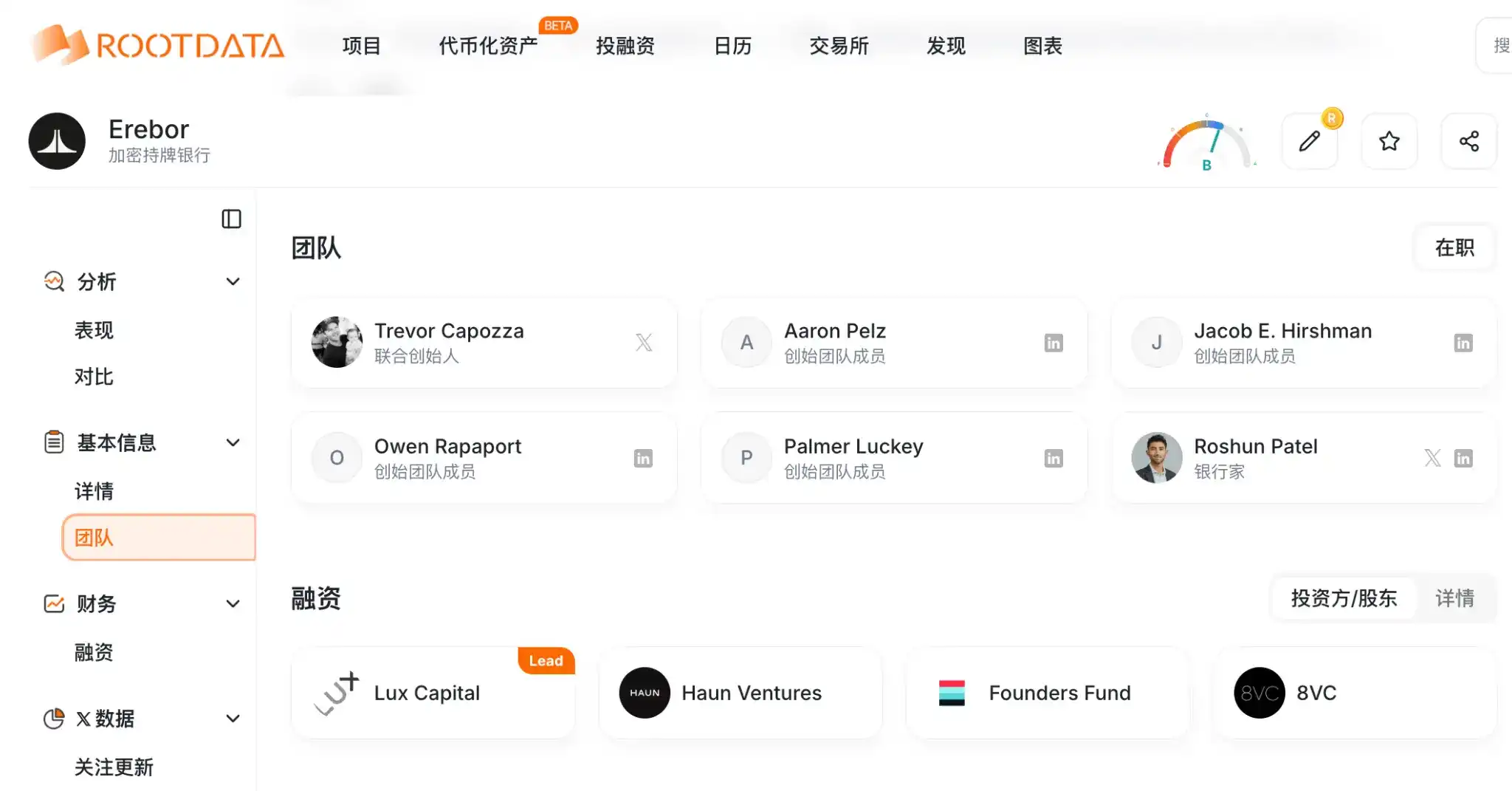
Nguồn ảnh:RootData

Ngoài ra, Erebor có một lựa chọn chiến lược then chốt là: kiên quyết tự mình xin giấy phép, chịu trách nhiệm về báo cáo tài chính, không như Mercury, Brex phụ thuộc vào ngân hàng hợp tác. Luận điểm của Luckey là, phụ thuộc vào cơ sở hạ tầng của bên thứ ba, đồng nghĩa với việc tự đặt mình vào rủi ro bị "gỡ nền tảng", áp lực chính sách và hạn chế sản phẩm; chỉ khi nắm giữ giấy phép và sổ sách, nó mới có thể thực hiện lời hứa về thanh toán trên chuỗi, đúc và mua lại stablecoin.

Nhìn lại điểm khởi đầu của Erebor, hầu như hoàn toàn gắn liền với sự sụp đổ của Silicon Valley Bank (SVB) năm 2023. Vụ phá sản đó khiến hàng loạt công ty khởi nghiệp và quỹ mạo hiếm mất đi đối tác ngân hàng chỉ trong một đêm, tiền gửi cũng mất bảo hiểm. Luckey và các nhà đầu tư cho rằng, điều này để lại một "khoảng trống cấu trúc", tức là ngân hàng chuyên phục vụ startup đã biến mất, trong khi các ngân hàng truyền thống lại quá bảo thủ hoặc chậm chạp đối với những startup nắm giữ tài sản không chuẩn (hợp đồng quốc phòng, phần cứng AI, token kỹ thuật số).

Erebor tuyên bố sẽ giải quyết bốn điểm đau chính: một là cung cấp tín dụng cho tài sản hữu hình, ngân hàng truyền thống giỏi cho vay dựa trên bất động sản hoặc khoản phải thu, nhưng không giỏi định giá "GPU" hoặc "nghiên cứu hàng không vũ trụ"; hai là xóa bỏ sự phân mảnh giữa trên chuỗi và ngoài chuỗi, đưa ngân hàng pháp định và thanh toán stablecoin vào cùng một bảng cân đối kế toán chịu sự giám sát; ba là đáp ứng nhu cầu thanh toán 24/7, thay thế SWIFT và ACH vẫn đang chạy theo lịch trình từ hàng chục năm trước; bốn là cung cấp kênh USD cho các doanh nghiệp quốc tế tăng trưởng cao, chống lại ma sát "mất ngân hàng" mà họ thường gặp phải.

Tất nhiên, tiềm năng vận hành này có bao nhiêu phần thực, bao nhiêu phần tiếp thị, vẫn còn không gian thảo luận. Các công ty được hậu thuẫn bởi quỹ mạo hiểm giờ đây thực sự có các lựa chọn thay thế như chủ nợ phi ngân hàng, cho vay DeFi, một số ngân hàng hiện có trước khi SVB sụp đổ cũng đã bắt đầu tranh giành thị phần công nghệ ngách. Nhà sáng lập Erebor rõ ràng tin rằng các tổ chức hiện có là không đủ, và việc nó có được một giấy phép ngân hàng đầy đủ, cho thấy cơ quan quản lý có lẽ cũng cho rằng đánh giá này có phần đúng?

Hơn nữa, tài sản kỹ thuật số là cốt lõi chiến lược dài hạn của Erebor. Nó có kế hoạch nhận tiền gửi và thanh toán stablecoin USD, cung cấp chuyển đổi tức thời giữa tiền pháp định và stablecoin, đường thanh toán hoạt động suốt ngày đêm, và dần hỗ trợ đúc và mua lại stablecoin trong khuôn khổ được quản lý. Giấy phép OCC của nó thậm chí cho phép rõ ràng việc nắm giữ một lượng nhỏ tài sản mã hóa trên sổ sách của chính mình, để thanh toán phí giao dịch trên chuỗi, thư quản lý định nghĩa việc nắm giữ này là hành vi "kèm theo" của nghiệp vụ ngân hàng, đây là một tiền lệ đáng chú ý về mặt tuân thủ.

Ngày 2 tháng 4, Quỹ Sui thông báo Erebor đã hỗ trợ mạng Sui, cho phép khách hàng thực hiện gửi và rút stablecoin, đây là một trong những bằng chứng công khai đầu tiên về việc nó kết nối cơ sở hạ tầng ngân hàng được quản lý với thanh toán trên chuỗi.

Tuy nhiên, thực tế cũng tồn tại khoảng cách. Theo nguồn tin nội bộ, nhu cầu về khoản vay thế chấp bằng tiền mã hóa thấp hơn kỳ vọng ban đầu của ngân hàng. Điều này tương đồng với báo cáo tài chính nêu trên: thứ thực sự thúc đẩy tăng trưởng gần đây, lại là các công ty xây dựng lại năng lực sản xuất của Mỹ, và tài trợ thiết bị cùng nợ mạo hiểm cho họ. Nói cách khác, Erebor hiện tại giống một hỗn hợp "Quốc phòng + Sản xuất tiên tiến + Tiền mã hóa" hơn là một ngân hàng tiền mã hóa thuần túy.

Thời cơ và địa lợi, ngay cả thời điểm nộp đơn xin giấy phép của Erebor cũng rất đúng lúc?

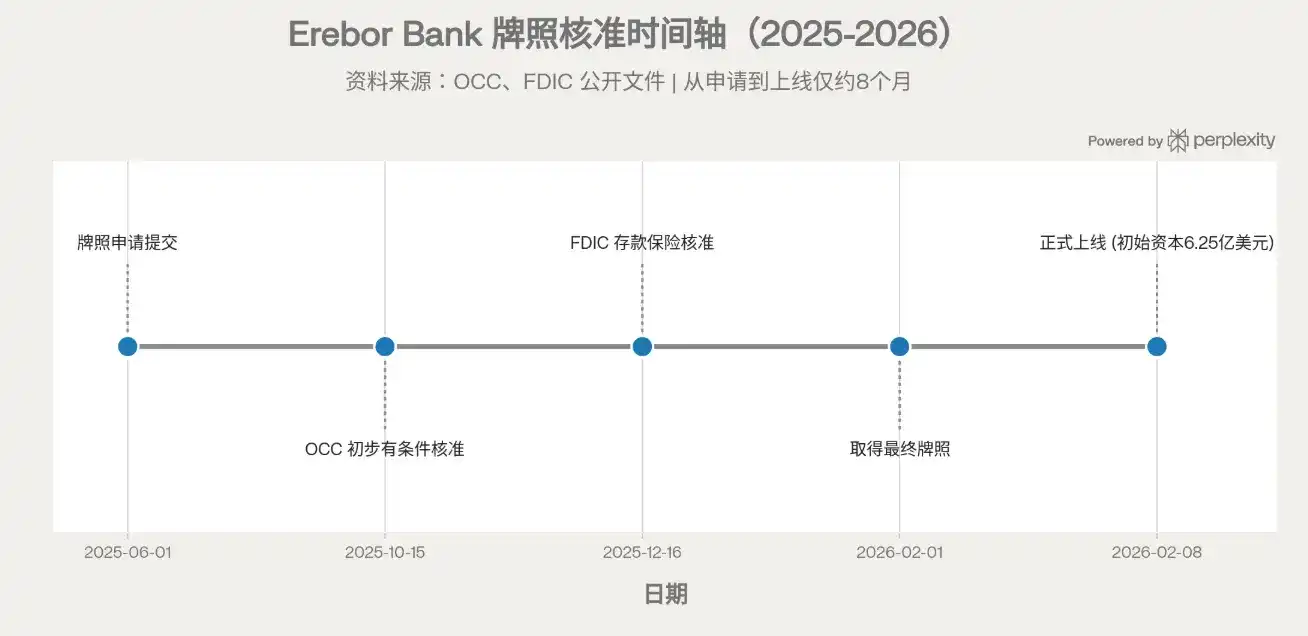
Phân tích phần giấy phép, Erebor nhận được phê duyệt có điều kiện sơ bộ từ OCC vào ngày 15 tháng 10 năm 2025, được FDIC phê duyệt bảo hiểm tiền gửi vào ngày 16 tháng 12, nhận giấy phép cuối cùng vào đầu tháng 2 năm 2026, và chính thức đi vào hoạt động vào ngày 8 tháng 2 với vốn ban đầu khoảng 625 triệu USD (tăng vốn đáng kể so với giai đoạn phê duyệt sơ bộ khoảng 275 triệu USD). Đây là giấy phép ngân hàng quốc gia mới được cấp (de novo) đầu tiên dưới chính phủ Mỹ hiện tại.
Tất cả điều này xảy ra trong bối cảnh chính sách ngân hàng Mỹ có sự chuyển hướng rõ rệt: dưới sự lãnh đạo của Giám đốc Jonathan Gould tại OCC, tư thế quản lý thể hiện rõ sự cởi mở với ngân hàng tài sản số, bản thân Gould cũng ca ngợi giấy phép này là ví dụ về "hệ thống tài chính năng động và đa dạng"; cùng với sự thúc đẩy của khung pháp lý stablecoin cấp liên bang (GENIUS Act), vùng pháp lý từng mờ mịt đã được làm rõ đáng kể.

Đáng chú ý, cơ quan quản lý cũng không hoàn toàn cho phép. Để đổi lấy sự phê duyệt, OCC và FDIC đã thêm các điều kiện nghiêm ngặt: trong ba năm đầu phải duy trì tỷ lệ đòn bẩy hạng nhất ít nhất 12% (gấp khoảng 2 lần ngưỡng "đủ vốn"), và kèm theo cam kết bổ sung vốn. Có thể nói, tính khả thi của Erebor một phần bị ràng buộc với chu kỳ chính trị hiện tại, nếu trong tương lai lập trường quản lý thay đổi, hoặc quy tắc stablecoin và chống rửa tiền trở nên nghiêm ngặt hơn, toàn bộ luận điểm của nó được xây dựng trên "quy tắc thân thiện với token" có thể đối mặt với gió ngược.

Cuối cùng, tổng hợp đánh giá từ truyền thông nước ngoài, mô hình của Erebor, hầu như mọi rủi ro đều đang sao chép bài học từ SVB năm xưa.

Nó phục vụ các công ty công nghệ giai đoạn đầu, tài sản thế chấp là tài sản phi truyền thống, nó phục vụ một số ít tài khoản lớn (startup, nhà sáng lập, quỹ đầu tư), chứ không phải hàng nghìn khách hàng nhỏ lẻ, bất kỳ thất bại hoặc rút tiền của một khách hàng duy nhất (biến động thị trường tiền mã hóa, quỹ mạo hiểm rút lui mạnh) đều có thể ảnh hưởng đáng kể đến thanh khoản; cơ quan quản lý từ lâu đã chỉ ra, cơ cấu khách hàng kiểu "độc canh" như của SVB, chính là một trong những tác nhân đẩy nhanh việc rút tiền ồ ạt.

Sự liên quan đến tiền mã hóa khiến vấn đề trở nên phức tạp hơn, nếu một stablecoin mà nó hỗ trợ mất neo, hoặc giá tiền mã hóa sụp đổ, nền tảng tiền gửi và tài sản thế chấp cho vay có thể đồng thời thu hẹp, xuống nữa, còn có rủi ro đảo ngược chính sách (toàn bộ luận điểm của nó đặt cược vào quy tắc token nới lỏng), rủi ro thực thi xây dựng hệ thống lõi và thanh toán trên chuỗi từ con số 0, và tiền đề chưa được chứng minh "liệu stablecoin có thực sự được khách hàng áp dụng rộng rãi". Cuối cùng là rủi ro danh tiếng và chính trị, sự liên kết chính trị gây tranh cãi cao của Luckey, cùng với sự mới lạ của bản thân "ngân hàng tiền mã hóa", đều có thể khuếch đại sự mất niềm tin của thị trường nếu ngân hàng gặp sự cố.

Có thể nói Erebor là một thử nghiệm gây chú ý cao độ diễn ra tại giao lộ giữa ngân hàng, tiền mã hóa và chính sách công nghiệp.

Nó đề xuất nhu cầu với thị trường chính là khoảng trống tài trợ sau khi SVB sụp đổ, và ma sát trong thanh toán tiền mã hóa, giờ đây, cơ quan quản lý đã chứng thực trên giấy tờ, đội ngũ cũng có cả uy tín công nghệ và nền tảng Phố Wall, việc thực thi mô hình mới này, tính liên tục của lập trường quản lý, và nhu cầu thực tế của thị trường đối với dịch vụ tích hợp của nó chính là những điểm thị trường đang xem xét kỹ lưỡng.


Crypto di tendenza

Domande pertinenti

QNgân hàng Erebor Bank có những yếu tố nào giúp định giá tăng gấp đôi lên 80 tỷ USD trong vòng 8 tháng?

ACác yếu tố chính bao gồm tốc độ tăng trưởng phi mã về quy mô tiền gửi (từ 1,1 tỷ lên 4,05 tỷ USD trong một quý), nền tảng khách hàng công nghệ và tiền mã hóa tiềm năng, cùng danh tiếng và sự hậu thuẫn từ nhà sáng lập Palmer Luckey (Oculus, Anduril) và các nhà đầu tư như Peter Thiel. Tuy nhiên, định giá cao này chủ yếu dựa trên kỳ vọng về tiềm năng tương lai (như cho vay, kinh doanh stablecoin) hơn là lợi nhuận hiện tại (ngân hàng vẫn đang lỗ).

QSự tăng trưởng mạnh mẽ về tiền gửi của Erebor Bank có thể mang lại rủi ro nào, dựa trên bài học từ sự sụp đổ của Silicon Valley Bank (SVB)?

ACó, sự tăng trưởng này có thể mang lại rủi ro tương tự SVB: (1) Cơ cấu khách hàng tập trung vào một số ít công ty khởi nghiệp và quỹ đầu tư mạo hiểm, nên việc rút tiền của một vài khách hàng lớn có thể gây mất thanh khoản nghiêm trọng. (2) Tài sản thế chấp cho các khoản vay tương lai có thể là các tài sản phi truyền thống (như hợp đồng quốc phòng, GPU, token mã hóa) khó định giá và thanh khoản. (3) Mối liên hệ với thị trường tiền mã hóa có thể làm trầm trọng thêm rủi ro nếu thị trường này biến động mạnh.

QChiến lược kinh doanh cốt lõi và lợi thế cạnh tranh của Erebor Bank là gì so với các đối thủ như Mercury hay Brex?

AChiến lược cốt lõi của Erebor là tự sở hữu giấy phép ngân hàng quốc gia (của OCC) thay vì phụ thuộc vào ngân hàng đối tác. Lợi thế cạnh tranh bao gồm: (1) Kiểm soát hoàn toàn cơ sở hạ tầng và sổ cái, giảm thiểu rủi ro bị 'hủy nền tảng'. (2) Có khả năng cung cấp các dịch vụ tích hợp sâu giữa ngân hàng pháp định và tiền mã hóa, như thanh toán stablecoin 24/7, chuyển đổi tức thì, và trong tương lai có thể là đúc và mua lại stablecoin ngay trên bảng cân đối kế toán của mình. (3) Tập trung vào các khách hàng có tài sản phi truyền thống (công nghệ, quốc phòng, tiền mã hóa) mà ngân hàng truyền thống thường phục vụ chậm hoặc bảo thủ.

QVai trò của tiền mã hóa và stablecoin trong mô hình kinh doanh dài hạn của Erebor Bank được mô tả như thế nào?

ATiền mã hóa và stablecoin là trọng tâm trong chiến lược dài hạn của Erebor. Ngân hàng này có kế hoạch: (1) Cung cấp dịch vụ gửi tiền và thanh toán bằng stablecoin (như USD stablecoin). (2) Cho phép chuyển đổi tức thời giữa tiền pháp định và stablecoin. (3) Cung cấp kênh thanh toán hoạt động 24/7, thay thế cho các hệ thống như SWIFT và ACH. (4) Giấy phép OCC của họ thậm chí cho phép giữ một lượng nhỏ tài sản mã hóa để trả phí giao dịch trên chuỗi, được coi là một tiền lệ quan trọng về mặt tuân thủ. Erebor đã bắt đầu tích hợp với mạng lưới Sui để hỗ trợ các dịch vụ stablecoin.

QCác điều kiện quản lý nghiêm ngặt nào được đặt ra cho Erebor Bank khi nhận được giấy phép, và điều này phản ánh điều gì về rủi ro?

ACơ quan quản lý OCC và FDIC đã đặt ra các điều kiện nghiêm ngặt: (1) Duy trì tỷ lệ đòn bẩy hạng 1 (Tier 1 Leverage Ratio) ít nhất 12% trong ba năm đầu, cao gấp đôi ngưỡng 'đủ vốn' thông thường. (2) Cam kết bổ sung vốn nếu cần. Những điều kiện này phản ánh nhận thức của cơ quan quản lý về các rủi ro cao tiềm ẩn trong mô hình kinh doanh mới mẻ và tập trung vào khách hàng chuyên biệt của Erebor. Chúng cũng cho thấy sự phê duyệt của cơ quan quản lý có phần thận trọng và có thể bị ảnh hưởng bởi môi trường chính sách hiện tại (ủng hộ tài sản số), tạo ra rủi ro nếu chính sách thay đổi trong tương lai.

Letture associate

MSTR Discloses Sale of 3,588 Bitcoins, Stock Price Drops Over 5% at One Point During Trading

MicroStrategy, the world's largest corporate holder of Bitcoin, has significantly shifted its business model. Between June 29 and July 5, the company sold 3,588 bitcoins for approximately $216 million to fund quarterly dividends for its preferred stock. This marks its largest-ever Bitcoin sale and signals a strategic pivot: Bitcoin is transitioning from a "buy-and-hold" reserve asset to a liquidity management tool for the company. This move follows a recent authorization allowing Bitcoin sales when equity fundraising is less attractive. The announcement contributed to a more than 5% intraday drop in MicroStrategy's stock price, while Bitcoin fell to around $61,800—below the company's average holding cost of roughly $75,700. The sale represents a major departure from MicroStrategy's long-standing "never sell" commitment, which saw its first minor breach in May with a $2.5 million sale. The latest, hundred-times-larger transaction underscores growing financial pressures. Analysts note the company faces about $1.5 billion in annual preferred dividend obligations, far exceeding cash flow from its software business. As of July 5, MicroStrategy holds 843,775 bitcoins. Its current operational logic involves buying Bitcoin during favorable financing conditions and selling portions to cover dividends when needed, creating a flexible capital management cycle amidst a challenging market environment.

华尔街日报6 h fa

MSTR Discloses Sale of 3,588 Bitcoins, Stock Price Drops Over 5% at One Point During Trading

华尔街日报6 h fa

Q-Day Countdown: Will Quantum Computing End Cryptocurrencies?

Quantum Computing's Threat to Cryptocurrency: A Countdown to Q-Day Quantum computing, specifically Shor's algorithm, poses a fundamental threat to the public-key cryptography (e.g., ECDSA, RSA) that secures blockchain networks like Bitcoin and Ethereum. This critical juncture, known as Q-Day, is estimated to occur potentially within the next 5-15 years. The core vulnerability stems from the public and immutable nature of blockchains. Assets in addresses where the public key is already exposed on-chain (e.g., spent outputs) are at direct risk, as a sufficiently powerful quantum computer could derive the private key. This threatens the very trust model of cryptocurrencies. The response lies in Post-Quantum Cryptography (PQC)—algorithms like lattice-based ML-DSA and hash-based SLH-DSA, which are resistant to quantum attacks. NIST has standardized key PQC algorithms (FIPS 203, 204, 205), providing a migration path. However, the primary challenge is not technical but socio-economic and involves complex governance: * **Bitcoin's** path is constrained by its conservative ethos. Migrating requires a soft-fork to new address types, facing hurdles like significantly larger signature sizes and, most critically, the divisive governance question of how to handle at-risk legacy UTXOs without violating core principles. * **Ethereum** is pursuing a "cryptographic agility" strategy, with a multi-layered roadmap. It leverages account abstraction for user accounts and is developing compressed hash-based signatures (e.g., leanXMSS) for its consensus layer, aiming for a full-stack upgrade over time. In conclusion, quantum computing does not spell an instant end for cryptocurrency but initiates a critical countdown. The industry has a limited "engineering comfort window" to orchestrate a coordinated, ecosystem-wide migration to PQC. The ultimate bottlenecks are the immense coordination efforts and governance decisions required for this foundational transition.

marsbit7 h fa

Q-Day Countdown: Will Quantum Computing End Cryptocurrencies?

marsbit7 h fa

Trump, the President Who Knows Best How to 'Trade Stocks'

Former US President Donald Trump reported a record-breaking $2.2 billion in personal income for 2025, the highest annual income ever disclosed by a sitting president. This figure, from a 927-page government ethics filing, represented a 3.5-fold increase from his $600 million income in 2024 and boosted his net worth to $6.5 billion. The primary drivers were cryptocurrency (64% of income, approximately $1.4 billion) and real estate (26%, approximately $575 million). His crypto earnings stemmed largely from the launch of his personal meme coin, $TRUMP, generating over $600 million in licensing fees, and substantial profits from the WLFI token and its parent company. Despite a sluggish property market, his Mar-a-Lago resort and associated golf clubs saw revenue surges of 50% and 27%, respectively, attributed to their use as venues for presidential events. Trump's financial disclosure also revealed an unprecedented level of stock market activity, with over 22,000 trades executed in 2025, averaging 87 trades per market day. Media analyses noted several instances where significant trading coincided with major policy announcements, such as proposed tariffs, raising questions about potential conflicts of interest. While the White House stated these trades were handled by a family-managed trust fund and not Trump directly, critics highlighted this as a departure from the blind trusts traditionally used by presidents post-Watergate. The report has intensified debate over the commercialization of the presidency. Supporters view it as a success story of a businessman-president, while critics argue it demonstrates an unprecedented conversion of public influence into private wealth, with policy decisions potentially linked to personal financial gains. The controversy centers on whether Trump's earnings represent innovative entrepreneurship or a fundamental conflict of interest, sparking renewed calls for stricter ethics reforms in US governance.

marsbit7 h fa

Trump, the President Who Knows Best How to 'Trade Stocks'

marsbit7 h fa

Trading

Spot

Articoli Popolari

Cosa è $S$

Comprendere SPERO: Una Panoramica Completa Introduzione a SPERO Mentre il panorama dell'innovazione continua a evolversi, l'emergere delle tecnologie web3 e dei progetti di criptovaluta gioca un ruolo fondamentale nel plasmare il futuro digitale. Un progetto che ha attirato l'attenzione in questo campo dinamico è SPERO, denotato come SPERO,$$s$. Questo articolo mira a raccogliere e presentare informazioni dettagliate su SPERO, per aiutare gli appassionati e gli investitori a comprendere le sue basi, obiettivi e innovazioni nei domini web3 e crypto. Che cos'è SPERO,$$s$? SPERO,$$s$ è un progetto unico all'interno dello spazio crypto che cerca di sfruttare i principi della decentralizzazione e della tecnologia blockchain per creare un ecosistema che promuove l'impegno, l'utilità e l'inclusione finanziaria. Il progetto è progettato per facilitare interazioni peer-to-peer in modi nuovi, fornendo agli utenti soluzioni e servizi finanziari innovativi. Al suo interno, SPERO,$$s$ mira a responsabilizzare gli individui fornendo strumenti e piattaforme che migliorano l'esperienza dell'utente nello spazio delle criptovalute. Questo include la possibilità di metodi di transazione più flessibili, la promozione di iniziative guidate dalla comunità e la creazione di percorsi per opportunità finanziarie attraverso applicazioni decentralizzate (dApps). La visione sottostante di SPERO,$$s$ ruota attorno all'inclusività, cercando di colmare le lacune all'interno della finanza tradizionale mentre sfrutta i vantaggi della tecnologia blockchain. Chi è il Creatore di SPERO,$$s$? L'identità del creatore di SPERO,$$s$ rimane piuttosto oscura, poiché ci sono risorse pubblicamente disponibili limitate che forniscono informazioni dettagliate sul suo fondatore o fondatori. Questa mancanza di trasparenza può derivare dall'impegno del progetto per la decentralizzazione—un ethos che molti progetti web3 condividono, dando priorità ai contributi collettivi rispetto al riconoscimento individuale. Centrando le discussioni attorno alla comunità e ai suoi obiettivi collettivi, SPERO,$$s$ incarna l'essenza dell'empowerment senza mettere in evidenza individui specifici. Pertanto, comprendere l'etica e la missione di SPERO rimane più importante che identificare un creatore singolo. Chi sono gli Investitori di SPERO,$$s$? SPERO,$$s$ è supportato da una varietà di investitori che vanno dai capitalisti di rischio agli investitori angelici dedicati a promuovere l'innovazione nel settore crypto. Il focus di questi investitori generalmente si allinea con la missione di SPERO—dando priorità a progetti che promettono avanzamenti tecnologici sociali, inclusività finanziaria e governance decentralizzata. Queste fondazioni di investitori sono tipicamente interessate a progetti che non solo offrono prodotti innovativi, ma contribuiscono anche positivamente alla comunità blockchain e ai suoi ecosistemi. Il supporto di questi investitori rafforza SPERO,$$s$ come un concorrente degno di nota nel dominio in rapida evoluzione dei progetti crypto. Come Funziona SPERO,$$s$? SPERO,$$s$ impiega un framework multifunzionale che lo distingue dai progetti di criptovaluta convenzionali. Ecco alcune delle caratteristiche chiave che sottolineano la sua unicità e innovazione: Governance Decentralizzata: SPERO,$$s$ integra modelli di governance decentralizzati, responsabilizzando gli utenti a partecipare attivamente ai processi decisionali riguardanti il futuro del progetto. Questo approccio favorisce un senso di proprietà e responsabilità tra i membri della comunità. Utilità del Token: SPERO,$$s$ utilizza il proprio token di criptovaluta, progettato per servire varie funzioni all'interno dell'ecosistema. Questi token abilitano transazioni, premi e la facilitazione dei servizi offerti sulla piattaforma, migliorando l'impegno e l'utilità complessivi. Architettura Stratificata: L'architettura tecnica di SPERO,$$s$ supporta la modularità e la scalabilità, consentendo un'integrazione fluida di funzionalità e applicazioni aggiuntive man mano che il progetto evolve. Questa adattabilità è fondamentale per mantenere la rilevanza nel panorama crypto in continua evoluzione. Coinvolgimento della Comunità: Il progetto enfatizza iniziative guidate dalla comunità, impiegando meccanismi che incentivano la collaborazione e il feedback. Nutrendo una comunità forte, SPERO,$$s$ può affrontare meglio le esigenze degli utenti e adattarsi alle tendenze di mercato. Focus sull'Inclusione: Offrendo basse commissioni di transazione e interfacce user-friendly, SPERO,$$s$ mira ad attrarre una base utenti diversificata, inclusi individui che potrebbero non aver precedentemente interagito nello spazio crypto. Questo impegno per l'inclusione si allinea con la sua missione generale di empowerment attraverso l'accessibilità. Cronologia di SPERO,$$s$ Comprendere la storia di un progetto fornisce preziose intuizioni sulla sua traiettoria di sviluppo e sui traguardi. Di seguito è riportata una cronologia suggerita che mappa eventi significativi nell'evoluzione di SPERO,$$s$: Fase di Concettualizzazione e Ideazione: Le idee iniziali che formano la base di SPERO,$$s$ sono state concepite, allineandosi strettamente con i principi di decentralizzazione e focus sulla comunità all'interno dell'industria blockchain. Lancio del Whitepaper del Progetto: Dopo la fase concettuale, è stato rilasciato un whitepaper completo che dettaglia la visione, gli obiettivi e l'infrastruttura tecnologica di SPERO,$$s$ per suscitare interesse e feedback dalla comunità. Costruzione della Comunità e Prime Interazioni: Sono stati effettuati sforzi attivi di outreach per costruire una comunità di early adopters e potenziali investitori, facilitando discussioni attorno agli obiettivi del progetto e ottenendo supporto. Evento di Generazione del Token: SPERO,$$s$ ha condotto un evento di generazione del token (TGE) per distribuire i propri token nativi ai primi sostenitori e stabilire una liquidità iniziale all'interno dell'ecosistema. Lancio della Prima dApp: La prima applicazione decentralizzata (dApp) associata a SPERO,$$s$ è stata attivata, consentendo agli utenti di interagire con le funzionalità principali della piattaforma. Sviluppo Continuo e Partnership: Aggiornamenti e miglioramenti continui alle offerte del progetto, inclusi partnership strategiche con altri attori nello spazio blockchain, hanno plasmato SPERO,$$s$ in un concorrente competitivo e in evoluzione nel mercato crypto. Conclusione SPERO,$$s$ rappresenta una testimonianza del potenziale del web3 e delle criptovalute di rivoluzionare i sistemi finanziari e responsabilizzare gli individui. Con un impegno per la governance decentralizzata, il coinvolgimento della comunità e funzionalità progettate in modo innovativo, apre la strada verso un panorama finanziario più inclusivo. Come per qualsiasi investimento nello spazio crypto in rapida evoluzione, si incoraggiano potenziali investitori e utenti a ricercare approfonditamente e a impegnarsi in modo riflessivo con gli sviluppi in corso all'interno di SPERO,$$s$. Il progetto mostra lo spirito innovativo dell'industria crypto, invitando a ulteriori esplorazioni delle sue innumerevoli possibilità. Mentre il percorso di SPERO,$$s$ è ancora in fase di sviluppo, i suoi principi fondamentali potrebbero effettivamente influenzare il futuro di come interagiamo con la tecnologia, la finanza e tra di noi in ecosistemi digitali interconnessi.

110 Totale visualizzazioniPubblicato il 2024.12.17Aggiornato il 2024.12.17

Cosa è $S$

Cosa è AGENT S

Agent S: Il Futuro dell'Interazione Autonoma in Web3 Introduzione Nel panorama in continua evoluzione di Web3 e criptovalute, le innovazioni stanno costantemente ridefinendo il modo in cui gli individui interagiscono con le piattaforme digitali. Uno di questi progetti pionieristici, Agent S, promette di rivoluzionare l'interazione uomo-computer attraverso il suo framework agentico aperto. Aprendo la strada a interazioni autonome, Agent S mira a semplificare compiti complessi, offrendo applicazioni trasformative nell'intelligenza artificiale (AI). Questa esplorazione dettagliata approfondirà le complessità del progetto, le sue caratteristiche uniche e le implicazioni per il dominio delle criptovalute. Cos'è Agent S? Agent S si presenta come un innovativo framework agentico aperto, progettato specificamente per affrontare tre sfide fondamentali nell'automazione dei compiti informatici: Acquisizione di Conoscenze Specifiche del Dominio: Il framework apprende in modo intelligente da varie fonti di conoscenza esterne ed esperienze interne. Questo approccio duale gli consente di costruire un ricco repository di conoscenze specifiche del dominio, migliorando le sue prestazioni nell'esecuzione dei compiti. Pianificazione su Lungo Orizzonte di Compiti: Agent S impiega una pianificazione gerarchica potenziata dall'esperienza, un approccio strategico che facilita la suddivisione e l'esecuzione efficiente di compiti complessi. Questa caratteristica migliora significativamente la sua capacità di gestire più sottocompiti in modo efficiente ed efficace. Gestione di Interfacce Dinamiche e Non Uniformi: Il progetto introduce l'Interfaccia Agente-Computer (ACI), una soluzione innovativa che migliora l'interazione tra agenti e utenti. Utilizzando Modelli Linguistici Multimodali di Grandi Dimensioni (MLLM), Agent S può navigare e manipolare senza sforzo diverse interfacce grafiche utente. Attraverso queste caratteristiche pionieristiche, Agent S fornisce un framework robusto che affronta le complessità coinvolte nell'automazione dell'interazione umana con le macchine, preparando il terreno per innumerevoli applicazioni nell'AI e oltre. Chi è il Creatore di Agent S? Sebbene il concetto di Agent S sia fondamentalmente innovativo, informazioni specifiche sul suo creatore rimangono elusive. Il creatore è attualmente sconosciuto, il che evidenzia sia la fase embrionale del progetto sia la scelta strategica di mantenere i membri fondatori sotto anonimato. Indipendentemente dall'anonimato, l'attenzione rimane sulle capacità e sul potenziale del framework. Chi sono gli Investitori di Agent S? Poiché Agent S è relativamente nuovo nell'ecosistema crittografico, informazioni dettagliate riguardanti i suoi investitori e sostenitori finanziari non sono documentate esplicitamente. La mancanza di approfondimenti pubblicamente disponibili sulle fondazioni di investimento o sulle organizzazioni che supportano il progetto solleva interrogativi sulla sua struttura di finanziamento e sulla roadmap di sviluppo. Comprendere il supporto è cruciale per valutare la sostenibilità del progetto e il suo potenziale impatto sul mercato. Come Funziona Agent S? Al centro di Agent S si trova una tecnologia all'avanguardia che gli consente di funzionare efficacemente in contesti diversi. Il suo modello operativo è costruito attorno a diverse caratteristiche chiave: Interazione Uomo-Computer Simile a Quella Umana: Il framework offre una pianificazione AI avanzata, cercando di rendere le interazioni con i computer più intuitive. Mimando il comportamento umano nell'esecuzione dei compiti, promette di elevare le esperienze degli utenti. Memoria Narrativa: Utilizzata per sfruttare esperienze di alto livello, Agent S utilizza la memoria narrativa per tenere traccia delle storie dei compiti, migliorando così i suoi processi decisionali. Memoria Episodica: Questa caratteristica fornisce agli utenti una guida passo-passo, consentendo al framework di offrire supporto contestuale mentre i compiti si sviluppano. Supporto per OpenACI: Con la capacità di funzionare localmente, Agent S consente agli utenti di mantenere il controllo sulle proprie interazioni e flussi di lavoro, allineandosi con l'etica decentralizzata di Web3. Facile Integrazione con API Esterne: La sua versatilità e compatibilità con varie piattaforme AI garantiscono che Agent S possa adattarsi senza problemi agli ecosistemi tecnologici esistenti, rendendolo una scelta attraente per sviluppatori e organizzazioni. Queste funzionalità contribuiscono collettivamente alla posizione unica di Agent S all'interno dello spazio crittografico, poiché automatizza compiti complessi e multi-fase con un intervento umano minimo. Man mano che il progetto evolve, le sue potenziali applicazioni in Web3 potrebbero ridefinire il modo in cui si svolgono le interazioni digitali. Cronologia di Agent S Lo sviluppo e le tappe di Agent S possono essere riassunti in una cronologia che evidenzia i suoi eventi significativi: 27 Settembre 2024: Il concetto di Agent S è stato lanciato in un documento di ricerca completo intitolato “Un Framework Agentico Aperto che Usa i Computer Come un Umano”, mostrando le basi per il progetto. 10 Ottobre 2024: Il documento di ricerca è stato reso pubblicamente disponibile su arXiv, offrendo un'esplorazione approfondita del framework e della sua valutazione delle prestazioni basata sul benchmark OSWorld. 12 Ottobre 2024: È stata rilasciata una presentazione video, fornendo un'idea visiva delle capacità e delle caratteristiche di Agent S, coinvolgendo ulteriormente potenziali utenti e investitori. Questi indicatori nella cronologia non solo illustrano i progressi di Agent S, ma indicano anche il suo impegno per la trasparenza e il coinvolgimento della comunità. Punti Chiave su Agent S Man mano che il framework Agent S continua a evolversi, diversi attributi chiave si distinguono, sottolineando la sua natura innovativa e il potenziale: Framework Innovativo: Progettato per fornire un uso intuitivo dei computer simile all'interazione umana, Agent S porta un approccio nuovo all'automazione dei compiti. Interazione Autonoma: La capacità di interagire autonomamente con i computer attraverso GUI segna un passo avanti verso soluzioni informatiche più intelligenti ed efficienti. Automazione di Compiti Complessi: Con la sua metodologia robusta, può automatizzare compiti complessi e multi-fase, rendendo i processi più veloci e meno soggetti a errori. Miglioramento Continuo: I meccanismi di apprendimento consentono ad Agent S di migliorare dalle esperienze passate, migliorando continuamente le sue prestazioni e la sua efficacia. Versatilità: La sua adattabilità attraverso diversi ambienti operativi come OSWorld e WindowsAgentArena garantisce che possa servire un'ampia gamma di applicazioni. Man mano che Agent S si posiziona nel panorama di Web3 e delle criptovalute, il suo potenziale per migliorare le capacità di interazione e automatizzare i processi segna un significativo avanzamento nelle tecnologie AI. Attraverso il suo framework innovativo, Agent S esemplifica il futuro delle interazioni digitali, promettendo un'esperienza più fluida ed efficiente per gli utenti in vari settori. Conclusione Agent S rappresenta un audace passo avanti nell'unione tra AI e Web3, con la capacità di ridefinire il modo in cui interagiamo con la tecnologia. Sebbene sia ancora nelle sue fasi iniziali, le possibilità per la sua applicazione sono vaste e coinvolgenti. Attraverso il suo framework completo che affronta sfide critiche, Agent S mira a portare le interazioni autonome al centro dell'esperienza digitale. Man mano che ci addentriamo nei regni delle criptovalute e della decentralizzazione, progetti come Agent S giocheranno senza dubbio un ruolo cruciale nel plasmare il futuro della tecnologia e della collaborazione uomo-computer.

568 Totale visualizzazioniPubblicato il 2025.01.14Aggiornato il 2025.01.14

Cosa è AGENT S

Come comprare S

Benvenuto in HTX.com! Abbiamo reso l'acquisto di Sonic (S) semplice e conveniente. Segui la nostra guida passo passo per intraprendere il tuo viaggio nel mondo delle criptovalute.Step 1: Crea il tuo Account HTXUsa la tua email o numero di telefono per registrarti il tuo account gratuito su HTX. Vivi un'esperienza facile e sblocca tutte le funzionalità,Crea il mio accountStep 2: Vai in Acquista crypto e seleziona il tuo metodo di pagamentoCarta di credito/debito: utilizza la tua Visa o Mastercard per acquistare immediatamente SonicS.Bilancio: Usa i fondi dal bilancio del tuo account HTX per fare trading senza problemi.Terze parti: abbiamo aggiunto metodi di pagamento molto utilizzati come Google Pay e Apple Pay per maggiore comodità.P2P: Fai trading direttamente con altri utenti HTX.Over-the-Counter (OTC): Offriamo servizi su misura e tassi di cambio competitivi per i trader.Step 3: Conserva Sonic (S)Dopo aver acquistato Sonic (S), conserva nel tuo account HTX. In alternativa, puoi inviare tramite trasferimento blockchain o scambiare per altre criptovalute.Step 4: Scambia Sonic (S)Scambia facilmente Sonic (S) nel mercato spot di HTX. Accedi al tuo account, seleziona la tua coppia di trading, esegui le tue operazioni e monitora in tempo reale. Offriamo un'esperienza user-friendly sia per chi ha appena iniziato che per i trader più esperti.

1.1k Totale visualizzazioniPubblicato il 2025.01.15Aggiornato il 2026.06.02

Come comprare S

Discussioni

Benvenuto nella Community HTX. Qui puoi rimanere informato sugli ultimi sviluppi della piattaforma e accedere ad approfondimenti esperti sul mercato. Le opinioni degli utenti sul prezzo di S S sono presentate come di seguito.

活动图片