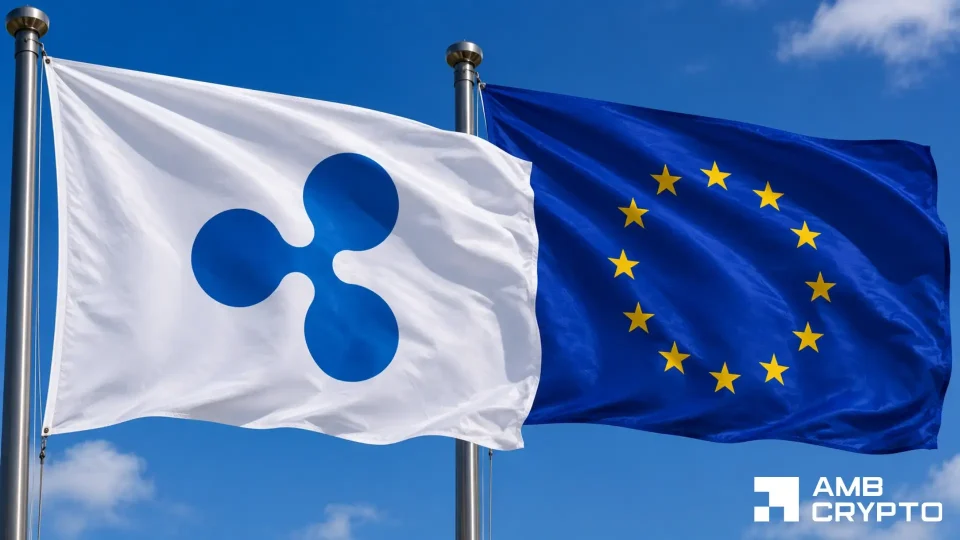
分析师认为瑞波币和币安币将在2026年末期争夺1000亿美元市值地位

bitcoinistPubblicato 2026-06-30Pubblicato ultima volta 2026-06-30

Introduzione

**摘要**:分析师预测,瑞波币(XRP)和币安币(BNB)可能在2026年下半年冲击1000亿美元市值大关。这一观点源自金融媒体Finbold的研究报告(已于2026年6月29日重新验证),并参考了CoinMarketCap的市场排名。 核心信息在于,这并非价格保证,而是基于历史图表和项目基本面的市场情绪与结构信号。对于交易者而言,此类叙事的重要性在于其反映了当前加密货币市场中资本、流动性及信心如何被定价。在主要由ETF资金流、杠杆、宏观决策和山寨币轮动驱动的市场里,背景解读至关重要。 分析师强调,1000亿美元市值的讨论本质上是推测性的,但可作为市场情绪的参照。XRP和BNB体量足够大,使得该目标并非幻想,但仍需有利的市场环境和项目自身催化剂才能实现。 报告提醒,需警惕市场常将单一数据点迅速放大为整体叙事。更审慎的解读应视其为信号而非确定性结果,需结合后续资金流、链上数据、未平仓合约及宏观流动性等多方面信息进行持续观察,以判断这是短期波动还是结构性趋势。

内容概要

  • 原始信息来源将瑞波币和币安币确定为主要候选者,有望在2026年下半年加入或重返1000亿美元市值俱乐部(最初的发现片段暗示了Sui,但核实后更正为瑞波币)。
  • 关键注意事项:这是分析师基于历史图表和项目基本面的推测,并非有保证的财务结果。
  • 对于交易者而言,这则新闻很重要,因为它影响着当前整个加密货币市场中资金、流动性或信心的定价方式。

事件概述

分析师认为瑞波币和币安币将在2026年末期争夺1000亿美元市值地位。此更新源自Finbold,其核心主张已对照Finbold研究报告(于2026年6月29日重新核实)/CoinMarketCap市场排名进行了核查。这一点很重要,因为如果这类报道仅被当作简单的价格头条,而非市场结构发展,它可能会迅速变得嘈杂难辨。

原始信息来源将瑞波币和币安币确定为主要候选者,有望在2026年下半年加入或重返1000亿美元市值俱乐部(最初的发现片段暗示了Sui,但核实后更正为瑞波币)。正确的解读不应是让单一数据点主导整个市场,而是最新的信号能让交易者更好地把握风险偏好的转移方向。在一个仍然由ETF资金流、杠杆、国库决策以及轮动的山寨币流动性所驱动的市场中,背景信息扮演着重要角色。

对加密货币交易者的重要性

关于1000亿美元市值的讨论本质上是推测性的,但作为情绪指标有其参考价值。瑞波币和币安币的规模足以让这个目标并非天方夜谭,但两者仍需要有利的市场背景和项目特定的催化剂才能实现。

实际的启示在于,这不仅仅关乎头条资产。此类报道的影响往往会蔓延至相关交易:比特币相关的动态可能影响山寨币情绪,ETF资金流数据可能塑造机构头寸,而代币特定的网络指标可能改变交易者对支撑、需求和供应的看法。当流动性稀薄时,这些次生效应的重要性几乎可以与原始新闻本身相提并论。

需要牢记的注意事项

这是分析师基于历史图表和项目基本面的推测,并非有保证的财务结果。这是读者应该始终牢记的核心要点。加密货币市场非常擅长将一个狭窄的数据点在几分钟内放大成一个全面的叙事。更好的解读通常更为审慎:这是一个信号,而非保证。

举例来说,资金流出并不自动意味着长期持有者失去了信心。一项治理警告并不意味着网络崩溃。代币解锁并不意味着所有释放的代币都在市场上抛售。衍生品头寸的变化也并不意味着价格必须直线跟随。有价值的部分在于理解这个信号所揭示的关于市场仓位、信心和激励措施的信息。

下一步关注点

下一步是观察数据是否会持续印证这一叙事。如果相同的模式出现在后续的资金流、链上指标、未平仓合约、治理仪表板或官方文件中,它就可能成为一个更持久的市场主题。如果它迅速消退,则可能最终看起来像是短期仓位调整引发的恐慌,而非结构性转变。

这种区分在当前市场中尤为重要。交易者仍在试图厘清:资金是真正撤离加密货币领域,轮动到更安全的加密资产中,还是仅仅停留在稳定币中等待更清晰的入场时机。这则报道为这个谜题增添了新的一块拼图,但它应该与更广泛的流动性、宏观和衍生品状况结合起来解读。

本报告基于来自Finbold及Finbold研究报告(于2026年6月29日重新核实)/CoinMarketCap市场排名的信息。

本文由新闻编辑部撰写,塞缪尔·雷编辑。

来源:Coinmarketcap

Crypto di tendenza

Letture associate

Losing $55 Million to Sell Bitcoin, MicroStrategy's Faith Reaches Its Interest Payment Day

On July 6th, Michael Saylor's MicroStrategy announced the sale of 3,588 BTC for approximately $216 million, incurring a realized loss of around $55.45 million compared to its average cost basis. This move, contradicting Saylor's long-standing "never sell" Bitcoin philosophy, was executed to pay dividends on its digital credit securities. The article traces this shift from a small "desensitization test" sale of 32 BTC in late May to the board's authorization on June 30th to sell up to $1.25 billion in Bitcoin for corporate purposes like dividends and buybacks. Analysis reveals that MicroStrategy's previous growth "flywheel"—using stock premiums to fund more Bitcoin purchases—has stalled. With its stock trading near a critical threshold (1.22x its Bitcoin NAV), issuing new shares would dilute value. Simultaneously, its financing channels (preferred stock, common stock ATM, convertible notes) are constrained while facing rigid annual dividend/interest obligations of roughly $1.76 billion. Consequently, selling Bitcoin became the calculated "optimal solution" under its own financial model. This transforms MicroStrategy from crypto's most prominent steady buyer into a predictable seller, creating a potential overhead of ~2,400 BTC in monthly selling pressure if obligations are fully covered by sales. This shift challenges the valuation models of the entire Digital Asset Treasury (DAT) sector that emulated MicroStrategy. The company's path forward now hinges on Bitcoin's price recovery, which would allow its preferred stock to trade at par and reopen its financing flywheel, creating a cyclical dependency between the firm's financial model and the asset it holds.

链捕手6 min fa

Losing $55 Million to Sell Bitcoin, MicroStrategy's Faith Reaches Its Interest Payment Day

链捕手6 min fa

OUSD Fake Partnership Controversy? Stablecoins and the Credit Game of Giant Endorsements

Author: Chloe, ChainCatcher Last week, Open Standard launched the dollar stablecoin OpenUSD (OUSD) with a list of over 140 supposedly supporting companies, including major names like Visa, Mastercard, Stripe, American Express, BlackRock, BNY, Standard Chartered, Google, Shopify, Samsung, Coinbase, Solana, and Ripple. The announcement initially impacted Circle's stock price, but doubts about the list quickly emerged. Several Korean firms named, including Samsung Electronics, Shinhan Financial Group, Dunamu (Upbit's parent), and K Bank, clarified they had not formally agreed to join the alliance. Some stated they were only approached for potential interest or learned of their inclusion from news reports, expressing surprise. Similar concerns were raised by U.S. entities, suggesting the list may be misleading. OUSD, led by Zach Abrams of Bridge (acquired by Stripe in 2024), promotes zero-fee minting/redemption, no transaction limits, and sharing reserve asset yields with partners instead of keeping profits. However, this model makes listed partnership imply economic benefits, turning it into a serious credibility issue. This incident reflects a common crypto marketing tactic of leveraging big names. A Chainstory analysis found over 62% of crypto press releases in late 2025 were high-risk or scams. The situation recalls Facebook's Libra (later Diem), which collapsed in 2022 after initial heavyweight backers like Visa and PayPal withdrew under regulatory pressure. Circle CEO Jeremy Allaire welcomed the competition but highlighted the challenges. He argued stablecoin success relies on network effects and real usage, not just alliances. He criticized OUSD's "free" model and full revenue sharing as potentially starving infrastructure development. Noting the dominance of USDT (~$1.84T) and USDC (~$730B) in the ~$2.91T stablecoin market, he suggested many new entrants lack real utility despite inflated circulation from incentives. In conclusion, while OUSD has genuine backing and a distinct model, its future depends on actual adoption in B2B payments, settlements, and cross-border transactions, not just a prestigious partner list. The market will determine if it is a credible challenger or merely another marketing promise.

链捕手8 min fa

OUSD Fake Partnership Controversy? Stablecoins and the Credit Game of Giant Endorsements

链捕手8 min fa

Selling at a Loss of $55 Million: MicroStrategy's Faith Reaches Its Interest Payment Date

On July 6th, Michael Saylor's MicroStrategy sold 3,588 BTC for approximately $216 million to fund dividends for its digital credit securities, incurring a realized loss of around $55.45 million. This move, from a company that long championed a "never sell" Bitcoin strategy, marks a significant shift. The sale followed a board-approved plan authorizing up to $1.25 billion in BTC sales for corporate purposes like dividends and buybacks. MicroStrategy's core growth model relied on issuing premium-priced shares to buy more Bitcoin. However, with its share price trading near the critical 1.22x mNAV (market value to net asset value) threshold, issuing new equity became dilutive. Simultaneously, its financing channels have constricted, while its annual dividend and interest obligations (roughly $1.76 billion) remain a rigid expense. Consequently, selling Bitcoin became the rational choice under its own framework. MicroStrategy now holds ~843,775 BTC and $2.55 billion in cash reserves. If annual obligations were fully covered by BTC sales, it could create consistent selling pressure of roughly 29,000 BTC per year. This transforms the market's largest consistent buyer into a scheduled seller, potentially pressuring Bitcoin prices and challenging the valuation models of similar digital asset treasury companies. For MicroStrategy, the path forward hinges on Bitcoin's price recovery, which would help restore the premium on its securities and restart its acquisition flywheel. Its fate is now cyclically tied to the asset it holds: a strong Bitcoin price validates its model, while a weak price strains the very model that exerts selling pressure.

marsbit43 min fa

Selling at a Loss of $55 Million: MicroStrategy's Faith Reaches Its Interest Payment Date

marsbit43 min fa

Trading

Spot

Articoli Popolari

Come comprare CAP

Benvenuto in HTX.com! Abbiamo reso l'acquisto di Cap (CAP) semplice e conveniente. Segui la nostra guida passo passo per intraprendere il tuo viaggio nel mondo delle criptovalute.Step 1: Crea il tuo Account HTXUsa la tua email o numero di telefono per registrarti il tuo account gratuito su HTX. Vivi un'esperienza facile e sblocca tutte le funzionalità,Crea il mio accountStep 2: Vai in Acquista crypto e seleziona il tuo metodo di pagamentoCarta di credito/debito: utilizza la tua Visa o Mastercard per acquistare immediatamente CapCAP.Bilancio: Usa i fondi dal bilancio del tuo account HTX per fare trading senza problemi.Terze parti: abbiamo aggiunto metodi di pagamento molto utilizzati come Google Pay e Apple Pay per maggiore comodità.P2P: Fai trading direttamente con altri utenti HTX.Over-the-Counter (OTC): Offriamo servizi su misura e tassi di cambio competitivi per i trader.Step 3: Conserva Cap (CAP)Dopo aver acquistato Cap (CAP), conserva nel tuo account HTX. In alternativa, puoi inviare tramite trasferimento blockchain o scambiare per altre criptovalute.Step 4: Scambia Cap (CAP)Scambia facilmente Cap (CAP) nel mercato spot di HTX. Accedi al tuo account, seleziona la tua coppia di trading, esegui le tue operazioni e monitora in tempo reale. Offriamo un'esperienza user-friendly sia per chi ha appena iniziato che per i trader più esperti.

26 Totale visualizzazioniPubblicato il 2026.06.26Aggiornato il 2026.06.26

Come comprare CAP

Discussioni

Benvenuto nella Community HTX. Qui puoi rimanere informato sugli ultimi sviluppi della piattaforma e accedere ad approfondimenti esperti sul mercato. Le opinioni degli utenti sul prezzo di CAP CAP sono presentate come di seguito.

活动图片