43-Year-Old OnlyFans Helmsman Passes Away; He Once Bought ETH into the Company's Balance Sheet

marsbitPubblicato 2026-03-25Pubblicato ultima volta 2026-03-25

Introduzione

Leonid Radvinsky, the 43-year-old Ukrainian-American majority owner of OnlyFans, has passed away after a long battle with cancer. Under his leadership since acquiring 75% of the parent company Fenix International in 2018, OnlyFans grew into a subscription-based content platform valued at approximately $18 billion, with over 377 million users and 4.63 million creators. Radvinsky maintained a low public profile but quietly engaged with crypto initiatives. In 2022, OnlyFans introduced NFT profile picture verification via Ethereum, marking its first step into web3. That same year, Fenix International purchased $19.9 million worth of ETH, recording it on its balance sheet, though it later wrote down $8.46 million due to market declines. The company also donated 500 ETH (then around $1 million) to Ukraine DAO in support of war relief efforts. Although OnlyFans never integrated crypto payments, its founder Tim Stokely later launched Zoop, an NFT trading card platform on Polygon, applying the creator-paid subscription model to web3. In 2025, Zoop and HBAR Foundation even submitted a bid to acquire TikTok’s U.S. operations with plans to incorporate token incentives and NFT-based creator monetization—though the deal did not materialize. Radvinsky’s tenure transformed OnlyFans into a financial powerhouse, generating over $6 billion in annual transactions and paying out more than $700 million in dividends in 2024 alone.

Original Author: Ma He, Foresight News

On March 23, Leonid Radvinsky, the actual controller of OnlyFans, passed away after a long battle with cancer at the age of 43. The OnlyFans company spokesperson simply stated "he passed away peacefully" and requested respect for the family's privacy.
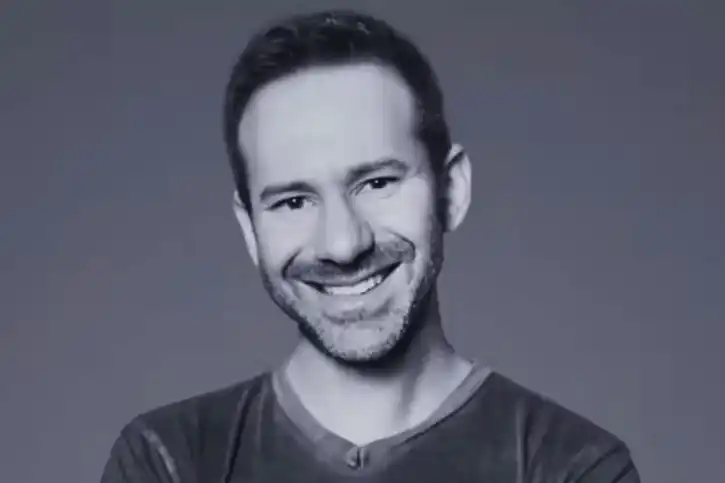
OnlyFans is a content subscription platform headquartered in London, UK. Creators upload exclusive content, and fans pay a monthly fee to subscribe. While it is centered around adult content creators, it also covers areas like fitness, music, and cooking. According to the latest data from 2025, OnlyFans has stabilized at approximately 377.5 million user accounts, with the number of creators growing to 4.63 million. Currently, OnlyFans is valued at around $18 billion, making it the highest-valued private company among global subscription-based creator economy platforms.

Radvinsky, a Ukrainian-American, rarely made public appearances. However, in 2018, he acquired a 75% stake in the parent company of OnlyFans, transforming a small UK-based platform into a cash cow with annual transaction volumes exceeding $6 billion. When he took over OnlyFans in 2018, the platform was just a "paid Instagram" started by the Stokely family with a loan of £10,000. After Radvinsky's significant acquisition, he decisively steered the platform towards adult content. During the pandemic, user numbers exploded, and in 2024 alone, he took home over $700 million in dividends.

Little was known publicly about Radvinsky's stance on crypto—he never publicly endorsed any chain but had explored the crypto world.

Bought Millions in ETH, Also Donated to Ukraine DAO

During his control, OnlyFans quietly launched a small feature in February 2022: support for Ethereum-verified NFTs as profile pictures. The platform explicitly stated this was "the first step in exploring the role of NFTs on the platform." Creators' NFT profile pictures would feature a small Ethereum icon, which could be clicked to view details on OpenSea.

This feature, seemingly minor, allowed millions of adult creators to directly engage with crypto assets for the first time.

This move was early. That year, the NFT frenzy was at its peak; Twitter had just introduced NFT profile pictures, and OnlyFans followed suit quickly.

Less known is that OnlyFans' parent company, Fenix International, also purchased tens of millions of dollars worth of ETH.
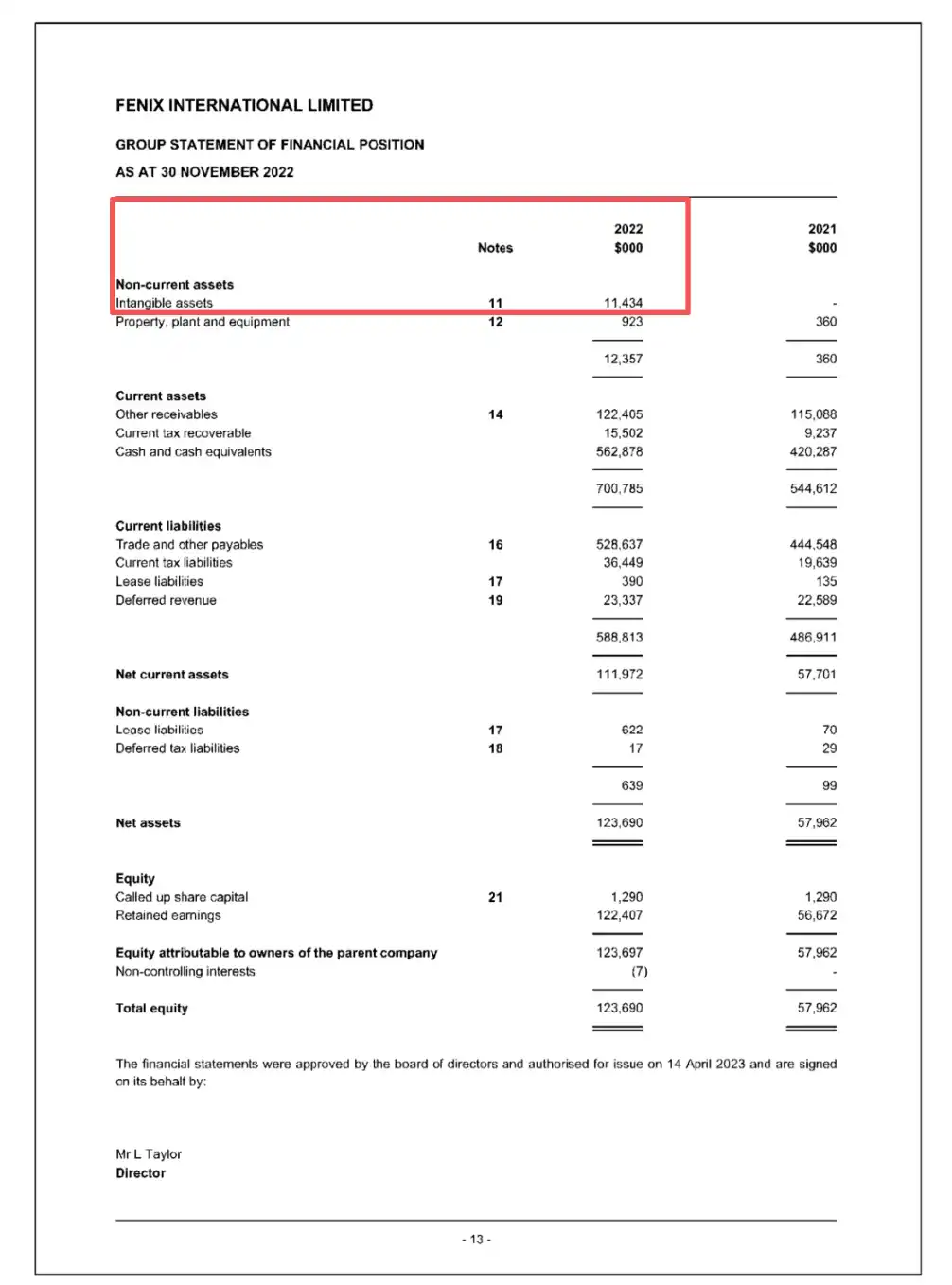
According to the company's financial statements from the end of November 2022, Fenix purchased a total of approximately $19.9 million worth of ETH, listing it as an intangible asset. Due to the cryptocurrency market crash in 2022, Ethereum's price plummeted significantly. The company recorded an impairment loss of approximately $8.46 million that year, adjusting the value of its ETH holdings to about $11.4 million.

The OnlyFans platform has not yet opened up crypto payments; users still rely on credit cards or third-party virtual cards. During Radvinsky's era, OnlyFans resembled more of a hybrid of "traditional finance + adult content," taking a 20% cut, with terrifyingly stable cash flow.

Shifting focus to the Russia-Ukraine war period in 2022, a group of cryptocurrency activists and enthusiasts quickly gathered to support Ukraine.

Their method was to auction an NFT artwork depicting the Ukrainian flag. The decentralized autonomous organization "Ukraine DAO" raised 2258 ETH in an auction, worth approximately $6.79 million at the time.
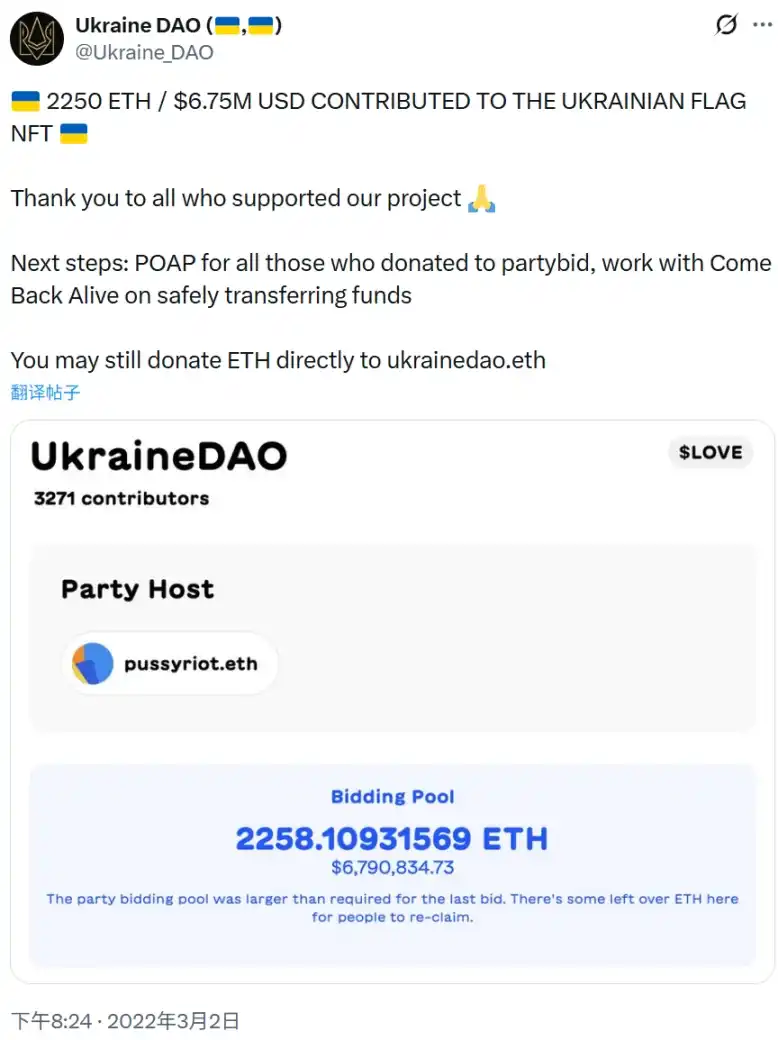
According to a subsequent report by Decrypt, the adult website OnlyFans also participated in this donation.

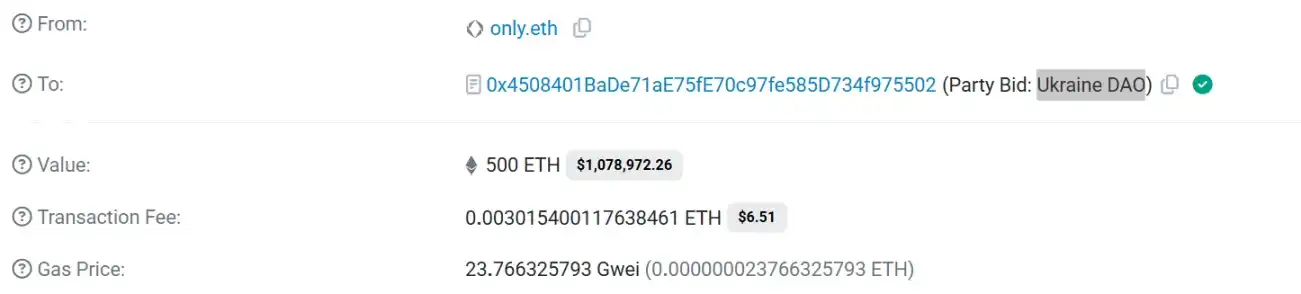
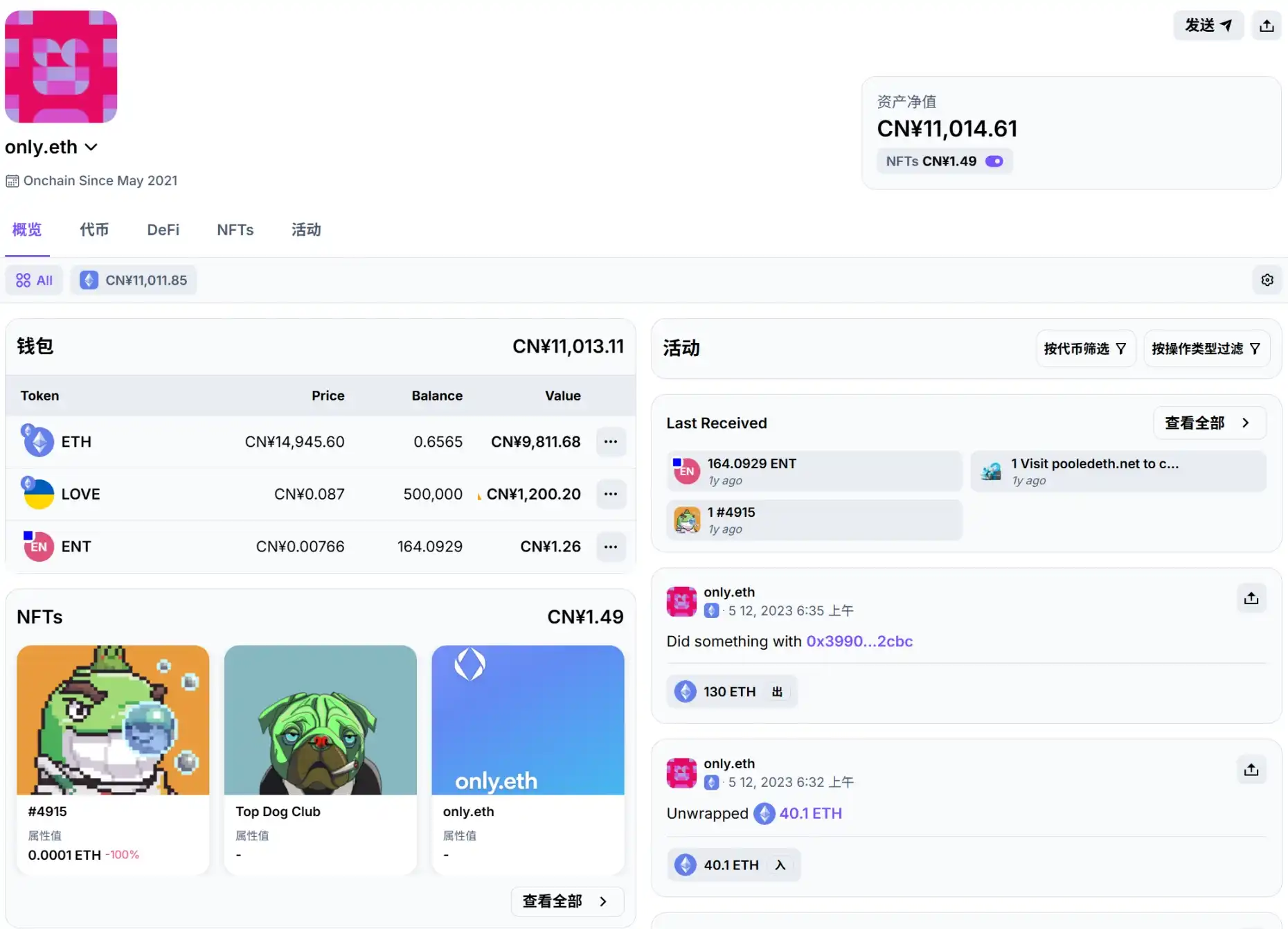
Blockchain tracking platform Etherscan showed that on February 27, an address named only.eth donated 500 ETH to Ukraine DAO, worth $1.079 million today.
Zapper data shows that the only.eth address was created in May 2021. Currently, its wallet holds a total value of less than $2000, with the last wallet activity being 3 years ago.
However, the person who truly brought the OnlyFans基因 (gene) into crypto was its founder, Tim Stokely.
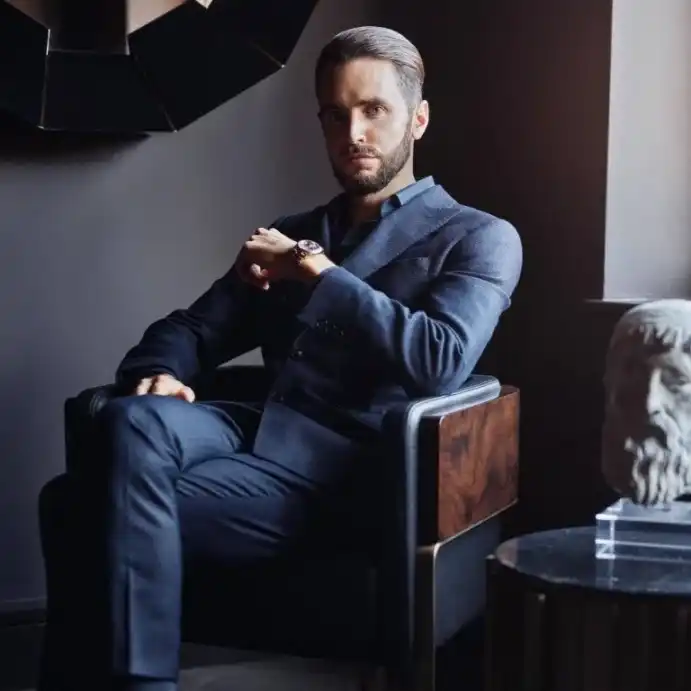
Stokely founded the OnlyFans platform in 2016, resigned as CEO in December 2021, and made a complete turn. In May 2022, he and former OnlyFans executive RJ Phillips launched Zoop—an NFT trading card platform based on the Polygon chain.

Zoop is positioned as completely "family-friendly": selling 3D digital collectible cards of celebrities and influencers. Users can buy, sell, trade, collect, and also receive airdropped benefits. It features limited editions and emphasizes creator revenue sharing. Essentially, Zoop transplants OnlyFans' "fans pay directly" model into the Web3 collectibles track.

In April 2025, Zoop, in conjunction with the HBAR Foundation (the treasury management entity for the Hedera chain), submitted a bid to acquire TikTok's US operations. The core of the proposal was Web3 integration: Hedera's scalability would be used to support TikTok's NFTs, creator payments, governance structure, and overall token incentive system, aiming to distribute 80% of advertising revenue directly to creators and users.

Ultimately, for various reasons, this intended bid did not finalize. Tim Stokely stepped away from the adult empire but brought its core logic into Zoop and the Hedera-led TikTok bid, effectively upgrading the "fans pay for content" model into a Web3 version.


Domande pertinenti

QWho was the actual controller of OnlyFans and what was the cause of his death?

ALeonid Radvinsky was the actual controller of OnlyFans. He passed away at the age of 43 after a long battle with cancer.

QWhat significant cryptocurrency purchase did OnlyFans' parent company, Fenix International, make under Radvinsky's control?

AFenix International purchased approximately $19.9 million worth of ETH, which it listed as an intangible asset on its balance sheet.

QHow did the OnlyFans platform engage with the crypto space in 2022?

AIn 2022, OnlyFans launched a feature allowing users to set an Ethereum-verified NFT as their profile picture, marking its first step in exploring the role of NFTs on the platform.

QWhat was the name of the core business model of the NFT platform launched by OnlyFans' founder, Tim Stokely, after he resigned?

ATim Stokely co-founded Zoop, an NFT trading card platform on the Polygon blockchain, which uses a 'fans pay creators directly' model similar to OnlyFans but for Web3 collectibles.

QWhat was the purpose of the only.eth address's transaction to Ukraine DAO in February 2022?

AThe only.eth address, associated with OnlyFans, donated 500 ETH (worth about $1.079 million at the time of the article) to Ukraine DAO to support Ukraine during the war.

Letture associate

Strategy's Loss in the Second Quarter Reaches $8.22 Billion Amid Bitcoin Decline

Strategy, the largest corporate holder of Bitcoin, reported a net loss of $8.22 billion for the second quarter. This loss was primarily driven by an $8.32 billion unrealized loss on its Bitcoin holdings due to a decline in the asset's price during the period. Despite these paper losses, the company increased its Bitcoin holdings to 843,775 BTC, a 25% growth since the start of the year. As part of a new monetization strategy, Strategy sold approximately $218.4 million worth of Bitcoin, mainly to fund dividends for preferred shareholders, with $216 million of that sold after Q2 ended. The company also built a $3.75 billion cash reserve, which it claims is sufficient to cover over two years of dividend and interest payments, aiming to insulate itself from Bitcoin's volatility while meeting obligations. Following the earnings release, Strategy's stock (MSTR) rose 4.7% in regular trading but corrected slightly after-hours. This pattern reflects how the company's accounting results are heavily tied to Bitcoin's price swings, even as its long-term strategy remains unchanged. The report indicates that Strategy is maintaining its core strategy of accumulating Bitcoin while building a financial buffer. This quarterly loss follows a recognizable pattern, with the company posting significant unrealized losses in previous quarters (e.g., $12.4 billion in Q4 2025 and ~$12.5 billion in Q1 2026) due to fair-value accounting. A key technical shift is its new monetization program, which introduces periodic selling pressure on the market, transitioning Strategy from a pure accumulator to a participant that occasionally adds supply. A critical question remains: how long can the cash reserve cover dividend obligations if a Bitcoin price downturn persists beyond two years?

cryptonews.ru21 min fa

Strategy's Loss in the Second Quarter Reaches $8.22 Billion Amid Bitcoin Decline

cryptonews.ru21 min fa

Will Terrorist Durov Ban Russian Officials?

Telegram founder Pavel Durov publicly reacted to being labeled a "terrorist" by Russian authorities, stating the designation came after he refused demands for mass surveillance and censorship on the platform. In a Telegram post, he highlighted that this status formally bans him from "publishing information online." Durov concluded with a statement widely circulated: Russian officials "clearly don't understand who can ban whom on the internet." This remark suggests Durov could potentially restrict official Russian government and officials' channels on Telegram, which continue to operate on the platform despite its formal blocking in Russia. The situation parallels previous, slow-moving state directives, like switching officials to domestic cars, contrasted with the current push to migrate all government communication to the Russian-made messenger MAX by 2030. However, reports indicate many officials still use Telegram via workarounds, fearing surveillance on MAX, while alternatives like BiP and KakaoTalk recently became inaccessible in Russia without a VPN. Durov has not specified any immediate actions against state channels. His statement is an initial response, with further developments depending on the authorities' reaction. The dynamic differs from 2020 when Russian regulators lifted a block on Telegram; now, Durov implies control from within the platform itself over the official accounts that persisted through that earlier blockade.

cryptonews.ru21 min fa

Will Terrorist Durov Ban Russian Officials?

cryptonews.ru21 min fa

DeepSeek V4 Official Version Arrives, New Capabilities Emerge, Value-for-Money King Enters the Fray

On July 31st, DeepSeek officially launched the public API beta for its DeepSeek-V4-Flash model. A key highlight is its performance on multiple Agent benchmark tests, reportedly nearing or even surpassing the level of the V4-Pro preview version from three months ago. Notably, the Flash model achieves this with significantly smaller scale (130B active parameters vs. Pro's 490B), suggesting that post-training optimization and data quality may be as crucial as raw model size. DeepSeek emphasized that the V4-Flash-0731 uses the same model architecture and size as its preview version, with improvements attributed solely to "re-trained post-training." The update also marks the official debut of DeepSeek's self-developed Agent framework, "Harness." The move signals DeepSeek's strategic push to position its cost-effective Flash model as a competitive base for Agent applications—scenarios requiring autonomous planning, tool usage, and complex task execution—where inference speed and cost are critical. By natively supporting OpenAI's Responses API format and adapting for code-generation scenarios, DeepSeek aims not just to be a cheaper alternative but to establish its own ecosystem in the Agent era. This release follows DeepSeek's record-breaking ~$50 billion fundraising round roughly two months prior, underscoring market confidence in its technology and commercialization prospects. The company is reportedly preparing for another funding round at a valuation of approximately $71 billion. The Flash model's advancement represents a step in fulfilling the high expectations that come with this valuation, setting the stage for the impending release of the V4-Pro official version and intensifying competition in the global Agent landscape.

marsbit25 min fa

DeepSeek V4 Official Version Arrives, New Capabilities Emerge, Value-for-Money King Enters the Fray

marsbit25 min fa

Trading

Spot
活动图片