Two Legends Lost in Three Days: Is Google's AI Talent Dam Cracking?

marsbitPubblicato 2026-06-20Pubblicato ultima volta 2026-06-20

Introduzione

In three days, Google lost two AI legends. On June 18, Noam Shazeer, co-author of the seminal "Attention is All You Need" paper and Gemini co-lead, left for OpenAI. Just 48 hours later, John Jumper, 2024 Nobel laureate and AlphaFold lead, departed DeepMind for Anthropic. This follows Andrej Karpathy joining Anthropic in May. These moves highlight a structural trend: top AI talent is concentrating at mission-driven, pre-IPO firms like OpenAI and Anthropic, while Google becomes a primary source. The exodus stems from a core mission mismatch. Google's ad-centric model often subordinates AI research to product and revenue goals, creating friction for pioneers like Shazeer, who returned in 2024 only to leave again. In contrast, OpenAI and Anthropic offer singular focus on pushing AI boundaries, whether towards AGI or safety-aligned models, which deeply appeals to top researchers like Jumper. Financial incentives amplify the pull. With both OpenAI and Anthropic nearing IPO, employees stand to gain immensely from equity, an upside Google's mature stock cannot match. Furthermore, the 2023 merger of Google Brain and DeepMind, intended to consolidate strength, has instead created cultural tension and slowed the path from research to product, as evidenced by Gemini's pace. This talent redistribution is reshaping the AI landscape. While Google retains vast data and compute resources, its true crisis is the quiet, continuous loss of the people who define the field's future. The real mo...

While the company that defined AI's past is losing the people who will define its future.

On June 18th, Noam Shazeer, core author of the Transformer paper and co-lead of Google Gemini, announced on X his departure from Google to join OpenAI, which had confidentially filed for an IPO with the SEC. He is one of the eight equal contributors to the 2017 paper "Attention is All You Need," which laid the technical foundation for modern large language models. Sam Altman immediately reposted and commented, "Noam has been one of the people I've most wanted to work with since day one of OpenAI. Only took a decade."

Forty-eight hours later, on June 19th, John Jumper, 2024 Nobel Laureate in Chemistry and core leader of AlphaFold, announced his departure from Google DeepMind after nearly nine years, joining Anthropic.

Two almost simultaneous departures of top-tier talent are enough to shock the AI community. Extending the timeline reveals an even clearer trend. On May 19th, former OpenAI founding member Andrej Karpathy announced he was joining Anthropic's pre-training team. Although he never worked at Google, his choice similarly illustrates one thing: top talent is concentrating at OpenAI and Anthropic, with Google becoming the primary source in this talent reshuffle.

Three Departures, Not Isolated Cases, But a Trend

Jumper is no ordinary researcher. In 2024, he, along with Demis Hassabis and David Baker, was awarded the Nobel Prize in Chemistry for leading the AlphaFold project, which used AI to predict protein 3D structures in an extremely short time, solving a problem that had perplexed the biology community for fifty years.

John Jumper (left) pictured with Demis Hassabis, echoing reports of his departure from Google DeepMind for Anthropic. Source: businessinsider.com (copyright review needed)

Shazeer is a key figure in modern AI development. He joined Google in 2000 and co-authored "Attention is All You Need" in 2017. The Transformer architecture proposed in that paper is the technical bedrock of all current large language models. In 2021, after Google refused to launch the AI chatbot product he co-developed with Daniel De Freitas, he left and founded Character.AI in 2022. Three years later, Google brought him back for approximately $2.7 billion, appointing him co-lead of Gemini. However, less than two years after his return, he has chosen to leave again, this time for OpenAI.
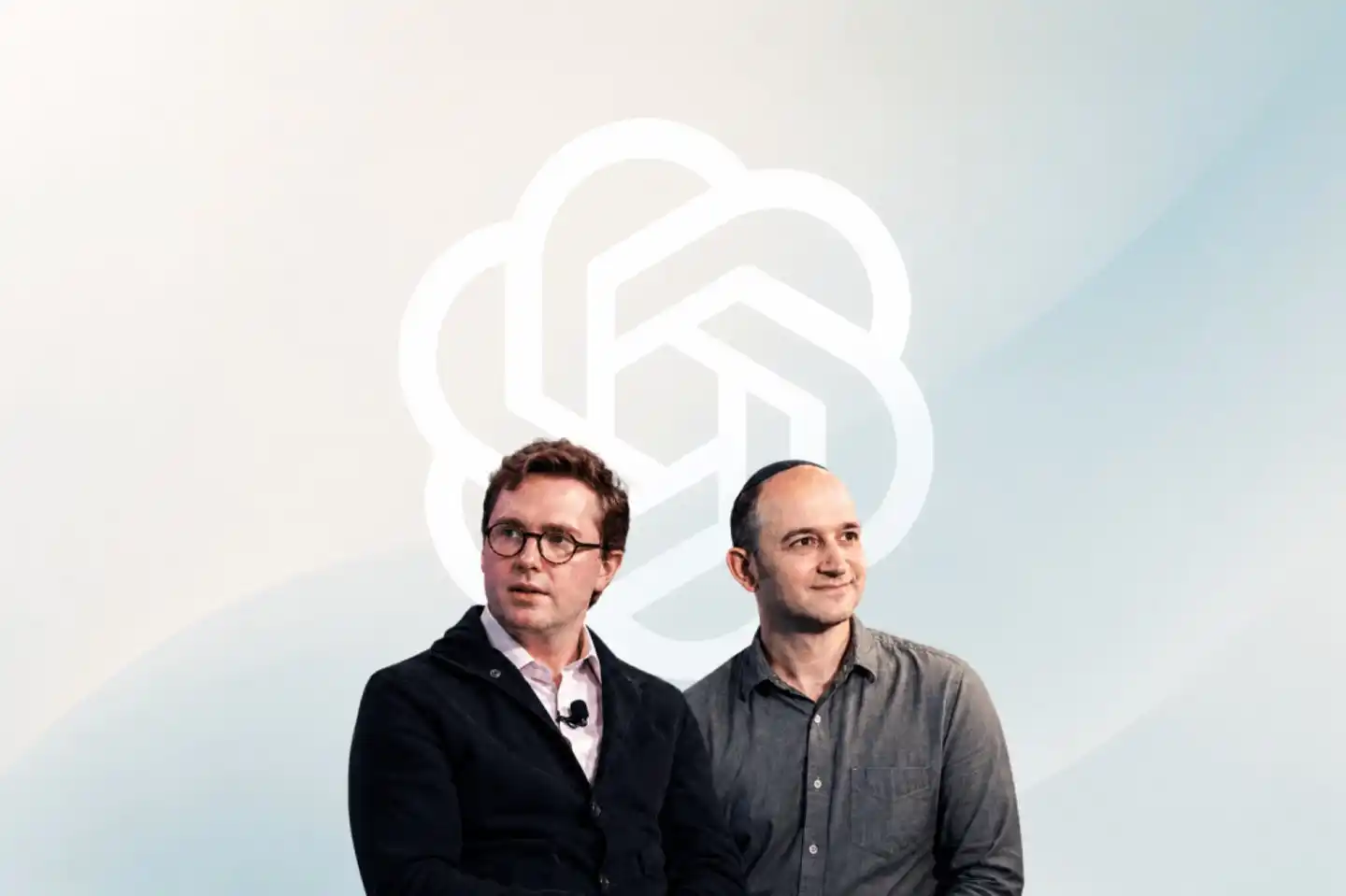
Noam Shazeer pictured with another AI executive, echoing reports of his departure from Google for OpenAI. Source: techcrunch.com (copyright review needed)

Karpathy's choice further confirms the larger trend. In May 2026, this OpenAI founding member, after concluding his educational startup Eureka Labs, announced he was joining Anthropic's pre-training team, responsible for "granting Claude core knowledge and capabilities through large-scale training runs." He never worked at Google, but his destination itself shows where top talent is concentrating.

Portrait of Andrej Karpathy, accompanying reports of his joining Anthropic's pre-training team. Source: bloomberg.com (copyright review needed)

Looking back further, this talent flow trend has been evident. Following the merger of Google Brain and DeepMind in April 2023, a significant number of mid-level and senior researchers flowed to OpenAI, Anthropic, and xAI. Tracking the author affiliations on cutting-edge AI papers on arXiv reveals that for more and more top researchers, the institution name on their profile has changed from "Google" to "OpenAI" or "Anthropic."

OpenAI and Anthropic are assembling the most influential talent rosters in the AI field. And Google is becoming the primary exporter in this talent migration.

Mission Misalignment

This is the most fundamental divergence, surpassing salary and compute power in importance.

Nearly 80% of Google parent Alphabet's revenue comes from advertising. This means all investments in the AI field must ultimately answer a product-oriented question: how will this serve the advertising business?

Shazeer quickly discovered after his return in 2024 that Google's core logic hadn't changed. The fundamental constraint he faced at Gemini—catching up to ChatGPT—remained a constrained task within an advertising-first architecture. The goal wasn't to redefine the boundaries of AI capability, but to defend advertising market share.

In contrast, OpenAI's charter clearly states its core mission is AGI (Artificial General Intelligence) for the benefit of all humanity. Anthropic has been built around AI safety since its inception, registered as a Public Benefit Corporation (PBC), legally obligated to balance shareholder interests with social benefits. At these two companies, top researchers don't need to answer questions like "how will this help the ads division increase revenue." They only need to focus on one goal: how to continuously push the boundaries of model capability.

Several researchers who moved from Google to these two organizations have repeatedly mentioned the same word in post-move interviews: "focus." At Google, key performance indicators are search click-through rates, ad conversion rates, and YouTube watch time. At Anthropic, key performance indicators are Claude's performance in pre-training and post-training. For a scientist like Jumper, who dedicated nine academic and professional years to the protein folding problem, this high degree of focus holds an irreplaceable appeal. At Anthropic, AI for Science is not a fringe project but a core research direction.

Mission is the push, while capital is the pull. In terms of compensation incentives, Google is at a structural disadvantage.

OpenAI confidentially filed for an IPO with the SEC in 2026, and Anthropic is also in the IPO preparation queue. Employees at both companies hold significant equity, poised for public market realization. The timing of Jumper's and Shazeer's decisions to join just before this window is no coincidence. In comparison, Google's market capitalization exceeds $2 trillion, with limited room for its stock price to double in the short term, making the explosive potential of its equity incentives at least an order of magnitude lower.

More noteworthy is the capital market's distinctly different pricing logic for these two types of companies. Leaked OpenAI audited financial reports show its 2025 GAAP net loss was approximately $38.5 to $39.0 billion (including about $30 billion in non-cash conversion expenses), with operating losses widening from $8.78 billion in 2024 to about $20.9 billion, yet the capital market reaction remained positive. During the same period, OpenAI's revenue soared from $3.7 billion to $13.07 billion, a 253% increase. In Q1 2026, the company's revenue was $5.7 billion with operating expenses of $3.7 billion. Investors are willing to pay for a "losses for growth" strategy.

At Google, AI investments of similar scale prompt questions from the capital market like, "What impact will this have on margins?" The same large-scale investment in AI is called strategic investment at OpenAI but is viewed as cost-center expansion at Google.

From the perspective of a top researcher, the logic behind this choice isn't complicated. On one side is a company nearing an IPO, where equity could realize nine-figure value within two years, with the entire team focused on optimizing model capability. On the other side is a mature behemoth with a $2 trillion market cap, where a researcher's work must continuously align with the quarterly goals of advertising and search teams.

The DeepMind Merger Creates New Centrifugal Forces

In April 2023, Google Brain and DeepMind merged into Google DeepMind, unified under the leadership of Demis Hassabis. The official narrative at the time was "consolidating strength." But looking back three years later, the merger's actual effects are debatable.

The merger failed to fundamentally resolve the realignment of influence in translating research into products.

DeepMind's foundational research needed to be implemented through product teams, which had their own independent timelines and priorities. Gemini is a典型案例. Shazeer was appointed co-lead, but the product release节奏 and commercialization path remained highly constrained by the search and cloud business units. This contrasts sharply with OpenAI's model where the entire organization revolves around the same core product goal.

The merger also created cultural identity tensions. Google Brain leaned more towards engineering and commercial落地, while DeepMind leaned more towards basic science and long-term exploration. Post-merger, the long-term research-oriented culture is seen as eroded under the pressure to "align with product roadmaps."

A former Google researcher wrote on X, "When we were asked to align our research direction with the product roadmap, I knew it was time to go."

Jumper's departure can be seen as a statement on the post-merger cultural direction. He worked at DeepMind for nearly nine years, experiencing the independent research era, the post-merger integration period, and the current phase of increasing productization pressure. When the research environment increasingly required alignment with search engine KPIs, leaving became a calculated but not difficult decision.

A deeper issue is that less than two years after Shazeer's return, the pace of AI product releases hasn't significantly accelerated. Gemini narrowed the capability gap with ChatGPT but never became the leader in细分领域. He hasn't publicly expressed dissatisfaction—his statement on X was standard professional措辞—but the action itself speaks volumes.

The Talent Map is Undergoing an Irreversible Reshuffle

This talent exodus is no longer just a matter of a few people changing jobs.

Google can bring back top researchers, but it cannot change the most fundamental thing: its core business model is advertising. AI is an enabling tool, not the ultimate mission. Money can bring back a person, but money cannot make Google not be Google. This means the outflow won't stop; it's a structural trend, not a few isolated departures.

On the other side, OpenAI and Anthropic are successfully carving their paths. OpenAI is securing the strongest force in LLM research, while Anthropic is combining AI safety with scientific applications. Both companies have clear boundaries and their own moats. Google is caught in the middle, lacking both OpenAI's product爆发力 and Anthropic's brand differentiation in safety.

What has irreversibly tilted the talent天平 is the IPO window. When top researchers can gain nine-figure or even ten-figure wealth through equity realization within a year or two, no mature giant's compensation system can compete on the same dimension. 2026 may well be remembered not for any particular AI capability breakthrough, but as the year the talent map underwent a structural reshuffle. In this round of competition, talent density determines model capability, model capability determines market share, and market share determines the winner's list.

Google is not without a chance for a comeback. It possesses one of the world's largest computing infrastructures, the most extensive user data reserves, and持续领先 in AI academic paper publications. But all these advantages rest on one premise: you must have足够优秀的人 to use them. And what Google is losing is precisely these people.

This might be the quietest crisis in Google's history—no major product失误, no heavy regulatory fines, no financial爆雷. It's just the smartest people, one after another, choosing to leave. In the AI field, the true moat has never been data, nor compute power, nor even the model architecture itself. It's the people willing to stay and push the technological boundaries day after day. And Google is discovering that retaining these people is far more difficult than training a trillion-parameter model. (This article was first published on Taimei APP, Author | AGI-Signal, Editor | Qin Conghui)

Crypto di tendenza

Domande pertinenti

QWhat are the two major AI talent departures from Google mentioned in the article that occurred within three days?

AThe two major departures were: 1) Noam Shazeer, co-author of the 'Attention Is All You Need' paper and co-head of Gemini, who left Google to join OpenAI. 2) John Jumper, 2024 Nobel laureate in Chemistry and core leader of AlphaFold, who left Google DeepMind to join Anthropic.

QAccording to the article, what is identified as the most fundamental reason for the talent exodus from Google?

AThe most fundamental reason is a 'mission misalignment.' Google's core business and revenue are centered on advertising, which imposes product-oriented constraints on AI research and development. In contrast, companies like OpenAI and Anthropic allow researchers to focus singularly on advancing AI capabilities or safety, without the need to justify their work in terms of ad revenue.

QWhat significant event in Google's AI organization in 2023 is cited as a catalyst for increased internal tension and talent outflow?

AThe merger of Google Brain and DeepMind into Google DeepMind in April 2023 is cited. While intended to consolidate strength, it reportedly created centrifugal forces by failing to solve the issue of research-to-product translation and introducing cultural clashes between commercial engineering (Google Brain) and long-term scientific exploration (DeepMind) under increased productization pressure.

QWhat financial factor is mentioned as a powerful 'pull' attracting top AI talent to companies like OpenAI and Anthropic?

AThe impending IPO window for OpenAI and Anthropic is a major financial pull. Employees at these pre-IPO companies hold significant equity that could become extremely valuable upon a public offering, offering potentially nine-figure or higher financial rewards that mature giants like Google, with its massive but slower-growing market cap, cannot easily match.

QWhat does the article conclude is the true 'moat' (defensive advantage) in the AI field, which Google is currently struggling to maintain?

AThe article concludes that the true moat in AI is not data, computing power, or even model architecture, but the people—the top talent who are willing to stay and push the boundaries of the technology day after day. Google's quiet crisis is that it is losing precisely these individuals.

Letture associate

TechFlow Intelligence Bureau: Anthropic IPO Odds Exceed 80%, Iran Closes Strait of Hormuz Again, Triggering Oil Price Volatility

**Market Digest** **AI & Tech:** Anthropic is widely expected to announce an IPO before November 2026, raising questions about balancing its trillion-dollar valuation ambitions with its core "AI safety" mission. Brands are increasingly adopting AI-generated virtual influencers for marketing. Cloudflare introduced temporary accounts for AI agents to ease automation workflows. **Infrastructure & Hardware:** Google's IPv6 traffic surpassed 50%, marking a major internet milestone. Goldman Sachs warned that massive projected AI capital expenditure ($5.3T) is approaching credit saturation limits, potentially curbing the "AI arms race." **Space & Robotics:** SpaceX's IPO saw a historic $370M retail buying frenzy in three days. Hyundai Motor Group plans to acquire full ownership of Boston Dynamics. Elon Musk speculated about future "septillion-dollar" investments in antimatter for interstellar travel. **Energy & Geopolitics:** Iran's military announced another closure of the strategic Strait of Hormuz, accusing Israel of violating a ceasefire, causing oil market volatility. However, ship-tracking data indicated some traffic continued. Concurrently, Iran resumed crude loadings at Kharg Island, potentially releasing up to 20 million barrels to the market. **Finance & Macro:** A European CLO (collateralized loan obligation) experienced its first post-2008-crisis-era equity tranche default, raising alarms in credit markets. Nomura warned that new Federal Reserve Chair Wash's perceived hawkish debut speech could signal a significant policy shift. **The Undercurrent:** Seemingly disparate events—the Strait of Hormuz tension, the European CLO default, and warnings on AI spending—point to a tightening of global liquidity and rising marginal costs across energy, credit, and tech investment. Meanwhile, capital continues chasing grand narratives like space exploration and advanced AI, highlighting a divergence where old-world leverage frays as new-world stories grow more ambitious.

marsbit4 h fa

TechFlow Intelligence Bureau: Anthropic IPO Odds Exceed 80%, Iran Closes Strait of Hormuz Again, Triggering Oil Price Volatility

marsbit4 h fa

Trading

Spot
Futures

Articoli Popolari

Cosa è $S$

Comprendere SPERO: Una Panoramica Completa Introduzione a SPERO Mentre il panorama dell'innovazione continua a evolversi, l'emergere delle tecnologie web3 e dei progetti di criptovaluta gioca un ruolo fondamentale nel plasmare il futuro digitale. Un progetto che ha attirato l'attenzione in questo campo dinamico è SPERO, denotato come SPERO,$$s$. Questo articolo mira a raccogliere e presentare informazioni dettagliate su SPERO, per aiutare gli appassionati e gli investitori a comprendere le sue basi, obiettivi e innovazioni nei domini web3 e crypto. Che cos'è SPERO,$$s$? SPERO,$$s$ è un progetto unico all'interno dello spazio crypto che cerca di sfruttare i principi della decentralizzazione e della tecnologia blockchain per creare un ecosistema che promuove l'impegno, l'utilità e l'inclusione finanziaria. Il progetto è progettato per facilitare interazioni peer-to-peer in modi nuovi, fornendo agli utenti soluzioni e servizi finanziari innovativi. Al suo interno, SPERO,$$s$ mira a responsabilizzare gli individui fornendo strumenti e piattaforme che migliorano l'esperienza dell'utente nello spazio delle criptovalute. Questo include la possibilità di metodi di transazione più flessibili, la promozione di iniziative guidate dalla comunità e la creazione di percorsi per opportunità finanziarie attraverso applicazioni decentralizzate (dApps). La visione sottostante di SPERO,$$s$ ruota attorno all'inclusività, cercando di colmare le lacune all'interno della finanza tradizionale mentre sfrutta i vantaggi della tecnologia blockchain. Chi è il Creatore di SPERO,$$s$? L'identità del creatore di SPERO,$$s$ rimane piuttosto oscura, poiché ci sono risorse pubblicamente disponibili limitate che forniscono informazioni dettagliate sul suo fondatore o fondatori. Questa mancanza di trasparenza può derivare dall'impegno del progetto per la decentralizzazione—un ethos che molti progetti web3 condividono, dando priorità ai contributi collettivi rispetto al riconoscimento individuale. Centrando le discussioni attorno alla comunità e ai suoi obiettivi collettivi, SPERO,$$s$ incarna l'essenza dell'empowerment senza mettere in evidenza individui specifici. Pertanto, comprendere l'etica e la missione di SPERO rimane più importante che identificare un creatore singolo. Chi sono gli Investitori di SPERO,$$s$? SPERO,$$s$ è supportato da una varietà di investitori che vanno dai capitalisti di rischio agli investitori angelici dedicati a promuovere l'innovazione nel settore crypto. Il focus di questi investitori generalmente si allinea con la missione di SPERO—dando priorità a progetti che promettono avanzamenti tecnologici sociali, inclusività finanziaria e governance decentralizzata. Queste fondazioni di investitori sono tipicamente interessate a progetti che non solo offrono prodotti innovativi, ma contribuiscono anche positivamente alla comunità blockchain e ai suoi ecosistemi. Il supporto di questi investitori rafforza SPERO,$$s$ come un concorrente degno di nota nel dominio in rapida evoluzione dei progetti crypto. Come Funziona SPERO,$$s$? SPERO,$$s$ impiega un framework multifunzionale che lo distingue dai progetti di criptovaluta convenzionali. Ecco alcune delle caratteristiche chiave che sottolineano la sua unicità e innovazione: Governance Decentralizzata: SPERO,$$s$ integra modelli di governance decentralizzati, responsabilizzando gli utenti a partecipare attivamente ai processi decisionali riguardanti il futuro del progetto. Questo approccio favorisce un senso di proprietà e responsabilità tra i membri della comunità. Utilità del Token: SPERO,$$s$ utilizza il proprio token di criptovaluta, progettato per servire varie funzioni all'interno dell'ecosistema. Questi token abilitano transazioni, premi e la facilitazione dei servizi offerti sulla piattaforma, migliorando l'impegno e l'utilità complessivi. Architettura Stratificata: L'architettura tecnica di SPERO,$$s$ supporta la modularità e la scalabilità, consentendo un'integrazione fluida di funzionalità e applicazioni aggiuntive man mano che il progetto evolve. Questa adattabilità è fondamentale per mantenere la rilevanza nel panorama crypto in continua evoluzione. Coinvolgimento della Comunità: Il progetto enfatizza iniziative guidate dalla comunità, impiegando meccanismi che incentivano la collaborazione e il feedback. Nutrendo una comunità forte, SPERO,$$s$ può affrontare meglio le esigenze degli utenti e adattarsi alle tendenze di mercato. Focus sull'Inclusione: Offrendo basse commissioni di transazione e interfacce user-friendly, SPERO,$$s$ mira ad attrarre una base utenti diversificata, inclusi individui che potrebbero non aver precedentemente interagito nello spazio crypto. Questo impegno per l'inclusione si allinea con la sua missione generale di empowerment attraverso l'accessibilità. Cronologia di SPERO,$$s$ Comprendere la storia di un progetto fornisce preziose intuizioni sulla sua traiettoria di sviluppo e sui traguardi. Di seguito è riportata una cronologia suggerita che mappa eventi significativi nell'evoluzione di SPERO,$$s$: Fase di Concettualizzazione e Ideazione: Le idee iniziali che formano la base di SPERO,$$s$ sono state concepite, allineandosi strettamente con i principi di decentralizzazione e focus sulla comunità all'interno dell'industria blockchain. Lancio del Whitepaper del Progetto: Dopo la fase concettuale, è stato rilasciato un whitepaper completo che dettaglia la visione, gli obiettivi e l'infrastruttura tecnologica di SPERO,$$s$ per suscitare interesse e feedback dalla comunità. Costruzione della Comunità e Prime Interazioni: Sono stati effettuati sforzi attivi di outreach per costruire una comunità di early adopters e potenziali investitori, facilitando discussioni attorno agli obiettivi del progetto e ottenendo supporto. Evento di Generazione del Token: SPERO,$$s$ ha condotto un evento di generazione del token (TGE) per distribuire i propri token nativi ai primi sostenitori e stabilire una liquidità iniziale all'interno dell'ecosistema. Lancio della Prima dApp: La prima applicazione decentralizzata (dApp) associata a SPERO,$$s$ è stata attivata, consentendo agli utenti di interagire con le funzionalità principali della piattaforma. Sviluppo Continuo e Partnership: Aggiornamenti e miglioramenti continui alle offerte del progetto, inclusi partnership strategiche con altri attori nello spazio blockchain, hanno plasmato SPERO,$$s$ in un concorrente competitivo e in evoluzione nel mercato crypto. Conclusione SPERO,$$s$ rappresenta una testimonianza del potenziale del web3 e delle criptovalute di rivoluzionare i sistemi finanziari e responsabilizzare gli individui. Con un impegno per la governance decentralizzata, il coinvolgimento della comunità e funzionalità progettate in modo innovativo, apre la strada verso un panorama finanziario più inclusivo. Come per qualsiasi investimento nello spazio crypto in rapida evoluzione, si incoraggiano potenziali investitori e utenti a ricercare approfonditamente e a impegnarsi in modo riflessivo con gli sviluppi in corso all'interno di SPERO,$$s$. Il progetto mostra lo spirito innovativo dell'industria crypto, invitando a ulteriori esplorazioni delle sue innumerevoli possibilità. Mentre il percorso di SPERO,$$s$ è ancora in fase di sviluppo, i suoi principi fondamentali potrebbero effettivamente influenzare il futuro di come interagiamo con la tecnologia, la finanza e tra di noi in ecosistemi digitali interconnessi.

83 Totale visualizzazioniPubblicato il 2024.12.17Aggiornato il 2024.12.17

Cosa è $S$

Cosa è AGENT S

Agent S: Il Futuro dell'Interazione Autonoma in Web3 Introduzione Nel panorama in continua evoluzione di Web3 e criptovalute, le innovazioni stanno costantemente ridefinendo il modo in cui gli individui interagiscono con le piattaforme digitali. Uno di questi progetti pionieristici, Agent S, promette di rivoluzionare l'interazione uomo-computer attraverso il suo framework agentico aperto. Aprendo la strada a interazioni autonome, Agent S mira a semplificare compiti complessi, offrendo applicazioni trasformative nell'intelligenza artificiale (AI). Questa esplorazione dettagliata approfondirà le complessità del progetto, le sue caratteristiche uniche e le implicazioni per il dominio delle criptovalute. Cos'è Agent S? Agent S si presenta come un innovativo framework agentico aperto, progettato specificamente per affrontare tre sfide fondamentali nell'automazione dei compiti informatici: Acquisizione di Conoscenze Specifiche del Dominio: Il framework apprende in modo intelligente da varie fonti di conoscenza esterne ed esperienze interne. Questo approccio duale gli consente di costruire un ricco repository di conoscenze specifiche del dominio, migliorando le sue prestazioni nell'esecuzione dei compiti. Pianificazione su Lungo Orizzonte di Compiti: Agent S impiega una pianificazione gerarchica potenziata dall'esperienza, un approccio strategico che facilita la suddivisione e l'esecuzione efficiente di compiti complessi. Questa caratteristica migliora significativamente la sua capacità di gestire più sottocompiti in modo efficiente ed efficace. Gestione di Interfacce Dinamiche e Non Uniformi: Il progetto introduce l'Interfaccia Agente-Computer (ACI), una soluzione innovativa che migliora l'interazione tra agenti e utenti. Utilizzando Modelli Linguistici Multimodali di Grandi Dimensioni (MLLM), Agent S può navigare e manipolare senza sforzo diverse interfacce grafiche utente. Attraverso queste caratteristiche pionieristiche, Agent S fornisce un framework robusto che affronta le complessità coinvolte nell'automazione dell'interazione umana con le macchine, preparando il terreno per innumerevoli applicazioni nell'AI e oltre. Chi è il Creatore di Agent S? Sebbene il concetto di Agent S sia fondamentalmente innovativo, informazioni specifiche sul suo creatore rimangono elusive. Il creatore è attualmente sconosciuto, il che evidenzia sia la fase embrionale del progetto sia la scelta strategica di mantenere i membri fondatori sotto anonimato. Indipendentemente dall'anonimato, l'attenzione rimane sulle capacità e sul potenziale del framework. Chi sono gli Investitori di Agent S? Poiché Agent S è relativamente nuovo nell'ecosistema crittografico, informazioni dettagliate riguardanti i suoi investitori e sostenitori finanziari non sono documentate esplicitamente. La mancanza di approfondimenti pubblicamente disponibili sulle fondazioni di investimento o sulle organizzazioni che supportano il progetto solleva interrogativi sulla sua struttura di finanziamento e sulla roadmap di sviluppo. Comprendere il supporto è cruciale per valutare la sostenibilità del progetto e il suo potenziale impatto sul mercato. Come Funziona Agent S? Al centro di Agent S si trova una tecnologia all'avanguardia che gli consente di funzionare efficacemente in contesti diversi. Il suo modello operativo è costruito attorno a diverse caratteristiche chiave: Interazione Uomo-Computer Simile a Quella Umana: Il framework offre una pianificazione AI avanzata, cercando di rendere le interazioni con i computer più intuitive. Mimando il comportamento umano nell'esecuzione dei compiti, promette di elevare le esperienze degli utenti. Memoria Narrativa: Utilizzata per sfruttare esperienze di alto livello, Agent S utilizza la memoria narrativa per tenere traccia delle storie dei compiti, migliorando così i suoi processi decisionali. Memoria Episodica: Questa caratteristica fornisce agli utenti una guida passo-passo, consentendo al framework di offrire supporto contestuale mentre i compiti si sviluppano. Supporto per OpenACI: Con la capacità di funzionare localmente, Agent S consente agli utenti di mantenere il controllo sulle proprie interazioni e flussi di lavoro, allineandosi con l'etica decentralizzata di Web3. Facile Integrazione con API Esterne: La sua versatilità e compatibilità con varie piattaforme AI garantiscono che Agent S possa adattarsi senza problemi agli ecosistemi tecnologici esistenti, rendendolo una scelta attraente per sviluppatori e organizzazioni. Queste funzionalità contribuiscono collettivamente alla posizione unica di Agent S all'interno dello spazio crittografico, poiché automatizza compiti complessi e multi-fase con un intervento umano minimo. Man mano che il progetto evolve, le sue potenziali applicazioni in Web3 potrebbero ridefinire il modo in cui si svolgono le interazioni digitali. Cronologia di Agent S Lo sviluppo e le tappe di Agent S possono essere riassunti in una cronologia che evidenzia i suoi eventi significativi: 27 Settembre 2024: Il concetto di Agent S è stato lanciato in un documento di ricerca completo intitolato “Un Framework Agentico Aperto che Usa i Computer Come un Umano”, mostrando le basi per il progetto. 10 Ottobre 2024: Il documento di ricerca è stato reso pubblicamente disponibile su arXiv, offrendo un'esplorazione approfondita del framework e della sua valutazione delle prestazioni basata sul benchmark OSWorld. 12 Ottobre 2024: È stata rilasciata una presentazione video, fornendo un'idea visiva delle capacità e delle caratteristiche di Agent S, coinvolgendo ulteriormente potenziali utenti e investitori. Questi indicatori nella cronologia non solo illustrano i progressi di Agent S, ma indicano anche il suo impegno per la trasparenza e il coinvolgimento della comunità. Punti Chiave su Agent S Man mano che il framework Agent S continua a evolversi, diversi attributi chiave si distinguono, sottolineando la sua natura innovativa e il potenziale: Framework Innovativo: Progettato per fornire un uso intuitivo dei computer simile all'interazione umana, Agent S porta un approccio nuovo all'automazione dei compiti. Interazione Autonoma: La capacità di interagire autonomamente con i computer attraverso GUI segna un passo avanti verso soluzioni informatiche più intelligenti ed efficienti. Automazione di Compiti Complessi: Con la sua metodologia robusta, può automatizzare compiti complessi e multi-fase, rendendo i processi più veloci e meno soggetti a errori. Miglioramento Continuo: I meccanismi di apprendimento consentono ad Agent S di migliorare dalle esperienze passate, migliorando continuamente le sue prestazioni e la sua efficacia. Versatilità: La sua adattabilità attraverso diversi ambienti operativi come OSWorld e WindowsAgentArena garantisce che possa servire un'ampia gamma di applicazioni. Man mano che Agent S si posiziona nel panorama di Web3 e delle criptovalute, il suo potenziale per migliorare le capacità di interazione e automatizzare i processi segna un significativo avanzamento nelle tecnologie AI. Attraverso il suo framework innovativo, Agent S esemplifica il futuro delle interazioni digitali, promettendo un'esperienza più fluida ed efficiente per gli utenti in vari settori. Conclusione Agent S rappresenta un audace passo avanti nell'unione tra AI e Web3, con la capacità di ridefinire il modo in cui interagiamo con la tecnologia. Sebbene sia ancora nelle sue fasi iniziali, le possibilità per la sua applicazione sono vaste e coinvolgenti. Attraverso il suo framework completo che affronta sfide critiche, Agent S mira a portare le interazioni autonome al centro dell'esperienza digitale. Man mano che ci addentriamo nei regni delle criptovalute e della decentralizzazione, progetti come Agent S giocheranno senza dubbio un ruolo cruciale nel plasmare il futuro della tecnologia e della collaborazione uomo-computer.

554 Totale visualizzazioniPubblicato il 2025.01.14Aggiornato il 2025.01.14

Cosa è AGENT S

Come comprare S

Benvenuto in HTX.com! Abbiamo reso l'acquisto di Sonic (S) semplice e conveniente. Segui la nostra guida passo passo per intraprendere il tuo viaggio nel mondo delle criptovalute.Step 1: Crea il tuo Account HTXUsa la tua email o numero di telefono per registrarti il tuo account gratuito su HTX. Vivi un'esperienza facile e sblocca tutte le funzionalità,Crea il mio accountStep 2: Vai in Acquista crypto e seleziona il tuo metodo di pagamentoCarta di credito/debito: utilizza la tua Visa o Mastercard per acquistare immediatamente SonicS.Bilancio: Usa i fondi dal bilancio del tuo account HTX per fare trading senza problemi.Terze parti: abbiamo aggiunto metodi di pagamento molto utilizzati come Google Pay e Apple Pay per maggiore comodità.P2P: Fai trading direttamente con altri utenti HTX.Over-the-Counter (OTC): Offriamo servizi su misura e tassi di cambio competitivi per i trader.Step 3: Conserva Sonic (S)Dopo aver acquistato Sonic (S), conserva nel tuo account HTX. In alternativa, puoi inviare tramite trasferimento blockchain o scambiare per altre criptovalute.Step 4: Scambia Sonic (S)Scambia facilmente Sonic (S) nel mercato spot di HTX. Accedi al tuo account, seleziona la tua coppia di trading, esegui le tue operazioni e monitora in tempo reale. Offriamo un'esperienza user-friendly sia per chi ha appena iniziato che per i trader più esperti.

1.1k Totale visualizzazioniPubblicato il 2025.01.15Aggiornato il 2026.06.02

Come comprare S

Discussioni

Benvenuto nella Community HTX. Qui puoi rimanere informato sugli ultimi sviluppi della piattaforma e accedere ad approfondimenti esperti sul mercato. Le opinioni degli utenti sul prezzo di S S sono presentate come di seguito.

活动图片