TradFi和传统股票,到底什么关系?

火币成长学院Pubblicato 2026-06-18Pubblicato ultima volta 2026-06-18

Introduzione

用最通俗的方式,把TradFi和传统股票的关系讲清楚。

先讲个故事:老李的困惑

老李是个在币圈玩了两年多的投资者。有一天,他在HTX的合约页面看到了一个叫“TradFi”的专区,点进去发现里面能交易黄金(XAU)、原油(USOIL)、还有苹果、英伟达、特斯拉的标的。

老李有点懵:“苹果不是股票吗?怎么跑到币圈平台来了?TradFi到底是什么?它跟股票是一回事吗?”

这个问题并不奇怪。对于习惯了Crypto世界的用户来说,“TradFi”是一个相对陌生的概念。这篇文章就用最通俗的方式,把TradFi和传统股票的关系讲清楚。

一个比喻,秒懂两者关系

想象你在盖一栋房子:

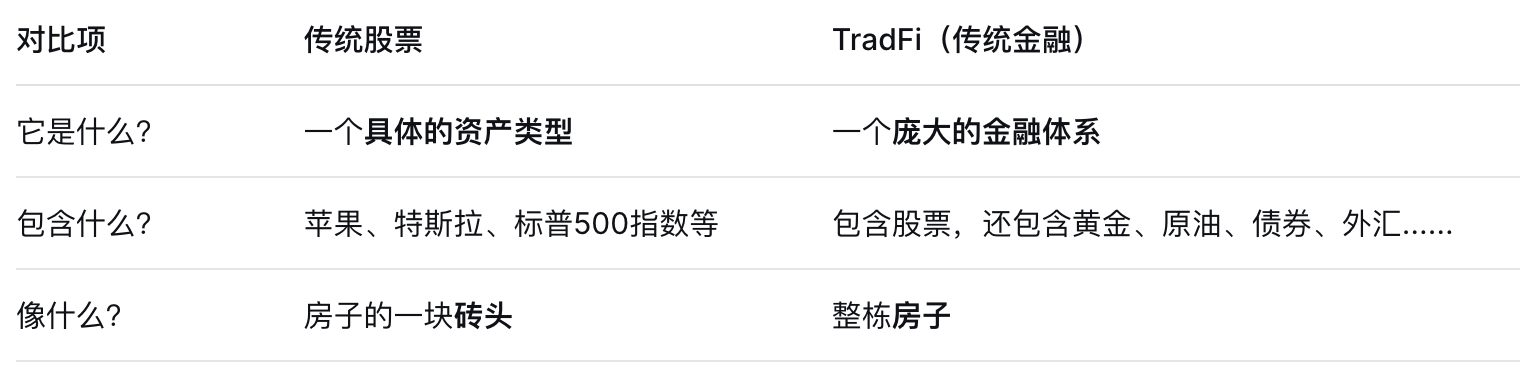
传统股票,是房子里的一块砖头。它是一样具体的东西——买苹果股票,就代表你拥有苹果公司的一小块所有权,苹果赚钱了你可以分红,苹果股价涨了你卖掉能获利。

TradFi(传统金融),是整栋房子。这栋房子里除了股票这块砖,还有别的砖:债券、黄金、原油、外汇、国债……所有在区块链诞生之前就存在的金融资产,全都属于TradFi这个大范畴。

所以答案很清楚了:

TradFi是一个大类,传统股票是它里面最重要、最常见的组成部分之一。

你可以用下面这张表快速理解:
那为什么在币圈总听人说“TradFi”?

这是一个很好的问题。

以前在Crypto世界,大家聊的都是比特币、以太坊、各种山寨币,跟传统金融没啥关系。但近一两年情况变了:

- 2024年比特币现货ETF在美国获批,华尔街开始大规模买入比特币

- 越来越多传统资产被“代币化”,搬到了链上

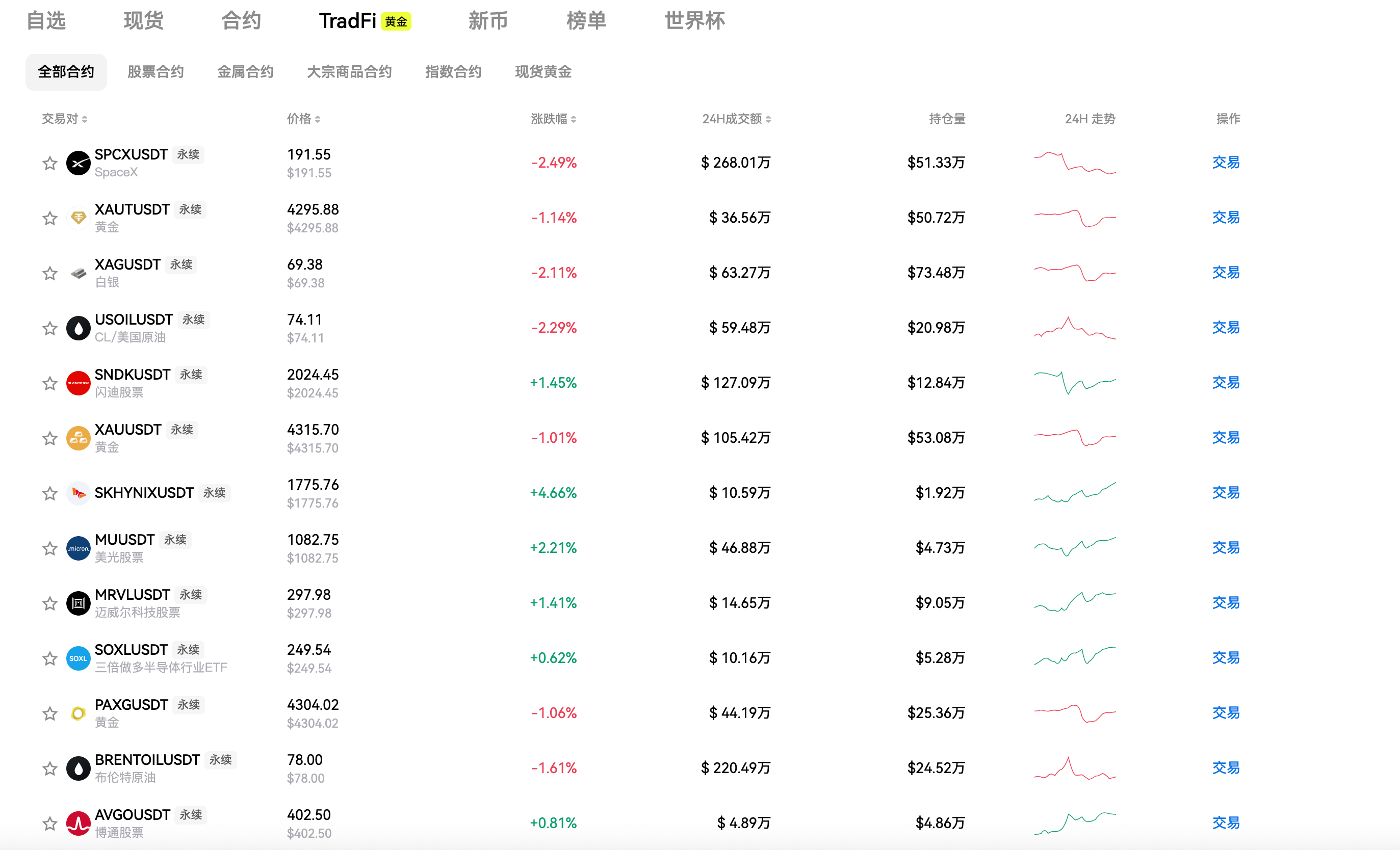
- 像HTX这样的加密交易平台,直接上线了TradFi专区,让用户用USDT就能交易黄金、美股等传统资产的价格

所以现在在币圈语境下,“TradFi”通常指的是那些通过技术手段被引入加密世界、让Crypto用户也能接触到的传统金融资产。

在HTX的TradFi专区里,股票扮演了什么角色?

打开HTX的TradFi专区,你会发现里面有两类资产:

第一类:大宗商品和避险资产

- 黄金(XAU)——避险之王

- 白银(XAG)——贵金属兄弟

- 原油(USOIL)——工业血液

第二类:股票和股指

- 美股指数(SPX500)——追踪标普500整体走势

- 科技龙头(NVDA、TSLAX等)——追踪英伟达、特斯拉等个股价格

第二类就是“股票类TradFi资产”。也就是说,股票是TradFi专区里的重要组成部分,但TradFi不止有股票,还有黄金、原油等其他资产。
在HTX交易股票类TradFi,和买真正的股票一样吗?

不完全一样,但有相似之处。

相似的地方:价格走势一致

NVDA的TradFi合约价格紧跟英伟达真实股价。英伟达财报好、股价涨,这里的合约价格也会跟着涨。

不同的地方:交易方式不同
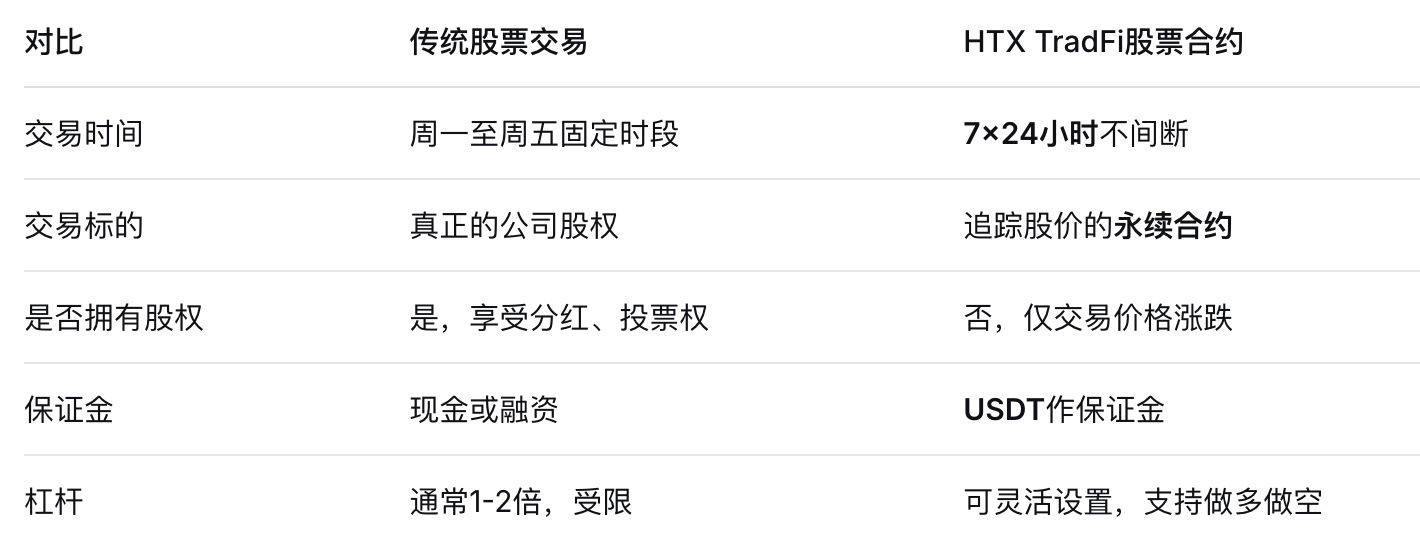
简单说:你用习惯的加密交易方式,去交易一个追踪传统股票价格的标的。

为什么要在币圈平台交易股票?直接买股票不就行了吗?

这是个很现实的问题。直接买股票确实可以,但有三个门槛:

门槛一:开户麻烦。传统券商开户需要各种身份认证,流程繁琐。

门槛二:交易时间受限。美股只在北京时间晚上开盘,白天想操作没门。

门槛三:做空工具少。下跌行情中想做空获利,传统账户操作复杂、限制多。

而在HTX的TradFi专区:

- 有USDT就能交易,不需要再去传统券商开户

- 7×24小时,随时可以买卖

- 做多做空一键切换,方向选对就能操作

四个要点,帮你快速记住TradFi和股票的关系

1. TradFi是大房子,股票是里面的砖头

2. 在币圈谈TradFi,特指“上链”了的传统资产,股票是其中重要一类

3. TradFi不只有股票,还包括黄金、原油、债券等

4. 在HTX交易股票类TradFi,体验类似加密合约,价格锚定真实股票,但底层逻辑是合约而非股权

写在最后

TradFi和传统股票的关系,不是什么高深理论,而是一把钥匙——帮你打开从Crypto走向更广阔金融世界的那扇门。
Letture associate

Supporters of Bitcoin BIP-110 Update Have Prepared a 'Last Resort' Plan If the Proposal Is Not Adopted: It Could Radically Change BTC's Value

Supporters of the BIP-110 update for Bitcoin have prepared a contingency plan in case the proposal is not adopted, a move that could radically alter BTC's value. Developer Chris Guida has adapted a proof-of-work code originally created by Luke Dashjr in 2017 for the current version of Bitcoin Knots. This adaptation is described as a last-resort measure to be activated if miners do not signal readiness for BIP-110. The proposal itself is a soft fork aimed at temporarily limiting the storage of arbitrary data in Bitcoin transactions. It introduces stricter limits on new transaction outputs, OP_RETURN fields, and witness data, with rules designed to expire after approximately one year. Guida stated this option needs to remain open if miners were to "conspire to betray Bitcoin." Should the contingency code be used, it could change Bitcoin's current mining algorithm. This change would likely prevent existing ASIC miners from generating blocks on the new chain, leading to a large-scale reorganization of the Bitcoin mining network. Luke Dashjr, another Bitcoin Knots developer, contributed to the code and expressed hope it would not be needed, but sees its existence as useful for a potential crisis. A supporter known as Mechanic argued that the mere possibility of a proof-of-work change could act as a deterrent, emphasizing that Bitcoin's rules should be set by participants and node operators, not miners. While miner signals are tracked for BIP-110 activation, data from the proposal's official tracking page indicates support remains limited.

cryptonews.ru2 h fa

Supporters of Bitcoin BIP-110 Update Have Prepared a 'Last Resort' Plan If the Proposal Is Not Adopted: It Could Radically Change BTC's Value

cryptonews.ru2 h fa

Why Did Bitcoin's Price Remain Stable and Not Fall Despite the Recent Major Hack? Here's the Secret

The article discusses why Bitcoin's price remained stable despite a recent $100 million hack targeting individual cold wallets, citing insights from experts on "The Wolf of All Streets" channel. Analysts attribute this resilience to significant institutional shifts in the crypto market. Key points include: 1. **Market Maturation:** The crypto market has transitioned from being dominated by individual retail holders to institutional investors. Most new capital now enters via regulated channels like spot ETFs and custodial services (e.g., Coinbase, Anchorage), making vulnerabilities in individual cold wallets less impactful. 2. **Institutional Dominance:** Control over price dynamics has shifted from miners and crypto exchanges to Wall Street and institutional capital. These large players operate with long-term strategies, viewing price corrections as buying opportunities rather than reasons for panic. 3. **Increased Resilience:** Institutional involvement has reduced market sensitivity to negative news. Sellers are largely exhausted, and remaining holders are steadfast. Major financial institutions (e.g., Morgan Stanley, Wells Fargo) are incorporating crypto assets into portfolios, with research teams recommending allocations of 1–6% to Bitcoin. 4. **Risk Perception:** Bitcoin's integration into traditional financial indices has lowered perceived risk among professionals and institutions, further stabilizing its price against isolated security breaches.

cryptonews.ru2 h fa

Why Did Bitcoin's Price Remain Stable and Not Fall Despite the Recent Major Hack? Here's the Secret

cryptonews.ru2 h fa

Trading

Spot
活动图片