小鹏、蔚来卷算力,理想换架构

marsbitPubblicato 2026-06-16Pubblicato ultima volta 2026-06-16

Introduzione

6月15日,理想汽车发布自研智驾芯片马赫M100,其特点在于采用动态数据流架构,区别于业界常见的冯·诺依曼架构。该设计旨在解决大模型推理中的数据搬运瓶颈,宣称在自家VLA2.1算法上,单颗芯片有效算力约为英伟达Thor U的3倍,延迟降低40%。该架构论文入选ISCA 2026工业分区,获得学术认可。 与蔚来、小鹏、华为等聚焦提升算力数字不同,理想选择从底层架构革新。马赫M100与理想自有算法深度绑定,实现了芯片、编译器、操作系统、AI算法、域控制器的全栈自研闭环,提升了软硬协同优化自主权,但也带来了未来技术路线切换成本较高的挑战。 发布会上,理想还提出“具身智能汽车”新定义,将竞争维度从配置转向系统能力。同时立下军令状:其智驾大模型马赫VLA将于今年第四季度全面对标特斯拉FSD V14,并给出了下半年分月的OTA升级具体目标。 目前理想面临营收下滑、毛利率收窄的财务压力,但研发投入保持高位。2026年销量目标为55万台,新车型L9 Livis市场反响良好,但整体销量增长仍需后续产品接力。马赫M100的架构创新能否经得起量产与市场的检验,今年7月的首次OTA和年底与FSD的对标将是关键考验。

6月15日,理想汽车在发布会上详细披露了自研芯片马赫M100的细节,这是它为新一代L9 Livis打造的自研智驾芯片。CTO谢炎强调:不能只造一颗比过去更快的芯片,而是需要造一种完全不同的芯片。这个“不同”说的便是芯片架构。

在车企扎堆自研芯片的2026年,TOPS是各家最惯用的宣传弹药。蔚来神玑NX9031、小鹏图灵、华为MDC 810 Pro,无一例外把算力数字放在最显眼的位置。理想选择的是从底层架构动刀。

马赫M100想证明的是,架构这件事比算力数字重要。但它对不对,还需要接受市场的检验。

01.算力通胀下的造芯分野

自研芯片这件事,已经是国内头部车企的共同选择。

蔚来神玑NX9031是全球第一颗5nm高性能智驾芯片,特别之处在于自研ISP,夜间1勒克斯低光条件下行人识别率比通用芯片高出40%,感知层做了专项强化。

小鹏的图灵芯片同样定制化明显,专门为小鹏自动驾驶大模型设计,还打算向飞行汽车和机器人延伸。

华为走的是另一条路,用昇腾做MDC,强调云端训练和车端推理完全对齐,“云端练一分钟,车端跟一分钟”。

这几家都是冯·诺依曼架构的变体:中央处理单元,数据在计算单元和内存之间往返搬运。制程越先进,搬得越快,但马赫M100想改变的是搬数据这件事本身。

02.动刀底层逻辑

冯·诺依曼架构在通用计算时代没什么问题,但大模型推理是另一种计算形态。VLM推理是大规模矩阵并行,不是顺序跑指令,瓶颈几乎全在内存带宽,数据反复进出内存的损耗,直接吞掉一大块有效算力。

动态数据流架构的思路是让数据沿计算图流动,不需要反复回存内存。理想给出的结果是,单颗马赫M100有效算力约为英伟达Thor U的3倍,端到端延迟降40%。
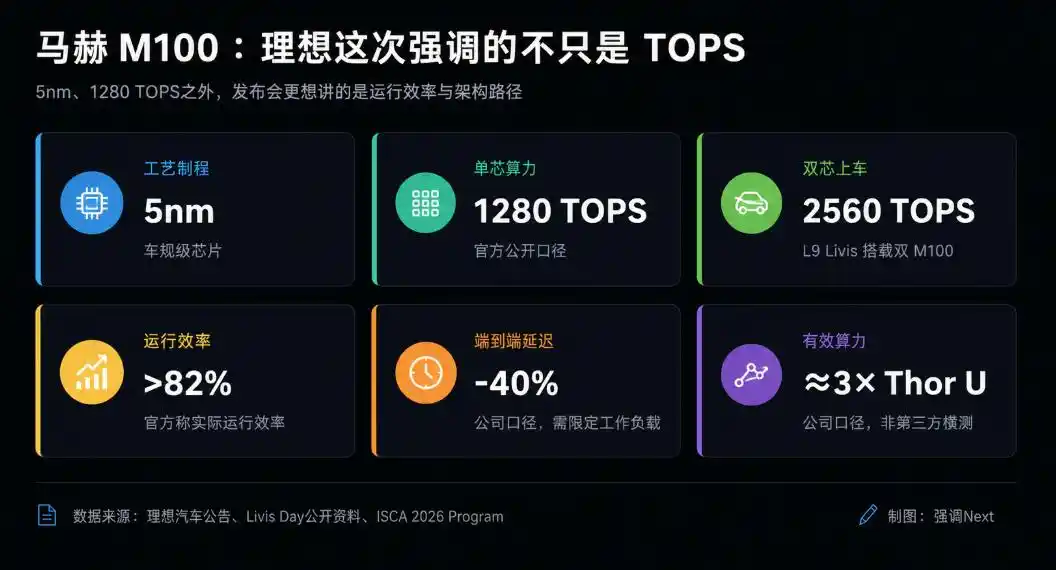
这个“3倍”能信几分?有一项外部验证可以参考。马赫M100的架构论文入选了ISCA 2026工业分区。ISCA是计算机体系结构顶级学术会议,工业分区的论文经过同行评审,架构设计细节是公开的,理想是该分区设立以来第一家入选的整车企业。

但3倍这个数字有它的前提。有效算力依赖具体workload,在理想VLA2.1这套算法上跑出的3倍,换一套体系未必成立。马赫M100是算法原生芯片,芯片和模型同步开发,针对自家算法深度适配。跑自家模型最强,跑通用任务不一定。

这和小鹏图灵的设计逻辑有相似之处,特斯拉FSD Chip也是这个路子。区别是,特斯拉和小鹏没有在架构层面做范式切换,马赫M100是在底层逻辑上动了刀。整车企业能不能把一套全新架构做到量产可靠,本身就是一个没有先例的挑战。

随着马赫M100上车,理想打通了芯片、编译器、操作系统、AI算法、域控制器的全栈自研。这个闭环在同行里不多见。

蔚来有自研芯片但OS依赖度不同,小鹏自研芯片但编译器和OS仍有外部依赖,华为是闭环的但它不是整车企业。理想这条链的战略含义在于,它让理想不被英伟达掐供应链,数据不出自己的平台,软硬协同的优化空间完全自主。

03.先占位“具身智能”

芯片只是发布会的主角之一。李想在发布会上还提出了“四位一体”的具身智能汽车定义:一辆电动车、一位职业司机、一台AI计算机、一位生活助手。

这和理想过去的品牌叙事跨度颇大。

2023年L9靠“大六座家庭SUV”打穿了30-50万市场,一代套娃产品线跟着起来。这个定位的问题是复制成本太低,问界M9、蔚来ES9、极氪9X都进来了,冰箱彩电大沙发成了行业标配,没有哪家拉得开差距,只剩价格战。

“具身智能汽车”把竞争维度从配置移到系统能力。在这个框架里,冰箱和后排屏是基础配置,差异点变成“谁的系统能感知、能思考、会成长”。品类定义本身就是战略资产,先说出来的人先占位。

理想给这套叙事配了一条相对完整的技术链条。马赫M100算力底座、马赫VLA2.1智驾大模型、马赫Mind-Pro和Mind-Edge端侧基座模型、星环OS全栈打通,每一层都有对应的产品落地。

发布会上演示了车辆随音乐律动、4D赛车模拟器、指挥泊车,这些是可感知的体验。李想在发布会上也说,自动驾驶只是具身智能“上半场”,通用人形机器人是“下半场”,但下半场的具体时间表和实现路径,还不明确。

04.Q4的军令状

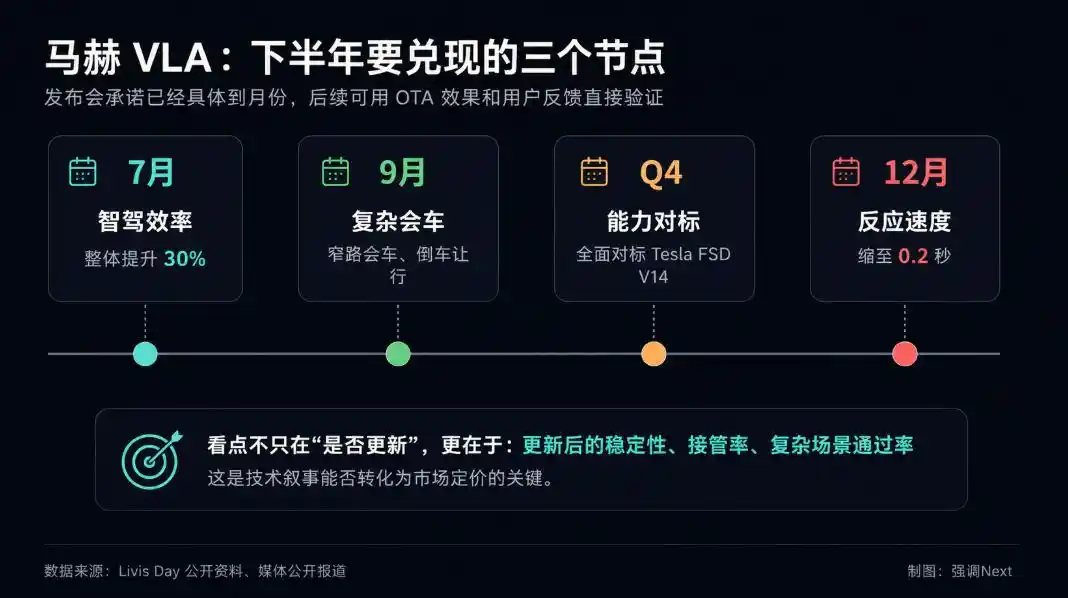
发布会上还有一个关键表态,理想智驾大模型马赫VLA今年Q4将全面对标特斯拉FSD V14。

李想的一贯风格是公开承诺,用外部压力倒逼内部执行。说了Q4对标FSD V14,年底所有人都会拿这把尺子量。

路线上,理想和特斯拉选择高度同构:端到端+VLA大模型+纯视觉为主。华为走的是激光雷达+多传感融合+规则与神经网络混合的方案,短期工程化落地稳定,算力需求低。但长期来看,如果纯视觉+大模型路线最终胜出,华为的体系会面临更大的切换成本。理想押注和特斯拉同一条技术信仰,这个判断现在对不对,要等年底来看。

下半年OTA承诺具体到月份。7月智驾效率提升30%,9月实现窄路会车倒车让行,12月车辆反应速度缩至0.2秒。每个节点都有明确的技术指标,年底会有数据可以对照。
05.发布会之外的几组数据

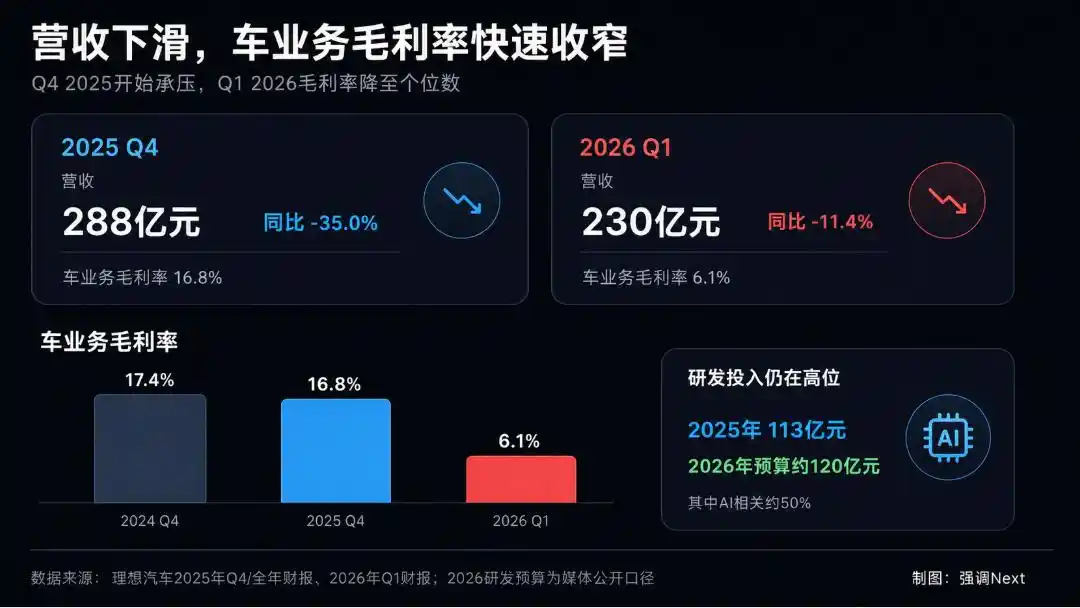
理想目前财务面并不轻松。2025年Q4以来,理想营收同比下滑,车业务毛利率明显收窄。与此同时,2026年研发预算维持在120亿元左右,其中AI相关占比约50%,和2025年的113亿、50%占比基本持平。研发投入不减,盈利压力还在。
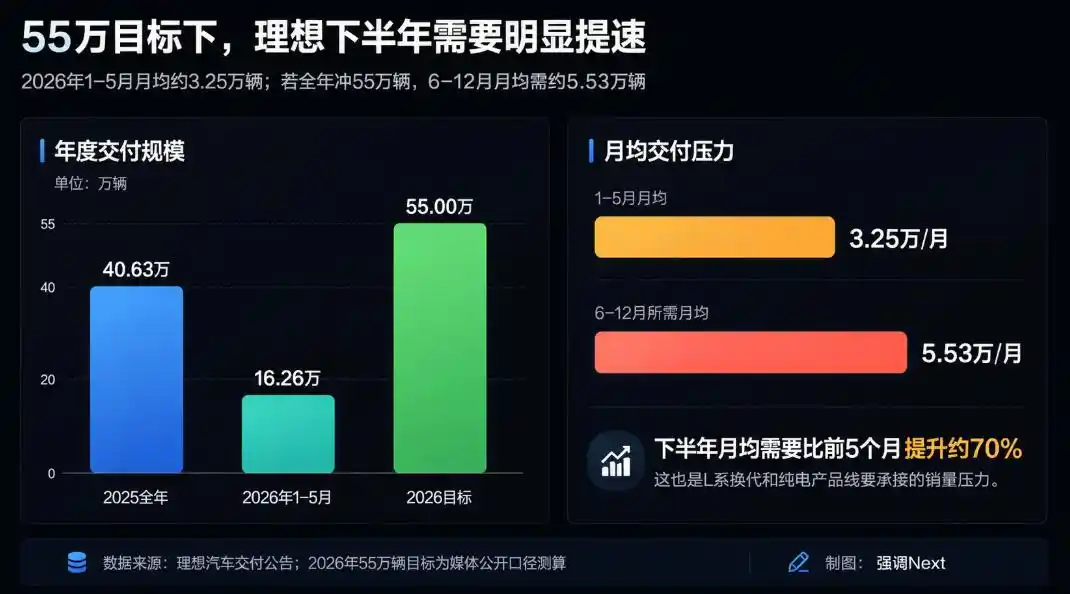
销量方面,理想2026年的目标是55万台。2025年实际交付40.6万台,5月单月交付3.3万台,同比仍在下滑。L9 Livis上市两周内获得超过1万台大定,50万以上市场表现稳定,但整体交付的量还需要L系列全系换代和纯电产品线在下半年接续释放。
芯片层面,马赫M100和自家算法深度绑定是设计选择,带来了软硬协同的效率优势。这同样意味着,如果未来技术路线需要调整,切换成本会高于使用第三方芯片方案的厂商。小鹏图灵、蔚来神玑面临类似情况,特斯拉FSD Chip同样如此,这是自研算法原生芯片的行业共性。

06.三季度见底牌

新L9上市、L8紧跟、7月OTA第一个节点,这些动作的初步成效都会在Q3财报里见分晓。

谢炎说,他需要造一种完全不同的芯片。架构论文通过同行评审,算是外部认可了这套设计思路。但从设计到量产,再到用户日常驾驶里的真实反馈,还有很长的路要走。7月OTA节点是第一次检验,年底对标FSD V14是更关键的一次。

本文来自微信公众号“强调Next”(ID:leo89203898),作者:一修,编辑:小白

Domande pertinenti

Q根据文章,理想汽车推出的自研芯片马赫M100的核心特点是什么?

A马赫M100的核心特点是采用了不同于传统冯·诺依曼架构的动态数据流架构。其设计思路是让数据沿计算图流动,减少在计算单元和内存之间反复搬运数据的损耗,从而提升有效算力并降低延迟。文章指出,在理想自家VLA2.1算法上,其有效算力约为英伟达Thor U的3倍,端到端延迟降低40%。

Q文章中提到小鹏和蔚来的自研芯片主要聚焦于什么方向?

A小鹏和蔚来的自研芯片主要聚焦于算力(TOPS)的提升和针对特定场景的定制化设计。蔚来神玑NX9031强调其自研ISP,以增强在低光等条件下的感知能力;小鹏图灵芯片则专门为其自动驾驶大模型设计,并计划向飞行汽车和机器人领域延伸。相比之下,理想选择了从底层芯片架构进行革新。

Q理想汽车提出的“具身智能汽车”定义包含哪四个部分?

A理想汽车提出的“具身智能汽车”定义为“四位一体”,具体包括:一辆电动车、一位职业司机、一台AI计算机、一位生活助手。这一定义旨在将竞争维度从传统的配置(如冰箱、彩电)升级到系统性的感知、思考和成长能力。

Q理想汽车对其智驾大模型马赫VLA有何重要的公开承诺?

A理想汽车承诺,其智驾大模型马赫VLA将在今年第四季度(Q4)全面对标特斯拉的FSD V14。这是李想用公开承诺倒逼内部执行的一贯风格,也为年底的产品表现设立了一个明确的检验标准。

Q文章指出,理想汽车在财务和销量方面面临哪些挑战?

A文章指出,理想汽车财务面并不轻松:自2025年第四季度以来,营收同比下滑,车业务毛利率明显收窄。在销量方面,理想2026年的目标是55万台,但2025年实际交付40.6万台,且2026年5月单月交付3.3万台,同比仍在下滑。因此,整体盈利和销量增长都面临压力。

Letture associate

7 Key Questions Regarding 'DeepSeek Completes Over 50 Billion Yuan in Financing'

DeepSeek, the prominent Chinese AI company, has reportedly completed its first external funding round, raising over 50 billion RMB (approximately $6.9 billion USD), according to foreign media reports. This financing values the company at over $50 billion USD, a significant increase from a $10 billion valuation when the round began in April 2026. Founder Liang Wenfeng personally contributed 20 billion RMB, with other investors including Tencent, CATL (Contemporary Amperex Technology), JD.com, NetEase, and IDG Capital. Notably, the National Artificial Intelligence Industry Investment Fund also participated with a direct investment of 1 billion RMB. The funding round is distinctive for its structure. Most investors' capital is channeled into a limited partnership controlled by CEO Liang Wenfeng, rather than directly into DeepSeek. These investors face a five-year lock-up period, have no voting rights, but receive priority financial information and future investment rights. This arrangement is seen as a measure to ensure Liang's absolute control over the company's direction, aligning with its stated principles of prioritizing groundbreaking AGI (Artificial General Intelligence) research over short-term profitability. The report highlights strategic reasons for key investors. Tencent's involvement is viewed as a strategic alignment, building on existing collaborations. CATL's investment is linked to the critical energy and power infrastructure needed for AI data centers, a key growth area for the battery giant. The participation of a state-backed fund underscores the national strategic importance of AI development. Post-funding, DeepSeek is expected to accelerate infrastructure development, including building its own data centers, hire more talent, and release new model versions with enhanced capabilities like image and audio support. While this marks a major step, the company's long-term journey towards AGI remains a challenging path that will require balancing its foundational ideals with the expectations of its new investors.

marsbit28 min fa

7 Key Questions Regarding 'DeepSeek Completes Over 50 Billion Yuan in Financing'

marsbit28 min fa

The World Cup is Here: The Battle for Entry into Prediction Markets Has Begun

The 2026 FIFA World Cup has begun, and alongside the on-field competition, a new off-field battleground is emerging: prediction markets. These blockchain-based platforms, which convert crowd wisdom into tradable probabilities, are gaining significant traction. However, their complexity—involving wallets, gas fees, and smart contracts—has historically limited participation to crypto-native users. Centralized exchanges (CEXs), like Gate, are tackling this adoption barrier. By integrating with leading prediction market protocol Polymarket, Gate simplifies the user experience. Users can participate directly with their exchange account and USDT, bypassing complex Web3 steps. Gate offers a streamlined "Prediction Mode" for casual users and a professional "Trading Mode" with advanced tools. Key features include two-way trading (allowing users to buy or sell positions before event resolution), support for diverse markets (sports, crypto, macroeconomics), and a suite of information tools like a "Smart Money" leaderboard, wallet tracking, and AI-powered insights. For the World Cup, Gate launched a dedicated hub aggregating schedules, standings, and relevant markets. This allows fans to seamlessly follow games and trade on outcomes, transforming passive viewing into active participation where they can monetize their predictions and trade on shifting consensus throughout a match. The article argues that prediction markets have proven their value in event forecasting. The next challenge is mass adoption. The competition is shifting from building effective protocols to creating accessible user entry points. By lowering technical barriers and building a complete ecosystem for information and trading, platforms like Gate aim to transition prediction markets from a niche crypto tool to a mainstream platform for expressing and trading on collective intelligence.

Odaily星球日报38 min fa

The World Cup is Here: The Battle for Entry into Prediction Markets Has Begun

Odaily星球日报38 min fa

Spain Held to a Draw by Cape Verde, Jucom Prediction Market Witnesses Historic Upset

In a major upset at the 2026 FIFA World Cup, tournament favorites Spain were held to a surprising 0-0 draw by debutants Cape Verde in their Group H opener on June 16, Beijing time. Despite dominating possession (74%) and recording 27 shots with an expected goals figure of 2.16, Spain failed to break down a resilient Cape Verde defense, with their 40-year-old goalkeeper Vozinha making 7 saves to earn Man of the Match. Pre-match predictions on the Jucom prediction market had heavily favored Spain, assigning them a 92% win probability. The actual result, a goalless draw, triggered significant volatility across related prediction markets. This outcome forces a market-wide reassessment of several key probabilities, including Spain's likelihood of winning the group and the tournament itself, while Cape Verde's previously near-zero chance of advancing is now being re-evaluated. The event highlights both the efficiency and the inherent limitations of prediction markets. While prices aggregate known information, football's low-scoring, high-variance nature means unquantifiable in-game factors can lead to unlikely results. The core value of such markets lies not in perfect foresight but in their ability to dynamically reflect how new information is incorporated into collective expectations. Platforms like Jucom, which track outcomes from single matches to the final champion, provide a real-time lens into how global consensus evolves with each game.

链捕手42 min fa

Spain Held to a Draw by Cape Verde, Jucom Prediction Market Witnesses Historic Upset

链捕手42 min fa

Trading

Spot
Futures

Articoli Popolari

Come comprare HOUSE

Benvenuto in HTX.com! Abbiamo reso l'acquisto di Housecoin (HOUSE) semplice e conveniente. Segui la nostra guida passo passo per intraprendere il tuo viaggio nel mondo delle criptovalute.Step 1: Crea il tuo Account HTXUsa la tua email o numero di telefono per registrarti il tuo account gratuito su HTX. Vivi un'esperienza facile e sblocca tutte le funzionalità,Crea il mio accountStep 2: Vai in Acquista crypto e seleziona il tuo metodo di pagamentoCarta di credito/debito: utilizza la tua Visa o Mastercard per acquistare immediatamente HousecoinHOUSE.Bilancio: Usa i fondi dal bilancio del tuo account HTX per fare trading senza problemi.Terze parti: abbiamo aggiunto metodi di pagamento molto utilizzati come Google Pay e Apple Pay per maggiore comodità.P2P: Fai trading direttamente con altri utenti HTX.Over-the-Counter (OTC): Offriamo servizi su misura e tassi di cambio competitivi per i trader.Step 3: Conserva Housecoin (HOUSE)Dopo aver acquistato Housecoin (HOUSE), conserva nel tuo account HTX. In alternativa, puoi inviare tramite trasferimento blockchain o scambiare per altre criptovalute.Step 4: Scambia Housecoin (HOUSE)Scambia facilmente Housecoin (HOUSE) nel mercato spot di HTX. Accedi al tuo account, seleziona la tua coppia di trading, esegui le tue operazioni e monitora in tempo reale. Offriamo un'esperienza user-friendly sia per chi ha appena iniziato che per i trader più esperti.

287 Totale visualizzazioniPubblicato il 2025.04.27Aggiornato il 2026.06.02

Come comprare HOUSE

Discussioni

Benvenuto nella Community HTX. Qui puoi rimanere informato sugli ultimi sviluppi della piattaforma e accedere ad approfondimenti esperti sul mercato. Le opinioni degli utenti sul prezzo di HOUSE HOUSE sono presentate come di seguito.

活动图片