Giá cổ phiếu SpaceX sẽ biến động ra sao trước khi đợt mở khóa vốn cho cổ đông tiếp theo?

marsbitPubblicato 2026-06-15Pubblicato ultima volta 2026-06-15

Introduzione

**Tóm tắt về diễn biến giá cổ phiếu SpaceX (SPCX) trước thời điểm mở khoá đầu tiên** Sau khi IPO, cổ phiếu SpaceX (SPCX) đã tăng mạnh ngay trong ngày đầu, đạt vốn hoá thị trường khoảng 2,1 nghìn tỷ USD. Lý do chính cho đà tăng này là nguồn cung giao dịch ban đầu rất thấp (chỉ khoảng 4% tổng cổ phần), kết hợp với câu chuyện hấp dẫn về Starlink, vận tải vũ trụ, hợp đồng quốc phòng và tầm nhìn của Elon Musk. Tình trạng khan hiếm cổ phiếu lưu hành này có thể tiếp tục đẩy giá lên cao hơn trong ngắn hạn do tâm lý FOMO và kỳ vọng về dòng tiền thụ động nếu cổ phiếu được đưa vào các chỉ số chính. Tuy nhiên, rủi ro chính nằm ở việc mở khoá cổ phiếu cho các cổ đông hiện hữu và nhân viên. Theo lịch trình, đợt mở khoá đầu tiên có thể diễn ra sau khi công bố báo cáo tài chính Q2/2026 (dự kiến khoảng tháng 8), với một phần cổ phiếu được phép chuyển nhượng. Các cổ đông này có giá vốn rất thấp so với giá thị trường. Do đó, áp lực bán ra tiềm tàng khi nguồn cung tăng lên có thể làm thay đổi đáng kể động lực thị trường, chuyển từ câu chuyện "khan hiếm" sang "ai sẽ là người mua". Báo cáo tài chính Quý 2 sẽ là yếu tố then chốt để xác nhận liệu hiệu suất kinh doanh có đủ mạnh để hỗ trợ mức định giá cao ngay trước thềm đợt mở khoá đầu tiên hay không. Nói cách khác, diễn biến giá của SPCX trong thời gian tới là cuộc đua giữa sức ép tăng giá do khan hiếm nguồn cung ngắn hạn và rủi ro điều chỉnh khi nguồn cung này bắt đầu được bổ sung.

TL;DR

Sau khi SpaceX xuất hiện trên thị trường công khai dưới hình thức SPCX, những gì nhà đầu tư mua không phải là một cổ phiếu công nghệ mới niêm yết thông thường.

Một mặt là Musk, Starlink, vận tải vũ trụ, hợp đồng quốc phòng và câu chuyện về Sao Hỏa - những từ khóa vốn mang sẵn mức định giá cao. Mặt khác, đây là một cổ phiếu tăng mạnh ngay trong ngày đầu tiên, đạt vốn hóa thị trường đóng cửa khoảng 2,1 nghìn tỷ USD, nhưng lượng cổ phiếu khả dụng giao dịch trong giai đoạn đầu niêm yết lại rất ít. Câu hỏi thực sự mà các nhà đầu tư phổ thông cần trả lời rất trực tiếp: mua SPCX lúc này là đang đặt cược vào tài sản vũ trụ khan hiếm nhất trên thị trường công khai, hay là đang cung cấp thanh khoản cho các cổ đông hiện hữu thoái vốn trong tương lai?

Những ngày qua, sự phân hóa trong thảo luận của cộng đồng X và các nhà đầu tư Trung Quốc cũng tập trung vào điểm này. Phe lạc quan cho rằng, tỷ lệ lưu hành thấp, tâm lý FOMO (sợ bỏ lỡ), câu chuyện từ Musk, cùng với dòng tiền mua thụ động từ việc có thể được đưa vào chỉ số trong tương lai, có thể tiếp tục đẩy giá lên cao trước đợt mở khóa đầu tiên. Phe bi quan thì nhìn vào một bảng số liệu khác: ngoài số cổ phiếu phát hành lần này, các cổ đông hiện hữu vẫn nắm giữ khoảng hơn 95% cổ phần. Khi thời hạn khóa cổ được mở dần theo từng giai đoạn, thị trường thứ cấp sẽ phải đối mặt với nhiều hơn những cổ phiếu có giá vốn thấp bước vào nhóm giao dịch.

Thứ đang được giao dịch với SPCX hiện tại, không chỉ là tầm nhìn cuối cùng về SpaceX, mà còn là một khoảng chênh lệch thời gian: trước đợt mở khóa đầu tiên, sự khan hiếm nguồn cung có thể đẩy giá lên cao đến mức nào; sau đợt mở khóa đầu tiên, nguồn cung mới gia tăng sẽ 'tiêu hóa' được bao nhiêu phần giá trị cộng thêm từ câu chuyện đầu tư.

Mức tăng mạnh ngày đầu phóng đại áp lực từ tỷ lệ lưu hành thấp

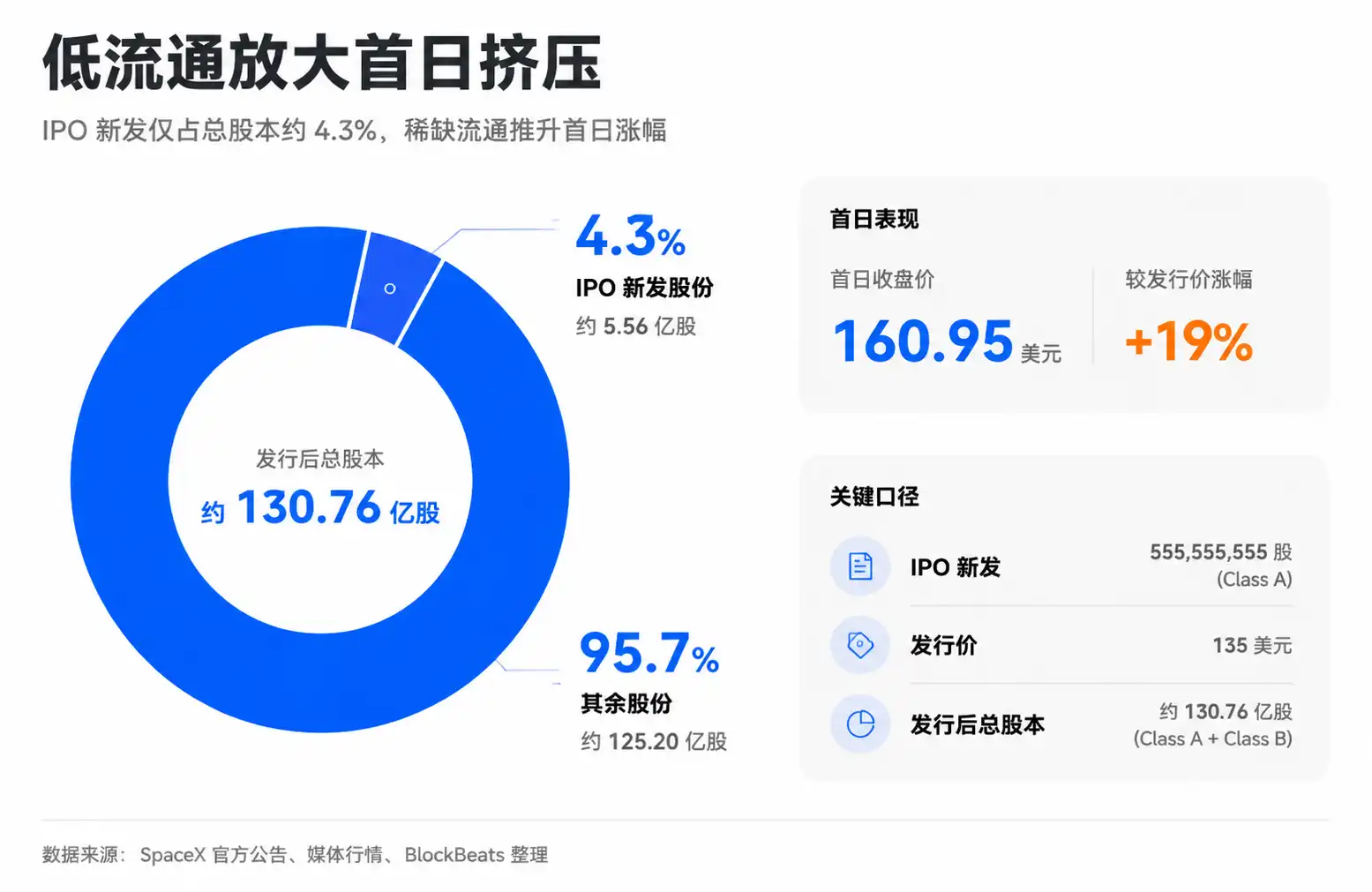
Theo thông báo chính thức của SpaceX, công ty IPO phát hành 555.555.555 cổ phiếu Class A, giá phát hành 135 USD, dự kiến giao dịch vào ngày 12 tháng 6 trên Nasdaq Global Select Market và Nasdaq Texas với mã "SPCX", cùng quyền bán thêm 83.333.333 cổ phiếu. Nhiều báo cáo truyền thông cho thấy, SPCX đóng cửa ngày đầu tiên ở mức khoảng 160,95 USD, tăng khoảng 19% so với giá phát hành, vốn hóa thị trường đóng cửa khoảng 2,1 nghìn tỷ USD.

Điều này để lại đủ không gian tưởng tượng cho dòng tiền ngắn hạn. Đối với một cổ phiếu vốn hóa lớn vừa mới lên sàn, đây không chỉ đơn thuần là sức nóng của cổ phiếu mới, mà là thị trường đang định giá một tài sản khan hiếm ở mức định giá cực cao.

Tỷ lệ lưu hành thấp là viên gạch đầu tiên để hiểu đợt giao dịch này. Theo hồ sơ phát hành, sau khi phát hành, Class A có khoảng 7,38 tỷ cổ phiếu, Class B có khoảng 5,696 tỷ cổ phiếu, cổ phiếu mới phát hành trong đợt IPO chiếm hơn 4% tổng vốn cổ phần. Nói cách khác, tỷ lệ cổ phiếu thực sự được đưa vào giao dịch công khai thông qua IPO trong giai đoạn đầu niêm yết là rất thấp.

Khi nguồn cung cổ phiếu ít, trong khi lực mua lại được đẩy cao bởi sự kết hợp của điểm nóng, truyền thông, mạng xã hội và kỳ vọng của các tổ chức, giá có thể dễ dàng bị ép lên. Không phải cơ bản thay đổi mạnh chỉ sau một đêm, mà là vì có nhiều người muốn mua, ít người có thể bán.
Điều này giải thích tại sao một số nhà đầu tư coi SPCX là cơ hội giao dịch ngắn hạn, thay vì chỉ nhìn theo các mô hình định giá truyền thống. Starlink cung cấp nền tảng doanh thu rõ ràng hơn, dịch vụ phóng và quốc phòng vũ trụ mang lại sự khan hiếm, bản thân Musk lại phóng đại câu chuyện về tài sản. Với dòng tiền ngắn hạn, những yếu tố này chưa chắc cần phải chuyển hóa ngay lập tức thành lợi nhuận, chỉ cần có thể thu hút lực mua liên tục là đủ để hỗ trợ sức mạnh trong giai đoạn đầu niêm yết.

Dòng tiền thụ động tiềm năng từ chỉ số cũng là một biến số trong câu chuyện của phe lạc quan. Logic không phức tạp: nếu SPCX trong tương lai được đưa vào các chỉ số quan trọng, các quỹ theo dõi chỉ số sẽ cần phân bổ theo quy tắc, dòng tiền mua vào này thường không phải vì chủ động lạc quan về công ty, mà là vì bắt buộc phải theo dõi chỉ số. Khi tỷ lệ lưu hành còn nhỏ, việc mua vào thụ động có thể tiếp tục khuếch đại sự mất cân bằng cung cầu.

Nhưng điểm này hiện chỉ có thể được coi là một giả định giao dịch. Việc đưa vào chỉ số chưa được xác nhận chính thức, và cái gọi là cửa sổ phân bổ cũng không thể được coi là sắp xếp chắc chắn. Đối với SPCX, dòng tiền từ chỉ số không phải là lợi ích đã định hình, mà là một lựa chọn mà phe lạc quan dùng để giải thích khả năng lực mua ngắn hạn vẫn có thể tiếp diễn.

Đợt mở khóa đầu tiên sẽ thay đổi đường cong cung

Rủi ro của SPCX không phải là "công ty không đủ vĩ đại", mà là mối quan hệ giữa giá cổ phiếu và nguồn cung có thể giao dịch sẽ thay đổi.

Tác dụng của thời hạn khóa cổ IPO là tránh việc các cổ đông hiện hữu và nhân viên bán ngay lập tức sau khi lên sàn, gây áp lực lên giá cổ phiếu mới. Điều mà nhiều nhà đầu tư phổ thông dễ bỏ qua là, thời hạn khóa cổ trước hết là vấn đề nguồn cung. Cổ phiếu của cùng một công ty, khi số lượng cổ phiếu có thể giao dịch còn ít và khi nhiều cổ phiếu có thể được bán ra, áp lực mà thị trường phải chịu hoàn toàn khác nhau.

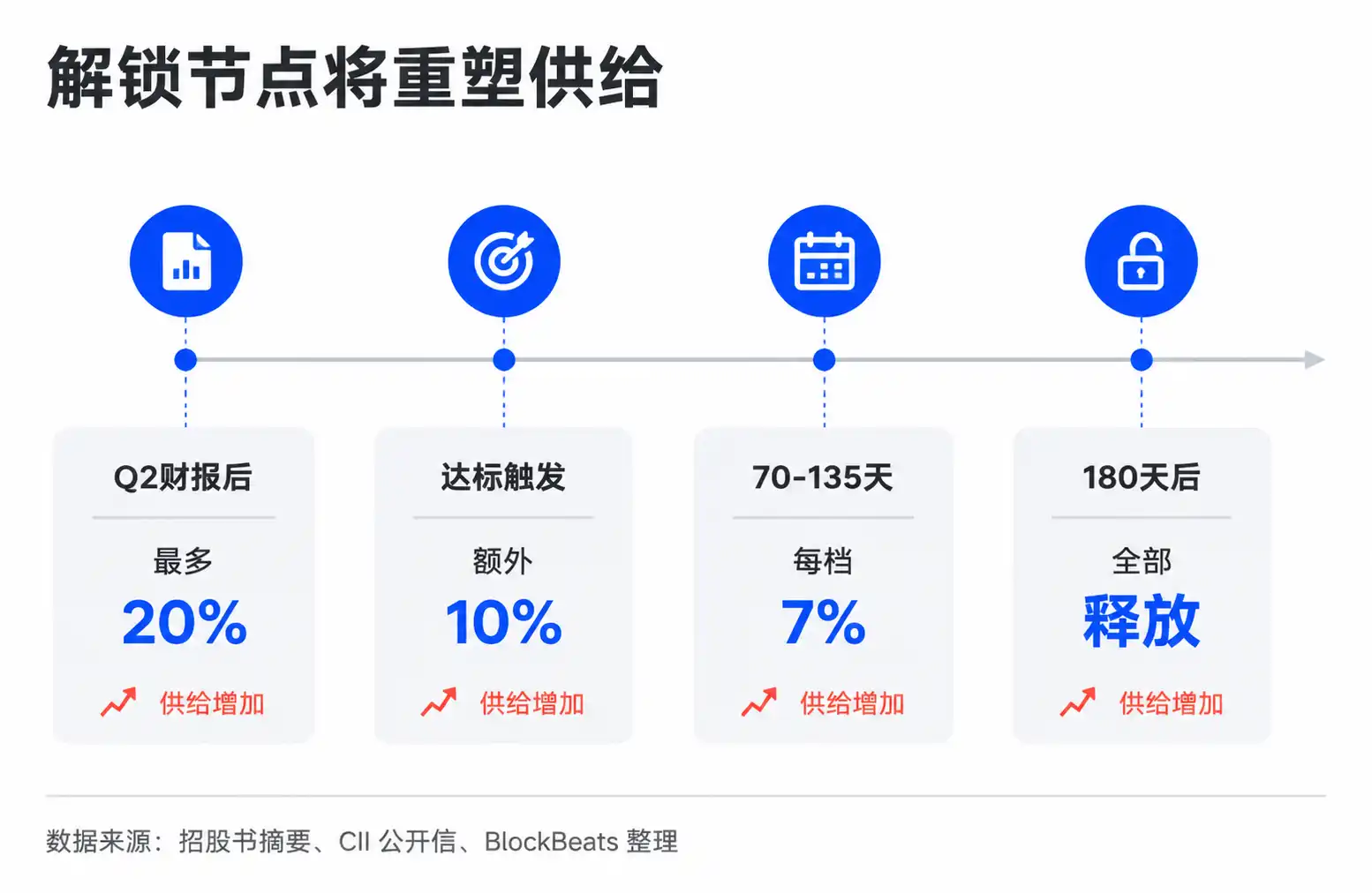
Cách sắp xếp mở khóa của SPCX cũng không đơn giản là "phát hành một lần sau 180 ngày". Hồ sơ phát hành cho thấy, 180 ngày khóa cổ sẽ được mở bắt đầu từ ngày giao dịch hoàn chỉnh thứ hai sau khi báo cáo tài chính Quý 2 năm 2026 được công bố, tối đa 20% có thể chuyển nhượng. Nếu vào thời điểm đó giá cổ phiếu đáp ứng điều kiện ít nhất cao hơn 30% so với giá phát hành, và ít nhất 5 ngày trong số 10 ngày giao dịch liên tiếp đạt ngưỡng, v.v., có thể mở khóa thêm 10%. Sau đó, tại các mốc 70, 90, 105, 120, 135 ngày, mỗi mốc có thể mở khóa 7%, sau 180 ngày sẽ mở khóa toàn bộ.

Ngày công bố cụ thể của báo cáo tài chính Q2 chưa được xác nhận. Nếu theo nhịp độ công bố thông thường, cửa sổ đầu tiên mà thị trường đang thảo luận có thể rơi vào khoảng tháng 8, nhưng vẫn cần căn cứ vào thông báo tiếp theo và hồ sơ SEC để xác nhận. Hồ sơ cũng cho thấy, cổ phần của Musk bị khóa 366 ngày, một số cổ đông lớn gia hạn khóa cổ đến sau báo cáo tài chính Q2 năm 2027 và sẽ mở khóa theo từng giai đoạn.

Đây là trọng tâm mà phe bi quan quan tâm. Chỉ cần đợt mở khóa đầu tiên chưa đến, tỷ lệ lưu hành thấp là bạn của phe lạc quan. Một khi thời điểm mở khóa đến gần, tỷ lệ lưu hành thấp sẽ trở thành cảnh báo rủi ro, bởi vì thị trường sẽ đặt câu hỏi trước: rốt cuộc có bao nhiêu cổ phiếu với giá vốn thấp đang chuẩn bị để bán ra?
Áp lực bán tiềm năng không đồng nghĩa với việc giá chắc chắn sẽ lao dốc vào ngày mở khóa. Ảnh hưởng phổ biến hơn của nó, là khiến lực mua trở nên thận trọng hơn, khiến việc phục hồi dễ gặp lực bán hơn, và khiến việc mở rộng định giá trở nên khó khăn hơn. Đặc biệt khi một cổ phiếu đã bị đẩy lên trên 2 nghìn tỷ USD ngay trong giai đoạn đầu niêm yết, thì nguồn cung mới tăng thêm, dù không phải bán ra một lần, cũng sẽ thay đổi đánh giá của thị trường về việc "ai sẽ là người mua vào".

Vì vậy, việc "giá có thể tiếp tục tăng trước đợt mở khóa đầu tiên không" và "liệu có đáng mua vào trong trung hạn không" có thể đồng thời đúng. Xét ngắn hạn, nguồn cung thắt chặt, tâm lý sôi động, câu chuyện mạnh mẽ, giá cổ phiếu vẫn có thể bị ép lên. Xét trung hạn, nhu cầu thoái vốn của các cổ đông và nhân viên hiện hữu là có thật, giá vốn nắm giữ của họ thường thấp hơn nhiều so với những người mua vào trên thị trường thứ cấp. Hai cách đánh giá này nhìn vào các khoảng thời gian khác nhau.

Định giá cao khiến báo cáo tài chính trở thành bộ khuếch đại

Nếu SPCX chỉ đơn thuần là một cổ phiếu mới niêm yết với tỷ lệ lưu hành thấp, áp lực mở khóa đã đủ quan trọng. Phức tạp hơn, nó còn là một cổ phiếu với tỷ lệ lưu hành thấp được đặt ở vùng định giá cực cao.

Theo tài liệu roadshow của SpaceX, doanh thu năm 2025 của công ty vào khoảng 18,7 tỷ USD. Phạm vi thảo luận của thị trường về doanh thu năm 2026 thường rơi vào khoảng 22 đến 24 tỷ USD, nhưng đây không phải là hướng dẫn đã được công ty xác nhận. Tính theo vốn hóa thị trường đóng cửa ngày đầu tiên khoảng 2,1 nghìn tỷ USD, rõ ràng thị trường không chỉ mua doanh thu Starlink hiện tại, mà còn mua quyền chọn dài hạn cho Internet vệ tinh, hàng không vũ trụ thương mại, hợp tác quốc phòng, năng lực vận chuyển của Starship, thậm chí sự phối hợp trong hệ sinh thái của Musk.

Việc trả giá cao cho câu chuyện tương lai tự nó không phải là vấn đề. Trong lịch sử cổ phiếu công nghệ, tình trạng này đã lặp đi lặp lại: khi thị trường tin rằng một công ty nào đó nắm giữ lối vào khan hiếm, họ sẽ chiết khấu lợi nhuận của nhiều năm sau vào giá cổ phiếu trước. Vấn đề nằm ở chỗ, loại định giá này rất nhạy cảm với nhịp độ. Một khi báo cáo tài chính, đơn hàng, tỷ suất lợi nhuận hoặc tăng trưởng người dùng không theo kịp kỳ vọng, thị trường không nhất thiết phủ nhận kết cục, nhưng sẽ đánh giá lại tốc độ hiện thực hóa.

Điều này khiến báo cáo tài chính Q2 trở thành mốc quan trọng trước đợt mở khóa đầu tiên. Nó không chỉ là bảng điểm đầu tiên sau khi lên sàn, mà còn có thể trở thành bộ khuếch đại cho kỳ vọng mở khóa. Nếu báo cáo tài chính mạnh, phe lạc quan sẽ nói rằng cơ bản có thể đỡ được định giá, logic bị ép giá ngắn hạn vẫn có thể tiếp tục. Nếu báo cáo tài chính yếu, phe bi quan sẽ liên kết nó với cửa sổ mở khóa: cơ bản chưa chứng minh được mức vốn hóa hiện tại là hợp lý, lại sắp có thêm cổ phiếu được phát hành, tại sao thị trường thứ cấp phải mua vào ở mức cao?
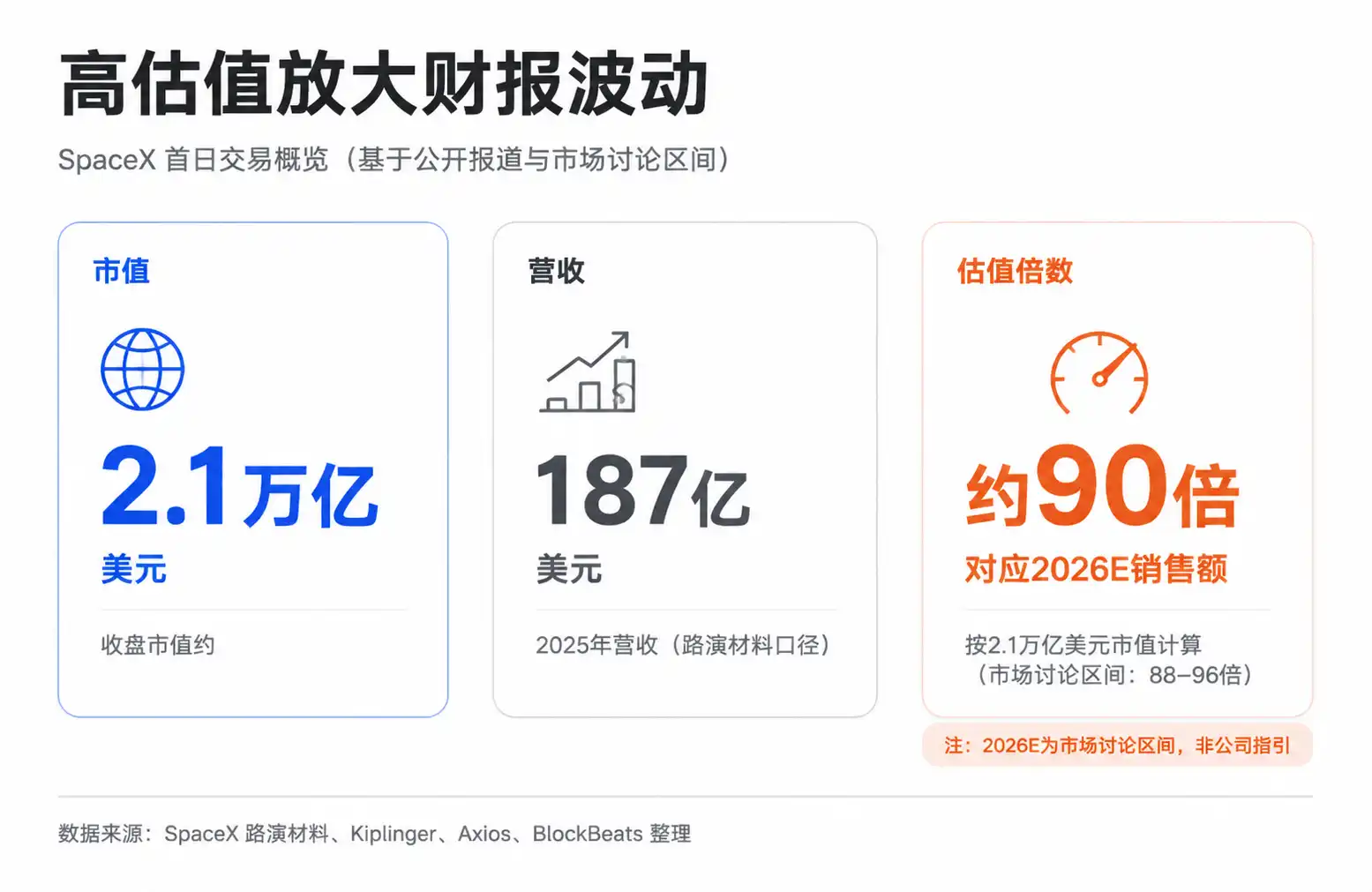
Đây cũng là điểm khác biệt giữa SPCX và cổ phiếu công nghệ trưởng thành. Ảnh hưởng của báo cáo tài chính với cổ phiếu công nghệ trưởng thành thể hiện nhiều hơn ở dự báo lợi nhuận và bội số định giá. Báo cáo tài chính của SPCX còn ảnh hưởng đến niềm tin giao dịch trước và sau thời hạn khóa cổ. Nó cần đồng thời trả lời hai câu hỏi: tăng trưởng kinh doanh có thể hỗ trợ câu chuyện dài hạn không, và trong bối cảnh nguồn cung có thể giao dịch sắp tăng, liệu vẫn có đủ lực mua tiếp nhận không.

So sánh với TGE, cốt lõi là tỷ lệ lưu hành thấp có ngày đáo hạn

Trong cộng đồng tiếng Trung, một số nhà đầu tư so sánh SPCX với "giao dịch tỷ lệ lưu hành nhỏ sau TGE của các dự án VC hàng đầu".

TGE là thời điểm dự án mã hóa phát hành token. Khi nhiều dự án hàng đầu mới ra mắt, tỷ lệ lưu hành thấp, câu chuyện mạnh, token của nhà đầu tư ban đầu và đội ngũ bị khóa. Trong giai đoạn đầu ra mắt, do số lượng token có thể mua ít, mức độ quan tâm cao, giá dễ bị đẩy lên. Nhưng khi chu kỳ mở khóa đến gần, thị trường bắt đầu giao dịch trước áp lực bán trong tương lai, giá có thể bước vào giai đoạn điều chỉnh.

Phép so sánh này không hoàn toàn chính xác. IPO cổ phiếu và phát hành token mã hóa khác nhau về quy định, công bố thông tin, cơ cấu nhà đầu tư. Nhưng nó nắm bắt được cùng một cơ chế thị trường: tỷ lệ lưu hành thấp không phải là tin tốt dài hạn, mà là một sự mất cân bằng cung cầu có ngày đáo hạn.

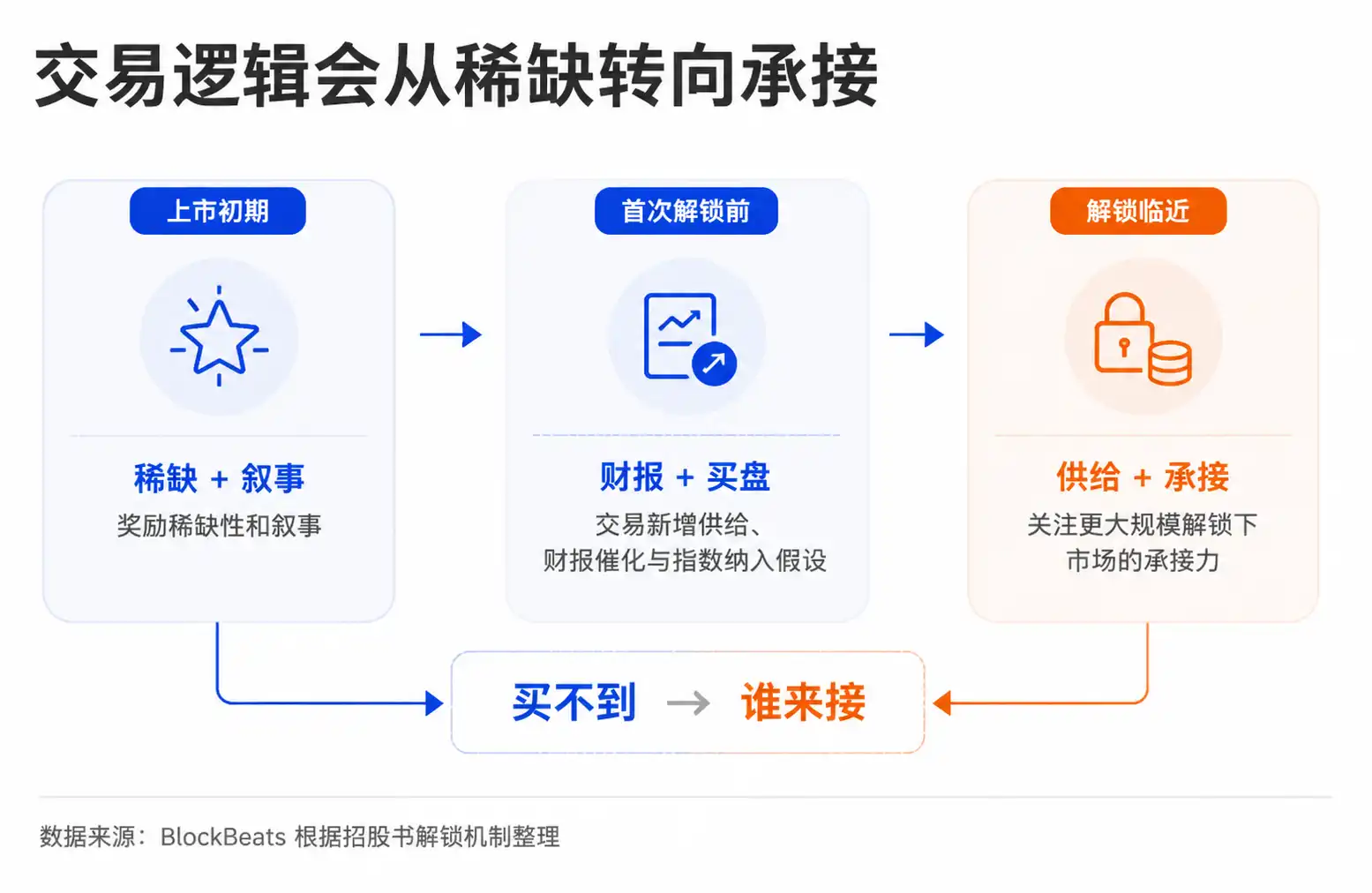
Trong khuôn khổ này, giao dịch của SPCX sau khi niêm yết có thể được chia thành vài giai đoạn. Giai đoạn đầu niêm yết, thị trường chủ yếu tưởng thưởng cho tính khan hiếm và câu chuyện, lực mua quan tâm liệu giá có thể tiếp tục bị ép lên không. Trước đợt mở khóa đầu tiên, giao dịch bắt đầu phức tạp hơn, nhà đầu tư sẽ đồng thời tính toán nguồn cung mới gia tăng, xúc tác từ báo cáo tài chính và khả năng được đưa vào chỉ số thụ động. Khi thời điểm mở khóa quy mô lớn hơn đến gần, thị trường sẽ chuyển từ "không mua được" sang "có đỡ nổi không".

Điều này cũng giải thích tại sao trong thảo luận của cộng đồng lại xuất hiện quan điểm kết hợp "lạc quan ngắn hạn, thận trọng trung hạn". Đó không phải là sự dao động, mà là các lát cắt thời gian khác nhau trong cùng một khuôn khổ cung cầu. Trong giai đoạn lưu hành thấp, phe lạc quan dễ chiếm ưu thế hơn. Ở giai đoạn mở khóa, logic của phe bi quan bắt đầu tăng cường. Điều cần phán đoán không phải là SpaceX có vĩ đại hay không, mà là liệu giá hiện tại đã chiết khấu hết tính khan hiếm trước đợt mở khóa đầu tiên chưa.
Tiếp theo cần xem hồ sơ mở khóa, báo cáo tài chính và lực mua thụ động

Xu hướng tiếp theo của SPCX, điểm xác minh quan trọng nhất không nằm ở câu chuyện Sao Hỏa, cũng không nằm ở tâm lý mạng xã hội, mà nằm ở một số biến số cụ thể hơn.

Đầu tiên cần xem, là cách sắp xếp mở khóa trong các hồ sơ cuối cùng và công bố tiếp theo của công ty. Tỷ lệ có thể chuyển nhượng lần đầu, điều kiện kích hoạt giá, thời gian công bố báo cáo tài chính, phạm vi cổ đông gia hạn khóa cổ, đều sẽ ảnh hưởng trực tiếp đến đường cong cung trong tương lai. Đối với nhà đầu tư, điều này quan trọng hơn biến động giá trong một ngày.

Sau đó là việc báo cáo tài chính Q2 có thể đỡ được mức định giá hiện tại hay không. Câu chuyện dài hạn của SPCX rất lớn, nhưng thị trường thứ cấp trong ngắn hạn vẫn cần xem doanh thu, đơn hàng, tỷ suất lợi nhuận và dòng tiền. Báo cáo tài chính càng mạnh, áp lực ép giá từ tỷ lệ lưu hành thấp càng dễ kéo dài. Báo cáo tài chính càng yếu, áp lực bán từ việc mở khóa càng dễ trở thành chủ đề định giá chính.

Việc đưa vào chỉ số cũng cần tiếp tục theo dõi, nhưng trước khi có thông báo rõ ràng, nó vẫn chỉ là giả định giao dịch của phe lạc quan. Nếu sau này thực sự xuất hiện nhu cầu đưa vào chỉ số và phân bổ, ngắn hạn có thể đệm được một phần áp lực mở khóa, nhưng cũng không đồng nghĩa với việc có thể tiêu hóa vĩnh viễn nhu cầu thoái vốn của các cổ đông và nhân viên hiện hữu.

SPCX hiện giống như một thí nghiệm cung cầu có bộ đếm ngược. Trước đợt mở khóa đầu tiên, tỷ lệ lưu hành thấp và câu chuyện mạnh mẽ vẫn có thể khiến giá giữ được sức bật. Sau đợt mở khóa đầu tiên, thị trường sẽ bắt đầu kiểm tra xem tài sản vũ trụ trị giá 2 nghìn tỷ USD này rốt cuộc có bao nhiêu sức tiếp nhận thực tế. Đối với nhà đầu tư phổ thông, việc quan sát điểm chuyển giao này quan trọng hơn việc đoán một mức giá mục tiêu: khi câu chuyện "không mua được" trở thành vấn đề "ai sẽ là người mua vào", logic giao dịch đã thay đổi.


Domande pertinenti

QCác yếu tố chính nào ảnh hưởng đến biến động giá cổ phiếu SpaceX (SPCX) trước khi hết hạn khóa cổ phiếu lần đầu?

ACó ba yếu tố chính: 1) Tỷ lệ lưu hành thấp (chỉ khoảng 4% tổng số cổ phiếu được giao dịch ban đầu) gây ra sự khan hiếm và có khả năng đẩy giá lên. 2) Tâm lý FOMO, câu chuyện về Elon Musk, Starlink và thám hiểm không gian tạo nên câu chuyện định giá cao. 3) Kỳ vọng về việc SPCX có thể được đưa vào các chỉ số chính, dẫn đến dòng tiền thụ động từ các quỹ ETF/Index.

QKế hoạch mở khóa cổ phiếu (unlock) lần đầu của SPCX diễn ra như thế nào và tại sao nó quan trọng?

ATheo bản cáo bạch, sau khi công bố báo cáo tài chính Q2/2026, tối đa 20% cổ phiếu bị khóa trong 180 ngày đầu tiên có thể được chuyển nhượng. Nếu giá đáp ứng các điều kiện nhất định (ví dụ: cao hơn 30% so với giá phát hành), có thể có thêm 10%. Sau đó, cổ phiếu sẽ được mở khóa thêm theo các giai đoạn ở ngày thứ 70, 90, 105, 120 và 135, và toàn bộ sẽ được mở khóa sau 180 ngày. Đây là điểm chuyển đổi quan trọng vì nó làm thay đổi đường cung, đưa một lượng lớn cổ phiếu có chi phí thấp vào thị trường thứ cấp, có khả năng gây áp lực bán.

QTại sao báo cáo tài chính Quý 2 (Q2) lại đặc biệt quan trọng đối với SPCX trước thời điểm mở khóa?

ABáo cáo tài chính Q2 là báo cáo đầu tiên sau khi IPO, đóng vai trò như một chất xúc tác và bộ khuếch đại. Nếu kết quả mạnh mẽ (doanh thu, đơn hàng, lợi nhuận), nó có thể củng cố niềm tin rằng định giá cao là hợp lý và duy trì động lực mua trong giai đoạn nguồn cung khan hiếm. Ngược lại, nếu kết quả yếu, nó sẽ làm trầm trọng thêm mối lo ngại về việc định giá quá cao ngay khi thị trường chuẩn bị đón nhận thêm nguồn cung từ việc mở khóa, có khả năng khiến giá điều chỉnh mạnh.

QSo sánh giữa SPCX và một dự án crypto sau TGE (Token Generation Event) có hợp lý không? Điểm tương đồng và khác biệt chính là gì?

ACó một số điểm tương đồng đáng chú ý: cả hai đều có tỷ lệ lưu hành ban đầu thấp, câu chuyện đầu tư hấp dẫn (narrative mạnh) và cổ phiếu/token của nhà đầu tư ban đầu bị khóa. Điều này tạo ra sự khan hiếm nhân tạo ban đầu, có thể đẩy giá lên, nhưng áp lực bán sẽ xuất hiện khi đến kỳ mở khóa. Tuy nhiên, sự khác biệt rất lớn: SPCX là cổ phiếu niêm yết với sự giám sát chặt chẽ của SEC, minh bạch thông tin và cơ sở tài sản/tăng trưởng doanh thu rõ ràng hơn nhiều so với hầu hết các dự án crypto. Do đó, so sánh này chỉ nên được hiểu như một phép ẩn dụ để minh họa cơ chế 'khan hiếm có thời hạn' chứ không phải để đánh đồng bản chất.

QNhà đầu tư nên theo dõi những biến số cụ thể nào để đánh giá triển vọng ngắn hạn và trung hạn của SPCX?

ANhà đầu tư nên tập trung vào: 1) Các thông báo chính thức về lịch trình mở khóa chi tiết và các điều kiện kích hoạt. 2) Kết quả báo cáo tài chính Q2 (dự kiến khoảng tháng 8/2026) về doanh thu, lợi nhuận và hướng dẫn tương lai. 3) Bất kỳ thông báo chính thức nào về việc SPCX được đưa vào các chỉ số chính (ví dụ: S&P 500). 4) Khối lượng giao dịch và hành vi giá trong giai đoạn trước và sau khi mở khóa để đánh giá sức mua thực tế. Những yếu tố này sẽ giúp xác định thời điểm chuyển đổi từ câu chuyện 'khan hiếm' sang thử thách 'khả năng tiếp nhận thanh khoản'.

Letture associate

Dalio's Latest Warning: Don't Get Carried Away by AI, Real Returns on US Stocks in the Next 5-10 Years Could Be -5% to -10%

Ray Dalio, founder of Bridgewater Associates, warns investors against excessive concentration in AI stocks. He argues the current market, dominated by a few AI giants, mirrors historical patterns where revolutionary new technologies lead to high risk, volatility, and uncertainty. While acknowledging AI's transformative potential, Dalio emphasizes that most investors fail at this stage of the cycle by over-concentrating in a handful of leading companies. He cites inherent risks: companies cannot accurately forecast investment needs or external shocks (e.g., monetary policy, geopolitics, taxes), face potential disruption from future technologies and international competition (notably from China), and experience significant price swings. Dalio's core advice is diversification, calling it his "Holy Grail of Investing." He presents a mathematical case that a well-diversified portfolio of 15-20 uncorrelated, good bets offers a superior risk-adjusted return compared to a concentrated position. Dalio also offers a cautious outlook, suggesting U.S. stocks may deliver real returns of -5% to -10% over the next 5-10 years based on valuation and bubble indicators. He concludes that in the face of high uncertainty, the prudent strategy is not to avoid betting entirely, but to avoid large, concentrated bets where one lacks sufficient informational edge. Instead, investors should build a strategically balanced, diversified portfolio.

marsbit1 h fa

Dalio's Latest Warning: Don't Get Carried Away by AI, Real Returns on US Stocks in the Next 5-10 Years Could Be -5% to -10%

marsbit1 h fa

Rain Valuation Approaches $20 Billion: The Battle for U-Cards Extends to Rewards Systems

Rain, a stablecoin payments infrastructure company, is shifting the competitive focus for U Cards from simple issuance to user retention and repeated usage. On June 15, Rain launched "Rain Rewards," an embedded loyalty program capability within its card-issuing infrastructure. This allows partner businesses—like fintech platforms and neobanks—to configure branded loyalty points, earning rules, redemptions, and merchant promotions directly within their card products. The system, built from the 2025 acquisition of Uptop, ensures points are only issued upon final transaction settlement, preventing liabilities from refunds. Trials, such as with Avalanche Card, reportedly boosted spending by 25% among enrolled users. Founded by Farooq Malik and Charles Yoo-Naut, Rain evolved from a tool for managing Web3 company expenses into a full-stack enterprise platform. It is a Principal Member of Visa and Mastercard, enabling partners to issue stablecoin-backed cards and wallets while leveraging traditional payment networks. Notably, the popular U Card Plasma One is issued by Rain under Visa's authority. Rain also integrates with Visa's stablecoin settlement pilot, using USDC for network settlement. Rain's rapid funding reflects growing institutional interest in stablecoin payment infrastructure. It raised a $245 million Series A in March 2025, a $58 million Series B in August 2025, and a $250 million Series C in January of this year, reaching a $19.5 billion valuation. Annualized transaction volume exceeds $3 billion, serving over 200 partners including Western Union and Nuvei. Beyond cards, Rain is expanding into programmable payments. Its June 2026 "Agent Control Layer" allows businesses to set spending rules—like merchant categories, amounts, and frequency—for AI agents before transactions occur. This positions Rain not as a single product but as an operating system for stablecoin payments, handling everything from card issuance and wallet management to rewards, on/off-ramps, and automated compliance. The goal is to enable seamless, often invisible, real-world spending of on-chain assets.

Foresight News1 h fa

Rain Valuation Approaches $20 Billion: The Battle for U-Cards Extends to Rewards Systems

Foresight News1 h fa

Google TPU Shipments Revised Up by 50%

Recent industry research indicates a significant upward revision in the shipments of Google's TPU (Tensor Processing Unit) chips. Previous expectations for 2027 were set at around 10 million units, but new estimates now point to 15 million units, a 50% increase. This substantial boost directly translates to higher demand across the entire supporting supply chain. Google's TPU clusters utilize a standardized all-optical interconnect architecture. Consequently, key hardware components are deeply integrated and scaled in fixed ratios with the chips. The 15 million TPU target will drive corresponding demand increases for NPO optical engines (roughly a 1:1 match), 1.6T optical modules, OCS optical switches, high-end server power supplies, fiber optics & MPO connectors, and liquid cooling solutions. Among these, liquid cooling is highlighted as the sector experiencing the most significant transformation and offering the most stable potential for excess returns. As next-generation TPU chips reach power levels where traditional air cooling is insufficient, liquid cooling becomes essential. 2026 is forecasted as the first year of substantial adoption for Google's liquid cooling solutions. This shift, coupled with delivery and capacity bottlenecks faced by incumbent overseas manufacturers, is creating a prime window for domestic Chinese suppliers to enter and secure Google's core supply chain. The market size for Google-specific liquid cooling is projected to potentially triple from a baseline of hundreds of billions to around 300 billion units by 2028. The logic for the fiber optic sector is also being rewritten. Once considered a cyclical commodity tied to telecom operator procurement, fiber is now a strategic and scarce resource for AI Data Centers (AIDC). A severe supply-demand imbalance, driven by the long lead time for preform production (18-24 months) and surging demand from cloud giants, is supporting strong performance. Chinese fiber manufacturers are well-positioned to capture a significant share of global AIDC demand, with exports potentially reaching 200-300 million core kilometers in 2026. Overall, the investment focus within the AI computing industry is shifting from pure "chip performance speculation" towards the more certain incremental growth in computing infrastructure and its supporting ecosystem. The upward revision in Google TPU shipments, along with the potential for further doubling by 2028, is seen as solidifying performance visibility for the entire supporting supply chain over the next two years.

marsbit2 h fa

Google TPU Shipments Revised Up by 50%

marsbit2 h fa

Trading

Spot
Futures

Articoli Popolari

Cosa è $S$

Comprendere SPERO: Una Panoramica Completa Introduzione a SPERO Mentre il panorama dell'innovazione continua a evolversi, l'emergere delle tecnologie web3 e dei progetti di criptovaluta gioca un ruolo fondamentale nel plasmare il futuro digitale. Un progetto che ha attirato l'attenzione in questo campo dinamico è SPERO, denotato come SPERO,$$s$. Questo articolo mira a raccogliere e presentare informazioni dettagliate su SPERO, per aiutare gli appassionati e gli investitori a comprendere le sue basi, obiettivi e innovazioni nei domini web3 e crypto. Che cos'è SPERO,$$s$? SPERO,$$s$ è un progetto unico all'interno dello spazio crypto che cerca di sfruttare i principi della decentralizzazione e della tecnologia blockchain per creare un ecosistema che promuove l'impegno, l'utilità e l'inclusione finanziaria. Il progetto è progettato per facilitare interazioni peer-to-peer in modi nuovi, fornendo agli utenti soluzioni e servizi finanziari innovativi. Al suo interno, SPERO,$$s$ mira a responsabilizzare gli individui fornendo strumenti e piattaforme che migliorano l'esperienza dell'utente nello spazio delle criptovalute. Questo include la possibilità di metodi di transazione più flessibili, la promozione di iniziative guidate dalla comunità e la creazione di percorsi per opportunità finanziarie attraverso applicazioni decentralizzate (dApps). La visione sottostante di SPERO,$$s$ ruota attorno all'inclusività, cercando di colmare le lacune all'interno della finanza tradizionale mentre sfrutta i vantaggi della tecnologia blockchain. Chi è il Creatore di SPERO,$$s$? L'identità del creatore di SPERO,$$s$ rimane piuttosto oscura, poiché ci sono risorse pubblicamente disponibili limitate che forniscono informazioni dettagliate sul suo fondatore o fondatori. Questa mancanza di trasparenza può derivare dall'impegno del progetto per la decentralizzazione—un ethos che molti progetti web3 condividono, dando priorità ai contributi collettivi rispetto al riconoscimento individuale. Centrando le discussioni attorno alla comunità e ai suoi obiettivi collettivi, SPERO,$$s$ incarna l'essenza dell'empowerment senza mettere in evidenza individui specifici. Pertanto, comprendere l'etica e la missione di SPERO rimane più importante che identificare un creatore singolo. Chi sono gli Investitori di SPERO,$$s$? SPERO,$$s$ è supportato da una varietà di investitori che vanno dai capitalisti di rischio agli investitori angelici dedicati a promuovere l'innovazione nel settore crypto. Il focus di questi investitori generalmente si allinea con la missione di SPERO—dando priorità a progetti che promettono avanzamenti tecnologici sociali, inclusività finanziaria e governance decentralizzata. Queste fondazioni di investitori sono tipicamente interessate a progetti che non solo offrono prodotti innovativi, ma contribuiscono anche positivamente alla comunità blockchain e ai suoi ecosistemi. Il supporto di questi investitori rafforza SPERO,$$s$ come un concorrente degno di nota nel dominio in rapida evoluzione dei progetti crypto. Come Funziona SPERO,$$s$? SPERO,$$s$ impiega un framework multifunzionale che lo distingue dai progetti di criptovaluta convenzionali. Ecco alcune delle caratteristiche chiave che sottolineano la sua unicità e innovazione: Governance Decentralizzata: SPERO,$$s$ integra modelli di governance decentralizzati, responsabilizzando gli utenti a partecipare attivamente ai processi decisionali riguardanti il futuro del progetto. Questo approccio favorisce un senso di proprietà e responsabilità tra i membri della comunità. Utilità del Token: SPERO,$$s$ utilizza il proprio token di criptovaluta, progettato per servire varie funzioni all'interno dell'ecosistema. Questi token abilitano transazioni, premi e la facilitazione dei servizi offerti sulla piattaforma, migliorando l'impegno e l'utilità complessivi. Architettura Stratificata: L'architettura tecnica di SPERO,$$s$ supporta la modularità e la scalabilità, consentendo un'integrazione fluida di funzionalità e applicazioni aggiuntive man mano che il progetto evolve. Questa adattabilità è fondamentale per mantenere la rilevanza nel panorama crypto in continua evoluzione. Coinvolgimento della Comunità: Il progetto enfatizza iniziative guidate dalla comunità, impiegando meccanismi che incentivano la collaborazione e il feedback. Nutrendo una comunità forte, SPERO,$$s$ può affrontare meglio le esigenze degli utenti e adattarsi alle tendenze di mercato. Focus sull'Inclusione: Offrendo basse commissioni di transazione e interfacce user-friendly, SPERO,$$s$ mira ad attrarre una base utenti diversificata, inclusi individui che potrebbero non aver precedentemente interagito nello spazio crypto. Questo impegno per l'inclusione si allinea con la sua missione generale di empowerment attraverso l'accessibilità. Cronologia di SPERO,$$s$ Comprendere la storia di un progetto fornisce preziose intuizioni sulla sua traiettoria di sviluppo e sui traguardi. Di seguito è riportata una cronologia suggerita che mappa eventi significativi nell'evoluzione di SPERO,$$s$: Fase di Concettualizzazione e Ideazione: Le idee iniziali che formano la base di SPERO,$$s$ sono state concepite, allineandosi strettamente con i principi di decentralizzazione e focus sulla comunità all'interno dell'industria blockchain. Lancio del Whitepaper del Progetto: Dopo la fase concettuale, è stato rilasciato un whitepaper completo che dettaglia la visione, gli obiettivi e l'infrastruttura tecnologica di SPERO,$$s$ per suscitare interesse e feedback dalla comunità. Costruzione della Comunità e Prime Interazioni: Sono stati effettuati sforzi attivi di outreach per costruire una comunità di early adopters e potenziali investitori, facilitando discussioni attorno agli obiettivi del progetto e ottenendo supporto. Evento di Generazione del Token: SPERO,$$s$ ha condotto un evento di generazione del token (TGE) per distribuire i propri token nativi ai primi sostenitori e stabilire una liquidità iniziale all'interno dell'ecosistema. Lancio della Prima dApp: La prima applicazione decentralizzata (dApp) associata a SPERO,$$s$ è stata attivata, consentendo agli utenti di interagire con le funzionalità principali della piattaforma. Sviluppo Continuo e Partnership: Aggiornamenti e miglioramenti continui alle offerte del progetto, inclusi partnership strategiche con altri attori nello spazio blockchain, hanno plasmato SPERO,$$s$ in un concorrente competitivo e in evoluzione nel mercato crypto. Conclusione SPERO,$$s$ rappresenta una testimonianza del potenziale del web3 e delle criptovalute di rivoluzionare i sistemi finanziari e responsabilizzare gli individui. Con un impegno per la governance decentralizzata, il coinvolgimento della comunità e funzionalità progettate in modo innovativo, apre la strada verso un panorama finanziario più inclusivo. Come per qualsiasi investimento nello spazio crypto in rapida evoluzione, si incoraggiano potenziali investitori e utenti a ricercare approfonditamente e a impegnarsi in modo riflessivo con gli sviluppi in corso all'interno di SPERO,$$s$. Il progetto mostra lo spirito innovativo dell'industria crypto, invitando a ulteriori esplorazioni delle sue innumerevoli possibilità. Mentre il percorso di SPERO,$$s$ è ancora in fase di sviluppo, i suoi principi fondamentali potrebbero effettivamente influenzare il futuro di come interagiamo con la tecnologia, la finanza e tra di noi in ecosistemi digitali interconnessi.

75 Totale visualizzazioniPubblicato il 2024.12.17Aggiornato il 2024.12.17

Cosa è $S$

Cosa è AGENT S

Agent S: Il Futuro dell'Interazione Autonoma in Web3 Introduzione Nel panorama in continua evoluzione di Web3 e criptovalute, le innovazioni stanno costantemente ridefinendo il modo in cui gli individui interagiscono con le piattaforme digitali. Uno di questi progetti pionieristici, Agent S, promette di rivoluzionare l'interazione uomo-computer attraverso il suo framework agentico aperto. Aprendo la strada a interazioni autonome, Agent S mira a semplificare compiti complessi, offrendo applicazioni trasformative nell'intelligenza artificiale (AI). Questa esplorazione dettagliata approfondirà le complessità del progetto, le sue caratteristiche uniche e le implicazioni per il dominio delle criptovalute. Cos'è Agent S? Agent S si presenta come un innovativo framework agentico aperto, progettato specificamente per affrontare tre sfide fondamentali nell'automazione dei compiti informatici: Acquisizione di Conoscenze Specifiche del Dominio: Il framework apprende in modo intelligente da varie fonti di conoscenza esterne ed esperienze interne. Questo approccio duale gli consente di costruire un ricco repository di conoscenze specifiche del dominio, migliorando le sue prestazioni nell'esecuzione dei compiti. Pianificazione su Lungo Orizzonte di Compiti: Agent S impiega una pianificazione gerarchica potenziata dall'esperienza, un approccio strategico che facilita la suddivisione e l'esecuzione efficiente di compiti complessi. Questa caratteristica migliora significativamente la sua capacità di gestire più sottocompiti in modo efficiente ed efficace. Gestione di Interfacce Dinamiche e Non Uniformi: Il progetto introduce l'Interfaccia Agente-Computer (ACI), una soluzione innovativa che migliora l'interazione tra agenti e utenti. Utilizzando Modelli Linguistici Multimodali di Grandi Dimensioni (MLLM), Agent S può navigare e manipolare senza sforzo diverse interfacce grafiche utente. Attraverso queste caratteristiche pionieristiche, Agent S fornisce un framework robusto che affronta le complessità coinvolte nell'automazione dell'interazione umana con le macchine, preparando il terreno per innumerevoli applicazioni nell'AI e oltre. Chi è il Creatore di Agent S? Sebbene il concetto di Agent S sia fondamentalmente innovativo, informazioni specifiche sul suo creatore rimangono elusive. Il creatore è attualmente sconosciuto, il che evidenzia sia la fase embrionale del progetto sia la scelta strategica di mantenere i membri fondatori sotto anonimato. Indipendentemente dall'anonimato, l'attenzione rimane sulle capacità e sul potenziale del framework. Chi sono gli Investitori di Agent S? Poiché Agent S è relativamente nuovo nell'ecosistema crittografico, informazioni dettagliate riguardanti i suoi investitori e sostenitori finanziari non sono documentate esplicitamente. La mancanza di approfondimenti pubblicamente disponibili sulle fondazioni di investimento o sulle organizzazioni che supportano il progetto solleva interrogativi sulla sua struttura di finanziamento e sulla roadmap di sviluppo. Comprendere il supporto è cruciale per valutare la sostenibilità del progetto e il suo potenziale impatto sul mercato. Come Funziona Agent S? Al centro di Agent S si trova una tecnologia all'avanguardia che gli consente di funzionare efficacemente in contesti diversi. Il suo modello operativo è costruito attorno a diverse caratteristiche chiave: Interazione Uomo-Computer Simile a Quella Umana: Il framework offre una pianificazione AI avanzata, cercando di rendere le interazioni con i computer più intuitive. Mimando il comportamento umano nell'esecuzione dei compiti, promette di elevare le esperienze degli utenti. Memoria Narrativa: Utilizzata per sfruttare esperienze di alto livello, Agent S utilizza la memoria narrativa per tenere traccia delle storie dei compiti, migliorando così i suoi processi decisionali. Memoria Episodica: Questa caratteristica fornisce agli utenti una guida passo-passo, consentendo al framework di offrire supporto contestuale mentre i compiti si sviluppano. Supporto per OpenACI: Con la capacità di funzionare localmente, Agent S consente agli utenti di mantenere il controllo sulle proprie interazioni e flussi di lavoro, allineandosi con l'etica decentralizzata di Web3. Facile Integrazione con API Esterne: La sua versatilità e compatibilità con varie piattaforme AI garantiscono che Agent S possa adattarsi senza problemi agli ecosistemi tecnologici esistenti, rendendolo una scelta attraente per sviluppatori e organizzazioni. Queste funzionalità contribuiscono collettivamente alla posizione unica di Agent S all'interno dello spazio crittografico, poiché automatizza compiti complessi e multi-fase con un intervento umano minimo. Man mano che il progetto evolve, le sue potenziali applicazioni in Web3 potrebbero ridefinire il modo in cui si svolgono le interazioni digitali. Cronologia di Agent S Lo sviluppo e le tappe di Agent S possono essere riassunti in una cronologia che evidenzia i suoi eventi significativi: 27 Settembre 2024: Il concetto di Agent S è stato lanciato in un documento di ricerca completo intitolato “Un Framework Agentico Aperto che Usa i Computer Come un Umano”, mostrando le basi per il progetto. 10 Ottobre 2024: Il documento di ricerca è stato reso pubblicamente disponibile su arXiv, offrendo un'esplorazione approfondita del framework e della sua valutazione delle prestazioni basata sul benchmark OSWorld. 12 Ottobre 2024: È stata rilasciata una presentazione video, fornendo un'idea visiva delle capacità e delle caratteristiche di Agent S, coinvolgendo ulteriormente potenziali utenti e investitori. Questi indicatori nella cronologia non solo illustrano i progressi di Agent S, ma indicano anche il suo impegno per la trasparenza e il coinvolgimento della comunità. Punti Chiave su Agent S Man mano che il framework Agent S continua a evolversi, diversi attributi chiave si distinguono, sottolineando la sua natura innovativa e il potenziale: Framework Innovativo: Progettato per fornire un uso intuitivo dei computer simile all'interazione umana, Agent S porta un approccio nuovo all'automazione dei compiti. Interazione Autonoma: La capacità di interagire autonomamente con i computer attraverso GUI segna un passo avanti verso soluzioni informatiche più intelligenti ed efficienti. Automazione di Compiti Complessi: Con la sua metodologia robusta, può automatizzare compiti complessi e multi-fase, rendendo i processi più veloci e meno soggetti a errori. Miglioramento Continuo: I meccanismi di apprendimento consentono ad Agent S di migliorare dalle esperienze passate, migliorando continuamente le sue prestazioni e la sua efficacia. Versatilità: La sua adattabilità attraverso diversi ambienti operativi come OSWorld e WindowsAgentArena garantisce che possa servire un'ampia gamma di applicazioni. Man mano che Agent S si posiziona nel panorama di Web3 e delle criptovalute, il suo potenziale per migliorare le capacità di interazione e automatizzare i processi segna un significativo avanzamento nelle tecnologie AI. Attraverso il suo framework innovativo, Agent S esemplifica il futuro delle interazioni digitali, promettendo un'esperienza più fluida ed efficiente per gli utenti in vari settori. Conclusione Agent S rappresenta un audace passo avanti nell'unione tra AI e Web3, con la capacità di ridefinire il modo in cui interagiamo con la tecnologia. Sebbene sia ancora nelle sue fasi iniziali, le possibilità per la sua applicazione sono vaste e coinvolgenti. Attraverso il suo framework completo che affronta sfide critiche, Agent S mira a portare le interazioni autonome al centro dell'esperienza digitale. Man mano che ci addentriamo nei regni delle criptovalute e della decentralizzazione, progetti come Agent S giocheranno senza dubbio un ruolo cruciale nel plasmare il futuro della tecnologia e della collaborazione uomo-computer.

547 Totale visualizzazioniPubblicato il 2025.01.14Aggiornato il 2025.01.14

Cosa è AGENT S

Come comprare S

Benvenuto in HTX.com! Abbiamo reso l'acquisto di Sonic (S) semplice e conveniente. Segui la nostra guida passo passo per intraprendere il tuo viaggio nel mondo delle criptovalute.Step 1: Crea il tuo Account HTXUsa la tua email o numero di telefono per registrarti il tuo account gratuito su HTX. Vivi un'esperienza facile e sblocca tutte le funzionalità,Crea il mio accountStep 2: Vai in Acquista crypto e seleziona il tuo metodo di pagamentoCarta di credito/debito: utilizza la tua Visa o Mastercard per acquistare immediatamente SonicS.Bilancio: Usa i fondi dal bilancio del tuo account HTX per fare trading senza problemi.Terze parti: abbiamo aggiunto metodi di pagamento molto utilizzati come Google Pay e Apple Pay per maggiore comodità.P2P: Fai trading direttamente con altri utenti HTX.Over-the-Counter (OTC): Offriamo servizi su misura e tassi di cambio competitivi per i trader.Step 3: Conserva Sonic (S)Dopo aver acquistato Sonic (S), conserva nel tuo account HTX. In alternativa, puoi inviare tramite trasferimento blockchain o scambiare per altre criptovalute.Step 4: Scambia Sonic (S)Scambia facilmente Sonic (S) nel mercato spot di HTX. Accedi al tuo account, seleziona la tua coppia di trading, esegui le tue operazioni e monitora in tempo reale. Offriamo un'esperienza user-friendly sia per chi ha appena iniziato che per i trader più esperti.

1.1k Totale visualizzazioniPubblicato il 2025.01.15Aggiornato il 2026.06.02

Come comprare S

Discussioni

Benvenuto nella Community HTX. Qui puoi rimanere informato sugli ultimi sviluppi della piattaforma e accedere ad approfondimenti esperti sul mercato. Le opinioni degli utenti sul prezzo di S S sono presentate come di seguito.

活动图片