From Calling for $150 to Liquidating HYPE in Just Three Days, How Much Credibility Does Arthur Hayes Have Left?

Odaily星球日报Pubblicato 2026-06-09Pubblicato ultima volta 2026-06-09

Introduzione

Arthur Hayes, co-founder of BitMEX and a prominent crypto figure, is facing scrutiny over his market credibility. Recent on-chain data and public criticism, notably from detective ZachXBT, question whether he uses his influence to create exit liquidity for his followers. Hayes has executed several abrupt sell-offs, including publicly advocating for HYPE to reach $150 before completely selling his holdings just three days later, after which the price dropped sharply. He similarly promoted WLD with a $10 target, only to sell his entire position three days afterward, citing vague concerns about SpaceX's pre-IPO activity and causing a significant price decline. Hayes justifies these moves with detailed macroeconomic analyses, such as a recent essay citing energy costs and AI market risks, explaining his shift into energy stocks and core cryptocurrencies BTC and ETH. However, his pattern of bullish public statements followed by unannounced sell-offs—previously seen with tokens like ETHFI and ENA—has led many investors to adopt a strategy of ignoring his commentary but closely monitoring his on-chain actions for sell signals. Analysts warn that this "cry wolf" pattern risks eroding his market trust, with Hayes himself admitting in a recent article, "I remain an unapologetic gambler."

Original |Odaily Planet Daily(@OdailyChina)

Author|Golem(@web3_golem)
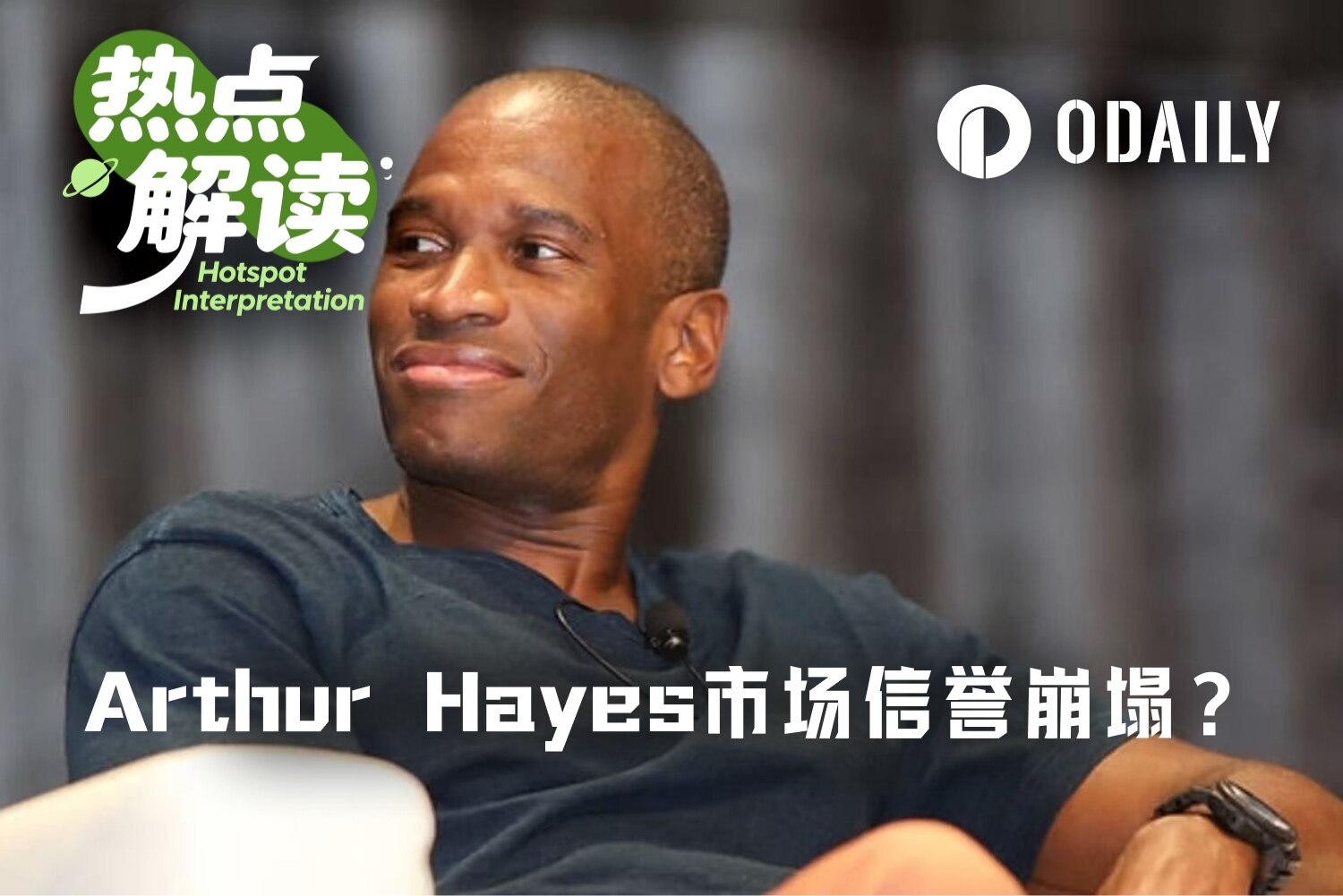
How much market credibility does Arthur Hayes have left? Recently, "the father of crypto perpetual contracts" and BitMEX co-founder Arthur Hayes has faced public criticism. On-chain detective ZachXBT has also publicly questioned how much exit liquidity he has created using his followers.

Liquidating HYPE, NEAR, WLD

Starting last week, Arthur Hayes performed several unexpected sell-offs to exit at the top.

Arthur Hayes had repeatedly stated publicly that HYPE would rise to $150 in this cycle. On June 1, Arthur Hayes passionately clashed with former Multicoin Capital co-founder Kyle Samani, who had disparaged Hyperliquid, and even made a $100,000 bet with him. However, just 3 days later, Arthur Hayes announced he had completely liquidated his HYPE and NEAR holdings. HYPE fell over 13.6% that day. His sell-off indeed allowed him to exit at the peak. HYPE reached a new high of $75.5 on June 4 before starting a continuous decline, currently trading around $62-64.

Besides HYPE and NEAR, Arthur Hayes also liquidated ZEC and WLD. Liquidating ZEC due to the Orchard Pool attack might be somewhat understandable. However, his sell-off of WLD resembles a classic "KOL dumping on retail" operation involving pre-positioning, public shilling, and finally pumping and dumping.

Because from publicly shilling WLD to liquidating it, Arthur Hayes only "pretended" for 3 days. On June 3, the day before selling HYPE, Arthur Hayes publicly shilled WLD with a $10 target, suggesting WLD would become an alternative for investors who couldn't directly participate in SpaceX equity trades. After the news spread, WLD rose over 35% that day. But by June 6, Arthur Hayes changed his tune, stating he had liquidated WLD because SpaceX's pre-IPO price action was "abnormal." This flimsy explanation caused WLD to drop over 20% that day.

The difference between Arthur Hayes and "third-rate KOLs" is that he writes lengthy posts, often justifying his actions from macroeconomic and top-level design perspectives.

On June 9, Arthur Hayes published a long article titled "Reality Test" (requiring about 20 minutes to read fully) explaining his recent moves. He believes three factors will burst the AI bubble: rising energy costs due to restricted traffic in the Strait of Hormuz, the IPOs of three major AI stocks (SpaceX, Anthropic, OpenAI), and Trump turning against AI for the midterm elections.

Therefore, his family office Maelstrom holds significant positions in U.S.-listed energy producers and has sold AI-related stocks and non-core crypto assets, holding only BTC and ETH.

Don't Listen to Arthur Hayes's Words, But Watch His Actions

Arthur Hayes's articles not only skillfully use extensive economic data and charts to argue his points but sometimes also overlay political and historical perspectives, which can be quite impressive. But when you take his words seriously and invest real money following his moves, he might announce a liquidation and turn bearish the very next day, seemingly forgetting what he said the day before, while your portfolio takes a simultaneous hit.

Such operations are not uncommon. As early as 2025, Arthur Hayes repeatedly performed the "bullish one day, liquidate the next" routine. The most classic example remains HYPE. In August 2025, Arthur Hayes promoted HYPE during a speech at Japan WebX, claiming the token still had up to 126x upside potential (Odaily note: the price was $45.9 that day). Yet just one month later, he announced liquidating HYPE, profiting millions, citing the need to avoid token unlock risks.

Arthur Hayes's sell-off then occurred precisely at the peak of HYPE's previous bull run, after which HYPE fluctuated downward. It wasn't until mid-January 2026 that Arthur Hayes again made large-scale purchases of HYPE. Judging from the price chart, his entry point for HYPE was again at the low point of this current cycle.

Similar examples include ETHFI and ENA, where he publicly expressed bullish views, then sold off without warning, achieving precise exits at the top. (Related reading:You Ran First Again! A Record of Arthur Hayes's Top Exits)

Long-term followers of Arthur Hayes have summarized a methodology: don't listen to Arthur Hayes's words, but you must watch his actions; follow his entries cautiously, and decisively liquidate when he sells.

However, if Arthur Hayes continues such performances, especially cases like manipulating WLD price volatility this time, no matter how reasonable the excuses are disguised, his market credibility will be threatened. This is like a crypto version of "The Boy Who Cried Wolf." In the end, Arthur Hayes will surely face backlash.

He said one thing right in his latest article—"I remain an unapologetic gambler," and gamblers usually don't end well.


Domande pertinenti

QWho is Arthur Hayes and why is his market credibility being questioned?

AArthur Hayes is the co-founder of BitMEX, often called the 'father of crypto perpetual contracts.' His market credibility is being questioned due to recent actions where he publicly promoted certain cryptocurrencies like HYPE and WLD, only to sell his holdings shortly after, which critics label as a classic 'pump and dump' strategy, manipulating exit liquidity from his followers.

QWhat specific cryptocurrencies did Arthur Hayes recently sell, and what were the consequences?

AArthur Hayes recently sold his holdings in HYPE, NEAR, ZEC, and WLD. For example, after publicly stating HYPE would reach $150, he sold it three days later, causing its price to drop over 13.6%. He also sold WLD just three days after promoting it, leading to a price drop of over 20%.

QWhat reasons did Arthur Hayes give in his article 'Reality Test' for selling his AI-related crypto assets?

AIn his article 'Reality Test,' Arthur Hayes cited three main reasons for selling AI-related crypto assets: 1) Rising energy costs due to restricted traffic in the Strait of Hormuz, 2) The potential IPO of major AI companies (SpaceX, Anthropic, OpenAI) bursting an AI bubble, and 3) His belief that former President Trump would oppose AI to aid midterm elections. Therefore, his family office shifted to holding energy stocks and core cryptocurrencies like BTC and ETH.

QAccording to the article, what is the suggested strategy for investors regarding Arthur Hayes's actions?

AThe article suggests that investors should not blindly follow Arthur Hayes's public statements but should closely monitor his actual on-chain transactions. The recommended strategy is to be cautious when he buys ('建仓谨慎跟随') and to decisively sell when he sells ('卖出果断清仓').

QWhat historical example does the article provide to show a pattern in Arthur Hayes's behavior?

AThe article provides the example of HYPE from August 2025. Arthur Hayes publicly promoted HYPE at the Japan WebX conference, claiming it had 126x growth potential. Just one month later, he sold all his HYPE holdings near the peak of that price cycle, citing token unlock risks, and re-entered the market at a low point in early 2026.

Letture associate

Google TPU Shipments Revised Up by 50%

Recent industry research indicates a significant upward revision in the shipments of Google's TPU (Tensor Processing Unit) chips. Previous expectations for 2027 were set at around 10 million units, but new estimates now point to 15 million units, a 50% increase. This substantial boost directly translates to higher demand across the entire supporting supply chain. Google's TPU clusters utilize a standardized all-optical interconnect architecture. Consequently, key hardware components are deeply integrated and scaled in fixed ratios with the chips. The 15 million TPU target will drive corresponding demand increases for NPO optical engines (roughly a 1:1 match), 1.6T optical modules, OCS optical switches, high-end server power supplies, fiber optics & MPO connectors, and liquid cooling solutions. Among these, liquid cooling is highlighted as the sector experiencing the most significant transformation and offering the most stable potential for excess returns. As next-generation TPU chips reach power levels where traditional air cooling is insufficient, liquid cooling becomes essential. 2026 is forecasted as the first year of substantial adoption for Google's liquid cooling solutions. This shift, coupled with delivery and capacity bottlenecks faced by incumbent overseas manufacturers, is creating a prime window for domestic Chinese suppliers to enter and secure Google's core supply chain. The market size for Google-specific liquid cooling is projected to potentially triple from a baseline of hundreds of billions to around 300 billion units by 2028. The logic for the fiber optic sector is also being rewritten. Once considered a cyclical commodity tied to telecom operator procurement, fiber is now a strategic and scarce resource for AI Data Centers (AIDC). A severe supply-demand imbalance, driven by the long lead time for preform production (18-24 months) and surging demand from cloud giants, is supporting strong performance. Chinese fiber manufacturers are well-positioned to capture a significant share of global AIDC demand, with exports potentially reaching 200-300 million core kilometers in 2026. Overall, the investment focus within the AI computing industry is shifting from pure "chip performance speculation" towards the more certain incremental growth in computing infrastructure and its supporting ecosystem. The upward revision in Google TPU shipments, along with the potential for further doubling by 2028, is seen as solidifying performance visibility for the entire supporting supply chain over the next two years.

marsbit49 min fa

Google TPU Shipments Revised Up by 50%

marsbit49 min fa

What Wall Street Really Wants After the Crypto Story Recedes

The tide of speculative crypto narratives has receded, revealing Wall Street's true objective: building a controlled, yield-generating, and compliant financial pipeline on distributed ledgers. They are migrating core functions onto blockchains, not for decentralization, but for efficiency and new revenue streams. Key developments include BlackRock's BUIDL fund, a tokenized treasury fund acting as a foundational reserve asset, and the rise of Securitize, which is going public and partnering with the NYSE to build a 24/7 digital securities trading and settlement system. This signals a major shift of securities clearing to blockchain technology. To make volatile assets like Bitcoin palatable for institutional investors, firms like BlackRock and Goldman Sachs are creating "covered call" ETFs (e.g., BITA). These products systematically sell options on Bitcoin holdings, transforming price volatility into stable monthly income, effectively repackaging crypto as a yield-bearing asset. Stablecoins are being positioned not as speculative tools but as efficient payment rails. Companies like Stripe and Mastercard are integrating them for instant, low-cost merchant settlements and cross-border card payments, respectively. Critically, new legislation like the GENIUS Act shapes them as non-interest-bearing, heavily regulated extensions of the US dollar system. In summary, Wall Street is quietly constructing a parallel, blockchain-based financial infrastructure featuring tokenized traditional assets, structured crypto yields, and programmable dollar pipelines—all under its control and fully integrated with existing regulatory and credit frameworks.

marsbit1 h fa

What Wall Street Really Wants After the Crypto Story Recedes

marsbit1 h fa

Tying Itself to SpaceX: Cursor's $60 Billion Rise

This article recounts the rapid rise of AI-powered coding startup Cursor and its 25-year-old MIT graduate CEO, Michael Truell. Launched in 2023, Cursor achieved explosive growth, reaching over 10 billion USD in revenue by late 2025. However, its journey highlights a central dilemma for AI application companies: dependence on foundational model providers. Cursor initially relied heavily on Anthropic's models but faced an existential threat when Anthropic launched its own competing coding tool, Claude Code. In response, Cursor declared an internal emergency in early 2026 and accelerated development of its own model, Composer. To secure the immense computing power needed, Truell struck a pivotal deal with Elon Musk's SpaceX in April 2026. The collaboration grants Cursor access to SpaceX's supercomputing resources for Composer, while SpaceX's Grok model benefits from Cursor's programming data. The agreement includes a potential 600 billion USD acquisition of Cursor by SpaceX later in the year, though a substantial termination fee is in place if the deal falls through. The story explores Cursor's intense, sometimes controversial hiring practices involving lengthy unpaid "work trials," its complex partnership-turned-rivalry with Anthropic, and its high-stakes gamble to ensure independence through the SpaceX alliance. The core question remains: will Cursor evolve into a defining, independent "generational" software company, or become a key piece in a tech giant's AI arsenal?

marsbit1 h fa

Tying Itself to SpaceX: Cursor's $60 Billion Rise

marsbit1 h fa

Trading

Spot
Futures

Articoli Popolari

Come comprare HYPE

Benvenuto in HTX.com! Abbiamo reso l'acquisto di Hyperliquid (HYPE) semplice e conveniente. Segui la nostra guida passo passo per intraprendere il tuo viaggio nel mondo delle criptovalute.Step 1: Crea il tuo Account HTXUsa la tua email o numero di telefono per registrarti il tuo account gratuito su HTX. Vivi un'esperienza facile e sblocca tutte le funzionalità,Crea il mio accountStep 2: Vai in Acquista crypto e seleziona il tuo metodo di pagamentoCarta di credito/debito: utilizza la tua Visa o Mastercard per acquistare immediatamente HyperliquidHYPE.Bilancio: Usa i fondi dal bilancio del tuo account HTX per fare trading senza problemi.Terze parti: abbiamo aggiunto metodi di pagamento molto utilizzati come Google Pay e Apple Pay per maggiore comodità.P2P: Fai trading direttamente con altri utenti HTX.Over-the-Counter (OTC): Offriamo servizi su misura e tassi di cambio competitivi per i trader.Step 3: Conserva Hyperliquid (HYPE)Dopo aver acquistato Hyperliquid (HYPE), conserva nel tuo account HTX. In alternativa, puoi inviare tramite trasferimento blockchain o scambiare per altre criptovalute.Step 4: Scambia Hyperliquid (HYPE)Scambia facilmente Hyperliquid (HYPE) nel mercato spot di HTX. Accedi al tuo account, seleziona la tua coppia di trading, esegui le tue operazioni e monitora in tempo reale. Offriamo un'esperienza user-friendly sia per chi ha appena iniziato che per i trader più esperti.

287 Totale visualizzazioniPubblicato il 2024.12.11Aggiornato il 2026.06.02

Come comprare HYPE

Discussioni

Benvenuto nella Community HTX. Qui puoi rimanere informato sugli ultimi sviluppi della piattaforma e accedere ad approfondimenti esperti sul mercato. Le opinioni degli utenti sul prezzo di HYPE HYPE sono presentate come di seguito.

活动图片