
沃什风暴将至

marsbitPubblicato 2026-05-19Pubblicato ultima volta 2026-05-19

Introduzione

标题:沃什风暴将至 摘要:美股近两年在AI热潮推动下屡创新高,但支撑其高估值的核心前提——长期利率走低——正面临动摇。30年期美债收益率已突破5%,居高不下。这背后是通胀韧性、美国财政赤字恶化以及美债供需失衡三重压力。高利率将侵蚀依赖远期现金流折现的科技股估值。 更大的变数在于美联储领导层更迭。新任主席凯文·沃什倾向于坚持缩表(QT),并可能减少对金融市场的隐性托底。这或将进一步推高长端利率,并改变市场对“美联储总会救市”的预期。尽管AI叙事强劲,但其对整体经济生产率的提升尚不足以快速抵消高利率带来的估值压力。沃什的上任可能意味着,过去由低利率和央行托底所支撑的美股高估值逻辑基础正在松动。

出品 | 妙投APP

作者 | 丁萍,虎啸APP

头图 | 视觉中国

沃什不是风暴本身,但他可能会让市场发现,风暴来时,美联储已经不站在过去那个位置了。

过去两年,英伟达、微软、Meta这些科技巨头不断刷新市值纪录,AI几乎重新定义了整个市场的风险偏好,标普和纳指也被一路抬高。

但如果把这轮行情拆开看,AI其实只是台前的故事,真正托住美股估值的,是另一个更关键的前提:长期利率最终会下来。

只有这个前提成立,市场才敢继续为远期盈利支付高溢价,才敢把少数科技龙头的增长叙事不断折现到今天,才敢在30倍、40倍甚至更高的估值上继续追。

但现在,这个前提正在变得不稳。

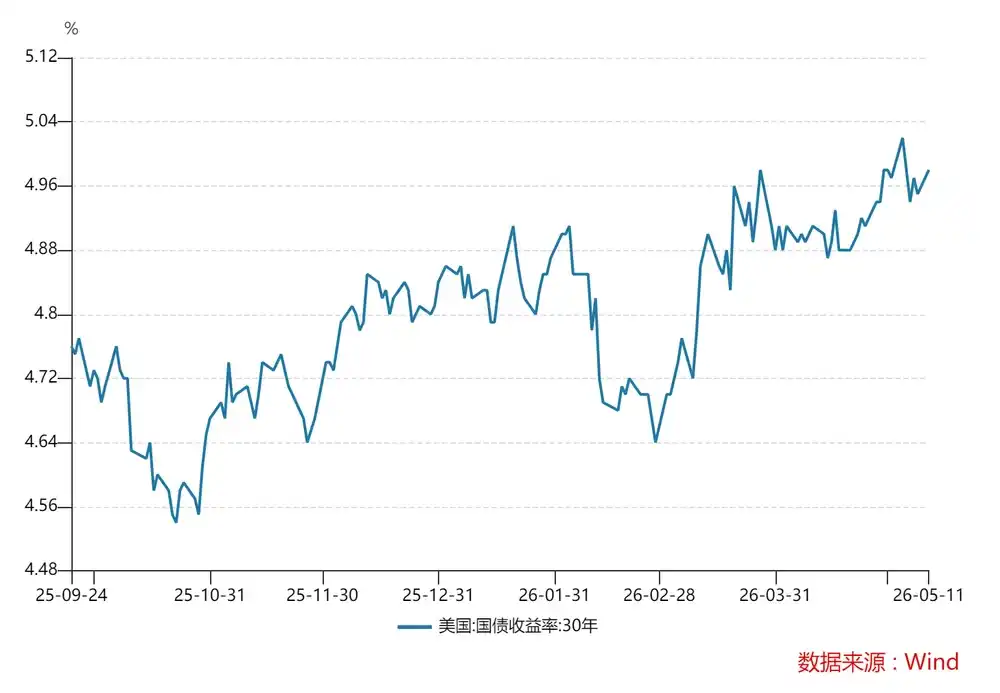
30年期美债收益率持续走高,近期已经突破了5%的高位。对一个高度集中、估值昂贵、极度依赖远期盈利叙事的美股市场来说,长端利率高位停留得越久,估值体系就越脆弱。

更麻烦的是,这种压力可能会越来越大。

5月15日,执掌8年美联储主席的鲍威尔正式卸任,凯文·沃什成为了下一任主席。相比鲍威尔,沃什可能会更容忍市场承压、更坚持缩表,并减少美联储对金融市场的隐性托底。

一旦长端利率越走越高,美联储也不再像过去那样迅速安抚市场,那么过去支撑美股高估值的那套繁荣逻辑,就可能开始失去支撑。

美股眼下的脆弱

是长端利率压不下去

过去一段时间,市场把注意力过度放在美联储会不会降息上,忽略了一个问题,就是长端利率已经不跟着货币政策走。

理论上,央行降息直接压低短期利率,市场如果相信未来利率会持续偏低,长端利率就能够随之下降。但现在出现了意外,即便美联储并未加息,30年期美债收益率仍继续往上走,5月15日最高摸到5.13%,背后说明市场不相信美国长期风险会下降,因此要求更高的风险补偿。
这正是美股眼下最脆弱的地方。

长端利率之所以钉在高位,背后至少有三层原因。

第一,通胀并没有像市场期待的那样顺滑回落

最新数据显示,美国4月CPI同比涨3.8%创近三年新高,核心CPI涨幅扩大至2.8%。更棘手的是,美伊冲突风险并未真正解除,油价持续高企,也在不断强化市场对输入性通胀的担忧。只要通胀预期不能被彻底压住,长端利率就很难顺利回落。

第二,美国财政的问题也在削弱市场对其长期财政约束的信心

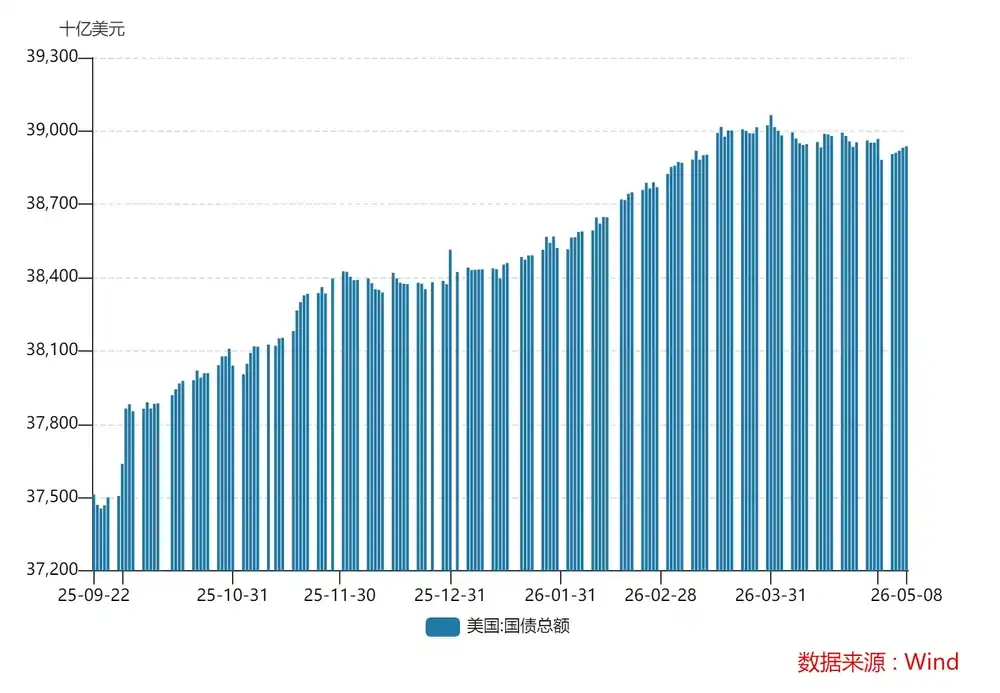
2025年10月,美国国债站上了38万亿美元大关;仅仅5个月,这一规模就突破了39万亿美元。这背后是长期的财政赤字(高昂的军事支出和社会福利支出),美国财政部通过发行新的债券来偿还到期的旧债,而这些新债又带来更高的利息支出,从而使得美国陷入了财政债务的“庞氏化”,即需要靠不断扩张的债务规模,来维持既有体系的稳定。
第三,美债的供需结构正在恶化

一边是财政部继续加大发债;一边是海外在减持,因为全球正在去美元化,外国官方部门减少美债增持,美债占全球储备资产的比例处于下降趋势,目前是24%。供给在增加,接盘力量却在减弱,结果就是长端利率越来越难压。

当上述风险得不到缓解时,美债就不再只是安全资产,投资者自然也会要求更高的风险补偿。

这对美股尤其危险。

因为当前美股并不是一个普遍低估、靠业绩慢慢兑现的市场,而是一个高度集中、由少数龙头支撑、且对贴现率极度敏感的市场。

一旦长期利率维持高位,远期现金流的折现就会明显变狠,估值的容忍区间也会迅速收窄。到那个时候,先受冲击的未必是基本面最差的公司,而恰恰是那些基本面最好、但估值已经被打得最满的公司。

美银Hartnett也表示,30年期美债收益率一旦站上5%,市场融资成本抬升、风险偏好回落,美股高估值科技股首当其冲。

2023年10月已经演示过一次。

彼时30年期美债收益率一度升破5%,纳斯达克指数在数月内累计回调约10%。当时投资者仍然相信,一旦金融条件继续恶化,美联储最终会释放安抚信号。但如果沃什上台后,这种预期开始松动,那么同样的长端利率冲击,市场的承受方式就会完全不同。

很多人也喜欢拿2007年类比今天,但其实真正值得借鉴的,不是当年利率也高,而是高利率对金融体系的伤害,从来不是瞬间发生的。它更像一种慢性侵蚀:先压融资,再压估值,再压资产负债表,最后把系统里最脆弱的一环逼出来。

2007年真正爆掉的是地产、次贷和影子银行;今天更危险的,则是高赤字财政把长债供给越推越高,长端利率压不下来,银行浮亏、商业地产尾部风险,以及风险资产对流动性的依赖,都会被一点点逼出来。

所以,一旦长端利率下不来,美股这轮AI牛市的估值基础就开始松动了

这个问题在沃什时代会更加严重

沃什为何值得市场警惕?

因为沃什倾向于缩表,会进一步推升30年期美债收益率,放大美股的脆弱性

这怎么理解?

美联储缩表就是缩减资产负债表规模。美联储以前为了刺激经济,买了很多国债、住房抵押贷款支持证券(MBS)等资产;买这些资产时,相当于向市场投放了大量资金。缩表就是让这些资产减少,慢慢收回市场的流动性。

我们也可以简单理解成,财政部新增或者到期的国债,美联储不接了,甚至还有可能卖掉手里的国债。

如上文所述,当前美国财政部还在加大发债,海外还在减持,如果美联储也缩表,那么新债和到期的美债只能流向市场,由市场来决定利率水平,结果就是美债收益率持续上行。这也会导致财政的利息负担越来越重,这对于依靠发新债换旧债的体系来说非常危险,一旦利息成本高到无法支撑,美债危机也就出现了。

美国前财长保尔森也曾发出警告,一旦美国国债开始失去市场买家,整个金融体系的“无风险锚”就会动摇。

既然后果这么严重,为何沃什还倾向于缩表?这还要从他的履历说起。

沃什在2006年至2011年担任美联储理事,这段经历是判断他政策倾向的核心。他完整经历了金融危机前最后一轮信用扩张、2008年全球金融危机和零利率与QE(量化宽松)的开启。

他并不是那种完全否认危机救助的人,相反,在系统性风险最强的时候,他支持美联储充当最后贷款人,也认可非常规工具的必要性。但他后来越来越怀疑,危机后的长期QE是否还应该长期存在?

因为从他的视角看,危机后的美国经济并没有出现与资产价格同等幅度的修复。实体经济复苏不算强,生产率改善有限,但金融资产价格却在流动性推动下快速反弹,甚至远超危机前水平。

这会让沃什形成一种非常典型的判断,即QE或许很擅长抬高金融资产价格,但未必同样擅长修复实体经济。一旦市场开始默认“美联储最终一定会托底资产价格。”那么金融体系就会越来越依赖流动性,风险偏好被长期压低,资产泡沫和错配也会越来越严重。

所以在他的逻辑里,美联储如果长期维持超大资产负债表、长期压低期限溢价,市场最终会越来越无法脱离央行流动性独立运行。在他看来,缩表不仅是收回流动性,也是美联储在主动退出“金融条件稳定器”的角色。

这也是为什么,沃什会比鲍威尔更倾向于推进QT(量化紧缩)。

所以沃什上台后,高利率环境会更加严峻,美联储也未必会像过去那样迅速出手安抚。一旦这种预期形成,美股当前本就脆弱的高估值体系,面临的压力也会进一步被放大

AI叙事也消化不了高利率

当然,30年期美债收益率维持高位,对美股的利空也并不是绝对的。

如果美国经济持续超预期走强,企业盈利不断上修,尤其是AI真的能快速转化为广泛的生产率提升,那么即便长期利率偏高,风险资产也未必扛不住。说到底,真正决定市场能否消化高利率的,最终还是经济增长本身。

过去一年,美股尤其是科技股之所以能在高利率环境下继续上行,很大程度上是依赖于这样的乐观判断:AI将显著提升企业盈利、推高生产率,并为美国经济打开新一轮增长空间。

但问题是,AI叙事目前更多集中在少数龙头公司和资本市场层面,还没有被充分证明能够快速、广泛地转化为整个经济的基本面改善。

以英伟达为例,它的确创造了惊人的资本回报和市场想象力,但这类公司有这样的共同特点,技术壁垒高、利润集中度高、就业吸纳能力有限(截至2026财年,英伟达全球员工总数也不过4.2万人),对整体经济的外溢效应并没有市场情绪表现得那么强。

换句话说,AI可以在短时间里抬高英伟达、微软这样的公司估值,却未必能在同样短的时间里,支撑更广泛的就业、投资和实体部门扩张。

更现实的是,美国当前本身就面临电力、基础设施和产业配套不足的问题。AI产业扩张越快,越容易把资本、能源和人才进一步吸向头部科技部门,使得原本就不均衡的资源配置更加向头部科技部门集中。

这里不是说AI不行,只是强调它还没有快到足以覆盖长端利率高位停留带来的估值压力

也就是说,市场以为自己在交易AI,实际上交易的仍然是另一件事:低长端利率和美联储托底。只要这两个前提还在,高估值就还能讲下去;一旦这两个前提开始松动,AI再强,也只是延缓重估,而不是取消重估。

沃什并不是风险来源,却可能是让这件事更难逆转的人

总之,虽然沃什不会主动制造危机,但他可能让市场第一次真正接受:过去那套靠低长端利率和联储托底支撑起来的高估值逻辑,已经没那么稳了

Crypto di tendenza

Domande pertinenti

Q根据文章,当前美股高估值体系最脆弱的地方是什么?

A当前美股高估值体系最脆弱的地方在于,其高度依赖“长期利率最终会下降”这一前提。随着30年期美债收益率持续走高并突破5%,这一前提正在变得不稳。长端利率在高位停留得越久,美股(尤其是估值昂贵、依赖远期盈利折现的科技股)的估值体系就越脆弱。

Q文章提到长端利率(如30年期美债收益率)难以下降有哪三个主要原因?

A长端利率难以下降主要有三个原因:1. 通胀并未顺滑回落,甚至有所反弹,且地缘冲突(如美伊冲突)带来油价高企,强化了通胀预期。2. 美国财政赤字严重,国债规模飙升,削弱了市场对美国长期财政纪律的信心,加剧了债务风险。3. 美债供需结构恶化:一方面财政部持续大量发债,另一方面全球去美元化趋势下,海外投资者(尤其是外国官方部门)在减持美债,导致承接力量减弱。

Q为什么说沃什(Kevin Warsh)出任美联储主席后,可能会让美股面临的压力更大?

A沃什出任美联储主席后可能会让美股压力更大,主要有两方面原因:第一,他倾向于坚持缩表(量化紧缩),这会减少美联储对美债市场的支持,可能进一步推高长端利率,直接冲击依赖低利率环境的美股高估值。第二,相比前任鲍威尔,他可能更容忍市场承压,减少对金融市场的“隐性托底”,一旦市场出现波动,美联储迅速安抚的预期会减弱,这将放大市场对高利率和估值风险的担忧。

Q文章认为AI叙事(人工智能带来的增长预期)在当前市场环境下存在什么局限性?

AAI叙事在当前市场环境下的局限性在于:它虽然极大地推高了英伟达、微软等少数科技龙头的估值和市场情绪,但尚未被证明能快速、广泛地转化为整体经济的生产率提升和基本面改善。AI产业的利润和资本高度集中,就业吸纳能力有限,且可能加剧资源配置不均衡(如电力、基础设施向头部集中)。因此,AI的增长故事不足以完全抵消长端利率高位停留所带来的估值压力,市场本质上仍在依赖低利率和美联储托底的预期。

Q沃什的政策倾向主要基于他哪段时期的工作经历?其核心观点是什么?

A沃什的政策倾向主要基于他在2006年至2011年担任美联储理事的经历,这段时期他完整经历了金融危机前的信用扩张、全球金融危机以及量化宽松(QE)的开启。他的核心观点是:尽管在系统性危机时期需要美联储充当最后贷款人并使用非常规工具,但长期维持庞大的资产负债表和极低利率,会导致金融体系过度依赖央行流动性,催生资产泡沫和资源配置扭曲,却未必能有效修复实体经济。因此,他主张美联储应更坚定地缩表,主动退出“金融条件稳定器”的角色。

Letture associate

UNI Doubles in Two Months Against the Trend: A 5-Year-Overdue Value Realization

Amidst a generally stagnant crypto market in June and July, UNI, the governance token of Uniswap, saw a significant surge, nearly doubling in price from around $2.3 to $4.6. This rally represents a delayed but significant value reassessment, triggered by the practical implementation of its long-debated "fee switch" mechanism. The key turning point was the on-chain execution of the UNIfication proposal in December 2025. It activated a protocol fee on select pools, directed Unichain sequencer revenue (net of costs) to a communal treasury, executed a one-time burn of 100 million UNI, and established a system where all protocol revenue flows into a "TokenJar" contract. This treasury has a single exit: purchasing and permanently burning UNI via a "Firepit" contract. Initially, the market reacted tepidly as the generated revenue and corresponding burn rate were modest. The narrative shifted dramatically in July 2025 with two major developments. First, the launch of Robinhood Chain, tailored for tokenized stocks, rapidly became a primary source of volume and fees for Uniswap, at one point contributing nearly half of its weekly fees. Second, governance votes successfully expanded the fee mechanism to v4 pools and initiated a temperature check for fees on Robinhood Chain. The activation of v4 fees caused the protocol's daily revenue earmarked for UNI burns to nearly triple. The core of UNI's recent price action is the transition from a pure governance token to a cash-flow asset with a permanent, protocol-funded buyer. Its effectiveness is amplified by UNI's mature and widely distributed supply, with no major impending unlocks to dilute the impact of the buybacks. The sustainability of this rally now hinges on whether the transaction volume, particularly on Robinhood Chain, persists after its initial gas subsidies expire, determining if this is a genuine value realization or a subsidy-fueled spike.

marsbit33 min fa

UNI Doubles in Two Months Against the Trend: A 5-Year-Overdue Value Realization

marsbit33 min fa

Breaking: Google Earth Urgently Pulls Back Nano Banana 2 Image Generation Feature!

Google Earth's newly launched "Create image" feature, powered by the Nano Banana 2 AI image generation model, was abruptly withdrawn shortly after its release due to being "played" by users. The feature allowed users to generate and overlay AI-created visuals directly onto real-world satellite and 3D maps in Google Earth. The tool enabled creative applications like historical recreations (e.g., visualizing ancient Pompeii), generating informational graphics for landmarks, and envisioning architectural projects or futuristic cityscapes on real terrain. It operated under "geospatial grounding," meaning the AI respected the underlying geography, topography, and perspective of the chosen map view. The model also integrated with Gemini to retrieve relevant factual information. However, upon release, users quickly tested its limits. A prominent example involved reimagining Philadelphia's historic Independence Hall as a post-apocalyptic ruin overrun by "happy" zombies, evil clowns, and giant alien mechs. This highlighted both the feature's playful potential and its risks regarding the generation of inappropriate or misleading content on realistic maps, leading to its swift temporary removal. Google stated it would re-release the feature after implementing "enhanced guardrails." Analysts note this move strategically leverages Google's vast proprietary geospatial data, positioning its AI not just for artistic generation but for spatially accurate world visualization—a unique advantage in the competitive AI image generation landscape.

marsbit2 h fa

Breaking: Google Earth Urgently Pulls Back Nano Banana 2 Image Generation Feature!

marsbit2 h fa

Altman Admits: Overestimated AI Snatching Jobs! Huang Renxun: The Unemployment Narrative Is Completely Backwards

Sam Altman has revised his earlier predictions about AI rapidly replacing jobs, admitting he overestimated the speed at which AI would eliminate entry-level white-collar roles. Speaking on the "Invest Like the Best" podcast, he stated that people do not truly want an AI CEO, as accountability and human connection remain critical. He found that individuals prefer interacting with people who can be held responsible for decisions. Similarly, NVIDIA's Jensen Huang argued that the narrative of AI destroying jobs is misguided. He distinguishes between tasks and jobs, noting that while AI can automate specific tasks, entire jobs—encompassing communication, judgment, coordination, and accountability—are not eliminated. He cited examples like radiologists and software engineers, where demand for these roles has increased as AI handles repetitive tasks, allowing for business expansion and the creation of more positions. Data from a University of Maryland and LinkUp study supports this, showing that U.S. job postings for new graduates have actually risen, countering the fear of vanishing entry-level roles. However, a significant shift is occurring: the traditional entry-level tasks that help newcomers gain experience are being automated, making initial career access more challenging. The key insight is that as AI takes over standardized tasks, the enduring value of human work shifts toward areas of responsibility, trust-building, and final decision-making—aspects that AI cannot replicate. The real "moat" for professionals lies in these irreplaceable human elements.

marsbit2 h fa

Altman Admits: Overestimated AI Snatching Jobs! Huang Renxun: The Unemployment Narrative Is Completely Backwards

marsbit2 h fa

Weekly Editor's Picks (0725-0731)

Weekly Editor's Picks (0725-0731) provides a curated selection of deep analysis, filtering out market noise. Key themes from this week include: **Macro & Policy:** The Federal Reserve's upcoming meeting is marked by high uncertainty, balancing cooling inflation data against persistent price pressures. Meanwhile, the U.S. crypto regulatory Clarity Act faces critical political hurdles, with its 2026 passage probability seen as low. **Investing & Crypto:** Analysis suggests long-term crypto success depends on conviction through volatile cycles, focusing on assets like Bitcoin and core smart contract platforms. A trend noted is the increasing similarity between global equity markets (especially tech) and crypto, driven by narrative and leverage. Several major crypto protocols show strong revenue growth, but this isn't always translating to token price appreciation due to sell pressure and structural factors. **AI & Semiconductors:** Nvidia's rising credit default swap rates signal market concern over AI infrastructure financing risks. The storage sector experienced volatility as markets began pricing in potential 2027 oversupply. Despite a record profitable quarter, SK Hynix's results were deemed "below expectations," reflecting heightened investor demands for future growth visibility. **Markets & DeFi:** TradeXYZ demonstrated remarkable accuracy in pre-market pricing for a major A股 listing. The token ONDO saw gains, linked to its growing role in the on-chain tokenized stock ecosystem. **Ethereum:** Post-Pectra upgrade, a major structural shift is underway as Lido begins migrating millions of ETH to new validator architectures designed for capital efficiency. **Also Highlighted:** Butian's bullish stock market move; OpenAI's Altman promising major advances; Samsung and SK Hynix securing large AI chip deals; Apple reaching a $5T market cap; and ongoing discussions around exchange security following Poolin's bankruptcy case.

marsbit2 h fa

Weekly Editor's Picks (0725-0731)

marsbit2 h fa

Trading

Spot

Articoli Popolari

Come comprare PING

Benvenuto in HTX.com! Abbiamo reso l'acquisto di Ping (PING) semplice e conveniente. Segui la nostra guida passo passo per intraprendere il tuo viaggio nel mondo delle criptovalute.Step 1: Crea il tuo Account HTXUsa la tua email o numero di telefono per registrarti il tuo account gratuito su HTX. Vivi un'esperienza facile e sblocca tutte le funzionalità,Crea il mio accountStep 2: Vai in Acquista crypto e seleziona il tuo metodo di pagamentoCarta di credito/debito: utilizza la tua Visa o Mastercard per acquistare immediatamente PingPING.Bilancio: Usa i fondi dal bilancio del tuo account HTX per fare trading senza problemi.Terze parti: abbiamo aggiunto metodi di pagamento molto utilizzati come Google Pay e Apple Pay per maggiore comodità.P2P: Fai trading direttamente con altri utenti HTX.Over-the-Counter (OTC): Offriamo servizi su misura e tassi di cambio competitivi per i trader.Step 3: Conserva Ping (PING)Dopo aver acquistato Ping (PING), conserva nel tuo account HTX. In alternativa, puoi inviare tramite trasferimento blockchain o scambiare per altre criptovalute.Step 4: Scambia Ping (PING)Scambia facilmente Ping (PING) nel mercato spot di HTX. Accedi al tuo account, seleziona la tua coppia di trading, esegui le tue operazioni e monitora in tempo reale. Offriamo un'esperienza user-friendly sia per chi ha appena iniziato che per i trader più esperti.

398 Totale visualizzazioniPubblicato il 2025.10.27Aggiornato il 2026.06.02

Come comprare PING

Discussioni

Benvenuto nella Community HTX. Qui puoi rimanere informato sugli ultimi sviluppi della piattaforma e accedere ad approfondimenti esperti sul mercato. Le opinioni degli utenti sul prezzo di PING PING sono presentate come di seguito.

活动图片