摩根士丹利为何将代币化证券视为2026年下半年起的‘自然发展路径’

ambcryptoPubblicato 2026-03-25Pubblicato ultima volta 2026-03-25

Introduzione

摩根士丹利计划在2026年下半年推出代币化证券交易支持,将其暗池交易平台Trajectory Cross扩展至支持代币化股票。该平台目前已支持传统股票、ETF和ADR,此次升级被视为自然演进。作为美国四大经纪商之一,摩根士丹利管理着8.2万亿美元客户资产,此前已率先向财富管理客户开放比特币和以太坊ETF交易,并申请了自有比特币ETF。代币化证券市场正快速增长,总价值达10亿美元,月转账量25亿美元,年增长率达245%。纳斯达克和纽交所也在布局代币化证券交易,传统金融机构通过代币化提升运营效率并拓展全球24/7交易市场。

机构间对代币化证券的竞争正在升温。纽约证券交易所(NYSE)和纳斯达克等传统证券交易所正与科技公司合作,构建代币化证券系统。

投资银行也在为此做准备。据摩根士丹利加密部门负责人Amy Oldenburg表示,这家全球财富管理与投资银行将于2026年下半年推出对代币化证券的支持。

在Blockworks数字资产峰会的间隙,Oldenburg表示:

我们计划在2026年下半年将我们的暗池交易系统Trajectory Cross升级,以支持代币化证券。

她补充道:

该系统已支持传统股票、ETF和ADR。因此,向代币化证券开放我们的系统是自然的发展路径。

解读摩根士丹利的加密与代币化布局

摩根士丹利是与美林证券(美国银行)、瑞银集团和富国银行并列的四大金融巨头之一,这些机构均允许高净值客户投资加密货币。这些公司共同管理着约15-17万亿美元的客户资产,其中摩根士丹利以8.2万亿美元领先。

因此,它们被视为比特币ETF‘第二波’ adoption的关键推动者。有趣的是,这一路线图已在逐步实现。

2025年底,摩根士丹利成为首家允许投资顾问向所有财富管理客户(包括管理退休账户的客户)主动推荐现货比特币和以太坊ETF的金融巨头。这较其2024年8月仅限高净值人士的加密ETF准入政策有了显著扩展。

此外,现货加密货币交易已被纳入摩根士丹利的E·TRADE平台,该平台同时支持股票、债券、ETF等交易。通过其资产管理子公司,该机构已申请推出自有现货比特币ETF,市场观察人士认为其可能超越贝莱德的IBIT需求。如今,它正押注下一个热门市场叙事:代币化。

如前所述,纳斯达克与纽交所均在为代币化证券交易奠定基础。对传统金融机构而言,代币化能提升运营效率,并拓展至24/7交易的全球市场。

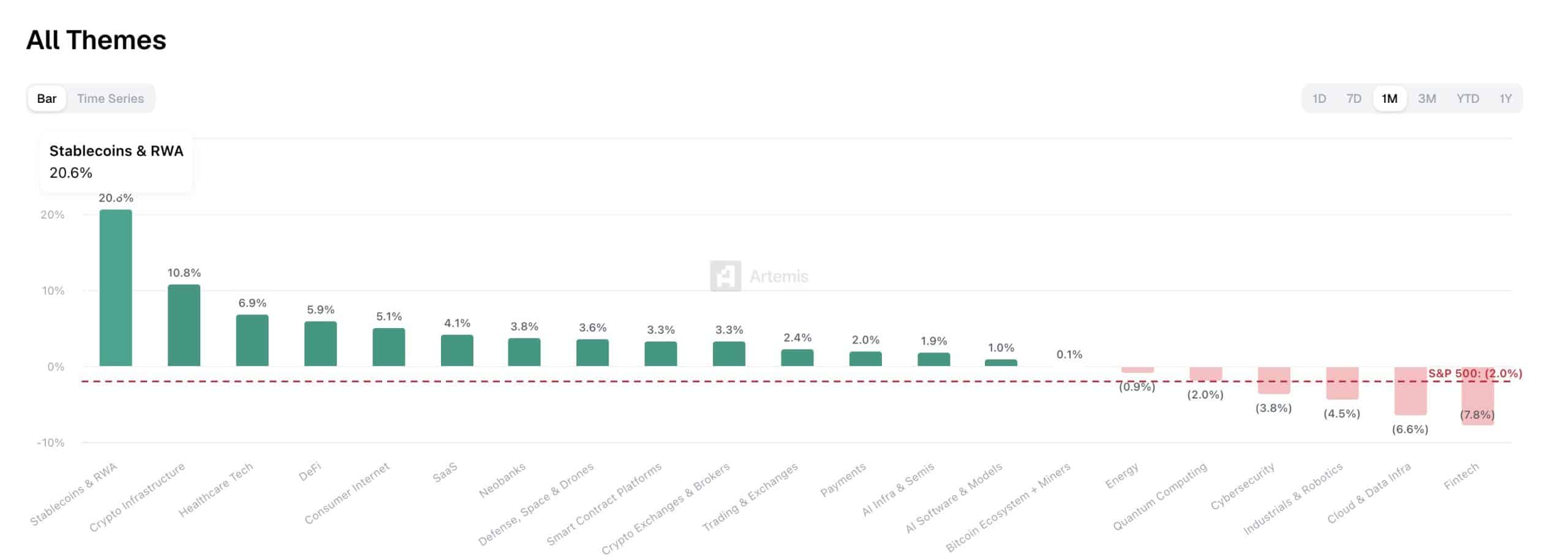
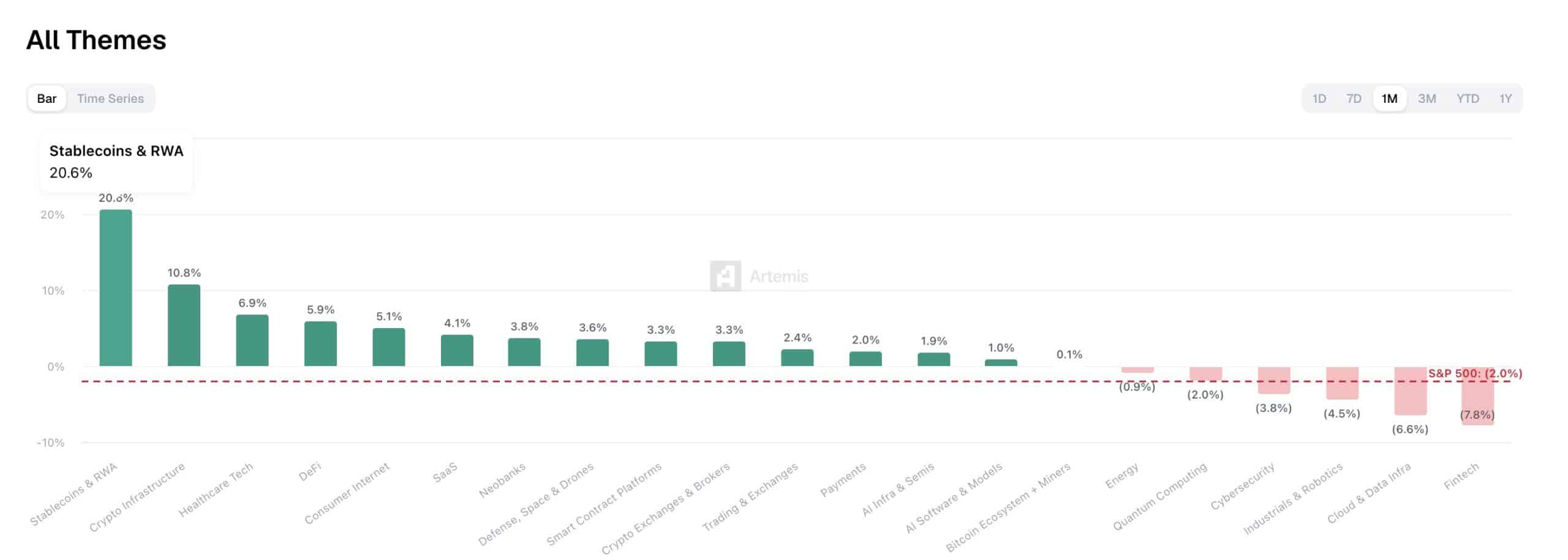
该领域总价值已飙升至10亿美元,月转移量增长45%达25亿美元,凸显出细分市场的巨大 adoption 潜力。事实上,今年三月,AI与代币化资产成为表现最佳的板块,也是 adoption 增速最快的领域之一。

来源:Artemis

灰度公司强调这一增长趋势时指出:

代币化活动持续强劲增长。代币化资产规模创历史新高,同比增长245%。稳定币增长35%。


最终总结

  • 摩根士丹利正布局代币化证券,预计今年下半年推出交易支持。
  • 代币化资产是加密货币市场增长最快的领域之一,年增长率达245%。

Crypto di tendenza

Domande pertinenti

Q摩根士丹利计划在何时推出对代币化证券的支持?

A摩根士丹利计划在2026年下半年(H2 2026)推出对代币化证券的支持。

Q摩根士丹利计划通过哪个平台来支持代币化证券交易?

A摩根士丹利计划通过其暗池交易平台Trajectory Cross来支持代币化证券交易。

Q根据文章,代币化资产市场在增长方面表现如何?

A代币化资产市场增长迅猛,年同比增长率达到245%,月转移量增长45%至25亿美元,总价值已达到10亿美元。

Q除了摩根士丹利,还有哪些传统金融机构在布局代币化证券?

A除了摩根士丹利,纽约证券交易所(NYSE)和纳斯达克(Nasdaq)等传统证券交易所也在与科技公司合作,构建代币化证券交易系统。

Q摩根士丹利在加密货币领域还有哪些其他重要举措?

A摩根士丹利在2025年底成为首家允许理财顾问向所有财富管理客户(包括管理退休账户的客户)积极推销现货比特币和以太坊ETF的 wirehouse,并且其资产管理部门已申请了内部现货比特币ETF。

Letture associate

a16z: From Companies to DAOs, DUNA May Become the Next Generation Organizational Form

This article, "From Companies to DAOs: How DUNA Could Become the Next Organizational Form," traces the 500-year evolution of business collaboration. It begins with medieval structures like the *commenda* and Florentine *compagnia*, which exposed partners to personal risk. The modern corporation, exemplified by the Dutch East India Company (VOC), was a revolutionary leap, enabling large-scale, capital-intensive ventures by offering limited liability and reducing coordination costs. However, corporations introduced new challenges like principal-agent problems and bureaucratic overhead. The piece argues that software and internet-native protocols are now reducing these traditional overheads. Decentralized Autonomous Organizations (DAOs) emerged as a new model for coordination without centralized management. Yet, DAOs face a significant legal vacuum: they lack legal recognition, leaving members exposed to unlimited personal liability, and their tokens are vulnerable to being classified as securities under unclear regulations (e.g., the Howey Test). This has forced projects into suboptimal workarounds like offshore foundations. The article identifies the Decentralized Unincorporated Nonprofit Association (DUNA) as a potential solution. Recently legalized in states like Wyoming, the DUNA provides a legal wrapper for decentralized networks. It grants key protections—legal personality, limited liability, and perpetual existence—to a group without imposing a traditional hierarchical management structure. This allows token-holder communities to govern, hold assets, and contract as a single legal entity, aligning with their decentralized nature. While DUNA doesn't solve all governance challenges or magically resolve securities law questions, it represents a crucial step. It fills the legal recognition gap, offering a native legal form for internet-scale, decentralized collaboration and extending the separation of personal risk from organizational venture into a new domain.

marsbit37 min fa
a16z: From Companies to DAOs, DUNA May Become the Next Generation Organizational Form

marsbit37 min fa

2026 Mid-Year Report On-Chain RWA: Tokenized Stock Market Cap Doubles in a Year, But 90% of Rights Are Hollow Shells

The 2026 Mid-Year Report on On-Chain RWA highlights a significant growth in tokenized stock market capitalization, which nearly doubled from $951 million in March to $1.89 billion by July. However, the report reveals a fundamental contradiction in this "layer 2.5" ecosystem: products with the strongest legal foundation (like regulated U.S. infrastructure) lack liquidity and distribution, while freely tradable offshored wrapper products often lack substantive ownership rights. The increase is driven largely by a few products (SECZ, FGRS, STRCx) and platforms (Ondo, xStocks, Securitize collectively hold over 85% share). While distributed value across networks like Ethereum, Solana, and BNB Chain has grown, the market remains fragmented. Products referencing the same underlying asset (e.g., Apple stock) are distinct legal liabilities with different intermediaries and jurisdictional rules, offering varying degrees of legal claim. The report cautions that headline numbers are misleading, as they reflect changes in distributed token value—driven by issuance, conversions, and price movements—not pure investor inflows. True "canonical shares" with legal ownership, wide wallet distribution, institutional liquidity, and independent on-chain price discovery do not yet exist at scale. Tokenized treasuries show stronger product-market fit, and ETFs may be easier to scale than single stocks. The core takeaway is a trade-off: legal certainty versus liquidity and composability.

marsbit1 h fa

2026 Mid-Year Report On-Chain RWA: Tokenized Stock Market Cap Doubles in a Year, But 90% of Rights Are Hollow Shells

marsbit1 h fa

Coldcard Hardware Wallet Hacked: 594 Bitcoin Withdrawn in 25 Minutes

The Coldcard hardware wallet has been compromised, with hackers stealing approximately 594.5 Bitcoin (~$40 million) from 500 addresses in just 25 minutes. The root cause was a critical software bug, undetected for five years, which disabled the device's secure chip for generating true random numbers. This led to the creation of private keys based on predictable data like the processor's serial number, drastically reducing cryptographic security. The attackers exploited this offline by brute-forcing possible seed phrases, finding active addresses on the public ledger, and signing transactions. Initially, Coinkite (Coldcard's maker) claimed only older models were at risk but later admitted all devices running the compromised firmware were vulnerable. CEO Rodolphe Novak (NVK) apologized but ruled out financial compensation for affected users. To secure funds, owners must urgently update their firmware to specific safe versions, generate a completely new seed phrase on the updated device, and transfer all assets to new addresses created with that new seed. While a BIP-39 passphrase can help, it does not replace this migration process. Other Coinkite products like TAPSIGNER were not affected. This incident underscores that even specialized hardware requires rigorous, independent code audits, especially for cryptographic functions. It parallels past failures, like a 2006 OpenSSL bug in Debian, and raises questions about whether automated code analysis can ever fully replace human scrutiny in critical security areas.

cryptonews.ru3 h fa

Coldcard Hardware Wallet Hacked: 594 Bitcoin Withdrawn in 25 Minutes

cryptonews.ru3 h fa

Trading

Spot

Articoli Popolari

Come comprare STO

Benvenuto in HTX.com! Abbiamo reso l'acquisto di StakeStone (STO) semplice e conveniente. Segui la nostra guida passo passo per intraprendere il tuo viaggio nel mondo delle criptovalute.Step 1: Crea il tuo Account HTXUsa la tua email o numero di telefono per registrarti il tuo account gratuito su HTX. Vivi un'esperienza facile e sblocca tutte le funzionalità,Crea il mio accountStep 2: Vai in Acquista crypto e seleziona il tuo metodo di pagamentoCarta di credito/debito: utilizza la tua Visa o Mastercard per acquistare immediatamente StakeStoneSTO.Bilancio: Usa i fondi dal bilancio del tuo account HTX per fare trading senza problemi.Terze parti: abbiamo aggiunto metodi di pagamento molto utilizzati come Google Pay e Apple Pay per maggiore comodità.P2P: Fai trading direttamente con altri utenti HTX.Over-the-Counter (OTC): Offriamo servizi su misura e tassi di cambio competitivi per i trader.Step 3: Conserva StakeStone (STO)Dopo aver acquistato StakeStone (STO), conserva nel tuo account HTX. In alternativa, puoi inviare tramite trasferimento blockchain o scambiare per altre criptovalute.Step 4: Scambia StakeStone (STO)Scambia facilmente StakeStone (STO) nel mercato spot di HTX. Accedi al tuo account, seleziona la tua coppia di trading, esegui le tue operazioni e monitora in tempo reale. Offriamo un'esperienza user-friendly sia per chi ha appena iniziato che per i trader più esperti.

308 Totale visualizzazioniPubblicato il 2025.04.03Aggiornato il 2026.06.02

Come comprare STO

Discussioni

Benvenuto nella Community HTX. Qui puoi rimanere informato sugli ultimi sviluppi della piattaforma e accedere ad approfondimenti esperti sul mercato. Le opinioni degli utenti sul prezzo di STO STO sono presentate come di seguito.

活动图片