Lỗ hổng Resolv kích hoạt mất neo USR sau khi đúc 80 triệu USD không có tài sản đảm bảo

ambcryptoPubblicato 2026-03-23Pubblicato ultima volta 2026-03-23

Introduzione

Resolv đã tạm dừng giao thức sau khi một cá nhân độc hại xâm phạm khóa riêng tư và đúc đúc trái phép khoảng 80 triệu USR không có tài sản đảm bảo, khiến stablecoin này mất neo và giá giảm hơn 56%. Nhóm phát triển xác nhận tài sản thế chấp nền không bị ảnh hưởng, nhưng việc phát hành token không kiểm soát đã làm loãng giá trị. Khoảng 9 triệu USR của kẻ tấn công đã bị đốt, và tổn thất hiện tại ước tính 0,5 triệu USD. Resolv đang lên kế hoạch mở lại quy trình mua lại và hợp tác với cơ quan pháp luật để khôi phục niềm tin. Sự cố này làm nổi bật rủi ro khi phụ thuộc vào kiểm soát ngoại vi thay vì cơ chế on-chain.

Resolv đã tạm dừng giao thức sau khi vi phạm khóa riêng tư cho phép kẻ tấn công độc hại đúc khoảng 80 triệu USD USR không có tài sản đảm bảo. Sự kiện này đã kích hoạt mất neo mạnh và làm dấy lên lo ngại về tính toàn vẹn của stablecoin.

Trong một bản cập nhật được chia sẻ, đội ngũ cho biết kẻ tấn công đã truy cập trái phép vào cơ sở hạ tầng và đúc token USR mới mà không có tài sản đảm bảo. Hợp đồng thông minh nhanh chóng bị tạm dừng, và khoảng 9 triệu USR do kẻ tấn công nắm giữ đã bị đốt.

Resolv tuyên bố tài sản đảm bảo cơ bản của họ không bị xâm phạm trực tiếp. Ngoài ra, tổn thất được xác nhận duy nhất cho đến nay là khoảng 0,5 triệu USD từ các giao dịch mua lại được xử lý trước khi tạm dừng.

Lỗ hổng làm bơm cung USR thay vì rút ròng tiền

Khác với các lỗ hổng DeFi thông thường làm rút cạn tiền của giao thức, sự cố Resolv tập trung vào việc bơm cung.

Trước sự cố, khoảng 102 triệu USR đang được lưu hành. Sau khi khai thác lỗ hổng, thêm ~71 triệu USR đã được đúc mà không có tài sản đảm bảo. Điều này thực chất đã làm loãng giá trị đảm bảo của stablecoin.

Việc này đẩy tổng cung vượt xa giá trị tài sản của giao thức, làm thay đổi mối quan hệ giữa cung và tài sản đảm bảo.

Đội ngũ cho biết lỗ hổng là do khóa riêng tư bị xâm phạm liên quan đến quyền truy cập cơ sở hạ tầng, chứ không phải do lỗi của hệ thống tài sản đảm bảo cơ bản.

Giả định thiết kế bị phơi bày trong quy trình đúc

Trong khi Resolv quy nguyên nhân vi phạm là do truy cập trái phép, sự cố này đã thu hút sự chú ý đến cách cấu trúc quyền hạn đúc.

Lỗ hổng có thể xảy ra vì một vai trò đặc quyền có thể cho phép phát hành token mà không có xác thực đầy đủ trên chuỗi về tài sản đảm bảo.

Điều này có nghĩa là một khi quyền truy cập bị chiếm đoạt, một lượng lớn USR có thể được đúc mà không cần kiểm tra ràng buộc với tài sản đã ký gửi.

Kiến trúc như vậy phụ thuộc vào các biện pháp kiểm soát ngoài chuỗi đáng tin cậy để thực thi giới hạn — một giả định có thể sụp đổ nếu các biện pháp kiểm soát đó bị xâm phạm.

USR mất neo khi niềm tin thị trường sụt giảm

Phản ứng thị trường trước lỗ hổng diễn ra nhanh chóng, khiến USR mất neo so với đô la.

Tại thời điểm viết bài, USR đang giao dịch gần 0,19 USD, giảm hơn 56% trong 24 giờ, theo dữ liệu từ CoinMarketCap. Mức giảm mạnh phản ánh việc định giá lại token khi cung vượt quá cơ sở tài sản đảm bảo.
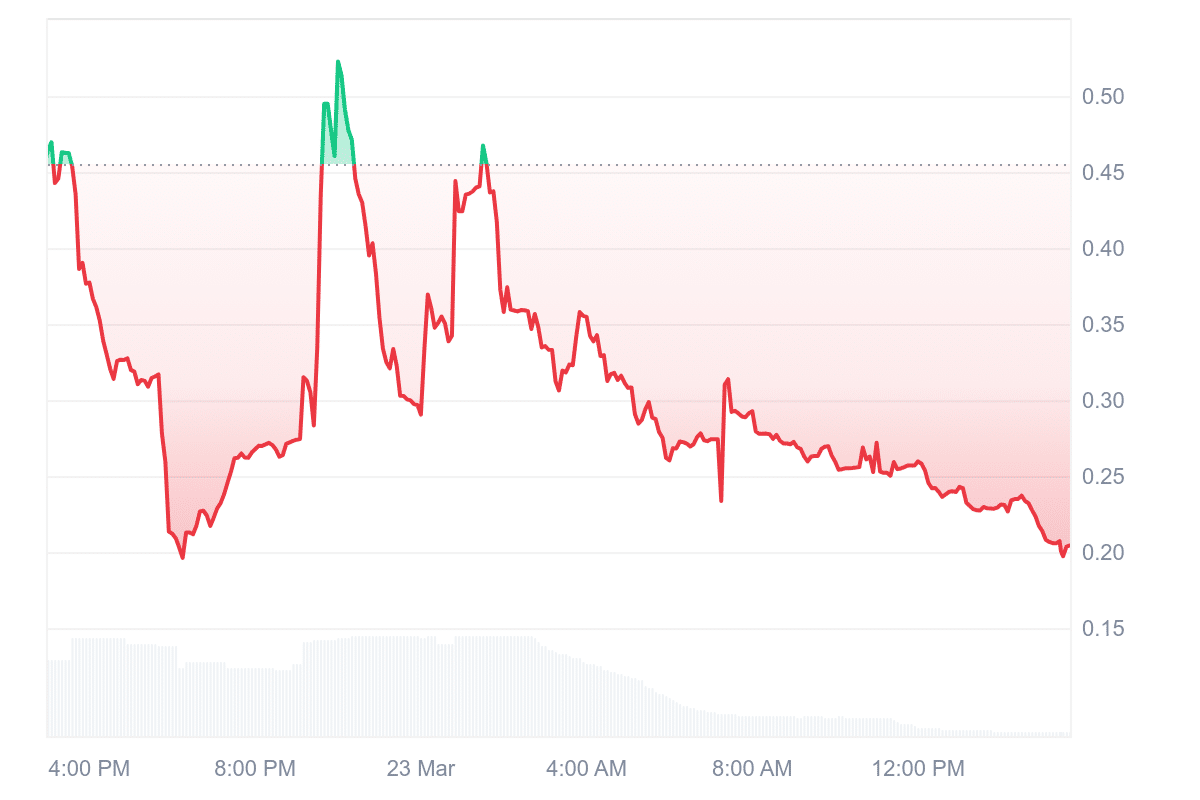
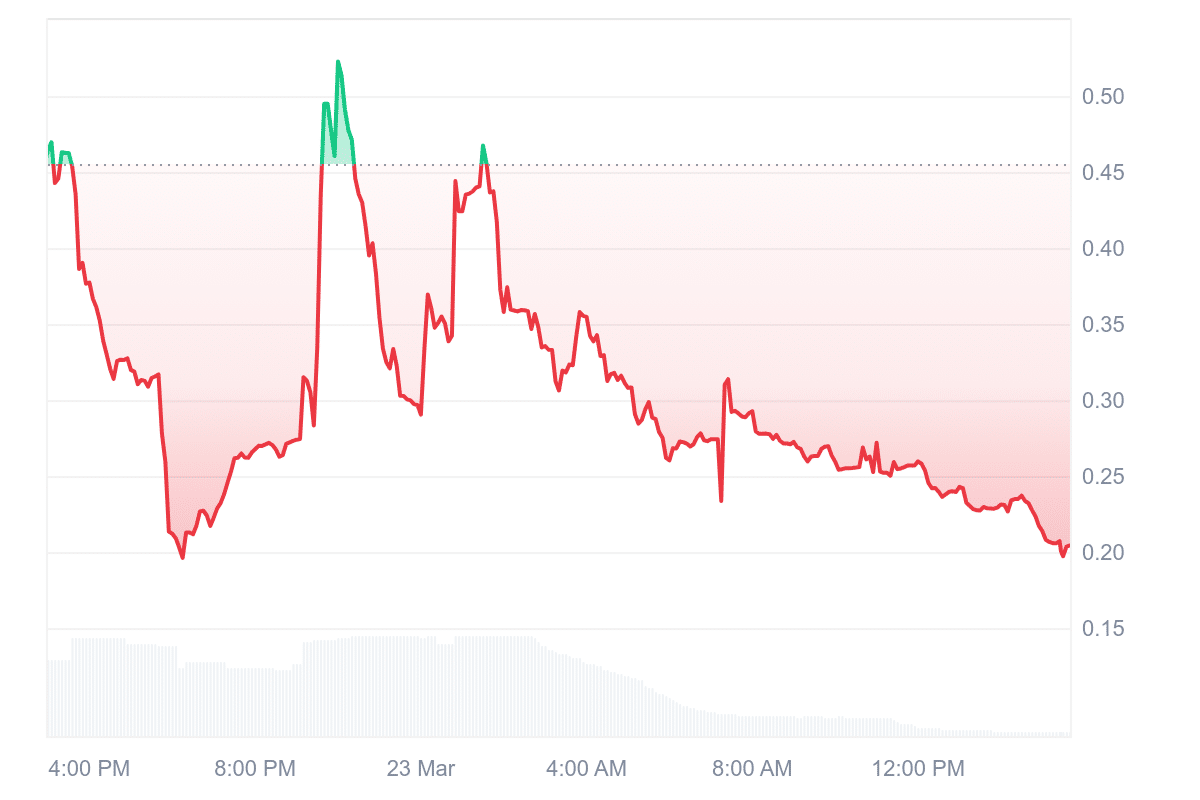
Nguồn: CoinMarketCap

Hoạt động giao dịch cũng suy yếu đáng kể, với khối lượng giảm khi người dùng thoát vị thế hoặc tránh tiếp xúc trong quá trình phục hồi.

Nỗ lực phục hồi đang được tiến hành khi kế hoạch mua lại được lập

Resolv cho biết họ đang chuẩn bị kích hoạt tính năng mua lại cho những người nắm giữ USR trước sự cố, bắt đầu với những người dùng trong danh sách cho phép.

Giao thức hiện đang nắm giữ khoảng 141 triệu USD tài sản, và đội ngũ đang làm việc với các đối tác, công ty phân tích và cơ quan thực thi pháp luật để truy tìm và ngăn chặn các token được đúc trái phép.

Người dùng được khuyến cáo không giao dịch USR hoặc các tài sản liên quan trong giai đoạn phục hồi. Hoạt động sau khai thác lỗ hổng có thể ảnh hưởng đến kết quả của quá trình.

Tính toàn vẹn của stablecoin bị giám sát chặt chẽ

Sự cố này làm nổi bật rủi ro rộng hơn trong các hệ thống DeFi, nơi các biện pháp bảo vệ quan trọng phụ thuộc vào kiểm soát ngoài chuỗi thay vì giới hạn được thực thi trên chuỗi.

Mặc dù nhóm tài sản đảm bảo của Resolv vẫn nguyên vẹn, khả năng đúc token không được đảm bảo đã làm suy yếu niềm tin vào hệ thống kế toán.

Khi tình hình diễn biến, thách thức chính sẽ là khôi phục niềm tin vào giá trị đảm bảo của USR và ổn định nguồn cung của nó.


Tóm tắt cuối cùng

  • Lỗ hổng Resolv làm bơm cung USR thêm 80 triệu USD mà không rút cạn tài sản đảm bảo, phơi bày rủi ro liên quan đến cơ chế kiểm soát ngoài chuỗi.
  • Việc mất neo mạnh của USR phản ánh sự mất niềm tin của thị trường, và việc phục hồi hiện phụ thuộc vào việc cách ly nguồn cung bất hợp pháp và khôi phục tính toàn vẹn của giá trị đảm bảo.


Crypto di tendenza

Domande pertinenti

QSự kiện khai thác lỗ hổng Resolv đã ảnh hưởng đến stablecoin USR như thế nào?

AKẻ tấn công đã đúc khoảng 80 triệu USD USR không có tài sản đảm bảo, làm loãng giá trị stablecoin và khiến USR mất neo giảm hơn 56% xuống còn 0.19 USD.

QNguyên nhân chính dẫn đến vụ khai thác lỗ hổng này là gì?

ANguyên nhân là do khóa riêng tư bị xâm phạm, cho phép kẻ tấn công truy cập trái phép vào cơ sở hạ tầng và đúc token USR mà không cần kiểm tra tài sản đảm bảo trên chuỗi.

QResolv đã thực hiện những biện pháp nào để ứng phó với sự cố?

AResolv tạm dừng hợp đồng thông minh, thiêu hủy 9 triệu USR của kẻ tấn công, chuẩn bị cho việc mua lại token cho người nắm giữ trước sự kiện và hợp tác với cơ quan thực thi pháp luật.

QTổn thất tài chính trực tiếp từ vụ tấn công được xác nhận là bao nhiêu?

ATổn thất trực tiếp được xác nhận cho đến nay là khoảng 0.5 triệu USD từ các giao dịch mua lại được xử lý trước khi giao thức tạm dừng.

QSự kiện này đã làm nổi bật rủi ro nào trong thiết kế hệ thống DeFi?

ASự kiện cho thấy rủi ro khi các cơ chế bảo vệ quan trọng phụ thuộc vào kiểm soát ngoài chuỗi thay vì giới hạn được thực thi trên chuỗi, dễ bị tổn thương nếu kiểm soát bị xâm phạm.

Letture associate

UNI Doubles in Two Months Against the Trend: A 5-Year-Overdue Value Realization

Amidst a generally stagnant crypto market in June and July, UNI, the governance token of Uniswap, saw a significant surge, nearly doubling in price from around $2.3 to $4.6. This rally represents a delayed but significant value reassessment, triggered by the practical implementation of its long-debated "fee switch" mechanism. The key turning point was the on-chain execution of the UNIfication proposal in December 2025. It activated a protocol fee on select pools, directed Unichain sequencer revenue (net of costs) to a communal treasury, executed a one-time burn of 100 million UNI, and established a system where all protocol revenue flows into a "TokenJar" contract. This treasury has a single exit: purchasing and permanently burning UNI via a "Firepit" contract. Initially, the market reacted tepidly as the generated revenue and corresponding burn rate were modest. The narrative shifted dramatically in July 2025 with two major developments. First, the launch of Robinhood Chain, tailored for tokenized stocks, rapidly became a primary source of volume and fees for Uniswap, at one point contributing nearly half of its weekly fees. Second, governance votes successfully expanded the fee mechanism to v4 pools and initiated a temperature check for fees on Robinhood Chain. The activation of v4 fees caused the protocol's daily revenue earmarked for UNI burns to nearly triple. The core of UNI's recent price action is the transition from a pure governance token to a cash-flow asset with a permanent, protocol-funded buyer. Its effectiveness is amplified by UNI's mature and widely distributed supply, with no major impending unlocks to dilute the impact of the buybacks. The sustainability of this rally now hinges on whether the transaction volume, particularly on Robinhood Chain, persists after its initial gas subsidies expire, determining if this is a genuine value realization or a subsidy-fueled spike.

marsbit11 min fa

UNI Doubles in Two Months Against the Trend: A 5-Year-Overdue Value Realization

marsbit11 min fa

Breaking: Google Earth Urgently Pulls Back Nano Banana 2 Image Generation Feature!

Google Earth's newly launched "Create image" feature, powered by the Nano Banana 2 AI image generation model, was abruptly withdrawn shortly after its release due to being "played" by users. The feature allowed users to generate and overlay AI-created visuals directly onto real-world satellite and 3D maps in Google Earth. The tool enabled creative applications like historical recreations (e.g., visualizing ancient Pompeii), generating informational graphics for landmarks, and envisioning architectural projects or futuristic cityscapes on real terrain. It operated under "geospatial grounding," meaning the AI respected the underlying geography, topography, and perspective of the chosen map view. The model also integrated with Gemini to retrieve relevant factual information. However, upon release, users quickly tested its limits. A prominent example involved reimagining Philadelphia's historic Independence Hall as a post-apocalyptic ruin overrun by "happy" zombies, evil clowns, and giant alien mechs. This highlighted both the feature's playful potential and its risks regarding the generation of inappropriate or misleading content on realistic maps, leading to its swift temporary removal. Google stated it would re-release the feature after implementing "enhanced guardrails." Analysts note this move strategically leverages Google's vast proprietary geospatial data, positioning its AI not just for artistic generation but for spatially accurate world visualization—a unique advantage in the competitive AI image generation landscape.

marsbit1 h fa

Breaking: Google Earth Urgently Pulls Back Nano Banana 2 Image Generation Feature!

marsbit1 h fa

Altman Admits: Overestimated AI Snatching Jobs! Huang Renxun: The Unemployment Narrative Is Completely Backwards

Sam Altman has revised his earlier predictions about AI rapidly replacing jobs, admitting he overestimated the speed at which AI would eliminate entry-level white-collar roles. Speaking on the "Invest Like the Best" podcast, he stated that people do not truly want an AI CEO, as accountability and human connection remain critical. He found that individuals prefer interacting with people who can be held responsible for decisions. Similarly, NVIDIA's Jensen Huang argued that the narrative of AI destroying jobs is misguided. He distinguishes between tasks and jobs, noting that while AI can automate specific tasks, entire jobs—encompassing communication, judgment, coordination, and accountability—are not eliminated. He cited examples like radiologists and software engineers, where demand for these roles has increased as AI handles repetitive tasks, allowing for business expansion and the creation of more positions. Data from a University of Maryland and LinkUp study supports this, showing that U.S. job postings for new graduates have actually risen, countering the fear of vanishing entry-level roles. However, a significant shift is occurring: the traditional entry-level tasks that help newcomers gain experience are being automated, making initial career access more challenging. The key insight is that as AI takes over standardized tasks, the enduring value of human work shifts toward areas of responsibility, trust-building, and final decision-making—aspects that AI cannot replicate. The real "moat" for professionals lies in these irreplaceable human elements.

marsbit1 h fa

Altman Admits: Overestimated AI Snatching Jobs! Huang Renxun: The Unemployment Narrative Is Completely Backwards

marsbit1 h fa

Weekly Editor's Picks (0725-0731)

Weekly Editor's Picks (0725-0731) provides a curated selection of deep analysis, filtering out market noise. Key themes from this week include: **Macro & Policy:** The Federal Reserve's upcoming meeting is marked by high uncertainty, balancing cooling inflation data against persistent price pressures. Meanwhile, the U.S. crypto regulatory Clarity Act faces critical political hurdles, with its 2026 passage probability seen as low. **Investing & Crypto:** Analysis suggests long-term crypto success depends on conviction through volatile cycles, focusing on assets like Bitcoin and core smart contract platforms. A trend noted is the increasing similarity between global equity markets (especially tech) and crypto, driven by narrative and leverage. Several major crypto protocols show strong revenue growth, but this isn't always translating to token price appreciation due to sell pressure and structural factors. **AI & Semiconductors:** Nvidia's rising credit default swap rates signal market concern over AI infrastructure financing risks. The storage sector experienced volatility as markets began pricing in potential 2027 oversupply. Despite a record profitable quarter, SK Hynix's results were deemed "below expectations," reflecting heightened investor demands for future growth visibility. **Markets & DeFi:** TradeXYZ demonstrated remarkable accuracy in pre-market pricing for a major A股 listing. The token ONDO saw gains, linked to its growing role in the on-chain tokenized stock ecosystem. **Ethereum:** Post-Pectra upgrade, a major structural shift is underway as Lido begins migrating millions of ETH to new validator architectures designed for capital efficiency. **Also Highlighted:** Butian's bullish stock market move; OpenAI's Altman promising major advances; Samsung and SK Hynix securing large AI chip deals; Apple reaching a $5T market cap; and ongoing discussions around exchange security following Poolin's bankruptcy case.

marsbit2 h fa

Weekly Editor's Picks (0725-0731)

marsbit2 h fa

Trading

Spot

Articoli Popolari

Come comprare RESOLV

Benvenuto in HTX.com! Abbiamo reso l'acquisto di Resolv (RESOLV) semplice e conveniente. Segui la nostra guida passo passo per intraprendere il tuo viaggio nel mondo delle criptovalute.Step 1: Crea il tuo Account HTXUsa la tua email o numero di telefono per registrarti il tuo account gratuito su HTX. Vivi un'esperienza facile e sblocca tutte le funzionalità,Crea il mio accountStep 2: Vai in Acquista crypto e seleziona il tuo metodo di pagamentoCarta di credito/debito: utilizza la tua Visa o Mastercard per acquistare immediatamente ResolvRESOLV.Bilancio: Usa i fondi dal bilancio del tuo account HTX per fare trading senza problemi.Terze parti: abbiamo aggiunto metodi di pagamento molto utilizzati come Google Pay e Apple Pay per maggiore comodità.P2P: Fai trading direttamente con altri utenti HTX.Over-the-Counter (OTC): Offriamo servizi su misura e tassi di cambio competitivi per i trader.Step 3: Conserva Resolv (RESOLV)Dopo aver acquistato Resolv (RESOLV), conserva nel tuo account HTX. In alternativa, puoi inviare tramite trasferimento blockchain o scambiare per altre criptovalute.Step 4: Scambia Resolv (RESOLV)Scambia facilmente Resolv (RESOLV) nel mercato spot di HTX. Accedi al tuo account, seleziona la tua coppia di trading, esegui le tue operazioni e monitora in tempo reale. Offriamo un'esperienza user-friendly sia per chi ha appena iniziato che per i trader più esperti.

269 Totale visualizzazioniPubblicato il 2025.06.11Aggiornato il 2026.06.02

Come comprare RESOLV

Discussioni

Benvenuto nella Community HTX. Qui puoi rimanere informato sugli ultimi sviluppi della piattaforma e accedere ad approfondimenti esperti sul mercato. Le opinioni degli utenti sul prezzo di RESOLV RESOLV sono presentate come di seguito.

活动图片