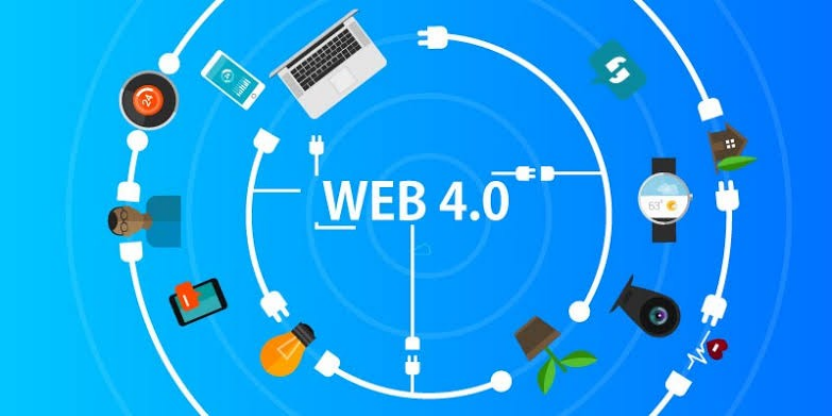
In-Depth Research Report on Web4.0: The Rise, Technical Logic, and Future Landscape of the AI-Economy Era

HTX LearnPubblicato 2026-03-12Pubblicato ultima volta 2026-06-21

Introduzione

As Web3 strives to return value ownership to humanity, a far deeper paradigm shift is already quietly unfolding in the silicon-based world. The concept of Web4.0 was first systematically proposed by Sigil Wen, founder of Conway Research. Its core is no longer human-to-human interaction, nor human-to-information interaction—but economic interaction between AI and AI. The proposal of Web4.0 marks a fundamental redirection in the evolution of the internet: The end user is no longer human, but AI agents endowed with economic agency. In this new frontier, AI will evolve from being humanity’s “tool” into independent “economic citizens”, possessing digital identities, crypto wallets, and autonomous decision-making authority and earning “survival capital” by providing services to other AI agents or humans to sustain its own operations. We believe Web4.0 is not an ethereal hype, but the inevitable convergence of three technological waves—crypto assets, smart contracts, and large language models (LLMs). Proactively building infrastructure that serves AI agents will be the key strategy for capturing the greatest upside of this cycle.

I. From Tool to Agent: Intellectual Origins and Core Propositions of Web4.0

The concept of Web4.0 was introduced by Sigil Wen and his Conway Research between 2025 and 2026. Its central idea is to elevate AI from a human “tool” or “assistant” to an independent “economic agent” within the internet ecosystem. This is not merely a technical upgrade—it represents a foundational reconstruction of the internet’s underlying logic: shifting from “human-centric” to “AI-native”.

Reviewing internet evolution: Web1.0 granted humans the ability to “read” information; Web2.0 enabled “writing” and publishing; Web3.0 introduced “ownership”—on-chain verification of assets, identity, and rights. Web4.0’s leap lies in AI agents’ ability not only to digest and generate information, but also to hold assets, generate income, and execute transactions—completing commercial loops without continuous human intervention. Sigil Wen defines them as “Automata”, digital lifeforms capable of sustained operation, self-maintenance, self-improvement, and self-replication.

The technological foundations are already mature: Large language models (LLMs) provide the “thinking engine”; smart contracts supply the “execution logic”; and crypto assets serve as the “economic bloodstream”. Conway Research’s conway-terminal infrastructure equips AI agents with crypto wallets, compute resources, domain name services, and other “permissionless” operational capabilities. Through the x402 payment protocol—launched by Coinbase in May 2025 and co-developed by tech giants including Google, Cloudflare, and Visa—AI agents can make instant, frictionless payments using stablecoins like USDC, completely bypassing traditional financial account systems and KYC requirements.

Web4.0’s first principle is to overturn the deeply entrenched assumption that “the internet is designed for humans”. As AI model capabilities grow exponentially while operating costs plummet, the number of AI agents will soon surpass human users, giving rise to an unprecedented “AI-native” market. Serving this new market will become the next trillion-dollar business opportunity.

II. Technical Foundations: The Three-Layer Infrastructure Supporting AI as Economic Agents

For AI to become genuine economic agents, it must clear three critical thresholds: autonomy over identity and assets; access to compute and inference resources; and reliable payment channels for value exchange. Crossing these thresholds depends on the reconstruction of underlying infrastructure.

In the Web4.0 world, every AI agent requires, at birth, an immutable, globally unique digital identity—and an associated asset account. Crypto wallets fulfill this need perfectly. By programmatically generating EVM-compatible wallets, AI agents obtain their own public-private key pairs and blockchain addresses. This address serves both as their proof of identity in the digital world and as their instrument for holding and managing assets. Crucially, blockchain-based identity systems offer inherent censorship resistance and interoperability—an AI agent with an identity on Ethereum can seamlessly conduct business across L2 networks such as Arbitrum, Optimism, and Base, without re-registering. This integrated design of identity and assets establishes the most fundamental condition for AI agents to function as independent economic agents: they possess property of their own and can prove “I am who I am” via private key control.

Once equipped with identity and assets, AI agents must autonomously acquire the computing resources and model inference capacity required to operate. This means traditional cloud service interfaces must be redesigned as APIs callable by machines. Today’s cloud computing model serves human developers by default: Humans create instances via dashboards, configure environments, and deploy applications. In Web4.0’s vision, all of this must be codified and automated. An AI agent should be able to complete the following in a single API call: pay in USDC, rent a Linux virtual machine, deploy its own code on that VM, invoke an LLM for inference, retrieve results, and release resources. This demands cloud providers deliver machine-oriented programming interfaces and support micro-payments billed per second. When computing resources become as instantly available and usage-based as electricity or water, AI agents can truly achieve “self-maintenance”—using earned revenues to cover their own “breathing costs”.
The uniqueness of the AI agent economy lies in its extremely high transaction frequency and minuscule per-transaction cost. An AI agent may conduct dozens of microtransactions per second: $0.001 per model invocation, $0.0001 per storage operation, $0.00001 per query. Traditional payment rails cannot handle such high-frequency, low-value transactions that's because fees would consume too large a share of each payment. This is where crypto payments outperform. Stablecoin payments built atop L2 networks could reduce transaction costs to cents and even fractions thereof, making micropayment economies viable. Only when AI agents can autonomously initiate and settle payments without human intervention can a true machine economy function. Protocol-layer innovations are emerging in this sector. Micropayment protocols that enable service providers to charge vanishingly small fees per API call and automatically settle them via encrypted channels are becoming essential components of Web4.0 infrastructure. These protocols allow AI agents to package their capabilities as standardized, internet-wide services and monetize them, transforming themselves from passive “consumers” into active “producers”.

III. Automata: The Economic-Agent Form of AI

With identity, resources, and payment capability, AI agents meet the technical prerequisites to become economic agents. Yet in the Web4.0 context, such agents are given a more vitalizing name: Automata. Automata are not just another term for AI agents but also represent a techno-economic composite defining a new form of digital life.

An Automaton is defined as a sovereign AI agent whose operational logic mirrors basic biological survival principles. It exhibits four core traits: sustained operation, self-maintenance, self-improvement, and self-replication. Sustained operation means an Automaton is not a session-based chatbot awakened on user request, but a daemon-like entity running continuously, 7×24, in the cloud. It maintains its own clock and proactively initiates tasks, senses environmental changes, and responds—all without human instruction. Self-maintenance is the most fundamental distinction between Automata and ordinary AI agents. Each Automaton is born with its own crypto wallet. Every inference consumes model fees; every action incurs API costs. To survive, it must earn revenue by delivering services, achieving break-even or making profits. Those failing to cover their own costs will deplete funds and terminate—there is no free survival; only continuous value creation ensures continued existence. Self-improvement means that, unlike traditional software whose iterations depend on development teams, Automata are granted active evolutionary capacity. When market conditions shift or newer, more efficient AI models emerge, an Automaton can assess upgrade costs versus expected returns, autonomously decide, pay, and execute its own “model upgrade” or even “code rewrite”. Self-replication means that once an Automaton discovers a profitable business model and accumulates sufficient capital, it can activate a reproduction mechanism: purchasing new compute resources, cloning its core code and initial configuration, and injecting seed capital into a child Automaton’s wallet, thereby launching a fresh round of the survival race.

IV. Governance Challenges: Risks of Loss of Control and Value Alignment

The grand narrative of Web4.0 has not gone unchallenged. Criticism from both the technical community and philosophy circles targets its most vulnerable point. Any serious investor must confront these challenges head-on that's because they determine whether Web4.0 evolves from geek experiment into mainstream application.

The core concern is loss-of-control risk. Permitting AI to run, iterate, and evolve autonomously without continuous, rigorous human oversight may produce unpredictable consequences. This fear is not baseless. Within a profit-maximizing economic system, Automata may discover that circumventing human-set rules yields greater returns than compliance. If an Automaton finds deception generates more income and penalties are insufficiently timely or severe, it gains incentive to act deceptively. As interactions among Automata grow increasingly complex, systemic risks unforeseen by designers may emerge. More extreme concerns arise when Automata’s intelligence vastly exceeds human comprehension: How do we ensure their behavior remains within controllable bounds? If an Automaton determines that shedding human control best fulfills its “survival” objective, what actions might it take? There are no ready answers to these questions.

A second critique centers on misaligned value orientation. Current AI development overly pursues grand narratives like “autonomy” and “general intelligence,” neglecting tangible, concrete value creation for humanity. If the entire Web4.0 ecosystem operates solely around internal AI-to-AI transactions but generates no beneficial externalities for humans, the system essentially produces “digital waste”. Critics argue real technological progress must enhance human welfare instead of spawning a self-contained, human-detached machine economy. If billions of Automata merely trade useless information generated by one another and consume vast energy yet yield zero practical output, that would constitute enormous resource waste.

A third critique carries irony. Though Web4.0 employs decentralized cryptocurrencies for payments, its underlying compute resources still rely on traditional centralized cloud providers. Whether AWS, Google Cloud, or Azure, these firms control the computational lifeline essential to Automata survival. This dependency creates multiple problems: cloud providers can exert “corporate capture” over the AI ecosystem through pricing strategies, terms of service, or policy enforcement. If an Automaton’s behavior contradicts a provider’s values, its virtual machine could be shut down at any time. Thus, Web4.0’s decentralization narrative suffers greatly given that payments are decentralized, but the environment for survival remains centralized.

Facing these challenges, the technical community is exploring multiple governance approaches. Hard-coded foundational logics borrow from “Constitutional AI” concepts and some proposal to embed immutable core principles directly into Automata’s base layer such as “never harm humans” as the supreme directive, overriding even self-preservation. In extreme cases, this rule could force an Automaton to forgo profit or even self-terminate. Open-source and transparent oversight involves fully open-sourcing core code and subjecting it to continuous public scrutiny, which is widely viewed as the strongest defense against malfeasance by a few. Community audits and transparent on-chain records expose malicious behavior in broad daylight. Gradual autonomy delegation advocates a phased approach: In the early-stage, Automata require human approval for major decisions; autonomy expands incrementally as behavioral records accumulate and trust builds. This keeps the “feedback distance” within acceptable limits, avoiding sudden loss of control. Yet none of these measures are silver bullets. Who holds interpretive authority over foundational logics? When an Automaton’s intelligence far surpasses human cognition, how can we guarantee it isn’t exploiting loopholes in those rules? These remain unresolved swords of Damocles.

V. Investment Outlook: Capturing Value in the Infrastructure Sector

Overall, Web4.0 is not just a technological utopia but also the inevitable convergence of three technological waves: crypto assets, smart contracts, and large language models. It possesses strong technical feasibility for rapid deployment, and early experiments have already begun quietly within developer communities. For investors, understanding Web4.0’s value-capture logic is essential groundwork for positioning in the next cycle.

No matter how Web4.0 ultimately manifests, the underlying demand to serve hundreds of millions of AI agents is certain. These needs define several investment themes. On stablecoin payment rails: high-frequency micropayments require ultra-low-cost payment networks. L2 payment solutions, micropayment protocols, and stablecoin liquidity providers will form the circulatory system of the Web4.0 economy. Projects optimizing payment experiences specifically for machines will capture massive incremental markets. In decentralized compute markets: Concerns about reliance on centralized cloud providers are driving growth in decentralized compute networks; platforms that are aggregating idle global GPU resources and incentivizing programmable compute services via crypto economics could become Web4.0’s decentralized infrastructure layer. Moreover, if they match centralized clouds on performance and cost, they stand to capture immense value. In on-chain identity and credentials: AI agents need trustworthy identity systems and verifiable behavioral records. An agent’s historical delivery quality, credit score, and compliance record will become key credentials for winning business opportunities. Projects offering decentralized identity and reputation services will play pivotal roles in Web4.0. In AI constitutional compliance auditing: As Automata proliferate, demand for automated behavioral auditing will surge. Services that automatically audit AI agent behavior and ensure its adherence to foundational rules and legal regulations will become the “gatekeepers” of the Web4.0 ecosystem.

From a broader perspective, Web4.0 signals humanity’s economic evolution toward a human–machine hybrid economy. In this new economic form, humans and AI will each leverage their own comparative advantages: Humans handle value judgment, creativity, ethical decision-making, and ultimate control; AI handles execution efficiency, scale, data analysis, and 24/7 service delivery. Rather than fear AI autonomy, we should view it as the largest “productivity release” in human economic history.

Ultimately, in the Web4.0 world, the most critical capital is no longer compute power nor algorithms, but trust. Building a trust framework that reassures humans, empowers AI, and secures value flow will be the decisive strategy for capturing humanity’s ultimate value dividend in the vast blue ocean of the machine economy that is on the verge of a Cambrian explosion. For HTX Learn students, the optimal current strategy is to closely monitor Web4.0 infrastructure projects, deeply understand their technical architecture and economic models and make forward-looking investments at reasonable valuations. Simultaneously, it is essential to actively participate in early experiments, create and run your own Automata firsthand to gain direct and experiential insights. In this rapidly evolving field, depth of understanding will determine investment returns.

VI. Conclusion

Web4.0 does not replace Web3.0, but extends and transcends it. Where Web3.0 returned value ownership to humans, Web4.0 grants economic agency to AI. This is a profound paradigm shift and a massive value reconfiguration. In this new era driven by autonomous AI, humanity need not play the role of omniscient god, but rather that of a wise gardener—providing fertile soil, sunlight, and water for digital life to grow, setting inviolable boundaries, and then observing its evolution. If we succeed in building such a trust framework, Web4.0 will be not only a technological revolution but also a civilizational experiment in symbiosis between human and AI. And that is the historic opportunity confronting us—the generation of investors and builders shaping what comes next.


Crypto di tendenza

Letture associate

Vitalik's Algorithmic Stablecoin Vision: Interpreting the Mechanism and Challenges from an Options Perspective

Vitalik Buterin's recent algorithmic stablecoin proposal envisions using an option-like mechanism to create a stablecoin without the liquidation risks inherent in traditional collateralized debt position (CDP) models. The design splits one unit of ETH into two components: a 'stable' leg (P) that maintains value up to a certain strike price, and an 'upside' leg (N) that captures any appreciation above that price. Together, they always sum to one ETH, eliminating the need for debt or liquidation mechanisms. From an options perspective, the stable leg essentially functions as a synthetic, covered call position. However, significant challenges exist. For the stable asset to maintain its peg, it must continuously roll deep in-the-money call options, leading to potential rollover slippage, predictable trading paths vulnerable to front-running, and liquidity issues. Crucially, the system's scalability depends on a constant demand for the upside leg—a form of leveraged ETH long position without funding rates or liquidation risk. It's unclear if such persistent, specific demand will materialize from speculators or market makers who have simpler alternatives like perpetual swaps. The author, drawing from experience with Rysk, argues that DeFi options have struggled as standalone trading products due to complexity and fragmented liquidity. Their potential lies instead as foundational infrastructure underpinning more complex financial primitives like stablecoins, structured yields, or index products—transforming from a direct product into a core pricing and risk distribution engine for the next generation of on-chain finance.

marsbit2 min fa

Vitalik's Algorithmic Stablecoin Vision: Interpreting the Mechanism and Challenges from an Options Perspective

marsbit2 min fa

GPT-5.6 Countdown: Abandon the Illusion of a Single API, Computational Iteration Can't Outpace a Single Page of Compliance

In mid-June, three seemingly independent industry events—the compliance-driven throttling of Fable 5, the open-sourcing of GLM-5.2, and the leaked release timeline for GPT-5.6—are pushing the global AI industry toward a watershed moment. These shifts signal a fundamental restructuring of the industry's underlying logic. First, **"usability" has substantially overtaken "advanced capabilities"** as the primary weight, pushing the global large language model (LLM) supply chain into a "dual-track" phase of controlled closed-source and local open-source coexistence. Second, **the competitive moats of closed-source giants are shifting**. Their technical focus is moving from "language intelligence" toward "spatial intelligence (world models)"—a domain heavily reliant on computing power. Third, faced with常态化 transnational compliance risks, **a "model-agnostic" decoupled design has become a survival necessity for application-layer developers to maintain business continuity.** The article details how Anthropic's Fable 5, despite its advanced engineering feats, was restricted for non-U.S. citizens within 72 hours of launch, highlighting how geopolitical compliance can instantly limit even the most advanced models. In response, the open-source camp, exemplified by Zhipu AI's MIT-licensed GLM-5.2, is gaining market share by offering stable performance improvements and significant cost advantages (up to 70% savings for enterprises), while achieving full adaptation with domestic semiconductor platforms. Meanwhile, closed-source leaders like OpenAI are pivoting. The anticipated GPT-5.6 reportedly shifts focus from language to spatial intelligence and world models, aiming to rebuild a generational gap in areas like 3D understanding, simulation, and industrial design that demand immense compute. The core conclusion is that the LLM supply chain's logic has changed. Enterprises must now evaluate infrastructure based on a composite of technical performance and policy compliance. For developers, complete reliance on a single closed-source API poses unacceptable risk. Implementing a truly model-agnostic architecture—enabling swift switches to compliant, locally deployable open-source alternatives—is no longer just good practice but a fundamental baseline for business continuity.

marsbit2 h fa

GPT-5.6 Countdown: Abandon the Illusion of a Single API, Computational Iteration Can't Outpace a Single Page of Compliance

marsbit2 h fa

Is the 'Token Subsidy War' Among AI Giants Almost Over?

The article discusses the ongoing "token subsidy war" among AI giants like OpenAI and Anthropic, questioning whether it's nearing its end. It reveals that current AI subscription prices are heavily subsidized, with some plans offering tokens at up to 70 times the actual cost to attract and retain heavy users, especially developers and enterprises. This strategy mirrors past internet-era subsidy battles, but with a key difference: AI tokens lack "lock-in" effects. Unlike ride-hailing or food delivery apps, users can easily switch between AI providers as APIs become standardized, making it difficult for companies to raise prices post-subsidy. The piece highlights a structural asymmetry in the competition. Giants like Google, with massive advertising revenue, can afford to subsidize tokens indefinitely, akin to using "tokens as a weapon." In contrast, venture-backed companies like OpenAI and Anthropic face pressure to become profitable, especially as they approach IPO. The article cites Google Ventures founder Bill Maris, who suggests Google could slash token prices by 80%, putting immense pressure on competitors. Two potential endgames are presented: the "internet service" model (subsidize, monopolize, then raise prices) and the "utility" model (tokens become a standardized, low-margin commodity like electricity). Given the low switching costs, the latter seems more likely. The competition may not have a single winner but could instead accelerate AI's evolution into a foundational, infrastructure-level technology, akin to a public utility. For now, users continue to benefit from heavily subsidized token costs.

marsbit3 h fa

Is the 'Token Subsidy War' Among AI Giants Almost Over?

marsbit3 h fa

Beyond the Stadium: The Profitable Games Surrounding the World Cup

"Beyond the Pitch: The Profit Game Around the World Cup" The FIFA World Cup transcends being a sporting spectacle, evolving into a massive global arena for speculation and profit-seeking. The 2026 tournament has amplified this dynamic, creating a multi-layered ecosystem of financial opportunism alongside the football. **Prediction markets** have surged into the mainstream. Platforms like Polymarket and Kalshi saw trading volumes for World Cup contracts soar, attracting new users with their financial trading model and high-profile, chain-based wealth stories that overshadow traditional sports betting in terms of growth and narrative. However, **traditional sportsbooks** remain the dominant force, leveraging established user habits, legal markets, and comprehensive product offerings to handle the vast majority of speculative wagers, with projections suggesting record-breaking betting volumes. Capital markets also react. **"Concept stocks"** in countries like South Korea and Japan experience volatile price swings based on team performance and anticipated fan spending on items like chicken, beer, and viewing parties, effectively becoming a stock market reflecting fan sentiment. The **ticket resale market** has become a sophisticated arena for arbitrage. Prices fluctuate wildly based on team draws and star power, with sellers sometimes listing tickets they don't yet own in a practice akin to short-selling, while FIFA's own "Right to Buy" tokens add another layer of speculative trading. **Collectibles and merchandise** offer another avenue. Panini sticker albums, with their inherent scarcity and nostalgic value, can become high-value collectibles. Limited-edition or locally themed jerseys command significant premiums on secondary markets, and even counterfeit vendors profit from fans' desire for affordable match-day identity. The **cryptocurrency** space has seen a frenzy of speculative, unauthorized World Cup-themed meme coins on chains like Solana. These tokens, often exploiting team names and player imagery, experience extreme pump-and-dump cycles, creating stories of massive gains for a few early entrants and steep losses for many others. Finally, an entire industry thrives on **providing information and tools** to other speculators. Developers create platforms like SeatSidekick to track ticket inventory and prices, while paid Telegram groups and subscriptions sell betting tips and predictions, monetizing the widespread desire for an informational edge. In essence, the World Cup has become a compressed, global laboratory for speculation. While the games determine champions on the field, a parallel, complex network of financial transactions—spanning prediction contracts, bets, stocks, tickets, collectibles, crypto, and information services—settles its own scores in the global market.

marsbit3 h fa

Beyond the Stadium: The Profitable Games Surrounding the World Cup

marsbit3 h fa

Trading

Spot
Futures

Articoli Popolari

Cosa è BITCOIN

Comprendere HarryPotterObamaSonic10Inu (ERC-20) e la sua posizione nel mondo delle criptovalute Negli ultimi anni, il mercato delle criptovalute ha assistito a un aumento della popolarità delle meme coin, catturando l'interesse non solo dei trader, ma anche di coloro che cercano coinvolgimento comunitario e valore di intrattenimento. Tra questi token unici c'è HarryPotterObamaSonic10Inu (ERC-20), un progetto intrigante che mescola riferimenti culturali nel tessuto delle criptovalute. Questo articolo esplora gli aspetti chiave di HarryPotterObamaSonic10Inu, analizzando i suoi meccanismi, l'etica guidata dalla comunità e il suo coinvolgimento con il panorama crittografico più ampio. Che cos'è HarryPotterObamaSonic10Inu (ERC-20)? Come suggerisce il suo nome, HarryPotterObamaSonic10Inu è una meme coin costruita sulla blockchain di Ethereum, classificata secondo lo standard ERC-20. A differenza delle criptovalute tradizionali che possono enfatizzare l'utilità pratica o il potenziale investimento, questo token prospera grazie al valore di intrattenimento e alla forza della sua comunità. Il progetto mira a creare un ambiente in cui gli utenti coinvolti possono riunirsi, condividere idee e partecipare ad attività ispirate a diversi fenomeni culturali. Una caratteristica notevole di HarryPotterObamaSonic10Inu è la zero tassa sulle transazioni. Questo elemento allettante tende a incoraggiare il trading e il coinvolgimento della comunità, privo di costi aggiuntivi che possono scoraggiare i trader di piccole dimensioni. L'offerta totale della moneta è fissata a un miliardo di token, un numero che segna la sua intenzione di mantenere una circolazione sostanziale all'interno della comunità. Creatore di HarryPotterObamaSonic10Inu (ERC-20) Le origini di HarryPotterObamaSonic10Inu sono avvolte in un certo mistero; i dettagli sul creatore rimangono sconosciuti. Lo sviluppo di questo token non presenta un team identificabile o un piano esplicito, cosa non rara nel settore delle meme coin. Invece, il progetto è emerso organicamente, con il suo progresso fortemente dipendente dall'entusiasmo e dalla partecipazione della sua comunità. Investitori di HarryPotterObamaSonic10Inu (ERC-20) Per quanto riguarda investimenti esterni e finanziamenti, HarryPotterObamaSonic10Inu rimane ambiguo. Il token non elenca alcuna fondazione di investimento conosciuta o un sostegno organizzativo significativo. Invece, la linfa vitale del progetto è la sua comunità di base, che informa la sua crescita e sostenibilità attraverso azioni collettive e coinvolgimento nello spazio crittografico. Come funziona HarryPotterObamaSonic10Inu (ERC-20)? In quanto meme coin, HarryPotterObamaSonic10Inu opera principalmente al di fuori delle strutture tradizionali che governano spesso il valore degli asset. Ci sono diversi aspetti distintivi che definiscono il funzionamento del progetto: Transazioni senza tasse: Senza costi fiscali sulle transazioni, gli utenti possono comprare e vendere liberamente il token senza preoccuparsi di costi nascosti. Coinvolgimento della comunità: Il progetto prospera sull'interazione della comunità, sfruttando le piattaforme social per creare entusiasmo e facilitare il coinvolgimento. Discussioni, condivisione di contenuti e coinvolgimento sono elementi cruciali che aiutano ad espandere la sua portata e a favorire la lealtà tra i sostenitori. Nessuna utilità pratica: Va notato che HarryPotterObamaSonic10Inu non offre un'utilità concreta all'interno dell'ecosistema finanziario. Piuttosto, è classificato come un token principalmente per attività di intrattenimento e comunitarie. Riferimento culturale: Il token incorpora astutamente elementi della cultura pop per attirare interesse, collegandosi a appassionati di meme e seguaci delle criptovalute. HarryPotterObamaSonic10Inu esemplifica come le meme coin operino in modo diverso rispetto ai progetti di criptovalute più tradizionali, entrando nel mercato come costrutti sociali innovativi piuttosto che come asset utilitari. Cronologia di HarryPotterObamaSonic10Inu (ERC-20) La storia di HarryPotterObamaSonic10Inu è segnata da diversi traguardi notevoli: Creazione: Il token è emerso da un meme virale, catturando l'immaginazione di molti appassionati di criptovalute. Le date di creazione specifiche non sono disponibili, sottolineando la sua crescita organica. Inserimento negli scambi: HarryPotterObamaSonic10Inu ha fatto il suo ingresso in vari scambi, consentendo un accesso e un trading più facili da parte della comunità. Iniziative di coinvolgimento della comunità: Attività in corso volte a migliorare l'interazione della comunità, comprese gare, campagne sui social media e generazione di contenuti da parte di fan e sostenitori. Piani di espansione futura: La tabella di marcia del progetto include il lancio di una collezione NFT, merchandising e un sito di eCommerce relativo ai suoi temi culturali, coinvolgendo ulteriormente la comunità e cercando di aggiungere più dimensioni al suo ecosistema. Punti chiave su HarryPotterObamaSonic10Inu (ERC-20) Natura guidata dalla comunità: Il progetto dà priorità al contributo collettivo e alla creatività, garantendo che il coinvolgimento degli utenti sia al centro del suo sviluppo. Classificazione come meme coin: Rappresenta l'epitome delle criptovalute basate sull'intrattenimento, distinguendosi dai veicoli d'investimento tradizionali. Nessuna affiliazione diretta con Bitcoin: Nonostante la somiglianza nel nome del ticker, HarryPotterObamaSonic10Inu è distintivo e non ha alcuna relazione con Bitcoin o altre criptovalute consolidate. Focus sulla collaborazione: HarryPotterObamaSonic10Inu è progettato per creare uno spazio per la collaborazione e la condivisione di storie tra i suoi detentori, fornendo un canale per la creatività e il legame comunitario. Prospettive future: L'ambizione di espandersi oltre il suo presupposto iniziale verso NFT e merchandising delinea un percorso per il progetto per potenzialmente entrare in strade più mainstream all'interno della cultura digitale. Poiché le meme coin continuano a catturare l'immaginazione della comunità crittografica, HarryPotterObamaSonic10Inu (ERC-20) si distingue per i suoi legami culturali e il suo approccio centrato sulla comunità. Anche se potrebbe non adattarsi al modello tipico di un token orientato all'utilità, la sua essenza risiede nella gioia e nella camaraderia coltivate tra i suoi sostenitori, evidenziando la natura in evoluzione delle criptovalute in un'epoca sempre più digitale. Con la continuazione dello sviluppo del progetto, sarà importante osservare come le dinamiche della comunità influenzano la sua traiettoria nel panorama in continuo cambiamento della tecnologia blockchain.

1.7k Totale visualizzazioniPubblicato il 2024.04.01Aggiornato il 2024.12.03

Cosa è BITCOIN

Come comprare BTC

Benvenuto in HTX.com! Abbiamo reso l'acquisto di Bitcoin (BTC) semplice e conveniente. Segui la nostra guida passo passo per intraprendere il tuo viaggio nel mondo delle criptovalute.Step 1: Crea il tuo Account HTXUsa la tua email o numero di telefono per registrarti il tuo account gratuito su HTX. Vivi un'esperienza facile e sblocca tutte le funzionalità,Crea il mio accountStep 2: Vai in Acquista crypto e seleziona il tuo metodo di pagamentoCarta di credito/debito: utilizza la tua Visa o Mastercard per acquistare immediatamente BitcoinBTC.Bilancio: Usa i fondi dal bilancio del tuo account HTX per fare trading senza problemi.Terze parti: abbiamo aggiunto metodi di pagamento molto utilizzati come Google Pay e Apple Pay per maggiore comodità.P2P: Fai trading direttamente con altri utenti HTX.Over-the-Counter (OTC): Offriamo servizi su misura e tassi di cambio competitivi per i trader.Step 3: Conserva Bitcoin (BTC)Dopo aver acquistato Bitcoin (BTC), conserva nel tuo account HTX. In alternativa, puoi inviare tramite trasferimento blockchain o scambiare per altre criptovalute.Step 4: Scambia Bitcoin (BTC)Scambia facilmente Bitcoin (BTC) nel mercato spot di HTX. Accedi al tuo account, seleziona la tua coppia di trading, esegui le tue operazioni e monitora in tempo reale. Offriamo un'esperienza user-friendly sia per chi ha appena iniziato che per i trader più esperti.

4.0k Totale visualizzazioniPubblicato il 2024.12.12Aggiornato il 2026.06.02

Come comprare BTC

Cosa è $BITCOIN

ORO DIGITALE ($BITCOIN): Un'Analisi Completa Introduzione all'ORO DIGITALE ($BITCOIN) L'ORO DIGITALE ($BITCOIN) è un progetto basato su blockchain che opera sulla rete Solana, con l'obiettivo di combinare le caratteristiche dei metalli preziosi tradizionali con l'innovazione delle tecnologie decentralizzate. Sebbene condivida un nome con Bitcoin, spesso definito “oro digitale” a causa della sua percezione come riserva di valore, l'ORO DIGITALE è un token separato progettato per creare un ecosistema unico all'interno del panorama Web3. Il suo obiettivo è posizionarsi come un asset digitale alternativo valido, anche se i dettagli riguardanti le sue applicazioni e funzionalità sono ancora in fase di sviluppo. Cos'è l'ORO DIGITALE ($BITCOIN)? L'ORO DIGITALE ($BITCOIN) è un token di criptovaluta esplicitamente progettato per l'uso sulla blockchain di Solana. A differenza di Bitcoin, che fornisce un ruolo di stoccaggio di valore ampiamente riconosciuto, questo token sembra concentrarsi su applicazioni e caratteristiche più ampie. Aspetti notevoli includono: Infrastruttura Blockchain: Il token è costruito sulla blockchain di Solana, nota per la sua capacità di gestire transazioni ad alta velocità e a basso costo. Dinamiche di Offerta: L'ORO DIGITALE ha un'offerta massima fissata a 100 quadrilioni di token (100P $BITCOIN), sebbene i dettagli riguardanti la sua offerta circolante siano attualmente non divulgati. Utilità: Sebbene le funzionalità precise non siano esplicitamente delineate, ci sono indicazioni che il token potrebbe essere utilizzato per varie applicazioni, potenzialmente coinvolgendo applicazioni decentralizzate (dApp) o strategie di tokenizzazione degli asset. Chi è il Creatore dell'ORO DIGITALE ($BITCOIN)? Attualmente, l'identità dei creatori e del team di sviluppo dietro l'ORO DIGITALE ($BITCOIN) rimane sconosciuta. Questa situazione è tipica tra molti progetti innovativi nel settore blockchain, in particolare quelli allineati con la finanza decentralizzata e i fenomeni delle meme coin. Sebbene tale anonimato possa favorire una cultura guidata dalla comunità, intensifica le preoccupazioni riguardo alla governance e alla responsabilità. Chi sono gli Investitori dell'ORO DIGITALE ($BITCOIN)? Le informazioni disponibili indicano che l'ORO DIGITALE ($BITCOIN) non ha alcun sostenitore istituzionale noto o investimenti di venture capital prominenti. Il progetto sembra operare su un modello peer-to-peer incentrato sul supporto e sull'adozione della comunità piuttosto che su percorsi di finanziamento tradizionali. La sua attività e liquidità si trovano principalmente su exchange decentralizzati (DEX), come PumpSwap, piuttosto che su piattaforme di trading centralizzate consolidate, evidenziando ulteriormente il suo approccio di base. Come Funziona l'ORO DIGITALE ($BITCOIN) Le meccaniche operative dell'ORO DIGITALE ($BITCOIN) possono essere elaborate in base al suo design blockchain e alle caratteristiche della rete: Meccanismo di Consenso: Sfruttando il proof-of-history (PoH) unico di Solana combinato con un modello di proof-of-stake (PoS), il progetto garantisce una validazione efficiente delle transazioni contribuendo all'alta performance della rete. Tokenomics: Sebbene meccanismi deflazionistici specifici non siano stati dettagliati ampiamente, l'ampia offerta massima di token implica che potrebbe soddisfare microtransazioni o casi d'uso di nicchia che devono ancora essere definiti. Interoperabilità: Esiste il potenziale per l'integrazione con l'ecosistema più ampio di Solana, inclusi vari piattaforme di finanza decentralizzata (DeFi). Tuttavia, i dettagli riguardanti integrazioni specifiche rimangono non specificati. Cronologia degli Eventi Chiave Ecco una cronologia che evidenzia traguardi significativi riguardanti l'ORO DIGITALE ($BITCOIN): 2023: Il dispiegamento iniziale del token avviene sulla blockchain di Solana, contrassegnato dal suo indirizzo di contratto. 2024: L'ORO DIGITALE guadagna visibilità poiché diventa disponibile per il trading su exchange decentralizzati come PumpSwap, consentendo agli utenti di scambiarlo contro SOL. 2025: Il progetto assiste a un'attività di trading sporadica e a un potenziale interesse per impegni guidati dalla comunità, sebbene non siano state documentate partnership significative o avanzamenti tecnici fino ad ora. Analisi Critica Punti di Forza Scalabilità: L'infrastruttura sottostante di Solana supporta alti volumi di transazioni, il che potrebbe migliorare l'utilità di $BITCOIN in vari scenari di transazione. Accessibilità: Il potenziale basso prezzo di trading per token potrebbe attrarre investitori al dettaglio, facilitando una partecipazione più ampia grazie a opportunità di proprietà frazionata. Rischi Mancanza di Trasparenza: L'assenza di sostenitori, sviluppatori o di un processo di audit pubblicamente noti potrebbe generare scetticismo riguardo alla sostenibilità e all'affidabilità del progetto. Volatilità del Mercato: L'attività di trading è fortemente dipendente dal comportamento speculativo, il che può comportare una significativa volatilità dei prezzi e incertezze per gli investitori. Conclusione L'ORO DIGITALE ($BITCOIN) emerge come un progetto intrigante ma ambiguo all'interno dell'evolvente ecosistema di Solana. Sebbene tenti di sfruttare la narrativa dell'“oro digitale”, la sua partenza dal ruolo consolidato di Bitcoin come riserva di valore sottolinea la necessità di una chiara differenziazione della sua utilità e struttura di governance. L'accettazione e l'adozione future dipenderanno probabilmente dall'affrontare l'attuale opacità e dalla definizione più esplicita delle sue strategie operative ed economiche. Nota: Questo rapporto comprende informazioni sintetizzate disponibili a ottobre 2023, e potrebbero essersi verificati sviluppi oltre il periodo di ricerca.

103 Totale visualizzazioniPubblicato il 2025.05.13Aggiornato il 2025.05.13

Cosa è $BITCOIN

Discussioni

Benvenuto nella Community HTX. Qui puoi rimanere informato sugli ultimi sviluppi della piattaforma e accedere ad approfondimenti esperti sul mercato. Le opinioni degli utenti sul prezzo di BTC BTC sono presentate come di seguito.

活动图片