这个老头凭什么让NFT届乖乖听话?

FastDailyPubblicato 2022-08-09Pubblicato ultima volta 2022-08-09

Introduzione

NFT对于我来说不应该是一个圈,而是一个生态。

老爷爷:这届NFT都是我眼里的小朋友。10KTF——会是Yuga Labs的下一步棋吗?

NFT对于我来说不应该是一个圈,而是一个生态。元宇宙概念和NFT是紧密相关的,所以NFT项目之间应该是没有壁垒的(我说的是正儿八经的项目,那些土狗或者要rug的就不说了)。那今天就来说一个比较有趣的NFT项目——10KTF。

什么是 10KTF?

10KTF是一家由 Wagmi-san 经营的在线商店,Wagmi-san (人称老爷爷)是一位虚构的顶级数码配件工匠。10KTF 允许用户从各种兼容的 NFT 系列中创建其现有 NFT 的衍生品。每个 10KTF 配件都是 1 of 1 的数字收藏品,只能创建一次。仅在有限的时间内提供,因此项目方会强烈建议持有者打开 10KTF 的 Twitter 通知,以确保不会错过任何内容。

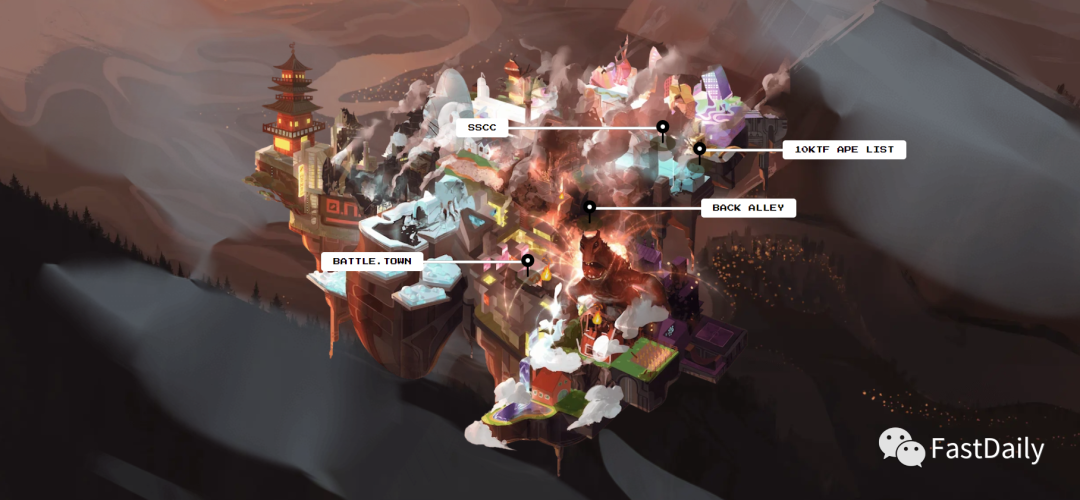
10 KTF 从 2021 年 9 月开始在 twitter 上运营,故事背景是发生在 New Tokyo(新东京)虚构城市,随着时间的推进,整个故事的主线内容及角色也在不断的扩充,在《10KTF》的官网还展示了他们的版图:
有意思的是,老爷爷的宣传视频都制作精良,引人入胜,值得反复观看。多放几个给大家欣赏一下~~

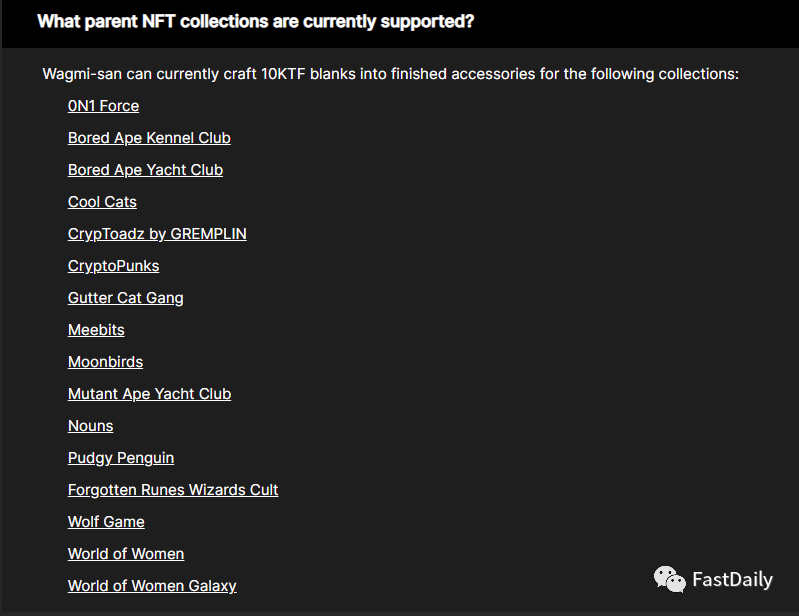
从合作方来看,老爷爷的资源是非常好的,现今为止,有16个官方合作的 NFT 项目,这些项目也被称为 Parent NFT,这些项目的共同点之一就是都给予持有者完全的商业授权,这也是《10KTF》发行他们的衍生品并构建项目的原因。
团队

《10KTF》是由 WENEW 这间公司所发起的项目,主要创办人包含 Mike Winkelmann(Beeple)、Michael Figge、Tim Smith、Guy Oseary 这 4 位,每个人都是NFT圈里面的牛中牛。Beeple这些就不用介绍了吧,如果真的不知道,那就赶紧加入我们的知识星球补补课!

时间表

别看老爷爷笑眯眯,实际上已经杀疯了。

10KTF 项目没有路线图,但它有一个关于店主越轨的生动、不断发展的故事情节。

在推出三个新的 PFP NFT 系列——Gutter Cats Gang、Wolf Game 和 CrypToadz——之后,10KTF 商店正处于制作空白阶段。商店库存收藏品的持有者可以消耗这些消耗材料来铸造这三个收藏品,而工具本身是可重复使用的。

此外,新东京的地图已经公开。这张动态地图允许访问 10KTF 商店客户的私人钱包,为他们提供有关平行宇宙中发生的事情和获得奖励的地点的信息。

到目前为止,除了 10KTF 商店外,该地图还开辟了Battle Town和Back Alley位置。在新店开张之前,一旦您连接了 MetaMask 钱包,Back Alley 就会掉落奖励(如果有的话)。

战斗镇也是如此,目前处于第 3 阶段(已完成商店建设)。这些游戏化和艺术设计的空投正在将 NFT 空间推向丰富的元宇宙方向。

根据铸造的 High Tops 和 Daypacks 的稀有度排名,Wagmi-san 向他们空投一定数量的材料来制作空白。同样,Wagmi-san 在他的 Discord 服务器上发布了关于如何通过配方使用空白的说明。

合作

十几次合作之后,10KTF 的最新成果就是 Gucci 的 Vault 项目,被称为10KTF Gucci Grail。它由 11 个 PFP 组成,灵感来自 Gucci 自己的艺术总监 Alessandro Michele。换句话说,持有 11 个 NFT 系列之一的所有者将可以用不拘一格的服装来装扮他们。一种是黄色,灵感来自 Aria 系列,另一种是红色,灵感来自 Love Parade。除此之外,LV和Puma也在他们的合作名单内。

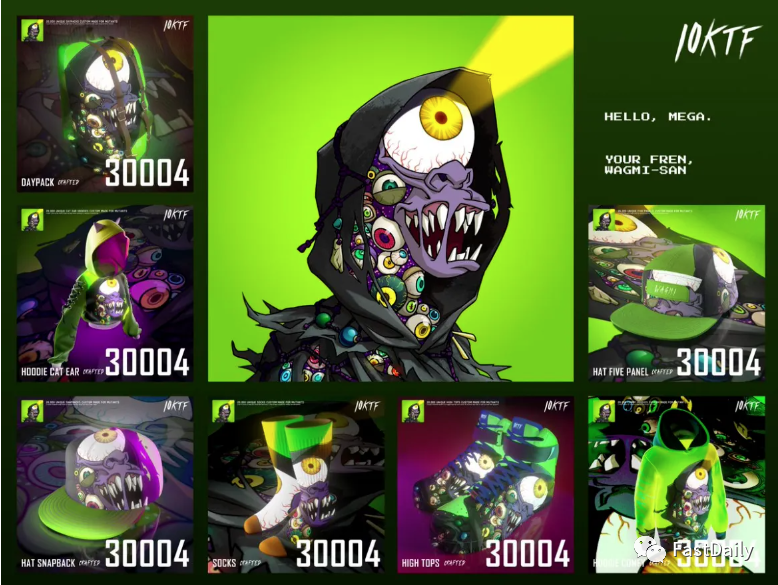
目前的周边 NFT 总共有 7 种类型:

Daypack

High Tops

Hoodie – Cat Ear

Hoodie – Comfy

Hat – Five Panel

Hat – Snapback

Socks

用1/1的化学猴做出来的展示下:
ApeCoin

老头的厉害之处

老爷爷的店铺常客都是些熟悉的面孔↑

无论 Wagmi-san 是谁,快速合作的数量之多足以说明它的未来前景。该项目无疑展示了高水平的艺术、商业、创意和技术能力。事实上,人们不得不怀疑 Wagmi-san 是否会很快出现在 Yuga Labs 即将推出的 Otherside 虚拟世界中。他当然涵盖了他们所有的主要主题——BAYC、MAYC 和 BAKC。

此外,这种猜测是基于在 10KTF 商店内发现的一个复活节彩蛋。

具体来说,右上角的长生不老药瓶与 Yuga Labs 的 Otherside 预告片中的长生不老药瓶惊人地相似。如果事实证明这是真的,我们将开始看到第一个清晰的轮廓,即元宇宙在 Facebook 围墙花园之外的样子。

人们不仅将他们的钱包用作跨平台迁移的账户,而且虚拟商品也可以作为衍生 NFT 随时用于铸造。通过非托管钱包确保隐私和安全,这创造了一个无边界的虚拟环境。

反过来,每一种资产都可以变成 NFT,变得可交易。如果 10KFT-Yuga Labs 的合作关系进一步加强,ApeCoin (APE) 将在 Otherside 找到更多用途。而现在,10KTF确实宣布了将会进行ApeCoin的空投。
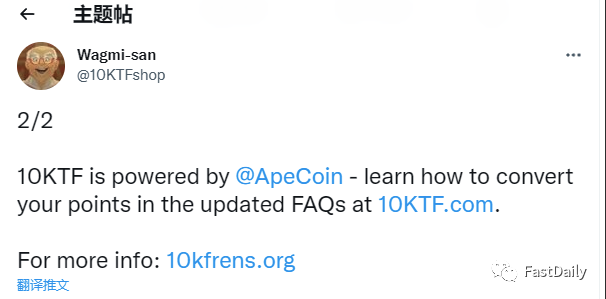
10KTF shop 宣布与 Yuga Labs 的 ApeCoin 代币建立新的合作伙伴关系,10KTF 早在 1 月份推出的期待已久的“新东京token”或俗称 NTD,被解释为将用于下一阶段的材料、物品和奖励,是实际上只是 ApeCoin,持有者可以将其用于 10KTF 生态系统。

因此,持有者将收到 $APE 空投,而不是他们期望的初始 NTD 空投。10KTF 还解释说,他们总共分配了 714,405 $APE 用于向社区空投。

还应该注意的是,自从一月份宣布 NTD 以来的几个月里,10KTF 社区中的许多人一直在积累 NTD。据透露,稍后可以将其换成 ApeCoin。

虽然这次与 Apecoin 的合作是个大新闻,但对于社区中的每个人来说,这并不一定是一个惊喜。10KT 社区中的一些人声称,由于过去几个月 10KTF 发布的有关 NTD 的各种提示,他们已经在猜测这次合作有一段时间了。

然而,这让社区想知道围绕 10KTF 的其他谣言可能是真的。

另一个关于 10KTF 商店的传言是他们将与 Yuga Labs 的 Otherside 进行某种类型的合作。这个谣言的开始是因为 10KTF 在他们的许多帖子中引用了 Otherside 以及 Otherside 在他们 7 月的第一次元宇宙之旅中似乎引用了 10KTF 的吉祥物 WAGMI-san。

老爷爷的玩法实在太多了,我们会持续关注。
Letture associate

South Korean Institutions' Crypto Race: Dual Explosion of Stablecoins and RWA

**Summary: South Korea's Institutional Crypto Race: Stablecoins and RWA Take Off** South Korea is undergoing a structural shift in its crypto ecosystem, moving beyond its historical role as a major retail trading hub. Major financial institutions and internet platforms are now building institutional-grade blockchain infrastructure, with stablecoins and Real-World Asset (RWA) tokenization as the primary drivers. The push for a regulated Korean won stablecoin market is a major policy and corporate focus. This is driven partly by an estimated $115 billion outflow into dollar stablecoins like USDC, threatening the domestic financial system. Banks (e.g., KB Financial, Hana), payment giants (e.g., Shinhan Card, BC Card), and internet super-apps (KakaoPay, NAVER Pay) are all conducting pilots. The goal is to anchor future digital finance to the Korean won and local regulations. In RWA, South Korea is advancing rapidly within regulatory sandboxes, focusing on unique domestic assets beyond typical global templates like US Treasuries. Projects involve tokenizing ships (with Hyundai Heavy Industries), defense supply chain assets, and K-pop intellectual property, alongside more conventional assets. A legal framework is set for 2027, and platforms like NXT are preparing for regulated trading. Key opportunities for crypto-native projects lie in providing the underlying technology these traditional institutions lack: global distribution channels for tokenized assets, cross-chain liquidity solutions, and enabling infrastructure tools (e.g., for asset packaging and management). Partnerships, such as Solana with Shinhan Card or LayerZero with the Korea Gold Exchange, exemplify this proactive approach. Crucially, user access is being shaped by consumer platforms. NAVER's planned acquisition of Upbit's operator Dunamu and Kakao's development of a unified wallet aim to seamlessly integrate crypto with everyday payments for tens of millions of users. The race is now about which protocols and projects will become the foundational standards as regulation solidifies and institutional adoption accelerates.

Foresight News7 min fa

South Korean Institutions' Crypto Race: Dual Explosion of Stablecoins and RWA

Foresight News7 min fa

How to Detect AI-Generated Videos? A Review of Dynamic, Traceable, and Explainable Detection Systems

**How to Detect AI-Generated Videos: A Survey on Dynamic, Traceable, and Explainable Detection Systems** With rapid advances in AI video generation (e.g., Sora, Veo), creating highly realistic, multi-minute videos is now possible, widening the gap with detection research. Current AI video detection, often limited to unreliable binary classifications, is insufficient. This survey, accepted at ACL 2026, reframes the goal as **"factual fidelity verification"**—checking if a video's content (who, when, where, what) aligns with the real world perceptually and cognitively. It categorizes AI-generated videos into three paradigms: **Local Manipulation Videos (LMV**, e.g., face swaps), **Audio-Visual Editing (AVE**, e.g., lip-syncing), and **Generative Video Synthesis (GVS**, fully synthetic videos like Sora's). Detection challenges evolve from visual artifacts in LMV to multi-modal inconsistencies in AVE and higher-level world knowledge violations in GVS. The core proposal is a **Vision-Language Dual-View framework** with four hierarchical layers: 1. **Layer 1 (Intrinsic Visual Cues):** Analyzes low-level signal statistics, noise patterns, and physiological signals. 2. **Layer 2 (Spatiotemporal Consistency):** Checks for temporal coherence in object motion and scene dynamics. 3. **Layer 3 (Cross-Modal Consistency):** Verifies alignment between video, audio, and text within the video. 4. **Layer 4 (Language-Guided World-Level Reasoning):** Uses external knowledge, facts, and physical laws to judge semantic plausibility and factual correctness. The survey traces a shift in detection focus from lower layers (1 & 2) toward higher, language-involved layers (3 & 4). It also reviews evolving evaluation metrics and datasets tailored for each video paradigm. The conclusion advocates for a **dynamic, evidence-first detection system** that moves beyond simple classification. Future trustworthy detection requires combining visual evidence (from CV) with semantic reasoning and explanation (from NLP & multimodal AI), ultimately creating traceable and explainable judgments about a video's adherence to real-world constraints.

marsbit43 min fa

How to Detect AI-Generated Videos? A Review of Dynamic, Traceable, and Explainable Detection Systems

marsbit43 min fa

It Turns Out the First Real-World Application of AI x Crypto is in Security Auditing

The article explores the surprising trend where AI's first major impact on crypto has been in security auditing, not in areas like trading or analytics. It details how AI-powered tools are dramatically lowering the barrier to finding smart contract vulnerabilities, enabling attackers to scan thousands of contracts and execute exploits within minutes. This has rendered traditional, manually-produced audit reports with their month-long validity periods increasingly obsolete, creating a critical "structural crack" in the old security model. Cases like Drift Protocol and KelpDAO show that even extensively audited protocols can be hacked through social engineering, operational flaws, or infrastructure misconfigurations beyond pure code review. Attackers are also using AI to find and exploit vulnerabilities in years-old, deployed contracts. Notably, OpenZeppelin's co-founder has expressed a grim view that "all DeFi is insecure" due to AI's asymmetric advantage. In response, the audit industry is undergoing a fundamental shift. While there's a short-term spike in defensive re-audits, the long-term business model is changing. Firms are developing AI-assisted systems and moving from one-time report deliveries towards embedded, continuous services like real-time monitoring and formal verification. Examples include AI tools uncovering critical, previously missed vulnerabilities in heavily audited protocols like Curve Finance and Zcash. The conclusion is that security must become a continuous investment, not a one-time checkbox, and audit firms must rapidly evolve their tools and service models to survive.

marsbit50 min fa

It Turns Out the First Real-World Application of AI x Crypto is in Security Auditing

marsbit50 min fa

Never expected that the first tangible application of AI x Crypto is in security auditing

Unexpectedly, the initial major application of AI in the Crypto sphere has turned out to be security auditing. In 2026, DeFi has faced significant security challenges, with 121 hacking incidents resulting in approximately $942 million in losses. While AI was expected to first impact areas like quantitative trading, its initial breakthrough has instead transformed security auditing by drastically lowering the cost and skill barrier for finding smart contract vulnerabilities. The traditional audit model is facing obsolescence. Advanced AI models, such as Claude Mythos, enable attackers to scan thousands of contracts and identify vulnerability patterns at scale, compressing the time from discovery to execution to mere minutes. This renders the month-long validity of traditional audit reports ineffective. Notably, attacks now frequently target well-audited, established protocols by exploiting business logic flaws, operational security weaknesses, and even years-old historical contracts, demonstrating that old audit reports offer zero protection. This pressure is forcing a fundamental shift in the industry. In the short term, a wave of defensive re-auditing is occurring, driven by projects seeking to meet new AI-era security standards and regulatory requirements. In the long run, audit firms' business models are diverging. The one-time report delivery model is declining in value, as evidenced by platforms like Code4rena shutting down. Leading firms are now pivoting towards AI-powered defense, integrating continuous monitoring, real-time on-chain risk detection, and embedding security directly into the development phase, as seen with tools like OpenZeppelin's Skills system. Ultimately, the era of "audit once, secure forever" is over. Security must become a continuous, embedded infrastructure investment for projects. For audit companies, survival depends on proactively transforming from traditional service providers into platforms offering AI-native, ongoing security solutions.

链捕手57 min fa

Never expected that the first tangible application of AI x Crypto is in security auditing

链捕手57 min fa

Trading

Spot
活动图片