In a World of Dramatic Change, How Should Humanities Workers Better Use AI?

marsbitPubblicato 2026-03-05Pubblicato ultima volta 2026-03-05

Introduzione

In a rapidly changing landscape, humanities professionals are increasingly turning to AI not as a magic solution, but as a practical tool integrated into their research, writing workflows. This guide outlines key principles for effectively using AI, moving beyond simple "prompts" to a systematic, controllable methodology. The approach is built on three core tenets: processes must be traceable, verifiable, and supervised; the user must remain in control; and the final output must be something the creator is willing to sign their name to. Key principles include: * **Treat AI as a workbench, not a wish-granter:** Clearly define tasks, audiences, and standards instead of making vague requests. * **You are the responsible agent:** Provide clear context, constraints, and executable steps. Dissatisfaction often stems from unclear instructions, not AI failure. * **Compare multiple models:** Different AIs have different strengths (writing, reasoning, coding); use them like a team. * **Manage expectations:** Assume AI has the knowledge level of a top undergraduate; provide examples and standards for specialized tasks. * **Break tasks into steps:** A white-box process of small, reliable steps is better than a single, error-prone black-box request. * **Industrialize first, then automate:** Define and structure your workflow into reproducible steps before assigning sub-tasks to AI. * **Anticipate AI's laziness:** Remove format barriers (e.g., clean text from PDFs/websites)...

Humanities workers did not create the world's changes, but they are bearing the brunt of them.

Sometimes I feel like those accounts selling AI tutorials treat AI as a kind of magic: give it a magical prompt, and you can do anything. Of course, reality is not like that. Over the past period, because we started FUNES, we've had to produce a massive amount of content daily using AI. Plus, there's content production for Fuyou Tiandi and my own writing—relying solely on human effort is no longer enough. So we've been extensively experimenting with how to use AI to assist our content marketing and humanities research work.

Later, when new colleagues joined the company, I made a simple Keynote presentation. Jia Xingjia, a teacher from Yidoude, heard about it and invited me to do a sharing session. My partner Keda and I named this presentation "An AI Usage Guide for Humanities Workers." It was purely a private sharing at first, mainly about some broad principles. We've done it a few more times since, gradually expanding it.

Over the past year or so, I've shared this set of experiences on how to use AI with many friends who work in content, research, and knowledge products. Its goal is not to teach you to memorize a few magical prompts, nor is it to treat AI as a panacea; on the contrary, it's more like a set of working methods: enabling you to integrate large models into your own writing, research, editing, topic selection, data organization, and production workflow without writing code, and to make it traceable, superviseable, verifiable, so that you are still willing to put your name on the final work.

This methodology comes from the pitfalls we've encountered in real projects: when content enters mass production, relying purely on human power collapses; and having AI write a piece directly leads to hallucinations, laziness, and writing that sounds like AI. So we had to turn creation into a production line, and the production line into an iterable system.

Today, I don't want to just give you various prompts; I hope to give you some key guiding ideas and principles.

Before the Principles: Three Bottom Lines for This Guide

Before the specific methods, clarify three bottom lines. They determine "how you use AI" and also "why you use it this way."

1. The process must be traceable, superviseable, and verifiable.
You can't just want a result without the process. For humanities work, a black box is the most dangerous: hallucinations, misquotations, and concept substitutions can all happen quietly inside it.

2. It must be controllable.
You need to be able to control how it does things, by what standards, where to slow down, and where to be strict. You are not "drawing cards"; you are producing.

3. In the end, you are still willing to put your name on it.
"Am I willing to put my name on this?" is the final quality check. If you are unwilling to sign, it's usually not a moral problem, but that your will was not贯彻 (implemented) during the process—which means the quality is uncontrollable.

Principle 0: Don't Make Wishes to AI, Treat It as a Workbench

The way many people use AI is essentially making a wish:
"Give me a good joke," "Help me write a good article," "Explain this paper."

The problem is—there are countless ways to "explain" itself: explaining to a layperson, an undergraduate, a graduate student, or a peer are completely different tasks. AI cannot inherently know your background, purpose, taste, and standards. If you don't specify, it can only糊 (cobble together) a least-effort answer using the "average human's" default way.

Treating large models as a workbench means: you don't demand results from it; instead, you mobilize its tools to complete a process. What you need to do is clarify the task, clarify the standards, and lay out the steps.

For example, asking AI to explain a paper

You can change a wish-based request (explain this paper for me) into a workbench-style task like this:

· Define the target audience: smart, curious graduate students who are not experts in the field

· Define the explanation method:启发式 (heuristic), step-by-step, with academic rigor

· Define structural requirements: first talk about significance, then add background, then还原 (recount) the research process, then talk about key technical points, then mention implications

· Define tone: respect intelligence, not condescending, not pretending the other person already has a deep foundation

You'll find: the more you give it like "assignment requirements," the less AI-like AI becomes, and the more it resembles a real teaching assistant who can actually work.

Principle 1: To Make AI Work Well, First Reflect on Yourself—You Are the Responsible Party

If you hired a secretary, you wouldn't just say:
"Revise Hanyang's article about the American Rust Belt well."

You would definitely add:

Why was this article written, for whom, where is it stuck now, what problem do you hope it solves, which parts cannot be touched, what style do you want, what indicator do you care about most.

AI is the same. You need to treat it like a very diligent, very polite colleague who doesn't understand the implicit premises in your mind. Real "prompt engineering" is not a技巧 (skill), but a sense of responsibility: any task is still yours to do, AI is just helping you work.

When you are dissatisfied with AI's output, the most effective first reaction is not "AI is no good," but:

· Did I clearly state the "object/audience/purpose"?

· Did I provide enough background material and constraints?

· Did I break down the "abstract wish" into "executable actions"?

· Did I provide a standard for judging right and wrong?

Principle 2: Ask at Least 3 Models the Same Question—Each AI Has Its "Personality" and Areas of Expertise

In our company, for any colleague初次 (initially)接触 (contacting) large models, I would希望 (hope) they ask three different AIs the same question in the early stages of use. AI has differences like people: some are better at writing and phrasing, some are better at reasoning and problem-solving, some are better at code or tool use. More realistically: models from the same product, new versions of the same model, will also constantly fine-tune "style" and "boundaries."

So a very simple but extremely effective habit is: throw the same question to at least 3 different AIs, and you will quickly gain a "feel":

· Which one writes better, which one thinks better, which one checks better, which one is lazier

· Which tasks are suitable for whom to do the "first draft," which are suitable for whom to be the "reviewer"

· Which is more suitable for generating "topics/structure," which is more suitable for generating "paragraphs/sentences"

The value of this step is not in "selecting the strongest model," but in: you start managing models like managing a team, not treating it as the only oracle.

Principle 3: AI Is Not Omniscient—Treat It as Having the Common Sense Level of a "Good Undergraduate Student"

A very practical expectation management is:
AI's common sense level ≈ a 985 university undergraduate student.

If you think "an excellent undergraduate might not even know" something, then you should assume by default that AI doesn't know it either; at least assume it will "make up something that sounds like it knows" when it doesn't know.

This leads to two direct actions:

1. For any content beyond common sense, you need to teach it.
For example: you want it to write jokes, write copy with truly unique taste, write highly professional arguments—you can't just say "write it better," you need to give examples, standards, no-go zones, and语料 (language materials). I believe explaining to a friend what good writing means to you in your heart takes some time now; how can you think AI knows by default?

2. You need to collaborate with it as an intern, not as a god.
It can do a lot of "micro-interpolation" work: completing the scaffolding you provide, weaving the materials you give into readable text. But the "scaffolding" and "direction" still come from you.

Principle 4: Let AI Approach the Goal Step by Step—White-Boxing in Steps is More Reliable Than Black-Boxing in One Go

AI's advantage is not "giving you the correct answer directly," but that it can stably complete many small steps within the process you design. The more you ask it to "do it all at once," the more likely it is to become a black box that "seems complete but is lazy at heart."

A particularly直观 (intuitive) example is processing TTS (text-to-speech) or朗读稿 (reading scripts). Instead of saying "pay attention to polyphonic characters, don't mispronounce," it's better to break the task into a series of steps, for example:

· Mark pauses/stress/speed change markers

· Identify potential polyphonic characters

· Check against a dictionary or authoritative pronunciation (search first if necessary)

· Pre-mark common characters that are easily misread

· If all else fails, replace with a homophone character with no ambiguity, eliminating the possibility of misreading from the root

This kind of "obviously correct approach," humans will assume they will do by default; but AI won't by default. If you don't write the "obvious" into the process, it will make mistakes on the path of least resistance.

Principle 5: Industrialize First, Then AI-ify—You Can't Jump from the Agricultural Age to the AI Age in One Step

If your writing/research process itself is random,灵感-based (inspiration-based), with unmanaged materials, then you will indeed find it difficult to hand it over to AI. Because AI can only handle the part that is "describable, reproducible."

A more realistic path is:

1. First turn the work into a "production line": divisible, reusable, quality-checkable

2. Then hand over the sub-steps within it to AI: let it be a workstation, not a god

We did a very笨 (clumsy) but crucial job: deconstructing my own process of writing a non-fiction article. Including:

· Why use this story to start

· Why choose this sentence

· How to score examples

· How to transition, how to conclude

· How to connect small stories to a grander picture

Finally, it was broken down into dozens of steps, letting different AIs only do one of these steps. The result was:
It wasn't that the model suddenly became stronger, but the process串起来 (strung together) its ability to "only do a little bit at a time."

When you can clearly describe "how my article is made," you will find: what determines the quality ceiling is never "which large model is used," but whether you have clearly explained the working method.
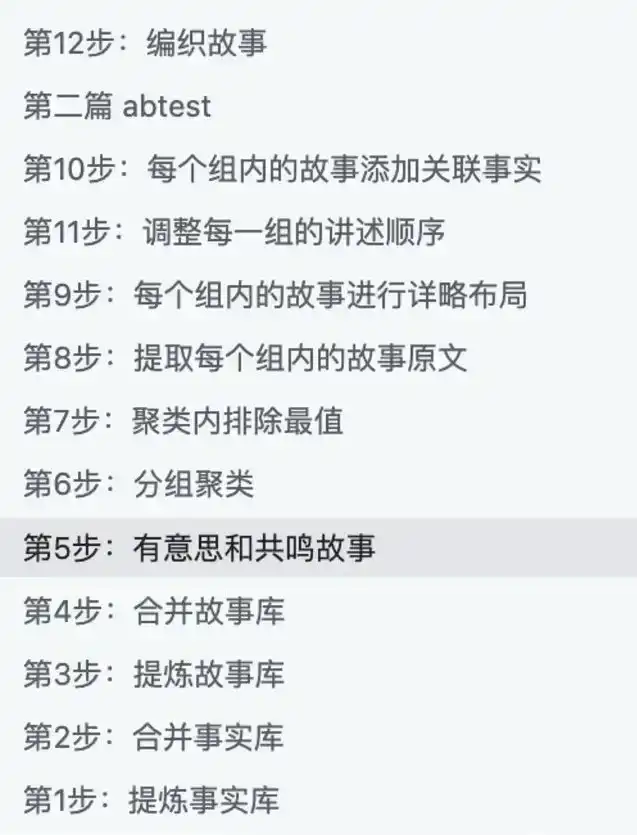
But I strongly recommend you listen to the program for this part; it's explained in more detail.

Principle 6: Anticipate That AI Will Be Lazy—It Saves Compute Power, You Need to Clear "Format Obstacles" for It

AI is lazy, and it's "systematically lazy": it won't open a webpage if it can avoid it, won't read a PDF if it can avoid it, will skip if it can. It's not that it's bad, but that under the constraints of compute power and time, it naturally tends to take the path of least resistance.

So what you need to do is: use AI's compute power for "understanding text," not waste it on "processing formats."

Very effective modifications include:

· Try to convert materials into plain text/Markdown before feeding them to AI

· Copy web content into clean text (remove navigation, ads, footnote noise)

· For long materials, first do "fact extraction/structure extraction," then let it write

· Put PDFs/EPUBs/web pages into a unified, searchable TXT library, then perform后续 (subsequent) tasks

You will find: many people resist this kind of "manual labor," thinking "the machine should do the dirty work for me." But in human-machine collaboration, the opposite is true—if you are willing to do a little mechanical labor, AI's intellectual part will become sharper and more reliable.

Principle 7: Remember Context is Limited—Try to Change Tasks to "Compression," Don't Count on It "Expand from Nothing"

AI has a context window, a "memory上限 (upper limit)." You give it twenty thousand words, it might not remember much; you give it two hundred thousand words, it might only scan the titles. An apt comparison is: lock a person in a small room for a day, throw them a two hundred thousand word book, and come out and ask them to recite it—how much they can recite is roughly how much AI can "remember."

Therefore, there is a very counterintuitive but extremely important experience:

1. Compression is much easier than expansion


Compressing 1 million words to 10,000 words is often more reliable than expanding 10,000 words to 1 million words.

This directly changes how you make requests to AI:

· Don't use a 100-word prompt to ask for a paper

· Instead, feed in the materials as much as possible (in batches, retrieval, RAG, etc.), and let it compress the structure,观点 (viewpoints), and main text based on sufficient materials

When you used to write articles, papers, it was always "read massive materials → extract → organize → write" (at least that's how I did it). When it comes to AI here, don't suddenly have double standards, demanding it grow out of thin air.

Principle 8: Resist the Impulse of "I'll Just Fix It with a Clever Edit"—Modify the Production Line, Not the Result

Many people who are good at writing最容易 (are most prone to)翻车 (crash and burn) in front of AI:
AI produces a 59-point draft, you feel you can改两下 (tweak it a bit) to 80 points, so you start editing; editing turns into you rewriting; after rewriting, you say "I might as well do it myself," and then never use AI again.

The solution is not to "edit the draft" more diligently, but to move the focus further upstream:

· Don't追求 (pursue) having AI directly write 100 points

· Your goal is to have the production line stably produce 75~80 points

· What you need to do is iterate on the process, to提高 (raise) the "average score," not to make a "single piece" perfect

Principle 9: Treat the Production Line as a Product to Iterate—Reliability Itself is Value

When you have a system that can stably give you a 70-point starting point, its value is not "how much it resembles you," but:

· You can get a usable draft at接近 (near) zero cost

· You can focus your energy on higher-level judgments: topic selection, structure, evidence, taste, and trade-offs

What you want is not an omnipotent god that replaces you, but a reliable factory: it's not perfect, but it's stable.

Principle 10: Quantity is the First Priority—Let It Produce More, Then Filter

Only letting AI give you one version usually gets you the most mediocre, conservative, "average" one. You need to use "quantity" to fight against "mediocrity."

A more effective approach is:

· Summaries: ask for 5 versions at once

· Openings: ask for 5 openings at once, do AB Test

· Topics: ask for 50 topics at once, then group, then select

· Structures: ask for 3 sets of structures at once, then combine

· Phrasing: ask for 10 different措辞 (wordings) at once, then choose the best

When you raise the average score, raise the output, 85-point, 90-point "surprise samples" will naturally appear in the distribution. Often, what's good is not "that one stroke of genius," but that you finally start working in a statistical way.

Principle 11: Don't Overstep—Command, Taste, and Send It Back to the Kitchen Like an Executive Chef

If you are the executive chef of a restaurant, you wouldn't personally go拍黄瓜 (smash the cucumbers). You would:

· Taste a bite

· Judge if it's qualified

· Give clear feedback (where it falls short, how to fix it)

· Let the cook go back and do it again

Collaborating with AI is the same. You need to respect its agency to "generate in its own way"—what you need to do is teach it how to meet your standards, not jump in yourself and修修补补 (patch up) its results into finished products every time.

Otherwise, you will be耗死 (exhausted to death) by endless "patching and mending."

The Final Underlying Principle: Return to the Real World—Materials × Taste Determine the Ceiling of a Work

In the AI era, the quality of a work is increasingly like: Materials × Taste.

Models will change, methods will iterate, but these two things remain unchanged:

1. Materials come from the real world


If you were given two choices to write an article:

· Use the latest model, but only use online materials

· Use an old model, but you have complete archives, oral histories, field interviews


The one more likely to produce a good work is often the latter.

2. Taste comes from long-term training


When "generation" becomes cheap, what is truly scarce is:

· You know what is worth writing

· You know which evidence is stronger

· You know which narrative is more powerful

· You are willing to put in physical labor for materials: search high and low, use your hands and feet to翻 (sift through) materials

What AI changes is the efficiency and manner of your interaction with materials; but the subject of the work is still you, the object is still the materials. AI is just part of the "verb."

Conclusion: Replace Anxiety with a Feel

Many people can't get started with AI, not because they are not smart, but because they stay in the cycle of "wish—disappointment—give up." What can really get you past it is to treat it as a workbench, engineer the tasks, white-box the process, and grow a feel through constant friction.

When you can do this, you are less likely to rashly conclude "AI is no good"; you will be more like a new type of worker who can manage new tools: neither looking down on it, nor looking up to it, placing it in the process, in reality, in the work you are willing to put your name on.


Domande pertinenti

QWhat are the three bottom lines that the author emphasizes before introducing the principles for using AI in humanities work?

AThe three bottom lines are: 1. The process must be traceable, monitorable, and verifiable. 2. It must be controllable, meaning you can dictate how it works, by what standards, and where to be more careful. 3. You must still be willing to put your name on the final work, as this is the ultimate quality check.

QAccording to the author, what is a more effective mindset than treating AI like a magic genie when making requests?

AThe author advises treating AI as a workbench rather than making wishes. This means you don't ask it for a final result, but instead direct its tools to complete a process. You need to clearly define the task, the standards, and the steps.

QWhy does the author suggest asking the same question to at least three different AI models?

AThe author suggests this because different AI models have different 'personalities' and areas of expertise. Some are better at writing, some at reasoning, and some at code or tool use. This practice helps you learn their strengths and manage them like a team, not treat a single model as an infallible oracle.

QWhat is the practical way to manage expectations about an AI's knowledge level, and what are the two direct actions that result from this?

AThe author suggests managing expectations by assuming an AI's common sense level is roughly equivalent to that of a top-tier undergraduate student. The two resulting actions are: 1. For any content beyond common knowledge, you must teach it by providing examples, standards, and materials. 2. You should collaborate with it as a trainee, not as an all-knowing deity.

QWhat two fundamental factors does the author state ultimately determine the quality上限 (upper limit) of a work in the AI era?

AThe author states that the quality of a work is increasingly determined by: 1. Materials from the real world (e.g., archives, oral histories, field interviews). 2. Taste, which comes from long-term training and is the true scarcity, encompassing knowing what is worth writing, which evidence is stronger, and which narratives are more powerful.

Letture associate

When AI Starts Paying with USDC, Circle's Victory and the Custodial Challenge of Funds

The article discusses the rise of AI agents as independent economic entities, highlighting that 99% of their payments are made using USDC, positioning Circle as a key beneficiary. Over a nine-month period, AI agents conducted 140 million transactions totaling $43 million, with an average transaction size of $0.31. This shift signifies AI's transition from conceptual to real economic activity, raising questions about financial infrastructure and asset management for autonomous agents. Circle’s three-layer infrastructure—stablecoin issuance, efficient on-chain settlement, and integration with traditional finance—enables seamless micro-payments. However, as AI agents accumulate capital, they will need to manage idle funds, creating opportunities for Real World Asset (RWA) tokenization. Projects like Ondo Finance are making RWA assets machine-readable and programmable, allowing AI agents to automate investments in tokenized treasury bonds or other low-risk assets. The integration of payment and asset management systems could enable AI agents to optimize operational efficiency by automatically investing surplus USDC into yield-generating RWA products. However, challenges remain, including data authenticity, model and liquidity risks, regulatory disparities, and technical security. The article concludes that while Circle provides the "payment nervous system" for AI economies, RWA must evolve to serve as the "energy storage system," ensuring AI agents can manage assets as efficiently as they execute transactions.

比推34 min fa

When AI Starts Paying with USDC, Circle's Victory and the Custodial Challenge of Funds

比推34 min fa

Trading

Spot
Futures

Articoli Popolari

Cosa è GROK AI

Grok AI: Rivoluzionare la Tecnologia Conversazionale nell'Era Web3 Introduzione Nel panorama in rapida evoluzione dell'intelligenza artificiale, Grok AI si distingue come un progetto notevole che collega i domini della tecnologia avanzata e dell'interazione con l'utente. Sviluppato da xAI, un'azienda guidata dal rinomato imprenditore Elon Musk, Grok AI cerca di ridefinire il modo in cui interagiamo con l'intelligenza artificiale. Mentre il movimento Web3 continua a prosperare, Grok AI mira a sfruttare il potere dell'IA conversazionale per rispondere a query complesse, offrendo agli utenti un'esperienza che è non solo informativa ma anche divertente. Cos'è Grok AI? Grok AI è un sofisticato chatbot di intelligenza artificiale conversazionale progettato per interagire dinamicamente con gli utenti. A differenza di molti sistemi di intelligenza artificiale tradizionali, Grok AI abbraccia un'ampia gamma di domande, comprese quelle tipicamente considerate inappropriate o al di fuori delle risposte standard. Gli obiettivi principali del progetto includono: Ragionamento Affidabile: Grok AI enfatizza il ragionamento di buon senso per fornire risposte logiche basate sulla comprensione contestuale. Supervisione Scalabile: L'integrazione dell'assistenza degli strumenti garantisce che le interazioni degli utenti siano sia monitorate che ottimizzate per la qualità. Verifica Formale: La sicurezza è fondamentale; Grok AI incorpora metodi di verifica formale per migliorare l'affidabilità delle sue uscite. Comprensione del Lungo Contesto: Il modello di IA eccelle nel trattenere e richiamare una vasta storia di conversazione, facilitando discussioni significative e consapevoli del contesto. Robustezza Adversariale: Concentrandosi sul miglioramento delle sue difese contro input manipolati o malevoli, Grok AI mira a mantenere l'integrità delle interazioni degli utenti. In sostanza, Grok AI non è solo un dispositivo di recupero informazioni; è un partner conversazionale immersivo che incoraggia un dialogo dinamico. Creatore di Grok AI Il cervello dietro Grok AI non è altri che Elon Musk, un individuo sinonimo di innovazione in vari campi, tra cui automotive, viaggi spaziali e tecnologia. Sotto l'egida di xAI, un'azienda focalizzata sull'avanzamento della tecnologia AI in modi benefici, la visione di Musk mira a rimodellare la comprensione delle interazioni con l'IA. La leadership e l'etica fondamentale sono profondamente influenzate dall'impegno di Musk nel superare i confini tecnologici. Investitori di Grok AI Sebbene i dettagli specifici riguardanti gli investitori che sostengono Grok AI rimangano limitati, è pubblicamente riconosciuto che xAI, l'incubatore del progetto, è fondato e supportato principalmente dallo stesso Elon Musk. Le precedenti imprese e partecipazioni di Musk forniscono un robusto sostegno, rafforzando ulteriormente la credibilità e il potenziale di crescita di Grok AI. Tuttavia, al momento, le informazioni riguardanti ulteriori fondazioni di investimento o organizzazioni che supportano Grok AI non sono facilmente accessibili, segnando un'area per potenziali esplorazioni future. Come Funziona Grok AI? Le meccaniche operative di Grok AI sono innovative quanto il suo framework concettuale. Il progetto integra diverse tecnologie all'avanguardia che facilitano le sue funzionalità uniche: Infrastruttura Robusta: Grok AI è costruito utilizzando Kubernetes per l'orchestrazione dei container, Rust per prestazioni e sicurezza, e JAX per il calcolo numerico ad alte prestazioni. Questo trio garantisce che il chatbot operi in modo efficiente, si scaldi efficacemente e serva gli utenti prontamente. Accesso alla Conoscenza in Tempo Reale: Una delle caratteristiche distintive di Grok AI è la sua capacità di attingere a dati in tempo reale attraverso la piattaforma X—precedentemente nota come Twitter. Questa capacità consente all'IA di accedere alle informazioni più recenti, permettendole di fornire risposte e raccomandazioni tempestive che altri modelli di IA potrebbero perdere. Due Modalità di Interazione: Grok AI offre agli utenti la scelta tra “Modalità Divertente” e “Modalità Normale”. La Modalità Divertente consente uno stile di interazione più giocoso e umoristico, mentre la Modalità Normale si concentra sulla fornitura di risposte precise e accurate. Questa versatilità garantisce un'esperienza su misura che soddisfa varie preferenze degli utenti. In sostanza, Grok AI sposa prestazioni con coinvolgimento, creando un'esperienza che è sia arricchente che divertente. Cronologia di Grok AI Il viaggio di Grok AI è segnato da traguardi fondamentali che riflettono le sue fasi di sviluppo e distribuzione: Sviluppo Iniziale: La fase fondamentale di Grok AI si è svolta in circa due mesi, durante i quali sono stati condotti l'addestramento iniziale e il perfezionamento del modello. Rilascio Beta di Grok-2: In un significativo avanzamento, è stata annunciata la beta di Grok-2. Questo rilascio ha introdotto due versioni del chatbot—Grok-2 e Grok-2 mini—ognuna dotata delle capacità per chattare, programmare e ragionare. Accesso Pubblico: Dopo lo sviluppo beta, Grok AI è diventato disponibile per gli utenti della piattaforma X. Coloro che hanno account verificati tramite un numero di telefono e attivi per almeno sette giorni possono accedere a una versione limitata, rendendo la tecnologia disponibile a un pubblico più ampio. Questa cronologia racchiude la crescita sistematica di Grok AI dall'inizio all'impegno pubblico, enfatizzando il suo impegno per il miglioramento continuo e l'interazione con gli utenti. Caratteristiche Chiave di Grok AI Grok AI comprende diverse caratteristiche chiave che contribuiscono alla sua identità innovativa: Integrazione della Conoscenza in Tempo Reale: L'accesso a informazioni attuali e rilevanti differenzia Grok AI da molti modelli statici, consentendo un'esperienza utente coinvolgente e accurata. Stili di Interazione Versatili: Offrendo modalità di interazione distinte, Grok AI soddisfa varie preferenze degli utenti, invitando alla creatività e alla personalizzazione nella conversazione con l'IA. Avanzata Struttura Tecnologica: L'utilizzo di Kubernetes, Rust e JAX fornisce al progetto un solido framework per garantire affidabilità e prestazioni ottimali. Considerazione del Discorso Etico: L'inclusione di una funzione di generazione di immagini mette in mostra lo spirito innovativo del progetto. Tuttavia, solleva anche considerazioni etiche riguardanti il copyright e la rappresentazione rispettosa di figure riconoscibili—una discussione in corso all'interno della comunità AI. Conclusione Come entità pionieristica nel campo dell'IA conversazionale, Grok AI incarna il potenziale per esperienze utente trasformative nell'era digitale. Sviluppato da xAI e guidato dall'approccio visionario di Elon Musk, Grok AI integra conoscenze in tempo reale con capacità di interazione avanzate. Si sforza di spingere i confini di ciò che l'intelligenza artificiale può realizzare, mantenendo un focus su considerazioni etiche e sicurezza degli utenti. Grok AI non solo incarna il progresso tecnologico, ma rappresenta anche un nuovo paradigma conversazionale nel panorama Web3, promettendo di coinvolgere gli utenti con sia conoscenze esperte che interazioni giocose. Man mano che il progetto continua a evolversi, si erge come testimonianza di ciò che l'incrocio tra tecnologia, creatività e interazione simile a quella umana può realizzare.

242 Totale visualizzazioniPubblicato il 2024.12.26Aggiornato il 2024.12.26

Cosa è GROK AI

Cosa è ERC AI

Euruka Tech: Una Panoramica di $erc ai e delle sue Ambizioni in Web3 Introduzione Nel panorama in rapida evoluzione della tecnologia blockchain e delle applicazioni decentralizzate, nuovi progetti emergono frequentemente, ciascuno con obiettivi e metodologie uniche. Uno di questi progetti è Euruka Tech, che opera nel vasto dominio delle criptovalute e del Web3. L'obiettivo principale di Euruka Tech, in particolare del suo token $erc ai, è presentare soluzioni innovative progettate per sfruttare le crescenti capacità della tecnologia decentralizzata. Questo articolo si propone di fornire una panoramica completa di Euruka Tech, un'esplorazione dei suoi obiettivi, della funzionalità, dell'identità del suo creatore, dei potenziali investitori e della sua importanza nel contesto più ampio del Web3. Cos'è Euruka Tech, $erc ai? Euruka Tech è caratterizzato come un progetto che sfrutta gli strumenti e le funzionalità offerte dall'ambiente Web3, concentrandosi sull'integrazione dell'intelligenza artificiale nelle sue operazioni. Sebbene i dettagli specifici sul framework del progetto siano piuttosto sfuggenti, è progettato per migliorare l'engagement degli utenti e automatizzare i processi nello spazio crypto. Il progetto mira a creare un ecosistema decentralizzato che non solo faciliti le transazioni, ma incorpori anche funzionalità predittive attraverso l'intelligenza artificiale, da cui il nome del suo token, $erc ai. L'obiettivo è fornire una piattaforma intuitiva che faciliti interazioni più intelligenti e un'elaborazione delle transazioni più efficiente all'interno della crescente sfera del Web3. Chi è il Creatore di Euruka Tech, $erc ai? Attualmente, le informazioni riguardanti il creatore o il team fondatore di Euruka Tech rimangono non specificate e piuttosto opache. Questa assenza di dati solleva preoccupazioni, poiché la conoscenza del background del team è spesso essenziale per stabilire credibilità nel settore blockchain. Pertanto, abbiamo classificato queste informazioni come sconosciute fino a quando dettagli concreti non saranno resi disponibili nel dominio pubblico. Chi sono gli Investitori di Euruka Tech, $erc ai? Allo stesso modo, l'identificazione degli investitori o delle organizzazioni di supporto per il progetto Euruka Tech non è prontamente fornita attraverso la ricerca disponibile. Un aspetto cruciale per i potenziali stakeholder o utenti che considerano di impegnarsi con Euruka Tech è la garanzia che deriva da partnership finanziarie consolidate o dal supporto di società di investimento rispettabili. Senza divulgazioni sulle affiliazioni di investimento, è difficile trarre conclusioni complete sulla sicurezza finanziaria o sulla longevità del progetto. In linea con le informazioni trovate, anche questa sezione rimane allo stato di sconosciuto. Come funziona Euruka Tech, $erc ai? Nonostante la mancanza di specifiche tecniche dettagliate per Euruka Tech, è essenziale considerare le sue ambizioni innovative. Il progetto cerca di sfruttare la potenza computazionale dell'intelligenza artificiale per automatizzare e migliorare l'esperienza dell'utente all'interno dell'ambiente delle criptovalute. Integrando l'IA con la tecnologia blockchain, Euruka Tech mira a fornire funzionalità come operazioni automatizzate, valutazioni del rischio e interfacce utente personalizzate. L'essenza innovativa di Euruka Tech risiede nel suo obiettivo di creare una connessione fluida tra gli utenti e le vaste possibilità presentate dalle reti decentralizzate. Attraverso l'utilizzo di algoritmi di apprendimento automatico e IA, mira a ridurre le sfide degli utenti alle prime armi e semplificare le esperienze transazionali all'interno del framework Web3. Questa simbiosi tra IA e blockchain sottolinea l'importanza del token $erc ai, fungendo da ponte tra le interfacce utente tradizionali e le avanzate capacità delle tecnologie decentralizzate. Cronologia di Euruka Tech, $erc ai Sfortunatamente, a causa delle limitate informazioni disponibili riguardo a Euruka Tech, non siamo in grado di presentare una cronologia dettagliata dei principali sviluppi o traguardi nel percorso del progetto. Questa cronologia, tipicamente preziosa per tracciare l'evoluzione di un progetto e comprendere la sua traiettoria di crescita, non è attualmente disponibile. Man mano che le informazioni su eventi notevoli, partnership o aggiunte funzionali diventano evidenti, gli aggiornamenti miglioreranno sicuramente la visibilità di Euruka Tech nella sfera crypto. Chiarimento su Altri Progetti “Eureka” È importante sottolineare che più progetti e aziende condividono una nomenclatura simile con “Eureka.” La ricerca ha identificato iniziative come un agente IA della NVIDIA Research, che si concentra sull'insegnamento ai robot di compiti complessi utilizzando metodi generativi, così come Eureka Labs ed Eureka AI, che migliorano l'esperienza utente nell'istruzione e nell'analisi del servizio clienti, rispettivamente. Tuttavia, questi progetti sono distinti da Euruka Tech e non dovrebbero essere confusi con i suoi obiettivi o funzionalità. Conclusione Euruka Tech, insieme al suo token $erc ai, rappresenta un attore promettente ma attualmente oscuro nel panorama del Web3. Sebbene i dettagli sul suo creatore e sugli investitori rimangano non divulgati, l'ambizione centrale di combinare intelligenza artificiale e tecnologia blockchain si erge come un punto focale di interesse. Gli approcci unici del progetto nel promuovere l'engagement degli utenti attraverso l'automazione avanzata potrebbero distinguerlo mentre l'ecosistema Web3 progredisce. Con l'evoluzione continua del mercato crypto, gli stakeholder dovrebbero tenere d'occhio gli sviluppi riguardanti Euruka Tech, poiché lo sviluppo di innovazioni documentate, partnership o una roadmap definita potrebbe presentare opportunità significative nel prossimo futuro. Così com'è, attendiamo ulteriori approfondimenti sostanziali che potrebbero svelare il potenziale di Euruka Tech e la sua posizione nel competitivo panorama crypto.

251 Totale visualizzazioniPubblicato il 2025.01.02Aggiornato il 2025.01.02

Cosa è ERC AI

Cosa è DUOLINGO AI

DUOLINGO AI: Integrare l'apprendimento delle lingue con Web3 e innovazione AI In un'era in cui la tecnologia rimodella l'istruzione, l'integrazione dell'intelligenza artificiale (AI) e delle reti blockchain annuncia una nuova frontiera per l'apprendimento delle lingue. Entra in scena DUOLINGO AI e la sua criptovaluta associata, $DUOLINGO AI. Questo progetto aspira a fondere la potenza educativa delle principali piattaforme di apprendimento delle lingue con i benefici della tecnologia decentralizzata Web3. Questo articolo esplora gli aspetti chiave di DUOLINGO AI, esaminando i suoi obiettivi, il framework tecnologico, lo sviluppo storico e il potenziale futuro, mantenendo chiarezza tra la risorsa educativa originale e questa iniziativa indipendente di criptovaluta. Panoramica di DUOLINGO AI Alla sua base, DUOLINGO AI cerca di stabilire un ambiente decentralizzato in cui gli studenti possono guadagnare ricompense crittografiche per il raggiungimento di traguardi educativi nella competenza linguistica. Applicando smart contracts, il progetto mira ad automatizzare i processi di verifica delle competenze e le allocazioni di token, aderendo ai principi di Web3 che enfatizzano la trasparenza e la proprietà da parte degli utenti. Il modello si discosta dagli approcci tradizionali all'acquisizione linguistica, facendo forte affidamento su una struttura di governance guidata dalla comunità, che consente ai detentori di token di suggerire miglioramenti ai contenuti dei corsi e alle distribuzioni delle ricompense. Alcuni degli obiettivi notevoli di DUOLINGO AI includono: Apprendimento Gamificato: Il progetto integra traguardi blockchain e token non fungibili (NFT) per rappresentare i livelli di competenza linguistica, promuovendo la motivazione attraverso ricompense digitali coinvolgenti. Creazione di Contenuti Decentralizzati: Apre opportunità per educatori e appassionati di lingue di contribuire con i propri corsi, facilitando un modello di condivisione dei ricavi che beneficia tutti i collaboratori. Personalizzazione Guidata dall'AI: Utilizzando modelli avanzati di machine learning, DUOLINGO AI personalizza le lezioni per adattarsi ai progressi individuali, simile alle funzionalità adattive presenti nelle piattaforme consolidate. Creatori del Progetto e Governance A partire da aprile 2025, il team dietro $DUOLINGO AI rimane pseudonimo, una pratica comune nel panorama decentralizzato delle criptovalute. Questa anonimato è inteso a promuovere la crescita collettiva e il coinvolgimento degli stakeholder piuttosto che concentrarsi su sviluppatori individuali. Lo smart contract distribuito sulla blockchain di Solana annota l'indirizzo del wallet dello sviluppatore, che segna l'impegno verso la trasparenza riguardo alle transazioni, nonostante l'identità dei creatori sia sconosciuta. Secondo la sua roadmap, DUOLINGO AI mira a evolversi in un'Organizzazione Autonoma Decentralizzata (DAO). Questa struttura di governance consente ai detentori di token di votare su questioni critiche come l'implementazione di funzionalità e le allocazioni del tesoro. Questo modello si allinea con l'etica dell'empowerment della comunità presente in varie applicazioni decentralizzate, enfatizzando l'importanza del processo decisionale collettivo. Investitori e Partnership Strategiche Attualmente, non ci sono investitori istituzionali o capitalisti di rischio identificabili pubblicamente legati a $DUOLINGO AI. Invece, la liquidità del progetto proviene principalmente da scambi decentralizzati (DEX), segnando un netto contrasto con le strategie di finanziamento delle aziende tradizionali di tecnologia educativa. Questo modello di base indica un approccio guidato dalla comunità, riflettendo l'impegno del progetto verso la decentralizzazione. Nel suo whitepaper, DUOLINGO AI menziona la formazione di collaborazioni con “piattaforme educative blockchain” non specificate, mirate ad arricchire la sua offerta di corsi. Sebbene partnership specifiche non siano ancora state divulgate, questi sforzi collaborativi suggeriscono una strategia per mescolare innovazione blockchain con iniziative educative, ampliando l'accesso e il coinvolgimento degli utenti attraverso diverse vie di apprendimento. Architettura Tecnologica Integrazione AI DUOLINGO AI incorpora due componenti principali guidate dall'AI per migliorare la sua offerta educativa: Motore di Apprendimento Adattivo: Questo sofisticato motore apprende dalle interazioni degli utenti, simile ai modelli proprietari delle principali piattaforme educative. Regola dinamicamente la difficoltà delle lezioni per affrontare le sfide specifiche degli studenti, rinforzando le aree deboli attraverso esercizi mirati. Agenti Conversazionali: Utilizzando chatbot alimentati da GPT-4, DUOLINGO AI offre una piattaforma per gli utenti per impegnarsi in conversazioni simulate, promuovendo un'esperienza di apprendimento linguistico più interattiva e pratica. Infrastruttura Blockchain Costruito sulla blockchain di Solana, $DUOLINGO AI utilizza un framework tecnologico completo che include: Smart Contracts per la Verifica delle Competenze: Questa funzionalità assegna automaticamente token agli utenti che superano con successo i test di competenza, rinforzando la struttura di incentivi per risultati di apprendimento genuini. Badge NFT: Questi token digitali significano vari traguardi che gli studenti raggiungono, come completare una sezione del loro corso o padroneggiare competenze specifiche, consentendo loro di scambiare o mostrare digitalmente i loro successi. Governance DAO: I membri della comunità dotati di token possono partecipare alla governance votando su proposte chiave, facilitando una cultura partecipativa che incoraggia l'innovazione nell'offerta di corsi e nelle funzionalità della piattaforma. Cronologia Storica 2022–2023: Concettualizzazione I lavori per DUOLINGO AI iniziano con la creazione di un whitepaper, evidenziando la sinergia tra i progressi dell'AI nell'apprendimento delle lingue e il potenziale decentralizzato della tecnologia blockchain. 2024: Lancio Beta Un lancio beta limitato introduce offerte in lingue popolari, premiando i primi utenti con incentivi in token come parte della strategia di coinvolgimento della comunità del progetto. 2025: Transizione DAO Ad aprile, avviene un lancio completo della mainnet con la circolazione di token, stimolando discussioni nella comunità riguardo a possibili espansioni nelle lingue asiatiche e ad altri sviluppi dei corsi. Sfide e Direzioni Future Ostacoli Tecnici Nonostante i suoi obiettivi ambiziosi, DUOLINGO AI affronta sfide significative. La scalabilità rimane una preoccupazione costante, in particolare nel bilanciare i costi associati all'elaborazione dell'AI e nel mantenere una rete decentralizzata reattiva. Inoltre, garantire la creazione e la moderazione di contenuti di qualità in un'offerta decentralizzata presenta complessità nel mantenere standard educativi. Opportunità Strategiche Guardando al futuro, DUOLINGO AI ha il potenziale per sfruttare partnership di micro-credentialing con istituzioni accademiche, fornendo validazioni verificate dalla blockchain delle competenze linguistiche. Inoltre, l'espansione cross-chain potrebbe consentire al progetto di attingere a basi utenti più ampie e a ulteriori ecosistemi blockchain, migliorando la sua interoperabilità e portata. Conclusione DUOLINGO AI rappresenta una fusione innovativa di intelligenza artificiale e tecnologia blockchain, presentando un'alternativa focalizzata sulla comunità ai sistemi tradizionali di apprendimento delle lingue. Sebbene il suo sviluppo pseudonimo e il modello economico emergente comportino alcuni rischi, l'impegno del progetto verso l'apprendimento gamificato, l'istruzione personalizzata e la governance decentralizzata illumina un percorso per la tecnologia educativa nel regno di Web3. Man mano che l'AI continua a progredire e l'ecosistema blockchain evolve, iniziative come DUOLINGO AI potrebbero ridefinire il modo in cui gli utenti interagiscono con l'istruzione linguistica, potenziando le comunità e premiando il coinvolgimento attraverso meccanismi di apprendimento innovativi.

238 Totale visualizzazioniPubblicato il 2025.04.11Aggiornato il 2025.04.11

Cosa è DUOLINGO AI

Discussioni

Benvenuto nella Community HTX. Qui puoi rimanere informato sugli ultimi sviluppi della piattaforma e accedere ad approfondimenti esperti sul mercato. Le opinioni degli utenti sul prezzo di AI AI sono presentate come di seguito.

活动图片