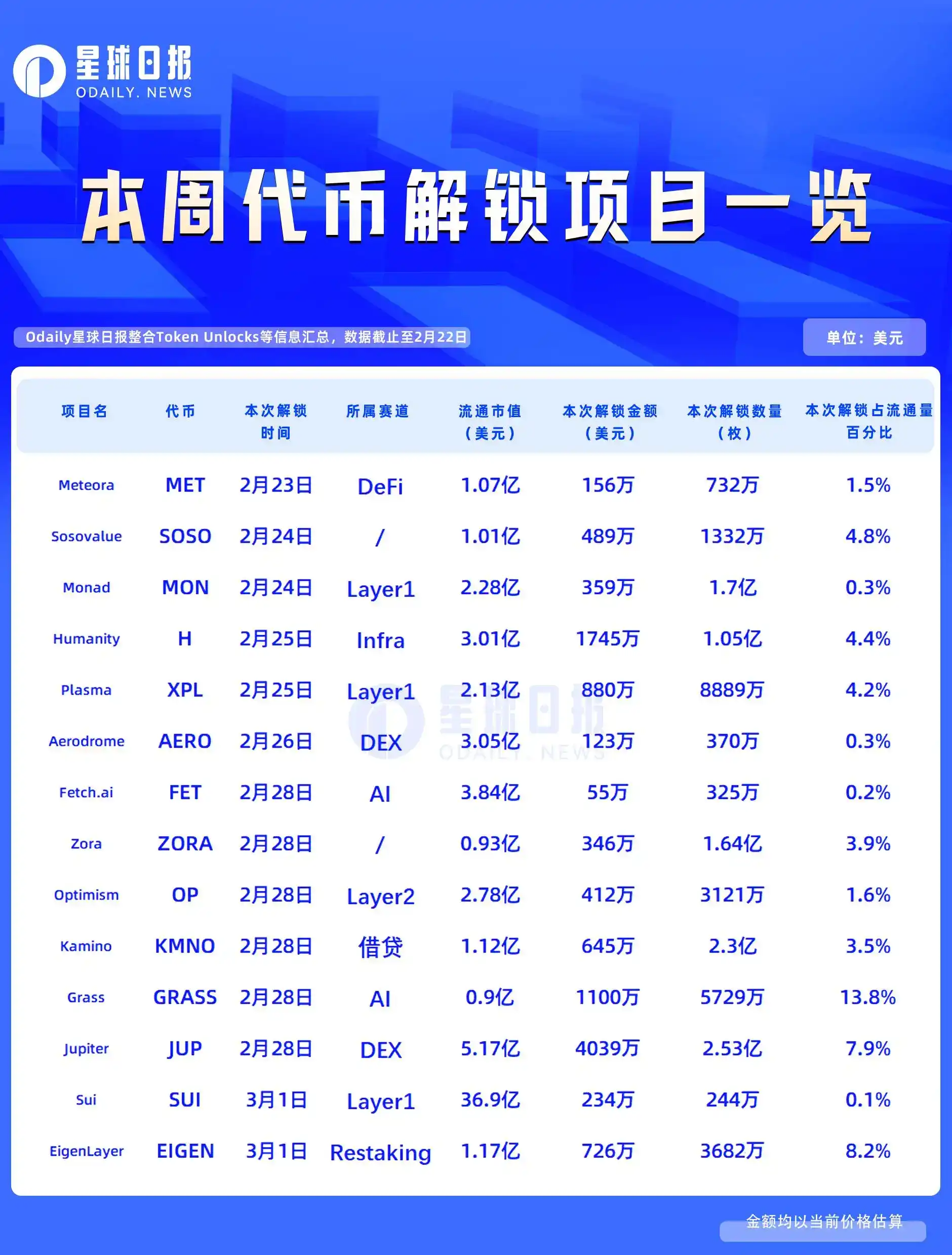
一周代币解锁:14个项目解锁价值1.1亿美元代币

marsbitPubblicato 2026-02-21Pubblicato ultima volta 2026-02-21

Introduzione

本周将有14个加密货币项目进行代币解锁,总价值约1.1亿美元。其中,Grass项目解锁5729万枚代币,价值约1100万美元,该项目是部署在Solana上的去中心化网络,专注于为AI模型训练提供数据层支持。EigenLayer解锁3682万枚代币,价值约726万美元,该项目是以太坊上的再质押协议,允许用户重新质押ETH以增强网络安全。SoSoValue解锁1332万枚代币,价值约499万美元,这是一个结合CeFi和DeFi的人工智能投资研究平台。其他项目还包括Acala、Aptos、CyberConnect、dYdX、Flow、Galxe、Manta、Moonbeam、Ronin、Starknet和Sui,具体解锁数量和金额未在文中详述。

Grass

项目推特:https://x.com/grass

项目官网:http://grass.io/

本次解锁数量:5729万枚

本次解锁金额:约1100万美元

Grass 是部署在 Solana 上的结合 AI、Depin 和 Solana 技术的项目,定位为 AI 的数据层。作为一个去中心化的网络,Grass 旨在通过访问公共网络,提供 AI 模型训练所需的数据。

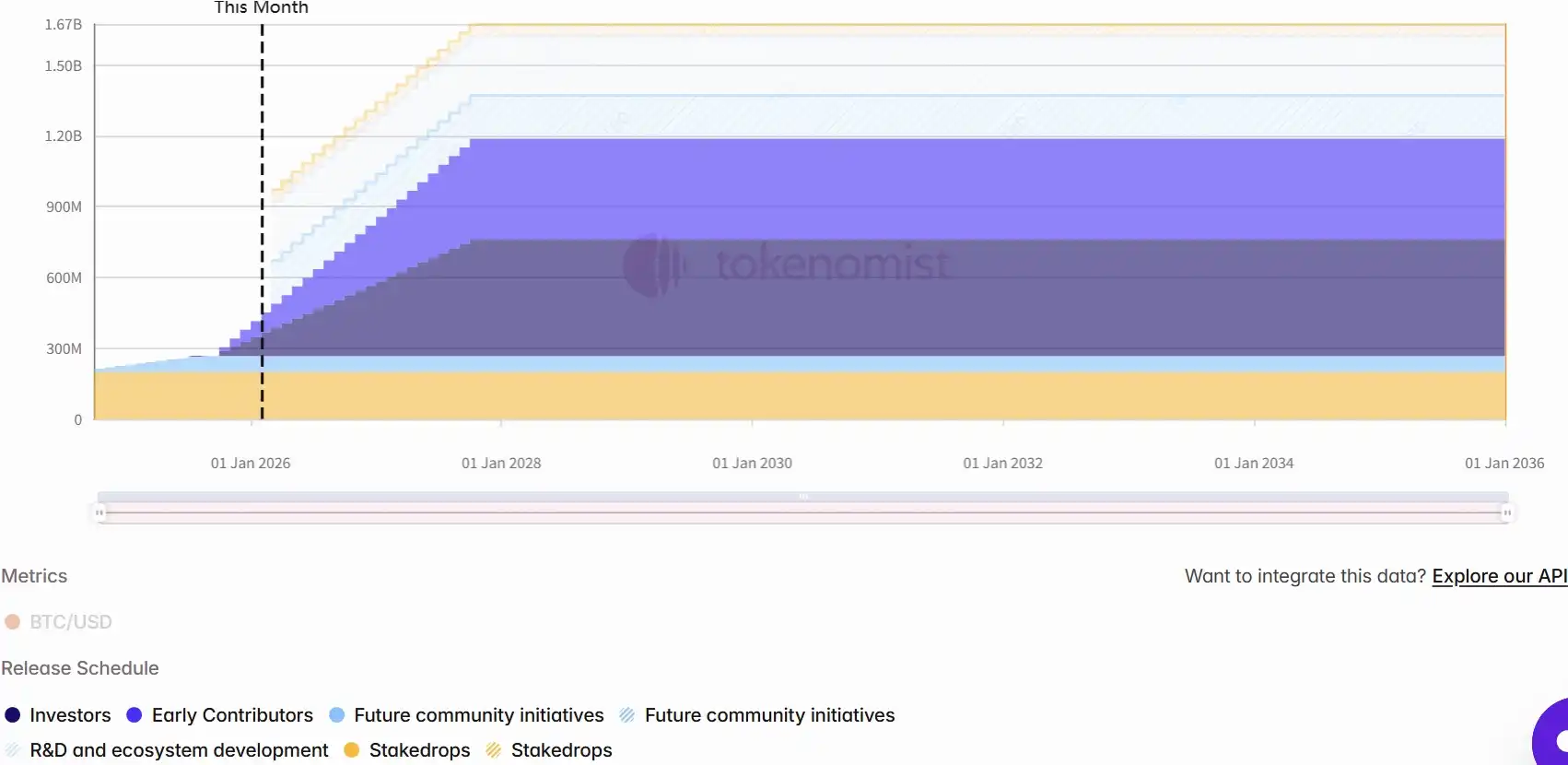
具体释放曲线如下:

EigenLayer

项目推特:https://x.com/eigenlayer

项目官网:https://www.eigenlayer.xyz/

本次解锁数量:3682万枚

本次解锁金额:约726万美元

EigenLayer 是一种建立在以太坊之上的协议,它引入了再质押概念,这是加密经济安全中的一种新原语。该原语允许在共识层上再质押ETH。质押ETH 的用户可以选择加入 EigenLayer 智能合约以重新质押他们的ETH并将加密经济安全性扩展到网络上的其他应用程序。

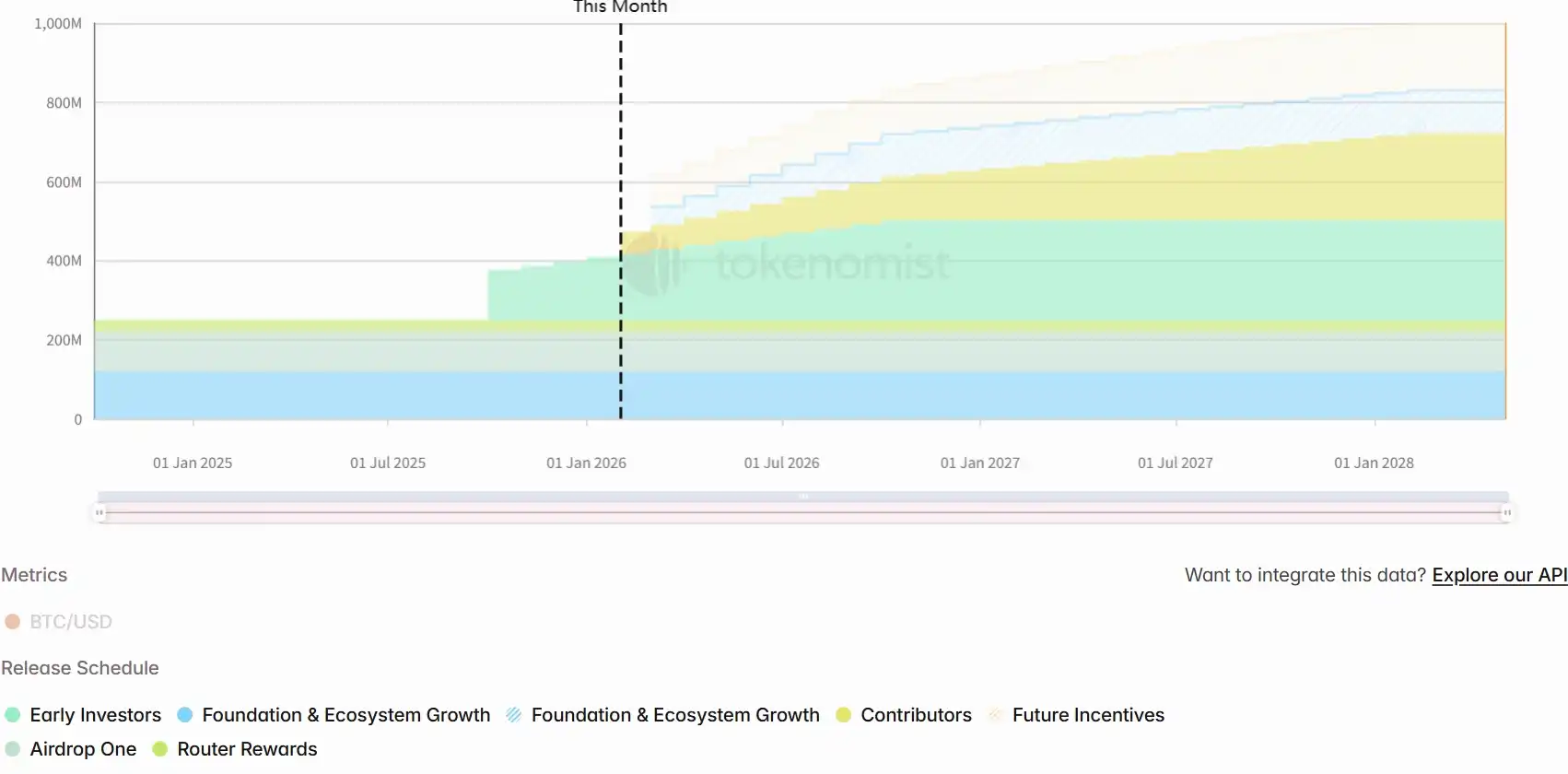
具体释放曲线如下:

SoSoValue

项目推特:https://x.com/SoSoValueCrypto

项目官网:https://sosovalue.com/

本次解锁数量:1332万枚

本次解锁金额:约499万美元

SoSoValue 是一个人工智能驱动的投资研究平台,它将 CeFi 的高效性与 DeFi 的透明性相结合,致力于解决加密货币市场中信息过载和跨链资产管理等挑战。

具体释放曲线如下:

Domande pertinenti

Q本周代币解锁涉及多少个项目?总价值是多少?

A本周共有14个项目进行代币解锁,总价值约为1.1亿美元

QGrass项目部署在哪个区块链上?它的主要定位是什么?

AGrass项目部署在Solana区块链上,定位为AI的数据层,旨在通过去中心化网络提供AI模型训练所需的数据

QEigenLayer协议引入了什么新概念?这个概念的运作机制是什么?

AEigenLayer引入了再质押概念,允许在以太坊共识层上再质押ETH。用户可以通过EigenLayer智能合约重新质押ETH,将加密经济安全性扩展到网络上的其他应用程序

QSoSoValue平台的主要特点是什么?它致力于解决哪些市场挑战?

ASoSoValue是一个人工智能驱动的投资研究平台,结合CeFi的高效性和DeFi的透明性,致力于解决加密货币市场中的信息过载和跨链资产管理等挑战

Q本次解锁中,哪个项目的单次解锁数量最大?数量是多少?

A本次解锁中Grass项目的单次解锁数量最大,达到5729万枚代币

Letture associate

Fed's Internal Doves Flock to Hawkish Stance, Warsh's Debut "Between a Rock and a Hard Place"

U.S. Federal Reserve officials who previously advocated for rate cuts, including Governor Christopher Waller, have recently shifted their stance, with many now not ruling out the possibility of future rate hikes. This sets a challenging stage for new Fed Chair Kevin Warsh's first policy meeting. Appointed by President Trump based on his dovish views, Warsh now faces a committee where the debate has pivoted from "when to cut" to "whether to hike," driven by persistent inflation above 3%, a strong labor market, and supply-side pressures from AI infrastructure demands and geopolitical tensions. Key figures illustrate the shift. Governor Waller, once concerned about employment, now says data has pushed him toward considering rate increases. Even moderate voices like Governor Lisa Cook, while expecting inflation to ease, have indicated readiness to hike if it fails to do so. Long-time hawks such as regional Fed presidents Beth Hammack, Lorie Logan, and Neel Kashkari have grown more vocal, arguing that the real policy rate is effectively falling and that action may soon be needed. The upcoming Fed meeting is expected to keep rates steady but will likely remove the "easing bias" from its statement, signaling a neutral stance between cuts and hikes. The quarterly "dot plot" is anticipated to show most officials projecting no cuts this year, with some potentially indicating hikes. Chair Warsh, a critic of the Fed's reliance on forward guidance like the dot plot, must navigate communicating this pivot using tools he has questioned, all while steering policy in a direction counter to the preferences of the president who appointed him. The consensus suggests the Fed's next move could well be a rate increase.

marsbit42 min fa

Fed's Internal Doves Flock to Hawkish Stance, Warsh's Debut "Between a Rock and a Hard Place"

marsbit42 min fa

The Trillion-Yuan Market Cap 'Yi Zhong Tian': Who is the True Value King?

The article analyzes the three leading Chinese optical module companies, collectively nicknamed "Yi Zhong Tian": Xinyisheng, Zhongji Innolight, and TFC Optical Communication. It evaluates their "cost-performance" not by current stock price, but through three lenses: PEG ratio (growth vs. valuation), earnings quality, and premium/discount for certainty. Xinyisheng shows the most attractive PEG ratio and high profitability, but its valuation reflects discounts for risks like high customer concentration and reliance on overseas markets. Zhongji Innolight, the most expensive, commands a premium for its market leadership, dominant share in key products like 800G/1.6T modules, and higher earnings certainty, though it faces geopolitical risks. TFC Optical, as an upstream component supplier ("water seller"), has the highest gross margin and bets on the long-term CPO/NPO architecture trend, but trades at a high valuation with more stable, less explosive growth. The core argument is that while these companies dominate module assembly, the true profit pool and technological moat lie upstream in laser and switch chips, currently controlled by U.S. firms like Lumentum and Coherent. The long-term "cost-performance" for these Chinese leaders hinges on whether the domestic industry, exemplified by companies like Yuanjie Technology, can successfully move up the value chain into high-power laser chips. Otherwise, their high growth may remain confined to the lower-margin assembly segment.

marsbit52 min fa

The Trillion-Yuan Market Cap 'Yi Zhong Tian': Who is the True Value King?

marsbit52 min fa

Has the Crypto Market Bottomed? Here's What Institutions Think

The crypto market is in a period of significant debate, with leading institutions offering differing views on whether a bottom has been reached. Three prominent firms have published detailed analyses: * **Galaxy Digital** argues Bitcoin has **not yet bottomed**. Their analysis of 13 historical indicators across six dimensions (valuation, profit-taking, miner pressure, etc.) shows only four are fully met. They project a potential bottom range between $30k and $54k. * **NYDIG** states a bottom is **possible but not likely**. While metrics are close to historic bear market extremes, they note the absence of a classic panic-selling event. They also suggest increased institutional adoption may have structurally altered the market cycle, potentially leading to a shallower downturn. * **Standard Chartered Bank** asserts the **bottom has already occurred** at around $59k. They cite two key factors: potential US-Iran diplomatic progress and the anticipated SpaceX IPO, which they believe absorbed capital and caused ETF selling pressure that is now subsiding. They forecast a year-end price target of $100k. Despite the surface-level disagreement, the reports share critical common ground more valuable for long-term investors: 1. All three believe the market bottom will form **within this year**. 2. All agree the current price is **closer to the bottom than to previous highs**. 3. All maintain a **bullish long-term outlook** for Bitcoin and a new cycle. The core takeaway is that while the exact bottom price ($40k, $50k, or $60k) is debated, the consensus is that a bottom is imminent. For long-term holders, the primary focus should not be pinpointing the absolute low, but on the future potential for prices to reach $100k, $200k, or higher. The fundamental thesis for Bitcoin—sovereign debt accumulation, inflation, declining trust in centralized institutions, global digitization, and improved accessibility—remains intact and is arguably strengthening. The overall landscape is viewed as more favorable than in previous crypto winters.

marsbit1 h fa

Has the Crypto Market Bottomed? Here's What Institutions Think

marsbit1 h fa

The 'Chip' Challenge and Breakthroughs in China's Optical Industry Chain

China's Photonics Industry: Bottlenecks and Breakthroughs In the global AI race, computing chips dominate the narrative, but the underlying bottleneck increasingly defining the scale of AI clusters is light—or more specifically, optical connectivity. Optical modules, which translate electrical signals to light and vice versa, are crucial for connecting thousands of GPUs in AI data centers, preventing data congestion and ensuring efficient model training. High-speed modules (800G, 1.6T) are now standard, with performance hinging on advanced DSP (Digital Signal Processor) chips. This is where a critical dependency lies. Two US giants—Marvell and Broadcom—collectively dominate over 90% of the high-end DSP chip market. Chinese optical module leaders like Zhongji Innolight and Eoptolink rely on these chips to manufacture modules for overseas AI customers, primarily in North America. While this creates a supply chain vulnerability, complete decoupling is difficult. Marvell derives over half its revenue from Greater China, and the US firms depend on Chinese partners for chip packaging and optical components. The risk from laser chips (e.g., from Lumentum), another key component, is considered more manageable due to multiple global suppliers and faster progress in domestic alternatives from companies like YOFC and Accelink. To mitigate risks, China's industry is pursuing a multi-pronged strategy: diversifying supply chains and locking in long-term orders; fostering a domestic market ecosystem to adopt homegrown DSPs from firms like Huawei HiSilicon and CETC; accelerating R&D in high-speed DSPs and advanced packaging; and investing in next-gen technologies like silicon photonics and Co-Packaged Optics (CPO) to reduce reliance on discrete DSPs. The ultimate solution lies not in short-term博弈 but in persistent advancement of domestic high-end chip R&D and manufacturing. While challenges remain in performance, certification, and ecosystem building, China's vast domestic market and manufacturing base provide a crucial buffer, buying time for the industry to achieve greater technological independence.

marsbit1 h fa

The 'Chip' Challenge and Breakthroughs in China's Optical Industry Chain

marsbit1 h fa

Trading

Spot
Futures

Articoli Popolari

Come comprare GRASS

Benvenuto in HTX.com! Abbiamo reso l'acquisto di Grass (GRASS) semplice e conveniente. Segui la nostra guida passo passo per intraprendere il tuo viaggio nel mondo delle criptovalute.Step 1: Crea il tuo Account HTXUsa la tua email o numero di telefono per registrarti il tuo account gratuito su HTX. Vivi un'esperienza facile e sblocca tutte le funzionalità,Crea il mio accountStep 2: Vai in Acquista crypto e seleziona il tuo metodo di pagamentoCarta di credito/debito: utilizza la tua Visa o Mastercard per acquistare immediatamente GrassGRASS.Bilancio: Usa i fondi dal bilancio del tuo account HTX per fare trading senza problemi.Terze parti: abbiamo aggiunto metodi di pagamento molto utilizzati come Google Pay e Apple Pay per maggiore comodità.P2P: Fai trading direttamente con altri utenti HTX.Over-the-Counter (OTC): Offriamo servizi su misura e tassi di cambio competitivi per i trader.Step 3: Conserva Grass (GRASS)Dopo aver acquistato Grass (GRASS), conserva nel tuo account HTX. In alternativa, puoi inviare tramite trasferimento blockchain o scambiare per altre criptovalute.Step 4: Scambia Grass (GRASS)Scambia facilmente Grass (GRASS) nel mercato spot di HTX. Accedi al tuo account, seleziona la tua coppia di trading, esegui le tue operazioni e monitora in tempo reale. Offriamo un'esperienza user-friendly sia per chi ha appena iniziato che per i trader più esperti.

254 Totale visualizzazioniPubblicato il 2024.12.11Aggiornato il 2026.06.02

Come comprare GRASS

Discussioni

Benvenuto nella Community HTX. Qui puoi rimanere informato sugli ultimi sviluppi della piattaforma e accedere ad approfondimenti esperti sul mercato. Le opinioni degli utenti sul prezzo di GRASS GRASS sono presentate come di seguito.

活动图片