MORPHO rises 16% as leverage builds: Breakout toward $1.80 next?

ambcryptoPubblicato 2026-02-16Pubblicato ultima volta 2026-02-16

Introduzione

MORPHO surged 16% to $1.40, with trading volume rising to $41.25M, indicating strong buyer participation. Market cap increased 14% to $532.77M, reflecting renewed capital inflows. The token significantly outperformed the broader market amid a rotation into altcoins. Technically, MORPHO completed a double-bottom pattern, reclaiming the $1.42 neckline—now a key resistance level. A sustained break above this zone could target $1.80, while failure may lead to a retest of $1.07. Momentum indicators like MACD have turned bullish, and the Parabolic SAR confirms a short-term uptrend. Market data supports the move: Spot Taker CVD shows aggressive buying, Open Interest surged 26% to $29.80M, and funding rates are positive, indicating bullish sentiment. The alignment of technical and on-chain factors suggests potential continuation if $1.42 is decisively broken.

MORPHO traded at $1.40 at the time of writing after gaining 16% in the past 24 hours, while trading volume rose to $41.25M, confirming expanding participation behind the move.

Market capitalization stood at $532.77M, reflecting a 14.03% increase and signaling renewed capital inflows.

Meanwhile, the CMC Altcoin Season Index has surged 54.55% this week to 34, highlighting capital rotation from Bitcoin into higher-risk altcoins.

MORPHO’s 16% weekly gain significantly outpaces the broader market’s 2.7% rise, reinforcing its strong beta positioning within this rotation.

Double-bottom confirmed as price presses into supply

MORPHO has completed a clear double-bottom formation after defending the $1.07 demand zone twice and reclaiming the $1.42 neckline with conviction.

The neckline now overlaps with a defined supply region, placing price at a structurally decisive level.

Buyers continue pressing into this resistance cluster in an attempt to convert prior distribution into acceptance.

Sustained strength above $1.42 would expose the next major horizontal barrier near $1.80, where price previously faced rejection.

However, failure to hold above the neckline could invite renewed selling pressure toward $1.07.

The symmetry of the structure and the strength of the reaction lows point toward deliberate accumulation rather than random volatility.

MACD has rotated into positive territory, with the histogram printing expanding green bars while the signal line trends upward.

This crossover marks a meaningful transition from prolonged downside compression into renewed bullish momentum.

During the earlier decline, MACD remained deeply negative and reinforced persistent selling pressure.

Now momentum aligns with structural recovery as price challenges resistance. The histogram had not flattened; instead, it continued expanding, which signals strengthening participation rather than a temporary relief bounce.

Besides, the Parabolic SAR has flipped below price, confirming a short-term trend reversal and reinforcing buyer control as long as candles hold above the SAR dots.

If this momentum expansion sustains while price tests supply, the technical structure increasingly favors continuation over rejection.

Buyer aggression persists as taker CVD supports price

The 90-day Spot Taker CVD continues to show dominant buyer activity, signaling aggressive market orders absorbing available liquidity.

This dynamic reflects conviction rather than passive positioning, particularly as price advances toward resistance.

Although participation cooled briefly in earlier sessions, the renewed 24-hour volume of $41.25M now aligns with price expansion, which reduces divergence risk.

Buyers continue executing through market orders, reinforcing upward pressure rather than hesitating at resistance.

When taker dominance persists during structural compression, it often precedes decisive resolution.

Continued absorption near $1.42 would increase the likelihood of supply exhaustion rather than immediate rejection.

Open Interest expands sharply as leverage builds

Open Interest has surged 25.99% to $29.80M, signaling a strong return of leveraged participation into the current move.

Rising Open Interest alongside price expansion typically reflects directional conviction rather than short covering.

However, deploying leverage into resistance increases volatility potential if price fails to secure acceptance.

A decisive breakout above $1.42 could accelerate upside momentum toward $1.80 as leveraged positions amplify continuation. Conversely, rejection at supply could trigger liquidations and intensify downside pressure.

The alignment between structural testing and derivatives expansion creates a high-impact moment that will likely determine the next major move.

Positive funding reflects strengthening long bias

The OI-Weighted Funding Rate printed positive near 0.005% at the time of writing, indicating that long positions pay shorts and that bullish sentiment dominates derivatives markets.

This shift marked a clear rotation from earlier negative extremes. Moderate positive funding during structural breakout attempts generally confirm conviction rather than excess.

At the time of writing, funding remained constructive without signaling overcrowding. Traders maintain long exposure as price presses into supply, which supports continuation potential.

If funding sustains moderate positivity while price clears resistance, the broader bullish structure would gain stronger confirmation.

A brief overview

MORPHO has aligned structural completion, momentum expansion, buyer dominance, rising Open Interest, and positive funding behind its current advance.

Broader altcoin rotation strengthens the macro backdrop and supports sustained interest in higher-beta assets.

If buyers secure acceptance above the $1.42 supply zone, price would likely advance toward $1.80 with reinforcing momentum.

However, failure to hold this region could trigger renewed pressure toward $1.07 demand. Current confluence favors continuation, yet decisive resolution at resistance will ultimately determine the durability of this rally.


Final Summary

  • Structural strength, momentum expansion, and rising derivatives conviction now align firmly behind this breakout attempt at key resistance.
  • Clear acceptance above supply would reshape market psychology and establish $1.80 as the next meaningful upside objective.


Domande pertinenti

QWhat is the current price of MORPHO and how much has it gained in the past 24 hours?

AMORPHO is trading at $1.40, having gained 16% in the past 24 hours.

QWhat key technical pattern has MORPHO's price completed, and what are the critical price levels associated with it?

AMORPHO has completed a double-bottom formation, defending the $1.07 demand zone and reclaiming the $1.42 neckline. A sustained move above $1.42 could target $1.80, while a failure to hold it could lead to a retest of $1.07.

QWhat does the surge in Open Interest and the positive Funding Rate indicate for MORPHO?

AThe 25.99% surge in Open Interest to $29.80M signals strong leveraged participation and directional conviction. The positive OI-Weighted Funding Rate of 0.005% indicates that bullish sentiment dominates the derivatives market, with long positions paying shorts.

QHow does the MACD indicator support the current bullish momentum for MORPHO?

AThe MACD has rotated into positive territory with expanding green bars on the histogram and an upward-trending signal line. This marks a transition from bearish momentum to renewed bullish momentum, signaling strengthening participation.

QWhat broader market indicator suggests capital is rotating into altcoins like MORPHO?

AThe CMC Altcoin Season Index has surged 54.55% this week to 34, highlighting a rotation of capital from Bitcoin into higher-risk altcoins. MORPHO's 16% weekly gain significantly outpaces the broader market's 2.7% rise, reinforcing its strong position within this trend.

Letture associate

The Richest Fed Chair in 112 Years Is Here: Kevin Warsh Is Rewriting the Rules

Kevin Warsh, with a personal fortune exceeding $130 million, became the 112nd and wealthiest Chair of the U.S. Federal Reserve on May 22nd. A former Wall Street investment banker and key figure during the 2008 financial crisis, Warsh lacks a traditional academic background for a central banker but brings deep market experience. He proposes an unconventional policy approach of simultaneously reducing the Fed's balance sheet ("quantitative tightening") while cutting interest rates, arguing that a smaller balance sheet would allow for more effective rate policy. His ascent marks a potential regime change at the Fed. Warsh aims to reform the institution's decision-making processes, tighten communication discipline among officials, and reduce reliance on forward guidance like the "dot plot." This shift responds to the Fed's current dilemma: fiscal policy is expanding the government's balance sheet through deficits, while monetary policy's ability to shrink its own $6.7 trillion balance sheet is severely constrained, creating pressure on long-term interest rates. Analysts expect Warsh's tenure to sustain high volatility in the U.S. Treasury market due to persistent supply pressures. Furthermore, his leadership coincides with a gradual, structural erosion of dollar dominance, evidenced by its declining share in global reserves and cracks in the petrodollar system, with increased use of alternatives like the Chinese yuan in oil trade. For investors, this environment underscores the importance of portfolio diversification, including assets like gold and Chinese sovereign bonds, amid a fluctuating dollar credit anchor.

链捕手4 min fa

The Richest Fed Chair in 112 Years Is Here: Kevin Warsh Is Rewriting the Rules

链捕手4 min fa

τ Scaling: Huawei's New Growth Engine Designed for the Post-Moore Era

**Tau Scaling: Huawei's New Growth Engine for the Post-Moore Era** For 60 years, progress in semiconductors was driven by Moore's Law – making transistors smaller, denser, and cheaper. This path has now stalled due to plummeting returns below 7nm, astronomical lithography costs, and rising per-transistor expenses. After six years and testing 381 production chips, Huawei’s semiconductor team proposes a fundamental shift: **stop competing on size, start competing on time**. This is the core of their "τ (Tau) Scaling" theory. It treats *time* as the key optimization metric, compressing characteristic delays (τ) across all levels – from transistor switching (picoseconds) to data center tasks (seconds), spanning 12 orders of magnitude. **What is τ Scaling?** It holistically minimizes delay/time constants (τ) across four layers: transistors (switching speed), circuits (signal delay), chips (compute/memory access), and systems (end-to-end communication). The goal is to align optimization from process and circuit design to architecture and systems using this unified metric. **Mobile Application: LogicFolding** Without advancing the process node, this technique vertically stacks chips using ultra-precision hybrid bonding, distributing critical paths across layers ("stacking floors"). Results include a 55% transistor density increase, 41% better energy efficiency, over 40% higher SRAM frequency, and a roadmap targeting 4GHz by 2029. **AI Data Center Application: Full-Link Latency Compression** With 80% of AI cluster energy and 70% cost spent on data movement, the focus is slashing communication time. Key innovations include: 1. **Unified Bus:** Cuts multi-layer protocols, reducing remote access latency from microseconds to ~100 nanoseconds – 500x faster. 2. **Hi-ONE Optical Interconnect:** Replaces copper with fiber, enabling 8Tb/s per module and scaling distances from 1m to 100m for 10,000-chip clusters. 3. **3D Folding:** Solves the "interface bottleneck" of 2.5D packaging by vertically integrating memory, power, and optical I/O alongside compute, predicting over 100x integration density gain by 2035. **Re-fusion of Logic and Memory** The AI era, where data movement is more critical than computation, demands tight 3D integration of logic and memory, shifting industry influence towards memory and advanced packaging. **Remaining Challenges** include adapting EDA tools for 3D design, optimizing wafer-to-wafer process variation and vertical interconnect losses, and establishing new energy efficiency and benchmarking standards. **Conclusion:** The era of scaling physical dimensions is over. The era of scaling time has begun. By leveraging 3D stacking, system architecture, and interconnect optimization—rather than solely chasing advanced lithography—performance and efficiency can continue to advance. This is poised to be the semiconductor industry's core roadmap for the next decade.

marsbit42 min fa

τ Scaling: Huawei's New Growth Engine Designed for the Post-Moore Era

marsbit42 min fa

NodeStrategy: The First Ordinals DAT Project, Bringing the Strategy Treasury Narrative to NFTs

**Summary: The Fundamental Flaws of NodeStrategy, the 'First Ordinals DAT'** NodeStrategy presents itself as the first Ordinals Digital Asset Treasury (DAT) on Bitcoin. Its model mirrors MicroStrategy's treasury narrative but for NFTs, specifically targeting the NodeMonkes collection (not officially affiliated). The project's core mechanism is a four-step flywheel: a 10% fee on all trades (90% to treasury, 10% to radFi/Bound marketplace) is used to buy NodeMonkes. These NFTs are then listed for sale on Satflow, with 100% of the sale proceeds used to buy back and burn the project's token, NODESTRAT, aiming to create a perpetual value cycle. However, the design contains critical, self-defeating flaws: 1. **Platform Lock-In:** As a Bitcoin Rune, NODESTRAT lacks smart contract functionality and cannot natively enforce the 10% fee. The fee can only be collected on the radFi/Bound marketplace itself. This makes the entire flywheel dependent on a single platform. If liquidity moves elsewhere, fee revenue drops to zero, halting the mechanism. 2. **Self-Suffocating Economics:** The 10% fee acts both as the flywheel's fuel and a major drag on demand. A buy/sell roundtrip incurs a 20% cost, creating a massive hurdle for traders. This strangles the very trading volume needed to generate fees. 3. **Ineffective Value Support:** The flywheel is starved. Low daily volume (~$9K) generates minimal fees for NFT purchases. The NFT "ladder" sales are slow and unpredictable (only 39 total sold), meaning buybacks are infrequent. While 30.77% of the supply has been burned, this supply reduction cannot lift price without corresponding demand, which is suppressed by the high transaction tax. 4. **Meaningless NAV:** The Net Asset Value (NAV), currently at a 0.46x discount to market cap, is merely a marketing figure. There is no redemption mechanism for token holders to claim the underlying NodeMonkes assets. Price is set by market liquidity flows, not by this theoretical backing. In essence, NodeStrategy's design forces its revenue source (trading fees) to simultaneously cripple the demand and liquidity required for its own success, trapping the project in a stagnant state.

marsbit49 min fa

NodeStrategy: The First Ordinals DAT Project, Bringing the Strategy Treasury Narrative to NFTs

marsbit49 min fa

Agentic Design Patterns: A Book That Made Me Re-Understand "What Is an Agent, Really?"

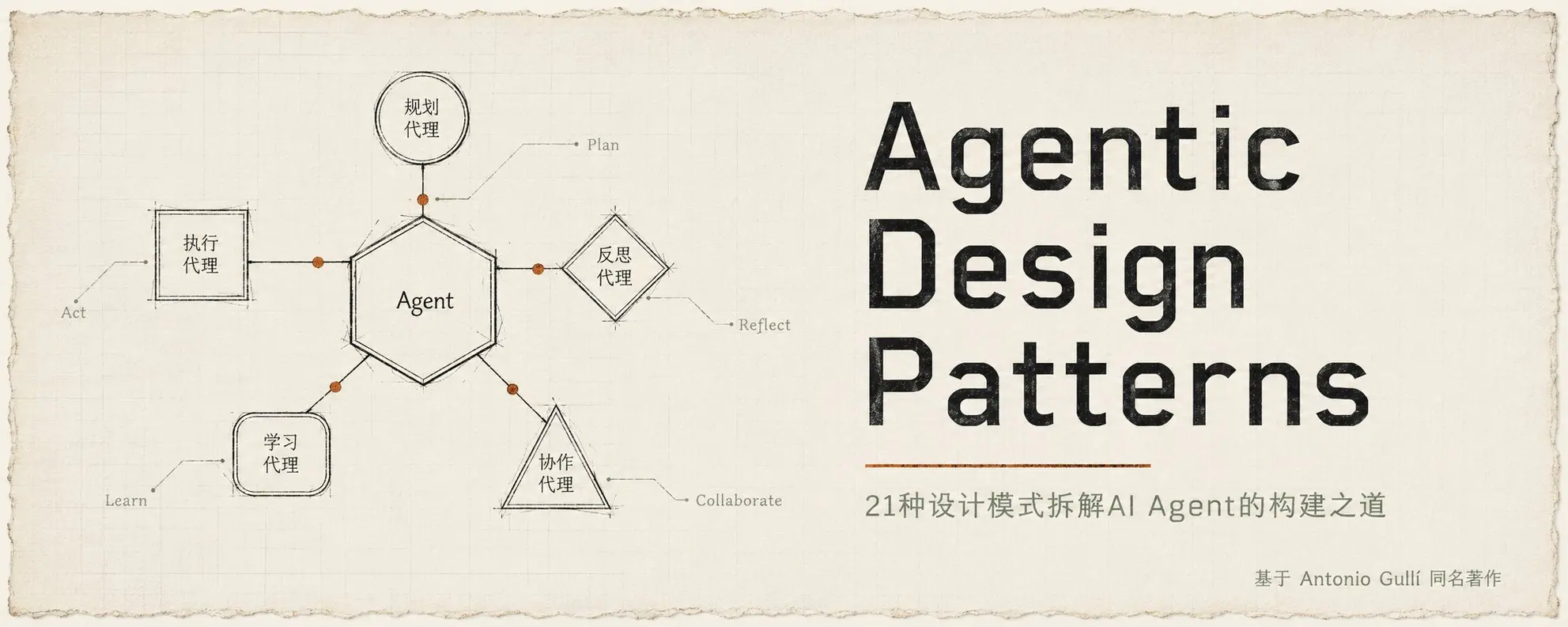
"Agentic Design Patterns" is a 2025 book by Antonio Gullí, a Google engineering director, which offers a systematic framework for AI Agent development through 21 design patterns. A core contribution is the "Four Levels of Agency": Level 0 (bare LLMs) are not true agents. Level 1 agents actively decide when and how to use tools. Level 2 agents engage in strategic planning, context engineering (curating and filtering information), and self-reflection. Level 3 involves multi-agent collaboration with defined communication topologies. The book introduces **Context Engineering** as a superset of prompt engineering, managing four layers of information for the agent: system prompts, external data, implicit context (user history, environment), and feedback loops for automated optimization. A key pattern is **Reflection (Producer-Critic)**, where two distinct agents with different prompts collaborate iteratively—one produces output, the other critiques it—until quality is satisfactory or a max iteration limit is reached. For **Memory**, a three-layer model is proposed: Session (ephemeral conversation context), State (temporary task data), and Memory (persistent, long-term storage). Regarding **Multi-Agent Systems**, the book advises against unnecessary complexity, recommending simple topologies like Supervisor or Peer-to-Peer based on task needs. It emphasizes perfecting a single Level 2 agent before moving to multi-agent setups. The author concludes with three actionable takeaways: 1) Add a Critic agent to existing workflows, 2) Practice Context Engineering beyond simple prompts, and 3) Avoid premature multi-agent complexity; first master a robust single agent. The book provides a practical map, codifying common challenges like reflection, memory, and coordination into reusable patterns, saving developers from reinventing foundational solutions.

链捕手1 h fa

Agentic Design Patterns: A Book That Made Me Re-Understand "What Is an Agent, Really?"

链捕手1 h fa

Trading

Spot
Futures

Articoli Popolari

Come comprare MORPHO

Benvenuto in HTX.com! Abbiamo reso l'acquisto di MORPHO (MORPHO) semplice e conveniente. Segui la nostra guida passo passo per intraprendere il tuo viaggio nel mondo delle criptovalute.Step 1: Crea il tuo Account HTXUsa la tua email o numero di telefono per registrarti il tuo account gratuito su HTX. Vivi un'esperienza facile e sblocca tutte le funzionalità,Crea il mio accountStep 2: Vai in Acquista crypto e seleziona il tuo metodo di pagamentoCarta di credito/debito: utilizza la tua Visa o Mastercard per acquistare immediatamente MORPHOMORPHO.Bilancio: Usa i fondi dal bilancio del tuo account HTX per fare trading senza problemi.Terze parti: abbiamo aggiunto metodi di pagamento molto utilizzati come Google Pay e Apple Pay per maggiore comodità.P2P: Fai trading direttamente con altri utenti HTX.Over-the-Counter (OTC): Offriamo servizi su misura e tassi di cambio competitivi per i trader.Step 3: Conserva MORPHO (MORPHO)Dopo aver acquistato MORPHO (MORPHO), conserva nel tuo account HTX. In alternativa, puoi inviare tramite trasferimento blockchain o scambiare per altre criptovalute.Step 4: Scambia MORPHO (MORPHO)Scambia facilmente MORPHO (MORPHO) nel mercato spot di HTX. Accedi al tuo account, seleziona la tua coppia di trading, esegui le tue operazioni e monitora in tempo reale. Offriamo un'esperienza user-friendly sia per chi ha appena iniziato che per i trader più esperti.

337 Totale visualizzazioniPubblicato il 2025.10.20Aggiornato il 2025.10.20

Come comprare MORPHO

Discussioni

Benvenuto nella Community HTX. Qui puoi rimanere informato sugli ultimi sviluppi della piattaforma e accedere ad approfondimenti esperti sul mercato. Le opinioni degli utenti sul prezzo di MORPHO MORPHO sono presentate come di seguito.

活动图片