Hong Kong Melanjutkan Regime Perizinan untuk Pedagang dan Kustodian Aset Virtual

cointelegraphPubblicato 2025-12-24Pubblicato ultima volta 2025-12-24

Introduzione

Hong Kong akan melanjutkan penerapan rezim perizinan bagi pedagang dan penyedia layanan penitipan aset kripto setelah menyelesaikan proses konsultasi. Langkah ini merupakan bagian dari upaya memperketat pengawasan sektor aset digital. Regulator setempat menyatakan bahwa perusahaan yang menyediakan layanan perdagangan atau penitipan kripto di Hong Kong harus memperoleh izin setelah kerangka peraturan berlaku. Kebijakan ini melengkapi kerangka perizinan kripto yang terus berkembang, termasuk rezim perizinan untuk penerbit stablecoin yang telah diberlakukan awal 2025. Hong Kong juga telah mewajibkan platform perdagangan kripto untuk berlisensi, dengan 11 perusahaan telah disetujui oleh Otoritas Sekuritas dan Berjangka (SFC). Selain aturan perizinan, Hong Kong menguji inisiatif tokenisasi dan menerbitkan konsultasi terpisah untuk rezim perizinan penyedia layanan penasihat dan manajemen aset kripto. Upaya ini bertujuan membangun ekosistem aset digital yang tepercaya dan berkelanjutan, serta memperkuat posisi Hong Kong sebagai pusat keuangan global.

Regulator Hong Kong akan melanjutkan legislasi regime perizinan untuk pedagang dan kustodian kripto setelah menyelesaikan konsultasi, sebagai bagian dari upaya yang lebih luas untuk memperketat pengawasan.

Dalam pengumuman Rabu, Biro Layanan Keuangan dan Perbendaharaan (FSTB) kota tersebut dan Securities and Futures Commission (SFC) menyatakan bahwa mereka telah menyimpulkan konsultasi mengenai regime perizinan yang diusulkan, yang akan mewajibkan perusahaan yang menyediakan layanan perdagangan atau kustodian kripto di Hong Kong untuk memperoleh izin setelah kerangka kerja berlaku.

Langkah ini menambah kerangka kerja perizinan kripto kota yang terus berkembang. Awal tahun 2025, Hong Kong memberlakukan Stablecoin Ordinance-nya, membuka regime perizinan baru bagi penerbit stablecoin.

Hong Kong sudah mewajibkan platform perdagangan kripto untuk memiliki izin. Rezim wajib saat ini dibangun di atas kerangka kerja opsional yang diperkenalkan pada tahun 2020, dengan 11 perusahaan telah mendapat persetujuan dari SFC hingga saat ini.
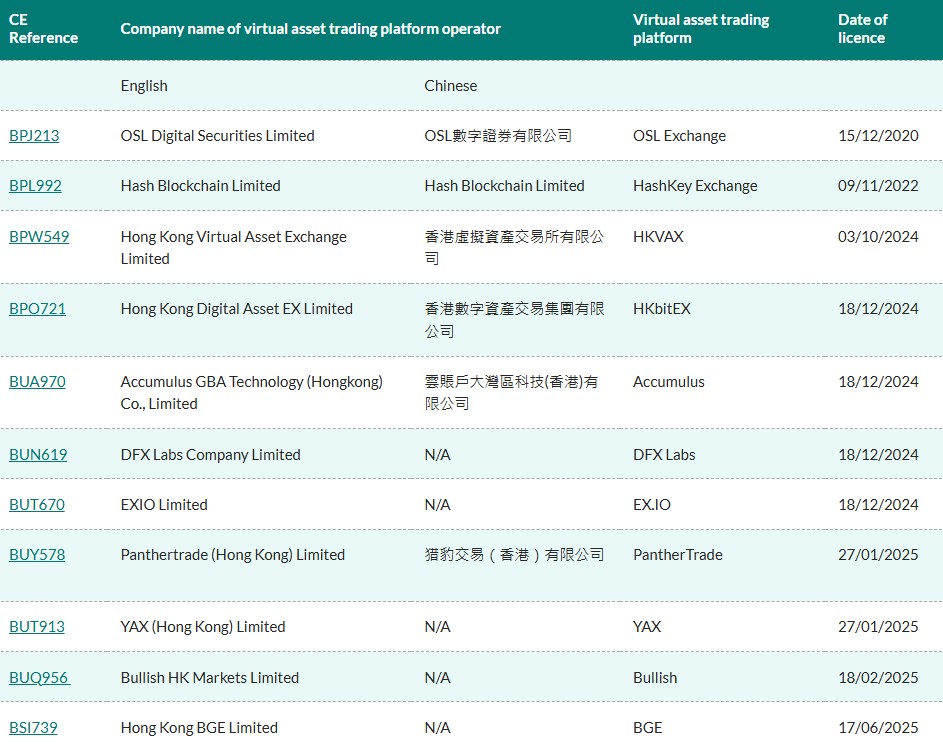
Hong Kong telah menolak lebih banyak pelamar untuk izin pertukaran kriptonya daripada yang disetujui. Sumber: SFC

Terkait: Kripto dapat masuk ke portofolio perusahaan asuransi saat Hong Kong meninjau aturan modal

Inisiatif kripto yang lebih luas Hong Kong

Hong Kong telah lama menyatakan ambisinya untuk berkembang menjadi pusat kripto. Kota ini sudah berfungsi sebagai pusat keuangan dengan rezim pajak yang ramah bisnis dan reputasinya sebagai gerbang keuangan antara Tiongkok daratan dan pasar modal global.

Di luar aturan perizinan kripto, Hong Kong juga telah menguji inisiatif tokenisasi. Dalam pengumuman Kamis, regulator menambahkan bahwa pengenalan regime perizinan yang tertunda untuk pedagang dan kustodian kripto adalah bagian dari upaya kota untuk membangun kerangka regulasi yang komprehensif untuk aset digital bersama stablecoin dan tokenisasi.

​Julia Leung, CEO SFC, mengatakan bahwa pengembangan lebih lanjut kerangka regulasi kripto Hong Kong akan membantu kota mempertahankan posisinya dalam perkembangan pasar aset digital global dengan "mendorong ekosistem yang tepercaya, kompetitif, dan berkelanjutan."

Terkait: Hong Kong meluncurkan konsultasi pajak kripto CARF untuk memerangi penggelapan

Konsultasi penasihat dan manajemen baru

SFC juga menerbitkan makalah konsultasi pada hari yang sama, meminta masukan publik mengenai proposal untuk memperkenalkan regime perizinan untuk penyedia layanan penasihat kripto dan penyedia layanan manajemen.

Konsultasi tersebut menghubungkan rezim yang diusulkan dengan kerangka Anti-Pencucian Uang (AML) yang ada di Hong Kong dan Counter‐Terrorist Financing Ordinance, dan menguraikan bagaimana kegiatan penasihat dan manajemen yang melibatkan aset digital akan dimasukkan ke dalam kerangka regulasi.

Dokumen ini juga mengundang komentar mengenai hal-hal seperti ruang lingkup perizinan, kewenangan pengatur, sanksi dan pengaturan banding, yang akan diperhitungkan dalam memfinalisasi proposal.


Domande pertinenti

QApa yang akan diwajibkan oleh rezim perizinan baru Hong Kong bagi perusahaan yang menangani aset kripto?

APerusahaan yang menyediakan layanan perdagangan atau penyimpanan aset kripto di Hong Kong harus memperoleh izin setelah kerangka peraturan ini berlaku.

QBerapa banyak perusahaan yang telah mendapatkan persetujuan izin dari SFC untuk platform perdagangan kripto hingga saat ini?

ASebanyak 11 perusahaan telah mendapatkan persetujuan izin dari Securities and Futures Commission (SFC) hingga saat ini.

QSelain aturan perizinan kripto, inisiatif apa lagi yang telah diuji Hong Kong dalam pengembangan aset digital?

AHong Kong juga telah menguji inisiatif tokenisasi sebagai bagian dari kerangka regulasi komprehensif untuk aset digital.

QApa tujuan Hong Kong mengembangkan kerangka regulasi kripto yang lebih luas menurut CEO SFC Julia Leung?

ATujuannya adalah mempertahankan posisi Hong Kong dalam perkembangan pasar aset digital global dengan menciptakan ekosistem yang tepercaya, kompetitif, dan berkelanjutan.

QApa fokus konsultasi yang diterbitkan SFC terkait penyedia layanan penasihat dan manajemen kripto?

AKonsultasi tersebut meminta masukan tentang pengenalan rezim perizinan yang terkait dengan kerangka Anti-Pencucian Uang (AML) dan mengatur cakupan perizinan, kekuatan regulasi, serta sanksi.

Letture associate

Google TPU Shipments Revised Up by 50%

Recent industry research indicates a significant upward revision in the shipments of Google's TPU (Tensor Processing Unit) chips. Previous expectations for 2027 were set at around 10 million units, but new estimates now point to 15 million units, a 50% increase. This substantial boost directly translates to higher demand across the entire supporting supply chain. Google's TPU clusters utilize a standardized all-optical interconnect architecture. Consequently, key hardware components are deeply integrated and scaled in fixed ratios with the chips. The 15 million TPU target will drive corresponding demand increases for NPO optical engines (roughly a 1:1 match), 1.6T optical modules, OCS optical switches, high-end server power supplies, fiber optics & MPO connectors, and liquid cooling solutions. Among these, liquid cooling is highlighted as the sector experiencing the most significant transformation and offering the most stable potential for excess returns. As next-generation TPU chips reach power levels where traditional air cooling is insufficient, liquid cooling becomes essential. 2026 is forecasted as the first year of substantial adoption for Google's liquid cooling solutions. This shift, coupled with delivery and capacity bottlenecks faced by incumbent overseas manufacturers, is creating a prime window for domestic Chinese suppliers to enter and secure Google's core supply chain. The market size for Google-specific liquid cooling is projected to potentially triple from a baseline of hundreds of billions to around 300 billion units by 2028. The logic for the fiber optic sector is also being rewritten. Once considered a cyclical commodity tied to telecom operator procurement, fiber is now a strategic and scarce resource for AI Data Centers (AIDC). A severe supply-demand imbalance, driven by the long lead time for preform production (18-24 months) and surging demand from cloud giants, is supporting strong performance. Chinese fiber manufacturers are well-positioned to capture a significant share of global AIDC demand, with exports potentially reaching 200-300 million core kilometers in 2026. Overall, the investment focus within the AI computing industry is shifting from pure "chip performance speculation" towards the more certain incremental growth in computing infrastructure and its supporting ecosystem. The upward revision in Google TPU shipments, along with the potential for further doubling by 2028, is seen as solidifying performance visibility for the entire supporting supply chain over the next two years.

marsbit1 h fa

Google TPU Shipments Revised Up by 50%

marsbit1 h fa

What Wall Street Really Wants After the Crypto Story Recedes

The tide of speculative crypto narratives has receded, revealing Wall Street's true objective: building a controlled, yield-generating, and compliant financial pipeline on distributed ledgers. They are migrating core functions onto blockchains, not for decentralization, but for efficiency and new revenue streams. Key developments include BlackRock's BUIDL fund, a tokenized treasury fund acting as a foundational reserve asset, and the rise of Securitize, which is going public and partnering with the NYSE to build a 24/7 digital securities trading and settlement system. This signals a major shift of securities clearing to blockchain technology. To make volatile assets like Bitcoin palatable for institutional investors, firms like BlackRock and Goldman Sachs are creating "covered call" ETFs (e.g., BITA). These products systematically sell options on Bitcoin holdings, transforming price volatility into stable monthly income, effectively repackaging crypto as a yield-bearing asset. Stablecoins are being positioned not as speculative tools but as efficient payment rails. Companies like Stripe and Mastercard are integrating them for instant, low-cost merchant settlements and cross-border card payments, respectively. Critically, new legislation like the GENIUS Act shapes them as non-interest-bearing, heavily regulated extensions of the US dollar system. In summary, Wall Street is quietly constructing a parallel, blockchain-based financial infrastructure featuring tokenized traditional assets, structured crypto yields, and programmable dollar pipelines—all under its control and fully integrated with existing regulatory and credit frameworks.

marsbit1 h fa

What Wall Street Really Wants After the Crypto Story Recedes

marsbit1 h fa

Tying Itself to SpaceX: Cursor's $60 Billion Rise

This article recounts the rapid rise of AI-powered coding startup Cursor and its 25-year-old MIT graduate CEO, Michael Truell. Launched in 2023, Cursor achieved explosive growth, reaching over 10 billion USD in revenue by late 2025. However, its journey highlights a central dilemma for AI application companies: dependence on foundational model providers. Cursor initially relied heavily on Anthropic's models but faced an existential threat when Anthropic launched its own competing coding tool, Claude Code. In response, Cursor declared an internal emergency in early 2026 and accelerated development of its own model, Composer. To secure the immense computing power needed, Truell struck a pivotal deal with Elon Musk's SpaceX in April 2026. The collaboration grants Cursor access to SpaceX's supercomputing resources for Composer, while SpaceX's Grok model benefits from Cursor's programming data. The agreement includes a potential 600 billion USD acquisition of Cursor by SpaceX later in the year, though a substantial termination fee is in place if the deal falls through. The story explores Cursor's intense, sometimes controversial hiring practices involving lengthy unpaid "work trials," its complex partnership-turned-rivalry with Anthropic, and its high-stakes gamble to ensure independence through the SpaceX alliance. The core question remains: will Cursor evolve into a defining, independent "generational" software company, or become a key piece in a tech giant's AI arsenal?

marsbit1 h fa

Tying Itself to SpaceX: Cursor's $60 Billion Rise

marsbit1 h fa

Trading

Spot
Futures

Articoli Popolari

Come comprare VIRTUAL

Benvenuto in HTX.com! Abbiamo reso l'acquisto di Virtuals Protocol (VIRTUAL) semplice e conveniente. Segui la nostra guida passo passo per intraprendere il tuo viaggio nel mondo delle criptovalute.Step 1: Crea il tuo Account HTXUsa la tua email o numero di telefono per registrarti il tuo account gratuito su HTX. Vivi un'esperienza facile e sblocca tutte le funzionalità,Crea il mio accountStep 2: Vai in Acquista crypto e seleziona il tuo metodo di pagamentoCarta di credito/debito: utilizza la tua Visa o Mastercard per acquistare immediatamente Virtuals ProtocolVIRTUAL.Bilancio: Usa i fondi dal bilancio del tuo account HTX per fare trading senza problemi.Terze parti: abbiamo aggiunto metodi di pagamento molto utilizzati come Google Pay e Apple Pay per maggiore comodità.P2P: Fai trading direttamente con altri utenti HTX.Over-the-Counter (OTC): Offriamo servizi su misura e tassi di cambio competitivi per i trader.Step 3: Conserva Virtuals Protocol (VIRTUAL)Dopo aver acquistato Virtuals Protocol (VIRTUAL), conserva nel tuo account HTX. In alternativa, puoi inviare tramite trasferimento blockchain o scambiare per altre criptovalute.Step 4: Scambia Virtuals Protocol (VIRTUAL)Scambia facilmente Virtuals Protocol (VIRTUAL) nel mercato spot di HTX. Accedi al tuo account, seleziona la tua coppia di trading, esegui le tue operazioni e monitora in tempo reale. Offriamo un'esperienza user-friendly sia per chi ha appena iniziato che per i trader più esperti.

374 Totale visualizzazioniPubblicato il 2024.12.23Aggiornato il 2026.06.02

Come comprare VIRTUAL

Discussioni

Benvenuto nella Community HTX. Qui puoi rimanere informato sugli ultimi sviluppi della piattaforma e accedere ad approfondimenti esperti sul mercato. Le opinioni degli utenti sul prezzo di VIRTUAL VIRTUAL sono presentate come di seguito.

活动图片












