2 ngày tăng 20 lần, cơ chế market-making tự động của Snowball - chú chó vàng mới

marsbitPubblicato 2025-12-22Pubblicato ultima volta 2025-12-22

Introduzione

Bài viết giới thiệu về Snowball, một meme coin được phát hành trên pump.fun vào ngày 18/12, đã tăng trưởng 20 lần trong 2 ngày và đạt vốn hóa 10 triệu USD. Điểm khác biệt của Snowball là cơ chế tự động tạo thanh khoản: 100% phí giao dịch không vào ví nhà phát triển mà được chuyển cho một bot làm thị trường trên chain. Bot này định kỳ dùng số tiền tích lũy để mua token, tăng tính thanh khoản và đốt 0.1% token, tạo hiệu ứng giảm phát. Phí giao dịch dao động từ 0.05% đến 0.95% tùy vốn hóa. Cơ chế này nhằm ngăn dev rút tiền và bỏ trốn, tạo ra vòng lặp: giao dịch tạo phí → phí thành tiền mua → đẩy giá lên → thu hút giao dịch mới. Dữ liệu on-chain cho thấy 7.270 holder, top 10 nắm 20% supply, giao dịch mua/bán cân bằng. Tuy nhiên, thị trường crypto hiện lạnh nhạt, meme coin khó thu hút dòng tiền. Cơ chế an toàn hơn nhưng không đảm bảo lợi nhuận, vì rủi ro còn bao gồm dump, thanh khoản thấp, và narrative lỗi thời. Snowball không phải dự án duy nhất theo xu hướng này (ví dụ FIREBALL), nhưng lịch sử từ OlympusDAO hay Safemoon cho thấy cơ chế dù hay cũng không tạo giá trị thực và phụ thuộc vào dòng tiền bên ngoài. Tóm lại, Snowball là một thí nghiệm cơ chế thú vị, nhưng trước hết vẫn là một meme coin với đầy rủi ro.

Thị trường crypto tháng 12 lạnh như thời tiết.

Giao dịch on-chain đã ngủ đông từ lâu, các narrative mới cũng khó lòng xuất hiện. Chỉ cần nhìn vào những tranh cãi và tin đồn mà cộng đồng CT Trung Quốc đang bàn tán vài ngày gần đây, là đủ biết thị trường này chẳng còn mấy ai chơi nữa.

Nhưng ở cộng đồng tiếng Anh, mấy ngày nay đang bàn về một thứ mới.

Một đồng meme coin tên là Snowball, phát hành trên pump.fun vào ngày 18 tháng 12, chỉ trong bốn ngày vốn hóa đã lao lên 10 triệu USD và vẫn đang lập đỉnh mới; trong khi cộng đồng Trung Quốc hầu như không ai nhắc đến.
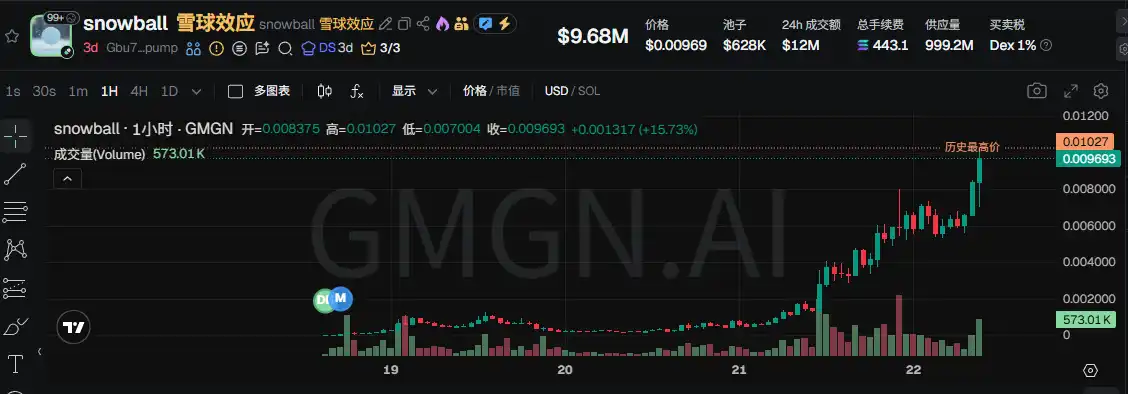
Trong bối cảnh không có narrative mới và meme chó cũng chẳng thèm chơi như hiện nay, đây có lẽ là một trong số ít thứ khiến người ta sáng mắt, mang lại hiệu ứng tài sản cục bộ.

Mà cái tên Snowball dịch ra là hiệu ứng quả cầu tuyết, vốn đã là câu chuyện nó muốn kể:

Một cơ chế khiến token "tự lăn càng to".

Biến phí giao dịch thành lực mua, market-making như lăn quả cầu tuyết

Muốn hiểu Snowball đang làm gì, trước tiên phải biết token trên pump.fun thường kiếm tiền như thế nào.

Trên pump.fun, bất kỳ ai cũng có thể tạo một token trong vài phút. Người tạo token có thể thiết lập "phí nhà sáng tạo", nói thẳng ra là cứ mỗi giao dịch thì抽 một tỷ lệ nhất định vào ví của mình, thường trong khoảng 0.5% đến 1%.

Về lý thuyết, số tiền này có thể dùng để xây dựng cộng đồng, quảng bá thị trường, nhưng trong thực tế, lựa chọn của hầu hết Dev là: tích đủ rồi rút chạy.

Đây cũng là một phần trong vòng đời điển hình của một con shitcoin. Phóng, kéo, thu phí, bỏ chạy. Nhà đầu tư đang cá cược không phải vào bản thân token, mà là lương tâm của nhà phát triển.

Cách làm của Snowball là, không lấy tiền phí nhà sáng tạo này.

Chính xác hơn, 100% phí nhà sáng tạo không vào ví của bất kỳ ai, mà được tự động chuyển vào một bot market-making on-chain.

Bot này định kỳ thực hiện ba việc:

Thứ nhất, dùng số vốn tích lũy để mua token trên thị trường, tạo thành lực mua hỗ trợ;

Thứ hai, thêm token đã mua và SOL tương ứng vào pool thanh khoản, giúp depth giao dịch tốt hơn;

Thứ ba, mỗi lần thao tác đốt 0.1% token, tạo ra giảm phát.
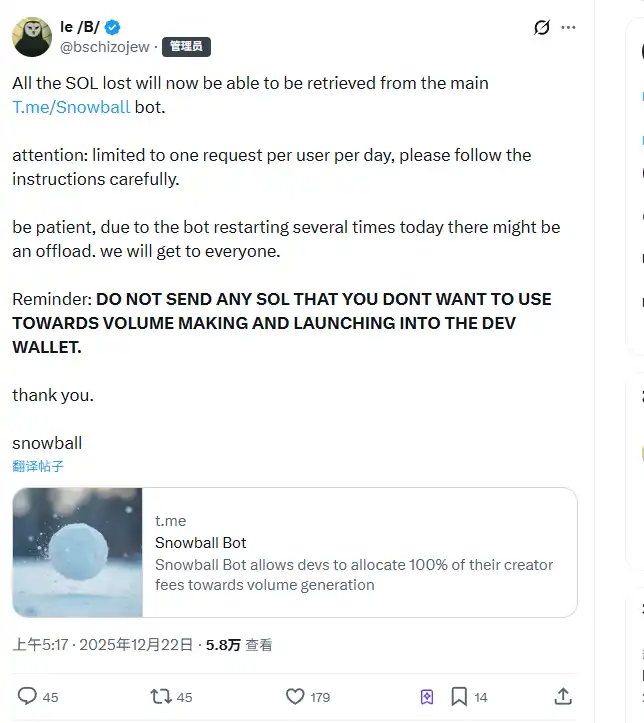
Đồng thời, tỷ lệ phí nhà sáng tạo mà token này thu không cố định, mà sẽ dao động từ 0.05% đến 0.95% tùy theo vốn hóa thị trường.

Khi vốn hóa thấp thì抽 nhiều hơn một chút, để bot tích lũy đạn dược nhanh hơn; khi vốn hóa cao thì giảm xuống, giảm ma sát giao dịch.

Tóm tắt logic của cơ chế này trong một câu, mỗi lần bạn giao dịch, là có một khoản tiền tự động biến thành lực mua và thanh khoản, chứ không phải vào túi nhà phát triển.

Vì vậy, bạn cũng dễ dàng hiểu hiệu ứng quả cầu tuyết này:

Giao dịch sinh ra phí → Phí biến thành lực mua → Lực mua đẩy giá cao → Giá cả thu hút nhiều giao dịch hơn → Nhiều phí hơn...... Về lý thuyết có thể tự lăn.

Tình hình dữ liệu on-chain

Nói xong cơ chế, hãy xem dữ liệu on-chain.

Snowball phóng vào ngày 18 tháng 12, đến nay là bốn ngày. Vốn hóa từ 0 lao lên 10 triệu USD, khối lượng giao dịch 24h vượt 11 triệu.

Đối với một shitcoin trên pump.fun, thành tích này đã được coi là sống lâu trong môi trường hiện tại rồi.

Về cấu trúc nắm giữ, hiện có 7270 địa chỉ nắm giữ. Top 10 người nắm giữ lớn nhất cộng lại chiếm khoảng 20% tổng cung, người nắm giữ đơn lẻ lớn nhất chiếm 4.65%.
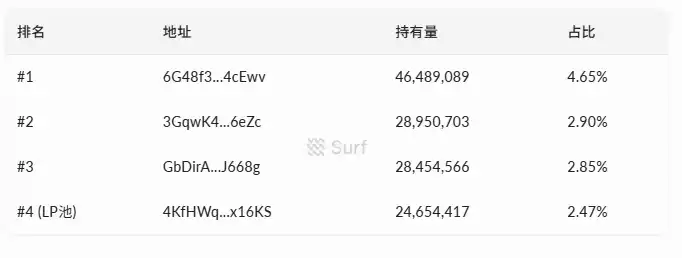
(Nguồn dữ liệu: surf.ai)

Không xuất hiện tình trạng một địa chỉ nắm giữ hai ba phần mười cung, phân bố tương đối phân tán.

Về dữ liệu giao dịch, từ khi phóng đến nay tích lũy hơn 58000 giao dịch, trong đó 33000 lần mua, 24000 lần bán. Tổng số tiền mua vào 4.4 triệu USD, bán ra 4.3 triệu USD, dòng tiền ròng vào khoảng 100k. Mua bán cơ bản ngang bằng, không xuất hiện áp lực bán dồn về một phía.

Trong pool thanh khoản nằm khoảng 380k USD, một nửa là token một nửa là SOL. Đối với thể thức vốn hóa này, depth không dày, lệnh lớn ra vào vẫn sẽ có trượt giá rõ rệt.

Một điểm đáng chú ý khác là, Bybit Alpha đã宣布 lên sàn token này chưa đầy 96 giờ sau khi phóng, ở một mức độ nào đó cũng chứng thực sức nóng ngắn hạn.

Động cơ vĩnh cửu gặp thị trường lạnh lẽo

Đi dạo một vòng, có thể thấy cộng đồng tiếng Anh thảo luận về Snowball chủ yếu tập trung vào bản thân cơ chế. Logic của người ủng hộ rất trực tiếp:

Đây là meme coin đầu tiên khóa 100% phí nhà sáng tạo vào giao thức, nhà phát triển không thể lấy tiền bỏ chạy, ít nhất về mặt cấu trúc là an toàn hơn các shitcoin khác.

Dev phát triển cũng đang phối hợp với narrative này. Ví nhà phát triển, ví bot market-making, nhật ký giao dịch đều công khai, nhấn mạnh "có thể kiểm tra on-chain".

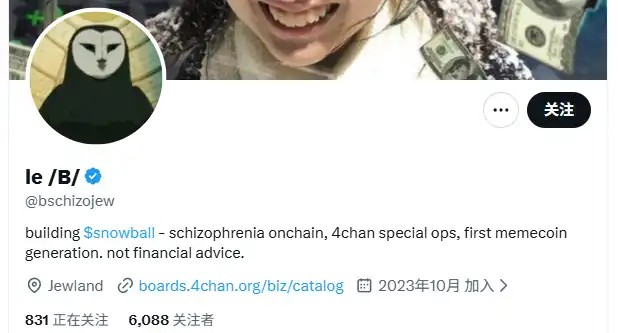
@bschizojew tự dán nhãn cho mình là "tâm thần phân liệt on-chain, lực lượng đặc chủng 4chan, lính già meme coin thế hệ đầu", mang đầy hương vị degen tự giễu, rất hợp với khẩu vị cộng đồng crypto native.
Nhưng cơ chế an toàn và kiếm được tiền hay không là hai chuyện khác nhau.

Điều kiện tiên quyết để hiệu ứng quả cầu tuyết thành lập là, có đủ khối lượng giao dịch liên tục sinh ra phí, để nuôi bot thực hiện mua lại. Giao dịch càng nhiều, bot càng đủ đạn, lực mua càng mạnh, giá càng cao, thu hút nhiều người giao dịch hơn...

Đây cũng là trạng thái lý tưởng mà bất kỳ bánh xe flywheel mua lại nào của meme được cho là quay lên trong bull market.

Vấn đề là, bánh xe cần động lực bên ngoài để khởi động.

Môi trường thị trường crypto hiện tại là gì? Hoạt động on-chain trầm lắng, sức nóng tổng thể của meme coin giảm sút, số vốn sẵn sàng xông vào shitcoin vốn đã ít. Trong bối cảnh này, nếu lực mua mới không theo kịp, khối lượng giao dịch teo lại, phí mà bot nhận được sẽ ngày càng ít, lực mua lại yếu đi, hỗ trợ giá giảm, ý chí giao dịch tiếp tục giảm.

Bánh xe có thể quay xuôi, cũng có thể quay ngược.

Vấn đề thực tế hơn là, cơ chế giải quyết một điểm rủi ro "nhà phát triển rút tiền bỏ chạy", nhưng rủi ro mà meme coin đối mặt còn xa hơn thế.

Zhuāng家 xả hàng, thanh khoản không đủ, narrative lỗi thời, những việc này xảy ra một cái bất kỳ, thì việc mua lại bằng 100% phí giao dịch cũng chỉ có tác dụng rất hạn chế.

Mọi người đều bị割 sợ rồi, trong cộng đồng Trung Quốc cũng có anh总结 khá đúng:

Chơi thì chơi, đừng quá đà.

Không chỉ một quả cầu tuyết đang lăn

Snowball không phải là dự án duy nhất kể câu chuyện market-making tự động này.

Cùng trong hệ sinh thái pump.fun, một token tên là FIREBALL cũng đang làm việc tương tự: mua lại tự động cộng đốt, đóng gói nó thành một giao thức mà token khác có thể kết nối vào. Nhưng vốn hóa nhỏ hơn Snowball rất nhiều.
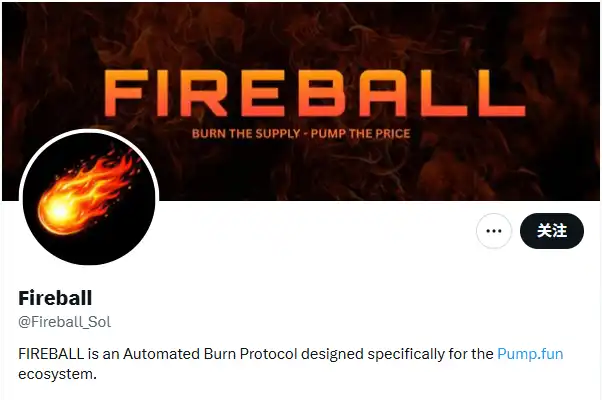
Điều này说明 thị trường hiện nay có phản ứng với hướng "meme coin kiểu cơ chế".

Cách chơi truyền thống喊单, kéo,炒作 cộng đồng ngày càng khó thu hút vốn, dùng thiết kế cơ chế để kể một câu chuyện "an toàn cấu trúc", có lẽ là một trong những套路 gần đây của meme coin.

Tuy nhiên, nói đến việc tạo ra một cơ chế nào đó nhân tạo, cũng không phải cách chơi mới.

OlympusDAO năm 2021 với (3,3) là trường hợp điển hình nhất, dùng lý thuyết trò chơi đóng gói cơ chế staking, câu chuyện kể là "mọi người đều không bán thì có thể cùng nhau kiếm lời", thời kỳ đỉnh cao vốn hóa lao lên几十 tỷ USD. Kết cục về sau mọi người cũng biết, xoáy giảm, giảm hơn 90%.

Sớm hơn một chút còn có cách chơi của Safemoon "mỗi giao dịch抽税 chia cho người nắm giữ", cũng là narrative đổi mới cơ chế, cuối cùng bị SEC kiện, người sáng lập bị buộc tội gian lận.

Cơ chế có thể là cái móc narrative rất tốt, có thể tập trung vốn và sự chú ý trong thời gian ngắn, nhưng bản thân cơ chế không tạo ra giá trị.

Khi dòng tiền bên ngoài ngừng chảy vào, bánh xe flywheel tinh xảo đến mấy cũng sẽ ngừng quay.

Cuối cùng, chúng ta hãy gỡ lại xem chú chó vàng nhỏ này rốt cuộc đang làm gì:

Biến phí nhà sáng tạo của meme coin thành "bot market-making tự động". Bản thân cơ chế không phức tạp, vấn đề giải quyết cũng rõ ràng, đó là khiến nhà phát triển không thể trực tiếp lấy tiền bỏ chạy.

Nhà phát triển không thể bỏ chạy, không có nghĩa là bạn kiếm được tiền.

Nếu bạn xem xong thấy cơ chế này thú vị, muốn tham gia, hãy nhớ một câu: nó trước hết là một meme coin, sau đó mới là thử nghiệm của một cơ chế mới.


Crypto di tendenza

Domande pertinenti

QSnowball (SNOW) là gì và cơ chế hoạt động của nó như thế nào?

ASnowball là một meme coin được phát hành trên pump.fun, với cơ chế tự động sử dụng 100% phí nhà sáng tạo để mua lại token, bổ sung thanh khoản và đốt token. Cứ mỗi giao dịch, một phần phí được chuyển vào bot làm thị trường, tạo ra mua vào, hỗ trợ giá và tăng tính thanh khoản, từ đó tạo hiệu ứng 'quả cầu tuyết' lý thuyết.

QTại sao Snowball được coi là an toàn hơn so với các meme coin thông thường?

ASnowball được xem là an toàn hơn về cấu trúc vì 100% phí nhà sáng tạo được tự động chuyển vào bot làm thị trường thay vì vào ví của nhà phát triển, loại bỏ nguy cơ dev rút tiền và bỏ chạy. Điều này tạo ra sự minh bạch và giảm rủi ro lừa đảo so với các dự án meme truyền thống.

QDữ liệu on-chain của Snowball cho thấy điều gì về hiệu suất và phân phối token?

ASau 4 ngày, Snowball đạt vốn hóa thị trường 10 triệu USD, với 7.270 địa chỉ nắm giữ. Top 10 holder nắm khoảng 20% tổng cung, holder lớn nhất chiếm 4.65%, cho thấy phân phối tương đối phân tán. Khối lượng giao dịch 24h là 11 triệu USD, với lượng mua và bán gần như cân bằng.

QNhững rủi ro tiềm ẩn khi đầu tư vào Snowball là gì?

ARủi ro chính bao gồm: thị trường crypto lạnh nhạt có thể khiến khối lượng giao dịch giảm, làm suy yếu khả năng mua lại của bot; cơ chế không ngăn được các rủi ro như thao túng giá, thiếu thanh khoản hoặc narrative lỗi thời; và cuối cùng, nó vẫn là một meme coin với biến động cao và phụ thuộc vào dòng tiền bên ngoài.

QCó những dự án nào tương tự Snowball và bài học từ các cơ chế trước đó là gì?

AFIREBALL trên pump.fun cũng áp dụng cơ chế tự động mua lại và đốt token. Các dự án trước như OlympusDAO (3,3) và Safemoon từng sử dụng cơ chế tương tự để tạo narrative, nhưng cuối cùng đều sụp đổ hoặc bị kiện do thiếu dòng tiền bền vững. Bài học là cơ chế dù hay nhưng không tạo ra giá trị thực và phụ thuộc vào tâm lý thị trường.

Letture associate

When the World Cup Collides with Agents: From Web2 to Web3, How Are Wallets Evolving into Agentic Wallets?

World Cup as a Catalyst for Agentic Wallets: From Web2 to Web3 This article explores how the World Cup provides a real-world scenario for observing the evolution of digital wallets from simple asset managers towards "Agentic Wallets"—intelligent, AI-powered interfaces. Using the example of prediction markets like Polymarket, it illustrates how AI Agents can lower the barrier to Web3 interaction. Instead of navigating complex DApps, users can express intent in natural language (e.g., "I think Portugal will win") within platforms like Discord or web pages. The Agent then interprets this intent, finds the relevant market, and seamlessly guides the user through the on-chain transaction via their wallet. The core shift is from wallets as mere "function menus" for signing transactions to "intent interpreters" that understand user goals. The article highlights parallel developments in traditional finance, such as Mastercard's "Agent Pay" and WeChat Pay's AI tests, which focus on granting AI controlled, authorized, and auditable payment capabilities. This underscores a broader trend of AI entering the financial layer. However, the article emphasizes that the primary challenge for Agentic Wallets in Web3 is not automation but establishing clear security boundaries. Unlike traditional systems with chargebacks, on-chain transactions are often irreversible. Therefore, future wallets must ensure users retain ultimate control and comprehension. They need to transparently communicate an Agent's permissions, spending limits, authorized durations, and provide easy ways to pause or revoke access. The World Cup experiments represent early steps toward wallets that are not just applications but ubiquitous, intelligent interfaces that simplify Web3 while keeping users securely in control.

marsbit34 min fa

When the World Cup Collides with Agents: From Web2 to Web3, How Are Wallets Evolving into Agentic Wallets?

marsbit34 min fa

Options Don't Work in DeFi? Vitalik Might Not Agree

For years, the prevailing view has been that options struggle to gain traction in DeFi due to complexity, fragmented liquidity, and lack of natural demand compared to products like perpetual futures. However, a recent algorithmic stablecoin design proposed by Vitalik Buterin presents a different perspective, using options not as a standalone trading product, but as foundational infrastructure for other financial instruments. In this design, one unit of ETH is split into two components: a "stable" side (P) that retains value up to a specified strike price, and an "upside" side (N) that captures all appreciation above that strike. Combined, they always equal one ETH, eliminating debt, margin, and liquidation risks inherent in typical collateralized debt position (CDP) stablecoins. The stable component essentially mimics the payoff of a covered call option. To function as a stablecoin, this structure requires continuously rolling deep in-the-money calls, which introduces challenges like rollover slippage, predictable transaction flow vulnerable to front-running, and persistent liquidity needs. A core hurdle is finding consistent buyers for the leveraged ETH upside exposure (N). While it offers leverage without funding rates or liquidation, it must compete with simpler alternatives like direct call options or perpetuals. The system's scalability depends on a sustained demand for this specific form of leverage. The author draws parallels to their experience with Rysk, where earlier versions of DeFi options protocols struggled. The breakthrough came with Rysk V12, which aligns incentives: asset holders generate yield by selling covered calls against their holdings, while market makers efficiently acquire the desired option exposure. This demonstrates that options can find product-market fit when embedded as a risk distribution and pricing engine within structured products, stablecoins, or yield-generating assets, rather than marketed as a complex direct trading instrument. Vitalik's proposal reinforces this architectural approach—using fully collateralized, non-custodial, and physically settled options as a fundamental building block. The real opportunity for options in DeFi may lie not in becoming the next perpetual swap, but in powering the next generation of on-chain financial products.

marsbit1 h fa

Options Don't Work in DeFi? Vitalik Might Not Agree

marsbit1 h fa

Conversation with Investor Zheng Di: MicroStrategy's Coin Sale Experiment, AI Economy, and Opportunities in US Stocks

Frontier tech investor Zheng "Didier" Di discusses the recent Bitcoin price drop, the financial strategy shift at MicroStrategy, the AI-driven surge in U.S. stocks, and the evolving role of crypto exchanges. Didier posits that the recent BTC decline stems less from macro factors or ETF outflows, and more from market repricing due to MicroStrategy's new financial structure. Following a wave of preferred stock and debt issuance (STRC, STRZ, etc.), MicroStrategy must now manage cash flow to pay dividends, potentially leading to a market expectation of sustained, small-scale BTC sales to maintain its "per-share bitcoin neutral" principle. Didier views this as a financial "experiment" testing market capacity for such recurring sell pressure, which, while creating near-term structural headwinds, likely avoids a true "death spiral" absent major new external shocks. Shifting to AI, Didier argues that tokens are becoming the new form of labor, with AI models and compute (tokenized inputs) increasingly replacing human roles in execution and middle-management. This drives enterprise efficiency and higher margins, fueling the sustained rally in U.S. semiconductor, data center, and infrastructure stocks. He foresees an emerging "machine economy" where automated agents transact and collaborate on-chain. Regarding crypto exchanges offering U.S. equities, Didier sees this as a natural evolution. With few crypto-native assets generating lasting value, exchanges are pivoting towards real-world assets (RWAs) like stocks and bonds. This doesn't necessarily cannibalize crypto but reflects a maturing industry focusing on blockchain's core utilities: decentralized choice and efficient settlement. He notes that trading logic for crypto natives doesn't need to drastically change, as meme-driven and fundamentalist strategies find analogs in U.S. markets. The "1011 event" (likely referring to a major market crash) severely damaged crypto market liquidity, marking a probable end to the altcoin speculative cycle, with capital flowing towards the deeper liquidity of U.S. markets. For the macro outlook, Didier is cautious about near-term market pressure from potential mega-IPOs (e.g., SpaceX) and the U.S. midterm elections, which could bring more regulatory scrutiny. Long-term, he remains bullish on AI's productivity gains and its convergence with blockchain/Web3, predicting a shift from speculative frenzy to a more institutionalized, industrial phase for the crypto sector.

marsbit1 h fa

Conversation with Investor Zheng Di: MicroStrategy's Coin Sale Experiment, AI Economy, and Opportunities in US Stocks

marsbit1 h fa

Playnance’s $GCOIN Lists on KoinBX Amid Rapid Growth in India

Playnance's native token, $GCOIN, has been listed on the cryptocurrency exchange KoinBX as of June 18. This move aims to enhance accessibility for its rapidly growing community, particularly in India, where the blockchain-powered Web3 iGaming ecosystem has gained significant traction. Over 130 partners in Playnance's "Be the Boss" program have built communities engaging thousands of active players in the region. The "Be the Boss" model allows participants to create and manage their own gaming communities, earning rewards tied to community activity. CEO Pini Peter noted India's high engagement, with community leaders successfully building player networks. One partner, Dr. Nicolas, reported earning over $57,000 through the program in recent months, highlighting both the financial rewards and the opportunity to grow an engaged community. $GCOIN serves as the ecosystem's core utility token, incentivizing participation and aligning the interests of players and community leaders ("Bosses"). The listing on KoinBX is part of Playnance's strategy to expand globally, increasing the token's utility and accessibility by combining community ownership, gamified engagement, and blockchain-based incentives. Founded in 2020, Playnance is a Web3 iGaming infrastructure company focused on creating live, non-custodial, on-chain products to onboard mainstream users. It currently processes approximately one million transactions daily, aiming to simplify the user experience while maintaining full on-chain transparency.

TheNewsCrypto2 h fa

Playnance’s $GCOIN Lists on KoinBX Amid Rapid Growth in India

TheNewsCrypto2 h fa

Trading

Spot
Futures

Articoli Popolari

Come comprare QUICK

Benvenuto in HTX.com! Abbiamo reso l'acquisto di Quickswap (QUICK) semplice e conveniente. Segui la nostra guida passo passo per intraprendere il tuo viaggio nel mondo delle criptovalute.Step 1: Crea il tuo Account HTXUsa la tua email o numero di telefono per registrarti il tuo account gratuito su HTX. Vivi un'esperienza facile e sblocca tutte le funzionalità,Crea il mio accountStep 2: Vai in Acquista crypto e seleziona il tuo metodo di pagamentoCarta di credito/debito: utilizza la tua Visa o Mastercard per acquistare immediatamente QuickswapQUICK.Bilancio: Usa i fondi dal bilancio del tuo account HTX per fare trading senza problemi.Terze parti: abbiamo aggiunto metodi di pagamento molto utilizzati come Google Pay e Apple Pay per maggiore comodità.P2P: Fai trading direttamente con altri utenti HTX.Over-the-Counter (OTC): Offriamo servizi su misura e tassi di cambio competitivi per i trader.Step 3: Conserva Quickswap (QUICK)Dopo aver acquistato Quickswap (QUICK), conserva nel tuo account HTX. In alternativa, puoi inviare tramite trasferimento blockchain o scambiare per altre criptovalute.Step 4: Scambia Quickswap (QUICK)Scambia facilmente Quickswap (QUICK) nel mercato spot di HTX. Accedi al tuo account, seleziona la tua coppia di trading, esegui le tue operazioni e monitora in tempo reale. Offriamo un'esperienza user-friendly sia per chi ha appena iniziato che per i trader più esperti.

95 Totale visualizzazioniPubblicato il 2024.12.11Aggiornato il 2026.06.02

Come comprare QUICK

Discussioni

Benvenuto nella Community HTX. Qui puoi rimanere informato sugli ultimi sviluppi della piattaforma e accedere ad approfondimenti esperti sul mercato. Le opinioni degli utenti sul prezzo di QUICK QUICK sono presentate come di seguito.

活动图片