Yearn Finance: крупный эксплойт yETH и вывод средств

cryptonews.ruPubblicato 2025-01-31Pubblicato ultima volta 2025-12-01

Протокол Yearn Finance подтвердил наличие активного эксплойта, затронувшего его продукт yETH. Инцидент, зафиксированный в воскресенье, произошел после того, как злоумышленник осуществил эмиссию практически неограниченного объема токенов yETH и вывел ликвидность из пулов Balancer.

Данное событие спровоцировало значительную ончейн-активность, включая множественные транзакции на 100 ETH, маршрутизированные через сервис микширования Tornado Cash.

Атака Infinite-Mint вывела ликвидность из пулов Balancer

Согласно данным блокчейна, эксплойт был реализован приблизительно в 21:11 UTC 30 ноября. Вредоносный кошелек выполнил атаку с неограниченной эмиссией, создав в рамках одной транзакции около 235 трлн токенов yETH.

some other balancer related stuff looking like an exploit considering heavy interactions with tornado

yearn, rocket pool, origin, dinero and other LST going around pic.twitter.com/wUuexeQJyg

— Togbe (@Togbe0x) November 30, 2025

Система оповещения платформы ончейн-аналитики Nansen позднее подтвердила факт атаки, идентифицировав событие как уязвимость неограниченной эмиссии в контракте токена yETH, а не в инфраструктуре хранилищ (Vaults) самого протокола Yearn.

Атакующий использовал новосозданные токены yETH для извлечения реальных активов — преимущественно ETH и токенов ликвидного стейкинга (LST) — из пулов ликвидности Balancer. Предварительные оценки указывают на вывод активов на сумму порядка $2,8 млн.

Приблизительно 1000 ETH были направлены через Tornado Cash вскоре после атаки для сокрытия происхождения средств. Несколько вспомогательных смарт-контрактов, задействованных в эксплойте, были развернуты за минуты до инцидента и впоследствии самоуничтожены с целью затруднить отслеживание операций.

some other balancer related stuff looking like an exploit considering heavy interactions with tornado

yearn, rocket pool, origin, dinero and other LST going around pic.twitter.com/wUuexeQJyg

— Togbe (@Togbe0x) November 30, 2025

Представители Yearn заявили, что хранилища версий V2 и V3 не были затронуты. Уязвимость, по всей видимости, ограничивается устаревшей реализацией продукта yETH.

Общая стоимость заблокированных активов (TVL) протокола, согласно данным CoinGecko, остается на уровне выше $600 млн, что косвенно свидетельствует о том, что ключевые системы не были скомпрометированы.

Ценовая динамика YFI демонстрирует рост на фоне ослабления первоначальной паники на рынке

Тем не менее, рыночная реакция привела к неожиданной динамике. Вскоре после того, как информация об эксплойте была распространена в социальных сетях и блокчейн-аналитиками, цена токена YFI продемонстрировала резкий рост, поднявшись с отметки около $4080 до более чем $4160 в течение часа.

Это движение произошло вопреки негативному информационному фону вокруг экосистемы Yearn.
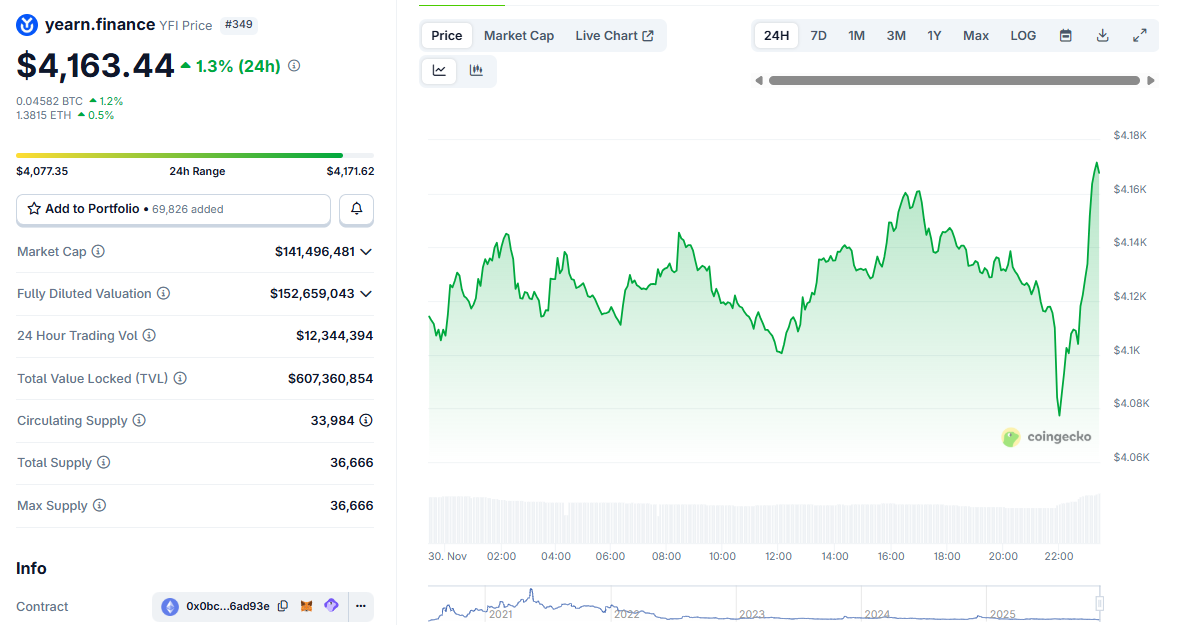
Ценовой график токена Yearn Finance (YFI). Источник: CoinGecko

Подобная ценовая реакция, по-видимому, связана с некорректной интерпретацией рынком событий в первые минуты после инцидента. Первоначальные сообщения об «эксплойте Yearn» спровоцировали открытие коротких позиций по YFI с высоким кредитным плечом, учитывая низкую ликвидность токена и его историческую склонность к агрессивным нисходящим движениям во время хакерских атак.

Когда стало очевидно, что атака была изолирована в рамках продукта yETH и не затронула основные хранилища Yearn, продавцы начали закрывать свои короткие позиции. Этот процесс спровоцировал кратковременное короткое сжатие, известное как short squeeze, и вызванный волатильностью ценовой скачок.

Циркулирующее предложение YFI составляет всего 33 984 токена, что делает его одним из наименее ликвидных ключевых токенов управления в секторе DeFi. Такая структура предложения значительно усиливает ценовые колебания, особенно в периоды неопределенности или быстрого изменения потока ордеров на ликвидацию. Данные по деривативам также показали повышенную волатильность ставок финансирования сразу после появления сообщений об эксплойте.

На данный момент убытки, судя по всему, локализованы в пулах yETH и Balancer, затронутых атакой. Расследование продолжается, и пока неясно, существуют ли какие-либо возможности для возврата похищенных активов.

Рынок, вероятно, будет ожидать официального отчета от Yearn с подробным анализом первопричины инцидента, принятых мер по устранению уязвимости и потенциальных решений на уровне управления протоколом.


Letture associate

Earning Six Figures and Still Struggling to Rent in San Francisco

A couple in San Francisco with a combined tech income over $360,000 struggled for months to find a one-bedroom apartment under $5,000 per month. Their story highlights how the AI wealth boom, driven by upcoming IPOs from companies like OpenAI and Anthropic, is dramatically escalating the city's cost of living. Even six-figure salaries are becoming insufficient for a comfortable lifestyle. The article details the financial reality for tech workers earning around $180,000 annually. After taxes, retirement contributions, and healthcare, take-home pay is roughly $7,000 per month. With average rents exceeding $3,800 and one-bedrooms often costing $4,500-$5,200, discretionary income shrinks to $1,500-$2,500. This contrasts sharply with reported median total compensations of $640,000 at OpenAI and $420,000 at Anthropic. The AI gold rush is identified as the primary driver. The scale of potential wealth from these IPOs, far surpassing previous tech booms, is flooding the housing market. Data shows San Francisco's average rent is now the highest in the U.S., with vacancy rates in desirable neighborhoods plummeting to around 3%. The overall cost of living is 65.6% above the national average. The piece features multiple professionals, including a 25-year-old with a $250,000 salary, facing housing instability, fierce competition for rentals, and a persistent, low-grade financial anxiety despite high earnings. It concludes that the rapid concentration of AI wealth is redefining what constitutes a "high salary" in San Francisco, pushing out mid-tier tech talent and creating a stark divide between those in the AI sector and everyone else.

marsbit1 h fa

Earning Six Figures and Still Struggling to Rent in San Francisco

marsbit1 h fa

Rate Hikes to Save STRC, Selling Bitcoin to Preserve Credit: Strategy Picks Its Two Most Expensive Paths

Over the past six weeks, Strategy has faced a significant crisis of confidence, with its core securities MSTR and STRC experiencing sharp price declines. The situation escalated as the company utilized dollar reserves intended for dividends and interest payments to repurchase debt, and then sold a small amount of Bitcoin for the first time since 2022—an action that contradicted its "never sell" narrative and signaled potential liquidity strain. In response, Strategy introduced a Digital Credit capital framework. This formalized a series of measures to manage the pressure down its capital structure: ordinary shareholders have already borne costs through equity dilution from an $11.5 billion ATM offering; new rules enforce a hard dollar reserve covering at least 12 months of expected dividend and interest payments; the STRC dividend rate was increased from 11.5% to 12%; and, most notably, Bitcoin was officially integrated into the capital toolkit, with board authorization to sell up to $1.25 billion worth if needed to support obligations and repurchase programs. The market reacted with a mix of relief and skepticism. While the announcement triggered a sharp single-day rally in both MSTR and STRC, the preferred shares still trade at a significant discount. Supporters view the framework as pragmatic crisis management that provides a price floor and clearer rules. Critics argue that institutionalizing Bitcoin sales undermines the core investment thesis and, with Bitcoin's price below the company's average cost basis, amounts to selling assets at a loss to maintain its financial structure. The broader context shows institutional Bitcoin buying drying up, highlighting that Strategy's challenges and new framework are now a key indicator for overall market risk sentiment. Ultimately, the framework buys time, but STRC's return to par value depends on market belief in the company's ability to cover dividends without further dilution or substantial Bitcoin sales—a task that would be easier if Bitcoin's price recovers.

链捕手1 h fa

Rate Hikes to Save STRC, Selling Bitcoin to Preserve Credit: Strategy Picks Its Two Most Expensive Paths

链捕手1 h fa

Trading

Spot
活动图片