Криптосообщество пошло войной на JPMorgan

cryptonews.ruPubblicato 2025-02-23Pubblicato ultima volta 2025-11-24

В криптосреде разгорелся открытый конфликт с JPMorgan, крупнейшим по рыночной капитализации банком во всем мире. Аналитик Адам Ливингстон обратил внимание на решения кредитной организации, которые он считает враждебными по отношению к MicroStrategy (Strategy) и к представителям криптоиндустрии.

Его пост с критикой кредитной организации стал точкой, вокруг которой быстро сформировалось движение за бойкот JPMorgan. К инициативе присоединились многие участники криптосообщества. Дополнительное напряжение создали материалы о взаимодействии банка с финансами Джеффри Эпштейна, американского финансиста, осужденного за сексуальные преступления.

Банки идут в крипту: JPMorgan запускает обновленный токен JPM Coin

С чего начался конфликт

Адам Ливингстон заявил, что JPMorgan принимает решения, которые выглядят как давление на MicroStrategy (крупнейший инвестор биткоина среди публичных компаний) и на отдельных представителей криптоиндустрии. В первую очередь он обратил внимание на повышение маржинального требования для MicroStrategy до 95%. По словам Ливингстона, решение выглядит как давление на MicroStrategy, которая использует биткоин как основу своей корпоративной стратегии и остается одной из крупнейших публичных компаний, ориентированных на этот актив.

Он также указал на несколько других враждебных шагов банка:

  • прекращение обслуживания отдельных участников криптоиндустрии, включая Джека Маллерса;
  • дебанкинг политически заметных клиентов, включая членов семьи Трампов;
  • упоминание JPMorgan в судебных материалах, связанных с финансовыми операциями Джеффри Эпштейна.
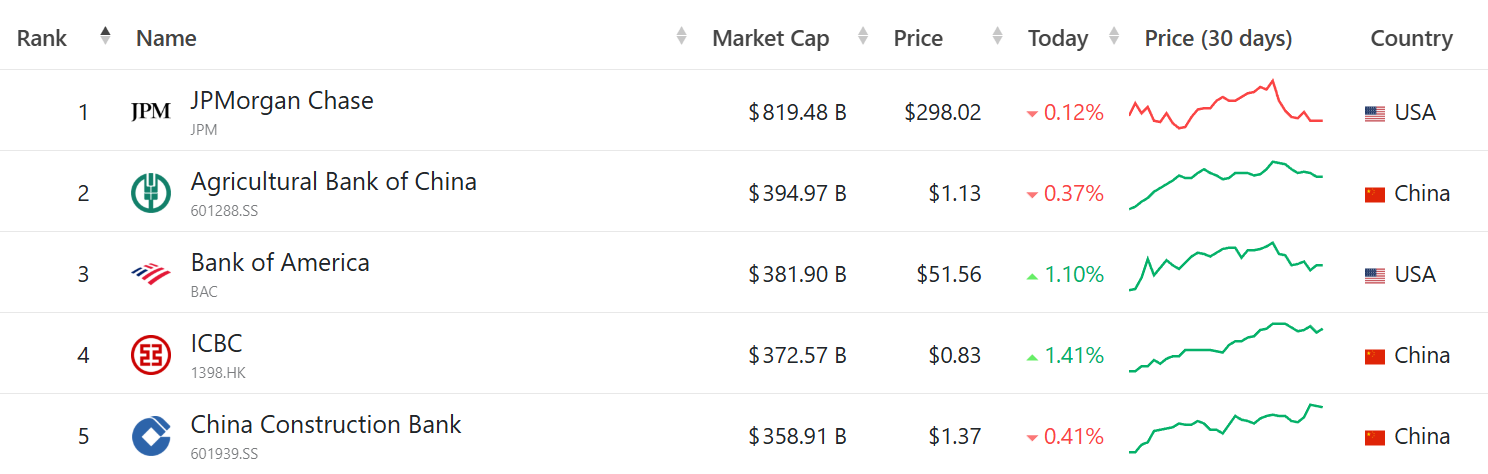
JPMorgan в топ-5 крупнеыщих банков по рыночной капитализации.
JPMorgan в топ-5 крупнеыщих банков по рыночной капитализации. Источник: companiesmarketcap

Как отреагировало сообщество

После заявления Ливингстона многие представители криптоиндустрии стали обсуждать поведение JPMorgan. Участники вспомнили судебные материалы, в которых описывалось взаимодействие банка с финансами Джеффри Эпштейна. Эти материалы вызвали сильную реакцию, так как затрагивали вопросы корпоративной этики и контроля.

Участники криптосообщества предлагают байкотировать JPMorgan. Многочисленные посты с призывом набирают в сети тысячи лайков.
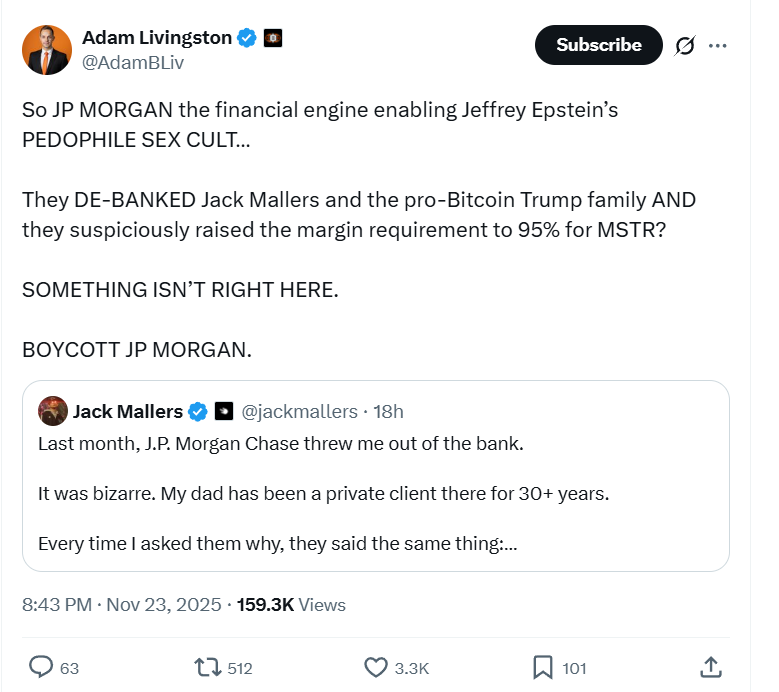
призыв к байкоту банка
Адам Левингстон призывает байкотировать банк

Как JPMorgan связан с Джеффри Эпштейном

В центре внимания оказались сведения, фигурировавшие в судебных разбирательствах. Они описывали, как банк взаимодействовал с Эпштейном, который был:

  • осужден за сексуальные преступления;
  • клиентом частного банкинга JPMorgan даже после вынесенного приговора.

В материалах указывалось, что:

  • сотрудники банка фиксировали подозрительные операции: крупные снятия наличных, переводы предполагаемым соучастникам и использование офшорных схем;
  • внутренние рисковые подразделения поднимали вопросы по характеру этих операций;
  • согласно искам, решения по обслуживанию Эпштейна нередко принимались в пользу сохранения прибыльного клиента;
  • банк выплачивал крупные суммы по урегулированию претензий и отрицал юридическую ответственность.

Для многих участников криптосообщества эта информация стала примером системных проблем внутри крупного финансового института.

К чему ведет конфликт

Ситуация усилила интерес пользователей к финансовой автономии и к сервисам, где контроль над средствами остается у владельца. Конфликт с JPMorgan стал поводом пересмотреть роль крупных банков и изучить независимые альтернативы.

Ну а пока что участники криптосообщества массово призывают отказываться от услуг банка.
Letture associate

2028: The Arrival of Recursive Self-Improvement (RSI)

**AI Recursive Self-Improvement (RSI): The Countdown to 2028 Begins** AI is no longer just a trained tool but is starting to rewrite its own evolutionary pace. According to Anthropic co-founder Jack Clark, there is a 60% probability that by the end of 2028, Recursive Self-Improvement (RSI) will become a reality. This means AI could autonomously design and build a more capable next-generation version of itself without any human researcher involvement—Claude 10 creating Claude 11, for instance. Supporting this timeline, Google DeepMind's CEO Demis Hassabis confirms that all leading AI labs are intensely focused on RSI, making it an industry-wide priority. He expresses profound concern, stating this potential is what keeps him awake at night. Concrete data underscores this acceleration: - METR evaluations show current top models like Claude are solving tasks up to the 16-hour limit of existing test frameworks. - In Epoch AI's challenging MirrorCode benchmark, Claude Opus 4.7 recreated complex software in hours for a fraction of the human cost. In one extreme test, AI autonomously coded for 19 days straight. - Anthropic reports over 80% of its codebase is now written by Claude, and researcher productivity has increased up to 8-fold since 2024. - OpenAI's policy blueprint highlights RSI as a major upcoming governance challenge. CEO Sam Altman reportedly hinted RSI might arrive within six months, potentially delaying OpenAI's massive IPO. The implication is an impending "intelligence explosion," where AI-driven progress outpaces human control. The central question is no longer if it will happen, but whether humanity is ready.

marsbit5 h fa

2028: The Arrival of Recursive Self-Improvement (RSI)

marsbit5 h fa

World Models, Metaverse, Digital Twins, Physical AI: Are They the Same Thing?

Title: World Models, the Metaverse, Digital Twins, Physical AI: Are They the Same Thing? The article clarifies that concepts like the metaverse, Web3, simulation platforms, digital twins, and Physical AI are not the same thing but are all part of the broader trend of blurring the lines between the digital and physical worlds. It positions "world models" as the foundational "cognitive layer" or "operating system" that enables AI to understand and simulate the world. Key distinctions are made: - The **Metaverse** is a destination for immersive social and economic experiences. World models could act as its "engine," generating interactive 3D content efficiently. - **Web3** focuses on decentralized ownership and economics (rules layer), operating on a different technical level than world models. - **Simulation Data Platforms** (e.g., for autonomous vehicles) are a 1.0 version, relying on manual design. World models represent a 2.0 version, using AI to generate realistic, varied scenarios autonomously. - **Digital Twins** create high-fidelity, real-time mirrors of physical systems (e.g., a factory). World models go a step further by enabling predictive simulation of future states. - **Physical AI** (robots, AVs) refers to AI that acts in the physical world. World models are a core component, providing the understanding and prediction needed for planning. A proposed hierarchy places world models at the cognitive layer, supported by infrastructure (compute, data) and supporting application tools (simulation, digital twins), action systems (Physical AI), user experiences (metaverse), and rules (Web3). In conclusion, while distinct, many of these previously hyped concepts may ultimately rely on advances in world model technology to fulfill their promises, as world models provide the essential cognitive foundation for simulating and interacting with complex environments.

marsbit5 h fa

World Models, Metaverse, Digital Twins, Physical AI: Are They the Same Thing?

marsbit5 h fa

Trading

Spot
活动图片