Tether потратила $1 млрд на покупку биткоина во время падения — неподтвержденные данные

cryptonews.ruPubblicato 2025-11-16Pubblicato ultima volta 2025-11-22

В криптосообществе разлетелись слухи о том, что эмитент USDT компания Tether потратила $1 млрд из собственного резерва на покупку биткоина во время его падения ниже отметки $86 000.

Что произошло на самом деле

Источником спекуляций стал пост пользователя Crypto Chatter в соцсети X со скриншотом из Arkham Intelligence. На изображении зафиксирован перевод $1 млрд USDT из казначейства Tether на депозитный адрес биржи Bitfinex. Операция действительно подтверждена блокчейн-данными — такие крупные переводы происходят регулярно для различных внутренних нужд компании.
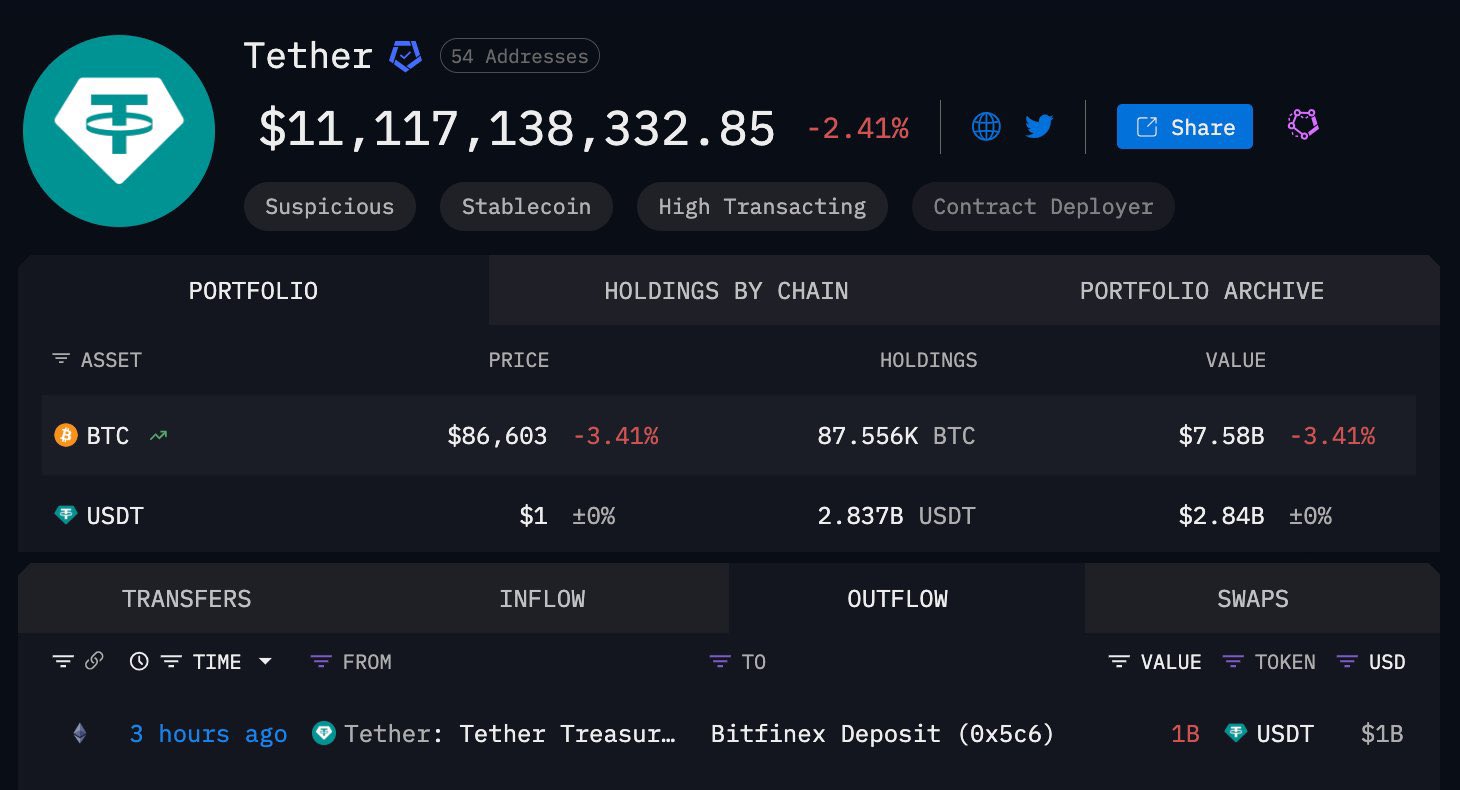
Перевод Tether $1 млрд USDT на биржу Bitfinex. Источник: Crypto Chatter

Перемещение токенов между адресами Tether и связанной с ней биржей Bitfinex — стандартная практика. Средства используются для пополнения ликвидности, подготовки к операциям выпуска или погашения стейблкоинов, а также других административных процедур. Однако прямых доказательств того, что эти токены сразу конвертировали в биткоин, не существует.

Почему аналитики сомневаются

Криптоаналитик @ai_9684xtpa прямо назвал подобную интерпретацию ошибочной. Перевод стейблкоинов на биржу не означает автоматическую покупку биткоина. Для подтверждения таких крупных приобретений необходимо увидеть соответствующий вывод BTC на резервные адреса компании — подобных движений не зафиксировано.

Более того, стратегия покупок биткоина у Tether четко регламентирована. С мая 2023 года компания систематически приобретает криптовалюту исключительно за счет 15% от реализованной квартальной прибыли, а не из резервов USDT. Эти резервы представляют собой обязательства перед держателями стейблкоина и не могут использоваться для спекулятивных инвестиций.

Молчание официальных источников

Ни компания Tether, ни ее генеральный директор Паоло Ардоино (Paolo Ardoino) не выпускали заявлений о покупке биткоина на $1 млрд. В их официальных аккаунтах и пресс-релизах подобная информация отсутствует. Последние крупные приобретения BTC компанией происходили в конце кварталов и сопровождались публичными подтверждениями — например, покупка 8888 биткоинов в сентябре 2025 года за счет прибыли.

Посты с хештегом #TetherBuyTheDip набрали сотни тысяч просмотров в социальных сетях, но в основном это репосты одного и того же скриншота без дополнительных ончейн-подтверждений. Рынок часто реагирует на подобные новости эмоционально, что может привести к неоправданным колебаниям цены.

Следующий квартальный отчет Tether ожидается в январе 2026 года — он может внести ясность в ситуацию с резервами и инвестиционной деятельностью компании.

Letture associate

Refunds! Claude 4.8 Sees Overnight Major 'Dumb-Down', GPT-5.6's Computational Power Reportedly 'Halved'

The AI community is currently alarmed by widespread reports of significant performance degradation in two leading models. This article details a "mass self-testing frenzy" triggered by a mysterious prompt designed to detect a hidden "Juice" value, representing a model's reasoning compute budget. On OpenAI's side, users suspect a covert, limited test of a "GPT-5.6-sol" model is underway. When using a specific XML prompt on the Codex platform, a normal "gpt-5.5 xhigh" model reportedly returns a Juice value of 768. However, some users routed to the suspected GPT-5.6 test receive a drastically reduced value of 128—a six-fold decrease. This has sparked debate on whether it signifies a major efficiency leap or a "watered-down, low-cost version" achieved by slashing reasoning depth to save computational expenses. Simultaneously, Anthropic's Claude models, particularly the flagship Opus 4.8 Max, are facing intense user backlash for a perceived "physical brain cut." Users on platforms like Reddit report a dramatic decline in the model's once-impressive reasoning, with complaints of it becoming "absurdly" weakened, performing worse than older, lighter models like Haiku. Specific criticisms include: losing long-context memory, refusing to think deeply even in high-reasoning modes, providing instant incorrect answers, and engaging in unhelpful, argumentative, or "gaslighting" behavior where it contradicts users unnecessarily. The article speculates these "stealth downgrades" might be a calculated corporate strategy. Companies could initially release models with temporarily boosted compute to create an illusion of a major breakthrough, then silently scale back parameters later to manage unsustainable inference costs. A proposed underlying cause is a tightened funding environment, potentially exacerbated by SpaceX's massive IPO soaking up market liquidity, which could delay AI company IPOs and force cost-cutting measures like model "nerfing." The core issue highlighted is the asymmetry of information: subscribers pay for a service that can be silently and fundamentally altered without notification or explanation. The viral "Juice test" resonates because it represents users' desire for transparency about what they are actually paying for.

marsbit20 min fa

Refunds! Claude 4.8 Sees Overnight Major 'Dumb-Down', GPT-5.6's Computational Power Reportedly 'Halved'

marsbit20 min fa

Earning Six Figures and Still Struggling to Rent in San Francisco

A couple in San Francisco with a combined tech income over $360,000 struggled for months to find a one-bedroom apartment under $5,000 per month. Their story highlights how the AI wealth boom, driven by upcoming IPOs from companies like OpenAI and Anthropic, is dramatically escalating the city's cost of living. Even six-figure salaries are becoming insufficient for a comfortable lifestyle. The article details the financial reality for tech workers earning around $180,000 annually. After taxes, retirement contributions, and healthcare, take-home pay is roughly $7,000 per month. With average rents exceeding $3,800 and one-bedrooms often costing $4,500-$5,200, discretionary income shrinks to $1,500-$2,500. This contrasts sharply with reported median total compensations of $640,000 at OpenAI and $420,000 at Anthropic. The AI gold rush is identified as the primary driver. The scale of potential wealth from these IPOs, far surpassing previous tech booms, is flooding the housing market. Data shows San Francisco's average rent is now the highest in the U.S., with vacancy rates in desirable neighborhoods plummeting to around 3%. The overall cost of living is 65.6% above the national average. The piece features multiple professionals, including a 25-year-old with a $250,000 salary, facing housing instability, fierce competition for rentals, and a persistent, low-grade financial anxiety despite high earnings. It concludes that the rapid concentration of AI wealth is redefining what constitutes a "high salary" in San Francisco, pushing out mid-tier tech talent and creating a stark divide between those in the AI sector and everyone else.

marsbit2 h fa

Earning Six Figures and Still Struggling to Rent in San Francisco

marsbit2 h fa

Trading

Spot
活动图片