Сохранится ли четырехлетний цикл биткоина?

cryptonews.ruPubblicato 2025-11-23Pubblicato ultima volta 2025-11-23

Дискуссия о жизнеспособности четырехлетнего цикла биткоина разделила криптовалютных аналитиков на два лагеря, и пока что ни одна сторона не готова сдаваться.

Мы находимся на середине ноября — месяца, который традиционно считается сильнейшим для биткоина в году. Но реальность оказалась суровой: цена криптовалюты сегодня ниже, чем была 1 января. На момент написания материала биткоин торговался на отметке $91 211, потеряв 15% за десять дней. Не самые радужные новости для Тома Ли (Tom Lee) и Артура Хейса (Arthur Hayes), которые пророчили $250 000 к концу года.

Когда ETF меняют правила игры

Если четырехлетний цикл биткоина действительно работает, то октябрьский максимум в $125 100 технически должен стать вершиной цикла. Это примерно через 18 месяцев после халвинга в апреле 2024 года — как раз по традиционной схеме: 18 месяцев бычьего рынка после халвинга, затем резкая коррекция и длительный спад до следующего халвинга.

Михаэль ван де Поппе (Michaël van de Poppe), основатель MN Trading Capital, склоняется к тому, что биткоин достигнет нового исторического максимума в 2026 году: «За последние 18 месяцев через биткоин-ETF было куплено 60 000 биткоинов — это значительный постоянный спрос со стороны институций». Однако он предупреждает, что объявлять цикл мертвым — «близорукое решение».
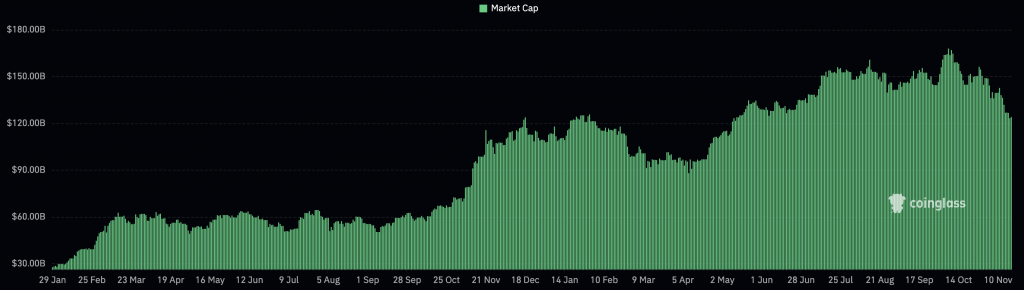
Рыночная капитализация биткоин-ETF. Источник: Coinglass

Ван де Поппе признает: «Этот цикл действительно ведет себя по-другому», но подчеркивает, что октябрьский максимум все еще может оказаться вершиной цикла. «Мы находимся на перепутье рыночных изменений, созревания такого актива, как биткоин, и, следовательно, другой рыночной динамики».

Главный инвестиционный директор Bitwise Мэтт Хуган (Matt Hougan) убежден: отсутствие роста криптовалютного рынка в конце 2025 года увеличивает потенциал для подъема в грядущем 2026. «Фундаментальные основы рынка действительно крепки, — заявил Хоуган. — Институциональные инвестиции, регуляторный прогресс, стейблкоины, токенизация — все эти силы слишком мощные, чтобы их можно было сдержать. Поэтому 2026 год станет успешным».

Макроэкономика против оптимизма

Основатель BitMEX Артур Хейес отметает идею о том, что биткоин придерживается традиционного цикла. Он заметно притих с прогнозом о $250 000 к концу года в своем последнем посте в Substack и утверждает, что биткоин поднимется к новым высотам только тогда, когда рынки достаточно просядут, чтобы заставить центральные банки вернуться к агрессивному денежному стимулированию.

Ведущий аналитик Swyftx Пав Хундал (Pav Hundal) также пристально следит за макроэкономическими данными, говоря, что пока рано объявлять вершину этого цикла. «Любое снижение инфляции или беспокойство по поводу показателей труда просто вернет нас на путь снижения ставок».

Джером Пауэлл (Jerome Powell) своими недавними заявлениями внес неопределенность в рынок, и теперь вероятность декабрьского снижения ставки упала до 40%, согласно инструменту CME FedWatch. Хундал говорит, что рынок сейчас «блуждает вслепую» в ожидании более четких данных. «Проблема не только в биткоине. Красный свет горит для всех рисковых активов».

Защитники традиционного цикла

Но есть аналитики и руководители, которые месяцами твердили: четырехлетний цикл никуда не делся. И нынешний обвал как раз подтверждает их правоту.

Известный аналитик криптовалют Rekt Capital предупреждал еще в июле: в текущем росте остается «совсем немного времени и пространства для движения цены вверх». Недавно он добавил: понадобится много времени, чтобы понять — удлинился ли цикл биткоина или все-таки завершился.
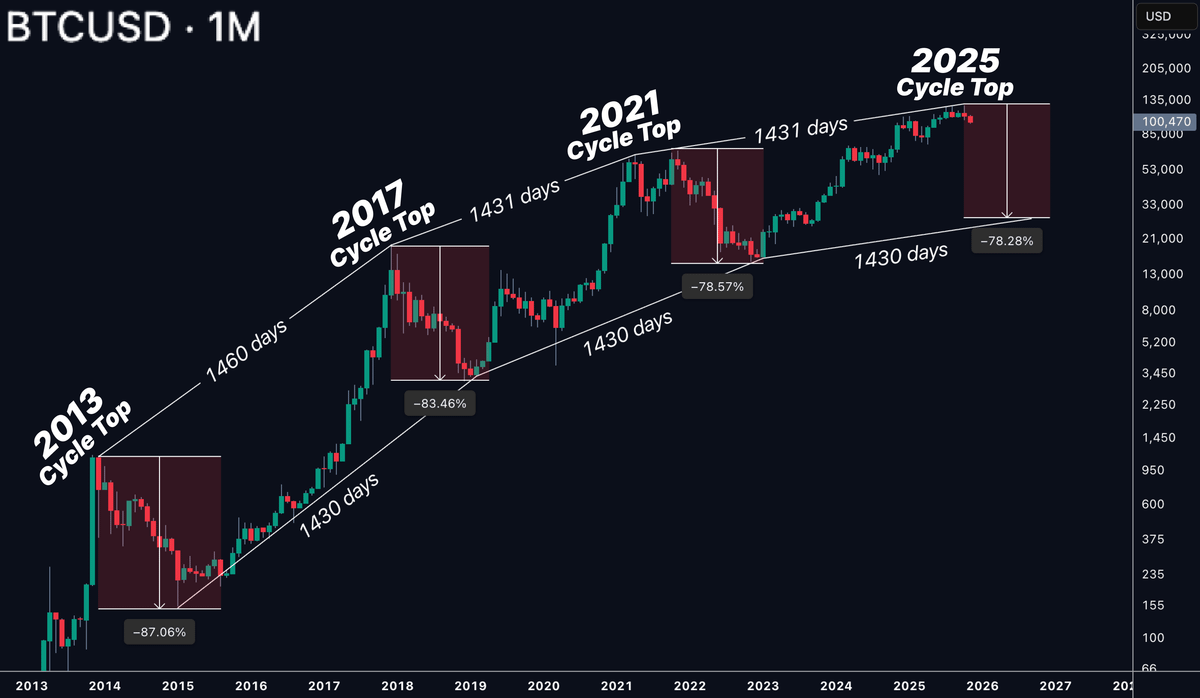
1-месячный график BTC/USD. Аналитика: Линтон Ворм (Linton Worm)

Глава Gemini в Азиатско-Тихоокеанском регионе Саад Ахмед (Saad Ahmed) верит: четырехлетние циклы никуда не денутся. «Скорее всего, мы продолжим наблюдать циклы в том или ином виде. Люди возбуждаются, переоценивают свои силы, затем происходит крах, и цена возвращается к равновесию».

Аналитик Colin Talks Crypto объявил: праздник цены биткоина закончился. «Если быстрого восстановления не случится в ближайшие день-два, мы входим в медвежий рынок или значительную коррекцию».

Четырехлетний цикл биткоина стал предметом ожесточенных споров именно тогда, когда рынку больше всего нужна определенность. Институциональные ETF действительно все поменяли, но пока неясно, положат ли они конец привычным закономерностям.


Letture associate

Playnance’s $GCOIN Lists on KoinBX Amid Rapid Growth in India

Playnance's native token, $GCOIN, has been listed on the cryptocurrency exchange KoinBX as of June 18. This move aims to enhance accessibility for its rapidly growing community, particularly in India, where the blockchain-powered Web3 iGaming ecosystem has gained significant traction. Over 130 partners in Playnance's "Be the Boss" program have built communities engaging thousands of active players in the region. The "Be the Boss" model allows participants to create and manage their own gaming communities, earning rewards tied to community activity. CEO Pini Peter noted India's high engagement, with community leaders successfully building player networks. One partner, Dr. Nicolas, reported earning over $57,000 through the program in recent months, highlighting both the financial rewards and the opportunity to grow an engaged community. $GCOIN serves as the ecosystem's core utility token, incentivizing participation and aligning the interests of players and community leaders ("Bosses"). The listing on KoinBX is part of Playnance's strategy to expand globally, increasing the token's utility and accessibility by combining community ownership, gamified engagement, and blockchain-based incentives. Founded in 2020, Playnance is a Web3 iGaming infrastructure company focused on creating live, non-custodial, on-chain products to onboard mainstream users. It currently processes approximately one million transactions daily, aiming to simplify the user experience while maintaining full on-chain transparency.

TheNewsCrypto40 min fa

Playnance’s $GCOIN Lists on KoinBX Amid Rapid Growth in India

TheNewsCrypto40 min fa

STRC Hits Historic Low, Saylor's Perpetual Motion Machine Grinds to a Halt

STRC, the perpetual preferred stock issued by MicroStrategy to fund its Bitcoin purchases, hit a historic low of $85.32, a 17% discount to its $100 par value. Designed as a "digital credit engine" to trade stably near par and enable continuous share issuance for buying Bitcoin, its plunge signals a breakdown in this model. Three key factors drove the decline: 1. Bitcoin's price fell over 50% from its peak, trading around $63,000 amid hawkish Fed signals. 2. MicroStrategy's cash reserves were depleted after a $1.5 billion convertible note repayment, slashing the dividend coverage for STRC's 11.5% yield to ~7 months. The company then sold 32 BTC to cover dividends—Michael Saylor's first Bitcoin sale since 2022—damaging the "never sell" narrative. 3. A competing Bitcoin-backed preferred stock, Strive's SATA, offers a higher yield (~13%) and daily dividends, drawing investors away from STRC. The drop triggers a negative cycle: STRC below par halts ATM share issuances, cutting off a key funding source for Bitcoin buys and potentially forcing more BTC sales for dividends, further eroding confidence. While Saylor argues the model is mathematically sound—needing only 2.3% annual Bitcoin growth to sustain itself—the market is testing the resilience of the leveraged Bitcoin treasury strategy in a bear market. The STRC price now reflects rising skepticism about this financial machinery's durability during downturns.

marsbit1 h fa

STRC Hits Historic Low, Saylor's Perpetual Motion Machine Grinds to a Halt

marsbit1 h fa

A Guide to Grayscale’s ‘Bottom Fishing’: Using Cash Flow to Assess Cryptocurrency Value

**Title:** Grayscale's Guide to Bottom-Fishing: Valuing Cryptoassets Using Cash Flows **Summary:** This report by Grayscale Research presents a fundamental valuation framework for cryptocurrency assets, moving beyond pure speculation to analyze those with underlying cash flows. It distinguishes between "commodity-like" assets (e.g., Bitcoin) and "cash-flow" assets, primarily within DeFi. Using the leading decentralized lending protocol Aave as a case study, the analysis applies traditional financial methodologies like Discounted Cash Flow (DCF) and Price-to-Earnings (P/E) multiples. Key findings indicate that AAVE tokens are currently undervalued. Despite recent challenges, the protocol's strong revenue growth, ~50% net profit margin, and diversified treasury support a fundamental valuation range of $80-$100 per token (compared to a ~$75 market price at the time of writing). In a base-case scenario driven by stablecoin adoption and regulatory clarity, the fair value could rise to around $175 within a year. The report emphasizes that protocol success does not automatically translate to token value. It critically examines the "value capture" mechanisms—such as buybacks, burns, and staking rewards—that channel protocol profits to token holders. Furthermore, it addresses the legal and governance complexities of Decentralized Autonomous Organizations (DAOs), noting their difference from traditional corporate equity but highlighting how robust, transparent governance can align protocol economics with holder interests. The conclusion is that the crypto market is maturing, with capital increasingly flowing towards projects with demonstrable fundamentals, real adoption, and disciplined capital allocation, creating opportunities for value-based investors.

marsbit2 h fa

A Guide to Grayscale’s ‘Bottom Fishing’: Using Cash Flow to Assess Cryptocurrency Value

marsbit2 h fa

After semiconductors lead the gains, are funds buying into AI orders or a macroeconomic rebound?

After US-Iran talks led to a temporary ceasefire and framework for reopening the strategic Strait of Hormuz, U.S. stocks rose on June 18, with the Nasdaq gaining 1.9%. The semiconductor and AI hardware sectors outperformed. This rally stemmed primarily from reduced geopolitical risk, which lowered oil prices and inflation expectations, easing discount rate pressure on high-valuation growth stocks like tech. The key question is not whether tech rebounded, but the nature of the rebound. The market appears to be selectively repricing AI infrastructure plays rather than broadly chasing AI narratives. Gains were concentrated in chips, optical interconnects, memory, and domestic manufacturing—segments tied to tangible data center build-outs and capital expenditure. Intel's ~10% surge, fueled by a Trump statement about potential Apple collaboration, exemplifies this mixed dynamic. It reflects policy catalysts and domestic manufacturing sentiment more than confirmed fundamentals. Meanwhile, strong earnings from companies like Astera Labs (revenue up 93% YoY) provided concrete evidence of AI-driven demand in hardware. In essence, the rally represents a risk-premium recalibration. Lower Middle East tensions opened a valuation repair window, and capital flowed first into AI infrastructure segments with visible near-term revenue streams. The sustainability of this move hinges on upcoming Q2 earnings, specifically continued strength in cloud provider capex, AI server orders, and hardware company guidance. Policy hopes alone are insufficient; the cycle needs validation from orders and financials.

marsbit2 h fa

After semiconductors lead the gains, are funds buying into AI orders or a macroeconomic rebound?

marsbit2 h fa

Trading

Spot
Futures
活动图片