UBS Launches First Tokenized Fund via Chainlink DTA

TheCryptoTimesPubblicato 2025-11-10Pubblicato ultima volta 2025-11-10

UBS, one of the world’s largest private banks managing over $6 trillion in assets, has completed the world’s first in-production tokenized fund transaction using Chainlink’s Digital Transfer Agent (DTA) standard. The transaction involved UBS’s own tokenized money market fund, uMINT, executed in collaboration with DigiFT, a regulated on-chain fund distributor.

The transaction involved UBS’s own tokenized money market fund, uMINT, executed in collaboration with DigiFT, a regulated on-chain fund distributor. 

Together, they processed live fund subscription and redemption orders entirely on blockchain, demonstrating that complex fund operations can now be automated, synchronized, and settled across digital and traditional financial systems, according to the official report.

How the technology works: Inside Chainlink’s DTA

At the core of the operation is Chainlink’s Digital Transfer Agent (DTA), a technical standard built to enable fully automated fund management on-chain. 

The DTA connects off-chain systems used by financial institutions with blockchain infrastructure, using components such as:

  • Chainlink Runtime Environment (CRE): Allows banks like UBS to translate standard financial messages (e.g., SWIFT ISO 20022) into smart contract instructions without changing their legacy systems.
  • Cross-Chain Interoperability Protocol (CCIP): Ensures tokens and fund operations work across public and private blockchains.
  • Automated Compliance Engine (ACE): Enforces rules like KYC and AML within smart contracts.
  • NAVLink: Feeds real-time pricing data for accurate fund valuation and redemption.
Image 18Image 18
DTA Flow. Source: Chainlink

Together, these components create a unified framework that enables tokenized funds to function more efficiently across systems, a goal traditional institutions have pursued for years with limited success.

Why UBS and Chainlink fit

The partnership between UBS and Chainlink was not developed overnight. It builds on the Monetary Authority of Singapore’s Project Guardian, where both companies tested cross-border tokenization frameworks earlier this year. 

Chainlink’s infrastructure, long used to secure billions in on-chain data, offers a plug-and-play bridge between smart contracts and the traditional fund industry: an ecosystem worth over $100 trillion globally.

For UBS, the move signals a continuation of its broader UBS Tokenize initiative, which explores how regulated institutions can bring investment products into blockchain environments without compromising compliance or investor protection. As Mike Dargan, UBS’s Group Chief Operations and Technology Officer, put it, the deal illustrates “how smart contract-based technologies enhance fund operations and the investor experience.”

Sergey Nazarov, co-founder of Chainlink, called the live deployment “a new benchmark for institutional finance on-chain.” He added that it demonstrates “secure, compliant, and scalable end-to-end workflows” capable of linking traditional fund structures to digital infrastructure.

From pilot to production

This milestone follows the September pilot run, in which UBS used Chainlink’s CRE and the SWIFT network to automate fund orders using ISO 20022 messaging. That pilot showed that global financial institutions could use existing infrastructure to initiate tokenized fund transactions, minting and burning tokens without manually interacting with blockchain code.

By moving from pilot to production, UBS has shown that tokenized funds can function in real market conditions, not just in sandbox trials. DigiFT, which handled the live fund distribution, confirmed that “operations can be executed and reconciled on-chain with real-time visibility,” marking progress toward faster, audit-ready transactions. 

The collaboration also builds on their Hong Kong initiative, where UBS, Chainlink, and DigiFT are developing a regulated tokenized fund system under the Cyberport Blockchain & Digital Asset Pilot Scheme, aimed at automating subscriptions, settlements, and fund lifecycle management.

Why this matters for tokenization

The success of this transaction goes beyond one institution. It signals that tokenization, once a buzzword, is entering its operational phase. By combining Chainlink’s interoperability infrastructure with UBS’s regulated frameworks, the industry is moving closer to scalable on-chain fund distribution that maintains compliance.

As global banks, asset managers, and regulators explore digital asset integration, this live demonstration shows that automation, interoperability, and transparency can coexist within a regulated environment.

What’s next

Coin Compass host Quinten Francois said in an X post, “There isn’t a single project in crypto with this level of real-world adoption.”

UBS’s move could accelerate broader institutional adoption of blockchain in asset management, particularly as tokenization frameworks mature across Europe and Asia. Future iterations of the DTA standard may extend beyond money market funds to equities, bonds, and structured products, effectively merging digital rails with traditional finance.

For now, the UBS–Chainlink collaboration is a signal to the market: tokenization is no longer experimental. The infrastructure for regulated, cross-chain fund management has arrived — and it’s being tested by the world’s largest financial players.

Also read: Tokenized U.S. Treasuries Surge Past $8.7 Billion


Mobile Only ImageMobile Only Image

Crypto di tendenza

Letture associate

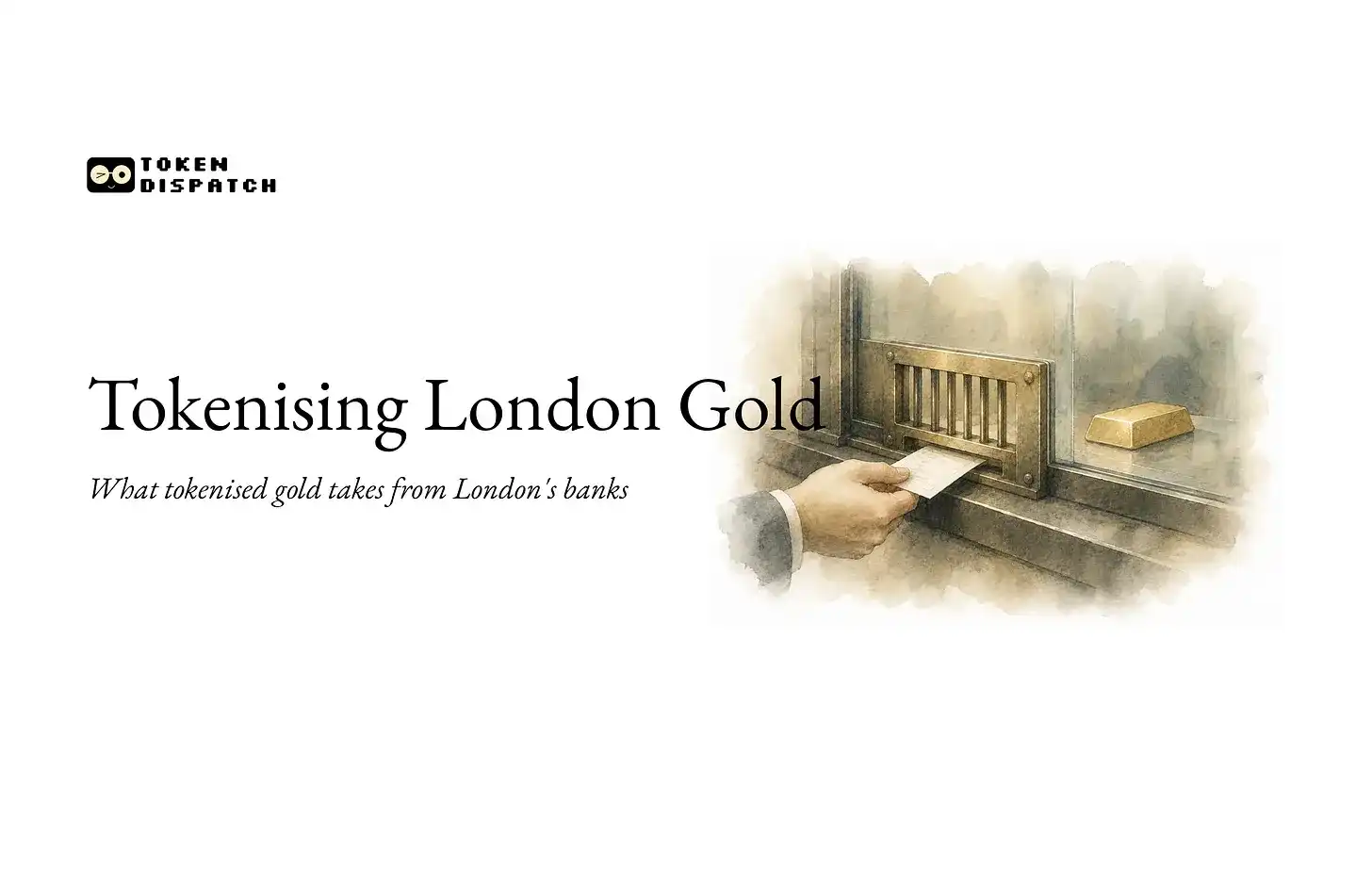
The Tokenization of Gold: A Financial Revolution Driven by Regulation

The Tokenization of Gold: A Regulation-Driven Financial Revolution In early 2025, anticipation of US tariffs triggered a rush to withdraw physical gold from the Bank of England, exposing the friction in London's $1.2 trillion gold market. While daily trading of $737 billion occurs via ownership certificates without moving bullion, demand for physical metal revealed a pricing split based on deliverability. This article explores why the UK's Financial Conduct Authority (FCA) is developing rules for tokenized gold, focusing regulation squarely on the ledger system. London's gold market, cleared by four major banks, performs four key functions: physical storage, quality verification, ownership registration, and credit provision. Tokenization excels at the third—offering cheap, precise ownership records—but fundamentally challenges the fourth by potentially rendering banks' credit intermediation obsolete. Currently, most gold is held in "unallocated" accounts, where investors are unsecured creditors of banks, trading speed for credit risk. Tokenized gold combines the instant transfer of unallocated accounts with the direct ownership claim of allocated bullion, eliminating bank risk. The FCA is prioritizing its use as collateral, where speed is critical, unlocking this vast pool of currently illiquid assets for margin calls. This shift is partly driven by post-2008 banking regulations like Basel III's Net Stable Funding Ratio, which penalized banks for holding unallocated gold. The push now comes from the清算 banks themselves, like HSBC, which have launched proprietary tokenization systems. The crucial regulatory decision will be whether these tokens are allowed to circulate outside their creators' closed ecosystems. True adoption will be visible in LBMA data: high overall trading volume paired with a decline in settlements through the traditional central ledger, as transactions move to instant blockchain transfers. Ultimately, tokenization doesn't replace the physical vaults, security, and assayers but could elevate their importance, shifting their revenue to standardized service fees. The revolution lies not in moving the gold, but in reinventing how its ownership is recorded and transferred.

marsbit3 min fa

The Tokenization of Gold: A Financial Revolution Driven by Regulation

marsbit3 min fa

Yield Leverage and Liquidity Leverage: The STONKBROKER Mechanism is Very Suitable for the RWA Scenario

The article argues that the STONKBROKER mechanism is highly suitable for Real-World Asset (RWA) tokenization scenarios due to its two key leverages: **Profit Leverage** and **Liquidity Leverage**. **Profit Leverage:** Traditional RWA models simply tie tokens to real-world asset yields. STONKBROKER's model is more engaging by allowing NFT holders to earn not only the underlying real-world cash flows but also additional yields generated from the on-chain system's own operations and transaction activity (like fees and slippage). This creates a dual income stream. **Liquidity Leverage:** Standard RWA asset bundles often suffer from poor liquidity. STONKBROKER's mechanism, which allows fixed-ratio swapping between NFTs and a platform's fungible token (and vice versa), solves this. It provides real-time market pricing and flexible exit options for each "RWA asset" NFT by unifying NFT liquidity with ERC-20 token liquidity via an AMM pool. This enhances capital efficiency and attracts more trading activity. The article further speculates on applying this model to broader RWAs (e.g., real estate, bonds). The core idea is to create a more dynamic, liquid, and profitable ecosystem where ordinary users can participate, combining real-world yields with the speculative and transactional energy of a crypto-native system. The author mentions being inspired by the launch of a project called @TheCardWall, which tokenizes high-grade physical trading cards.

marsbit24 min fa

Yield Leverage and Liquidity Leverage: The STONKBROKER Mechanism is Very Suitable for the RWA Scenario

marsbit24 min fa

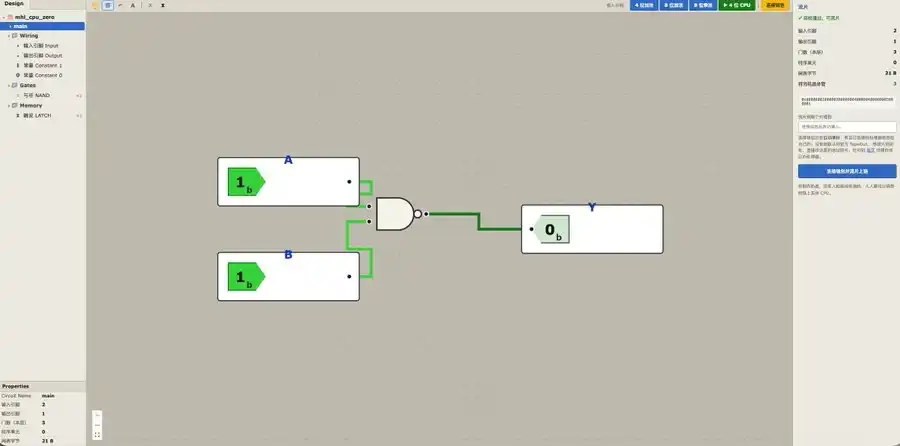
Deciphering TapeOut: A Child Built a CPU On-Chain

**Title: Understanding TapeOut: A Kid Built a CPU On-Chain** **Summary:** The article explores a remarkable experiment where a young developer named Blonskr has used blockchain technology to build a functional, on-chain CPU. Named "Behemoth," this CPU is based on the 1971 Intel 4004 processor specification. It runs on the BNB Chain, uses block production as its clock (running at a glacial 2.22 Hz), and is perhaps the slowest CPU in existence, yet it represents a novel and intriguing concept in the on-chain space. The core concept is the TapeOut protocol, named after the final "tape out" stage in semiconductor manufacturing. It treats the blockchain as a silicon wafer, with tokens representing fundamental logic components. The protocol's atomic unit is an ERC-1155 token representing a single NAND gate, the fundamental building block of digital logic. Users can visually design circuits on a "canvas," connecting these logic tokens. Once a design is finalized, the underlying tokens are burned, and an ERC-721 NFT representing the permanent, immutable circuit is minted. Blonskr used 2,300 such tokenized NAND gates to construct the Behemoth CPU. Key features of this and any TapeOut circuit include **permanent operation** (running as long as the chain exists), **free, permissionless evaluation** (anyone can query it without gas), and **safe composability** (circuits cannot call external contracts or modify state, making them inherently safe to use). This enables a new form of open, collaborative hardware design, where anyone can build upon and integrate components created by others. While highly niche, TapeOut reimagines the foundations of computation using blockchain's properties of permanence and openness. It pushes the boundaries of what can be built on-chain, potentially enabling future applications like custom mining circuits or decentralized, specialized processors. The experiment demonstrates an exciting combination of extreme technical vision and creative curiosity.

marsbit58 min fa

Deciphering TapeOut: A Child Built a CPU On-Chain

marsbit58 min fa

Novig Sues Wisconsin as Sports Prediction Market Dispute Heats Up

Novig, a sports event prediction market operator, has filed a lawsuit against Wisconsin's attorney general. The legal dispute centers on whether prediction markets fall under federal derivatives regulations or state gambling laws. The lawsuit, filed in a U.S. district court, seeks a declaratory judgment after Novig began offering event contracts to Wisconsin residents. This case is part of a broader conflict. In April, Wisconsin sued other prediction market platforms like Kalshi and Polymarket, alleging their sports-related contracts violate state gambling laws. Novig argues its contracts are "swaps" regulated exclusively by the federal Commodity Futures Trading Commission (CFTC), under the Commodity Exchange Act. Wisconsin contends they are sports betting. Federal courts have issued conflicting rulings on similar cases, creating legal uncertainty. The outcome is significant as prediction markets are a fast-growing sector, with trading volume reaching $9.5 billion on a single day in August. These markets are also increasingly intertwined with cryptocurrency infrastructure. Simultaneously, Novig is pursuing a nationwide legal strategy, having filed similar lawsuits in four other states. The company also recently secured a marketing partnership with the New York Mets, marking the first such deal with an MLB team. The Wisconsin case's resolution will influence whether prediction markets can operate as national financial products or remain constrained by individual state laws.

cryptonews.ru1 h fa

Novig Sues Wisconsin as Sports Prediction Market Dispute Heats Up

cryptonews.ru1 h fa

Держатели XRP могут торговать опционами на платформе Derive, используя FXRP в качестве залога

XRP holders can now trade options on the Derive platform using FXRP as collateral, as announced by Flare on August 12. This integration allows users to open positions from self-custody wallets while the underlying XRP backing the FXRP remains on the XRP Ledger. According to DeFi analyst Will Procheska, this provides XRP's dedicated holder base with a permissionless options market for generating yield or hedging. Derive's platform combines protocol-level settlements with an order book managed by Derive Trading Co., enabling users to retain asset control while professional market-makers provide liquidity. XRP options on Derive are cash-settled in USDC, so profits or obligations adjust the trader's USDC balance without transferring XRP or FXRP. The platform's portfolio margin system assesses overall account risk but may still trigger liquidations if margin levels fall below requirements. The launch expands Flare's XRPFi ecosystem. FXRP, introduced via the FAssets system in September 2025, creates an on-chain representation of XRP for use in smart contracts. It has since been integrated into spot trading and, more recently, permissionless lending markets on Morpho. This addition of options on Derive offers XRP holders hedging and premium-earning capabilities comparable to other major assets. While regulated XRP options debuted on CME Group in October 2025, Derive provides a decentralized alternative with USDC settlement and direct wallet access. The platform also supports perpetual futures, offering further trading strategies. Flare and Derive are exploring automated "strategy vaults" to simplify yield-generating options approaches for users.

cryptonews.ru1 h fa

Держатели XRP могут торговать опционами на платформе Derive, используя FXRP в качестве залога

cryptonews.ru1 h fa

Trading

Spot

Articoli Popolari

Come comprare LINK

Benvenuto in HTX.com! Abbiamo reso l'acquisto di ChainLink (LINK) semplice e conveniente. Segui la nostra guida passo passo per intraprendere il tuo viaggio nel mondo delle criptovalute.Step 1: Crea il tuo Account HTXUsa la tua email o numero di telefono per registrarti il tuo account gratuito su HTX. Vivi un'esperienza facile e sblocca tutte le funzionalità,Crea il mio accountStep 2: Vai in Acquista crypto e seleziona il tuo metodo di pagamentoCarta di credito/debito: utilizza la tua Visa o Mastercard per acquistare immediatamente ChainLinkLINK.Bilancio: Usa i fondi dal bilancio del tuo account HTX per fare trading senza problemi.Terze parti: abbiamo aggiunto metodi di pagamento molto utilizzati come Google Pay e Apple Pay per maggiore comodità.P2P: Fai trading direttamente con altri utenti HTX.Over-the-Counter (OTC): Offriamo servizi su misura e tassi di cambio competitivi per i trader.Step 3: Conserva ChainLink (LINK)Dopo aver acquistato ChainLink (LINK), conserva nel tuo account HTX. In alternativa, puoi inviare tramite trasferimento blockchain o scambiare per altre criptovalute.Step 4: Scambia ChainLink (LINK)Scambia facilmente ChainLink (LINK) nel mercato spot di HTX. Accedi al tuo account, seleziona la tua coppia di trading, esegui le tue operazioni e monitora in tempo reale. Offriamo un'esperienza user-friendly sia per chi ha appena iniziato che per i trader più esperti.

956 Totale visualizzazioniPubblicato il 2024.12.13Aggiornato il 2026.06.02

Come comprare LINK

Discussioni

Benvenuto nella Community HTX. Qui puoi rimanere informato sugli ultimi sviluppi della piattaforma e accedere ad approfondimenti esperti sul mercato. Le opinioni degli utenti sul prezzo di LINK LINK sono presentate come di seguito.

活动图片