Есть ли шансы на новый максимум биткоина в ноябре 2025

cryptonews.ruPubblicato 2025-04-29Pubblicato ultima volta 2025-10-31

Октябрь не оправдал ожиданий инвесторов. Несмотря на уверенный старт месяца, октябрь 2025 года в моменте стал худшим за последние годы

Тем не менее многие участники рынка сохраняют оптимизм и считают, что текущее снижение — это временная передышка перед новым ростом.

Как купить биткоин с карты: инструкция

Оптимисты: надежда на рост и новый максимум

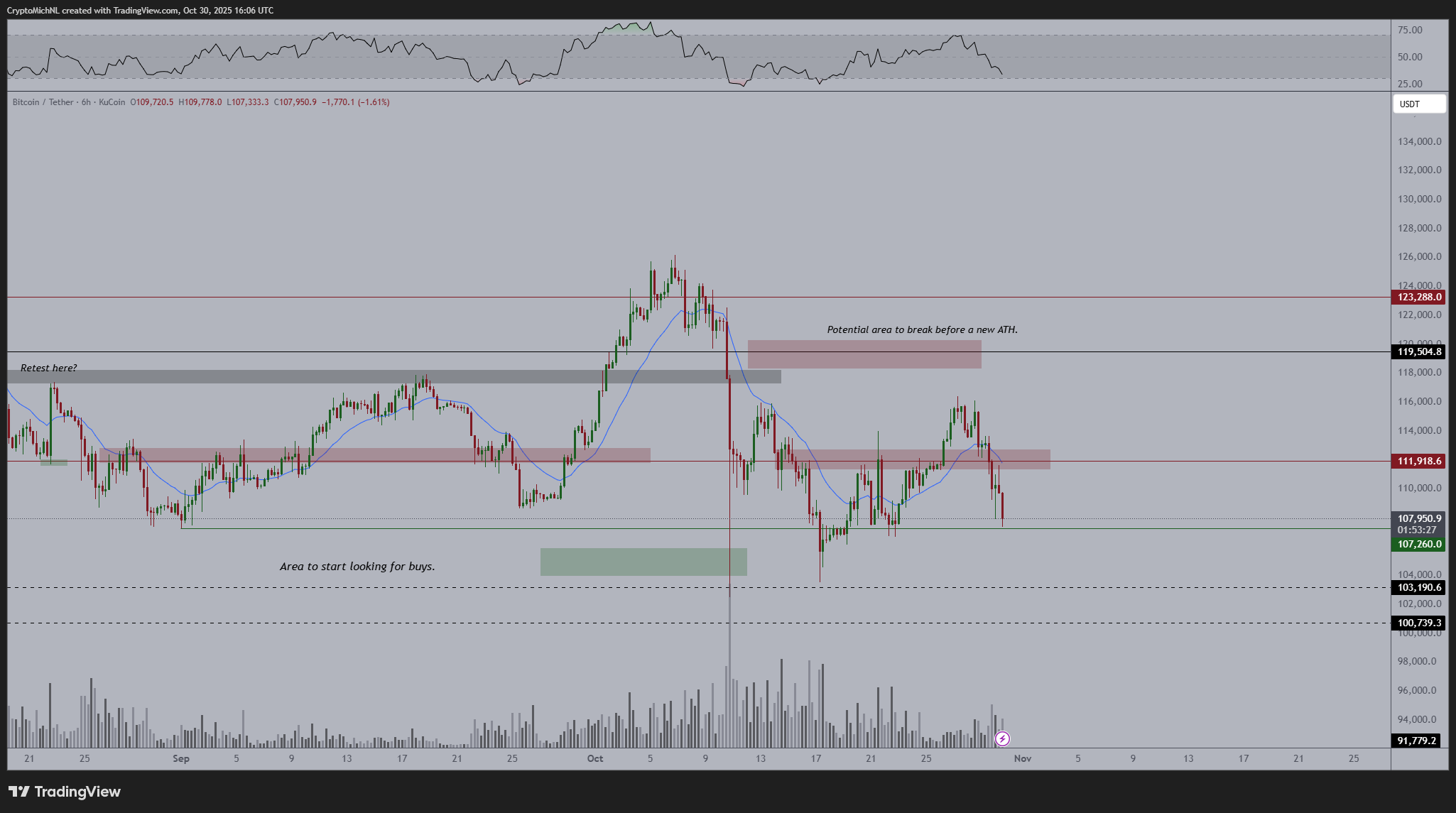
Аналитик Михаэль ван де Поппе отметил, что для продолжения восходящего движения биткоину необходимо закрепиться выше уровня $112 000. Он по-прежнему уверен, что в ноябре рынок сможет обновить исторический максимум. Однако эксперт предупреждает: если поддержка будет потеряна, курс рискует опуститься к $103 000 или даже ниже. По его мнению, текущее снижение стоит использовать для покупок.
анализ биткоина
Анализ графика биткоина от Михаэля ван де Поппе

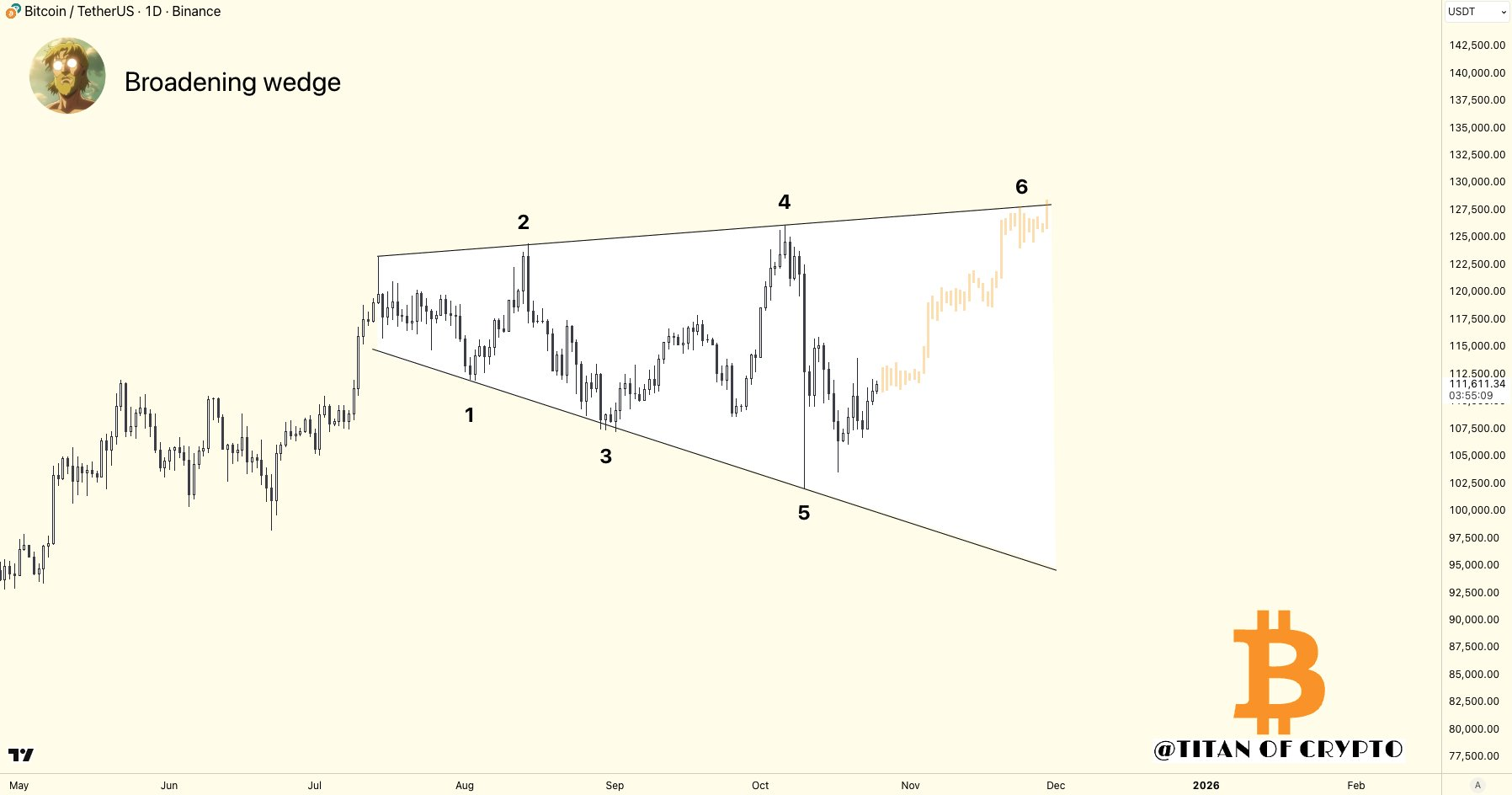
Похожего мнения придерживается аналитик Titan of Crypto. Он считает, что биткоин завершает формирование важной фигуры, после чего рынок решит — двигаться ли выше или завершать текущий цикл. По его оценке, шанс на обновление максимума в ноябре остается высоким.
Анализ BTC
Анализ графика биткоина и прогноз от Titan of Crypto

Многие аналитики отмечают, что с точки зрения психологии рыночных циклов октябрь можно рассматривать как фазу надежды, когда инвесторы начинают верить в восстановление после спада. За ней часто следует фаза оптимизма — этап, на котором актив стремительно растет и обновляет максимумы.

Пессимисты: рынок уходит в медвежью фазу

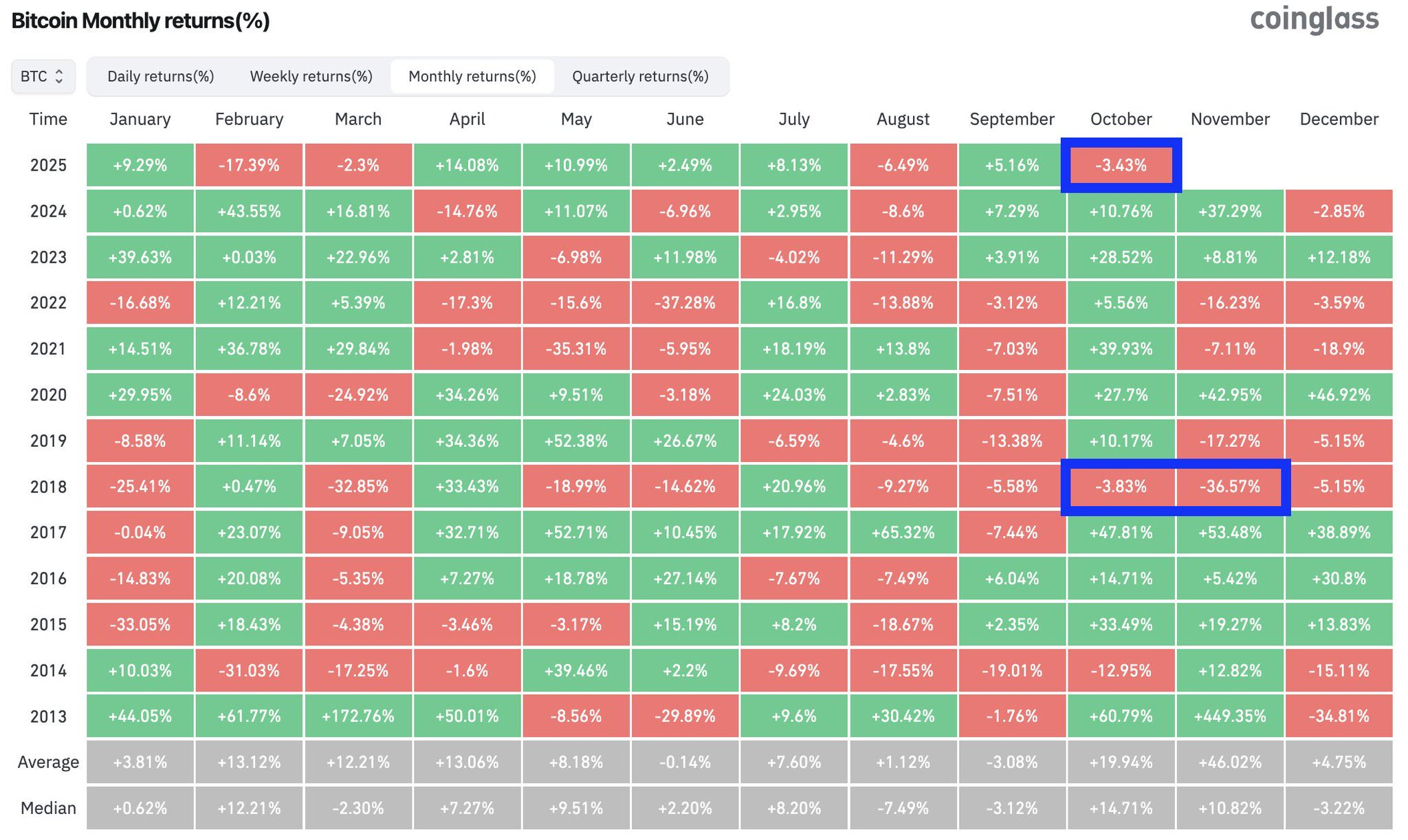
Более осторожную позицию занял аналитик Notaz.eth. Он напомнил, что в последний раз, когда биткоин завершал октябрь в минусе (2018 год), последовавшие за ним ноябрь и декабрь оказались неудачными месяцами.
курса биткоина по месяцам
Как менялась цена биткоина по месяцам

Аналитик Джастин Ву также настроен пессимистично. Он, как и Notaz.eth, боится повторения истории 2018 года. По его словам, рынок вновь дает понять, что приближается зима.

Трейдер Doctor Profit считает, что рынок уже вступил в раннюю стадию медвежьего цикла. Он подчеркнул, что чем раньше инвесторы это осознают, тем выгоднее смогут зафиксировать прибыль или выйти из позиций. По его словам, он снова продал свои биткоины и открыл короткие позиции на вершине рынка — так же, как делал это в 2021 году перед обвалом и в 2022-м, когда покупал биткоин по $16 000.

Выводы

Ноябрь может стать решающим месяцем для биткоина. Рынок подошел к границе между восстановлением и началом нового цикла снижения. Оптимисты ожидают прорыва выше $112 000 и обновления исторического максимума уже в ближайшие недели. Пессимисты же видят признаки формирования медвежьей фазы и предупреждают о возможном снижении к $103 000 и ниже.

На практике многое будет зависеть от реакции инвесторов на текущие уровни и общего настроения на рынке. Если биткоину удастся удержать поддержку и восстановить импульс, ноябрь может стать стартом нового витка роста. В противном случае рынок рискует войти в затяжную фазу коррекции.


Letture associate

Ray Dalio's Latest Macro Analysis Full Text: Buy More Gold, Add Some Bitcoin

In his latest macro analysis, Ray Dalio applies his framework from "How Countries Go Broke: The Big Cycle" to the current global debt environment. He highlights recent events like Japan selling U.S. Treasuries and rising U.S. long-term yields as signs of an unsustainable debt dynamic. Dalio explains that excessive government debt leads to either unacceptably high interest rates, severe economic downturns, or significant currency debasement through central bank money printing. He summarizes the U.S. fiscal situation: with $5.5 trillion in revenue, $7.5 trillion in spending, a $2 trillion deficit, and total debt at six times annual revenue, debt servicing costs are immense. Without correction, U.S. debt could reach $55-$60 trillion in a decade. Dalio proposes a "3% Three-Way" solution: reducing the budget deficit to 3% of GDP through balanced spending cuts, tax increases, and interest rate reductions to avoid a traumatic adjustment. In response to FAQs, he argues that the risk of a U.S. debt crisis is high and could materialize within a few years if the current path continues. He dismisses the notion that the dollar's reserve status makes the U.S. immune, citing historical precedents of reserve currency declines. He is also unconvinced by Japan's high-debt stability, noting poor returns for yen-denominated assets. For investors, Dalio recommends diversifying globally, underweighting bonds, and overweighting assets like gold and a small allocation to Bitcoin (around 10-15% to gold) to hedge against currency debasement and poor debt returns.

marsbit38 min fa

Ray Dalio's Latest Macro Analysis Full Text: Buy More Gold, Add Some Bitcoin

marsbit38 min fa

Stripe’s 16-Year Chronicle: From 7 Lines of Code to a $100 Billion Valuation

Stripe's 16-year journey began with a simple promise: "7 lines of code to accept payments." Founded by Patrick and John Collison, the company started by hiding the complexity of bank integrations and merchant accounts behind a clean API, initially targeting developers at startups. This early focus on user experience and technical simplicity fueled rapid adoption. A key early milestone was establishing vital bank partnerships, a challenge overcome by hiring Billy Alvarado, who brought crucial institutional relationship skills. From this foundation, Stripe systematically expanded its product boundaries. It launched Connect for platform payments, Atlas for company formation, Radar for fraud prevention, and Billing for subscriptions. This transformed Stripe from a payment processor into a broader financial infrastructure suite for internet businesses. The COVID-19 pandemic accelerated growth but also led to over-hiring. A 14% layoff in 2022 marked a period of organizational correction. Subsequently, Stripe shifted its growth strategy towards strategic acquisitions to enter new domains quickly. It acquired Bridge (stablecoin infrastructure), Privy (wallet infrastructure), Metronome (usage-based billing), and agreed to buy OpenRouter (AI model routing). These moves signal Stripe's ambition to build a "programmable money system" for the emerging AI and agent-based economy, managing not just currency flows but also the measurement and pricing of computational resources like AI tokens. Internally, Stripe leverages AI agents (like "Minions") to boost engineering productivity. Despite scaling to nearly 8,000 employees and processing $1.9 trillion in payment volume annually, the company remains private. A recent employee tender offer valued it at $159 billion. The core question for Stripe's future is whether it can successfully integrate its expanding product matrix—spanning payments, crypto, and AI infrastructure—into a cohesive platform, positioning itself as the foundational economic layer for autonomous software agents.

marsbit1 h fa

Stripe’s 16-Year Chronicle: From 7 Lines of Code to a $100 Billion Valuation

marsbit1 h fa

Treasury Secretary's Move to Suppress Treasury Yields Ignites 'Currency Debasement Trade'! Gold Hits Three-Month High, Bitcoin Surges Over 25% in a Single Week

US Treasury Secretary Besant's efforts to lower long-term Treasury yields by announcing expanded buybacks had only a brief market impact. However, this move fueled a "currency devaluation trade," weakening the US dollar while boosting both gold (to a three-month high) and Bitcoin (up over 25% for the week). Analysts attribute this reaction to deepening market concerns over the massive US fiscal deficit and structural pressures keeping long-term rates elevated, including fierce competition for capital from global government borrowing and massive AI sector financing. Despite the Treasury's actions, fundamental forces like growth, inflation, and capital demand are seen as limiting its ability to sustainably suppress yields. Bitcoin's strong positive correlation with gold has reinforced its narrative as a hedge against devaluation. While equity markets have shown resilience, some strategists warn that Treasury yields nearing 5% increase pressure on the dollar and high-leverage assets. Figures like Ray Dalio have advised reducing bond exposure in favor of gold and some Bitcoin, citing US debt risks. Market opinions are divided on the sustainability of the devaluation trade, with some noting the lack of a near-term catalyst for its next leg higher. The underlying tension between the Treasury's desire for lower borrowing costs and the Federal Reserve's focus on inflation and reducing market intervention remains a key theme. Upcoming events like Nvidia's earnings and the Jackson Hole symposium will test whether AI profits can continue supporting stocks and if the Fed aligns more with Washington's preference for easier financial conditions.

华尔街日报3 h fa

Treasury Secretary's Move to Suppress Treasury Yields Ignites 'Currency Debasement Trade'! Gold Hits Three-Month High, Bitcoin Surges Over 25% in a Single Week

华尔街日报3 h fa

Alexander Shokhin: Business Needs an Interest Rate Below 10% and the Dollar at 90-95 Rubles

Alexander Shokhin, head of the Russian Union of Industrialists and Entrepreneurs (RSPP), has advocated for potentially using "non-market" tools to keep the ruble within a target exchange rate corridor. This, he argues on August 21, would help avoid excessive volatility, though he called the topic a separate discussion. Shokhin had previously raised the idea of a currency corridor in late May, noting the ruble's current exchange rate is not fully market-driven due to a limited currency segment and reduced foreign currency demand. He stated that many business community colleagues propose fixing a corridor, even through non-market methods, to ensure predictability. The business community's key targets, as outlined by Shokhin in late December 2025, are a Central Bank key rate of 12%, inflation of 4–5%, and a US dollar exchange rate of 90–95 rubles by the end of 2026. A turning point for investment, he said, would be lowering the rate to 12% with 6% inflation, though truly comfortable business conditions would require a rate below 10%. He stressed the critical importance of currency predictability for corporate investment decisions. From a data analysis perspective, the idea of a ruble corridor is not new. A similar mechanism was used in Russia from 1995 to 1998, where the central bank held the dollar within fixed boundaries through regular interventions. This regime lasted three years before ending abruptly during the 1998 default, illustrating the fragility of rigid targets under external shocks. The macro-economic link is clear: stricter corridors require more reserves to defend against currency pressure. The key unresolved technical aspect is the specific sources and volume of such interventions given the current market's limited liquidity. Whether this discussion remains theoretical or leads to concrete corridor parameters will be seen in the coming months.

cryptonews.ru4 h fa

Alexander Shokhin: Business Needs an Interest Rate Below 10% and the Dollar at 90-95 Rubles

cryptonews.ru4 h fa

Trading

Spot
活动图片



