Буллран на рынке анонимных криптовалют: что происходит

cryptonews.ruPubblicato 2025-04-28Pubblicato ultima volta 2025-10-29

Сектор приватных монет переживает стремительный подъем. Интерес к анонимным транзакциям возвращается, а лидерами роста стали Zcash и Monero

Рассказываем, почему рынок конфиденциальных активов перешел в фазу роста и какие факторы могут поддержать этот тренд.

Где купить анонимные криптовалюты: топ-7 бирж

Рост рынка анонимных криптовалют

За последние 30 дней индекс Privacy Coins вырос на 83,91%. Совокупная капитализация крупнейших анонимных монет превысила $13 млрд. Лидером роста стал Zcash (ZEC), подорожавший на 704,73% с начала сентября. Monero (XMR) укрепился на 31,24% за тот же период и сохранил первое место среди приватных активов по капитализации.
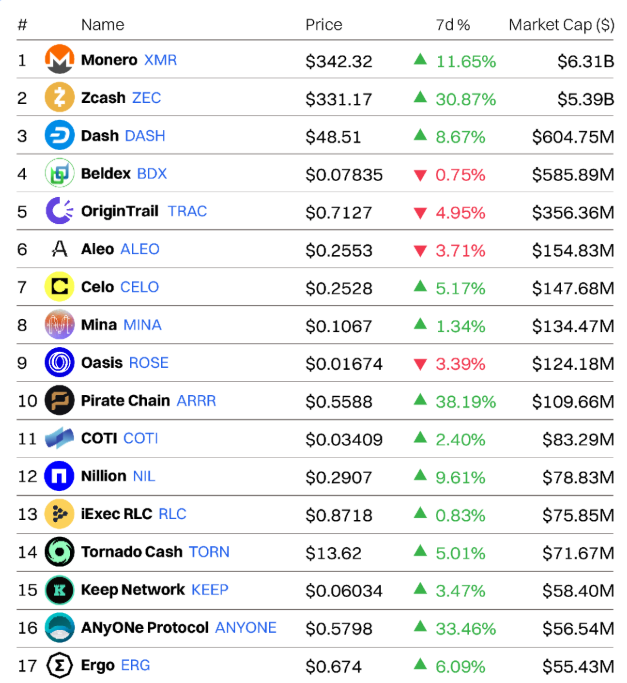
самые капитализированные анонимные криптовалюты
Информация о самых капитализированных анонимных криптовалютах. Источник: CoinMarketCap

Резкий подъем сектора связан с рядом факторов:

  1. Усиление регулирования и контроля за цифровыми переводами, что подогрело интерес к анонимным транзакциям.
  2. Приближение халвинга Zcash, который сократит эмиссию и усилит дефицит актива.
  3. Возвращение институционального интереса через регулируемые инвестиционные продукты, такие как Grayscale Zcash Trust.
  4. Позитивные прогнозы известных инвесторов, которые спровоцировали рост розничного спроса.
  5. Общее восстановление крипторынка, которое стимулирует интерес к высокорискованным активам.

Почему растет Zcash

Zcash стал главным драйвером роста рынка приватных активов. Цена монеты поднялась с $54 до $372, что выше максимума мая 2021 года в $319. Капитализация достигла $5,39 млрд, а текущая цена держится около $331. За неделю актив прибавил 30,87% и занял второе место среди приватных токенов по капитализации.
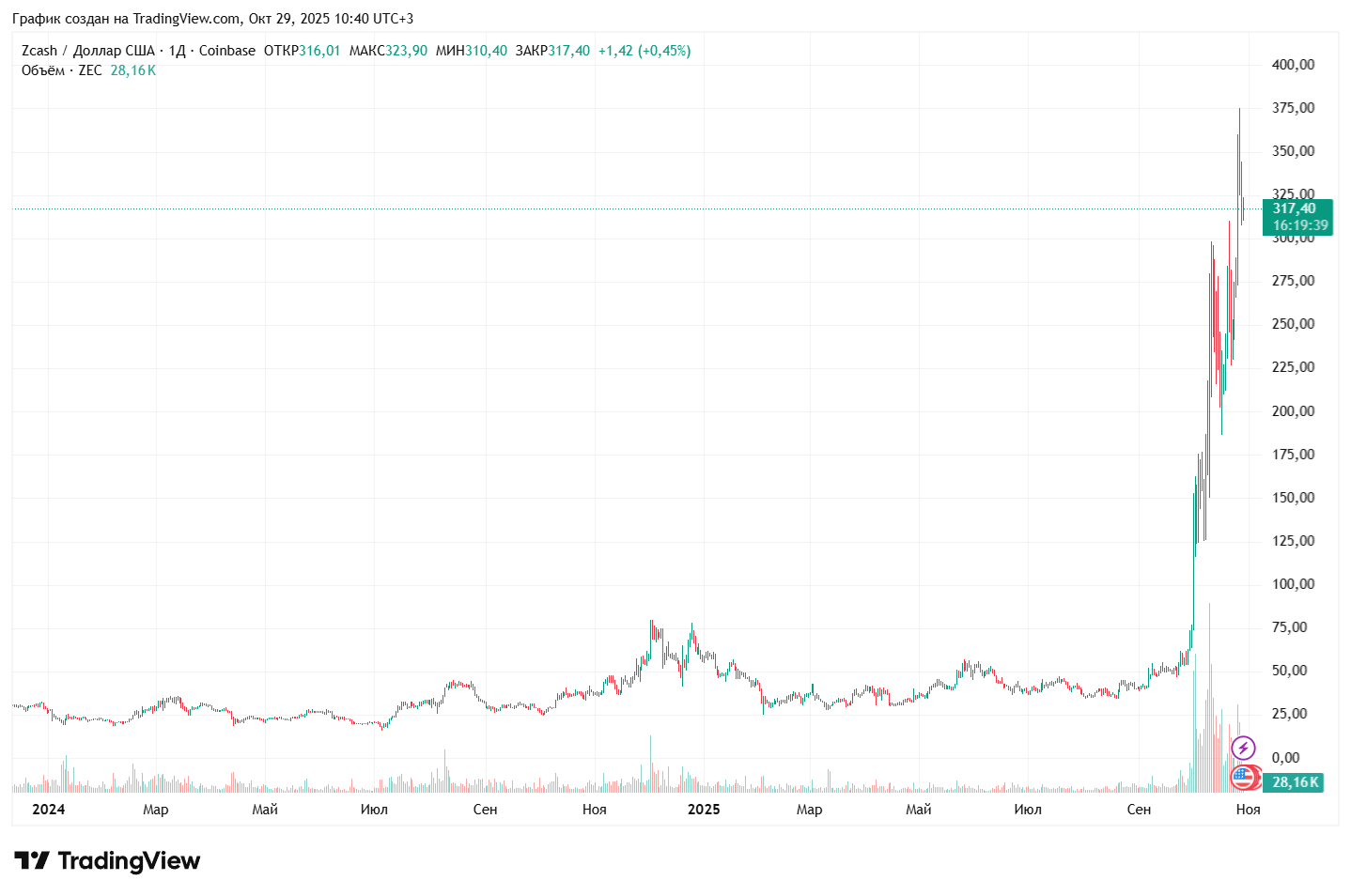
График Zcash. Источник: TradingView

Ожидание халвинга, запланированного на 18 ноября, усилило интерес к активу. Вознаграждение майнерам снизится с 3,125 до 1,5625 ZEC за блок, что уменьшит объем нового предложения.

Институциональный спрос поддержал Grayscale Zcash Trust (ZCSH). Рыночная цена бумаг фонда выросла до $28,48, а чистая стоимость активов на акцию составила $28,19. За сутки они прибавили 27,71% и 33,10% соответственно. Под управлением фонда находится $136 млн. Его успехи укрепили интерес институциональных инвесторов к сегменту приватных активов.

Однако в росте Zcash заметны признаки перегрева. Доля институциональных вложений колеблется близ 20%, а крупные кошельки частично фиксируют прибыль. После громких прогнозов суточный объем торгов достиг $1,45 млрд, а цена подскочила на 30% за двое суток — типичная картина спекулятивного пампа.

Но есть и признаки устойчивого тренда:

  1. Пробой четырехлетнего нисходящего тренда и закрепление выше $370.
  2. Рост числа приватных транзакций на 36% в октябре.
  3. Увеличение объемов приватных пулов на 11%.
  4. Повышение интереса со стороны институциональных инвесторов.
  5. Возвращение внимания к теме финансовой конфиденциальности.

Дальнейшее движение Zcash зависит от реакции рынка на халвинг. Сохранение цены выше $150–160 подтвердит устойчивость восходящего тренда. Падение ниже этой зоны укажет на фиксацию прибыли и переход к сценарию sell the news.

Что происходит с Monero

Monero вырос на 31,24% за последние 30 дней и сохраняет лидерство среди анонимных активов. Капитализация достигла $6,31 млрд, цена держится в районе $342, недельный прирост — 11,65%. В отличие от Zcash, монета демонстрирует более стабильную динамику без резких скачков, что указывает на зрелую рыночную структуру и сильную базу держателей.
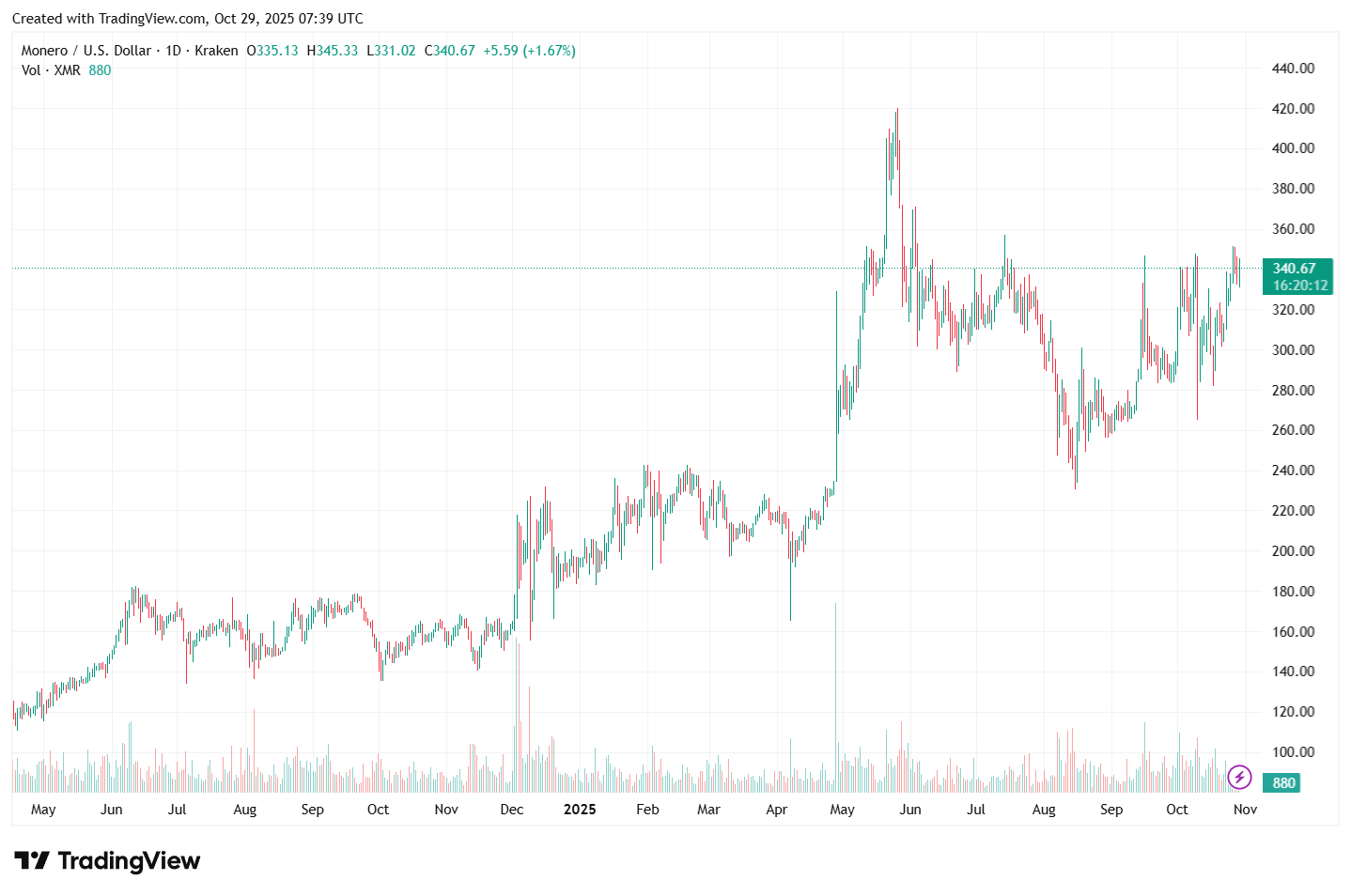
График Monero
График Monero. Источник: TradingView

Команда Monero Research Lab работает над новой схемой адресации Jamtis, призванной повысить безопасность сети в условиях появления квантовых технологий. Проект внедряет элементы постквантового шифрования, обеспечивающие защиту даже при утечке данных об адресах или генераторах кошельков.

Действующий механизм CARROT уже содержит функции прямой секретности, а Jamtis расширяет их, добавляя устойчивость к противникам с квантовыми вычислительными возможностями. Разработка ведется открыто, обновления публикуются на GitHub разработчиком Tevador.

Фокус на постквантовой криптографии укрепляет репутацию Monero как технологического лидера среди приватных монет. В отличие от Zcash, который привлекает спекулятивный капитал, Monero делает ставку на долгосрочную безопасность и устойчивость сети.

Кажется, проекту удалось восстановиться после атаки майнинг-пула Qubic.

Вывод

Рынок анонимных криптовалют вошел в фазу активного роста. Zcash стал центром краткосрочных спекуляций в преддверии халвинга. Monero подтверждает статус технологически зрелого проекта, ориентированного на приватность и устойчивость сети.

Главный вопрос — насколько надолго рынок сохранит интерес к приватным активам. Продолжение роста зависит от поведения инвесторов после халвинга Zcash и от того, сможет ли Monero удержать доверие сообщества, развивая защиту от новых технологических угроз. Давление регуляторов также может усилить интерес участников рынка к анонимным монетам.

Letture associate

Bitcoin and Ethereum Soar Together! Eight Altcoins Worth Watching in the Later Market

Bitcoin and Ethereum Surge, Fueling Altcoin Speculation. Bitcoin Eyes $77,000, Ethereum Gains 20% in a Single Day. Market anticipates capital rotation from major cryptos to high-beta altcoins, but a selective rise is expected, favoring projects with genuine users, protocol revenue, and healthy tokenomics. Analysts highlight eight altcoins across key sectors: **High-Performance Blockchains:** * **SOL (Solana):** Market cap ~$51.88B. A dominant player with a strong ecosystem. Considered a relatively safe bet for potential catch-up growth. * **SUI (Sui):** Market cap ~$3.03B. High volatility potential but faces risks from its low circulating supply and future token unlocks. **DeFi Lending:** * **UNI (Uniswap):** Market cap ~$2.38B. Transitioning to a revenue-capturing asset post-fee switch implementation. * **AAVE (Aave):** Market cap ~$1.53B. Features balanced tokenomics and revenue but has seen significant recent gains. * **MORPHO:** Market cap ~$1.50B. Rapid protocol growth but weaker token value capture and opaque supply data. **Perpetual DEX:** * **HYPE (Hyperliquid):** Market cap ~$16.41B. The clear sector leader with strong revenue but high valuation and a large portion of tokens still locked, warranting caution. **RWA & On-Chain Finance Infrastructure:** * **LINK (Chainlink):** Market cap ~$8.09B. A key oracle provider positioned to benefit from multiple trends like RWA and institutional adoption, offering strong fundamentals. * **ONDO (Ondo Finance):** Market cap ~$1.77B. Shows strong business growth but carries high risks due to concentrated token holdings and a massive unlock scheduled for 2027. **Conclusion:** The altcoin rally is expected to be selective. Recommendations include a medium position in SOL, small allocations to SUI and UNI/AAVE for DeFi exposure, and caution with HYPE and ONDO due to their specific risks. LINK is suggested as a core holding for the RWA thematic.

marsbit34 min fa

Bitcoin and Ethereum Soar Together! Eight Altcoins Worth Watching in the Later Market

marsbit34 min fa

Shanghai's $10 Billion Unicorn Is About to Go Public

Shanghai-based automotive-grade millimeter-wave radar chip unicorn Calterah Microelectronics Technology (Shanghai) Co., Ltd. has filed for an IPO on Shanghai's STAR Market, aiming to raise 3.49 billion yuan. Founded in 2014 by Chen Jiashu, a UC Berkeley PhD graduate, and his professor Ali Niknejad, Calterah pioneered CMOS technology for 77GHz radar chips, breaking the decades-long monopoly of international giants like Texas Instruments. Its low-cost, highly integrated solutions enabled millimeter-wave radar to move from luxury to mass-market vehicles. By 2025, Calterah captured a 31.1% share in China's automotive millimeter-wave radar chip market (second domestically, fourth globally), with cumulative shipments exceeding 30 million units. Its client list includes BYD, Geely, Nio, and Volvo. The company has undergone 11 funding rounds, attracting high-profile investors such as the National Integrated Circuit Industry Investment Fund Phase II, China Capital Management, and GD Capital. Its valuation has reached tens of billions of yuan, with a projected post-IPO valuation of approximately 14 billion yuan. Despite rapid revenue growth—increasing from 206 million yuan in 2023 to 632 million yuan in 2025 with a 75.28% CAGR—Calterah remains unprofitable. It reported net losses of 323 million yuan, 334 million yuan, and 193 million yuan from 2023 to 2025, accumulating over 900 million yuan in losses over three and a half years. These losses are primarily attributed to heavy R&D investment, which totaled over 1.039 billion yuan in the reporting period, often exceeding annual revenue. The company faces significant risks, including high customer concentration (its top five customers accounted for over 99% of revenue from 2023-2025, with BYD alone representing over 50% in 2025) and supply chain concentration. Revenue pressure from key customers and dependencies on overseas suppliers for EDA tools and IP pose challenges to sustainable growth. The IPO is seen as crucial for securing capital to expand production, diversify its customer base, and reduce supply chain dependencies.

marsbit1 h fa

Shanghai's $10 Billion Unicorn Is About to Go Public

marsbit1 h fa

Ray Dalio's Latest Macro Analysis Full Text: Buy More Gold, Add Some Bitcoin

In his latest macro analysis, Ray Dalio applies his framework from "How Countries Go Broke: The Big Cycle" to the current global debt environment. He highlights recent events like Japan selling U.S. Treasuries and rising U.S. long-term yields as signs of an unsustainable debt dynamic. Dalio explains that excessive government debt leads to either unacceptably high interest rates, severe economic downturns, or significant currency debasement through central bank money printing. He summarizes the U.S. fiscal situation: with $5.5 trillion in revenue, $7.5 trillion in spending, a $2 trillion deficit, and total debt at six times annual revenue, debt servicing costs are immense. Without correction, U.S. debt could reach $55-$60 trillion in a decade. Dalio proposes a "3% Three-Way" solution: reducing the budget deficit to 3% of GDP through balanced spending cuts, tax increases, and interest rate reductions to avoid a traumatic adjustment. In response to FAQs, he argues that the risk of a U.S. debt crisis is high and could materialize within a few years if the current path continues. He dismisses the notion that the dollar's reserve status makes the U.S. immune, citing historical precedents of reserve currency declines. He is also unconvinced by Japan's high-debt stability, noting poor returns for yen-denominated assets. For investors, Dalio recommends diversifying globally, underweighting bonds, and overweighting assets like gold and a small allocation to Bitcoin (around 10-15% to gold) to hedge against currency debasement and poor debt returns.

marsbit1 h fa

Ray Dalio's Latest Macro Analysis Full Text: Buy More Gold, Add Some Bitcoin

marsbit1 h fa

Stripe’s 16-Year Chronicle: From 7 Lines of Code to a $100 Billion Valuation

Stripe's 16-year journey began with a simple promise: "7 lines of code to accept payments." Founded by Patrick and John Collison, the company started by hiding the complexity of bank integrations and merchant accounts behind a clean API, initially targeting developers at startups. This early focus on user experience and technical simplicity fueled rapid adoption. A key early milestone was establishing vital bank partnerships, a challenge overcome by hiring Billy Alvarado, who brought crucial institutional relationship skills. From this foundation, Stripe systematically expanded its product boundaries. It launched Connect for platform payments, Atlas for company formation, Radar for fraud prevention, and Billing for subscriptions. This transformed Stripe from a payment processor into a broader financial infrastructure suite for internet businesses. The COVID-19 pandemic accelerated growth but also led to over-hiring. A 14% layoff in 2022 marked a period of organizational correction. Subsequently, Stripe shifted its growth strategy towards strategic acquisitions to enter new domains quickly. It acquired Bridge (stablecoin infrastructure), Privy (wallet infrastructure), Metronome (usage-based billing), and agreed to buy OpenRouter (AI model routing). These moves signal Stripe's ambition to build a "programmable money system" for the emerging AI and agent-based economy, managing not just currency flows but also the measurement and pricing of computational resources like AI tokens. Internally, Stripe leverages AI agents (like "Minions") to boost engineering productivity. Despite scaling to nearly 8,000 employees and processing $1.9 trillion in payment volume annually, the company remains private. A recent employee tender offer valued it at $159 billion. The core question for Stripe's future is whether it can successfully integrate its expanding product matrix—spanning payments, crypto, and AI infrastructure—into a cohesive platform, positioning itself as the foundational economic layer for autonomous software agents.

marsbit2 h fa

Stripe’s 16-Year Chronicle: From 7 Lines of Code to a $100 Billion Valuation

marsbit2 h fa

Trading

Spot
活动图片