Интерес к криптовалютам в Австралии стремительно растет

cryptonews.ruPubblicato 2025-07-23Pubblicato ultima volta 2025-10-24

Анализ веб-трафика, который был проведен венчурной организацией Andreessen Horowitz, выявил, что австралийцы лидируют по интересу к криптовалютам на душу населения. Больше всего жители региона интересуются торговлей и спекулятивными сделками. Исследование проанализировало посещаемость сайтов, связанных с 30 ведущими токенами по версии CoinGecko, за исключением биткоина и разных стейблкоинов.

Австралия заняла 1-е место с показателем 74,63% трафика на 1 млрд человек. Южная Корея заняла 2-е с 73,48%, а на Великобританию пришлось 2,15% трафика. Что касается США, то они заняли 4-е место с показателем 40,73%. Специалисты подчеркнули, что в развитых странах преобладает трейдинг, тогда как в развивающихся регионах популярны ончейн-операции через мобильные приложения.

Согласно прогнозам, популярность криптовалют в Австралии продолжит расти. Сервис Statista ожидает увеличение показателя на 19,85% ежегодно. Число новых пользователей может достичь 11,16 млн, охватив около 41% населения. Опрос, недавно проведенный компанией Swyftx, показал, что 40% молодежи сожалеют о том, что ранее не инвестировали средства в криптоактивы. Представитель платформы сообщил изданию Cointelegraph, что молодые инвесторы предпочитают активы с высокой волатильностью и хорошо ориентируются в сфере криптовалют.

Интерес австралийцев обусловлен развитой финансовой экосистемой и доступом к различным цифровым сервисам. Страна активно интегрирует криптовалюты в экономику, чему способствуют местные биржи. Также гибкая регулятивная политика привлекает глобальные платформы.

Технологическая грамотность и интерес к инновациям усиливают сложившуюся динамику. Молодежь активно изучает рынок, используя данные разных сервисов. Рост трафика отражает в большей степени заинтересованность в спекулятивных операциях. В развивающихся странах криптовалюты чаще применяют для переводов и долгосрочных инвестиций из-за ограниченного доступа к банковским услугам.

Letture associate

Domestic RF Filters, Finally Starting to Compete?

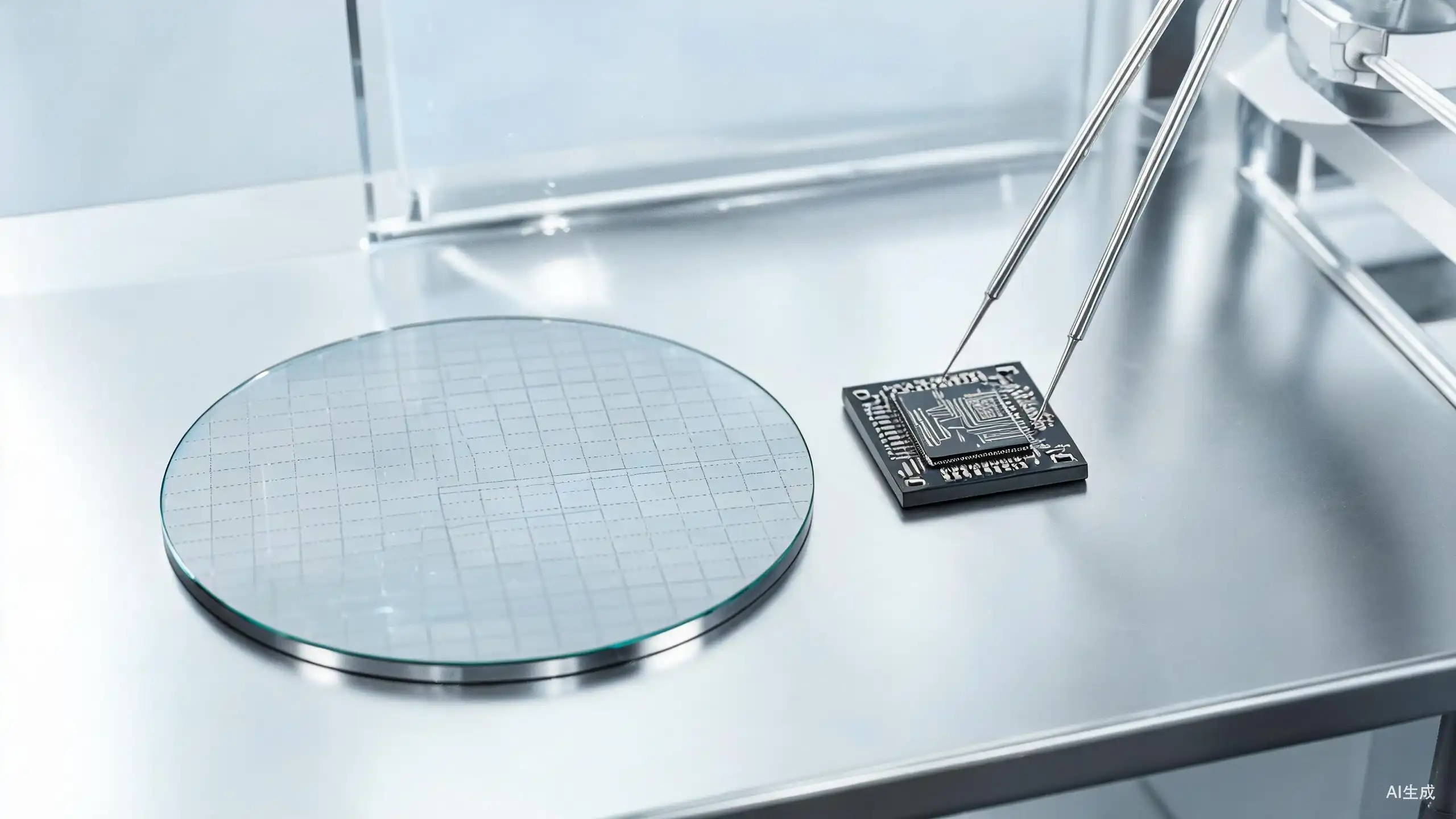
China's domestic filter industry, particularly in the challenging BAW (Bulk Acoustic Wave) segment, has reached a significant inflection point, moving from solving the "availability" problem to entering a phase of commercial competition and scale. The market is attractive, with the global mobile terminal RF filter market projected to reach $9.2 billion in 2025, and BAW filters showing strong growth. However, the sector is historically dominated by giants like Broadcom and Qorvo, protected by deep patent walls, as evidenced by lawsuits that have bankrupted competitors like Akoustis. Previously, high-frequency BAW filter production in China was nearly zero. Now, domestic players like Nous Micro, Wuhan Memsensing, Hansky, and others are forming a genuine industrial cluster, achieving mass production and shipping hundreds of millions of chips to clients. Different business models are emerging, including IDM and fab-lite approaches through partnerships with foundries like Sai Microelectronics and Runxin Sensing. A key signal of this new competitive phase is a patent lawsuit filed by Nous Micro against Wuhan Memsensing in June 2025, alleging infringement of a core BAW resonator patent. This conflict, rather than mere internal friction, underscores that the industry now has substantial products and market stakes to contest. The challenge is no longer just technical breakthrough but transforming technological leads into sustainable commercial success through superior patents, product performance, cost control, and customer acquisition. Chinese companies are finally positioned to compete for a share of this lucrative market long held by foreign leaders.

marsbit23 min fa

Domestic RF Filters, Finally Starting to Compete?

marsbit23 min fa

Zhang Lei: How He Became the Biggest Money-Maker This Year

Zhang Lei's company Pinzhun Laser (频准激光) became the biggest "meat sign" (highly profitable new share) of the year on its A-share market debut. Its stock price skyrocketed nearly 600% from its IPO price, generating potential single-lot profits of over 550,000 RMB for lucky subscribers. Founded by Zhang Lei, a 2014 Ph.D. graduate from the Shanghai Institute of Optics and Fine Mechanics, Pinzhun Laser specializes in ultra-stable, narrow-linewidth lasers critical for quantum computing. Its lasers are used by leading global research teams at Harvard, Caltech, and France's PASQAL. The company later successfully applied its core frequency conversion technology to the semiconductor sector, developing deep-ultraviolet lasers for advanced chip manufacturing and inspection. This move diversified its revenue, with semiconductor sales growing rapidly to account for over 25% of its business by 2025. The company boasts gross margins consistently above 69%. Remarkably, Pinzhun Laser required only two major external funding rounds before its IPO, a testament to its early profitability. Key strategic investors in its IPO included major downstream players like BOE,佰维存储 (BIWIN), and中微半导体 (AMEC), signaling strong industry validation. The article highlights the crucial early-stage support from Hangzhou-based capital, particularly funds associated with the Hangzhou Institute of Optics and Fine Mechanics. This "patient capital" model, part of Hangzhou's broader 300-billion-yuan industrial fund strategy, focuses on partnering with scientist-entrepreneurs through the risky valley of death from lab to market. The success of Pinzhun Laser and another Hangzhou-backed firm,宇树科技 (Unitree Robotics), showcases how this supportive ecosystem helps build leading hard-tech companies.

marsbit28 min fa

Zhang Lei: How He Became the Biggest Money-Maker This Year

marsbit28 min fa

3-Month Loss of $10 Billion, DAT Companies Begin to Return to Rationality

During the recent earnings season, major Digital Asset Treasury (DAT) companies reported staggering combined losses of approximately $10 billion for Q2 and over $30 billion for the first half, primarily due to markdowns on their bitcoin holdings. However, contrary to expectations, their stock prices have rebounded from June lows, indicating the market had already priced in these losses. The key shift is a collective return to rationality. Companies like Strategy, Sharplink, and Metaplanet are now prioritizing a new core metric: increasing the amount of crypto assets per share. This marks a departure from last year's aggressive growth-at-all-costs narrative. To achieve this, they are adopting disciplined capital allocation—issuing stock to buy crypto when trading at a premium, and halting dilution or initiating buybacks when at a discount. Some, like Strategy, have even broken "never sell" pledges to uphold this discipline. A major tool enabling this strategy is the STRC model—perpetual preferred shares offering high dividends (e.g., 12-13%) to raise fixed-income capital for purchasing bitcoin. Strive, Bitmine, and Metaplanet have launched their own variants. Sharplink pursues a different path, staking its vast Ethereum holdings to generate native yield. While the premium of DAT stocks over their underlying crypto asset value has declined and may not fully return, the model is evolving rather than ending. Stripped of hype, DAT firms are becoming actively managed, leveraged thematic funds. Their survival through massive losses and continued institutional investment (with major funds adding billions to positions during downturns) suggests the industry is maturing into a more calculated, long-term business focused on compounding crypto per share.

marsbit32 min fa

3-Month Loss of $10 Billion, DAT Companies Begin to Return to Rationality

marsbit32 min fa

PI Price Forecast Remains Stable at $0.086 as Pi Network Reforms App Economy

PI price forecast remains stable around $0.086 as it continues to trade below a key descending trendline from April. The token has been consolidating in a narrow range between $0.078 and $0.086 throughout August, with major EMAs positioned above the price indicating bearish pressure. Key resistance levels are identified at the 20-day EMA ($0.08772) and the SuperTrend indicators around $0.09-$0.10. Support sits at the current price and the August range low of $0.070. Fundamentally, Pi Network announced a major change to its App Studio pricing model, set for August 24, 2026. The fixed, subsidized rate of 0.25 Pi for app creation/editing will shift to a usage-based model reflecting actual AI service costs. Subsidized rates will remain for apps demonstrating genuine user adoption. Separately, the mandatory node protocol upgrade has reached version 26.1, with only version 27.1 remaining to complete the sequence. On-chain activity shows increased transaction volume, including patterns of repeated 0.03 Pi transfers, potentially related to testing following the protocol upgrade. The bullish scenario targets a break above the $0.08772-$0.09000 resistance cluster, opening a path toward the 50-day EMA at $0.09560. The bearish risk is a breakdown below the consolidation range, potentially testing the $0.070 support level. The conclusion notes that while fundamental developments are progressing, the price chart remains technically constrained until it can decisively break above the persistent downtrend line and key moving averages.

cryptonews.ru36 min fa

PI Price Forecast Remains Stable at $0.086 as Pi Network Reforms App Economy

cryptonews.ru36 min fa

Trading

Spot
活动图片