Nobel Prize Winner Declares Bitcoin A Force For Economic Liberation

bitcoinistPubblicato 2025-10-14Pubblicato ultima volta 2025-10-14

Introduzione

María Corina Machado, a leading figure in Venezuela’s opposition, was awarded the 2025 Nobel Peace Prize for her long campaign...

Trusted Editorial content, reviewed by leading industry experts and seasoned editors. Ad Disclosure

María Corina Machado, a leading figure in Venezuela’s opposition, was awarded the 2025 Nobel Peace Prize for her long campaign to restore democratic rule and human rights in the country.

Reports say she has also become one of Latin America’s most public supporters of Bitcoin, calling the cryptocurrency a “lifeline” for Venezuelans coping with strict currency controls and runaway inflation.

Award Highlights Bitcoin Role

The Nobel Committee’s decision puts Machado at the center of both political and economic debates. According to the committee, her work has rallied many Venezuelans against repression.

At the same time, Machado has described Bitcoin as a tool people used to protect savings, send remittances, and avoid state-controlled exchange rates. That claim was made during a 2024 interview with the Human Rights Foundation.

Venezuela’s Economic Collapse And Its Fallout

Venezuela’s economy entered a deep crisis after 2016 and through the next several years, with hyperinflation and a sharp drop in output. Reports show years of runaway prices and a steep fall in the bolívar’s value, driving many families to seek foreign currency or alternative stores of value. Large numbers of people left the country and many more relied on informal markets and remittances from abroad.

Cryptocurrency As A Practical Tool

Based on reports and interviews, ordinary Venezuelans used Bitcoin not as a speculative asset but as a working solution to daily problems. It helped some to move money across borders when official channels were closed or unreliable.

Machado and other activists have argued that peer-to-peer crypto markets can let people access funds without going through state-controlled systems.

BTCUSD currently trading at $114,573. Chart: TradingView

Politics, Allies, And Accusations

Machado’s international profile has brought allies and critics. Reports note contacts between opposition figures and senior US officials, and observers say Machado has ties with US conservatives, including US President Donald Trump and Secretary of State Marco Rubio.

Machado has denied that her movement is directed from abroad and she has framed outside support as solidarity with Venezuelan citizens facing repression.

Market Turbulence And Recovery

Bitcoin’s recent price swings have drawn fresh attention to its real-world use. According to market data, a sharp sell-off pushed the asset as low as $102,000 after open interest on derivatives fell by about $12 billion, sliding from $47 billion to $35 billion.

Buyers later stepped in and prices climbed back toward about $115,110, an intraday rebound that left Bitcoin up more than 3% on the day in some reports.

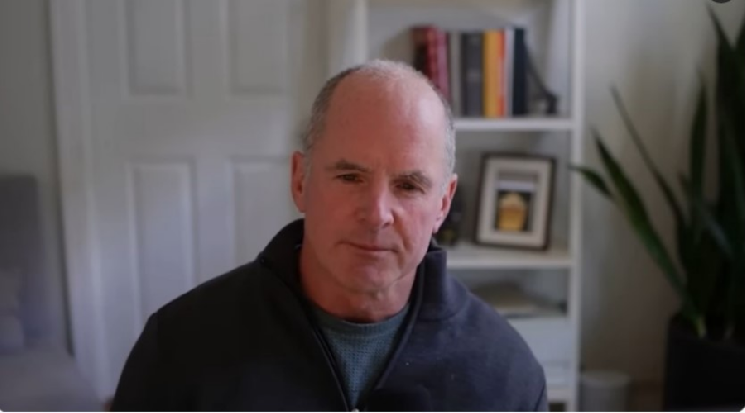
Featured image from NewsX, chart from TradingView

Editorial Process for bitcoinist is centered on delivering thoroughly researched, accurate, and unbiased content. We uphold strict sourcing standards, and each page undergoes diligent review by our team of top technology experts and seasoned editors. This process ensures the integrity, relevance, and value of our content for our readers.

Christian, a journalist and editor with leadership roles in Philippine and Canadian media, is fueled by his love for writing and cryptocurrency. Off-screen, he's a cook and cinephile who's constantly intrigued by the size of the universe.

Letture associate

Investment Philosophy of Gavin Baker, an Early Nvidia Investor: Long AI Infrastructure Bottlenecks, Short Overall Market Risk

Gavin Baker, an early investor in Nvidia and founder of Atreides Management, outlines his investment philosophy: going long on AI infrastructure bottlenecks while hedging against broader market risk. He argues AI is not a bubble but a supercycle driven by constraints in power, wafers (semiconductors), and compute efficiency (tokens per watt). True alpha, he believes, lies not in application-layer companies like OpenAI but in "picks and shovels" providers—companies solving physical bottlenecks in GPU connectivity (e.g., Astera Labs), memory (Micron), inference chips (Cerebras, Positron), advanced manufacturing (TSMC, ASML), and energy supply. His portfolio reflects this barbell strategy: concentrated bets on key infrastructure players alongside a significant put position on the QQQ ETF to hedge overall market downside. Baker contends this cycle differs from the dot-com bubble because demand is fueled by the strong balance sheets of hyperscalers (Google, Meta, Amazon, Microsoft), not debt, and physical supply constraints (e.g., chip manufacturing capacity) prevent runaway overinvestment. He highlights the growing importance of inference (vs. pre-training), vertical/small language models, sovereign infrastructure deployment speed, and the convergence of energy and space (e.g., orbital compute). His long-term view is that performance-per-watt and token cost reduction will dictate winners as AI scaling hits fundamental physical limits.

marsbit1 h fa

Investment Philosophy of Gavin Baker, an Early Nvidia Investor: Long AI Infrastructure Bottlenecks, Short Overall Market Risk

marsbit1 h fa

Apple Re-invented Image Compression with AI: Same Quality, One-Third the File Size

Apple’s PICO: An AI-Powered Image Codec That Cuts File Size by Two-Thirds at Equal Perceived Quality In 2025, JPEG AI became the first international standard for learned image compression. However, it, like most codecs, still prioritizes mathematical metrics like PSNR over true perceptual quality—what the human eye finds pleasing. Apple researchers have introduced PICO (Perceptual Image Codec), a neural codec designed to optimize for human perception. It tackles key practical challenges: 1) Speed: A novel "one-shot context model" accelerates entropy encoding without sacrificing compression efficiency. 2) Artifacts: A dedicated TextFidelity loss preserves text clarity, and a TilingArtifact loss eliminates color seams between image tiles processed in parallel. 3) Control: It avoids the "hallucinations" common in GAN-based perceptual models. In a large-scale human evaluation (74,925 comparisons), PICO achieved the same perceived quality as standards like AV1, VVC, and JPEG AI while using only 30-43% of the bitrate. It also outperforms other learned perceptual codecs by 20-40%. Remarkably, it runs in 230ms (encode) and 150ms (decode) on an iPhone 17 Pro Max. While less efficient on synthetic graphics, PICO represents a significant shift from optimizing mathematical scores to directly targeting human visual experience, making high-quality perceptual compression practical for consumer devices. The work builds on expertise from WaveOne, whose team joined Apple and previously advanced neural video compression.

marsbit1 h fa

Apple Re-invented Image Compression with AI: Same Quality, One-Third the File Size

marsbit1 h fa

Shanghai's Leading Large Model Company Initiates A-Share Listing

Shanghai-based AI large language model leader MiniMax has initiated the process for an A-share listing in China, having filed a pre-IPO tutoring report with the Shanghai Securities Regulatory Bureau on May 29. This move positions it to compete with Zhipu AI for the title of the first major domestic LLM company to list on the A-share market. Having already completed an IPO in Hong Kong in January 2026, MiniMax's stock price has surged approximately 409% since its debut, with its market capitalization reaching around HK$263.45 billion (approximately RMB 227.55 billion) as of May 29. The company's rapid growth is supported by strong business performance. Its Annual Recurring Revenue (ARR) has grown over 100% in the past two months and now exceeds $300 million. It serves over one million global enterprise and developer clients and has around 300 million users worldwide. For the full year 2025, MiniMax reported revenue of $79.038 million, with a gross margin of 25.4%. While it reported an adjusted net loss of $250 million, the loss rate has narrowed significantly year-over-year. On the product front, MiniMax has released several flagship models this year, including MiniMax-M2.5, M2.6, and M2.7, with the first and last being open-sourced. Its models gained significant traction earlier in the year, briefly becoming the top model provider by usage share on the OpenRouter platform in February. The company has also upgraded its AI agent product, now named Mavis, and is preparing to launch its next-generation MiniMax-M3 model. Technical previews indicate M3 will feature a novel "MiniMax Sparse Attention" mechanism, promising substantial improvements in inference speed. MiniMax's push for an A-share listing reflects a broader trend among China's leading AI firms, including Zhipu AI, Moonshot AI, StepFun, and 01.AI, to seek public listings. This strategy aims to secure broader financing channels to support the immense computational costs and ongoing commercialization efforts inherent in developing advanced large language models.

marsbit1 h fa

Shanghai's Leading Large Model Company Initiates A-Share Listing

marsbit1 h fa

Trading

Spot
Futures
活动图片