Сильное падение альткоинов обычно предшествует альтсезону. Повторится ли история?

cryptonews.ruPubblicato 2025-05-13Pubblicato ultima volta 2025-10-14

Альткоины обычно сильно падают перед началом альтсезона. Аналитики выявили исторические закономерности, показывающие, что крупные обвалы рынка предшествовали ралли альткоинов — новый альтсезон может быть совсем близко.

Эксперты предполагают, что массовая ликвидация кредитного плеча в выходные, только что стершая миллиарды долларов с рынка расчистила путь для «альтсезона 3.0».

«Каждому значительному росту криптовалют предшествовало резкое падение на 30-60%», — отметил аналитик и исследователь Bull Theory.
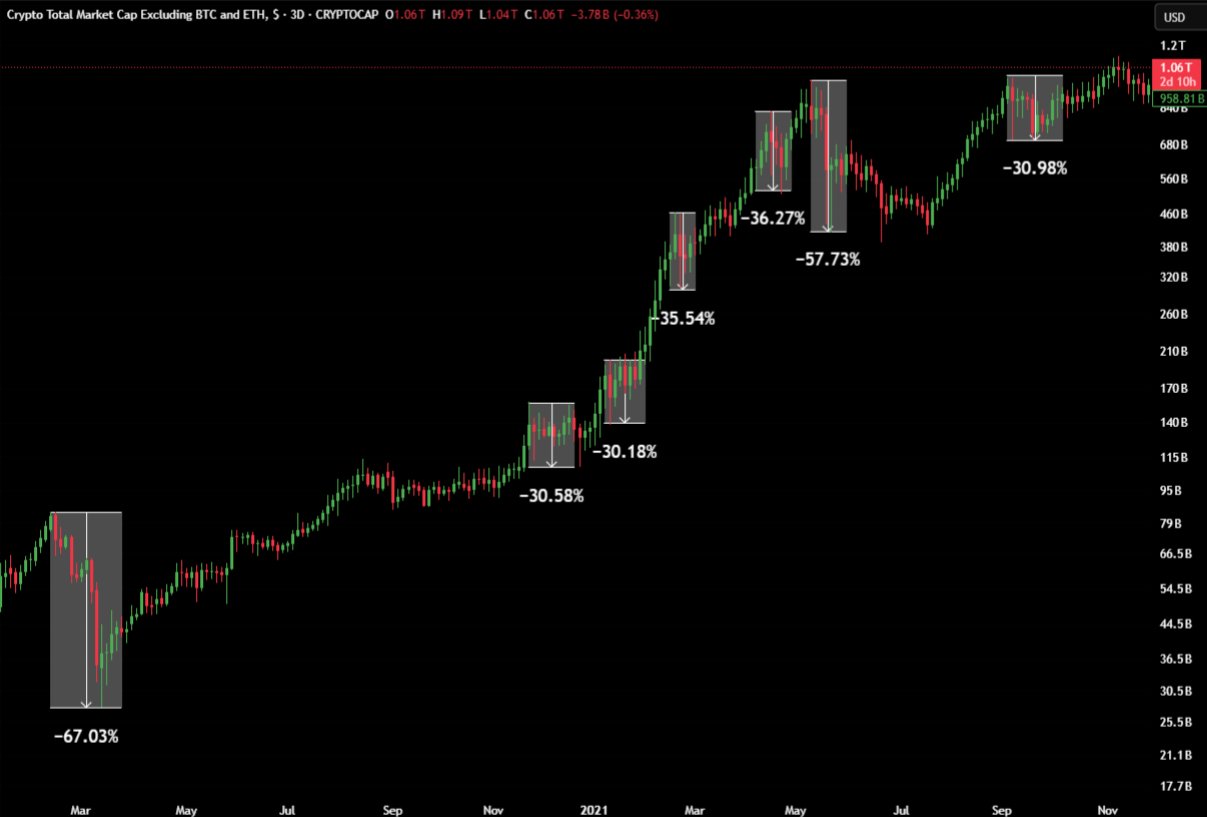
3-дневный график капитализации крипторынка (без биткоина и Ethereum). Аналитика: Bull Theory

В марте 2020 года рынки обвалились почти на 70% из-за пандемии — события типа «черный лебедь», а в мае 2021 года просадка составила более 50%. За время последнего бычьего рыночного цикла произошло как минимум пять просадок альткоинов на 30-40%.

Рыночный обвал в апреле этого года заставил многих назвать его началом медвежьего рынка. Однако «каждый из этих дампов выглядел как конец, за каждым следовало сильнейшее ралли цикла», — добавил аналитик.

Готовы ли альткоины к росту?

Альткоины обычно страдают сильнее всех во время таких эпических рыночных перезагрузок, и это произошло после 10 октября: XRP упал как минимум на 18%, Solana — на 22%, Dogecoin — на 28%, Cardano — на 25%, а Chainlink — на 26% всего за день.

После мартовского обвала 2020 года «у нас был выраженный альтсезон, когда альткоины выросли в 25-100 раз», — заявил аналитик Ash Crypto, добавив: «Думаю, это произойдет снова».
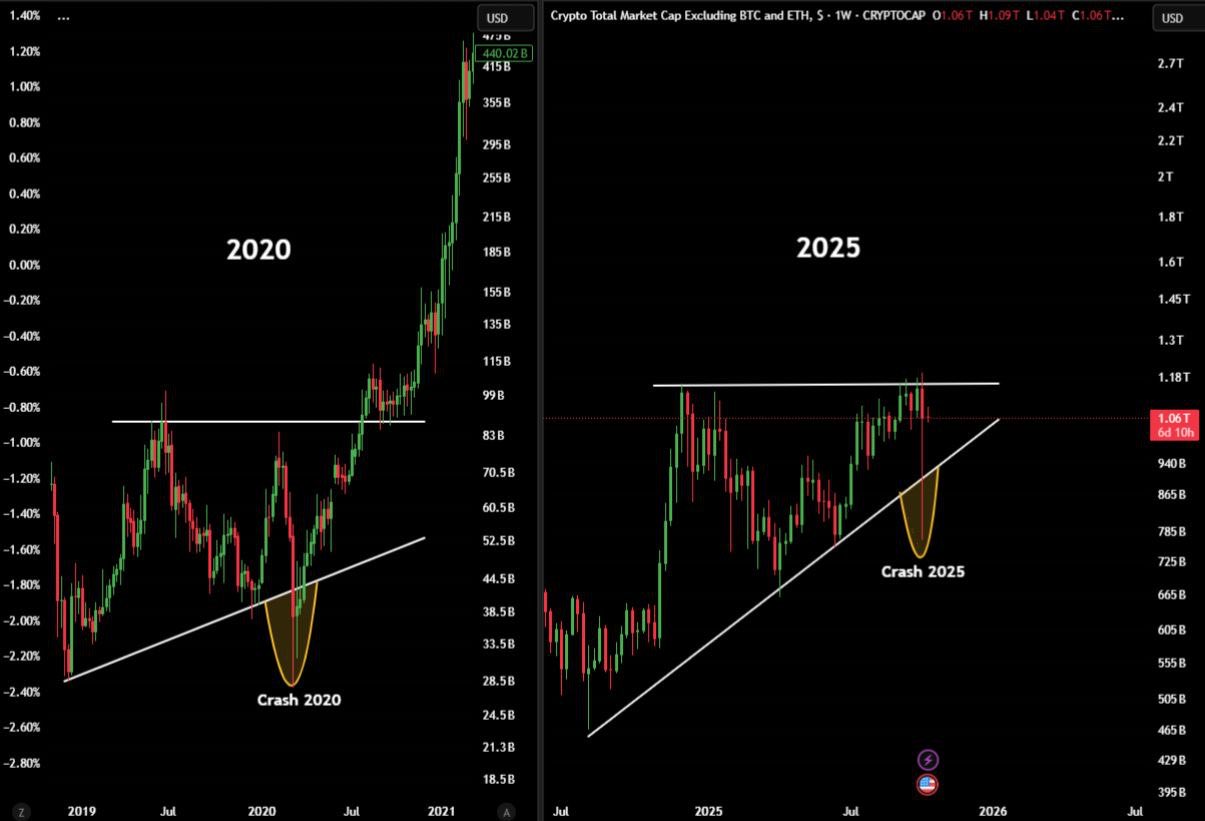
1-недельный график капитализации крипторынка (без биткоина и Ethereum). Аналитика: Ash Crypto

Тем временем аналитик Merlijn The Trader выявил сигнал, указывающий на «альтсезон 3.0»: бычье пересечение MACD на месячном графике BTC/альткоины — тот же паттерн наблюдался в 2017 и 2021 годах.
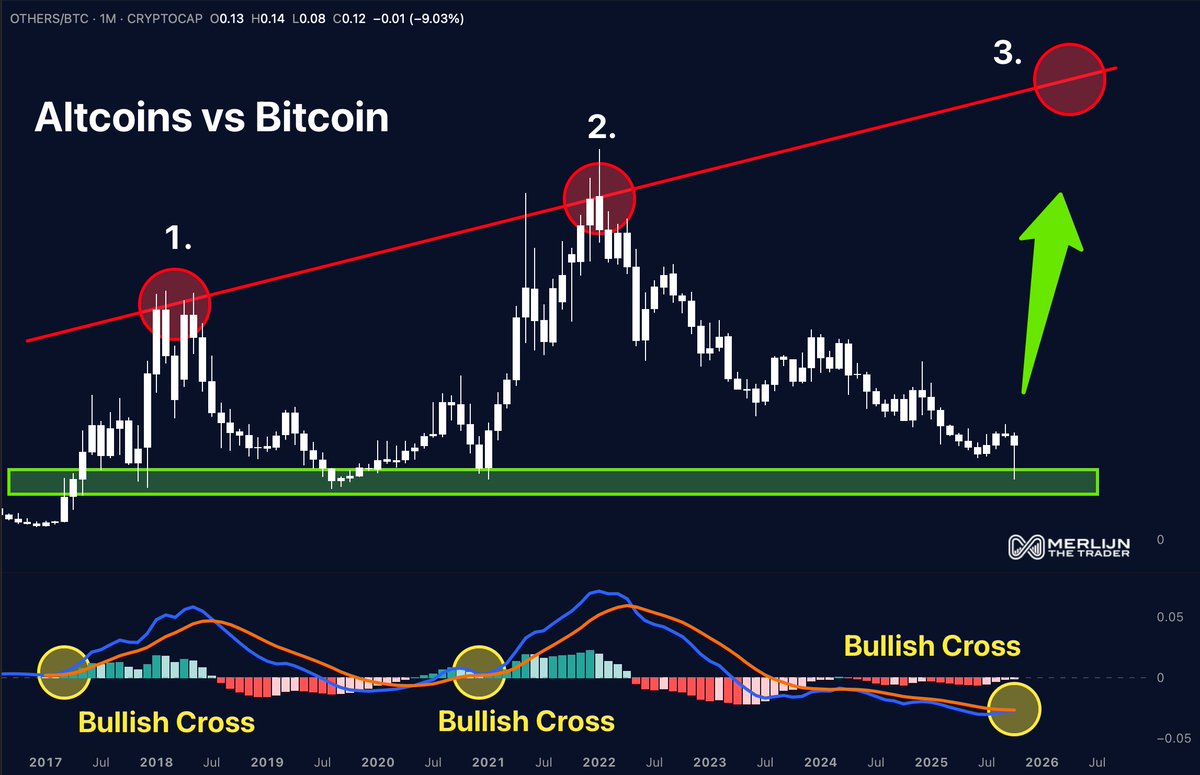

1-месячный график биткоин/альткоины. Аналитика: Merlijn The Trader

Letture associate

A Guide to Grayscale’s ‘Bottom Fishing’: Using Cash Flow to Assess Cryptocurrency Value

**Title:** Grayscale's Guide to Bottom-Fishing: Valuing Cryptoassets Using Cash Flows **Summary:** This report by Grayscale Research presents a fundamental valuation framework for cryptocurrency assets, moving beyond pure speculation to analyze those with underlying cash flows. It distinguishes between "commodity-like" assets (e.g., Bitcoin) and "cash-flow" assets, primarily within DeFi. Using the leading decentralized lending protocol Aave as a case study, the analysis applies traditional financial methodologies like Discounted Cash Flow (DCF) and Price-to-Earnings (P/E) multiples. Key findings indicate that AAVE tokens are currently undervalued. Despite recent challenges, the protocol's strong revenue growth, ~50% net profit margin, and diversified treasury support a fundamental valuation range of $80-$100 per token (compared to a ~$75 market price at the time of writing). In a base-case scenario driven by stablecoin adoption and regulatory clarity, the fair value could rise to around $175 within a year. The report emphasizes that protocol success does not automatically translate to token value. It critically examines the "value capture" mechanisms—such as buybacks, burns, and staking rewards—that channel protocol profits to token holders. Furthermore, it addresses the legal and governance complexities of Decentralized Autonomous Organizations (DAOs), noting their difference from traditional corporate equity but highlighting how robust, transparent governance can align protocol economics with holder interests. The conclusion is that the crypto market is maturing, with capital increasingly flowing towards projects with demonstrable fundamentals, real adoption, and disciplined capital allocation, creating opportunities for value-based investors.

marsbit13 min fa

A Guide to Grayscale’s ‘Bottom Fishing’: Using Cash Flow to Assess Cryptocurrency Value

marsbit13 min fa

After semiconductors lead the gains, are funds buying into AI orders or a macroeconomic rebound?

After US-Iran talks led to a temporary ceasefire and framework for reopening the strategic Strait of Hormuz, U.S. stocks rose on June 18, with the Nasdaq gaining 1.9%. The semiconductor and AI hardware sectors outperformed. This rally stemmed primarily from reduced geopolitical risk, which lowered oil prices and inflation expectations, easing discount rate pressure on high-valuation growth stocks like tech. The key question is not whether tech rebounded, but the nature of the rebound. The market appears to be selectively repricing AI infrastructure plays rather than broadly chasing AI narratives. Gains were concentrated in chips, optical interconnects, memory, and domestic manufacturing—segments tied to tangible data center build-outs and capital expenditure. Intel's ~10% surge, fueled by a Trump statement about potential Apple collaboration, exemplifies this mixed dynamic. It reflects policy catalysts and domestic manufacturing sentiment more than confirmed fundamentals. Meanwhile, strong earnings from companies like Astera Labs (revenue up 93% YoY) provided concrete evidence of AI-driven demand in hardware. In essence, the rally represents a risk-premium recalibration. Lower Middle East tensions opened a valuation repair window, and capital flowed first into AI infrastructure segments with visible near-term revenue streams. The sustainability of this move hinges on upcoming Q2 earnings, specifically continued strength in cloud provider capex, AI server orders, and hardware company guidance. Policy hopes alone are insufficient; the cycle needs validation from orders and financials.

marsbit18 min fa

After semiconductors lead the gains, are funds buying into AI orders or a macroeconomic rebound?

marsbit18 min fa

The Entire Internet Hails Noam's Joining, But OpenAI's Loss Bill Just Got Thicker

While the AI community celebrates Noam Shazeer, co-author of the "Attention Is All You Need" paper, joining OpenAI as Head of Architectural Research, the company's audited financials reveal a starkly different reality. In 2025, OpenAI reported $13.07 billion in revenue but a massive $20.92 billion operating loss. Even excluding a one-time accounting charge, the cash burn is severe, with $3.7 billion consumed in Q1 2026 alone. This high-profile hiring occurs against a backdrop of significant internal research talent drain, with key founders and researchers departing as the company's focus shifts from exploratory research to product iteration. Meanwhile, OpenAI's fundamental business model faces a deep crisis. It paid Microsoft $10.59 billion for compute in 2025, while its vast user base of 9 billion weekly actives includes only 50 million paying customers, making growth a direct driver of escalating costs. The article argues Shazeer's recruitment is less about technical necessity and more about crafting a compelling narrative for OpenAI's upcoming IPO, aiming to justify a rumored $1 trillion valuation to future public market investors. It contrasts OpenAI's strategy with Anthropic's reported path to profitability, which relies on a strong enterprise customer base and cost control, rather than star-powered narratives. Ultimately, the piece concludes that while Shazeer's architectural work may take 1-2 years to materialize, OpenAI's financial clock is ticking much faster, with its massive losses undercutting the celebratory headlines.

marsbit2 h fa

The Entire Internet Hails Noam's Joining, But OpenAI's Loss Bill Just Got Thicker

marsbit2 h fa

Trading

Spot
Futures
活动图片